Tag: scripture

  • Satan is Jesus’s Older Brother

    Satan is Jesus’s Older Brother

    Stay with me.

    Before I go down this path let me acknowledge some things:

    1. We don’t understand how time works in eternity. It’s likely everything I’m about to say is nonsense from the eternal perspective. Still, have some fun with me. I know I got your attention with that title.
      • It’s very possible that God “adopted” billions of intelligences at the same time. Meaning, It didn’t go Satan, then Jesus, then Moses, then you, then me, etc. It’s probably not that simple. Anyways…

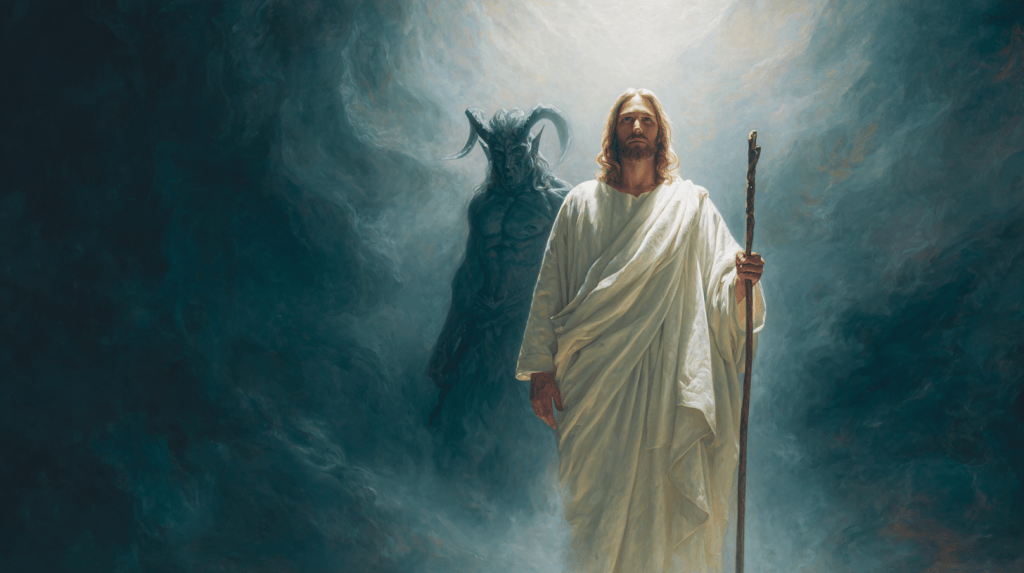
    Now that’s out of the way, I think there is a fun thought experiment/argument to be had that despite Jesus Christ having the title of “Firstborn”, Satan might be “older” than Jesus.

    Everything in this world symbolizes Jesus Christ. Everything points to Him (Moses 6:63, 2 Nephi 11:4). 

    There are some individuals from history that are clear types and shadows of Jesus Christ.

    Examples:

    1. Joseph of Egypt
      • Savior of his people and all of Egypt
    2. Moses
      • Liberator of Israel
    3. Nephi
      • Led his people to the Promised Land
    4. David
      • King of Israel
    5. Isaac
      • Inheritor of all that Abraham had and father of Israel (Jacob)
    6. Jacob (Israel)
      • Father of the covenant people of Earth
    7. Joseph Smith
      • Restorer of the Gospel on Earth (through Jesus Christ, of course)
    8. Peter
      • Leader of Christ’s church after Christ’s ascension
    9. Abel
      • In the likeness of his father, hearkened to the voice of the Lord
    10. Ephraim
      • Received the birthright, descendents are responsible for the gathering of Israel

    All of these men represent Jesus Christ in different but very clear and obvious ways. 

    What do all these men have in common? None of them are the oldest in their family. None of them are the firstborn.

    Interesting, right?

    “Well, but, the scriptures say Jesus Christ is the firstborn of God. Clear as day,” said a hypothetical someone arguing against my point.

    What if “firstborn” has meaning closer to heir, covenant son, preeminent one?

    Psalm 89:27 speaking of David, King of Israel, reads:

    “I will make him my firstborn, higher than the kings of the earth.”

    David was the youngest son in his family.

    In Genesis 22:2 God says to Abraham:

    “Take now thy son, thine only son Isaac, whom thou lovest…”  

    But Isaac wasn’t Abraham’s only son. He also had Ishmael. Maybe Isaac was his covenant son. 

    Jeremiah 31:9 reads:

    “For I am a father to Israel, and Ephraim is my firstborn.”

    None of Ephraim, David, or Isaac were the firstborn. Yet they were each described as such in varying ways.

    Now Jesus’s words about Himself:

    “I was in the beginning with the Father, and am the Firstborn” (D&C 93).

    This is a captivating feature of scripture. There is a repeated theme of an older brother rejecting His younger brother who receives stewardship over him. 

    Cain opposed Abel.

    Ishmael yielded to Isaac.

    Esau opposeed Jacob.

    Joseph of Egypt was rejected by his older brothers.

    David was initially overlooked by his older brothers.

    Are these older brothers representative of Satan, the way the younger brother is representative of Jesus?

    Sound familiar? (Satan’s Story and Satan’s Story Continued)

    Maybe all these examples are meant to teach us something. It’s hard to be an older brother and yield leadership to your younger brother. What if Satan had taken another route and humbly accepted Jesus Christ? What if he accepted Jesus Christ’s position as “firstborn of the Father”, the chosen one, God’s beloved? What if Cain didn’t oppose Abel? Where would Cain be now?

    Also, what if Joseph of Egypt’s brothers accepted his position of power over them from the beginning? Joseph wouldn’t have been able to complete his earthly mission of saving all of Egypt. Sometimes, maybe, we need opposition (2 Nephi 11).

    But what happens when older brothers do humbly yield to their younger brother? Joseph Smith’s older brothers were legendarily supportive of his calling as God’s prophet. Esau famously humbled himself and reconciled with Jacob. Moses’s older brother Aaron appears to have accepted Moses’s role as prophet most of the time. Amazing things happen when older brothers can humble themselves.

    What if Laman and Lemuel could have humbled themselves before Nephi? Think of the love, peace, and prosperity that could have existed among the Nephites in the Americas. But then we wouldn’t have had all the lessons the Book of Mormon teaches us about opposition.

    God’s plan is perfect.

    It’s fascinating to look at scripture from a broader perspective, look for patterns, and try to grasp all that God wants us to learn and understand.

    While I prefaced this post saying it could be somewhat silly of an exercise, I stand by it. I think it’s a good exercise to review the scriptures in out-of-the-box ways and try to see the patterns God may be trying to teach us.

    Wherever in the birth order Jesus Christ and Satan landed, we know they were “older.” We know that God chose Jesus Christ to be His Son, the Redeemer of the world, the Savior of mankind. We know God doesn’t make mistakes. I’m grateful for what the scriptures teach me about Jesus Christ and that they can constantly strengthen my testimony of Him and all that He did for me.
  • Repentance

    Repentance

    3 Nephi 11:32 reads: 

    “And this is my doctrine, and it is the doctrine which the Father hath given unto me; and I bear record of the Father, and the Father beareth record of me, and the Holy Ghost beareth record of the Father and me; and I bear record that the Father commandeth all men everywhere to repent and believe in me.” 

    3 Nephi 11:37-38 reads:

    “And again I say unto you, ye must repent, and become as a little child, and be baptized in my name, or ye can in nowise receive these things. 

    And again I say unto you, ye must repent, and be baptized in my name, and become as a little child, or ye can in nowise inherit the kingdom of God.” 

    These were some of the first recorded words Jesus Christ spoke to His other flock in the Americas (John 10:16).

    Hugh Nibley says, 

    “Who is righteous in the Book of Mormon? There’s a very simple definition of righteousness in the Book of Mormon, as in the book of Ezekiel. One is righteous because he is repentant, and a person who is not repenting is a person who is not righteous. That’s all there is to it, because we’re all wicked and we all need to repent all the time. “Say nothing but repentance to this generation” (D&C 6:9). The first word of the Lord to the Nephites was, “This is my doctrine…and I bear record that the Father commandeth all men, everywhere to repent…” (3 Nephi 11:32). You have to do that. And as Ezekiel tells us, if a person has been righteous all his life but he’s not repenting any more, he’s wicked (see Ezekiel 18:20-32). Of course, he may have been wicked all of his life, and if he’s repenting now, he’s righteous. It makes no difference. So, always repent, always keep repenting. “But behold, all nations, kindreds, tongues, and people shall dwell safely in the Holy One of Israel if it so be that they will repent” (1 Nephi 22:28).

    I’ve thought a lot about that Hugh Nibley quote since I read it. 

    Can it be that simple? Is it that black and white? 

    Good person = someone repenting 

    Bad person = someone not repenting 

    Does this mean deathbed confessions are adequate? Does this mean if you confess your sins and repent the day before you die that you are righteous? 

    Yes and no. 

    I believe Hugh Nibley’s point is powerful. Repentance=righteousness. Unrepentance=unrighteousness.  

    There’s another part of this equation. Repentance=change. 

    I think back on the eight years I was inactive from church. One of the most distinct aspects of that time period was not praying. I never prayed. Praying made me feel guilty. Since I was not praying, naturally I was also not repenting. At the time I couldn’t repent. Not only due to the fact that I wasn’t praying, but also because I wasn’t ready. I wasn’t going to stop doing the things I was doing. I couldn’t repent and then go continue to do what I was doing. I hope I’ve never taken for granted the Atonement of Jesus Christ. I know I do. But I try so hard not to. 

    As I’ve been back at church these last 10 years, I haven’t missed a day of repentance. I repent at least once and sometimes two or three or four times a day. My nightly prayers have a consistent feature, no matter what – asking for forgiveness for the mistakes I’ve made. I often try to think back through my day and think of the mistakes I made and the things I could have done better. 

    Repentance causes change. If I repented during the years of my inappropriate behavior, it would have been insincere, or it would have led to change. I wouldn’t have been trying to change. My repentance started when I was ready to change. That isn’t to say I should have waited as long as I did. But I do believe Heavenly Father has an unimaginable amount of patience with us. I think we’ll one day marvel at how much love and patience He possesses.  

    Repentance has a negative connotation. It shouldn’t. Repentance makes us better. As Ivy put it one day when I asked her, “Why do we want to be like Jesus?” 

    “Because He is nice.” Repentance makes us nicer. Repentance makes us better. It isn’t a negative thing at all.  

    Are there nice people that don’t “repent.” Of course. But repentance is bigger than that. It’s a humility. It’s recognizing our faults. It’s recognizing we have nothing without all that God has given us. It is a desire to change and be even better than we were the day before. 

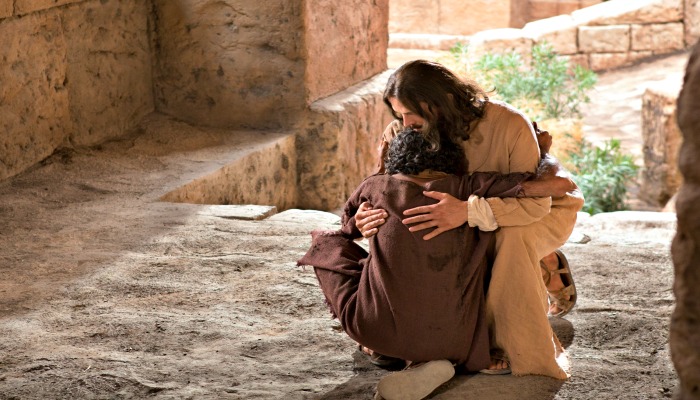
    So are deathbed confessions valid? That’s not for me to decide. I know repentance results in change. Ultimately God will decide. It’s not for us to judge. And that’s the most important point to make. When someone shows up to church for the first time, someone who has made a million mistakes and a million bad life choices; when that person shows up to church, you love them. You love and accept and forgive. Leave the rest for God to decide. A person coming to church and trying to change should be shown as much love as a church congregation can muster.

    The miracle of the Atonement is that it is eternal – backwards and forwards. Forever. Christ is always there waiting for us when we’re ready. When we’re ready to start repenting, then we are ready to start changing, and then we can start to be ready to go see Him again. Hopefully, through so much repentance, we can become like Him. That’s the ultimate goal.  

  • Abraham’s Faith

    Abraham’s Faith

    I had a thought (shocker).

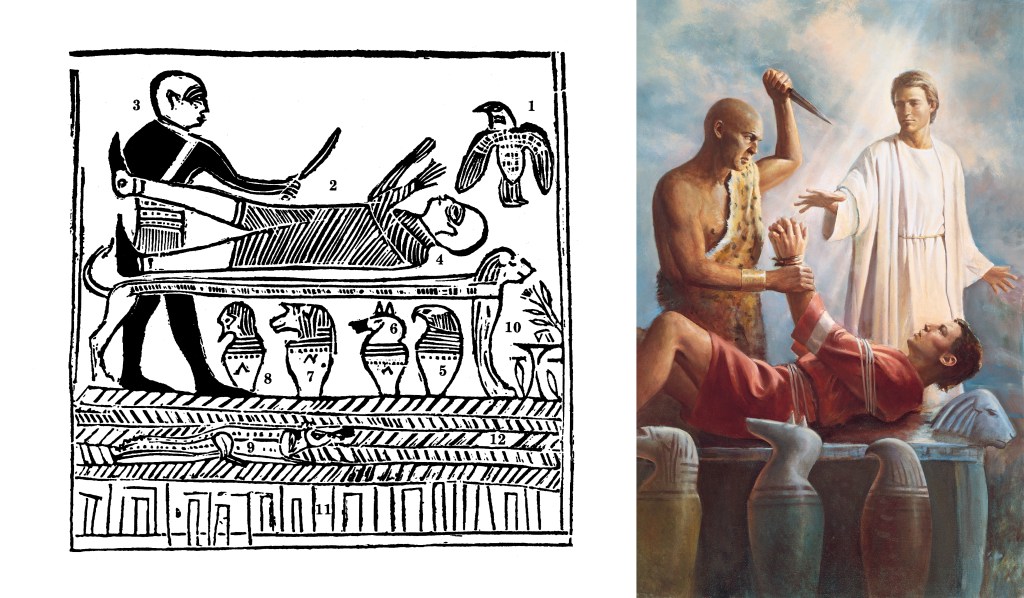
    I shared last week about Abraham’s shared experience of almost being sacrificed by his father.

    Here’s another way to look at it.

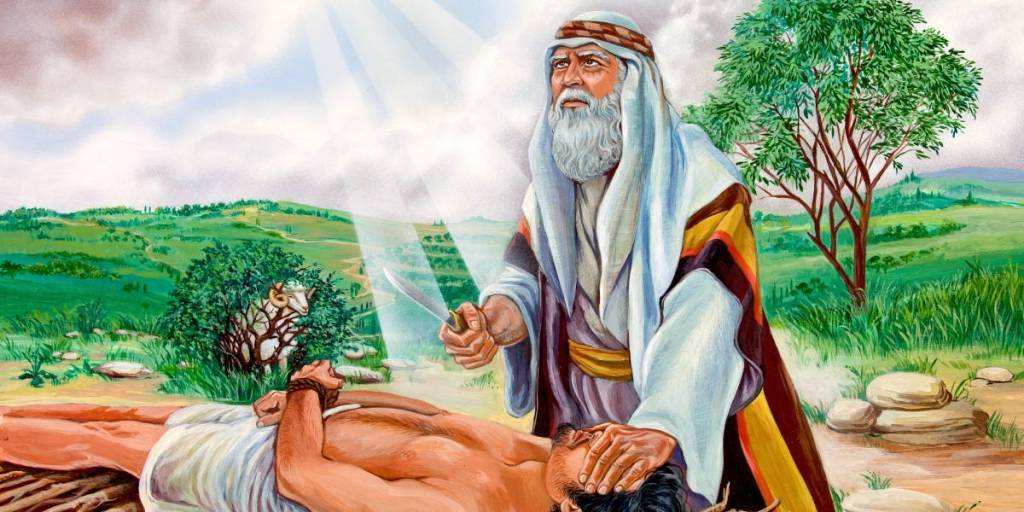
    We marvel at the faith of Abraham to sacrifice his son. He didn’t know that God would stop him moments before he went through with it. For all Abraham knew, his son would be dead, gone. And yet, he was still willing to do what God asked him to do.

    We marvel at this faith to do the impossible.

    What about God, when it came to sacrificing His only Son? Well, we would say, God knew the end. He knew His Son would conquer death and be resurrected. He knew His Son’s death would only be temporary. He’s God. He has nothing to worry about. Abraham was just a man. Abraham had no such knowledge.

    Or did he? 

    Faith is the “assurance of things hoped for, the evidence of things not seen” (Hebrews 11:1). Faith, by its nature, is to not have a perfect knowledge of things. Was Abraham’s faith so perfect that he did know, just like God knew with Jesus Christ, that everything would be ok?

    Abraham had a promise from God. God promised Abraham that his seed would be as numerous as the stars in the heavens and the sands of the sea. Abraham had some understanding of the eternities. It didn’t matter to him when the promises of God would be fulfilled. He trusted God. He had a perfect knowledge that God would keep his promises. 

    Now. The gut-wrenching, heart-tearing, indescribable and impossible act of losing your son. The pain. What about that? Abraham had faith that God would even make that right. Abraham had faith that God would only allow him to do what ultimately he needed to do to become who he could become. Abraham trusted God enough to do anything. Why? I think because he knew God loved him. Abraham didn’t have faith that God loved him, didn’t hope that God loved him, didn’t believe that God loved him. He knew. 

    Maybe faith proceeds knowledge.

    If we truly understand God’s love for us, His children, we can do anything, and endure anything.

    Abraham didn’t know the exact result of the sacrifice of his son. But he did know that God kept His promises. And hew knew that God loved him. And whatever the result, it would all work out for their benefit, glory, and growth in the long run. 

    That is faith.

  • Abraham’s Sacrifice

    Abraham’s Sacrifice

    “Yet Abraham himself came from a troubled family – his father, who had abandoned the true worship of God, tried to have Abraham sacrificed to false gods.”

    Come Follow Me Curriculum

    And you thought your parents were bad. They ever try to sacrifice you to false gods? 

    When I read that above quote, I thought about something I’d never connected in my mind before.  

    The story of Abraham almost sacrificing his son Isaac is a well-known biblical story of true faith. What I’d never connected with this, though, was the almost sacrifice of Abraham by his father many years prior. 

    There’s a lot to unravel there. 

    What occurred to me was this: Not only was this an unbearably difficult test Abraham was given; to sacrifice and kill his most precious, only son. It also, likely, spurred up painful memories of when Abraham’s father offered him as a sacrifice. (If all things are a type and a shadow of greater things, and Abraham represents God in sacrificing His only begotten son, what does this say about God?) 

    In that moment, with the added guilt and pain of losing his precious son, did Abraham also wonder about the damage he was causing his son? If by some miracle Isaac surived, how would he feel about almost being sacrificed? Abraham went through the same with his father.

    Another way to think about this – Abraham’s father is demonized for his part in almost sacrificing his son. Abraham is revered for his almost role in sacrificing his son. What is the difference? Well, the difference, I assume, is the intent, the heart, and the being to whom the sacrifice was being offered. 

    But how, in that moment, did Abraham have such faith, such trust, such knowledge, such understanding to know he was doing the right thing and sacrificing his son to the right God? Didn’t his father believe the same thing once upon a time? 

    This is one of those blog posts where I don’t have answers to my own questions. This is something I will have to ponder upon, research, and think more about.   

    If anyone has comments or can enlighten me, please do. 

  • What is Hell?

    What is Hell?

    Studies have shown that humans will prefer pain over boredom. We as humans need stimulation. When left in a room with the options being complete boredom or a painful electric shock, many will choose the electric shock just to feel something.

    You can watch this YouTube video for an interesting study on this:

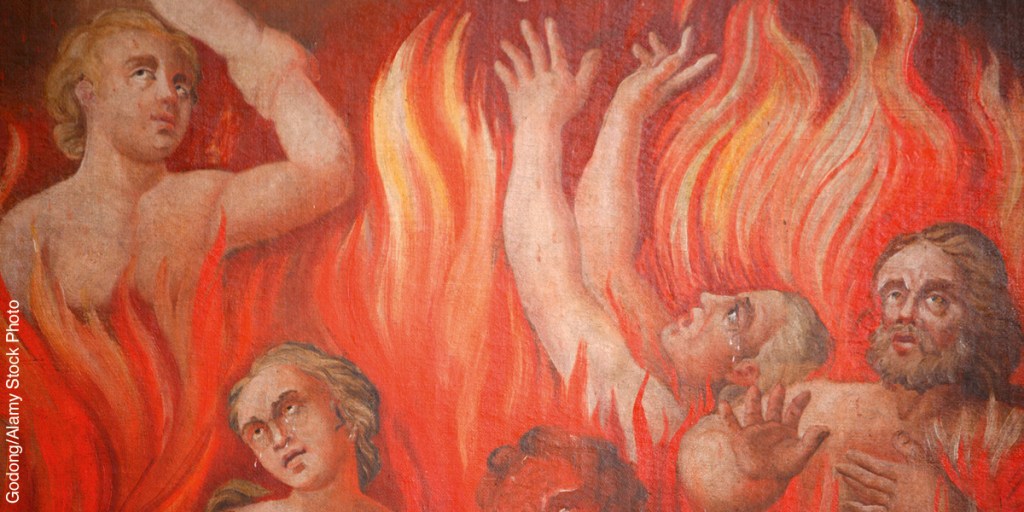
    There is this idea that perpetuates throughout Christianity that hell is fire and pain. I don’t think that’s actually the case. I think hell is boredom, stagnation, lack of growth, lack of purpose, selfishness to the point of looking only at oneself. I think hell is being stuck.

    Mark 9:43-44 reads:

    43 And if thy hand offend thee, cut it off: it is better for thee to enter into life maimed, than having two hands to go into hell, into the fire that never shall be quenched: 

    44 Where their worm dieth not, and the fire is not quenched.

    Doctrine and Covenants 76:43-44 reads:

    43 Who glorifies the Father, and saves all the works of his hands, except those sons of perdition who deny the Son after the Father has revealed him. 

    44 Wherefore, he saves all except them-they shall go away into everlasting punishment, which is endless punishment, which is eternal punishment, to reign with the devil and his angels in eternity, where their worm dieth not, and the fire is not quenched, which is their torment-

    The word translated “hell” in Mark 9:43 is the Greek word Gehenna. Gehenna was a garbage dump in ancient Jerusalem.

    “Gehenna was located on the south end of Jerusalem and had been a site for pagan child sacrifices during Old Testament times (2 Kings 23:10). During Jesus’ lifetime, Gehenna had a constant fire burning to dispose of the waste that was left there—from regular household trash to the carcasses of animals and convicted criminals (Jeremiah 7:31–33). Because of this, the Jews considered Gehenna to be a cursed place full of filth.” (See this link for more information).

    This is where we get the reference in Mark 9:44 “fire is not quenched.” Gehenna or hell was literally a place where fire never stopped, and I believe this is where the popular idea of hell being a place of fire comes from. I think the more critical point in those verses is the phrase, “Where their worm dieth not.” This is not referring to a literal worm, as I don’t believe the endless fire represent literal fire in hell. I believe the fire represents never ending torment.

    But what is this torment? Is it physical pain? Worse.

    As I mentioned earlier for that study, people would prefer any sensation to that of no sensation. I think the endless torment is being stuck for eternity.

    I read a book that once described what hell might be like. It considered hell to be like being a worm deep within mud. The worm squirms around, with no purpose or meaning. The worm can’t see, it can’t feel, it can’t think. It’s getting nowhere. It endlessly squirms in the mud.

    I believe the worm that dieth not is our eternal soul. What could be worse than an eternity of… nothing? What could be worse than being the equivalent of a worm squirming within mud, forever?

    Just the thought should terrify you.

    God has provided us a plan of growth and progression. He has provided us a way to become like Him. Those who reject Him will be stuck, forever. There will be no progressing for them. Their “worm dieth not.”

    I am grateful to God for all that He has given me and all that He has afforded me. I know that because He loves me He has allowed me to grow and progress in eternity. Not to be stuck and stagnant. Growth. I am grateful for that gift He has provided me.