Tag: support

  • Is Roseto, Pennsylvania Zion?

    Is Roseto, Pennsylvania Zion?

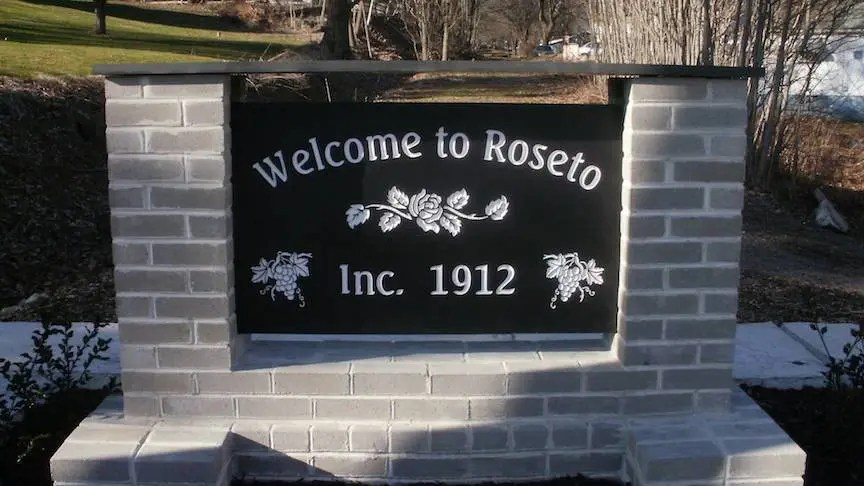
    There was an extraordinary thing happening in Roseto, Pennsylvania in the 1950s. I read about it in an awesome book called Outliers by Malcom Gladwell.

    Roseto, Pennsylvania was an outlier when it came to heart disease. For some reason, instances of heart attacks and heart trouble in Roseto were shockingly different than anywhere else.

    In the 1950s, heart attacks were the leading cause of death in men under the age of 65 (Outliers, p. 6).

    In Roseto, nobody under 55 had heart attacks. Roseto had half as many people with heart trouble over 65 compared to any other area studied. This included next-door cities and towns.

    What’s fascinating about this is that this phenomenon apparently had nothing to do with genetics, diet, or any other seemingly obvious reason. There was no obvoius indicator of why a whole community would be free of heart trouble.

    Heart trouble wasn’t the only thing missing from this community. A sociologist was brought in to study the community. His name was John Bruhn and he said, “There was no suicide, no alcoholism, no drug addiction, and very little crime. They didn’t have anyone on welfare. Then we looked at peptic ulcers. They didn’t have any of those either. These people were dying of old age. That’s it” (Outliers, p. 7).

    What made Roseto unique, then?

    Finding no pattern, those doing the study had to look at anything different about Roseto to try to explain this phenomenon.

    This led to a primary theory. That primary theory behind why Roseto, Pennsylvania residents didn’t suffer heart trouble or many other common diseases had to do with their community.

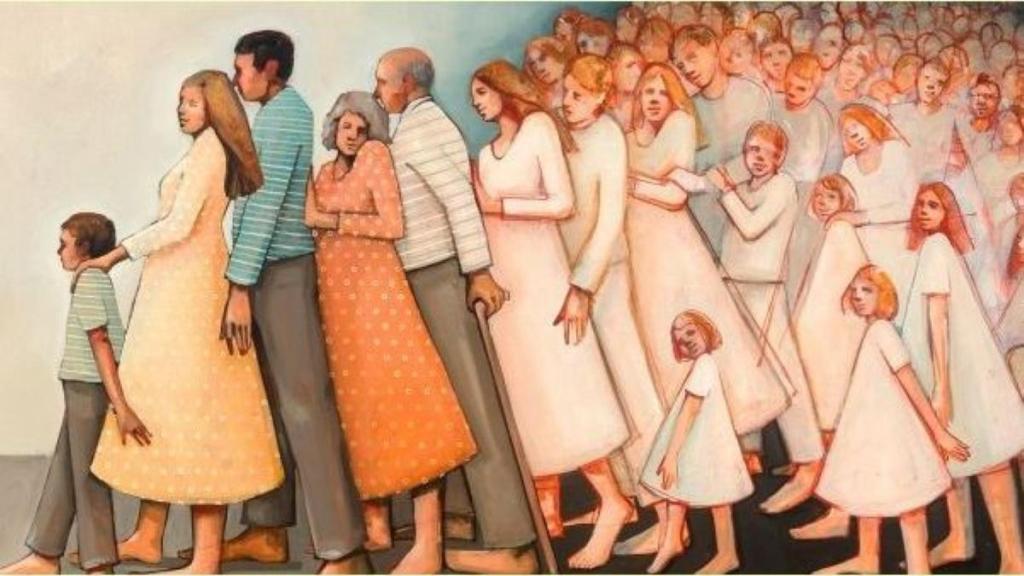
    Roseto had an old-fashioned way about it in the 1950s, even compared to the standards of its day. The residents of Roseto were primarily Italian-American immigrants. The standard in Roseto was to live at home as long as possible, take care of one another, and generally live a more laid-back and communal way of life. A young man would stay at home and take care of family. If he lost a job, it was okay. The community would often try to keep shortcomings like a lost job secret so as not to create any embarrassment. Kids would take care of parents. Parents would take care of kids. The community took care of each other. It was a family-focused, close-knit community.

    “(Researchers) learned about the extended family clans that underlay the town’s social structure. They saw how many homes had three generations living under one roof, and how much respect grandparents commanded. They went to mass at Our Lady of Mount Carmel and saw the unifying and calming effect of the church. They counted twenty-two separate civic organizations in a town of just under two thousand people. They picked up on the egalitarian ethos of the community, which discouraged the wealthy from flaunting their success and helped the unsuccessful obscure their failures” (Outliers p. 9, emphasis added).

    The fact that Roseto residents had such low instances of heart trouble revealed a potential connection between community relationships and social support to reduced stress and heart disease. The community of Roseto appeared to buffer its inhabitants from the stresses of life.

    This got me to thinking.

    What is Zion? What is the perfect society? What will it look like? What will it be like, practically speaking?

    “…the Rosetans had created a powerful, protective social structure…” (Outliers p. 9).

    Will Zion be a community that goes to church together? A community that stops to talk to each other? A community that continues to live under one roof with their direct family as long as possible? A community where equality reigns? A community where spontaneous cookouts in front yards are common?

    This sounds like Zion to me.

    It’s fascinating that a community basically shielded itself from the stresses of a fallen world by living by these principles. I believe these are God-given principles: fairness, love, community, support, unity – that’s what makes Zion.

    “When presenting (the researchers’) findings at many medical conferences where their peers were presenting long rows of data arrayed in complex charts and referring to this kind of gene or that kind of physiological process, and they themselves were talking instead about the mysterious and magical benefits of people stopping to talk to one another on the street and of having three generations under one roof….No one was used to thinking about health in terms of community” (Outliers p. 10).

    This Christmas season, as I’m inevitably considering the state of our world and where we’re headed, I can’t help but wonder: is it this simple?

    Community, family, support. People supporting people, people uplifting one another, communities looking out for each other. Neighbors waving hi. People engaging with those in their community. Ministering. Fellowship. Is it that simple? Would that fix our world?

    I think it would. I think this is primarily what is missing from our modern-day societies. Love thy neighbor. How about say hi to thy neighbor?

    This holiday season, aim to light the world. Start by dropping off cookies at a neighbor’s house. It might save you from a heart attack.
  • Ministering of Angels

    Ministering of Angels

    I read something from Hugh Nibley recently that stood out to me. It was very simple, but it jumped out at me. I think there is a profound truth about our existence in the vast universe behind this simple realization.

    What I was reading was a lecture from Nibley’s Book of Mormon class in the 1990s.

    Hugh Nibley asked a question:

    What is it that angels do when they minister to an individual?

    His answer – “It’s quite simple. They talk to them.”

    When Christ was on the mount of transfiguration with Peter and John and He was ministered to by angels, what did they do with Christ at that time? They spoke to Him.

    When Nephi was taken up in vision atop a mountain and spent time with an angel, what did the angel do? Talk to him.

    When Daniel was in the Lions’ Den, the angel shut up the mouths of the lions, but what else did he likely do? Do you imagine the angel and Daniel just sat there looking at each other? I think not. I think it likely the angel was talking with Daniel while they were in the den together.

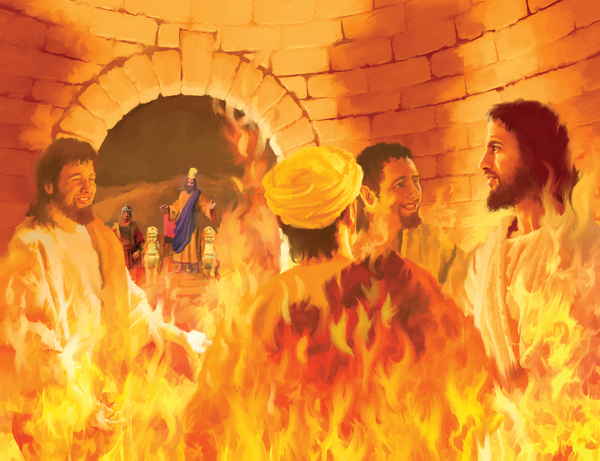
    Same goes with Shadrach, Meshach , and Abednego who were thrown in the fiery furnace. Do you imagine the angel was standing and staring at them? I don’t.

    What is the significance of this?

    What is the ministering of angels? The ministering of angels is quite often angels simply conversing with mortals.

    What is the point?

    Angels come from another realm to visit mortals, and what do they do? Talk.

    Yet we’re surrounded by mortals all day every day. How often do we really talk?

    The Church of Jesus Christ of Latter-day Saints has a ministering program. I think this program gets overcomplicated. All the program really asks is for us to talk to each other. Angels come from other dimensions to do it. We can pull out a phone and have someone on the other end of a line in seconds. We can be angels every day. All it takes is talking to people.

    I think this a profound thing to consider. All it takes for you to be someone’s ministering angel is to reach out and talk to them. This can be the difference in someone’s life.

  • Worldwide Family

    Worldwide Family

    *This was written in 2022, thus the mention to only Ivy.

    Beth and I are blessed in our lives to have the maximum amount of support from both of our families. If we ever needed support or help in any way, we would have help from all sides. 

    Not everybody has that.

    Some have moved away from their support systems. Some don’t have support systems.

    Recently we had a rough day in our household. I was in the office so Beth was on her own with Ivy. Ivy had been slightly under the weather and Beth was not feeling well at all. I knew it was bad when Beth did something she has never done and hasn’t done since: asked me to skip practice with my basketball team and come home.

    Right at that time I was responding to a thoughtful text from someone at church. She had complimented me on a talk I had recently given at church. This person from church had noticed Beth wasn’t at church the prior week. She asked if Beth was doing ok. I mentioned that Beth was under the weather. This kind woman from church asked, as she always does, if there was anything she could do to help. Bring dinner over maybe? 

    Normally I would have said we’re ok, and thank you. But I had just received this code red from Beth and knew she was struggling. I told this saint from church that a meal would help a lot.

    A couple hours later – chicken, green beans, potato salad, rolls, mac n cheese, and ice cream sandwiches were dropped off at our doorstep.

    We are fast approaching the time where I could be ANYWHERE in the world, and a faithful servant of Jesus Christ would be there to support me. I realized what a comfort it is to know I can go anywhere and feel instant brotherhood, love, and support from members of the Church of Jesus Christ of Latter-day Saints.

    I am beyond grateful for my family. I am also beyond grateful for my church family. I know that it is the light of Christ that makes someone who is busy in her own life to drop everything and bring dinner to another family. I know that the Church of Jesus Christ of Latter-day Saints is a community of loving support and will soon cover the whole globe. 

    I hope we never forget part of why the Church of Jesus Christ exists. It exists to bring food to those in need. It exists to provide a platform for us to stand with those in need of comfort, mourn with those who mourn, succor those in need of succor (Mosiah 18:9).

  • Ivy Goes Ministering

    Ivy Goes Ministering

    For those who don’t know, the Church of Jesus Christ of Latter-day Saints has an initiative we call “ministering.” The name has changed over the years, but it’s always been essentially the same thing. The concept is simple. Minister to one another, teach one another, visit with one other, check in on one another. Christ’s church should be a family and the ministering program is the way that the Church tries to keep its members connected, like a family should be connected.

    Ivy recently went with me on a ministering visit. This wasn’t Ivy’s first rodeo. She’s done her fair share of ministering in her years on this earth. What was interesting about this ministering visit was what happened after.

    One Saturday Ivy and I joined the missionaries meeting with a new friend of the church. He was on his way towards baptism. This was my first time meeting him. This person went on to get baptized and has since become a very good friend. So this was a significant visit with the missionaries.

    Afterward, Ivy and I dropped by a family’s home to say hi. I had never met this family. They didn’t know who I was. This was a true “cold” drop-in. They had two young boys under the age of ten and a brand-new baby girl.

    I knocked at the door and heard the normal shuffle going on behind it. The door was opened by two shirtless boys.

    “Hi, my name is Brayden, is your mom or dad home?”

    The younger one ran off yelling, “Dad!”

    The father came to the door, and I introduced myself. I then introduced Ivy to the two boys. We small-talked for a couple minutes, invited them to church, and that was it.

    On the way back to the car Ivy was, as is normal, full of questions.

    Why did we visit them?

    • Because they’re in our church and we want to check on them.

    That home was their church?

    • No, that was their home. But they go to our church, and we just invited them.

    When will they come to our church?

    • Hopefully tomorrow.

    On and on. Anyone who has been around a toddler knows what I’m talking about.

    The next day we went to church and Ivy was very disappointed when her new friends weren’t there.

    After church, we were preparing for our Sunday afternoon nap. As consistent as Ivy’s numerous questions is her desire to avoid a nap. She was giving us her normal fight before lying down.

    I finally said, “Ivy, you’ve been so good today, if you go take a good nap, when you wake up, we can do whatever you want.”

    I immediately worried about this open-ended promise I had given. What would she request? Surely her most common requests: a trip to Six Flags or Las Vegas.

    Ivy shocked me with her reply. After her nap, the thing she wanted to do more than anything – go see her new friends.

    I’ve thought a lot about this.

    What was it about that visit that made Ivy’s day?

    You know what I think. I think her little, pure spirit realized she just got to do something special. And she wanted to do it again.

    She wanted more than anything in the world, whether she fully realized it or not – more than a trip to Las Vegas to see family or a fun-filled trip to Six Flags – more than either of those things, she wanted to go ministering. Ivy’s spirit knew the importance of ministering.

    Sometimes I wish we adults could remember the purity of that desire – to minister to one another, teach one another, visit with one another, check in on one another, love one another.

    I saw in Ivy what we all seem to forget. Supporting those around us – ministering – is more important than anything. Even a trip to Six Flags.

  • Goals

    Goals

    I never used to set goals. I’m not exactly sure why. Could have been partly due to the thinking: if you don’t set goals you don’t fail.

    Throughout life, despite not actively setting goals, I think I’ve always had goals, even if those goals are subconscious. I think we all have goals.

    It’s interesting to look back on my life and see how my goals have changed.

    High school – graduate

    College – have as much fun as possible and meet as many people as possible

    After college – have a job to provide for myself

    Over time my goals changed in drastic ways. I went from wanting to have fun to thinking about a family. At some point, I went from only thinking about myself to thinking about others. 

    I’ve never been one to put a whole bunch of stock in goal setting. I always heard the logic: “You can’t accomplish it until you write it down.” I can see how that makes sense, but I just never subscribed to it. That includes New Year’s Resolutions. What’s the point of a whole population of people setting goals due to an arbitrary date? A goal they will stop putting any effort toward after week 3. 

    My Dropbox account has a whole lot of random and miscellaneous items in it. Random word documents, thoughts, quotes, letters, theories, links, notes, etc. When I had been back at church a couple years, I stumbled across something interesting, something I had almost no recollection of writing. I’ll post some of it here. It was a Word document called “2016 Goals.”

    Here is what I wrote in 2016. Through context clues, I can determine it was written either very early in 2016 or even *gasp as New Year’s Resolutions.

    Life

    • Stop swearing
      • Every time I swear out loud, take note of it. At the end of the year, donate $1 for every swear word I said through 2016.
    • Drink less
      • Try to limit drinking to twice per month.
    • Go back to church
      • In January go at least once.
      • February-December go to church at least 2 times per month. If I go less than 2 times in any given month, make up for it in a future month.
    • Go out of my way to do one nice thing for someone else at least once per week.
    • Buy a property.

    High aspirations, right? Try to limit drinking to twice per month, wow… aim for the stars.

    Other than the “Life” category I also had poker, work, and exercise. For the purpose of this post, I’ll focus on the above – Life.

    First of all, I immediately didn’t keep pretty much any of these goals. I never donated $1 for every swear word, though I do remember trying to keep track of my swearing. Drink less – out the window almost instantly. I don’t think I went to church at all January or February, so that’s pretty funny. 

    But here’s the extraordinary part. The year 2016 was the year I accomplished EVERY SINGLE ONE of those goals, with only buying a property bleeding into 2017.

    I stopped swearing in 2016, completely.

    I stopped drinking in 2016, completely.

    I started thinking about others. I don’t know if I did a nice thing for someone every week, but I know I tried.

    I bought my condo in 2017.

    In my opinion, without a doubt, the most important one and the one that enabled me to accomplish all the other goals I set – March 2016 was the month I started going back to church. I laugh at the fact I didn’t go in January or February, but is there any chance I would have gone in March if not for writing down these goals? Probably not.

    Remember, I don’t even remember writing these down. I know that seems strange, but I don’t. That’s how little thought I put into it. Within 2 months I’d completely forgotten about these goals. But, I think, something inside of me didn’t forget about these goals. Call it my subconscious, I’ll call it my soul, somehow, some way, writing these down gave me the power and strength to do things I thought impossible. Note again the goals, swear LESS, drink LESS. I went back to church and that became I don’t want to swear, I don’t want to drink.

    I’d be remiss if I gave all credit to myself for writing these goals down and accomplishing them. These goals that were written down and forgotten, my soul remembered them. I also think they were written and acknowledged somewhere much more important. I believe someone took note of my goals and sent help. That’s the only logical conclusion after all these forgotten goals somehow fell into place in the year 2016.

    After all this, I still don’t set concrete goals. Shame on me after the evidence I’ve seen. When I stumbled upon that “2016 Goals” Word document, I became a believer. Writing down goals is powerful. God sees our goals. Maybe our subconscious kicks in. Maybe good goals cause your spirit to cry out with joy that you’ve set some standards for yourself to try to accomplish.

    What I do know, is that goals are powerful. Writing them down is powerful. I should really try to be better at setting and WRITING DOWN concrete, solid goals. I’ve seen extraordinary things come from that. I think we all can accomplish extraordinary things when we set ourselves on a path.

    I have to conclude by thanking them. God. How could that all have happened without His support? My goals were so lame, and yet He made them something. Jesus Christ. How could I accomplish anything without Him forgiving me for all my wasted time, bad actions, and mistakes? I could only move forward by Him letting me look past my past. The Holy Ghost. There were countless difficult situations, countless times I ALMOST gave in and started drinking again, countless times, countless times. I know he was always there begging me to listen to him. Finally, the countless angels God undoubtedly sent, seen and unseen, to lift me up, help me along, protect, and encourage me. I owe it all to them. I am grateful.