Tag: Trinity

  • My Ignorance and Further Light and Knowledge

    My Ignorance and Further Light and Knowledge

    I have an embarrassing story I’m going to share. I’m not that embarrassed by it or else I wouldn’t share. Though, part of the reason I’m not embarrassed by it is probably due to how I’ve progressed from the ignorance I had at that point.

    Early on when I was coming back to church I started meeting with the missionaries and an individual who was curious about the church. One day after months of meeting together and discussing the Book of Mormon, he sat us down for a serious chat. The friend that had been meeting with us for months informed us that it wasn’t true. That’s a story for another day.

    There was a moment that has stuck with me that I haven’t forgotten. This friend, and he is a friend to this day, talked about the unity of the Christian faith. He talked about how LDS doctrine was way off, and most of Christianity, outside of us, agreed on the most important things.

    I wholeheartedly disagreed with this and still do. I see little unity in Christianity. See my post two weeks ago, A Kingdom Divided.

    This is the embarrassing part. At that time, I believed that Godhead vs. Trinity beliefs were roughly split 50/50 in Christianity. I thought for every Trinity leaning Christian sect there was a Godhead leaning sect. This was pure ignorance on my part. I had no idea that there were basically only two sects of Christianity that believed in the Godhead, and the rest followed the Trinitarian belief.

    To illustrate the divided nature of Christianity, I used the worst example. Based out of my ignorance, I stated that the issue of the Godhead vs. the Trinity was a perfect example of an important disagreement between Christianity. This friend who was essentially a Bible scholar looked at me like I was growing a second head. It was like he suddenly realized I had no idea what I was talking about and I lost all credibility.

    He said, “You know the LDS church is one of the only Christian churches that believes in the Godhead right?”

    I really didn’t. Now I did. Of course, it’s actually not that straight forward. While the belief that Heavenly Father, Jesus Christ, and the Holy Spirit are three separate and distinct beings is a minority belief, there are still many, many sects that believe in the Godhead.

    There was something important I learned from this experience, though. I’ll never know enough. There will always be things I don’t know. There will always be things I’m ignorant of. There will always be someone smarter than me. There will always be someone who understands history and the Bible and Christianity better than me.

    That said, if that “smarter,” “more learned,” or “Biblical scholar” doesn’t have the additional light and knowledge of the restored Gospel of Jesus Christ, whether they realize it or not, I will always have more than them. Even if I might not be what the world would call more learned on the subject, I’ve been introduced to truth and light from Heaven. Those that are biblical scholars are studying a dead text. The Bible is important, and wonderful, and a guider, but it is dead. It is no longer living. The Church of Jesus Christ of Latter-day Saints, Christ’s restored church , is a living church. Further revelation and knowledge will always beat studying an ancient and sometimes misunderstood text.

    I have confidence in what I know. But I am not cocky in my understanding. I know there is so much I don’t know. I know I can’t Bible bash with the best of them.

    What I can do, and I hope I do, is rely on the Holy Spirit, the living spirit of revelation, to help me to teach others the truth I know. I may not know everything, but the Holy Spirit does. As long as I have Him with me, and preach and teach with His guidance, I can be confident. I can be confident not in what I know, but in what the Spirit knows and what He can reveal to me.

    I’m grateful for that embarrassing moment. It taught me to never be cocky. It taught me who I need to rely on.

    Ultimately, you can battle over interpretations of Bible verses until you’re blue in the face. The truth is, Christianity is the thing that Christ preached against more than anything – separated, disjointed, contentious. Christianity doesn’t agree because Christianity no longer relies on the Holy Spirit for revelation and truth.

    This led to mass confusion and misunderstanding in Christianity. The things “Christianity” are often the most consistent on (like the Trinity) were decisions made by men who had rejected God and His guidance.

    We need God to reveal truth to us. If we push Him out, He’ll let us fumble about. We’ve seen Christianity fumble about since it rejected Christ’s apostles and started to have their debates and creeds.

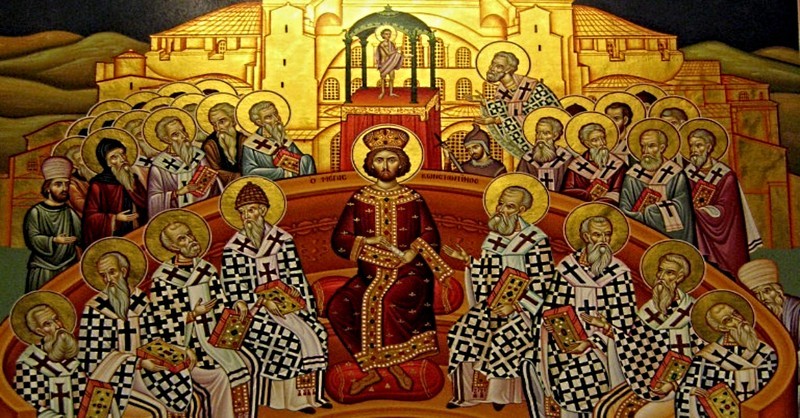
    The more I study the Nicene Creed and how the Trinitarian belief came about, the more confused I get. It’s something I hope to write about. But honestly, not sure I ever will because it’s such an ambiguous and ridiculous process that led to this “unanimous” belief.

    We need answers from heaven or we are lost. Christ’s church isn’t dead. It is living. Without that living church, we are lost.
  • How did the Trinity come to be? – The Nicene Creed Post 1

    How did the Trinity come to be? – The Nicene Creed Post 1

    Most of my blog posts are personal experiences with little research. They’re mostly just stream-of-thought writing. That’s what I prefer.

    Every once in a while, I want to write about a topic I know nothing about, which results in some (or a lot) of research. My Adam-God Theory post is one that comes to mind.

    I’ve long wanted to write a post about how the Trinity came to be. To prove this, years ago I gave my thoughts on the Trinity in this post.

    And wrote about how I know the Godhead to be true in this post.

    This has been a topic pretty consistently on my mind for a long time.

    Quick definition so we can all follow along (because this isn’t going to be an advanced or complicated post), the Trinity refers to the belief that God the Father, Jesus Christ, and the Holy Ghost are all one being. Most of Christianity believes in the Trinity. The Church of Jesus Christ of Latter-day Saints, through the experience of the prophet Joseph Smith, believe in the Godhead. The Godhead is the belief that God the Father, Jesus Christ, and the Holy Ghost are three distinct beings who are one in purpose (John 17:21-23).

    I’ve long wanted to learn more about how the Trinitarian belief came to be. I know it developed from the Nicene Creed. But if this is a falsehood perpetuated throughout history, how did it become so dominant? I’ve wanted to understand this history better. Part of the motivation to understand this better comes from the dominance of the Trinitarian viewpoint. When I’m trying to relate to other Christians, the Trinity vs Godhead question really becomes an issue.

    To know God you must know who He is. When I talk to a Christian, we both believe in Jesus Christ, but who is Jesus Christ? It’s OK to say we both believe in God and go from there, but sometimes not understanding who God is keeps me and other Christians from really being able to progress and learn from each other.

    Personally, I believe this is why this misunderstanding has been so perpetuated throughout history. Satan is cunning. He knows if we don’t know who our Father is, it becomes so much harder to worship Him.

    Is that an unfair statement for me to make? I can hear all the Catholics and Protestants and Lutherans and Baptists in an uproar when I state that a core belief of theirs has been perpetuated by Satan to confuse them. I understand that this is inflammatory. When I’m told by those same groups of people that my belief that God the Father and Jesus Christ are separate and distinct beings is a lie that Satan has deceived me with, it hurts. So I get it.

    This is why I want to understand where the belief in the Trinity comes from.

    When I read the Bible, it’s so abundantly clear to me. It doesn’t make any sense to me that people can read the Bible and conclude that Heavenly Father and Jesus Christ are one person. And yet, I’m in the minority, so clearly, there’s more to it.

    We all have our biases. I have always known Heavenly Father and Jesus Christ to be separate individuals. I have always known Christ to be my advocate with the Father. I have always known Heavenly Father to be my literal Heavenly Father. Seeing it any other way is hard. I get that others have always seen them as the same being. Others have read the scriptures with them being the same entity in mind. I get it.

    Which leads me to my point.

    As I studied this more, trying to understand it, the more confused I got. How this came to be is so confusing. I wanted to write a post simply explaining the history of the Nicene Creed and how the Trinitarian belief came to be and I’m realizing giving a “simple” explanation is going to take a lot more reading to understand.

    Some things stood out as I’ve studied this topic. I have a 62,000+ word document of research, quotes, and other information from my study of this topic.

    What stands out are the words I come across when reading how the Trinitarian belief came into existence.

    “Argument” – 13 times in my notes.

    “Debate” – 7 times in my notes.

    “Power” – 18 times in my notes.

    These are the words I kept coming across as I studied this topic.

    One word stands out that I haven’t come across thus far in all my reading. That word is “revelation.” In all that I’ve read it’s always “debate” and “power” and “trial” and “gain” and “politics.” No revelation

    I would love for a biblical and historical scholar to give me a crash course on the history of the creeds. For now, I continue to read, and study, and try to understand why the Christian world trusts a gospel principle that was handed down by power and politics, with little reference to the God they were trying to understand.

    I conclude this post without a conclusion because I don’t yet have one. It will be the first of many posts about the Nicene Creed and the Trinitarian belief.

  • Godhead – My Understanding

    Godhead – My Understanding

    Two posts ago I discussed the doctrine of the Trinity and my opposition to it.

    This will be a much gentler post, detailing how I personally come to the belief and understanding of the Godhead as true doctrine. 

    First, an explanation I didn’t give last time. Definitions:

    1. Trinity or Trinitarian belief:  God is one God, but three coeternal and consubstantial persons; the Father, the Son, and the Holy Spirit.  The three persons are distinct, yet are one “substance, essence or nature” (homoousios).  In this context, a “nature” is what one is, whereas a “person is who one is. (From https://en.wikipedia.org/wiki/Trinity).  (Also, huh?).
    2. Godhead: God the Father, Jesus Christ, and the Holy Ghost form a group known as the Godhead.  Each member is a different, individual being, yet all three are united in thought, desire, knowledge, power, and purpose. (From https://www.churchofjesuschrist.org/media/video/2019-08-0080-godhead?lang=eng). (Also, visit that link to watch a 7-minute video to learn more).

    How can I say “I know” the Godhead to be true?

    The Godhead is one of the unique beliefs of the Church of Jesus Christ of Latter-day Saints. 

    A majority of Christianity believes in the Trinity.

    In this post, I won’t go into detail on the doctrine, differences, importance, history, etc. of the distinctions between Trinitarian and Godhead belief.  That I’ll likely save for another day.  In this post I simply want to explain how I have come to know for myself that the Godhead is true and correct doctrine.

    The short answer to how I can know the Godhead to be true is:

    Through study, prayer, and upbringing.

    My understanding of this principle and the knowledge I have of it can be broken down very simply.  It’s a similar breakdown that explains much of my testimony in the restored gospel.

    In reading the Book of Mormon, I know without a shadow of a doubt that it is the word of God.  I know that it was translated through the power of God.

    If the Book of Mormon is true, then Joseph Smith is a prophet. 

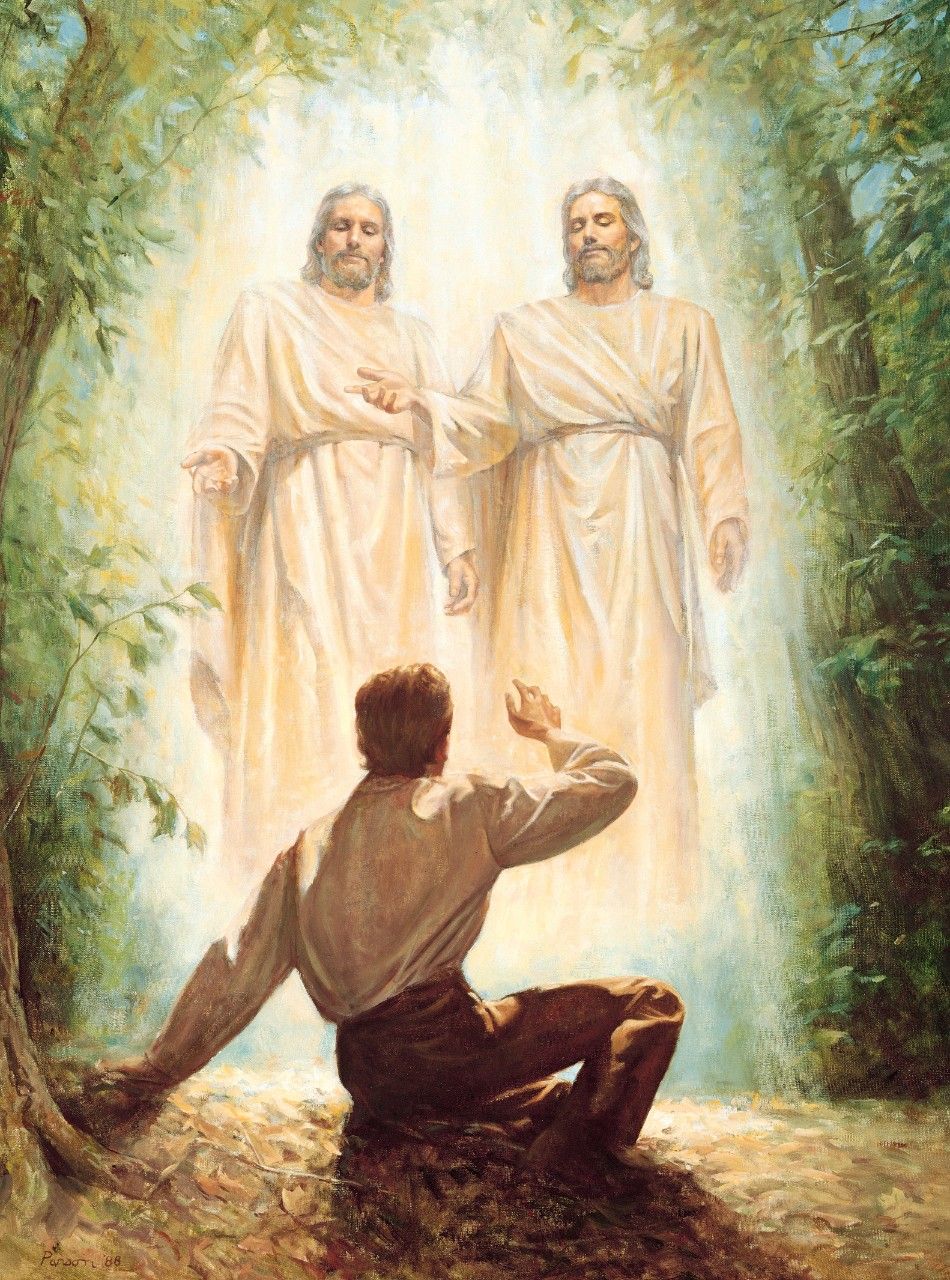
    Joseph Smith told us he saw God the Father, and Jesus Christ on His right hand.

    Joseph Smith History 1:17:

    It no sooner appeared than I found myself delivered from the enemy which held me bound. When the light rested upon me I saw two Personages, whose brightness and glory defy all description, standing above me in the air. One of them spake unto me, calling me by name and said, pointing to the other-This is My Beloved Son, Hear Him!

    Joseph Smith never wavered on this fact. 

    This could be where it ends, but I’ll add some notes on upbringing and study.

    Upbringing – obviously, I must mention that my upbringing played a role in my believing this to be true.  I was raised to believe in the Godhead; therefore, it is much easier for me to accept as truth.  That said, it was up to me to ask questions, read the book for myself, study Joseph Smith’s history and understand the principle for me to come to the knowledge.  Because I was raised to believe it to be true didn’t make it true.  Which leads to the next point.

    Study – As I said, through study and research I have determined the Book of Mormon to be the word of God.  It is an inspired book. 

    Prayer – My testimony of the Book of Mormon, mentioned in study, not only comes from logical, mind-centered study, but from personal revelation.  I’ve felt the Book of Mormon is true.  I’ve prayed to know the Book of Mormon is true.  I’ve received my answer, through prayer, that the Book of Mormon is true.  Prayer is an irreplaceable ingredient. 

    The principle of the Godhead has been distorted, attacked, and misunderstood for centuries.  One of the first attacks Satan always makes is on the nature of God.  If Satan can confuse us on who God is, he can confuse us on who we are.  We are children of the Almighty God. 

    I am grateful for modern revelation and prophets that make simple and powerful truths known.  I am grateful to know that while God is magnificent and powerful, He is not un-knowable.  The understanding of God as my Heavenly Father and Jesus Christ as my brother, who gave His life for me, strengthens my faith and helps me put my trust in them.

    This truth is eternal, and this truth is important.