Tag: understanding

  • Prodigal Son

    Prodigal Son

    The story of the Prodigal Son is well known.  For those who have not read it before or haven’t read it recently it can be found in Luke 15:11-32.

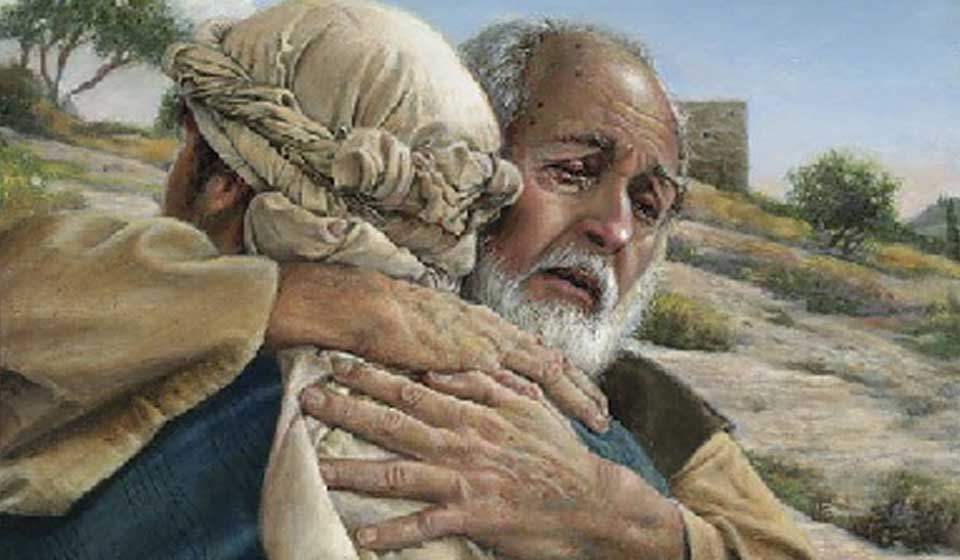
    The story of the Prodigal Son has always hit close to home for me.  Obviously, it’s easy for me to relate to the younger son.  You should read Luke chapter 15 above but a quick summary: there were two sons.  They will be referred to as the elder/older son and the younger son as I write.  The two sons were given their inheritances.  The younger son left his home and went to a faraway city.  There he squandered his inheritance on “riotous living.”  When he hit the lowest of lows, the younger son returned home to beg his father to allow him to be a servant.  The father, instead of showing anger, welcomed his son home, killed the fatted calf, put a robe on his son, gave him a ring, put shoes on his feet, and threw a huge party in celebration of his return.

    The older son, upon hearing of his brother’s return and the subsequent party, was angry.

    This story is often told in such a way that the primary lesson is about the Prodigal Son and his father’s reaction to his return. The story is called “the prodigal son” after all.  That lesson being that no matter how we stray, how far gone are, and how many mistakes we make our Heavenly Father (the father in the story) will always welcome us back.  In fact, Heavenly Father rejoices at our repentance:

    “I say unto you, that likewise joy shall be in heaven over one sinner that repenteth, more than over ninety and nine just persons, which need no repentance.”

    Luke 15:7

    All Prodigal Sons like myself rejoice at this story.

    I once heard a different perspective on this story, and I’d like to share it.  There is a great lesson to be learned in the story of the Prodigal Son by looking at a secondary character: the older brother.

    A great question to ask yourself before reading any of Christ’s parables is “who was He speaking to?”  Another good question is “What was He trying to teach?”  If you look at the parable from the perspective of the Prodigal Son, you can say Christ was teaching those who have sinned that they can always repent and return to the light of their Heavenly Father’s love.

    Who was Christ speaking to when he gave this parable? He was speaking to those looking for the message of God.   He was speaking to the listeners.  These were the ones looking for the message of God.  When giving this parable Christ was speaking to the saints.

    Consider what can be learned from the older brother.  The older brother never left.  The older brother never sinned.  The older brother respected and worked for his father.  Many say, and I always thought, he was justified in his reaction.  His exact words in verses 29 and 30:

    “And he answering said to his father, Lo, these many years do I serve thee, neither transgressed I at any time thy commandment: and yet thou never gavest me a kid (fatted calf), that I might make merry with my friends:

    But as soon as this thy son was come, which hath devoured thy living with harlots, thou hast killed for him the fatted calf.”

    This appears to be a natural reaction.  He had always been there.  He had always done right.  Only for his corrupt brother to return and receive honor.

    Why did the older son stay and work hard for his father?  Why did he keep his commandments?  Was he simply looking forward to the inheritance he was to receive?

    A Crucial Lesson from the Brother of the Prodigal Son « Meridian Magazine

    Why do you serve God and keep his commandments?  Are you looking forward to your mansion?  Do you serve God so you can inherit His glory?  Are you serving Him for YOUR benefit?

    We should serve God because we love God.  We should serve God because we love those around us.  Our service to God shouldn’t be for the blessings and honors He can give us.  Our hearts should serve for love and not for our inheritances.

    Jesus didn’t tell this story only to get sinners to repent.  He also told this story to get the saints to repent.  The Prodigal Son went out to experience life and disregarded his father’s possessions.  The older son on the other hand stuck around, but he was working to please his father.  He looked at himself as moral and worthy.  He was after his father’s possessions.  That’s what he concerned himself with.  The elder son was keeping score.  He was trying to earn his father’s love and inheritance.

    Sometimes we are like the Prodigal Son: sinning and needing to return home.  Sometimes we are like the older brother: serving for the glory of the world. 

    Often we are like the older son in our envy and jealousy.  When someone returns to the fold do we judge them for their past?  Or, like the father in the parable and our Heavenly Father, do we rejoice at someone’s return?

    Elder Holland in his talk, The Other Prodigal, said:

    “I testify that no one of us is less treasured or cherished of God than another.  I testify that He loves each of us-insecurities, anxieties, self-image, and all.  He doesn’t measure our talents or our looks; He doesn’t measure our profession or our possessions.  He cheers on every runner, calling out that the race is against sin, not against each other.  I know that if we will be faithful, there is a perfectly tailored robe of righteousness ready and waiting for everyone, “robes…made…white in the blood of the Lamb.”  May we encourage each other in our effort to win that prize is my earnest prayer.”

    Let us not compare our blessings to the blessings of others, what we have to the possessions of others.  Let us support and help each other to all return to our Heavenly Father.  Jealousy is of Satan.  We should never look down on somebody who made mistakes and is trying to return to God, because then we are the sinner.  We can learn from every character in Christ’s great parable.  Be like the Prodigal Son and repent, humble ourselves, and return home.  Be like the elder son and don’t envy but welcome our wayward brothers and sisters back home with joy and love.  And be like the father, loving all those around us, embracing the sinner and the saint alike.  I believe this is God’s hope for us and what Christ was teaching us through this story.

    __________________________

    Here is a link to Jeffery R. Holland’s talk, The Other Prodigal:

    https://www.churchofjesuschrist.org/study/general-conference/2002/04/the-other-prodigal?lang=eng

  • Organized Religion

    Organized Religion

    What do you think the point of organized religion is?

    I had an obvious realization recently, only recently.  The point of organized religion is to bring you closer to Heavenly Father and Jesus Christ.  If organized religion doesn’t bring you closer to God, then why do it?  I think it’s why we see so many people disenfranchised with organized religion.  In their hearts and souls, they know and hope what organized religion will bring – closeness with God.  When it doesn’t do that (and in fact sometimes does the opposite) they move away from it.

    The second point of organized religion: to bring us peace. 

    This second part isn’t as simple as “I belong to a church so I am happy and peaceful.” We know that Christianity is not always comfortable. This peace is bigger than worldly comfort. This peace is the knowledge that you are right with God. This peace is more eternal than this life.

    Why don’t organized religions do these two things?  Some do, and I’m not discounting those who come closer to God and find peace in any faith.  My point stands, that a lot of people have moved away from organized religion.  Why?  Why don’t most organized churches bring us closer to God or bring us peace?  They don’t have the proper authority from heaven to do so.

    God, through revelation has told us exactly what we need to do to come closer to Him and to have peace:

    1. Faith in Jesus Christ
      • Start by simply believing in Jesus Christ.  Believe He was born, believe He lived, believe He is the son of God, believe He died for you and your sins.
    2. Repentance
      • Once you believe, be better.  Don’t take for granted the suffering Christ went through for you.  Pray to God and ask forgiveness for the mistakes you have made and continue to make.
    3. Baptism
      • Religion has corrupted this simple principle.  All God asks is you make a symbolic gesture to show that you have faith in Him, faith in Jesus Christ, and will remember them.  Then use that show of faith to change and be better.  God has asked us to be baptized.  Follow His commandments and be baptized. 
    4. Gift of the Holy Ghost
      • The world is ever distracting and evil.  God has given us someone to provide strength.  The Holy Ghost is one with God and Jesus Christ and can be with us always.
      • I have the perfect example to help illustrate the important role the Holy Ghost plays.  I received a text from a friend one afternoon while I was working telling me his dad had passed away.  My friend didn’t want me to find out over social media, so he texted me.  When I read it I initially thought selfishly.  I was at work.  There wasn’t anything I could do.  I wanted to kneel and pray and cry.  But as I was sitting there something happened.  As clear as if a person whispered in my ear, I heard and felt a message.  Clear as day I knew important things.  This was my friend.  He was hurting.  Clear as day, “go to your friend.”  I’m not affectionate, it’s hard for me, ask my wife.  Beth knows that better than anyone.  It’s not in my nature to want to go comfort and cry with a friend.  That seems hard and vulnerable.  But in that very important moment I know the Holy Ghost came to me and directed me.  I know it was important for me, and I believe it was important for my friend.  The Holy Ghost did that.  I know that because I’ve worked so hard to be able to hear when the Holy Ghost speaks to me.  I have so many examples of that.  I could go on for days about the important moments that the Holy Ghost guided me.

    After the Holy Ghost, the final step: endure to the end.  Take the sacrament each week to renew your covenants from baptism.  Repent every day.  Remember Jesus Christ every day.  That’s it.  That brings you closer to God.  I know because it has for me.

    People don’t change overnight.  I know to many it seemed like I changed overnight.  I didn’t.  It was years of slowly changing habits, changing thoughts.  Many saw first-hand who I used to be but didn’t see the slow, gradual change to who I am now.  I always told myself I was “good.”  What good was me telling myself I was good if my actions and my selfishness said otherwise?  Four years ago, if I received the text I mentioned above I would have said “I’m sorry” and “let me know if you need anything.”  Today, I’m different.  I’m different because of Jesus Christ.

    What’s important?  I know why I’m here.  I know where I come from.  I know where I’m going. This brings peace.

  • Paul’s Life and Letters

    Paul’s Life and Letters

    Book Review: Paul’s Life and Letters

    By Dr. Sidney B. Sperry

    Copyright 1955

    __________________

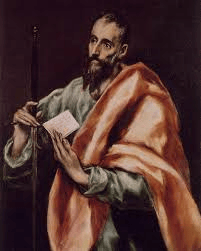
    This book was a breakdown of Paul’s life and everything he ever wrote – thus the title.  I haven’t read the New Testament beginning to end.  I want to finish the Old Testament first.  This book helped me get a better understanding of Paul’s writings.  His writing was deep and powerful.  I also think his writings have always been and are increasingly misunderstood.

    Paul was such a fascinating figure.  I’ve long wondered what it would have been like to be alongside him.  Everything he did he did with such zeal.  Reading and learning about him, I’m awed by his work ethic.  He’s somebody to be admired for his hard work.  The fervor with which he did whatever he put his mind to.  It’s motivating on one hand and terrifying on the other.  Few can live up to the devotion Paul had to what he was passionate for.  We are lucky his passion turned towards the Gospel of Jesus Christ and worship of God as we’ve seen how his efforts against the early saints caused much pain and suffering.

    The book starts with a history of Paul.  Where he was from, who he was, how he became who he became.  The beginning was basically a historical biography of who Paul was.  As Paul got into the portion of his life where he was writing so much, the book transitions.

    This book is one I will refer back to often as I continue to study scripture.  It had a great breakdown of Paul’s individual epistles and when they were estimated to be written.  For example, chapter 13 was “Paul’s third missionary journey (continued).”  It gave a detailed breakdown of the epistle to the Galatians including everything Paul said, the authenticity, importance, style, and doctrine from that epistle.  I would find myself marking entire pages during these chapters. 

    There were many notable things I learned about Paul from this book.  One was that he worked throughout his missionary ministry.  Despite travelling all over the ancient world and spending many, many years as a full-time missionary, it never appears that Paul was paid for his ministry.  He was given “gifts” from church members from time to time.  But it seems very clear that Paul always worked.  The predominant theory is that he was a tent builder.  I found this very interesting given that many modern-day ministers point to Paul’s writings as proof that Paul advocated a paid ministry. 

    One amazing thing about this book was the feeling I had while reading it.  Especially while reading the breakdown of Paul’s letters.  There were moments where I’d pause and ask myself what I was feeling.  This isn’t normally something I do, but I was aware I was feeling something.  It was joy.  It was a feeling like, ‘what is this earth and what does it really matter but to be a test for something greater?  Live righteously and prepare to live with Christ and God forever.’  While reading his writings everything seemed so clear and simple.  It was a feeling in my chest while reading his messages.  Pure joy.  Pure peace.  Pure comfort in the future if I am faithful.  Motivation to be faithful.  As long as I am obedient and keep faith, I truly have nothing to fear.  It’s a similar feeling to what I get when I read the Book of Mormon.  That testified and made it so clear to me that what I was reading was the word of God, meant to lift up and inspire.

    I’m grateful for this book and the understanding it gave me of Paul and his writings.  As I mentioned, I know I’ll be using this book often as I continue to read scripture and one day study Paul’s writings more intently.  The principles Paul taught were pure.  He was called by Jesus Christ Himself which tells us of the importance of Paul’s work.  The missionary effort Paul put forth and his contribution to building God’s kingdom is inspiring.  He has the greatest conversion story of all time.  We could all be better if we spent more time aspiring to be like Paul the Apostle.

  • Policy

    Policy

    I want to write about what I learned when I struggled with something at church.  I apologize for not going into specifics because I don’t want that to be the point.  I want to write about what I learned from my struggle.  To be clear, it was not a faith crisis.  It was a policy/decision that I struggled with.  I think almost all of us can relate to this for some topic, to some extent. 

    The first thing I learned is that God will speak peace to us, if we need it and if we can accept it.  In my case I was questioning something and asking myself, “was that right?”  I was pretty worked up about it.  I was upset and confused.  At some point, I stopped thinking about it.  At the time I didn’t realize what was happening.  I somehow moved on.  I came to a feeling of peace about it. Initially, I attributed it to my general lack of caring about things I can’t control.  But then it worked itself out, or God worked it out, and I look back and realize He spoke peace to me.  I can almost hear Him, “Peace, my son.  Don’t you know my hand is in these things?  Don’t you know I will care for my children?  Have faith.”

    I believe God blessed and helped me.  I believe the Holy Ghost spoke peace to my soul.  I didn’t ask for it.  I didn’t even question it.  Maybe I showed a fraction of faith and God rewarded me with peace.  I more think He loves me and gave me that peace because I needed it.  Either way it became a non-issue for me.  Things would work out. 

    But, no matter our faults or potential mistakes, God will make things happen the way they need to happen.

    I learned an important lesson.  Despite how I think things should go or how I think things should be done, God has an order to His church.  Decisions are made by those in authority.  End of story.  Satan ended up where he was because he fought God’s authority.

    This gets me into the second thing I learned.

    Throughout history, there have been things that are hard for people to understand.  This has happened since before the restoration of the gospel.  For the entirety of human history, and especially Christ’s Church, there have been aspects of it that man couldn’t understand, comprehend, or sometimes accept.  We fall into this recency bias where we think we’re the only ones who struggle with church policy.  In Adam’s day, his children had issues with “church policy.”  In Moses’s day the Israelites disagreed with him often.  In Joseph Smith’s day and up to right now with Russell M. Nelson, there are policies that we don’t understand.  This isn’t unique to me.  This is constant throughout the history of man.

    In my opinion, it is okay to question.  The restoration started with a question.  We must be careful with doubt.  Doubt can be a part of faith; in fact, it is a part of faith.  If there weren’t some small part of doubt, it wouldn’t be faith.  It would be something known.  What we must be sure of is that our faith is stronger than our doubt.

    The third thing I’ve always known but have learned to truly appreciate is that our testimony must be based on something sure.  If our testimony is based on Jesus Christ and the Book of Mormon, it will all work out. 

    My testimony is built on something much bigger than any policy. 

    My testimony is built on Jesus Christ, Joseph Smith being a prophet of God, and the Book of Mormon being an inspired and true translation of an ancient book, given to us by God’s hand.  I know these things because I’ve prayed about them.  I know these things because I’ve felt them.  Some recent archaeological discovery is not going to dissuade me from the truthfulness of the Book of Mormon.  I won’t let some recent finding by society make me doubt things of God.

    I refuse to let my testimony of the important things be shaken by a policy. We must do our best not to get hung up on a moment.   I can’t fully comprehend eternity but I still try to put things into an eternal perspective. The bigger picture is that God guides this church.  It doesn’t mean our issues, doubts, and questions will be resolved today, next week, next month, or even in this life.  But it will get resolved.  I know that.  And if you’re experiencing a faith crisis I would suggest praying.  Don’t always ask for your question to get answered or for it to be “resolved” by your definition.  Ask for peace.  And then be willing to accept that peace and move on.  That’s important.  You will receive peace.  But if you dwell and dwell and dwell on the doubt the peace will leave, Satan will win back his portion.  Have faith that your question will be answered at some point and move forward.  I know that’s easier said than done in many instances. 

    There are so many things I don’t understand.  Faith comes with the hope that I’ll one day understand. 

    I think that’s the lesson to take from this.  God is watching.  He loves us.  Things will work the way they need to.  When we get ourselves worked up, worried, concerned, frustrated, even angry, He can speak peace to our souls if we seek it.  He can speak peace to our souls even if we don’t know how desperately we need it. 

    I’ll end with a quote I heard from a recent meditation:

    “If we can accept that life has changed even though it’s hard, if we can surrender to the fact that all we can do is move on then we won’t experience the same level of stress we would have had we resisted our circumstances.  And if we can remind ourselves that this pain we’re feeling will change, that it will soften… we’ll heal and feel joy again much sooner.  So, in times when there’s nothing that we can do to change our circumstances, in times we feel stressed and uncertain and overwhelmed, the most kind and compassionate thing we can do for ourselves is to surrender to what is.”

    I would add, surrender to God.  If we surrender to Him, He will take care of us.