Author: Brayden Quackenbush

  • The Hearts of the Fathers

    The Hearts of the Fathers

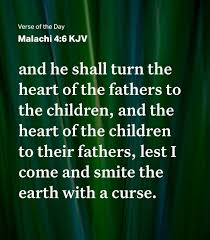
    I always thought about the mission of Elijah (turn the hearts of the fathers to the children and children to the fathers) from my perspective, as one of the “children.” I hadn’t thought about it from the other perspective.

    What happened when Christ preached to those who had died? He talked of His gospel and returning to heaven which was predicated on their baptism. This likely caused a stir amongst the dead. You can see the shudder through the countless number, “Baptism? But how can we be baptized without bodies?” Then Christ explained temple work, vicarious baptisms for the dead, and that they could be saved by their progenitors, their families. Imagine the excitement this caused.

    Those who Christ preached to had been dead for hundreds, some for thousands of years. When was the last time they’d thought about mortality? Did they think about mortality? Had they moved on? Like someone who has a vacation in Mexico but returns to their home, had they settled back into “life” amongst the dead and slowly stopped thinking about mortality? 

    If they had settled back into death, this news from Jesus Christ surely made them re-focus their attention on the living. 

    What then transpired? Did they begin ministering to their living loved ones? Were they sent out to influence the living? Were they ushered out to beg spiritually for help to be saved? 

    I’d always thought about how our hearts here on earth were turned to our dead loved ones when Elijah came and instituted the keys of the sealing power. 

    I hadn’t thought about how the hearts of the dead turned back to us and what that looked like. 

    Love. 

    Love and sacrifice and covenants bind us. 

    We, without them, cannot be made perfect. They, without us, cannot be made perfect. 

    Our ancestors laid the entire foundation for all that we have. Whether we want to give them credit, blame them, or forget them, we can’t deny that we are where we are and we are who we are because of them. 

    It’s amazing to see the modern-day genealogical work being done in the world and particularly amongst the saints. 

    We are creating a bonding link, a welded connection back to Adam. I don’t know exactly how, but this keeps the world from being smitten with a curse. 

    I believe it has to do with love. It has to do with connection. It has everything to do with why we’re here and what we’re meant to learn. 

  • Grandpa Frank

    Grandpa Frank

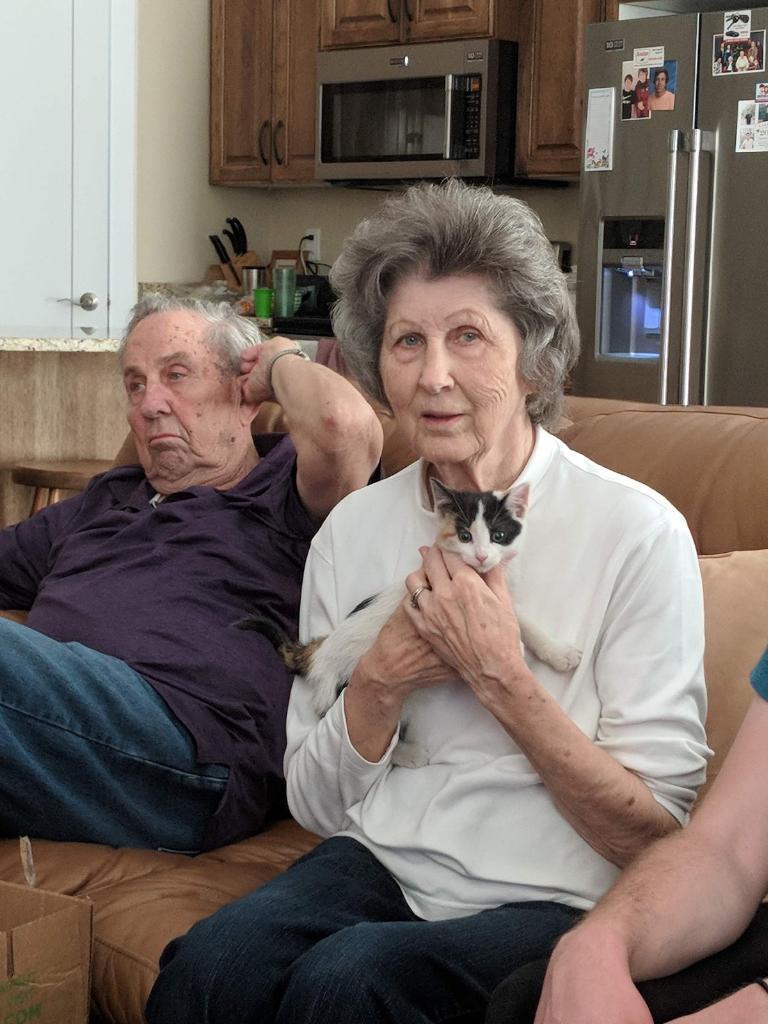
    My most vivid memory of Grandpa Frank, aside from the “Wogs” (the nickname he had for me) and sitting on his lap as a kid, being squeezed into a ball, and being told I would grow up that way, is a few years ago when he bore his testimony in a church meeting. Paraphrasing, Grandpa said:

    “I miss my wife. I miss my daughter. I miss them so much. But this Gospel tells me I will see them again. That means more to me than anything. And I know it’s true, and that brings me so much comfort.”

    As the legend goes, Grandma Leach converted to the Church of Jesus Christ of Latter-day Saints in her early 30s. While Grandma lugged kids to church every Sunday, Grandpa Frank would watch football, golf, or go fishing. He seldom attended. He showed little to no interest in church.

    Again, as legend goes, after over a decade of this, the bishop of Grandma’s ward came to the door one day.

    “Are you excited for this Saturday?!” He asked.

    “What is happening Saturday?” Grandma asked, confused.

    “Frank’s baptism!” The bishop exclaimed.

    Grandma had no idea. For months, on the sly, Grandpa Frank had been meeting with the missionaries and studying the Book of Mormon. He decided it was true. I have no idea why he never told Grandma. I don’t think anyone knows. Maybe this is where I get my secretive, stubborn, frustratingly independent qualities (sorry Beth).

    That Saturday he got baptized and proceeded to go to church with the family from then on.

    What is the Gospel of Jesus Christ, really?

    Change. A man who preferred football, golf, or fishing realized the most important thing in his world was his family. He sacrificed what he wanted to do on Sunday for them.

    What is the Gospel of Jesus Christ, really?

    Faith. A man who decided to believe something extraordinary: he could and would spend eternity with those he loved most.

    What is the Gospel of Jesus Christ, really?

    Love.

    I didn’t cry when I heard Grandpa died. I know I’ll see him again. I know where he is. I know he’s happy.

    As I write this, a vision comes to my mind.

    Grandpa Frank sees Grandma Sandra. He smiles. He is overjoyed to be reunited with the love of his love, his constant companion until the previous four years separated them temporarily. He embraces her. “It’s really true, Sandra?”

    “You always knew it was,” Grandma tells him.

    Others come. Grandpa is surrounded by Laura, Mike, Henry, Olivia, parents, grandparents, friends, loved ones, and Bengie, of course. They rejoice. People (and a dog) he missed so much, but always knew he’d see again.

    As I picture this reunion, and I think about where I am, similarly stubborn and obnoxious as Grandpa Frank, I think about my daughters, and this family I’ve been given. I think about the faith I’ve gained because I’ve seen examples of real faith. Faith as tangible as this keyboard I now type on. Grandpa Frank’s faith was real. I think about those I’ll one day see again. I think about those I have in my life now, that I’ll be able to have in my life forever. As I consider this all, I cry tears of joy.

    This is the Gospel of Jesus Christ.

    I know that Grandpa knew it and I know where he is now.

    What greater comfort is there than this?

    Thank you, Grandpa, I’ll see you soon.

  • Marriage

    Marriage

    I wrote this in September of 2023, when Beth and I were practically still newlyweds (married just over 4 years when I wrote this, now we’re approaching 7).

    Beth and I had a fight the other day.

    I’ve been reading the Church Handbook for the Church of Jesus Christ of Latter-day Saints.

    The day after that fight, and Beth and I had of course made up, I read this:

    Husband and Wife

    “A husband and wife are intended to progress together toward eternal life (see 1 Corinthians 11:11).

    This is your quarterly reminder that marriage is HARD. There’s a reason it’s so important in God’s eternal plan.

    “A couple makes this covenant (covenant of celestial marriage) when they receive the marriage sealing ordinance in the temple. This covenants it the foundation of an eternal family.”

    “When faithfully kept, it allows their marriage to endure forever. Ultimately, thy can become like God (see Doctrine and Covenants 132:19-20).

    Again, in case you missed it the first time, another reminder, there is a reason marriage is so HARD.

    If you’re reading this and your marriage is hard, don’t give up. If you’re reading this and your marriage is getting hard, don’t give up. If you’re reading his and your marriage has been hard, don’t give up. Rely on and trust each other.

    “God has commanded husbands and wives to cleave to each other (see Genesis 2:24; Doctrine and Covenants 42:22). In this context, the word cleave means to be completely devoted and faithful to someone. Married couples cleave together by loving and serving each other.”

    And just one more important reminder from the handbook:

    “Cleaving also includes total fidelity between husband and wife.”

    Marjorie Hinckley was once told by a lady when she was a newlywed to Gordon B. Hinckley, “Don’t get discouraged, the first 10 years of marriage are hard.” Not the first 6 months or the first year: the first 10 years. You are combining your life with someone. There will inevitably be differences in living, habits, thoughts, plans. You are literally becoming one with another individual. What could be more difficult than that? What can be more humbling than giving a part of yourself a way for someone you love? What can better illustrate that love than sacrificing for your significant other?

    Marriage is a sacrifice, and it’s meant to be. That’s the point I think the world forgets sometimes. Marriage is not supposed to be all gain and all for me, me, me. Like being a member of the Church of Jesus Christ of Latter-day Saints isn’t all flowers and blessings –being a member of this church is a sacrifice – of time, money, and effort. Being married is also a sacrifice. If it wasn’t a sacrifice, it wouldn’t be worth having.

    The sixth Lecture on Faith is all about sacrifice.

    The most important and valuable things in this world require sacrifice.

    I recently heard the fascinating idea that when couples divorce, they lose memories. It is after divorce that they learn their memories weren’t theirs at all but shared memories. When separated, divorced couples literally lose memories. Because those memories weren’t just one or the others. Those memories were joint memories. When split, when separated, when broken, when divorced, those memories disappear.

    I found that to be so interesting.

    I love my wife. I am grateful for her. There are things she does that make my life less enjoyable- but I couldn’t live without her. She is the mother of my daughters and the most important person in my life and I’m sorry every day that I take her for granted. Marriage is hard, but she is my partner. I’ve grown so much and connected with her on so many levels the first few years of marriage, I’m interested to see how far this merging of mind and personality can go. To become one.

    1 Corinthians 11:11 “Nevertheless neither is the man without the woman, neither the woman without the man, in the Lord.”

    “The man and the woman are intended to learn from, strengthen, bless, and complete each other.” – Elder Bednar.

  • Lazy Christianity

    Lazy Christianity

    I wrote this in 2022. As I re-read it before posting, I cringed a little. I wondered if I should post it. It’s a little aggressive. I felt this way in 2022. We all go through ups and downs in our faith and devotion, and as I feel like a lazy Christian at this very moment, I think it’s all that more important to post. This is a call to repentance for myself.

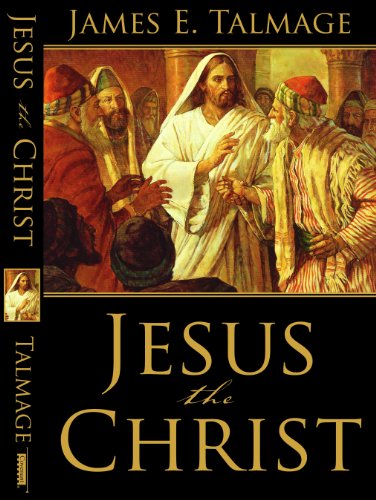
    If you don’t read Jesus the Christ by James E. Tallmadge at least twice in your life, you’re not a real Christian.

    Of course, this is an exclamatory statement. I say it to make a point. 

    I hear so many people profess Christ. Sometimes when this book is mentioned people will say, “It’s so long.”

    Jesus Christ literally suffered the pain and suffering for your sins and mistakes, but the book is too long?

    Before anyone gets mad at me for being high and mighty, let me be clear: I have not read Jesus the Christ twice. But I plan to.

    I think that’s the point. We’re all trying to be better “Christians” or followers of Christ, but, really, what effort are we putting in?

    Are we serving others? Are we thinking about Him? Are we trying to be like Him? Are we reading about Him?

    I think we need to put in more effort.

    On that note, if you’re a member of the Church of Jesus Christ of Latter-day Saints, and you haven’t read the Book of Mormon cover to cover at least two times: get to reading. This is latter-day scripture. Joseph Smith died for this book. Everything we have been given is because of this book.

    We must strengthen our testimonies of Christ as these days get darker and the second coming approaches.

    When Christ returns, will you know Him?

    Will He know you?

  • Story of Compassion

    Story of Compassion

    *This is from a true story I read 4 years ago that I can’t find the source for now.

    There is a story of a person named Om whose mother was killed when he was a young child. After his mother was killed, Om was shipped off to another country. There he was held and kept by the very people who killed his mother.

    Om lived in captivity like this for twenty years, mistreated, and kept by those who murdered his mother. At the age of twenty-four he was shipped back to his home and allowed to be free. Twenty years he was with the people who killed his mom and held him against his will.

    One of those captors tried to befriend Om. This person’s name was Marc. Marc wasn’t directly responsible for Om’s suffering. Marc wasn’t the one who killed Om’s mother. But Marc was still one of them. Marc was the enemy.

    The people directly responsible for the murder of Om’s mother told Marc to be careful around Om. Om hated them all and would kill Marc the first chance he got. 

    Over time Marc started to befriend Om and Om did not attempt to kill Marc.

    While in captivity, Om developed a close relationship with a young child. This friendship was one of the few joys Om had in his difficult life.

    One day Marc slipped and startled the young child that Om was so fond of.

    Three female chimpanzees charged at Marc over his mishap and started to bite and attack him.

    As Marc was being attacked, he saw Om charge toward them. Om was furious. Surely Marc was going to pay for startling Om’s precious young one. Om’s time of revenge had finally come. He was going to kill Marc.

    To Marc’s surprise, Om fought off the three female chimpanzees and kept them at bay while Marc crawled to safety. Marc made it to a hospital and barely survived.

    Here was Om, whose mother had been taken from him and his life destroyed by the people Marc represented. Om could easily view Marc as the ultimate evil. And yet, over time, they had become, if not friends, at least friendly.

    Om stands for Old Man.

    You’ve probably figured out by now that Om is a chimpanzee.

    What can we learn from Om?

    We humans consider ourselves so smart, so intelligent, far removed from the beastly chimpanzee. Here is a creature, an animal, a beast, who could show so much forgiveness that he would save a man who represented the destruction of his life.

    We humans might immediately point to the lack of intelligence in Om as the reason behind his forgiveness. “If he really understood the situation, as we humans do, he wouldn’t be so quick to forgive.”

    What if the opposite is true? What if it is a sign of Om’s intelligence that he was able to forgive?

    Om showed compassion and forgiveness.

    While we are human and chimpanzees are beast, we can learn something from Om.

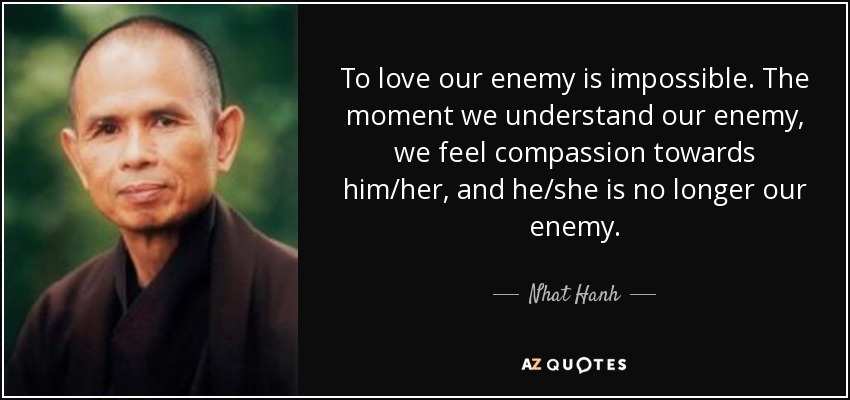
    The next time you find it difficult to love, or forgive, or understand, remember Om, a chimpanzee capable of great compassion.