Tag: bible

  • Lehi’s Dream

    Lehi’s Dream

    Some thoughts I had while reading about Lehi’s dream. I will not relate every detail of the dream so for those who are unfamiliar, it can be read in 1 Nephi chapter 8.

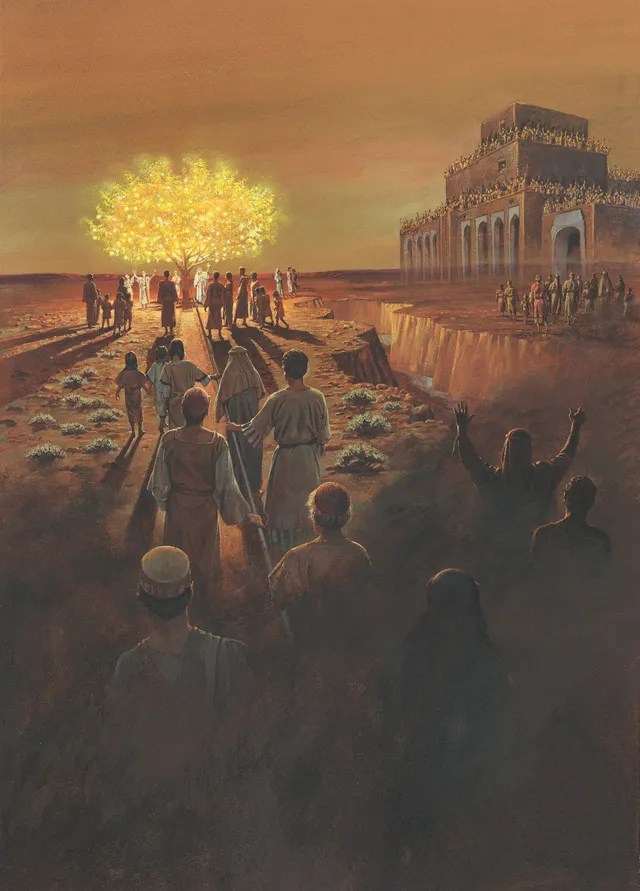
    The first thing I noticed is the location where Lehi starts in his dream. The people he sees later all start at the head of a fountain of water. It could be this is where they started or this is where Lehi first sees them. What seems significant to me is this: Lehi is wandering blindly through the dark and dreary wilderness (verse 4). It is then that Lehi encounters a man dressed in a white robe who bade Lehi to follow (verses 5, 6).

    What I find significant is that later in the dream Lehi beckons Sam, Sariah, and Nephi, along with others, to come to the tree. Where is their man in a white robe? I think what we’re learning here is the significance of prophets in God’s plan. Lehi was led to the Tree of Life, the fruit, the gospel of Jesus Christ by a man in a white robe. Let’s assume the being in the white robe is Jesus Christ Himself (Sidenote: Let’s be clear, in Lehi’s dream I don’t know that the man in the white robe is necessarily Jesus Christ. It could be someone Christ sent like Gabriel or Adam to lead Lehi. But the principle stands and for simplicity, I’ll refer to the white-robed being as Christ). So, Christ leads Lehi to the gospel. It’s then that Lehi guides others there. Not to say that others don’t have a personal relationship with Jesus Christ, just that if we follow the guidance of and heed the prophet, he will guide us to the Gospel of Christ and keep us connected to the iron rod.

    The significance of a prophet is further illustrated by verse 8. Lehi doesn’t encounter Christ and immediately show up at the Tree. He “traveled for the space of many hours in darkness.” I think this represents the trials and tribulations Lehi had to go through. He was scorned, threatened death, and ultimately had to leave his home for his testimony of Christ. Prophets don’t become prophets overnight. They’re often the most persecuted among us. Then Lehi “began to pray unto the Lord that he would have mercy on me, according to the multitude of his tender mercies” (verse 8). It was when Lehi humbly cried out that he beheld “a tree, whose fruit was desirable to make one happy” (verse 10).

    Lehi is led to the gospel. In a way I think he is ordained a prophet in that moment. From there he beckons and leads others to the fruit.

    Another way this can be looked at is that anyone who leads others to the tree of life, like Lehi led his family, can be a type and shadow of Christ. If you are an example to someone of Christ-like love and lead someone to come closer to Jesus Christ, you are acting in the role of the white-robed person, or Jesus Christ. You become a Savior on Mount Zion.

    Another significant feature of Lehi’s dream is the river of water. It can become confusing what exactly the river of water represents if you read Lehi’s dream, then Nephi’s interpretation of it. In chapters 12 and 15 Nephi is clear, the water was filthy and represents the depths of hell (12:16). If you read 11:25 it reads, “the rod of iron…led to the fountain of living waters, or to the tree of life.” I think the significance here is the water is “living water” as it approaches the tree of life. As the water distances from the Tree of Life it becomes filthy. Therefore, at the head of the river, away from the Tree of Life, it was filthy and represented hell.

    Those in the great and spacious building mocked those who sought the Tree of Life. I think one interpretation could be that those in the building were products of ignorance. They knew no better. They were deceived by the “wisdom thereof, the pride of the world.” Laman and Lemuel can not plead ignorance. They had seen an angel (1 Nephi 3). Their father was a prophet. They started from a different point than someone who ended up in the great and spacious building. When Laman and Lemuel denied what they knew and denied all the light they’d been given, they were swept away. To whom much is given, much is required (Luke 12:48). “He who sins against the greater light shall receive the greater condemnation” (D&C 82:3).

    1 Nephi 12:18 “the large and spacious building…is the vain imaginations and the pride of the children of men. And a great and a terrible gulf divideth them; yea, even the word of the justice of the Eternal God, and the Messiah who is the Lamb of God.”

    The gulf that separates the people in the great and spacious building from the Tree of Life is their ignorance, not always of their own fault. Their upbringing might have brought them to the building. They may have been more easily deceived by Satan because of their upbringing and experiences. They may have started with an unfair disadvantage that made them unable to accept the gospel, “a terrible gulf” that made it too difficult to understand “the word of the justice of the Eternal God.” If they only understood how kind and loving their Father in Heaven is, or even that He is their Father, they likely wouldn’t laugh and scoff at those who embrace this great truth and find comfort from this truth.

    That’s why it’s so important that this message is shared with the world.

    This, I believe, is also why we must never judge others. We don’t know the experiences of others. It may be that if we were raised in a certain house, with a certain culture, with a certain understanding, with a certain life, with certain experiences, we would be just like the individual who scoffs at the Gospel. We don’t know the circumstances of someone else. We don’t know why they are the way they are. In their shoes, we may be no different. This is why it is to our greater condemnation to judge others. Don’t judge someone. You can’t comprehend all there is to know about them. Only one person can do that. He will rightfully and righteously judge them.

    Back to Laman and Lemuel and the filthy water that sweeps them away – as said, they are worse off. This is also why those who partake of the fruit and are brought to be ashamed by the scorn of the world “fell away into forbidden paths and were lost.” They didn’t make it to the spacious building. They were lost to wander forbidden paths. Once you’ve tasted the sweet truth of the Gospel of Jesus Christ there is no going back. You can try to go back to the world, but most find they are more lost than ever. There are so many examples of individuals who leave the church but can’t ever really leave it. They become lost, always seeking to find something to fill the void the Church of Jesus Christ left. They can’t fill the void so they end up attacking it.

    11:35 reads, “The multitude of the earth was gathered together; and I beheld that they were in a large and spacious building, like unto the building which my father saw. And the angel of the Lord spake unto me again, saying: Behold the world and the wisdom thereof; yea behold the house of Israel hath gathered together to fight against the twelve apostles of the Lamb.”

    Many of these people are deceived, and therefore they fight against God, unknowingly sometimes. The wisdom and pride of the world can be churches that look at the poor and needy and manipulate them. Or it can be individuals who look at any other church and scoff and mock. Oftentimes, these actions are done in the guise of defending God. More evil has been perpetuated under the guise of doing what’s right than just about anything. God needs us to defend Him by our kind actions and good examples, not by slandering, judging, or hating others. Many today of other faiths openly mock what they don’t realize is Christ’s true and living church. They have been deceived by the wisdom of the world. And in mocking “they never knew Him” (JST Matt. 7:33).

    These are just a few of my thoughts from Lehi’s dream of the Tree of Life. I feel there is so much to learn from this simple story. As with all things in the Book of Mormon, this points to Jesus Christ and helps point me in the direction of trying to be more like Him.

  • What the Theory of Evolution is Missing

    What the Theory of Evolution is Missing

    This is going to go a direction you won’t expect. I’m not going to argue against Darwin’s Theory of Evolution. I’m not nearly smart enough to discuss the theory of evolution in much detail.

    What I will do instead, is propose my own theory.

    Scientists who are proponents of the theory of evolution believe that life is constantly evolving. Over billions of years, a process called natural selection has taken place. Natural selection is basically the idea of survival of the fittest. If you’re the fittest, you survive. If you survive, you procreate. Survival of the fittest. Natural selection.

    The disconnect, for me personally, is when the theory of evolution brings scientists to the conclusion that God doesn’t exist. The omniscient, omnipresent, omnipotent God, creator of Heaven and Earth, couldn’t allow his creations to change?

    Here is where I will diverge from class Christian thinking. The theory of evolution doesn’t go far enough.

    “As man now is, God once was: As God now is, man may be.”

    What is it to attain the fulness of God? (Ephesians 3:19).

    You think fundamentalist Christians hate the theory of evolution already? Imagine their hate for us if we say it hasn’t gone far enough.

    Now, the theory evolution is more than just change. As I noted, it’s about natural selection. Darwin’s theory is that natural selection leads to change. Christ’s theory is He leads to change.

    I’m not saying that Christ is leading plants and animals to change. They have their own process to fulfill the measure of their creation.

    But Christ does lead us to change, or evolve, if you want to use that word.

    Many of both religious and scientific persuasions would scoff at this notion.

    Look again at the theory of evolution. Living creatures are evolving.

    Why would humans not aspire or evolve to something greater then? I’m not talking about from mushrooms or apes. We are God’s children and as His children we have a divine inheritance. Our evolution is much greater. It’s from what we are now, to what Christ is now. This is possible because our Heavenly Father wants to give us “all he hath.”

    What do I change into while here on earth, in a small amount of time? I turn into my parents. I become more and more like my dad every day. What do we evolve or change to eternally? God. He is my Father. It’s the natural order of things.

    Joseph Smith often talked about how scholars, intellectuals, and religionists ridiculed him. Yet all he ever taught was what made sense. What made sense were eternal truths.

    The boy, like to his father grown,

    Has but attained unto his own;

    To grow to sire from state of son,

    Is not ’gainst Nature’s course to run.

    A son of God, like God to be,

    Would not be robbing Deity.

    Lorenzo Snow

    Paul understood this (Philippians 2:5-6) –

    “Let this mind be in you, which was also in Christ Jesus:

    Who, being in the form of God, thought it not robbery to be equal with God”

    So, the scientific-minded, expand your thinking. Religious minded, expand your thinking. Embrace your inheritance and all that the Father has to offer you. Embrace change, embrace the Atonement of Jesus Christ that allows all change. Embrace your evolution. God wants you to aspire to be like Him. It isn’t robbery to Him. What greater joy is there than watching your children grow, develop, and become better? Maybe even become like you.  

    Where does the theory of evolution lead? Where are we headed, what do we become? What is our evolution?

    Our evolution is to become like God, our Father.

  • Speed of God

    Speed of God

    I recently read a book called ­Project Hail Mary. It’s by the same guy who wrote The Martian. This book has the space travel and physics concept of time dilation involved. I’m an ignoramus when it comes to the physics of this so I’m not going to say anything smart here. Time dilation is the idea that if you’re moving at a fast enough speed, you will age slower than someone moving at a normal or slower speed. See a movie like Interstellar for example. This is related to Einstein’s theory of relativity.

    To think about someone moving at a speed that makes them age slower than others – time dilation – is a beyond complext concept. The book had a comment like, “I’m glad the universe thought to have time slow down as you approached the speed of light.” That made me think, it’s amazing the universe is like this.

    Before I continue, I just wanted to share, this is the beginnings of a thought on how the physics of this complex phenomena might explain something about God, our relationship to Him, and our position to Him in the cosmos. In doing this, because I’m so ignorant on the topic and don’t fully understand it, I’m sure I’ll get something wrong that someone who better understands the science of this topic can point out. That’s fine. I take comfort in the fact that the people out there that adequately understand this concept are roughly 1 per 1 billion so probably unlikely to read my blog.

    This is more a mental exercise for myself.

    So… the faster you move, the slower you age. What is age for us? It is our mind and bodies degrading.

    God is the center of the universe. We all revolve around God. As we move closer to God, we move closer to the center.

    I’ve written about God and time before, here for example.

    Time is definitely different and potentially nonexistent for God. We talk about 1000 years for us being a day for God, in a way for us to try to understand God’s “time” (see Psalm 90:4 and 2 Peter 3:8, and especially D&C 130:4-11).

    God is light. God is in the center. So that would be why 1000 years for us is like a day for God. Time moves slower for Him because He’s at the center. Of course, God doesn’t age, He has a resurrected, perfected, and celestial body, but time moves slower for Him because He moves infinitely faster than the speed of light. He moves at the speed of everything – past, present, and future.

    So at a higher speed or revolution, less time is experienced. God’s mind, power, and faith move at a rate impossible for us to comprehend. Maybe that’s what makes Him in everything, alpha and omega, the beginning and the end. His higher speed puts Him on a higher plane. If we come closer to God, we would have to come closer to His speed and His plane, His level. If we do that, then time would slow down for us. We would be able to comprehend more. We would “age” slower. We would become like Him.

    By the way, this sent me down a wormhole (pun intended) of Youtube videos on time dilation, wormholes, the general theory of relativity, “nothing,” the twin paradox, space, and a plethora of other topics. This all led me to believe, while I can’t properly put into words my exact theory, that there is something to the above. There is something to God being the center. There is something to Christ being “light” which we know we can’t, in this life, move at the speed of. There is something to this physics and God thing. That makes sense given that God would be the master physicist as the Creator of the Universe.

    I’ll leave these musing at this point. Basically, long story short, there is something to God being on Kolob and us and our solar system revolving around Him. More on this as I explore this thought more.

  • Pain

    Pain

    The other day I banged my knee against a bed frame so hard that I almost threw up. The pain was excruciating. Then I realized, why am I fine? I’m fine because I know the pain will end in the next couple minutes, then I’ll be fine.

    I haven’t experienced tons of physical pain in my life. I’ve been very lucky in that respect. I imagine the worst thing about pain is not knowing when it will end.

    What makes pain bearable is knowing it will end. It’s the not knowing that can be truly excruciating. For example, take even just the pain of a paper cut. If that painful cut was indefinite, meaning you felt the papercut for minutes, then hours, then days, just as intensely as that first moment when the cut happened, it would be horrible. Papercuts aren’t that bad because the pain passes quickly.

    What about when you don’t know when the pain will end?

    I think that’s the worst kind of experience. Again, I haven’t personally gone through that, so I can’t say from experience. But we’ve all heard stories of or know people with some sort of chronic pain. Pain that doesn’t end would be a challenge due to the mental exhaustion along with the physical pain.

    I haven’t even gotten into mental or emotional pain. Those are different categories that can be completely different levels of unbearable.

    If you’ve read a couple of my posts before, you know where this is going: The infinite Atonement of Jesus Christ.

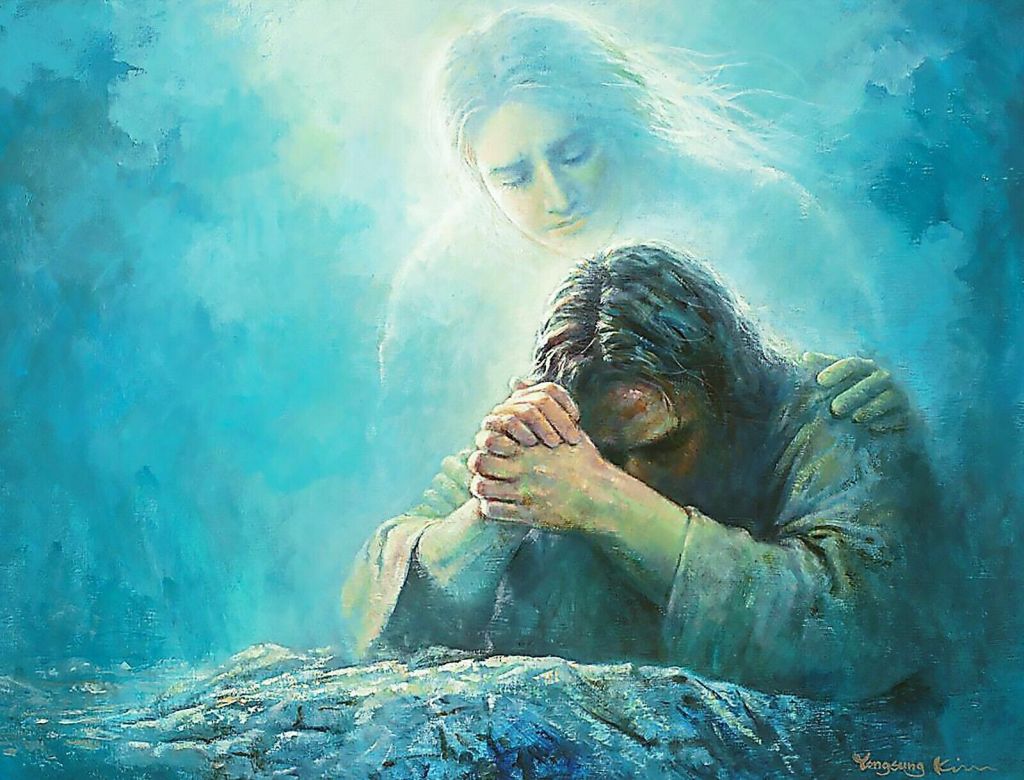
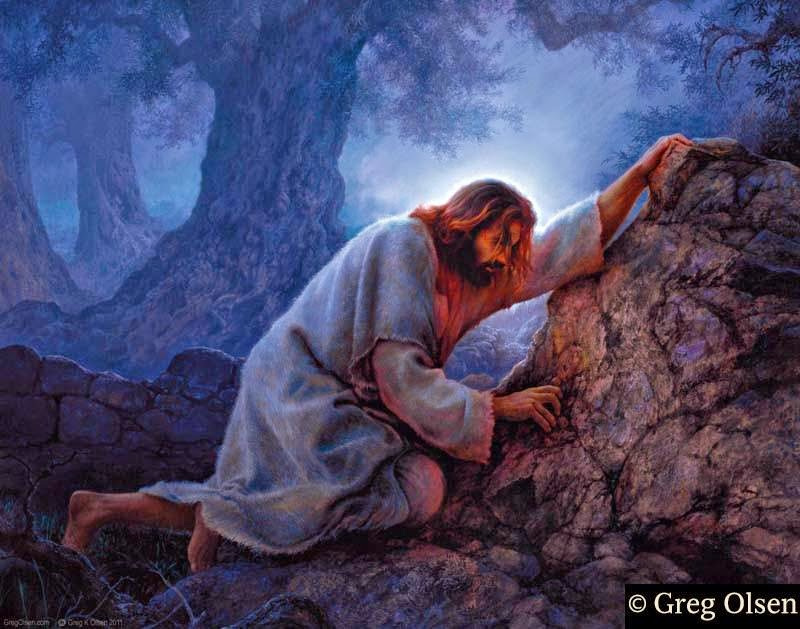
    Did the pain Christ felt in Gethsemane feel infinite? I doubt “infinite” is even close to an adequate word for what Christ felt when he experienced the past, present, and future sins, sufferings, and pains of a universe.

    Luke 22:41-44:

    41 And he was withdrawn from them about a stone’s cast, and kneeled down, and prayed,

    42 Saying, Father, if thou be willing, remove this cup from me: nevertheless not my will, but thine, be done.

    43 And there appeared an angel unto him from heaven, strengthening him.

    44 And being in an agony he prayed more earnestly: and his sweat was as it were great drops of blood falling down to the ground.

    I wonder if the uncertainty of time led to the ultimate request, “If thou be willing, remove this cup from me.”

    It’s hard to imagine what Christ felt in those moments. The “infinite” Atonement of Jesus Christ. Did it feel infinite? Did it feel like it would never end? However it felt, it didn’t feel good.

    D&C 19:18:

    18 “Which suffering caused myself, even God, the greatest of all, to tremble because of pain, and to bleed at every pore, and to suffer both body and spirit—and would that I might not drink the bitter cup, and shrink.

    19 Nevertheless, glory be to the Father, and I partook and finished my preparations unto the children of men.

    I remind myself daily that Christ suffered what He did because He loves me. I owe Him everything. I’m grateful that He was willing to pay the price of my sins and to feel all my sorrows and pains so He can support and understand everything about me.

    I hope during this Christmas season we remember what Christ did for us and why we celebrate Christmas.

  • The Higher Law and the End of Blood Sacrifice

    The Higher Law and the End of Blood Sacrifice

    Christ fulfilled the law. This was why blood sacrifices were done with after His last and great sacrifice. But what does this mean, practically?

    The Israelites practiced God’s law which was a law of reparations. You take out the eye of an enemy maliciously, you take out his eye. Someone kills your brother, you kill him. The problem with this is obvious. Blood begets blood and when does it end?

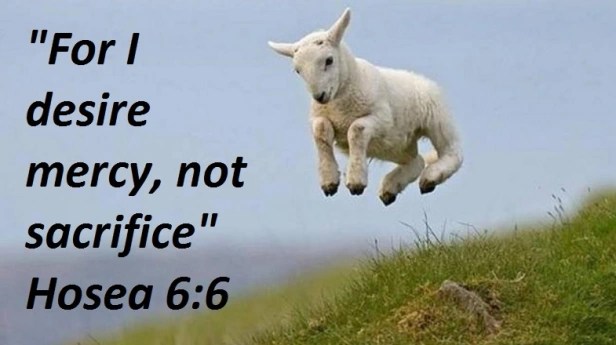
    This is why the Israelites practiced the law of sacrifice. They took an animal, that had nothing to do with bloodshed, or theft, or lying, and instead of continuing the constant cycle of reparations, they sacrificed the blood of the animal. This is obviously what Christ represented when He died on the cross. He paid the price for all our sins, because we are incapable of paying such a price.

    This is why Christ preached a higher law. No longer was it an eye for an eye but it was turn the other cheek. No longer was it sue for damages but give your second coat. Christ’s point was that after He died for our sins, animal sacrifices would be done away with, there was no more putting your sins off on a goat. Christ was teaching the end of strife. Someone wrongs you, forgive them and move on. This put an end to the vicious cycle of payback and recompense.

    Who was the greatest example ever of this? Jesus Christ never asked us to do something He didn’t do first, when He was up on the cross, and forgave those who had scourged, beaten, and crucified Him.

    But of course, justice still had to be paid for a wrong done. That’s where Christ came in, paying the ultimate and last sacrifice with His blood. So, we flawed human beings, who sometimes commit wrong without even meaning to, can be forgiven. This is the miracle of what Christ did for us, the miracle of His atonement, the miracle of His forgiveness, and the miracle of the higher law.