Tag: bible

  • Suzerain and Vassal: The Father and the Son

    Suzerain and Vassal: The Father and the Son

    Mosiah 15:1-2 reads:

    1 And now Abinadi said unto them: I would that ye should understand that God himself shall come down among the children of men, and shall redeem his people.

    2 And because he dwelleth in flesh he shall be called the Son of God, and having subjected the flesh to the will of the Father, being the Father and the Son…

    How can Christ be both the father and the son? It’s a question that has troubled Christianity since before it was called Christianity. How can there be the one true God (Jehovah) and yet Jesus Christ (Jehovah) pray to His father who is in heaven?

    How can Christ be both the father and the son? Well, how are you, reading this a father (or mother) and a son (or daughter)? Sometimes we might overcomplicate the simplest things.

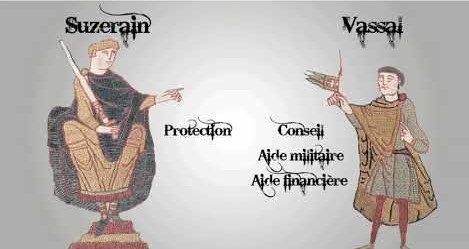
    In the ancient near east there existed a system wherein covenants could be made. That system could be described as a Suzerain Vassal covenant or treaty. In this sort of agreement one of the parties would be greater or more powerful than the other. The suzerain would be the powerful entity. The vassal would be the subservient, or lesser, or learning entity. In this sort of treaty, the vassal would pay tribute or show some form of loyalty to its suzerain. In return, the suzerain would provide protection or some other sort of benefit to its vassal. There could only be one suzerain/vassal connection. Meaning, a vassal couldn’t have two suzerains. This would basically be treason. You can only serve one lord.

    From this article on the suzerain/vassal covenant relationship:

    “The covenant Yahweh established with Israel at Mount Sinai exhibits striking parallels with Hittite suzerain/vassal treaties, which had six basic features: 1) a preamble that identifies the suzerain; 2) a historical prologue that recounts the previous relationship between the parties; 3) covenant stipulations to which the vassal must agree; 4) provisions for periodic reading and safekeeping of the covenant; 5) witnesses to the covenant; and 6) blessings and curses should the vassal either keep or fail to keep the covenant. The Sinaitic covenant contains all six of these characteristics.”

    In his book, The Last Days: Types and Shadows from the Bible and the Book of Mormon, Avraham Gileadi states:

    “the idea of Israel’s suzerain or Lord [Jehovah] assuming vassal or servant status in order to answer to his suzerain [God the Father] for his people’s rebelliousness introduces the concept of a God higher than Israel’s God. That is, Jehovah, the God of Israel, is a “Son” to God the “Father” (3 Nephi 11:7,11,32; compare 15:4-5). That concept does not appear explicitly in the Old Testament. Many Jews, therefore, insist that God is but “one” (Hebrew ehad; Deuteronomy 6:4); other than the Lord, they assume, no God exists (see Isaiah 44:6,8; 45:21-22). However, the idea of “the Father” and “the Son” makes perfect sense in light of ancient Near Eastern suzerain (Lord)–vassal (servant) covenant relationships.

         “Abinadi (and every prophet who teaches God’s redemption of humanity) here enlightens us. Abinadi says that God, who redeems his people, is both “the Father and the Son” (Mosiah 15:1-3; compare Alma 11;38-39; Ether 3:14). That abstruse statement seems at first glance to contradict the careful distinction between the Father and the Son that other scriptures teach. But when viewed from the ancient Near Eastern suzerain (lord)–vassal (servant) covenant relationship, we gain insight on how the Lord can serve as a suzerain or Father to his people Israel, but also can serve as a vassal or Son to his Father or suzerain. To Israel, the Lord is Father, and they become his sons or vassals. To God the Father, the Lord is the Son, subjecting his will to the Father in order to merit Israel’s salvation (Mosiah 15:2,7).

         “Moreover, as the literal and loyal Son of a divine Father–as the Son of a righteous [covenant suzerain “Father”]–the Lord is not subject to death unless he himself consents to die (See the type of Isaac’s consenting to let Abraham sacrifice him–Genesis 22:9) Even if he does die, the Father must come to the aid of his vassal and deliver his Son from death. In ancient Near Eastern literatures there is the concept of the god who dies only to revive and assume the throne of a senior deity. Thus “God breaketh he bands of death . . . giving the Son power to make intercession for the children of men” (Mosiah 15:8). What the Father does for the Son, the Son does for his sons and daughters: when “the Son reigneth, and hath power over the dead . . . he bringeth to pass the resurrection of the dead” (Mosiah 15:20).

         “Moreover, the moment one introduces the idea of the Father and the Son, one also introduces the concept of spiritual progression. That constitutes as much a part of the “good news,” or gospel, as does redemption from death itself (see Mosiah 15:10-19). Inherent in a Father/suzerain–Son/vassal relationship with God is the assuming of divine attributes–becoming God-like…”

    So we see that this Near Eastern tradition of suzerain and vassal treaties and covenants perfectly aligns with how we relate to Jesus Christ. He is our suzerain, making us His children. God is His suzerain. Through our covenant relationship with Christ, we receive protection from both Christ and His Father and our Father, God the Father.

    Another interesting thought from that note is how Christ conquered death. It was by His relationship with the Father that He was able to conquer death. He in turn allows us the same opportunity when we link ourselves to His will and power. Christ received His divine identity from His Father. We can receive our divine identity through Jesus Christ’s Atonement and conquering of death. This is why we only come to the Father through the Son. Christ is our protector, our Suzerain. As we serve Him, we receive that protection as His vassals.

    In addition, another way that Christ is our father is through the resurrection. It is due to Christ’s atonement and resurrection that we are able to be resurrected. This makes Christ the father of our bodies. For we wouldn’t have our bodies without His resurrection and the gift that we can be resurrected into our bodies. God the Father is still the father of our spirits. Whether that be through adoption, some measure of creation, or some other way, we’ll one day know.

    A last note I wanted to make that I liked from this article:

    “The basis of the covenant was Yahweh’s gracious acts toward Israel, not their obedience to him.”

    Our covenant relationship with Christ is a reminder that His grace saves us. It doesn’t matter how obedient we are. We needed His grace to save us. As our Suzerain, His covenant with us is based so much more on how He loves us and all He is willing to do for us than anything we can do for Him. We can never properly repay Christ for all He’s done for us. He is the Suzerain. He has the power to save us.

    This is the good news of the Gospel. Because Christ conquered all, we can become like Him, and in turn, become like our Father in Heaven.


  • Be Ye Therefore Perfect

    Be Ye Therefore Perfect

    There is a message recently brought to my attention in Matthew chapters 5-7. We all know the sermon on the mount. Don’t just not kill, also don’t even be angry. Don’t just not commit adultery, don’t even lust. Be ye therefore perfect.

    What comes next though? I haven’t before considered how the next chapters lead to a great message, a culmination of how we should behave and how we should try to be.

    What does the Sermon on the Mount transition into? What is the theme of chapter 6?

    Matthew 6:1 –

    “Take heed that ye do not your alms before men, to be seen of them: otherwise ye have no reward of your Father which is in heaven.”

    Matthew 6:20 –

    “But lay up for yourselves treasures in heaven, where neither moth nor rust doth corrupt, and where thieves do not break through nor steal.”

    Matthew 6:38 (JST) –

    “Wherefore, seek not the things of this world but seek ye first to build up the kingdom of God, and to establish his righteousness”

    Matthew 6 is all about our motives. In chapter 5 you seek to be perfect by your behavior. Chapter 6 asks, “why are you seeking to be perfect?” Is it for the glory of the world? Is it for more temporal possessions and blessings? Chapter 6 looks at your heart and asks your intention. We should want to be perfect because we love God and we love others. We should want to be perfect because it’s right. Perfection shouldn’t be about us or what it does for us. We should want to be perfect because Christ was perfect, perfect love, and our example. Chapter 6 tells us to look heavenward in all things.

    Which leads us to chapter 7. What does chapter 7 teach us?

    The message of chapter 7 is summed up by verse 1 (JST) –

    “Judge not unrighteously, that ye be not judged; but judge righteous judgement.”

    You’ve worked hard to fix your bad habits, to be loving, to treat others as you want to be treated. You’ve then addressed why you’re doing these things. Your heart is pure, you love others because it’s the right thing to do you. You look heavenward. Chapter 7 is about understanding that not everyone is at the same point on their own journey to perfection. Just because someone is working along their path, and in your mortal eyes may seem to be “behind” you, they’re not. Judge not others. They’re working their way down the path of perfection just as you are.

    That said, we still judge others righteously. Righteous judgement is loving judgement.

    Matthew 7:9 (JST) –

    “Go ye into the world, saying unto all, Repent, for the kingdom of heaven has come nigh unto you.”

    D&C 6:9 –

    “Say nothing but repentance unto this generation.”

    D&C 15:6 –

    “the thing which will be of the most worth unto you will be to declare repentance unto this people.”

    D&C 16:6 –

    “the thing which will be of the most worth unto you will be to declare repentance unto this people.”

    D&C 14:8 –

    “And it shall come to pass, that if you shall ask the Father in my name, in faith believing, you shall receive the Holy Ghost, which giveth utterance, that you may stand as a witness of the things of which you shall both hear and see, and also that you may declare repentance unto this generation.”

    What Christ’s apostles at the meridian of time were told to preach was the same thing those who were instrumental in the restoration of the Gospel of Jesus Christ were told to preach. It’s the same thing we’re supposed to preach today.

    Repentance.

    That’s what brings us and those around us closer to Christ.

    So, work on yourself first, Matthew chapter 5. Work on your motives second, Matthew chapter 6. Then, preach repentance to those on a different part of the path than you. Preach repentance with love and understanding. Never forgetting that you’re on the path too, trying to be your best. That’s all we can ask of each other. Do your best.

    From the book 40 Years And Marching On, an article by John W. Welch (p. 228) he says:

    “First is the acknowledgment that all people are at different stages in the eternal journey toward the glory of God, which is intelligence.”

    This is the message of the Sermon on the Mount. It’s not a one-part lesson, it’s 3 parts. Be perfect – be perfect for the right reasons – accept that others are not perfect (yet).

  • Talk – How can I show faith in Jesus Christ more in my daily life?

    Talk – How can I show faith in Jesus Christ more in my daily life?

    I recently shared Beth’s amazing talk given on the natural man being an enemy to God. That can be read by clicking HERE.

    The following week I was asked to give a talk on the topic, “how can I show faith in Jesus Christ more in my daily life?” I thought I’d share that as well. My written talk was more of an outline, but here were my notes.

    Introduction

    Good morning!

    If you were here last week then you saw my wife already introduce us when she spoke.  For those that weren’t here, I am Brayden Quackenbush.  My wife goes by Beth, and we have a 1-year-old daughter named Ivy.

    Brother Patterson commented after Beth spoke last week, quote “Clearly you, like me, have married up.”  So of course, the Bishopric has asked me to speak today, more likely for you to see that principle of marrying up in action for yourself as opposed to any spiritual enlightenment I am meant to impart.  I hope along with demonstrating the marrying up principle, my talk can also provide some uplifting spiritual content for you today.

    Topic – faith

    The topic I was asked to speak on today is, “How can I show faith in Jesus Christ more in my daily life?”

    Let’s start with the what.  What is faith?

    Hebrews 11:1 – Now faith is the substance of things hoped for, the evidence of things not seen.

    Elder Dallin H. Oaks said QUOTE: “‘Faith without works is dead.’ But ‘Works without faith is even deader.’”

    How do we increase our faith?

    Read the scriptures every day.  Pray every day.  Go to church each week.  Serve others.  Go to the temple.

    For those of you that have zoned out – Okay, let’s take a quick pause.  I know I’ve lost most of you.  You’re thinking, great, he started his talk with 5 things I’ve heard 1 MILLION times.  And then you started zoning out.  Come back to me for a second.  I’ll say it again for those who REALLY zoned out.  Come back to me.

    I could go on and on with quotes about what faith is and give ideas you’ve heard over and over and over about how to increase your faith and be exemplary latter-day saints.  In my time back at church, I’ve learned that personal experiences are powerful.  Repetition is good.  There’s a reason we hear the same things over and over.  Read scriptures, pray daily, go to church, attend the temple.  Of course, these things are good and of course these things are important.

    How?

    But HOW do we really show more faith in Jesus Christ in our daily lives.  – This is an interesting question – how?  How is so independent of anyone else’s how. How isn’t a hypothetical.  It’s an action. Faith is a principle of action.  For that reason, I can’t tell YOU how to live with more faith in Jesus Christ.  What I can do is tell you what has helped me.

    It always benefits me to hear of others’ habits, stories, experiences and how they strengthened their faith.  I hope some of my thoughts can help someone here today.

    A little background about me – I spent 7 years of my life, from age 18-25 with zero church activity.  I was about as far from the church as I could be.

    It was wholesome books brought me back. Books that started making me ask the questions – why am I here?  Where am I going?

    The books that most impacted my journey back to church, and influenced my faith in Jesus Christ were Visions of Glory by John Pontius, Jesus the Christ by James E. Talmage, and of course, the Book of Mormon.

    To increase our faith, we must know in whom our faith resides.  That is Jesus Christ.  This is the first how I suggest, that helped me.  President Russell M. Nelson has repeatedly implored us to study the life of Jesus Christ, understand His ministry, understand His life, understand Him.  With more of an understanding of Him, more love for Him will naturally develop, and it will become easier to follow Him and act in faith.

    What other how’s have helped me in my daily life?

    I’ve mentioned I want to focus on faith being a principle of action.  If you have faith in Christ, it should move you towards action.

    For me, after knowing who my faith resides in, it’s helped to be conscious of what I want to accomplish.  Showing more faith in Christ daily needs to be a conscious goal.

    1. Daily affirmations
      • The cartoonist behind Dilbert, his name is Scott Adams, he talks about a habit he developed in his early 20s.  What he did was, every single day, he wrote 15 times a statement over and over.  For example, “I Scott Adams will become a famous cartoonist.”  This was before he’d ever written a comic.  Most of you have heard of Dilbert.  His second affirmation was “I Scott Adams will write a bestselling book.”  He also accomplished this goal.
      • Write what you want to accomplish in your relationship with Jesus Christ, your family, or your greatest desire.  The act of writing it each day will make it a focus in your life.
      • Examples could be:  I will love others.  I will be a loving father/mother.  I will increase my faith in Jesus Christ.  I will bring others unto Jesus Christ.  I will return to live with my Heavenly Father.
      • This makes this a focus every single day.  How did Scott Adams become a famous cartoonist?  Faith.  Now he wouldn’t say it, but that’s what he did.  He put something out there, he focused on it every single day for years and he made it a reality. 
      • Make your faith a focus in your life.
    2. This leads to another how – focus on your thoughts. 
      • A book I read recently stated that rock is sculpted one chip at a time.  Concrete is poured then molded.  People are formed one thought at a time.
      • I hope the daily affirmations example shows the power in our thoughts.
      • Guard every thought.  Any time a judgmental or unkind thought enters your mind, remove it.  Remove impatience.  Remove anger.  It is possible.  Our thoughts are ours to control.  Once you control the negative thoughts, move to loving thoughts.  Keeping your thoughts focused on God and Jesus Christ as much as possible will help.  
      • Matthew 22:37-39 “love the Lord thy God with all thy heart, and with all thy soul, and with all thy mind.  This is the first and great commandment.”
    3. The third thing that has helped me is to study the scriptures with a purpose.
      • I have a close friend who is not a member of this church.  He has read the Book of Mormon multiple times and doesn’t believe it’s divinely inspired.  He believes it was written by a man and not translated by a prophet of God.  I’ve read the Book of Mormon every day for 4 years alongside an online commentary noting every time I find something from Hugh Nibley or some other LDS scholar that can’t be explained by an uneducated farm boy writing the Book of Mormon.  The note in my phone now includes well over 100 notes that can’t be explained by an ignorant farm boy writing the Book of Mormon.  Each day I’m excited to find another unexplainable feature of the Book of Mormon.  That strategy has worked for me.  But I invite you to think about something that can make you interested and excited to read a little scripture each day.  By the way, if you’re interested in seeing my list of “proofs” I would love to share them.  It strengthens my testimony of this work and of the love Jesus Christ has for us in providing these “proofs” of the divine nature of the Book of Mormon to those who seek them.
    4. A fourth, and to me personally, the most important thing that has helped me with my faith is to feel the atonement of Jesus Christ.
      • Can you feel your love and appreciation for Christ and His gospel?  Really feel it, inside of you.  Feel the emotion of it.  For some, your conversion moment may be so long ago that you haven’t thought about it in a long time.  Remember what it was like to realize this was true.  Think about the comfort it brought you.  Remember the feeling of knowing that Christ died for you, and He allowed you all this.  Family, love, peace, eternity: It’s because of Him.  Close your eyes.  Remember that moment.  Feel that moment.  Do that often.
      • The best time to feel this appreciation for Jesus Christ is during the sacrament, it’s why we partake of the sacrament – to remember Him.
      • You need to feel, truly feel, what Christ has done for you.  I’ve had more of a challenge doing this during the sacrament since my daughter Ivy entered my life.  Sometimes I miss the quiet time of closing my eyes and thinking about what Christ did for me that day 2000 years ago.  But then recently I’ve found an amazing substitute.  During the sacrament I’ve found it extremely beneficial to stare at my daughter.  I think about not only what Christ did for me, but I remember that He gave her to me, He saved her, and He allows her to be mine forever.  If you aren’t brought to the verge of tears every so often when you partake of the sacrament or think about what Christ did for you, you NEED to think about it more.  Focus on it and feel it.
      • We’ll be taking the sacrament in a few minutes.  I invite you to focus on Christ.  Think where you’d be without Him.  Think about what He’s done for you eternally.  Eternal glory, forgiveness, love, peace for ALL eternity. Have you thought about the word eternity?  Forever.  That’s what He’s given you.  Feel it in your heart and thank Him with all your might, mind, and strength.
    5. The fifth important part of my faith has been to repent daily.  There is always something to repent for, no matter how good we think we are, we always fall short, and that’s ok.  Because of Him.

    That concludes my how’s of developing and strengthening faith daily, but I hope you can search out your own.

    Why?

    The last thing I’d like to talk about is the why.  Why do we need to develop more faith?  Why does our faith matter?

    When this work truly touches your heart, what do you do?

    In a book called Faith in the Service of about members of the Church of Jesus Christ of Latter-day Saints in the armed forces, a U.S. Air Force Chaplain gave the simple quote: “I am a convert to the gospel, and I am indebted to the missionaries who saved me spiritually.”

    Do you consider your membership of this church being spiritually saved?

    Elder Jeffrey R. Holland when speaking of the Apostle John’s great desire to remain on the earth said:

    “The Apostle John asked the Lord if he, John, might remain on the earth beyond the normal span of life for no other purpose than to bring more souls unto God.  In granting that wish, the Savior said that this was ‘a greater work’ and a nobler ‘desire’ even than that of desiring to come into the presence of the Lord ‘speedily.’”

    From the book Teachings of the Prophet Joseph Smith, “Like all prophets and apostles, the Prophet Joseph Smith understood the deep meaning of John’s request when he said, ‘After all that has been said, [our] greatest and most important duty is to preach the Gospel.’”

    I’ll ask again the question; do you consider your membership to this church as being spiritually and eternally saved?  You have been saved by Christ.  Then save others.  If you saw someone on the roadside bruised and bleeding, would you help them?  And yet we’re surrounded by masses of people missing what we have.  They’re not physically bruised and bleeding. Worse, they’re spiritually bruised and bleeding.  Reach out, share your faith, love, serve, share a Book of Mormon, have a real conversation, invite to church, invite to an activity.  Many people don’t want to be saved because they don’t know they’re drowning.  That’s fine.  You still cast out a life jacket.  The world is lonely, the world is sad, the world is divisive, the world is angry, the world is hurt.  And we have Jesus Christ in our lives.  To whom much is given much is expected.  And we, us, you, here in this room, you have been given as much or more than most individuals in all of human history.  Think about that for a moment.  Billions and billions of God’s children and you live now, in Arizona, in the United States, in a free country, with the saving ordinances of Jesus Christ in your life. You live with a knowledge of God as your father, you live in the dispensation of all times, the fullness, You are peaceful, you are happy. Many of us are prosperous spiritually as well as physically.  And more important than all the physical benefits of our existence – you know where you come from, why you’re here, and where you’re going.  To whom much is given.  Has anyone ever been so blessed as us in this room?

    When we feel how truly blessed we are, when this gospel and the love of Jesus Christ touches your heart, what do you do next?  You share it.

    Don’t be discouraged by the world we live in today.  Even Christ was rejected by many.  Many are called and few are chosen could also apply to the masses that don’t want to come unto Christ.  It is still our sacred duty and loving responsibility to share it.

    I hope that we can strengthen our faith in Christ through righteous habits.  Make it a conscious decision.  Guard our thoughts.  Study with purpose.  Feel the Atonement of Jesus Christ. Repent daily.  These have helped me.  I hope we all can find our own ways to show more faith in Jesus Christ.  And when we do, and our faith is strengthened, strengthen others.

    I say these things in the name of Jesus Christ, amen.

  • Share Your Light

    Share Your Light

    In Teaching in Heaven I talked about the struggle of sharing the gospel with friends and loved ones who have such a different starting point in religious background and understanding from what I have. I talked about how this can be frustrating at times. This is a follow up to that post. This is more a reminder for myself than anything.

    When I was Ward Mission Leader, I worked with a missionary who once said, “Be disappointed, but don’t get discouraged.” This is a saying I’ve tried to remember and sometimes could be easier said than done. When that frustration builds that those around me having zero interest in something so important to me, I get frustrated. When nobody seems to want to talk about things that have eternal significance, I have to work to be disappointed but not discouraged. It was explained that disappointment is temporary and can be combatted, but once you get discouraged, that is constant, and hard to shake. It is difficult to recover from discouragement.

    I believe it’s important while we’re here to share ourselves and to share our stories. We have all been given some level of light that we can share, and we can only share that light if we share ourselves. This isn’t restricted to those in the Church of Jesus Christ. This is about everyone. We’re all here for a reason and all have something to share.

    We don’t put a candle under a bushel. We let it burn bright (Matthew 5:15-16).

    While everyone needs to share themselves, for those who are members of the Church of Jesus Christ, it’s important to remember what we have to share. It’s important we share the light we’ve been given that has eternal significance. And then, after sharing your light, don’t be discouraged. Share and love and give and know that these moments of sharing will be immensely important. Don’t let yourself forget that one day when we all remember why we were here, every person you shared the light of Christ with will want to thank you for sharing that light. And how great will be your joy in the kingdom of your Father with those people (D&C 18:15-16).

    So when the world tells you to be shy about your religion, to be reserved about your religion, to not share these important things, remember what Christ said. The world will love you not for you share things not of this world. The world hated Him, because He wasn’t of the world (John 17:14-16). Step above the world as often as you can and share those parts of you, your testimony, that will make someone greet you with a hug of love when this life is over.

    That’s what this life is all about, after all. Share your light. Don’t cover your candle.

    Be disappointed in the world and the distractions that take so many away from true joy, but don’t be discouraged.

    One day Christ will say to you, “I always knew you.”  That, and bringing others unto Him will be worth all the disappointment this world can give. 

    Share yourself.  Share your story.  Share your light.

  • Inheritance and Lehi’s Blessing

    Inheritance and Lehi’s Blessing

    I have always been confused by the blessings of Lehi to his posterity in the 4th chapter of 2 Nephi in the Book of Mormon.  For one, there is the obvious blessing that is missing: Nephi’s.  For another, there seem to be mixed messages.  Laman and Lemuel have a blessing, but it may be removed?  What does Sam get?  Who is the actual new leader- Nephi or Laman?

    In an article titled Lehi’s Last Will and Testament: A Legal Approach, John Welch goes into great detail on the legality and custom of Lehi’s blessing, and answers all of the above questions. I’d encourage anyone interested to read his whole article. It strengthened my testimony of the authenticity of the Book of Mormon and reminds us of the real world that Nephi was a part of.

    I want to go over some highlights from John Welch’s article that explain Lehi’s blessing in its cultural context. Credit also goes to Alan C. Miner who put together the points I found most relevant to the above questions.

    Inheritance and succession was an important aspect of near eastern culture. It was a way of “preserving and transmitting the family estate from one generation to the next” (John Welch). Typically, the eldest son of the father’s first wife inherited his estate. The leadership of the family was also an important inheritance given. Faulk points out, “a father was free to choose a younger son as his successor, if he found the eldest unworthy of the office.” Sound like this fits Laman and Lemuel much? The father passed this leadership of the family on often through a special blessing (Deuteronomy 21:17), like we see in 2nd Nephi chapter 4.

    There are many examples of this spiritual or ruling leadership being given to a younger son including:

    1. Abel
    2. Seth
    3. Jacob (Israel)
    4. Ephraim
    5. David
    6. Solomon

    In each of these cases older sons were passed over as the spiritual leaders of the family.

    So, we have property inheritance and ruling inheritance. There was a third category sometimes handed down from the father: priestly duties. This is what happened with Lehi giving Jacob the priestly authority in the Book of Mormon. Another example of this was Jacob/Israel’s blessing in the Old Testament. Israel blessed Judah with the ruling authority (Genesis 49:10), Joseph of Egypt receiving a double portion through Ephraim and Manasseh (Genesis 48:22), and Levi inherited some priestly rights to the priesthood.

    As time passed in ancient Jerusalem, it became common custom for the eldest son to automatically receive a double portion of the inheritance. As noted, there were times that younger sons received different portions, or rights to rule, or increased inheritance. This was the exception, not the rule.

    This basic background information brings us to our fascinating story in the Book of Mormon. We have an eldest son, Laman, who was the eldest son of, what appears to be, a relatively well-off citizen of Jerusalem. This family leaves behind their land and property, to venture off to a promised land, a promised land Laman seldom showed faith in attaining. This family spends years in the wilderness, potentially months on a ship, and eventually land in the promised land. This elder brother is now over the moon with joy and enthusiasm. He will inherit all that his father has and be the leader and now king of a new nation.

    But what about Nephi? It was Nephi from the start that helped the family in the wilderness. It was Nephi that went back and got the plates so they could remember God and how to read and write. It was Nephi who built a ship to get them to the promised land. Nephi led the family, physically and spiritually to the promised land. He was the natural leader of the family and deserved to inherit the leadership, and kingship, of this great new nation.

    Lehi has a bit of a conundrum. How was Lehi going to handle Laman’s expectation to receive a double portion from his father? How was Lehi to handle the expectation from Laman that, as the oldest son, it was his RIGHT to inherit everything, despite his lack of leadership throughout the journey. Especially when Nephi had been declared a “ruler and a teacher” (1 Nephi 2:22, 3:29) by God Himself.

    This brings us to our blessing, and to the answer to the questions I always had.

    Lehi needed to appease Laman while attaching appropriate contingencies to his blessing. The main contingency was that Laman’s blessing would be applicable as long as he hearkened unto Nephi. This same admonition was given to Lemuel, Sam, and the sons of Ishmael. If they refused to follow Nephi, their blessings would be null and void.

    So Lehi employed three ways to diminish Laman’s blessing and role as the firstborn son. In diminishing Laman’s role Lehi enhanced Nephi’s. This leads us to the questions:

    First, why was Sam’s portion linked with Nephi’s? Why were there no Samites?

    Combining Sam’s inheritance with Nephi’s was similar to Joseph of Egypt’s blessing being doubled through his sons, Ephraim and Manasseh. Sam’s share of the land was linked to Nephi’s and therefore Nephi’s portion was doubled through Sam’s faithfulness, loyalty, and devotion he would show to Nephi as he always had.

    Welch discusses a second way Lehi diminished Laman’s blessing as found in 2 Nephi 4:5-9, “He [Lehi] blessed his firstborn’s children to the effect that their sins and cursings would be answered upon the heads of their parents. This could not have been flattering to Laman.”

    The third way Laman’s authority and blessing was reduced, Lehi referred to Jacob three times as his “firstborn…in the wilderness” and applied the priestly duties to him. By naming Jacob as another version of the “firstborn,” Lehi subtly took away from Laman’s claims as the firstborn son. As we remember, the custom in ancient Jerusalem was for Laman to receive the inheritance by default because he was the firstborn son. But, with Jacob also receiving a form of the title, “first born son,” Laman lost some claim on this exclusive title.

    Laman was warned that if he was disobedient, to God and to Nephi, that his blessing would be revoked. Lehi was, in a way, willing to give Laman the cursory “honor” of the blessing while putting many safeguards in place to keep Laman from actually ruling.

    This background context gives us additional insight into how the Nephites (followers of Nephi) and Lamanites (followers of Laman) could so quickly devolve into war and contention. The peace was kept as long as Lehi, the official patriarch, was around. Custom in Jerusalem was to love and respect the father (Exodus 20:12). But as soon as Lehi died, it was chaos. Laman was never one to heed faith or blessings, so the warnings from his now passed father were of no concern to him. He wanted to rule.

    To conclude, Alan C. Miner states, “Thus, John Welch has provided a plausible cultural background and answer as to why there were no “Samites.”  His words also give testimony to the fact that the ancient world of which Lehi and Nephi were proposed to be a part of in the pages of the Book of Mormon was a very real world.” The confusing nature of the blessing adds to the authenticity of the Book of Mormon.  Lehi’s blessing is consistent with the pattern an ancient Israelite may use in blessing his children. 

    I bear testimony that the Book of Mormon is a true historical account of families that originated in Jerusalem and eventually settled in the Americas. The more I read and study the book the more obvious it becomes. God has given us a second witness of the divinity of Jesus Christ, and I’m grateful for it. I’m grateful for a book that has been tested for 200 years and still holds up. I’m grateful to know God is still invested in us and our lives. I’m grateful for the Book of Mormon, Joseph Smith, and the Church of Jesus Christ of Latter-day Saints.