Tag: bible

  • Does God get Impatient?

    Does God get Impatient?

    Sometimes I have heard the comment when discussing scripture that God “lost his patience.” In this way of thinking, enough was enough for God. The Lord of Lords and King of Kings had come to the end of His straw. His patience was lost.

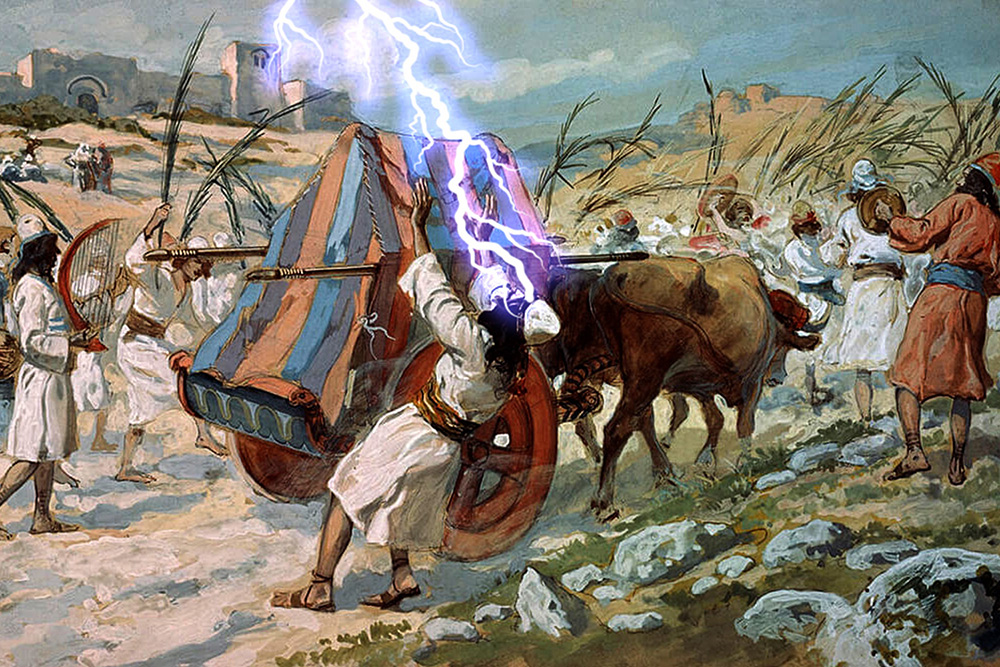
    There are countless examples we can look to where a perceived loss of patience occurred. In these examples, our human eyes see a loss of patience. Examples include the times the Lord told Moses He was going to destroy the Israelites (Exodus 32, Deuteronomy 9:12-14) or Uzzah touching the ark (2 Samuel 6:6-7).

    Does God change His mind?

    Various Google searches of “Is God impatient” come up with many titles like “God is patient – until He isn’t.” I propose that this is not the right way to think about God. I lose patience with my toddler, often. We all lose patience, often. Does God “lose patience” with me? I don’t think so.

    Remember the omniscient thing? Omniscience=all knowing. If God knows the beginning from the end, how can He lose patience? He knows what’s coming.

    From this link during some of those Google searches:

    “God is never said to be patient about things or circumstances. Why? It is because He knows all things. He knows the beginning from the end. He does not have any need of that kind of patience. When we speak of the patience of God, we are not talking about enduring hard times; we are talking about being longsuffering toward people.”

    David Hocking

    Patience, like time, is a human thing. It doesn’t apply to God. We apply it to Him in our attempt to understand Him. But how can God be “patient” if He already knows everything?

    So why are these examples, where it seems like the Lord changes His mind, included in the scriptures? Why is the account of the Lord saying He was going to destroy the Israelites and raise up a seed through Moses, only to “change His mind” included in the Bible?

    The question, “Why is it in the Bible” is almost always answered, “to teach us about Christ.”

    Let’s look at the Moses example.

    Moses is talking to Jehovah when he pleads on behalf of the children of Israel. He is interceding on their behalf. Who does Moses represent here? – Jesus Christ, our advocate with the Father. So, in this case, Moses was being a type of Christ and Christ was assuming the role of God the Father. We were learning from this scripture that Christ is our advocate with the Father, the same way Moses was the advocate for the Israelites with Jehovah.

    We must be careful in applying our human traits to God. God is not us. He works on a completely different plane. We can’t comprehend His ways and it’s important, because of our lack of understanding, we don’t lessen His power and perfection in our finite minds.

    God doesn’t lose patience with circumstances. He can’t. He knows all the circumstances. He knows the beginning. He knows the end. God doesn’t lose patience with us. He can’t. He is perfect in everything, including His love for us. He can want the best from us, He can want us to be better, He can want us to make better choices. But He DOES NOT lose patience with us. He is longsuffering. He is loving. He is perfect.

  • The Prints

    The Prints

    There’s a subtlety throughout scripture I don’t think we discuss often enough.

    We know that when we are resurrected, we are resurrected to our perfect frame. Not a hair on our heads will be lost. We will be perfected (Alma 11:43-44).

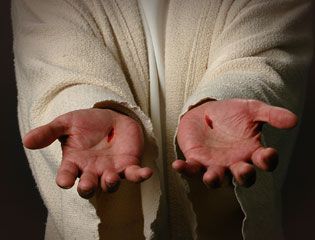
    We also know that when Christ showed Himself after His resurrection, He retained the prints in his hands, wrists, and feet (3 Nephi 11, John 20).

    Why does Christ retain these markings? Why does He keep these reminders of the most pain and suffering any person has ever experienced? It’s because Christ doesn’t remember the suffering when he looks at those marks. He remembers us.

    He could choose to remove those physical “blemishes.” Instead, He keeps them as a reminder.

    He also probably keeps them for us. So that when we see Him, we can be reminded of what He did for us. So we can remember His suffering and in turn realize how deeply He loves us. In this sense, Christ may have Thomas the Doubter (unfair title) in mind (John 20:25).

    Everything in scripture can hold some deep significance.

    I think this often overlooked fact holds spectacular significance.

    He was pierced through, tortured, suffered for us. He will never forget us. We are etched in the palms of His hands.

  • Of Goodly Parents

    Of Goodly Parents

    Over Christmas, I watched family home videos with my family. We played a video from 1994, a few months after my sister Adie was born. I was four at the time. I was singing to Adie.

    Early in the video, I was singing Humpty Dumpty, Old Mcdonald, and Jack and Jill. Then I started singing Follow the Prophet.

    Adam was a prophet, first one that we know.

    In a place called Eden, he helped things to grow.

    Adam served the (King!) Lord by following his ways.

    We are his descendants in the latter days.

    Of course, at that age, I stumbled through most of the song and got many prompts. King was my confident guess at who Adam served. My answer was as right as the correct lyric anyway.

    My mom joked while my whole family was gathered around watching, “See, we did teach you about the Bible.”  We laughed.

    I don’t remember singing that song to Adie when I was four, obviously. But that song is so ingrained in my heart and soul, it’s a part of my being. Watching that video, it’s a physical, emotional, and spiritual remembering. As an adult now, thinking about that song, it feels like it’s always been a part of me. After watching that quick video, I know why.

    Parenthood is infinite tiny moments. I know that every day provides thousands and thousands of opportunities to have an impact on Ivy and Sage. I’m grateful for the thousands and thousands of moments my parents impacted me.

    My parents have flaws just as I do. I pray to Heavenly Father that, despite my many shortcomings and flaws, I can have a positive impact on Ivy and Sage, just as my parents had on me.

    If you’ve read the themes in my writing, you know there are three things ingrained in me that I know to be true.

    1. I have a divine inheritance; I am a child of God.
    2. I am loved.
    3. I am watched over.

    I hope to ingrain these same truths into the hearts and minds of Ivy and Sage. I wish to remind them here of what their souls already know. That is the greatest gift I could give them.

  • How Does God Bring Us Scripture?

    How Does God Bring Us Scripture?

    I recently heard a different denominational Christian individual say, “We believe God can provide scripture in whatever way He wants. It’s not on us to tell Him how He should have brought scripture to us. This is why we believe in the infallibility of the gospel message from the Bible.”

    This individual is adamantly opposed to the Church of Jesus Christ of Latter-day Saints and especially opposed to the Book of Mormon.

    I found that statement so interesting. Of course, I’m pulling the comment of one anonymous individual to make a large sweeping point, but I believe the point is significant nonetheless.

    If believers of the Bible agree with that statement, namely: that God brought the Bible to us through translations, handing down, manuscripts, different texts, different handlers, scholars, writers, and translators, and that was in His power to do so and we don’t try to criticize Him for His method of bringing us His Word…

    My only question is.

    Why can’t that same logic be applied to the Book of Mormon?

  • God Loves a Returned Sinner

    God Loves a Returned Sinner

    Luke 15:7 reads:

    “I say unto you, that likewise joy shall be in heaven over one sinner that repenteth, more than over ninety and nine just persons, which need no repentance.”

    Why does heaven rejoice over a returned sinner?

    Why does Christ love a returned sinner? This should be obvious. Christ loves a returned sinner because they’re utilizing His Atonement, the great gift He gave them. He suffered for that gift. Why wouldn’t He rejoice over it being used?

    It’s very important to point out that this doesn’t make the returned sinner any better than the constantly faithful. Do you think God is up there thinking, “you were always upright. Too bad you didn’t sin some more so I could have increased joy”? Of course not. God loves the consistently faithful. I think another important point here is that we’re all sinners. So, by this scripture we can know, that God loves all who repent of sins. We all sin.

    An individual from history who was a clear sinner, making evil choices, even if he didn’t realize it, was Paul. Paul ended up being one of the greatest missionaries ever but started as the greatest persecutor of the church. Paul received a miraculous visit from Jesus Christ. This converted him and he instantly changed his ways. As we read the scriptures, Paul’s change seems instant. But I believe there was a reason he had to travel blind for three days. I believe his change was actually slow and required a lot of humility.

    Paul became an obvious example of Luke 15:7, heaven rejoicing. Paul was such a go-getter of persecution; the Heavens must have been excited to have him on their team once he converted. Imagine how the angels rejoiced when Paul turned to the Lord because they now knew how ferocious he would be for the Lord.

    Peter can be seen as another example of someone who didn’t always make the right choices. Isn’t it amazing to read the New Testament and consider how flawed the individuals were who Christ chose to spread His word and be His ministers? Peter was no exception. You can look to Peter’s three denials of Christ as a great scriptural moment representing needing to learn a lesson, repent, and double down on conversion and commitment.

    Peter made a huge, and life-altering mistake by denying Christ those three times. It was life-altering for how it helped Peter change his life. It could have been life-altering in how it turned Peter away from Christ. He could have gone the other way. Christ knew He wouldn’t. That’s why Christ picked Peter.

    The show “The Chosen” does an interesting job of depicting Peter. What if Peter was kind of a bad guy? Not a bad heart, but did some bad things. A rough guy. A guy that made a lot of mistakes before he met Jesus and fell in as one of his apostles. Then, slowly, over much time around the Master, Peter became His primary apostle. Peter eventually became the president of Christ’s church.

    The student manual for the book of Mark notes:

    “Mark, more than the other Gospel writers, recorded the disciples’ shortcomings (see Mark 4:36-41; 6:52; 8:14-21). The disciples’ weaknesses stand in contrast to their greath faith and successes, which are depicted in the book of Acts, helping us appreciate the transformation brought about by the Resurrection and the outpouring of the Holy Ghost.”

    Never judge a sinner. They can become the most kind, most gentle, most Godly person. We all have Godhood in us. One day our sins will be in great contrast to our faith and successes when we ultimately attain our full potential.

    The Bible Dictionary definition of “conversion” states:

    Denotes changing one’s views, in a conscious acceptance of the will of God (emphasis added, Acts 3:19). If followed by continued faith in the Lord Jesus Christ, repentance, baptism in water for the remission of sins, and the reception of the Holy Ghost by the laying on of hands, conversion will become complete and will change a natural man into a sanctified, born again, purified person-a new creature in Christ Jesus (see 2 Cor. 5:17). Complete conversion comes after many trials and much testing (emphasis added, see Luke 22:32; D&C 112:12-13). To labor for the conversion of one’s self and others is a noble task, as in Ps. 51:13; Dan. 12:3; James 5:19-20; Alma 26; D&C 18:15-16.”

    The part that stood out to me most from that definition was that complete conversion comes after many trials. I know it did for me. I had to experience the bitter to appreciate the sweet. I had to see how dark life could feel to appreciate Christ’s light. I know my testimony is stronger because I had to learn how dark it can be.

    Did Peter experience his change through trials? Did Paul? I think they did. Those who go through the greatest trials and then turn to the Lord become his most devout followers. Paul was blind. That’s quite a trial. But when he saw the light, he never turned away from it again.

    We all don’t receive miraculous visitations from Jesus Christ like Paul did, or get to work with Christ side-by-side like Peter, but we can still feel His presence, serve Him, and feel what it’s like to have Him by our side. Imagine how different your actions would be day-to-day if Christ was with you? Well, He is.

    Sometimes I worry that faithful, day-one-never-wander latter-day saints are missing this. This devotion to the cause. This understanding of how much you need Him. It’s why trials happen. Otherwise, we’d all walk merrily through this life, never understanding the true depth of the Atonement and how desperately we need Him.

    Now, trials come in all shapes and sizes. Just because someone appears to never have gone through “it”, doesn’t mean they’ve never gone through it. We never know the internal struggles, challenges, and difficulties someone faces in their faith. It’s usually not on the outside. But if you see a devoted person to God, you can assume they’ve been through something. It’s those somethings that bring us to Him.

    God loves a returned sinner. Remember that whenever you make a mistake. While we don’t want to make mistakes, we always want to do our best, God will welcome us back with open arms when we make mistakes and repent. It’s a comforting thought whenever we mess up. God knows our heart. Part of making mistakes and repenting is truly regretting it. This doesn’t mean beating yourself up about it or getting too down on yourself, but it does mean truly feeling regret and remorse for mistakes. This can’t be faked. God knows your heart.

    I think we can learn something really neat from examples like Peter and Paul. No matter how far we stray, God has a place for us. God doesn’t look at what we’ve been or what we are, but what we will be. He knows what we will be. He sees that in us. I’d guess it’s His greatest desire that we see in ourselves what He already knows is there.

    Be like Peter and Paul. Be someone Christ can pick.

    God loves a returned sinner.