Tag: Book of Mormon

  • November 2023 Israel-Palestine Conflict

    November 2023 Israel-Palestine Conflict

    I wrote about the Israel-Palestine conflict earlier this year.

    Here we are 10 months later. I encourage anyone to go read my original post. I just did. It helped me refresh in my mind the complexity of this issue. This issue clearly isn’t going away in our lifetimes. I think it’s only a matter of time before this issue could impact our actual lives so it’s good to be aware of what’s going on.

    Before I write this, be aware that I am aggressively avoidant of the news. It’s so conflicting and I don’t trust it. If I’m going to look into this topic, I’m going to do a lot of research and reading. Beth just said she didn’t know how to interpret the news because she’ll hear one thing and then the complete opposite from moment to moment. So, some of what I write here might be considered politically incorrect. I don’t care.

    I recently accidentally listened to a soundbite from the Republican presidential debate. Someone was asked what Israel should do to the terrorists, Hamas. The response was so… aggressive. I had a bunch of other adjectives there at first, for what the response was. I removed them because I don’t want to offend anyone. That said, I will voice my opinion here. I hope anyone reading who would use aggressive terms about what Israel should do will consider the complexity of the situation before proclaiming that Hamas must be destroyed by any means necessary.

    I just went to search for exactly what was said by that Republican candidate and found an article in the Washington Post with the title:

    Candidates use violent rhetoric on Israel-Gaza war without mentioning humanitarian aid

    I think it’s immensely important to remember that the pursuit of vengeance is causing more atrocities to be performed.

    Terrorism is bad. Obvious statement? Of course. So is retaliation, withholding food, water, and medical supplies to innocent people, bombing hospitals, war crimes.

    Division.

    Pro-Israel or pro-Palestine. These are labels.

    This entire world is focused on creating more divisions among us. Satan reigns in the hearts of men.

    The world is not black and white. The Book of Mormon is a story of two groups of people that couldn’t coexist. They had a centuries-long feud based upon an argument over the right to rule. It is written from the perspective of the Nephites so it can often incorrectly be characterized as a story of good guys versus bad guys. The story of the Nephites and the Lamanites is not a story of good guys and bad guys. It is a story of two groups of people with differing views, ideologies, politics, and cultures that each felt they were in the right.

    The world is not black and white. It is seldom as simple as good guys and bad guys. That’s what we’re seeing in the Middle East right now. A study of the Book of Mormon can show us exactly where this kind of feud leads. It can only lead to complete destruction on both sides.

    Some quotes from my last post on this conflict –

    “What’s worse is what is being done to Israeli people, we are becoming animals.” 

    Two Blue Lines

    “It’s clear that there will not be peace if we continue to demolish innocent peoples’ houses…”

    Two Blue Lines

    “All former Shin Bet (Israel’s internal security service, think the FBI) leaders were unanimous; Israel must talk with the terrorists.  They must talk with anyone that might talk to them.  Peace cannot come through military or tactics or fighting or intelligence.”

    Israel-Palestine Conflict

    “When conflict becomes decades of conflict, an eye for an eye becomes 100,000 eyes for 100,000 eyes.”

    Israel-Palestine Conflict

    The two great commandments of God are to love and to love (Matthew 22:36-40).

    This conflict doesn’t end until forgiveness and love supersede vengeance and bloodshed.

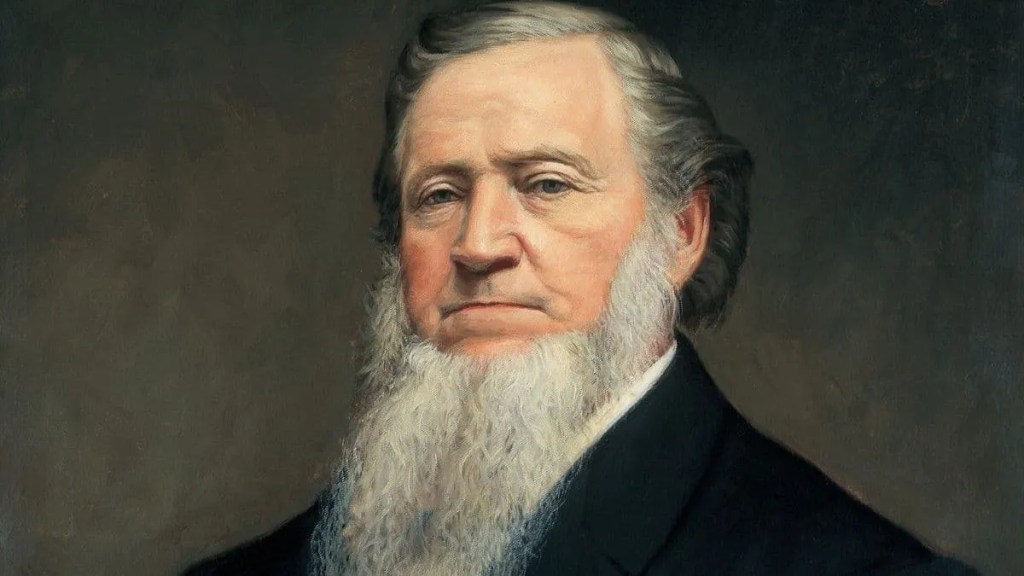
    Now, look at the cover picture, at the top of this post. Look at it closely. Stare at it. Put yourself there. Be the man in that picture for a fraction of a second. I did. That’s why I’m writing this post. My heart breaks for those caught in a war. My heart breaks for those who want nothing to do with this conflict, caught in between angry, vengeful, hateful factions. My heart breaks for men and women holding their dead children in their arms.

    I am not Pro-Israel or Pro-Palestine. I am Pro-peace. I believe we all should be.
  • The Prints

    The Prints

    There’s a subtlety throughout scripture I don’t think we discuss often enough.

    We know that when we are resurrected, we are resurrected to our perfect frame. Not a hair on our heads will be lost. We will be perfected (Alma 11:43-44).

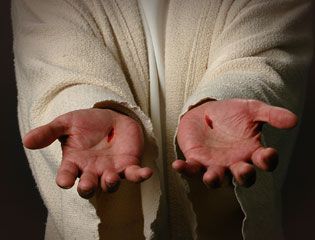
    We also know that when Christ showed Himself after His resurrection, He retained the prints in his hands, wrists, and feet (3 Nephi 11, John 20).

    Why does Christ retain these markings? Why does He keep these reminders of the most pain and suffering any person has ever experienced? It’s because Christ doesn’t remember the suffering when he looks at those marks. He remembers us.

    He could choose to remove those physical “blemishes.” Instead, He keeps them as a reminder.

    He also probably keeps them for us. So that when we see Him, we can be reminded of what He did for us. So we can remember His suffering and in turn realize how deeply He loves us. In this sense, Christ may have Thomas the Doubter (unfair title) in mind (John 20:25).

    Everything in scripture can hold some deep significance.

    I think this often overlooked fact holds spectacular significance.

    He was pierced through, tortured, suffered for us. He will never forget us. We are etched in the palms of His hands.

  • Agency and Mistakes: Was Brigham Young Wrong?

    Agency and Mistakes: Was Brigham Young Wrong?

    Let’s start with an assumption.

    What if Brigham Young incorrectly instituted the practice of the priesthood ban for black people?

    We always think in this way that God can do anything, however He wants to. Why didn’t He fix the priesthood ban for blacks issue immediately after Brigham Young if it was in fact a mistake by Brigham Young?

    We sometimes neglect to think that, if God were to fix things however He wants to, that would likely supersede our agency. This whole life is about us making choices. It would be a problem if God started correcting everything on this earth, especially with our many mistakes and shortcomings as mortals. It was never in God’s plan to supersede our agency, that was Lucifer’s plan.

    But let’s take a bigger perspective on this.

    What if God did correct this issue of black men not receiving the priesthood in the 1800s and early 1900s? What if He corrected it an eternity ago, when He created the Plan? God’s plan is perfect. God doesn’t always fix things the way we think He should fix things. In fact, He probably never fixes things the way we think they should be fixed. That’s what makes Him God and us tiny mortals trying with all our might to be like Him, but inevitably falling short.

    God’s Plan was established well before black men were denied the priesthood through Earth’s late 19th and early 20th centuries. His plan allows all those who would have faithfully accepted the priesthood while in this life to lose out on nothing. This is in precisely the same way His plan accounts for His countless children who didn’t have access to the saving ordinances of the Gospel in life, whether that be due to the gospel not being present on earth, never hearing about it, or a child dying before reaching the age of accountability. God’s plan is perfect. He’s already thought it through. I assume those who have an issue with the delay in the Church allowing black men to have the priesthood also have an issue with the tens of millions of infant deaths each year. In that case, your issue is with your faith in God, not in any church policy.

    I understand that these things are hard to understand while here. Some reading this may respond, “Yes, that’s precisely the issue I have: That many noble and worthy men weren’t allowed the priesthood and the millions of innocent children that die unfairly.” I understand this challenge. This is where faith comes in. I have faith in God, His Plan, His love, and that He will make all these things we don’t understand right. If we don’t have faith in those things, then yes, God is a monster that we should not worship. The God I know loves us and one day all these things will be understood.

    Something to us, here, simple and short-minded on earth, that looks like a huge mistake – it’s not a mistake to God. All those who couldn’t get the priesthood due to an incorrect policy will receive it.

    What if Brigham Young did make a mistake and what if the Church really would have collapsed if that mistake was corrected in the 1860s? THEN God’s church wouldn’t be on the earth. That seems like a real mistake. Again, God has thought these things through.

    We have an example of this principle in the policy change instituted by Wilford Woodruff banning plural marriage. In Official Declaration 1 of 1890, now in the Doctrine and Covenants, Wilford Woodruff says,

    “The question is this: Which is the wisest course for the Latter-day Saints to pursue—to continue to attempt to practice plural marriage, with the laws of the nation against it and the opposition of sixty millions of people, and at the cost of the confiscation and loss of all the Temples, and the stopping of all the ordinances therein, both for the living and the dead, and the imprisonment of the First Presidency and Twelve and the heads of families in the Church, and the confiscation of personal property of the people (all of which of themselves would stop the practice); or, after doing and suffering what we have through our adherence to this principle to cease the practice and submit to the law, and through doing so leave the Prophets, Apostles and fathers at home, so that they can instruct the people and attend to the duties of the Church, and also leave the Temples in the hands of the Saints, so that they can attend to the ordinances of the Gospel, both for the living and the dead?

    “The Lord showed me by vision and revelation exactly what would take place if we did not stop this practice. If we had not stopped it, you would have had no use for … any of the men in this temple at Logan; for all ordinances would be stopped throughout the land of Zion. Confusion would reign throughout Israel, and many men would be made prisoners. This trouble would have come upon the whole Church, and we should have been compelled to stop the practice. Now, the question is, whether it should be stopped in this manner, or in the way the Lord has manifested to us, and leave our Prophets and Apostles and fathers free men, and the temples in the hands of the people, so that the dead may be redeemed.”

    Sometimes we live with this thinking that God can do whatever so why doesn’t He? This, I think, is the basis of so many losing faith in Him. I look forward to the day when we are all reminded that we came to earth willingly, that we knew the Plan, and that we were eternally grateful for the opportunity to have freedom of choice and to learn right from wrong, away from Him (God), where it was completely up to us to make choices.

    Again, we fall into this thinking, I think, that God can do anything He wants however He wants. Maybe. But God still works through us. God still gives us our agency. God still lives by laws. God said He allows plural marriage in the case where he wants to raise a righteous generation unto Himself (Jacob 2). What would we have had God do if He needed to grow the church membership in one generation? Import a couple hundred thousand men and women from space? The answer is – God works with us. He works within the world He has given us.

    God allows us the bounds to make mistakes. Within those mistakes, God’s Plan works. I have faith in the truth of that. God takes our worst, and it becomes part of the Plan. He prefers our best, but He knows us better than we know ourselves.

    On the question of if Brigham Young did make a mistake – again, maybe the answer is yes, but I will refer again to the Official Declaration 1 – this was Wilford Woodruff speaking, “The Lord will never permit me or any other man who stands as President of this Church to lead you astray. It is not in the programme. It is not in the mind of God” (emphasis added).

    It is not in the program. It is not in the mind of God.  

    I believe in giving God all the power we actually try to take away from His power. God doesn’t watch things unfold her and go, “Oh crap, I need a righteous generation, let’s implement polygamy.”  Or, “Oh man, Brigham isn’t listening, this is bad.” This was worked out long ago. Just because we don’t like the way God did things makes it all the more likely He did it perfectly, because we are dumb, and so limited in our view. We cannot comprehend the workings of God.

    Did Brigham Young make a mistake? I don’t know.

    I know who didn’t make a mistake. That’s where I put my faith.

  • What do we believe in?

    What do we believe in?

    My Aunt Lindsey often asks the question, “What do you know?” I usually respond, “Not much.”

    What do we really know? Anything?

    While reading Mosiah chapter 26, I came across an interesting commentary from Hugh Nibley, one of my favorite scholars. The commentary was on Mosiah 26:15 which reads:

    “Blessed art thou, Alma, and blessed are they who were baptized in the waters of Mormon. Thou art blessed because of thy exceeding faith in the words alone of my servant Abinadi” (emphasis added).

    In considering that phrase, “in the words alone of Abinadi”, Hugh Nibley asks, “Now what about childish faith? What about being gullible, etc.? Alma believed in the “words alone”? Alma saw no evidence, no proof, or anything like that? And it wasn’t the words of God; it was the words of Abinadi alone that he believed in? What’s going on here? Why is there merit in this?”

    He continues, “There is merit because Alma believed in his words alone. I would emphasize his. You are blessed because of the things you choose to believe-not by the act of believing, not just by faith. You weren’t blessed because you believed, but because you chose what to believe. Everybody chooses what to believe. The atheist is a very strong believer. He is the most passionate arguer you can possibly find, and the positivist. Where will you find greater faith and firm conviction than among economists? . . . You must believe in something, and everybody does. But the Lord said, blessed are you [Alma] because of the things you chose to believe; you chose to believe in the things that Abinadi taught.”

    I’ve written before about The Faith of an Atheist.

    What do we believe in?

    This is an interesting statement by Hugh Nibley. The idea that it isn’t our faith that is important. Everyone has faith in something. It is what we have faith in. What do we choose to believe? Do we choose to believe that this is all one dumb coincidence and we’re all here for no real reason? Or do we believe in a Savior who redeems us, a Father who loves us, and an eternity of potential?

    Like a lot of things, it’s really about agency. What do we choose to believe in? Alma chose to believe in something good, hopeful, eternal.

    People who leave the church – are they better for it? This is going to upset some people. But in my opinion, no, people aren’t better for leaving the Church. That’s not absolute, of course. Some who leave the church still donate constantly to good causes, serve others, love others, and use their time in helping others. More often than not, I don’t think that’s the case.

    Many who leave the church, instead of turning their focus to good, hopeful, and helpful things, spend the rest of their lives trying to bash, destroy, and talk negatively about the church. Why is that? If leaving the Church of Jesus Christ is a good thing, why doesn’t more good come from it instead of more negativity? Why is tearing down something, whatever your feelings on it, that brings others hope and joy, a good result?

    Is it easy to be a member of the Church of Jesus Christ? With the number of people my age deciding they don’t care for the Church, or any church, I’d say membership in the Church of Jesus Christ is not super easy. A lot of people say, “The church doesn’t do anything for me.” The Church isn’t about what it can do for you. It’s about what you can do for others. When you leave the Church, what do you do for others?

    Leaving the Church is complicated. I’m not trying to oversimplify it too much. But what I think gets lost sometimes is that leaving the Church is often a selfish choice. At least it was for me. I don’t want to have to get up early for church on Sunday. I don’t want to use my Saturday morning helping an elderly person move their belongings. I want to drink. I don’t have time for a church calling like teaching a class, working with the youth, or organizing group activities. I definitely don’t have time for ministering. Yeah, checking on a couple people every so often to make sure they’re doing OK, and really help them if they say they need something, don’t have time for that. I don’t want to pay 10% of what I earn anymore. The list goes on. Someone leaving the Church NEVER thinks this way (or won’t admit it). It’s about historicity or “what they feel” or feeling lied to or CES letter blah blah. I’m not trying to say that those things can’t be hard for people. They are, and I understand that. But often, it comes back to I, when the Church’s main goal is to help us see outside of ourselves.

    Now let’s be clear. Simply going to church isn’t enough. There are plenty of people who go to church on Sunday, leave, and call themselves stalwart disciples of Christ. You may be worse off than the nonbeliever in that case. It may be worse to believe and turn away the sick and needy than to choose not to believe.

    Does some small historical question, or some big historical question, distract you from a plan called “the Plan of Happiness”? Do you choose to worry about a statement by Brigham Young or some question about Joseph Smith? Do you disregard the miraculous book that was written, the testimony of a Savior of the world, an account of that Savior visiting His children in America? Do you ignore the hopeful and positive miracles because you have doubts?

    What do you choose to believe in?

  • Books in 2022

    Books in 2022

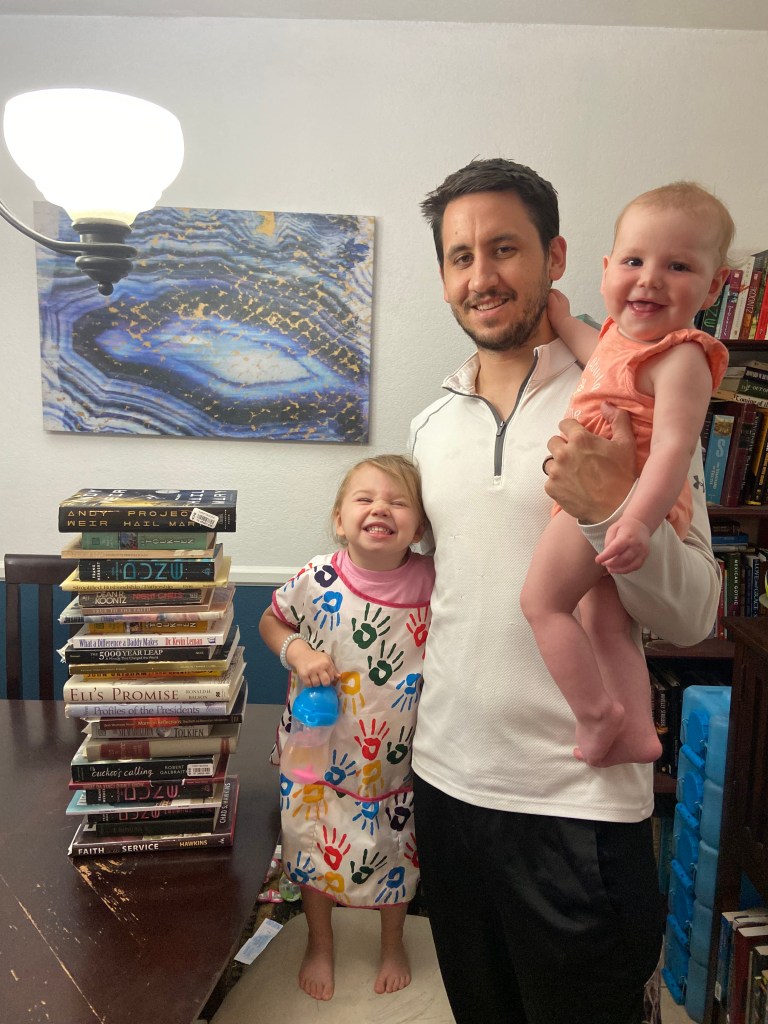
    It’s time for my annual list of books read last year. My 2022 list is down quite a bit due to some non-book reading and studying. I’ll rank the books from favorite to least favorite with a short description of what I remember about the book or what led to its ranking.

    Without further ado, here is my list of books from 2022:

    1. Marvelous Work and a Wonder
      • One of my favorite (and most important) books ever, so despite it being my third or fourth read, still has to top the list. This book lays out just how marvelous a work and a wonder the restoration of Christ’s gospel is.
    2. God Emperor of Dune (book 4)
      • This is the fourth book in the Dune series and comes ahead of Children of Dune and Dune Messiah.
    3. Children of Dune (book 3)
      • It’s hard to separate all these books, they blend into one in my mind, but I think God Emperor was my favorite after book 1, followed by Children of Dune. We’ll get to Dune Messiah later.
    4. 5000 Year Leap
      • This book was given to me by CJ Matthews and as you can see by its ranking, I highly enjoyed it. It resulted in a blog post which is a sign of a good book that made me think.
    5. Project Hail Mary
      • This was another recommended book, this one from John Safstrom. I loved this book, close call between this and the author’s other popular book turned feature film, The Martian starring Matt Damon.
    6. What a Difference a Daddy Makes
      • Yet another recommended book, thanks Mitch Waters who recommended this book after he heard my second daughter was coming. Must read for any girl dad.
    7. The Cuckoo’s Calling
      • J.K. Rowling is a modern marvel. I love her and her writing. While reading, knowing Robert Galbraith is a pseudonym, I couldn’t help but recognize her amazing writing style. This book was so good it made me continue on with the series and I’m currently on book 3, “Career of Evil.”
    8. Night Chills
      • Classic Dean Koontz, spooky and fast-paced. I recommended this to a friend along with a long Stephen King novel (Tommyknockers). The friend quit Tommyknockers and finished Night Chills.
    9. Dune Messiah (book 2)
      • This one drops a bit below the others because I think it was more of a transition book to keep the series going, at least that’s what Frank Herbert seems to have said about the book. It’s still ranked highly because the Dune series is so awesome and sometimes you need bridging books to make the next ones that much better.
    10. Eli’s Promise
      • Any book that makes me cry multiple times probably needs to be in the top ten. This book was a split between Holocaust and modern-day time lines, jumping around a bunch, which kept things interesting throughout.
    11. Herland
      • Classic book I never read in high school but when it was assigned reading for a class I took this year, I decided to actually read the whole book. Glad I did. Book is based around the idea of a women-only society.
    12. Ford County Stories
      • I really like John Grisham. This is a book of short stories focused around Ford County. You know an author is good when they take a topic you have zero interest in, like a small Mississippi town, and make you love it.
    13. Knees Over Toes
      • This book was tough to rank because it made huge changes to my daily habits and saved my Achilles, but can’t be rated higher as a book than the ones above it. Recommended to me by my brother Garrick.
    14. Simplified Husbandship Simplified Fathership
      • This was an impactful book overall but a notch below What a Difference a Daddy Makes (#6). Definitely made me think more seriously about being a father and husband.
    15. Silmarillion
      • I Enjoy the Lord of the Rings stuff, but the mythology can be a bit to keep up with sometimes. I really enjoyed the Silmarillion, but Lord of the Rings books in general are lower on my list due to their density. If I’m reading a fantasy fiction, I like to spend less time trying to understand geography.
    16. Book of Lost Tales Vol 2
      • See notes on Silmarillion, this one is more dense than the Silmarillion since the Silmarillion is like a mythological overview, which made it more enjoyable to me.
    17. The Book of Lost Tales Vol 1
      • The Books of Lost Tales are going way back in the Lord of the Rings mythology, farther than JRR Tolkien ever got published. They’re his son compiling his notes and other works to put together more stories. I enjoy them, but again, very dense and a lot of geography to try to understand sometimes.
    18. A Guide to Tolkien
      • This was basically an encyclopedia of Tolkien. Someday I’ll read the actual encyclopedia.
    19. Just to Illustrate
      • This was a collection of sayings from LeGrand Richards, thus the saying “Just to illustrate,” which apparently was something he was known for saying. Very much enjoyed this book. Though it’s low on the list, LeGrand is one of my favorite people ever.
    20. Faith in the Service
      • This book was all about members of the Church of Jesus Christ of Latter-day Saints that served in the military. As I review this list I realize I didn’t read many bad books this year. I really enjoyed this book, and it still falls near the bottom for the year.
    21. Mormon Reflections: The Path to Mountain Meadows
      • This was a fictional account of what could have led to the horrific events of the Mountain Meadows massacre. Made me think about things. Made me wonder what events could have led to people doing something so heinous.
    22. Joshua Man of Faith
      • This is from a series of books that details the ancient prophets. I read the Moses (# 24) one last year. I didn’t like this one as much as the Moses one. It’s hard to compete with Moses.
    23. Profiles of the Presidents
      • This was a biographical book of all the Presidents of the Church of Jesus Christ of Latter-day Saints.
    24. True to the Faith
      • Almost feels wrong having this so low, but it is essentially a textbook. A textbook on faith, but still a textbook. Weird having a book so low that I feel I should read at least once a year.
    25. What Da Vinci Didn’t Know
      • A book being this low basically means it didn’t stand out to me. I think this book was basically trying to get in on the Da Vinci Code movie hype. I don’t remember learning anything super interesting from this book besides that Leonardo da Vinci was “Leonardo from Vinci.”
    26. 40 Years and Marching On
      • Despite probably liking this book more than What Da Vinci Didn’t Know, I couldn’t for the life of me remember anything about the book until I found it on my shelf. A book that un-memorable gets demoted. It was a BYU studies book that was interesting but still bottom of the list for the year due to being forgotten.

    Additional reading:

    1. Book of Mormon
    2. Doctrine & Covenants
      • Finished Doctrine and Covenants sections 133-Official Declarations. Read alongside two student manuals.
    3. New Testament
      • Book of Matthew and started Book of Mark, reading alongside New Testament Student Manual.
    4. Come Follow Me lesson each week
    5. Did a semester of school and completed 15 credits.
      • Most memorable reading was Nietzche.

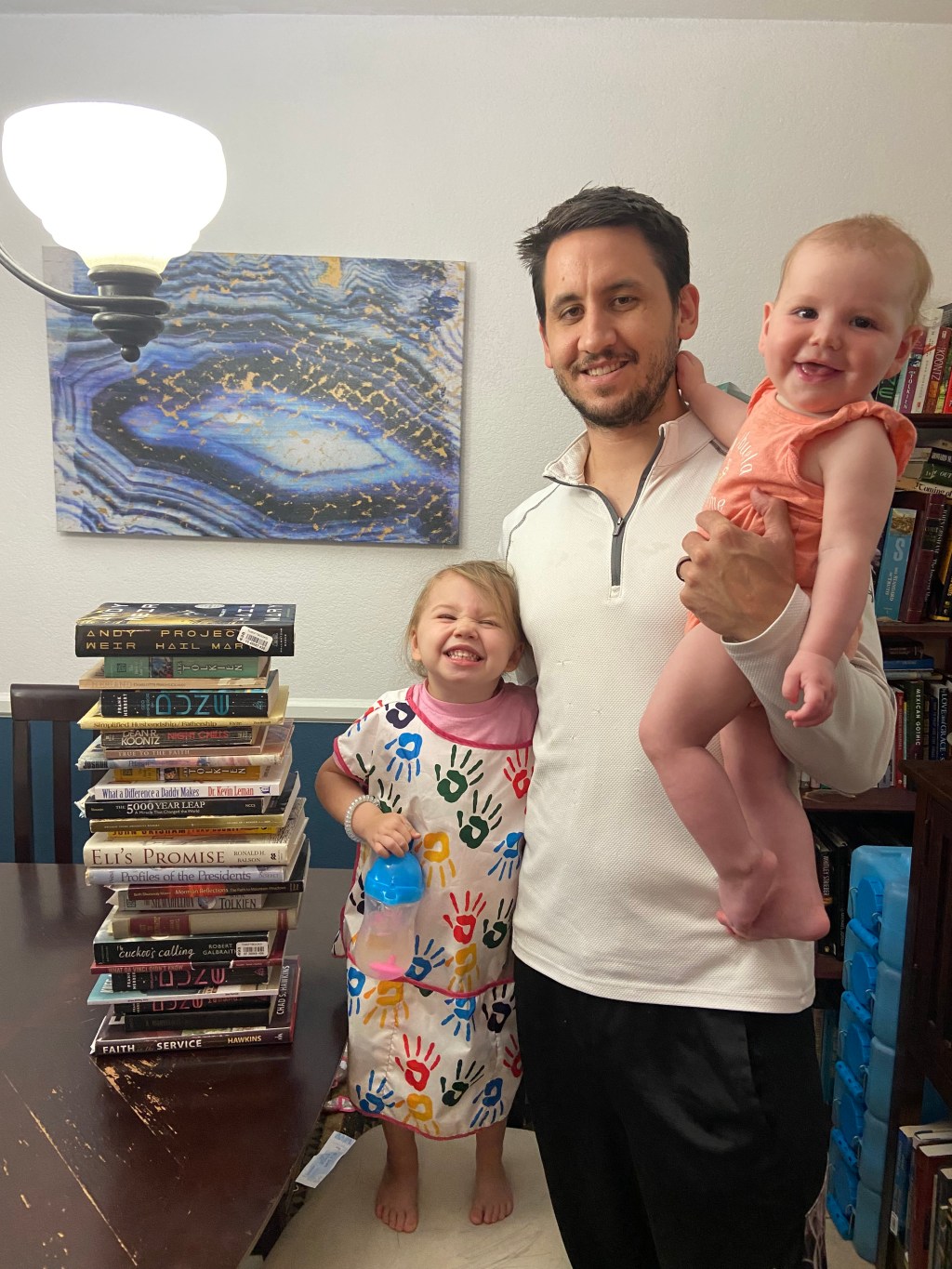
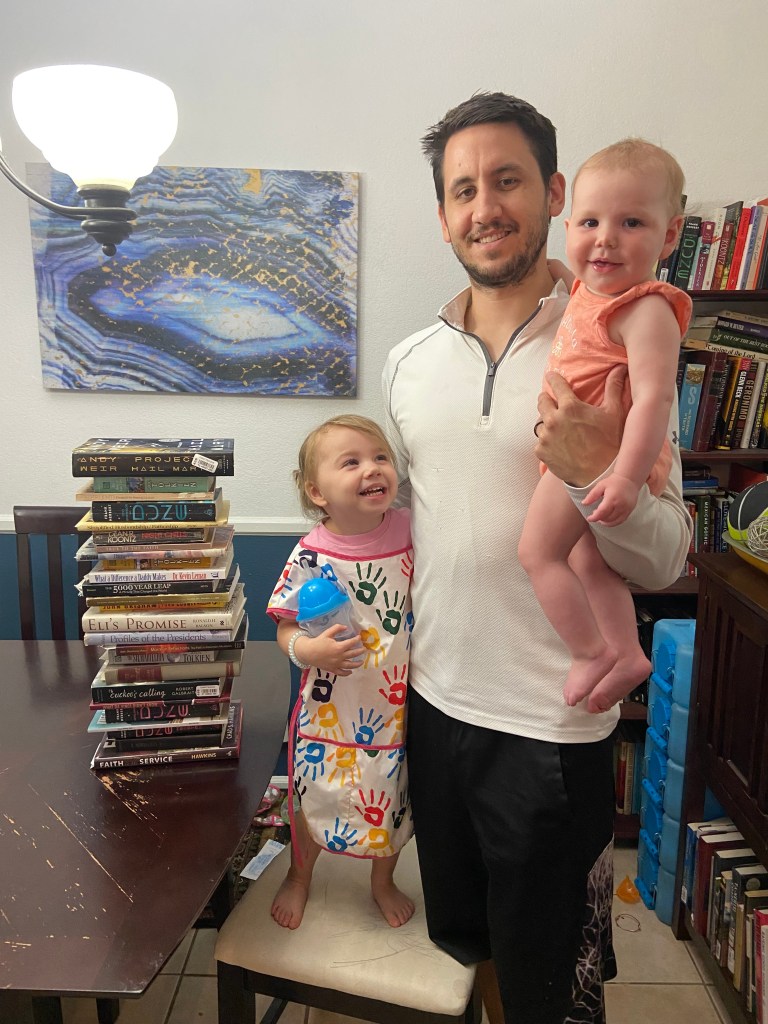
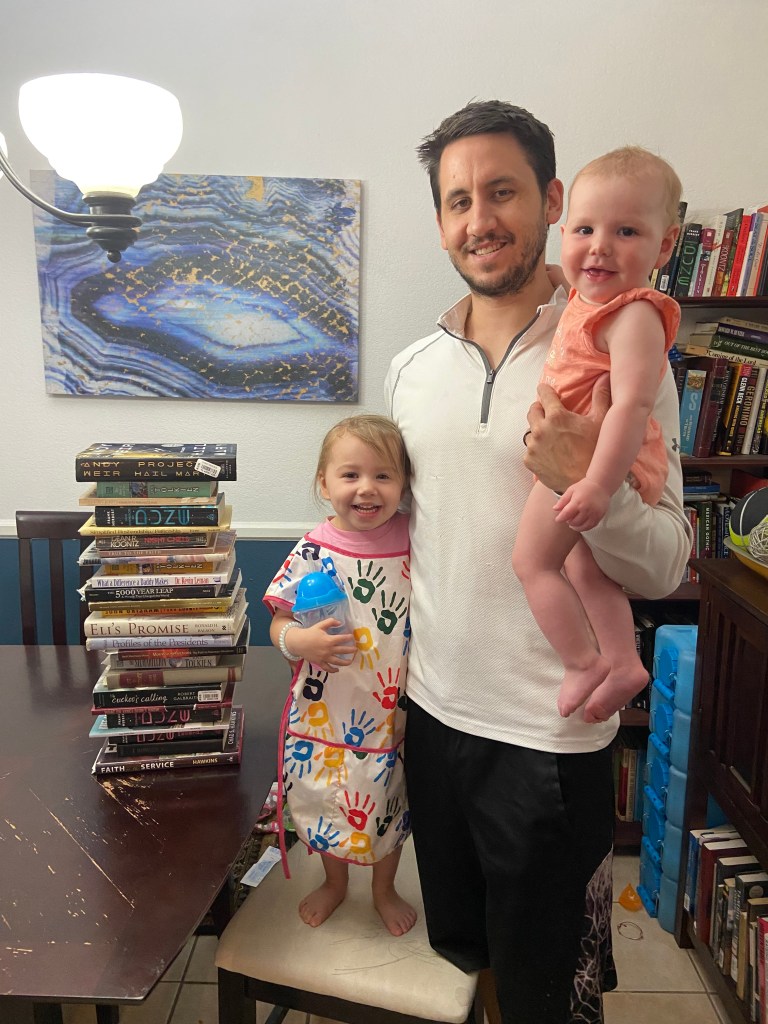
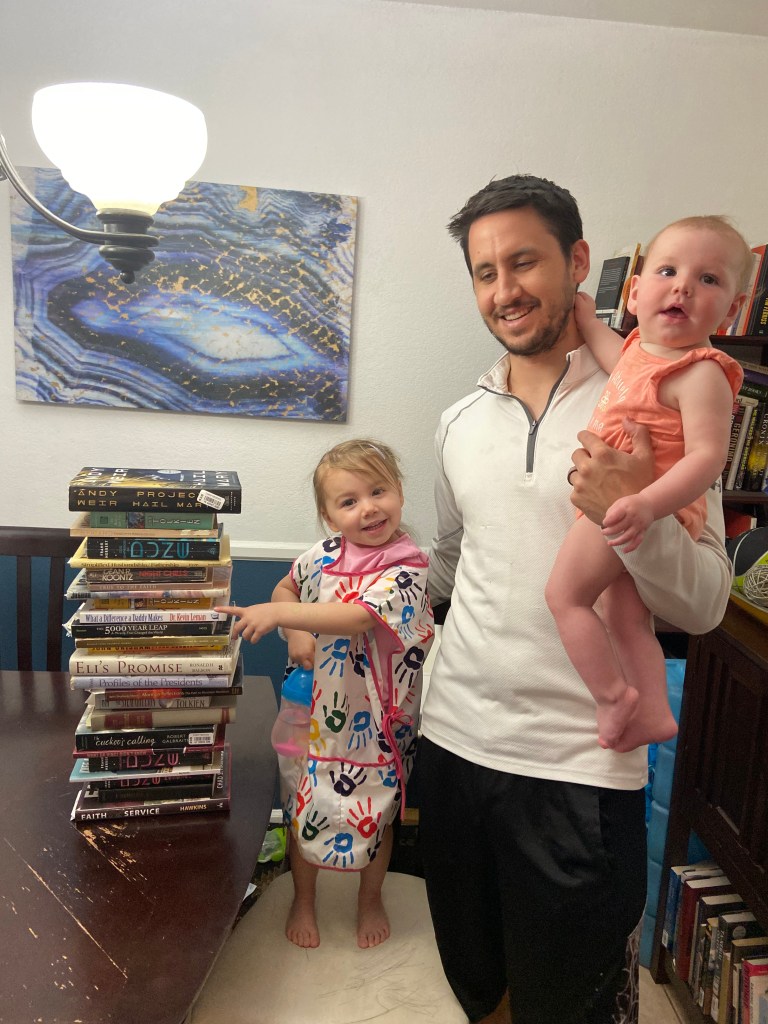
    Couldn’t pick my favorite for the cover photo, so keeping with tradition from last year: