Tag: Book of Mormon

  • Inheritance and Lehi’s Blessing

    Inheritance and Lehi’s Blessing

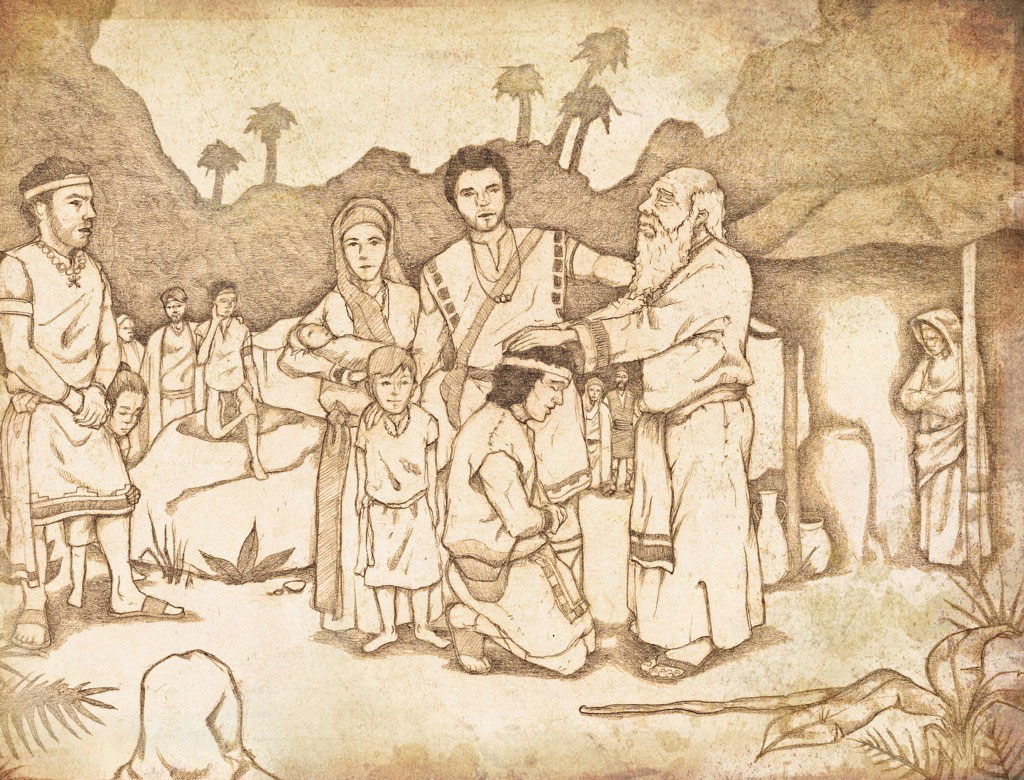
    I have always been confused by the blessings of Lehi to his posterity in the 4th chapter of 2 Nephi in the Book of Mormon.  For one, there is the obvious blessing that is missing: Nephi’s.  For another, there seem to be mixed messages.  Laman and Lemuel have a blessing, but it may be removed?  What does Sam get?  Who is the actual new leader- Nephi or Laman?

    In an article titled Lehi’s Last Will and Testament: A Legal Approach, John Welch goes into great detail on the legality and custom of Lehi’s blessing, and answers all of the above questions. I’d encourage anyone interested to read his whole article. It strengthened my testimony of the authenticity of the Book of Mormon and reminds us of the real world that Nephi was a part of.

    I want to go over some highlights from John Welch’s article that explain Lehi’s blessing in its cultural context. Credit also goes to Alan C. Miner who put together the points I found most relevant to the above questions.

    Inheritance and succession was an important aspect of near eastern culture. It was a way of “preserving and transmitting the family estate from one generation to the next” (John Welch). Typically, the eldest son of the father’s first wife inherited his estate. The leadership of the family was also an important inheritance given. Faulk points out, “a father was free to choose a younger son as his successor, if he found the eldest unworthy of the office.” Sound like this fits Laman and Lemuel much? The father passed this leadership of the family on often through a special blessing (Deuteronomy 21:17), like we see in 2nd Nephi chapter 4.

    There are many examples of this spiritual or ruling leadership being given to a younger son including:

    1. Abel
    2. Seth
    3. Jacob (Israel)
    4. Ephraim
    5. David
    6. Solomon

    In each of these cases older sons were passed over as the spiritual leaders of the family.

    So, we have property inheritance and ruling inheritance. There was a third category sometimes handed down from the father: priestly duties. This is what happened with Lehi giving Jacob the priestly authority in the Book of Mormon. Another example of this was Jacob/Israel’s blessing in the Old Testament. Israel blessed Judah with the ruling authority (Genesis 49:10), Joseph of Egypt receiving a double portion through Ephraim and Manasseh (Genesis 48:22), and Levi inherited some priestly rights to the priesthood.

    As time passed in ancient Jerusalem, it became common custom for the eldest son to automatically receive a double portion of the inheritance. As noted, there were times that younger sons received different portions, or rights to rule, or increased inheritance. This was the exception, not the rule.

    This basic background information brings us to our fascinating story in the Book of Mormon. We have an eldest son, Laman, who was the eldest son of, what appears to be, a relatively well-off citizen of Jerusalem. This family leaves behind their land and property, to venture off to a promised land, a promised land Laman seldom showed faith in attaining. This family spends years in the wilderness, potentially months on a ship, and eventually land in the promised land. This elder brother is now over the moon with joy and enthusiasm. He will inherit all that his father has and be the leader and now king of a new nation.

    But what about Nephi? It was Nephi from the start that helped the family in the wilderness. It was Nephi that went back and got the plates so they could remember God and how to read and write. It was Nephi who built a ship to get them to the promised land. Nephi led the family, physically and spiritually to the promised land. He was the natural leader of the family and deserved to inherit the leadership, and kingship, of this great new nation.

    Lehi has a bit of a conundrum. How was Lehi going to handle Laman’s expectation to receive a double portion from his father? How was Lehi to handle the expectation from Laman that, as the oldest son, it was his RIGHT to inherit everything, despite his lack of leadership throughout the journey. Especially when Nephi had been declared a “ruler and a teacher” (1 Nephi 2:22, 3:29) by God Himself.

    This brings us to our blessing, and to the answer to the questions I always had.

    Lehi needed to appease Laman while attaching appropriate contingencies to his blessing. The main contingency was that Laman’s blessing would be applicable as long as he hearkened unto Nephi. This same admonition was given to Lemuel, Sam, and the sons of Ishmael. If they refused to follow Nephi, their blessings would be null and void.

    So Lehi employed three ways to diminish Laman’s blessing and role as the firstborn son. In diminishing Laman’s role Lehi enhanced Nephi’s. This leads us to the questions:

    First, why was Sam’s portion linked with Nephi’s? Why were there no Samites?

    Combining Sam’s inheritance with Nephi’s was similar to Joseph of Egypt’s blessing being doubled through his sons, Ephraim and Manasseh. Sam’s share of the land was linked to Nephi’s and therefore Nephi’s portion was doubled through Sam’s faithfulness, loyalty, and devotion he would show to Nephi as he always had.

    Welch discusses a second way Lehi diminished Laman’s blessing as found in 2 Nephi 4:5-9, “He [Lehi] blessed his firstborn’s children to the effect that their sins and cursings would be answered upon the heads of their parents. This could not have been flattering to Laman.”

    The third way Laman’s authority and blessing was reduced, Lehi referred to Jacob three times as his “firstborn…in the wilderness” and applied the priestly duties to him. By naming Jacob as another version of the “firstborn,” Lehi subtly took away from Laman’s claims as the firstborn son. As we remember, the custom in ancient Jerusalem was for Laman to receive the inheritance by default because he was the firstborn son. But, with Jacob also receiving a form of the title, “first born son,” Laman lost some claim on this exclusive title.

    Laman was warned that if he was disobedient, to God and to Nephi, that his blessing would be revoked. Lehi was, in a way, willing to give Laman the cursory “honor” of the blessing while putting many safeguards in place to keep Laman from actually ruling.

    This background context gives us additional insight into how the Nephites (followers of Nephi) and Lamanites (followers of Laman) could so quickly devolve into war and contention. The peace was kept as long as Lehi, the official patriarch, was around. Custom in Jerusalem was to love and respect the father (Exodus 20:12). But as soon as Lehi died, it was chaos. Laman was never one to heed faith or blessings, so the warnings from his now passed father were of no concern to him. He wanted to rule.

    To conclude, Alan C. Miner states, “Thus, John Welch has provided a plausible cultural background and answer as to why there were no “Samites.”  His words also give testimony to the fact that the ancient world of which Lehi and Nephi were proposed to be a part of in the pages of the Book of Mormon was a very real world.” The confusing nature of the blessing adds to the authenticity of the Book of Mormon.  Lehi’s blessing is consistent with the pattern an ancient Israelite may use in blessing his children. 

    I bear testimony that the Book of Mormon is a true historical account of families that originated in Jerusalem and eventually settled in the Americas. The more I read and study the book the more obvious it becomes. God has given us a second witness of the divinity of Jesus Christ, and I’m grateful for it. I’m grateful for a book that has been tested for 200 years and still holds up. I’m grateful to know God is still invested in us and our lives. I’m grateful for the Book of Mormon, Joseph Smith, and the Church of Jesus Christ of Latter-day Saints.


  • Beth’s Talk on Mosiah 3:19 (January)

    Beth’s Talk on Mosiah 3:19 (January)

    This is a talk, exactly as written, by Beth, that she gave in church in January. She rehearsed the talk verbally to me multiple times before I heard it in church. Of course, through hearing it I knew it was a great talk, but it wasn’t until proofreading and preparing to post this that I was struck by how phenomenal a talk this really was. Hope you enjoy reading it as much as much as I did. And now, Beth –

    Mosiah 3:19 Talk
    January 9, 2022
    Good morning brothers and sisters.
    I wanted to start by introducing my family as we are one of the families that were blended into this ward with the recent changes in the stake. My name is Elisabeth Quackenbush. My husband is Brayden Quackenbush. We met in the Scottsdale Young Single Adult Ward in 2017 and have been married for over 2 years. We have a one year old daughter named Ivy. You’ll see her running around Sunday School for another 5 months but she is very excited to start nursery after that.

    The topic I was given to speak on this morning is the scripture Mosiah 3:19. When I was informed this was my assignment I wasn’t really surprised. This scripture comes into my mind a lot and is brought up in conversations about life all the time when I’m chatting with my husband. I think it sticks in my mind because it stands in such contrast to a lot of the attitudes of the world these days.

    For those of you that memorized scripture mastery back in the day you may remember this scripture, but as a reminder, this scripture is King Benjamin speaking to his people in the Book of Mormon. It reads,

    “For the natural man is an enemy to God, and has been from the fall of Adam, and will be, forever and ever, unless he yields to the enticings of the Holy Spirit, and putteth off the natural man and becometh a saint through the atonement of Christ the Lord, and becometh as a child, submissive, meek, humble, patient, full of love, willing to submit to all things which the Lord seeth fit to inflict upon him, even as a child doth submit to his father.”

    When we break down this verse, we can derive meaning in a variety of ways. The first that I noted is that the natural man is inherently selfish. The second is the importance of change to the Eternal Plan of Happiness.

    Boyd K Packer stated in his 1990 talk, “Put Off the Natural Man, and Come Off
    Conqueror”:
    “Unchecked selfishness [of the natural man] stubbornly blocks the way for developing all of the divine qualities: love, mercy, patience, long-suffering, kindness, graciousness, goodness, and gentleness. Any tender sprouts from these virtues are sheared off by sharp selfishness. Contrariwise, I cannot think of a single gospel covenant the keeping of which does not shear off selfishness from us.”

    Through the influence of the Holy Ghost, and the atonement of Jesus Christ, we can and should change from the narrow focus of the natural man and become, “submissive, meek, humble, patient, full of love, and willing to submit to the will of God.”

    This idea of our ability and strength to change stands in stark contrast to the pervasive attitude of our society. This attitude states that we are born a certain way. We can’t change, and even shouldn’t want to change. If we do change, we are inauthentic. On the surface, this has a false sense of empowerment, I think. However, this idea that change is bad and that we must only be one way for the rest of our life is truly limiting, almost an eternal purgatory of mediocrity. Compare this to the freedom and growth permitted to us through Jesus Christ’s suffering, that we may improve and become like our Heavenly Father and Savior, Jesus Christ.

    My husband and I have had the opportunity to have many deep, religious
    conversations with friends of a variety of backgrounds. We often come across
    criticism of our faith’s belief that we can take steps, including repentance, baptism, and participating in temple ordinances, to change and become like God. We are accused of valuing works and forgetting the grace provided through Jesus Christ. On the contrary… His grace is the key element that permits us TO become new beings.

    In 2 Corinthians 5:17 we read, “Therefore if any man be in Christ, he is a new
    creature: old things are passed away; behold, all things are become new.”

    Brad Wilcox does a beautiful job in his BYU talk, “His Grace is Sufficient” at outlining how the Atonement of Jesus Christ, through His death and resurrection, provides us the need to change… (forgive me for this lengthy quote but as many of you know, this talk is incredible…)

    “[Yes, we are saved by Grace but] Have you been changed by grace? [We] are so excited about being saved that we are not thinking enough about what comes next. We are so happy the debt is paid that we may not have considered why the debt existed in the first place. Latter-day Saints know not only what Jesus has saved us from but also what He has saved us for.

    “A life impacted by grace eventually begins to look like Christ’s life. While many Christians view Christ’s suffering as only a huge favor He did for us,
    Latter-day Saints also recognize it as a huge investment He made in us.

    “As Moroni puts it, grace isn’t just about being saved. It is also about becoming like the Savior. The miracle of the Atonement is not just that we can live after we die but that we can live more abundantly. The miracle of the Atonement is not just that we can be cleansed and consoled but that we can be transformed.“

    Again, just think for a minute… how does that compare to what we are being taught by the world? I can’t change, I shouldn’t change…

    HOW DO WE PUT OFF THE NATURAL MAN AND BECOME LIKE CHRIST?

    We can actively seek this positive change…

    In her 1998 BYU Speech, Wendy Watson, now well known as Wendy Nelson, lists some ways. One is reflection. She notes how Alma directs this type of reflection:

    “Just how does Alma invite these change-inducing reflections? One way is through his use of questions. In Alma 5 alone, more than 40 questions are offered—questions like:
    Have ye received his image in your countenances? Have ye experienced this mighty change in your hearts? . . .
    . . . If ye have experienced a change of heart, and if ye have felt to sing the song of redeeming love, I would ask, can ye feel so now?‘ [Alma 5:14, 26]. Through the process of persistent questioning, Alma invites us to reflect over and over again: on our status with the Lord, on our spiritual growth and development, on things that need to change or have changed—and before we know it our desire for more change increases.”

    Another idea is to listen to the uplifting voices of authority in your life remembering, “As helpful as human voices of authority are, none can or should replace the ultimate voice of authority—the Word himself: the Savior Jesus Christ. What are you doing to hear his voice in your life? What are you doing to establish his voice as the voice of authority for you?”

    Other ways we can develop this change to become more like Him… Consistently and earnestly repent, seek out holy places, take steps of faith, pray to Him daily.”

    Sometimes change finds us…whether it be through loss, grief, depression, or trials in life, change is often thrust upon us in this mortal life. Again, the world finds few answers as to why there is such suffering and grief in the world. His eternal plan of growth and development is sometimes the only answer that makes sense. If we are to become like Christ, our innocent brother that felt all the sufferings of the world, how can we expect to be truly changed without some suffering of our own?

    Peter in speaking of [trials], said: “Beloved, think it not strange concerning the fiery trial which is to try you, as though some strange thing happened unto you: But rejoice, inasmuch as ye are partakers of Christ’s sufferings; that, when his glory shall be revealed, ye may be glad also with exceeding joy.”

    When we endure this life, put off the natural man, and develop into more Christ-like beings, we set ourselves up to feel an even greater degree of joy in this life and in eternity.

    This topic makes me think of a time when I came back to church after living a life that was not in line with what I knew to be right. I made many positive changes when I started coming back and attending the Scottsdale Young Single Adult ward. I starting observing the sabbath day, stopped a lifestyle of college partying, broke off a serious relationship, and made several other difficult but important decisions.

    However, with all this positive change and shunning of the enticings of the natural man, I still felt like I wasn’t receiving the blessings I thought I would. I wallowed in self pity over my own suffering for a while because of this and even wondered if all of my change was for nothing.

    However, I eventually decided I would stop focusing on what I needed and instead turned outward. I made it my mission to seek anyone in my ward that seemed lonely as I was. I sought opportunities to serve those that were also going through a variety of trials. And a miracle happened! The less I focused on my pain, my loneliness, my loss, and focused on loving those around me as Christ did, I really came to find true joy.

    I couldn’t believe how sincerely I loved everyone around me. I didn’t feel lonely. I developed new, Christ-like attributes. And ultimately, I shunned the ultimate trait of the natural man – selfishness. What a blessing that lesson was for my life.

    I know how hard it can be to put off the feelings we have as humans in a difficult mortal journey. It is something we will actively have to work for as long as we live. However, I know that when we let ourselves change and take on the characteristics of Christ we will prepare ourselves to find real joy in eternity. We will truly have cause to rejoice in his second coming.

    I say these things in the name of Jesus Christ, amen.

  • The Journal Entry of Beth’s Conversion Story

    The Journal Entry of Beth’s Conversion Story

    This is my wife, Beth’s testimony exactly as written.  Names have been changed.

    In a future post I will give some of my thoughts about this, but for now, the power of her testimony should stand on its own, unencumbered by any comments I could hope to make.

    Here it is.

    The Journal Entry of Beth’s Conversion Story

    April 20, 2016

                   I just read my patriarchal blessing for the second time since I got it. It confirmed promptings I’ve been having lately that I should do some journaling for myself and posterity so, even though it is past midnight I felt it better to do this than mindlessly fall asleep to some Netflix show. The past few years have had so much I don’t know how to fit everything I should write to remember. So, because of my failings as a journal writer, it will have to be a highlight reel of life. I just feel some changes that have occurred are too important to neglect to include.

                   I am in my third year at ASU. I love it, I love learning, but my diagnosis with clinical depression in October 2015 has really been a roadblock in my ability to work hard. Luckily, after dropping out for a semester, I’m slowly starting to feel like myself again. I’m not taking medication anymore but I’ve been hiking often and the feeling I get from pushing myself and being physically fit really serves as a great anti-depressant. So I’m back in school with just 9 credit hours, but hard classes. (1920’s senior thesis, history of college sports, and existentialism) I will probably graduate in about a year and do some sort of graduate school program. I previously had been dead set on going to law school. However, I’ve had to rethink my career path after being diagnosed with the depression episode. I don’t really trust myself to be able to go through law school. I always had 100% confidence in my academic capabilities. Now, I’ve taken a real hit to that confidence. My patriarchal blessing does mention that through my righteousness I will have many different career options. That has been comforting.

                   Life has been full of changes the past year. I think the biggest one that I will write on is about the ending of my very serious relationship with John for 2 ½ years and my decision to come back to church. I dated him from senior year of high school all the way up to just short of my 21st birthday. I really thought I loved him. He and I had plans to even get married one day. We were HS sweethearts and he was what I considered my first real love. I feel a real sense of anger at the situation but I also can’t help but think I will always love who he used to be and what we used to have.

    Initially, since about sophomore year of high school, I was set on not being LDS. I didn’t have a testimony of the Book of Mormon, I didn’t believe what the prophets spoke about. I wanted to live contrary to many of the commandments. I never cared to enter the temple. I was prepared to live that life with John too. We were definitely not living by LDS standards and that is exactly what I wanted. I was perfectly happy breaking the word of wisdom and living contrary to the law of chastity, among other things. Our relationship was never perfect. We fought often. He drank. I remember one day he drank so much he wound up in the hospital knocked out. For approximately 5 hours I sat there watching him, angry, upset, feeling betrayed, but wanting to show compassion. He cheated on me many times. I would often find messages on his phone texting other girls. He was perfectly fine with going out and getting drunk with other girls when I wasn’t around. Dramatic scenarios like these were often. I didn’t like who I was when I was with him. But I lost touch with who I used to be or who I could be. And when there were good times, I felt some amazing love. I just started to realize I had a better potential and I deserved better.

                   The changes came slowly at first. I remember when Clark was on his mission, I had one night where I felt so very, extremely alone. Not just physically but much deeper than that. It was dark. I was overcome by hopelessness. It was a feeling I almost lack the ability to explain. I now think it was a result of separating myself so far from the spirit that the light from Christ dimmed. I was prideful. I hadn’t prayed in years. But I did. I prayed in that moment. Desperately. I pleaded with God, please take this feeling from me even though I know I don’t deserve it. Immediately, my fear dissipated and calm overwhelmed me. That was the first time I understood how real prayer was. I wish I could convey that feeling to others. It was painful, scary, optimistic, and inspiring all at once. That was a start.

                   Any institute classes at ASU helped too. I didn’t mind studying the gospel from an intellectual standpoint so I liked going. I read scriptures. I discussed the gospel. I often was so eager to share what I learned with John. Sometimes he’d listen, other times he’d pretend to. It was awkward. I wanted to share what I found profound and he was resistant. But again, there were slow changes creeping in. I was realizing what the words of the gospel could mean. And he was realizing that he wanted nothing to do with it.

                   The real changes began around the start of 2015. I had quit or was about to quit partaking in most of the big sins I had been living in for years. I had already quit drinking and I was ready to cut-off the intimate aspect of my relationship with John. I had an institute class on the Teachings of the Latter-Day Prophets at this time. For some scheduling reason, I missed that class often. To make up absences we had to write papers on general conference talks. (Which I had never listened to previously in my life) So I did it. And that was a blessing in disguise. Again, I took it as an intellectual opportunity, like listening to Gospel TED Talks. At first I learned a lot. But then I began to feel a lot. I studied the atonement. And the friendship and companionship of Christ. I studied talks on being genuine and being compassionate. I began to slowly feel a change of heart, a softening of a heart that had been proud for many years. And even though I thought I was happy before, I started to feel joy. Real joy. And I started to feel love for others. Real Christ-like love. And I started to understand my divine purpose. The real potential I could live up to. Then came the dreams that gave the final push.

                   I’ve had vivid and detailed dreams for a few years now. Often they are silly. But often they are profound. Sometimes they even come true. I know that for many of us, the spirit speaks to us in dreams. For context, it is important to know I never wanted to get married in the temple before in my life and I never had been the kind of girl to dream excessively of my wedding day either. However, I had about four dreams where I was walking out of the temple in a white dress looking happier than I’d ever been lovingly holding the hand of a man. These dreams always ended right before I saw the face of the man I married. One night, I had the fifth identical dream but this time the man was John.

                   In addition, I had another dream that my friend Mike was home from his mission, in white, crying and saying how proud he was while hugging another person dressed in white. As he turned around it became clear it was John on his baptism day! So with these dreams I thought I knew what it meant! John and I would change our ways, repent, convert, and live happily ever after.

                   But of course that isn’t what happened. As a side note, I now have a different interpretation of those dreams. I think God was showing me what could be. What I should want to be. And as I saw that possibility play out in my dreams but realized that it could not be a reality in real life I had to consider what I truly wanted and expected for myself. After I broke up with John I had the wedding dream only once more. It was once again identical to the dreams before. But I saw the man I was going to marry. It isn’t like I could list a particular physical look I had for him but it’s as if I knew who he was anyway. As if the trust and love I had for him made me know him. And it made me desire so much to strive to one day be endowed so that I will get to marry that man and walk out of the temple with him one day. That was the first time I wanted to go through the temple. I now hope to be endowed and sealed one day.

    So after these dreams I tried to appeal to John, first by asking him to quit drinking. I wanted so badly to have the life I thought I knew we could have. But we were sent here with free will and someone needs to want to change in order to truly change. He did not want to change. The last few months were devastating. I thought I loved John, I was otherwise so happy, but my relationship was suffering. I was starting to open up to the gospel, to build a relationship with Christ. I was doing well in school, I was making many friends. But we had diverged. Thankfully I was blessed to be given so many obvious signs of what was right that I knew without any doubt there was no turning back from the Gospel at this point. I either go forward with this change next to John or I go forward without him. But I had to go forward And so June came, he sat on my front doorstep. We talked kindly but distanced. And that was it. I was sad. The man I thought I loved was gone. But inexplicably I felt so at peace. It felt okay. I felt optimistic. I sensed a hard path ahead but I knew it was going to be worth it.

                   So here I am with that journey under my belt. It has left me at times feeling damaged. I’m generally a confident person but I took a real hit to my self worth after this. The depression has made me feel like I’m not as smart or capable as I thought I was. My failed relationship made me feel I’m not worth someone’s loyalty or commitment That no matter how pretty or smart or funny or confident they think I am that a life with me wasn’t worth giving up something as trivial as alcohol. That my friends weren’t wiling to stick around when I chose to give up sin and follow Christ. But the gospel keeps me going.

                   I can’t wait to love someone that chooses to love me fully back. I hope one day I can trust myself to do that. I hope one day I can give 100% of my love and feel it back. I want to trust that I’m worth someone’s loyalty. I want to trust I’m worth a righteous man. I pray to become better through this trial so I can be worth it one day.

    And in the end of this trial I realize I’m grateful for it. I look to those times where I was given a sign and a testimony loud and clear when I’m beginning to doubt. And I’ve doubted. I was proud enough to think blessings would rain down on me immediately after this big step. They didn’t, at least not in the form I had expected. I’ve dated in the YSA ward but there hasn’t been anyone I’m seriously in to. In fact I almost find myself incapable of emotionally attaching to anyone. I’ve dealt with crippling depression. I lost friends. People decided they would choose John over me. They decided it was better to have the partying John than the sober Beth. I lost direction in my career path. But among all these trials I now understand what is temporary and what is eternal. It was the most alone I had ever felt. But I finally knew I wasn’t really ever alone.

                   I had to go through my own repentance process with the bishop. (Farnsworth then Thurston) It was scary. But I now love and feel the atonement for real. Every time I pray, I thank Heavenly Father for Christ’s atonement. I needed the atonement then, and I need it now. My testimony in the atonement holds me over when my testimony in other aspects is less stable. My testimony of the eternal nature of being is so strong. My testimony of Christ’s personal relationship to us through prayer is tangible.

                   I love Christ. I feel him there because he knows my pain. He’s been my friend when all hope was gone. I’m not completely myself again but I find joy in reaching out to those who I sense also feel alone, damaged, or scared. My trial has given me an ability to reach out to those in pain just as Christ does. And I feel real, Christ-like love that I’ve never felt before. I look at people with a new light now because of it.  I try to understand the principle of forgiveness because I need it. I long to maintain an eternal perspective because I knew what challenges there were to face on Earth yet I boldly said I was ready to do it. And I will continue to do so.

                   I look forward to the day I can look back and understand the ‘why’ of my experiences and trials. But for now I will press on with hope and gratitude. I know my Savior lives. I hope I never doubt it! I hope I never forget. I am so grateful for the hard times. I’m grateful for humility and for this clarity. I’m so grateful for my story.

    Elisabeth Brooke Cannon

  • Truths Removed from the Bible

    Truths Removed from the Bible

    This post comes directly from something I read on my favorite Book of Mormon commentary website. He received it from a book I would like to read at some point by Anthony E. Bentley: 1000 Evidences for the Church of Jesus Christ of Latter-day Saints: Part Two-A Voice from the Dust: 500 Evidences in Support of the Book of Mormon. The portion I’m taking from the book is from pages 16-17.

    In the book, Brother Bentley points out how critics like to ask for specific examples of any “plain and precious things” found in the Book of Mormon that are not also found in the Bible. He then provides this list:

    • The Lord prepares a way for us to keep all of His commandments (1 Nephi 3:7):
      • 7 And it came to pass that I, Nephi, said unto my father: I awill go and do the things which the Lord hath commanded, for I know that the Lord giveth no bcommandments unto the children of men, save he shall cprepare a way for them that they may accomplish the thing which he commandeth them.
    • How mysteries are made known unto man (1 Nephi 10:19; Mosiah 2:9; Alma 12:10; 26:22)
      • 19 For he that diligently seeketh shall find; and the bmysteries of God shall be unfolded unto them, by the power of the cHoly Ghost, as well in these times as in times of old, and as well in times of old as in times to come; wherefore, the dcourse of the Lord is one eternal round.
      • 9 And these are the words which he aspake and caused to be written, saying: My brethren, all ye that have assembled yourselves together, you that can hear my words which I shall speak unto you this day; for I have not commanded you to come up hither to btrifle with the words which I shall speak, but that you should chearken unto me, and open your ears that ye may hear, and your dhearts that ye may understand, and your eminds that the fmysteries of God may be unfolded to your view.
      • 10 And therefore, he that will aharden his heart, the same receiveth the blesser portion of the word; and he that will cnot harden his heart, to him is dgiven the greater portion of the word, until it is given unto him to know the mysteries of God until he know them in full.
      • 22 Yea, he that arepenteth and exerciseth faith, and bringeth forth good bworks, and prayeth continually without ceasing—unto such it is given to know the cmysteries of God; yea, unto such it shall be dgiven to ereveal things which never have been revealed; yea, and it shall be given unto such to bring thousands of souls to repentance, even as it has been given unto us to bring these our brethren to repentance.
    • The process for receiving revelation and inspiration (1 Nephi 17:45; Enos 1:10)
      • 45 Ye are aswift to do iniquity but slow to remember the Lord your God. Ye have seen an bangel, and he spake unto you; yea, ye have heard his voice from time to time; and he hath spoken unto you in a still small voice, but ye were cpast feeling, that ye could not feel his words; wherefore, he has spoken unto you like unto the voice of thunder, which did cause the earth to shake as if it were to divide asunder.
      • 10 And while I was thus struggling in the spirit, behold, the voice of the Lord came into my amind again, saying: I will visit thy brethren according to their diligence in keeping my commandments. I have bgiven unto them this land, and it is a holy land; and I ccurse it not save it be for the cause of iniquity; wherefore, I will visit thy brethren according as I have said; and their dtransgressions will I bring down with sorrow upon their own heads.
    • The gentiles to assist the house of Israel (1 Nephi 22:8-11; 2 Nephi 10:18)
      • And after our seed is scattered the Lord God will proceed to do a amarvelous work among the bGentiles, which shall be of great cworth unto our seed; wherefore, it is likened unto their being nourished by the dGentiles and being carried in their arms and upon their shoulders.
      • And it shall also be of aworth unto the Gentiles; and not only unto the Gentiles but bunto all the chouse of Israel, unto the making known of the dcovenants of the Father of heaven unto Abraham, saying: In thy eseed shall all the kindreds of the earth be fblessed.
      • 10 And I would, my brethren, that ye should know that all the kindreds of the earth cannot be blessed unless he shall make abare his arm in the eyes of the nations.
      • 11 Wherefore, the Lord God will proceed to make bare his arm in the eyes of all the anations, in bringing about his covenants and his gospel unto those who are of the house of Israel.
      • 18 Wherefore, my beloved brethren, thus saith our God: I will afflict thy seed by the hand of the Gentiles; nevertheless, I will asoften the hearts of the bGentiles, that they shall be like unto a father to them; wherefore, the Gentiles shall be cblessed and dnumbered among the house of Israel.
    • The law of consecration (2 Nephi 2:2)
      • 2 Nevertheless, Jacob, my firstborn in the wilderness, thou knowest the greatness of God; and he shall consecrate thine aafflictions for thy gain.
    • The reason God allows evil and opposition to continue in the world and the importance of moral agency (2 Nephi 2:2, 10:16)
      • (See above).
      • 16 Wherefore, he that afighteth against bZion, both Jew and Gentile, both bond and free, both male and female, cshall perish; for dthey are they who are the ewhore of all the earth; for fthey who are gnot for me are hagainst me, saith our God.
    • The purpose of Adam’s fall & man’s existence (2 Nephi 2:22-25)
      • 22 And now, behold, if Adam had not transgressed he would not have fallen, but he would have remained in the garden of Eden. And all things which were created must have remained in the same state in which they were after they were created; and they must have remained forever, and had no end.
      • 23 And they would have had no achildren; wherefore they would have remained in a state of innocence, having no bjoy, for they knew no misery; doing no good, for they knew no csin.
      • 24 But behold, all things have been done in the wisdom of him who aknoweth all things.
      • 25 aAdam bfell that men might be; and men care, that they might have djoy.
    • The lost prophecy of the latter-day Joseph (2 Nephi 3:6-16)
    • God’s word is not limited to the Bible (2 Nephi 29:3-13)
    • The lost teachings of Zenos (Jacob 5:1-77)
    • A description of the natural man, and how to overcome (Mosiah 3:19; Alma 5:6-45)
      • 19 For the anatural bman is an cenemy to God, and has been from the dfall of Adam, and will be, forever and ever, unless he eyields to the enticings of the fHoly Spirit, and gputteth off the hnatural man and becometh a isaint through the atonement of Christ the Lord, and becometh as a jchildksubmissive, meek, humble, patient, full of love, willing to submit to all things which the Lord seeth fit to inflict upon him, even as a child doth submit to his father.
    • How to retain the remission of sins (Mosiah 4:11-16)
    • The true process of being born again (Mosiah 5:2-9; Alma 5:6-45)
    • The office and calling of a seer (Mosiah 8:13-17):
      • 13 Now Ammon said unto him: I can assuredly tell thee, O king, of a man that can atranslate the records; for he has wherewith that he can look, and translate all records that are of ancient date; and it is a gift from God. And the things are called binterpreters, and no man can look in them except he be commanded, lest he should look for that he ought not and he should perish. And whosoever is commanded to look in them, the same is called cseer.
      • 14 And behold, the king of the people who are in the land of Zarahemla is the man that is commanded to do these things, and who has this high gift from God.
      • 15 And the king said that a aseer is greater than a prophet.
      • 16 And Ammon said that a seer is a revelator and a prophet also; and a gift which is greater can no man have, except he should possess the power of God, which no man can; yet a man may have great power given him from God.
      • 17 But a seer can know of things which are past, and also of things which are to come, and by them shall all things be revealed, or, rather, shall secret things be made manifest, and hidden things shall come to light, and things which are not known shall be made known by them, and also things shall be made known by them which otherwise could not be known.
    • The manner in which faith is developed and maintained (Alma 32:26-34)
    • The relationship between justice and mercy (Alma 34:15-16)
      • 15 And thus he shall bring asalvation to all those who shall believe on his name; this being the intent of this last sacrifice, to bring about the bowels of mercy, which overpowereth justice, and bringeth about means unto men that they may have faith unto repentance.
      • 16 And thus amercy can satisfy the demands of bjustice, and encircles them in the arms of safety, while he that exercises no faith unto repentance is exposed to the whole law of the demands of cjustice; therefore only unto him that has faith unto repentance is brought about the great and eternal dplan of eredemption.
    • The state of the soul between death and the resurrection (Alma 40:11-14):
      • 11 Now, concerning the astate of the soul between bdeath and the resurrection—Behold, it has been made known unto me by an angel, that the spirits of all men, as soon as they are departed from this mortal body, yea, the spirits of all men, whether they be good or evil, are ctaken dhome to that God who gave them life.
      • 12 And then shall it come to pass, that the spirits of those who are righteous are received into a state of ahappiness, which is called bparadise, a state of rest, a state of cpeace, where they shall rest from all their troubles and from all care, and sorrow.
      • 13 And then shall it come to pass, that the aspirits of the wicked, yea, who are evil—for behold, they have no part nor portion of the Spirit of the Lord; for behold, they chose evil works rather than good; therefore the spirit of the bdevil did enter into them, and take possession of their house—and these shall be cast out into couter darkness; there shall be dweeping, and wailing, and gnashing of teeth, and this because of their own iniquity, being led captive by the will of the devil.
      • 14 Now this is the state of the asouls of the bwicked, yea, in darkness, and a state of awful, cfearful looking for the fiery dindignation of the wrath of God upon them; thus they remain in this estate, as well as the righteous in paradise, until the time of their resurrection.
    • Christians and Christianity flourished before the time of Christ (Alma 46:13-16):
      • 13 And he fastened on his head-plate, and his abreastplate, and his shields, and girded on his armor about his loins; and he took the pole, which had on the end thereof his rent coat, (and he called it the btitle of liberty) and he cbowed himself to the earth, and he prayed mightily unto his God for the blessings of liberty to rest upon his brethren, so long as there should a band of dChristians remain to possess the land—
      • 14 For thus were all the true believers of Christ, who belonged to the church of God, called by those who did not belong to the church.
      • 15 And those who did belong to the church were afaithful; yea, all those who were true believers in Christ btook upon them, gladly, the name of Christ, or cChristians as they were called, because of their belief in Christ who should come.
      • 16 And therefore, at this time, Moroni prayed that the cause of the Christians, and the afreedom of the land might be favored.
    • The symbolisms of the remnant of Joseph’s coat (Alma 46:23)
      • 23 Moroni said unto them: Behold, we are a aremnant of the seed of Jacob; yea, we are a remnant of the seed of bJoseph, whose ccoat was rent by his brethren into many pieces; yea, and now behold, let us remember to keep the commandments of God, or our garments shall be rent by our brethren, and we be cast into prison, or be sold, or be slain.
    • The perpetual cycle of the human experience (pride cycle): obedience–>blessings–>prosperity–>pride–>sin–punishment–>humility–>repentance–>obedience . . . (Helaman 12:1-3):
      • And thus we can behold how false, and also the unsteadiness of the hearts of the children of men; yea, we can see that the Lord in his great infinite goodness doth bless and aprosper those who put their btrust in him.
      • Yea, and we may see at the very atime when he doth bprosper his people, yea, in the increase of their fields, their flocks and their herds, and in gold, and in silver, and in all manner of cprecious things of every kind and art; sparing their lives, and delivering them out of the hands of their enemies; softening the hearts of their enemies that they should not declare wars against them; yea, and in fine, doing all things for the welfare and happiness of his people; yea, then is the time that they do dharden their hearts, and do eforget the Lord their God, and do ftrample under their feet the Holy One—yea, and this because of their ease, and their exceedingly great prosperity.
      • And thus we see that except the Lord doth achasten his people with many afflictions, yea, except he doth visit them with bdeath and with terror, and with famine and with all manner of pestilence, they will not cremember him.
    • The “other sheep” spoken of in John 10:16 are identified (3 Nephi 15:16-24)
    • The powers of translated beings (3 Nephi 28:36-40)
      • 36 And now behold, as I spake concerning those whom the Lord hath chosen, yea, even three who were caught up into the heavens, that I knew not whether they were acleansed from bmortality to immortality—
      • 37 But behold, since I wrote, I have inquired of the Lord, and he hath made it manifest unto me that there must needs be a change wrought upon their bodies, or else it needs be that they must taste of death;
      • 38 Therefore, that they might not taste of death there was a achange wrought upon their bodies, that they might not bsuffer pain nor sorrow save it were for the sins of the world.
      • 39 Now this change was not equal to that which shall take place at the last day; but there was a change wrought upon them, insomuch that Satan could have no power over them, that he could not atempt them; and they were bsanctified in the flesh, that they were choly, and that the powers of the earth could not hold them.
      • 40 And in this state they were to remain until the judgment day of Christ; and at that day they were to receive a greater change, and to be received into the kingdom of the Father to go no more out, but to dwell with God eternally in the heavens.
    • Baptism is only for those who are accountable (Moroni 8:5-23)
    • The manner in which all truth may be verified (Moroni 10:4-5)   
      • And when ye shall receive these things, I would exhort you that ye would aask God, the Eternal Father, in the name of Christ, if these things are not btrue; and if ye shall ask with a csincere heart, with dreal intent, having efaith in Christ, he will fmanifest the gtruth of it unto you, by the power of the Holy Ghost.
      • And by the power of the Holy Ghost ye may aknow the btruth of all things.

    And lastly, one of my own:

    Order of baptism 3 Nephi 11:24-27
    24 And now behold, these are the words which ye shall say, calling them by name, saying:
    25 Having aauthority given me of Jesus Christ, I baptize you in the name of the bFather, and of the Son, and of the Holy Ghost. Amen.
    26 And then shall ye aimmerse them in the water, and come forth again out of the water.
    27 And after this manner shall ye abaptize in my name; for behold, verily I say unto you, that the Father, and the Son, and the Holy Ghost are bone; and I am in the Father, and the Father in me, and the Father and I are one.

    I haven’t personally checked the Bible for all of these truths. If anyone knows of places in the Bible that speaks of any of these truths I would gladly review them. Ultimately, it is not a competition between the Bible and the Book of Mormon. The primary purpose of the Book of Mormon is to testify of Christ, and part of that purpose is accomplished by supporting the Bible in every way. The Bible and the Book of Mormon together leave indisputable evidence of Christ’s divine mission as our Savior.

  • Teaching in Heaven

    Teaching in Heaven

    I was having a conversation with a very close friend about the Church.  Topics ranged from authority, to the Book of Mormon, to prophets. 

    As I was having this conversation I realized how uphill the battle was to describe these things to someone whom the topic was so foreign to. It wasn’t that my friend was flawed in any way.  In fact, if there was any flaw it was in my ability to communicate with the English language things of such magnitude, such importance, such eternal significance. These situations are a reminder to me of how blessed I’ve been to be raised with the Gospel of Jesus Christ in my life.

    I’ve had many such conversations.  Battling the biases, worldly distractions, and worldly concerns, so inherent and built into us while here during this mortal journey.

    As I was having this conversation with my friend, and struggling with the constant frustration of feeling like I’m just not doing justice to these spiritual topics through my words, something happened that’s never happened to me before.  I had a vision of sorts.  Really, it was simply a daydream.

    I saw myself after this life.  I saw this friend.  I saw the scales of mortality removed from his eyes and I saw that I would have the opportunity one day to teach these things again. When that opportunity came, language, bias, and distraction would not be part of the equation.  I saw that one day this friend would remember who he really was, and he would know who I really was, and I would be able to teach him.

    Countless friends started to pop up in my mind around this friend the conversation was being had with.  Countless people; from small, seemingly insignificant interactions to long drawn out discussions about the doctrine of Jesus Christ. I saw many people in my mind whom I love with all my heart. I saw them around me, and me able to teach them. Finally in a way they would understand. Without all my flaws and lack of ability to communicate holding them back.

    I realized this friend would accept the gospel.  No doubt in my mind.  One day, here or there.  The time spent here, with all the shortcomings in my communication, these conversations were planting seeds.  And one day, when I stand before him in all his eternal glory, he will accept my words because the seed was already there, from mortality.  He would remember our conversations here, and it will make it so much easier for him to accept Christ and His gospel there.

    I realized this situation would be with so many people I know here.  So many people I just can’t quite get the rights words, feeling, spirit, or power to persuade to see what I see and feel what I feel.  Again, no fault of those around me.  We all have our own journeys.  One day I’ll be able to teach again.  I look forward to that day.

    For anyone who has read a single word of my blog posts: you will be in that group I so anxiously wait to teach.  I thank you for reading, and look forward to that day when we remember who we are, and can be united under the name that grants us all we have, all we’ve ever had, and all we will ever have.

    The name of Jesus Christ.  Our redeemer.  Our Savior.