Tag: Books

  • Meaning in Religious Art

    Meaning in Religious Art

    This was an essay I wrote for a meaning of life through art class I took, thus the official format. I feel it was worth sharing.

    Meaning in Religious Art

                It was with difficulty I prepared to hypothesize about the meaning of life when I believe I know the meaning of life. It occurred to me that if I truly believe I know the meaning of life, and I do believe that, that it would be dishonest to write this essay in any other way than to state what I know in my heart to be true. It’s for that reason that I’ve decided to pick three pieces of artwork; a hymn, a mural, and a piece of literature to give a brief explanation on how those pieces portray what I know to be true about the meaning of life. Given my powerful belief of these principles, and the desire I have to share them in my life, it’s with excitement that I write this essay and explore the meaning of life through art.

    Religion

    It’s important to note that a religious individual cannot begin to explore the topic of “the meaning of life” without their ideologies, beliefs, and understandings that come from their religious upbringing having a huge impact on their exploration. I fully acknowledge that many may disagree with my conclusions and interpretations of these pieces of art. That is what makes art beautiful. Art is completely subjective. My viewpoint on the world will color how I view this art. I look to explore how my viewpoint shapes my perspective on these pieces of art and helps me consider the meaning of life.

    Hymn

                I’d like to start by discussing my favorite hymn which is titled “A Child’s Prayer” (MormonTabChoir, 2014). A main focus throughout this essay will be the emotion elicited through this artwork. I believe that art that makes one ponder the meaning of life is likely evoking strong emotions. I cannot listen to this song without strong emotions welling inside me. I feel a change come over me as I listen to the lyrics, likely because it’s this song I focus on when I most question about the meaning of life.

                “A Child’s Prayer” asks a poignant question: “God, are you there?” That’s the portion I ask myself in difficult times. The song unfailingly leads to the important statement: “Pray, he is there, speak, he is listening” (A Child’s Prayer, 1992). This is an important reminder about life and its meaning. The most important line in this song, and the one that most defines the meaning of life on earth is, “You are his child” (A Child’s Prayer, 1992). The meaning of life is to grow and learn and come closer to our Heavenly Father. This hymn is a powerful piece of art that speaks to the soul and reminds one of things often forgotten, but that will forever be true.

    Mural

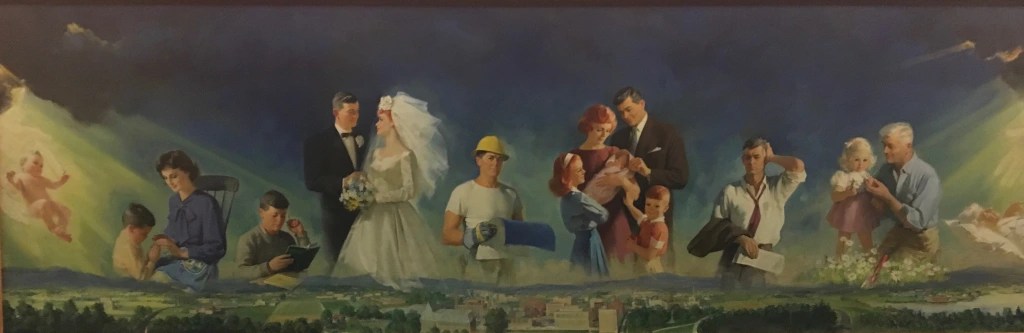
    The second piece of art I’d like to discuss is a mural aptly called, Purpose of Life (Skemp, 1964). Purpose of Life is a simple but compelling representation of the cycles of life and what life is about. Like the hymn, “A Child’s Prayer,” this mural evokes strong feelings within me, and I believe would for anyone who strongly considers its message. 

                The painting starts by showing a child entering the world. There are subtle hands shown coming from the sunlight, appearing to gently lead the child into this life. The depiction follows a young man growing. First, he is at his mother’s side, then reading, and then getting married. These three quick jumps create a feeling inside. As a result, a question develops: is life really that short? The painting continues, showing the boy, now a man, working. The man is shown with his wife and children. The man is shown with graying hair. The man is shown with his grandchild.

                The climax of the painting is the man lying on his deathbed. There is light above him, and the same hands that brought him to earth beckon him home. What could better illustrate the purpose and meaning of life than this painting? The purpose of life is to live, love, grow, learn, and then to come home. As my eyes scroll across the painting, powerful emotions arise. I consider growing up with my family. I consider the family I’ve started. I consider that like everyone before me, my life is heading to the same place, a return trip home. This mural does a fantastic job of illustrating the true meaning of this life.

    Book

    I couldn’t write a paper about the meaning of life without crediting a piece of literature that has given meaning to my life. The Book of Mormon is an entire book that focuses on the question, what is the meaning of life? The Book of Mormon is a piece of literature that literally details the purpose of life (Book of Mormon, 1830). Through my study of it, I have learned many important principles. One of these most important principles that give meaning to my life is that God loves and cares about all people, and that includes me. Others include that God is aware of us and is watching our progress, this life is important and there’s a reason I’m here, and that God keeps His promises. These are the principles that give my life meaning. 

    In a world of chaos and confusion, these basic principles give me hope. They provide light to my world. I simply couldn’t write about the meaning of life without discussing the book that has changed my life, brought me so much comfort, and put me on a path that gives my life meaning and purpose. The Book of Mormon is eloquent in its message and is a powerful work of art that I believe to be from Heaven. I can’t read it without feeling that God is there and being reminded why I’m here. 

    Conclusion

    I am grateful for these pieces of art and the feelings they create inside me. It’s these feelings that tell me there is more to this world than meets the eye and that I’m never alone. Great art provokes thought and emotion. Great art can make one stop and ponder. Great art can make one appreciate beauty and see the world in a different light. As Cooper (2003) says, “art, like philosophy, is the act of bringing truth into being” (p. 109). These three pieces of art, the hymn “A Child’s Prayer, the mural Purpose of Life, and the Book of Mormon, are each art pieces that provide this purpose for me, enlighten my life, and remind me the purpose of being here. I am grateful for art that makes us look beyond ourselves, consider purpose, and even see eternity.

  • Speed of God

    Speed of God

    I recently read a book called ­Project Hail Mary. It’s by the same guy who wrote The Martian. This book has the space travel and physics concept of time dilation involved. I’m an ignoramus when it comes to the physics of this so I’m not going to say anything smart here. Time dilation is the idea that if you’re moving at a fast enough speed, you will age slower than someone moving at a normal or slower speed. See a movie like Interstellar for example. This is related to Einstein’s theory of relativity.

    To think about someone moving at a speed that makes them age slower than others – time dilation – is a beyond complext concept. The book had a comment like, “I’m glad the universe thought to have time slow down as you approached the speed of light.” That made me think, it’s amazing the universe is like this.

    Before I continue, I just wanted to share, this is the beginnings of a thought on how the physics of this complex phenomena might explain something about God, our relationship to Him, and our position to Him in the cosmos. In doing this, because I’m so ignorant on the topic and don’t fully understand it, I’m sure I’ll get something wrong that someone who better understands the science of this topic can point out. That’s fine. I take comfort in the fact that the people out there that adequately understand this concept are roughly 1 per 1 billion so probably unlikely to read my blog.

    This is more a mental exercise for myself.

    So… the faster you move, the slower you age. What is age for us? It is our mind and bodies degrading.

    God is the center of the universe. We all revolve around God. As we move closer to God, we move closer to the center.

    I’ve written about God and time before, here for example.

    Time is definitely different and potentially nonexistent for God. We talk about 1000 years for us being a day for God, in a way for us to try to understand God’s “time” (see Psalm 90:4 and 2 Peter 3:8, and especially D&C 130:4-11).

    God is light. God is in the center. So that would be why 1000 years for us is like a day for God. Time moves slower for Him because He’s at the center. Of course, God doesn’t age, He has a resurrected, perfected, and celestial body, but time moves slower for Him because He moves infinitely faster than the speed of light. He moves at the speed of everything – past, present, and future.

    So at a higher speed or revolution, less time is experienced. God’s mind, power, and faith move at a rate impossible for us to comprehend. Maybe that’s what makes Him in everything, alpha and omega, the beginning and the end. His higher speed puts Him on a higher plane. If we come closer to God, we would have to come closer to His speed and His plane, His level. If we do that, then time would slow down for us. We would be able to comprehend more. We would “age” slower. We would become like Him.

    By the way, this sent me down a wormhole (pun intended) of Youtube videos on time dilation, wormholes, the general theory of relativity, “nothing,” the twin paradox, space, and a plethora of other topics. This all led me to believe, while I can’t properly put into words my exact theory, that there is something to the above. There is something to God being the center. There is something to Christ being “light” which we know we can’t, in this life, move at the speed of. There is something to this physics and God thing. That makes sense given that God would be the master physicist as the Creator of the Universe.

    I’ll leave these musing at this point. Basically, long story short, there is something to God being on Kolob and us and our solar system revolving around Him. More on this as I explore this thought more.

  • “Education is not about obscure facts and little test scores” – Mr. Feeny

    “Education is not about obscure facts and little test scores” – Mr. Feeny

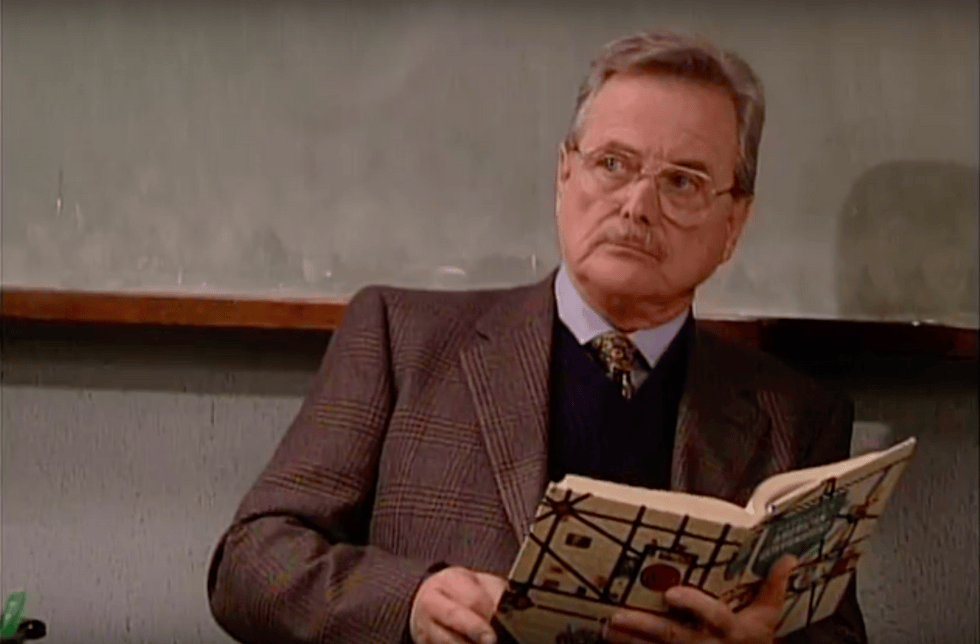
    “Education is not about obscure facts and little test scores. Education is about the overall effect of years of slow absorption of concepts, philosophies, approaches to problem-solving. The whole process is so grand and all-encompassing that it really can’t be threatened by the occasional late-night no-hitter. It is important that a boy spend time with his father.”

    Oh, the wisdom of Mr. Feeny.

    I’ve had some good teachers in my life. I consider Mr. Feeny to be one of them, even though he’s a fictional character.

    Quick recap of this classic Boy Meets World episode. Alan (Cory’s father) pulls Cory out of bed late at night to watch a no-hitter in progress in a Phillies baseball game. The next day Cory sleeps through a test. Alan goes to speak to Mr. Feeny to ask if Cory could have a makeup test. Mr. Feeny denies his request.

    It is later in the episode, during a late-night stargazing, apple juice session that Cory sits down with Mr. Feeny and Mr. Feeny gives the above quote.

    Education is not about one moment. It’s about a billion small moments.

    I often reflect back on that quote. I have read more in 2020 (the year I wrote this post) than any previous year. I don’t feel any smarter today than I did a year ago, I don’t think. But that’s not how knowledge-gaining works. It doesn’t happen over the course of a day or a week or even a year. Learning is an ongoing process. I hope to look back on the year 2020 and appreciate that it helped me learn things that would help me learn more and grow for the rest of my life.

    I look forward to learning into eternity.

    It is important that a boy (or girl) spend time with his (or her) father (or mother). What is the value of time with a father, a mother, someone who loves you? I believe it’s invaluable.

    The episode continues and both Mr. Feeny and Alan come to Cory separately and tell Cory that the other was right in their decision. Alan tells Cory Mr. Feeny was right to not let him retake the test and that Alan shouldn’t have pulled Cory out of bed. Obviously, the quote above indicates that Mr. Feeny approved of Alan’s pulling Cory out of bed to spend time with his son, despite not letting Cory re-take the test.

    Later, Cory is talking to his mom and he asks her how two people could both think the other was right, while seemingly disagreeing with one another. The lesson here is that the world is not black and white. There are many judgment calls where there is no perfect decision. There are many decisions that depend on your intent.

    Cory’s dad was not wrong for wanting to spend time with his son. His desire was good and admirable. Mr. Feeny agreed with that.

    Mr. Feeny had a standard he had long set that he would take no excuses from students as to why they failed a test. He couldn’t back down from that standard. His standard was set so he would always hold his students accountable and not let them down. Mr. Feeny had a good reason for denying Alan’s request.

    Both were right. Both agreed with the other’s reasoning.

    The conversation between Mr. Feeny and Cory’s dad was contentious. It ended with Mr. Feeny saying, “this conversation is over.” Both men ended up telling Cory the other was right. Why is that? Respect, introspection, understanding of the reasoning behind another’s viewpoint.

    We could do with much more of this in the world today.

  • Ivy Thoughts Part 2

    Ivy Thoughts Part 2

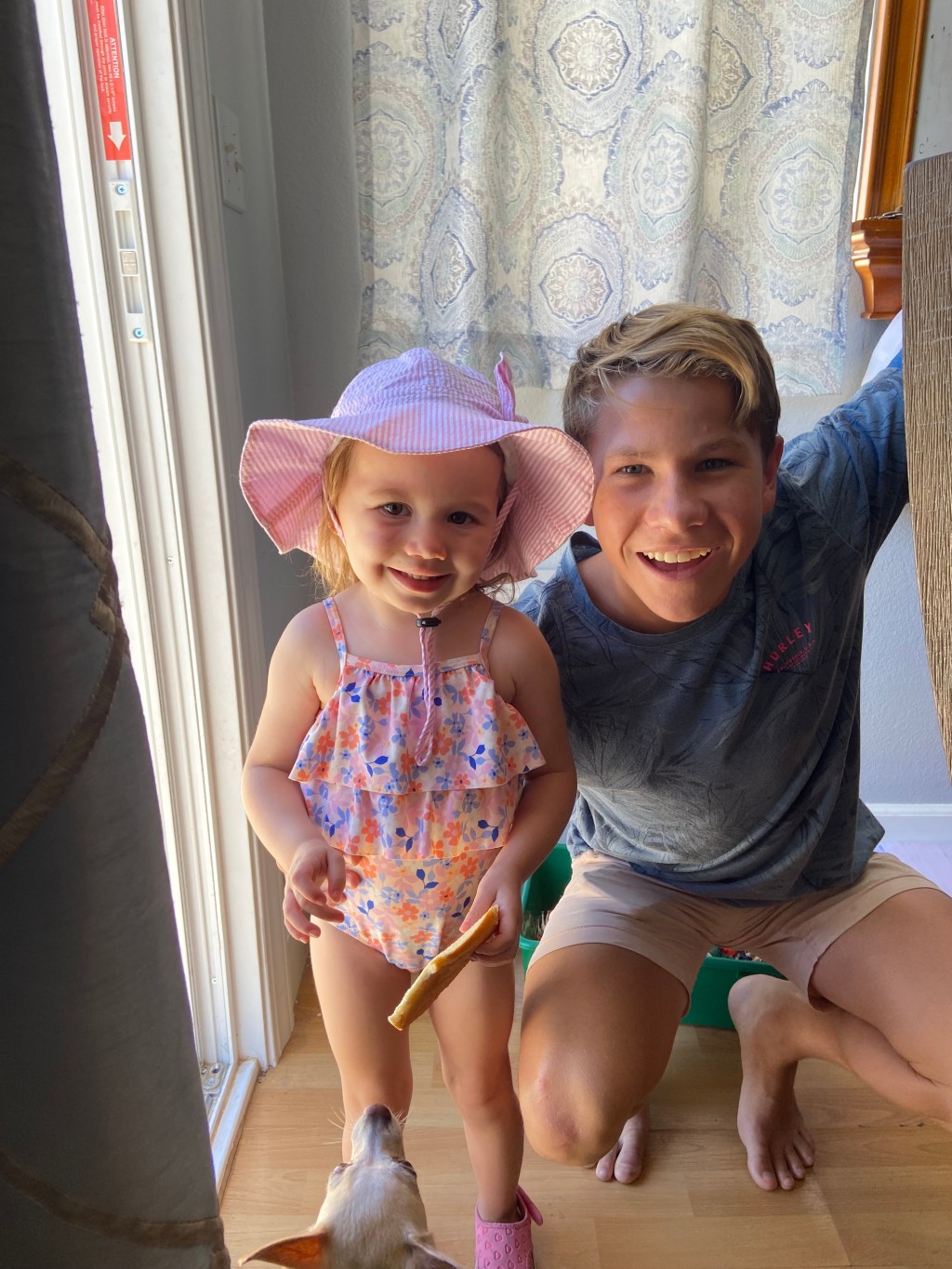
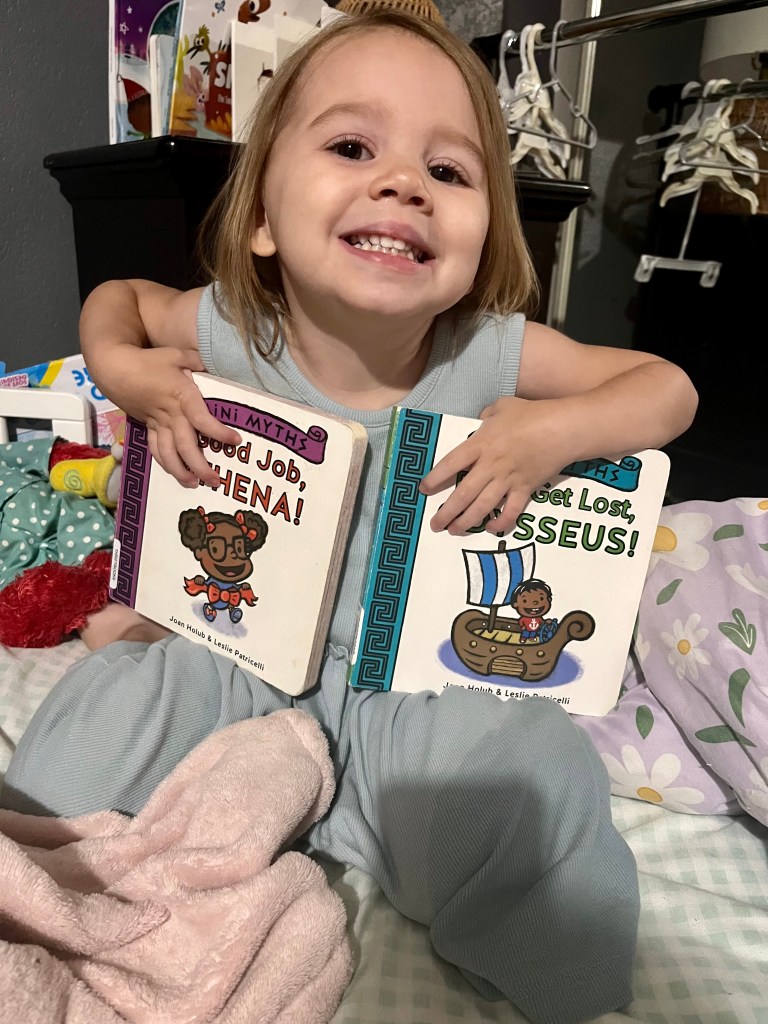
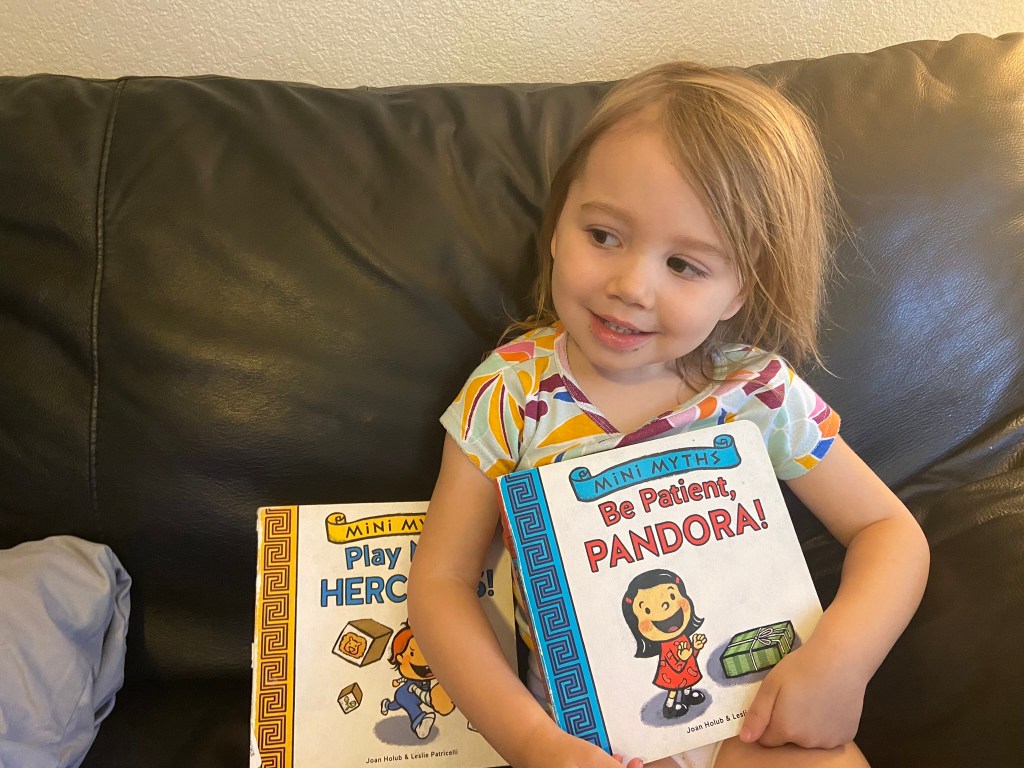
    There’s this book Ivy loves called “Icarus.” We learned there are a series of these books that take Greek legends and makes them into children’s stories with a lesson. Icarus, for example, flies his kite too high until it hits trees, similar to the Greek legend of Icarus flying too close to the sun. Anyways, we learned about the series, and ordered a few of them. We got one about Odysseus. Remember how Ivy often wants to be called “teacher”? That’s been replaced by “Ivydysseus.” Beth and I never said that. She came up with that on her own.

    It’s not the only nickname Ivy has come up with either. We read a book about Baby Beluga. Ivy, on her own, started calling Sage “Sagey Beluga.” My family loves giving nicknames. I’m never referred to as “Brayden” by my parents. I am either Lewis or Fly. Adie is Sassafrass, Garrick is Dude, Dresdan is Jiggles, Cambria is Barbara, and Easton is Goose. Ivy apparently has the Quackenbush gene of giving nicknames.

    I’ve mentioned Ivy teaching Sage how to pray. Ivy says her prayer every night before bedtime. Last night she said her normal prayer, “Thank you for Jesus, thank you for Mudder (she learned she could call Beth “mother”), thank you for Daddy, thank you for blankie, thank you for super cozy (code for being comfortable in bed), thank you for water. Amen.” Then she says, “Billy’s turn.” Billy is her stuffed bobcat. I get Billy from the floor and hand him to her. Ivy gets back into kneeling position on her bed and says, “Thank you for Ivy. Amen.” Of course, Billy has to say his prayer and the only thing he’s grateful for is Ivy.

    We dog-sit a dog named Chicago. Ivy LOVES Chicago. Today Ivy “called” Chicago’s owner on the phone during her lunch. Here was what she had to update Chicago’s owner on: “Yeah Mommy’s with Sage. Chicago’s just sleeping. Yeah Chicago…Chicago…Chicago…okay bye.”

    More on nicknames. You can get in big trouble for not being aware of Ivy’s current persona. At this moment in time, there are many. At any given moment she can be a completely different attitude depending on her name. “Ivydysseus,” as mentioned, indicates she’s feeling adventurous. Ivy teacher means she’s teaching you something, or potentially cooking you some food. There’s Ivy, which obviously means she’s not in character. There is Ivy James. I’m not sure what Ivy James indicates. But DON’T get caught calling her by the wrong name. If you call her Ivydysseus while she’s clearly reading you a book, you will get a firm, “No, I Ivy teacher.” When you reply, “Oh, sorry, Ivy teacher” she will reply, “Good job.”

    There are things Beth isn’t allowed to say, but I am. We haven’t figured out why that is or any sort of pattern yet. But if Beth says something like, “Oh, sorry Ivy.” It’s common for Ivy to reply, “No, no, no, you no say ‘sorry Ivy.’ Dada say ‘sorry Ivy.’” This goes for all sorts of things. “No, no, no, you no say ‘OK’, Dada say ‘OK’”. That one really puts Beth in a tough spot because the natural reaction to that statement is to reply “OK” again. Beth’s really got to watch herself because if she says “OK” again… man is she going to hear about it.

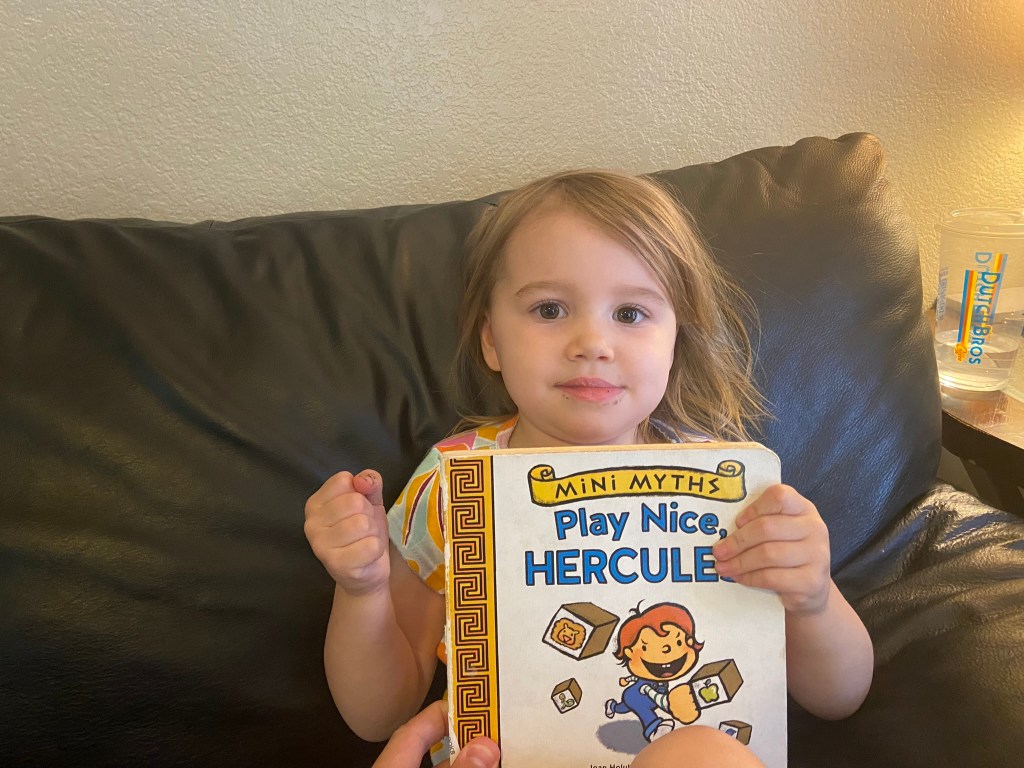
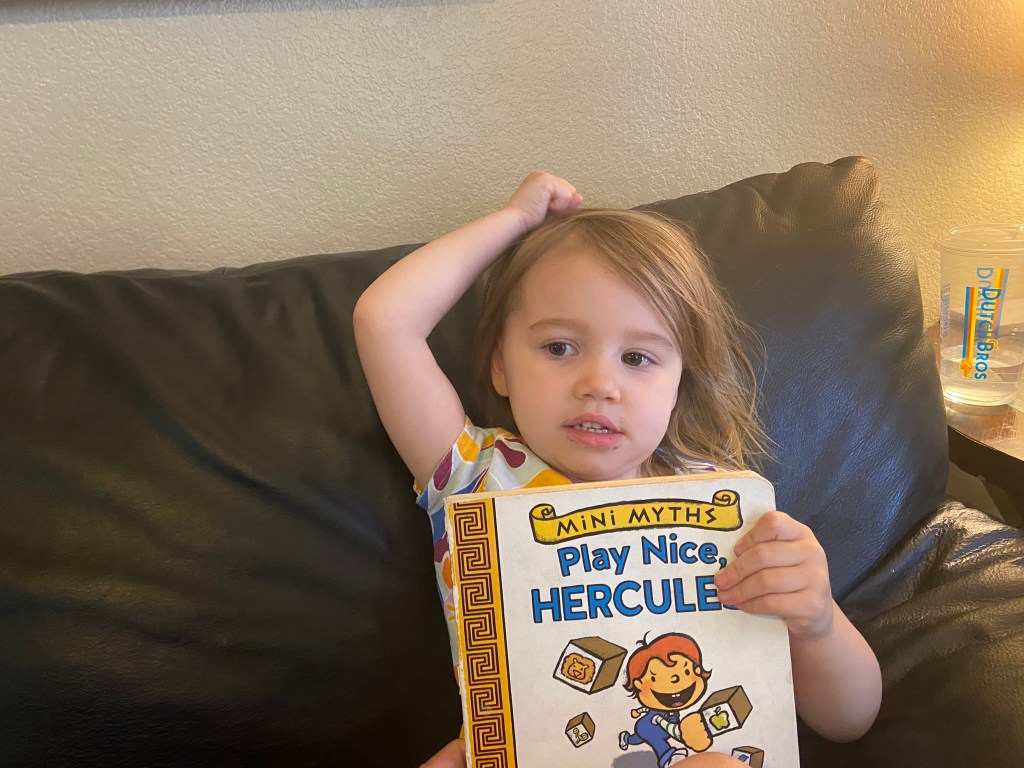
    Those Mini Myths books, mentioned earlier, are awesome. I already talked about the Icarus and Odysseus ones. We have a couple others. But one of those books has been causing problems. It is the Hercules version. In the Hercules version, Hercules has a little sister. At one point Hercules’s father (Zeus? Doesn’t look like him in the book but whatever) says, “Hercules, are you playing nice?” Hercules responds, “I’m strong, I’m not nice.” Hercules proceeds to destroy his sister’s tower. The book has a happy ending, of course. Hercules learns to be strong and nice. He reconstructs his sister’s tower. Ivy, unfortunately, has forgotten the ending. All day she is picking up stuff and saying, “I so strong. I not nice.” I told Beth we need to start skipping that page.

    On this same note, Ivy is super susceptible to messages from books or TV. The most well-intentioned media, like the Hercules book or the show Daniel Tiger’s Neighborhood (which does a ton of good) can have a negative impact. If Ivy sees anger in a show, she goes through it herself.

    There is a Daniel Tiger episode where he learns how to handle anger. He pauses, takes a deep breath, and counts to four, with a little jingle attached. This is awesome. Ivy does this deep breath and counting pretty much every day. What’s crazy is that when Ivy watches the show she goes through the full emotional roller coaster Daniel Tiger goes through in the show. When he gets angry, she gets angry. It’s kind of fake anger on Ivy’s part, kind of not. I’ve seen that anger carry on after the episode is finished.

    One night I was reading Ivy a book called I was so Mad before bedtime. I altered the entire book to “I was so happy” because I knew if I read “I was so mad” over and over while Ivy was in bed, she’d actually get mad. It’s interesting how much those little minds are impacted by external influences.

    This wraps another “Ivy Thoughts.” Part 3 is already in full swing. Stay tuned for more.

  • Books in 2022

    Books in 2022

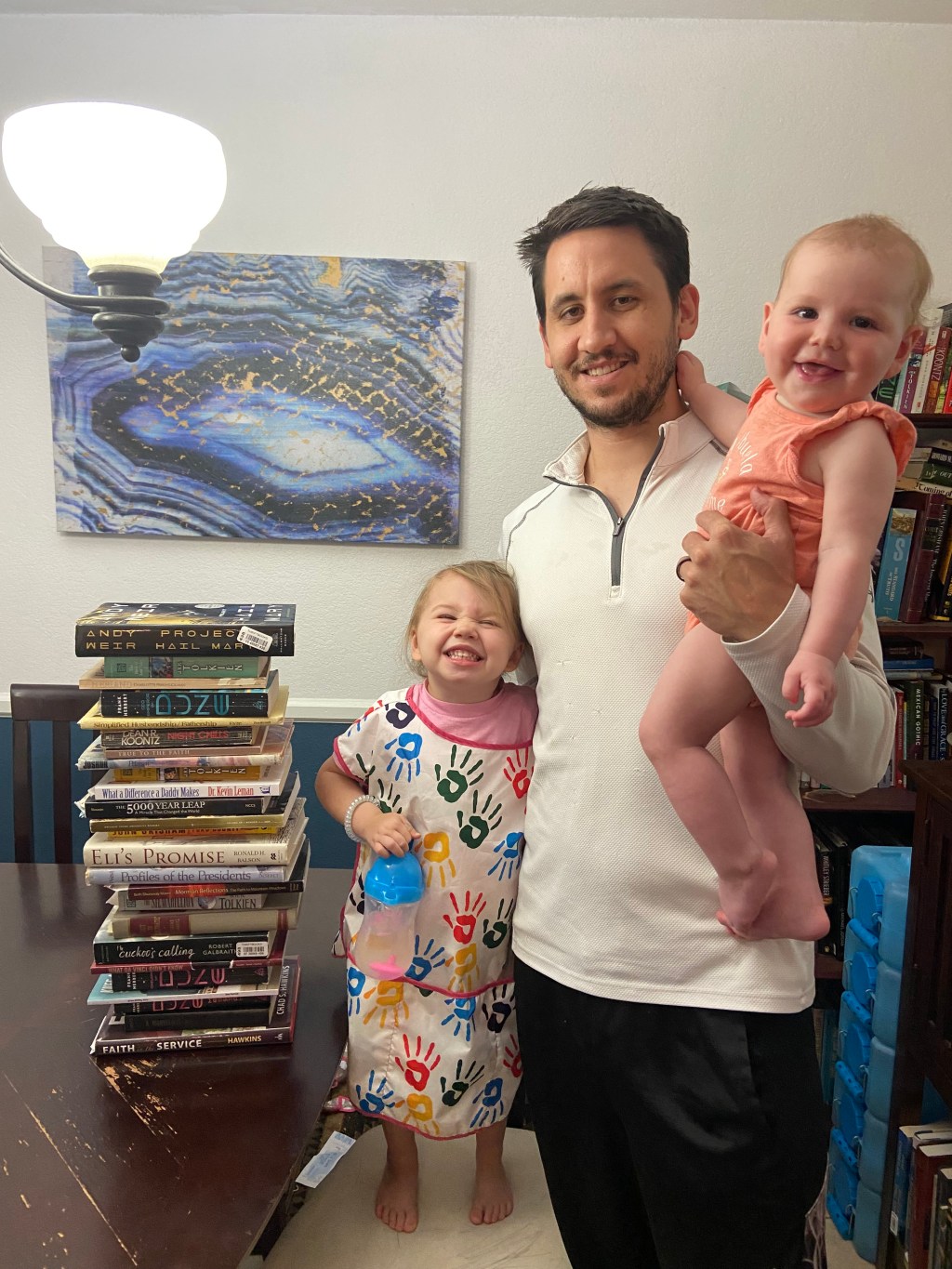
    It’s time for my annual list of books read last year. My 2022 list is down quite a bit due to some non-book reading and studying. I’ll rank the books from favorite to least favorite with a short description of what I remember about the book or what led to its ranking.

    Without further ado, here is my list of books from 2022:

    1. Marvelous Work and a Wonder
      • One of my favorite (and most important) books ever, so despite it being my third or fourth read, still has to top the list. This book lays out just how marvelous a work and a wonder the restoration of Christ’s gospel is.
    2. God Emperor of Dune (book 4)
      • This is the fourth book in the Dune series and comes ahead of Children of Dune and Dune Messiah.
    3. Children of Dune (book 3)
      • It’s hard to separate all these books, they blend into one in my mind, but I think God Emperor was my favorite after book 1, followed by Children of Dune. We’ll get to Dune Messiah later.
    4. 5000 Year Leap
      • This book was given to me by CJ Matthews and as you can see by its ranking, I highly enjoyed it. It resulted in a blog post which is a sign of a good book that made me think.
    5. Project Hail Mary
      • This was another recommended book, this one from John Safstrom. I loved this book, close call between this and the author’s other popular book turned feature film, The Martian starring Matt Damon.
    6. What a Difference a Daddy Makes
      • Yet another recommended book, thanks Mitch Waters who recommended this book after he heard my second daughter was coming. Must read for any girl dad.
    7. The Cuckoo’s Calling
      • J.K. Rowling is a modern marvel. I love her and her writing. While reading, knowing Robert Galbraith is a pseudonym, I couldn’t help but recognize her amazing writing style. This book was so good it made me continue on with the series and I’m currently on book 3, “Career of Evil.”
    8. Night Chills
      • Classic Dean Koontz, spooky and fast-paced. I recommended this to a friend along with a long Stephen King novel (Tommyknockers). The friend quit Tommyknockers and finished Night Chills.
    9. Dune Messiah (book 2)
      • This one drops a bit below the others because I think it was more of a transition book to keep the series going, at least that’s what Frank Herbert seems to have said about the book. It’s still ranked highly because the Dune series is so awesome and sometimes you need bridging books to make the next ones that much better.
    10. Eli’s Promise
      • Any book that makes me cry multiple times probably needs to be in the top ten. This book was a split between Holocaust and modern-day time lines, jumping around a bunch, which kept things interesting throughout.
    11. Herland
      • Classic book I never read in high school but when it was assigned reading for a class I took this year, I decided to actually read the whole book. Glad I did. Book is based around the idea of a women-only society.
    12. Ford County Stories
      • I really like John Grisham. This is a book of short stories focused around Ford County. You know an author is good when they take a topic you have zero interest in, like a small Mississippi town, and make you love it.
    13. Knees Over Toes
      • This book was tough to rank because it made huge changes to my daily habits and saved my Achilles, but can’t be rated higher as a book than the ones above it. Recommended to me by my brother Garrick.
    14. Simplified Husbandship Simplified Fathership
      • This was an impactful book overall but a notch below What a Difference a Daddy Makes (#6). Definitely made me think more seriously about being a father and husband.
    15. Silmarillion
      • I Enjoy the Lord of the Rings stuff, but the mythology can be a bit to keep up with sometimes. I really enjoyed the Silmarillion, but Lord of the Rings books in general are lower on my list due to their density. If I’m reading a fantasy fiction, I like to spend less time trying to understand geography.
    16. Book of Lost Tales Vol 2
      • See notes on Silmarillion, this one is more dense than the Silmarillion since the Silmarillion is like a mythological overview, which made it more enjoyable to me.
    17. The Book of Lost Tales Vol 1
      • The Books of Lost Tales are going way back in the Lord of the Rings mythology, farther than JRR Tolkien ever got published. They’re his son compiling his notes and other works to put together more stories. I enjoy them, but again, very dense and a lot of geography to try to understand sometimes.
    18. A Guide to Tolkien
      • This was basically an encyclopedia of Tolkien. Someday I’ll read the actual encyclopedia.
    19. Just to Illustrate
      • This was a collection of sayings from LeGrand Richards, thus the saying “Just to illustrate,” which apparently was something he was known for saying. Very much enjoyed this book. Though it’s low on the list, LeGrand is one of my favorite people ever.
    20. Faith in the Service
      • This book was all about members of the Church of Jesus Christ of Latter-day Saints that served in the military. As I review this list I realize I didn’t read many bad books this year. I really enjoyed this book, and it still falls near the bottom for the year.
    21. Mormon Reflections: The Path to Mountain Meadows
      • This was a fictional account of what could have led to the horrific events of the Mountain Meadows massacre. Made me think about things. Made me wonder what events could have led to people doing something so heinous.
    22. Joshua Man of Faith
      • This is from a series of books that details the ancient prophets. I read the Moses (# 24) one last year. I didn’t like this one as much as the Moses one. It’s hard to compete with Moses.
    23. Profiles of the Presidents
      • This was a biographical book of all the Presidents of the Church of Jesus Christ of Latter-day Saints.
    24. True to the Faith
      • Almost feels wrong having this so low, but it is essentially a textbook. A textbook on faith, but still a textbook. Weird having a book so low that I feel I should read at least once a year.
    25. What Da Vinci Didn’t Know
      • A book being this low basically means it didn’t stand out to me. I think this book was basically trying to get in on the Da Vinci Code movie hype. I don’t remember learning anything super interesting from this book besides that Leonardo da Vinci was “Leonardo from Vinci.”
    26. 40 Years and Marching On
      • Despite probably liking this book more than What Da Vinci Didn’t Know, I couldn’t for the life of me remember anything about the book until I found it on my shelf. A book that un-memorable gets demoted. It was a BYU studies book that was interesting but still bottom of the list for the year due to being forgotten.

    Additional reading:

    1. Book of Mormon
    2. Doctrine & Covenants
      • Finished Doctrine and Covenants sections 133-Official Declarations. Read alongside two student manuals.
    3. New Testament
      • Book of Matthew and started Book of Mark, reading alongside New Testament Student Manual.
    4. Come Follow Me lesson each week
    5. Did a semester of school and completed 15 credits.
      • Most memorable reading was Nietzche.

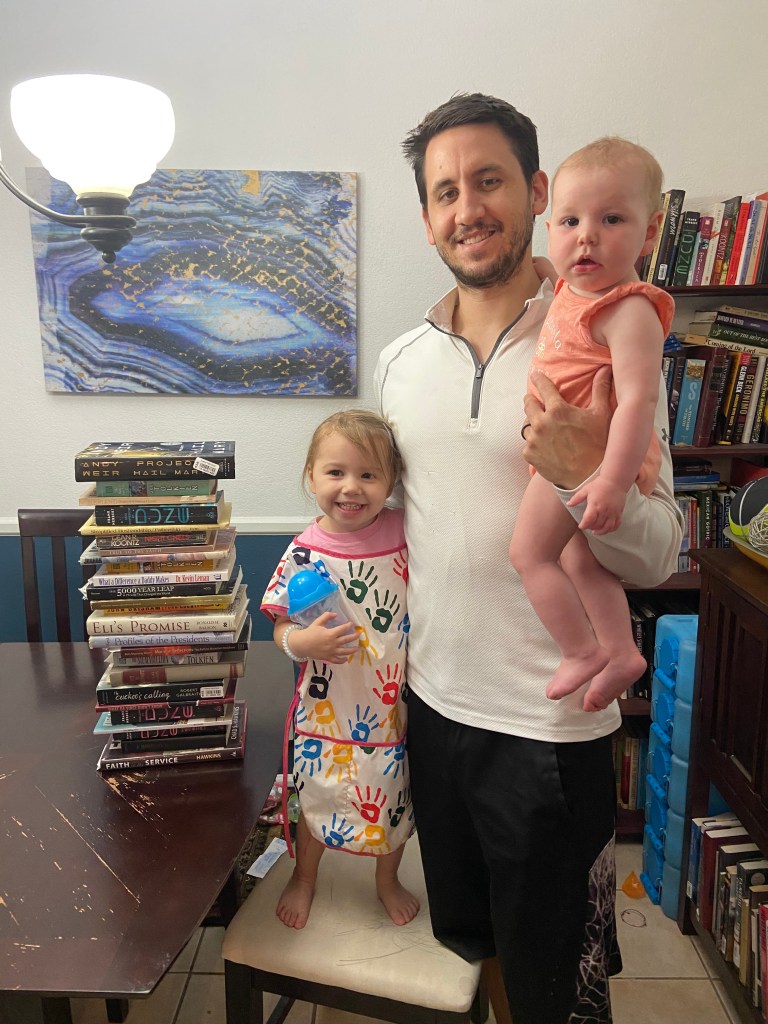
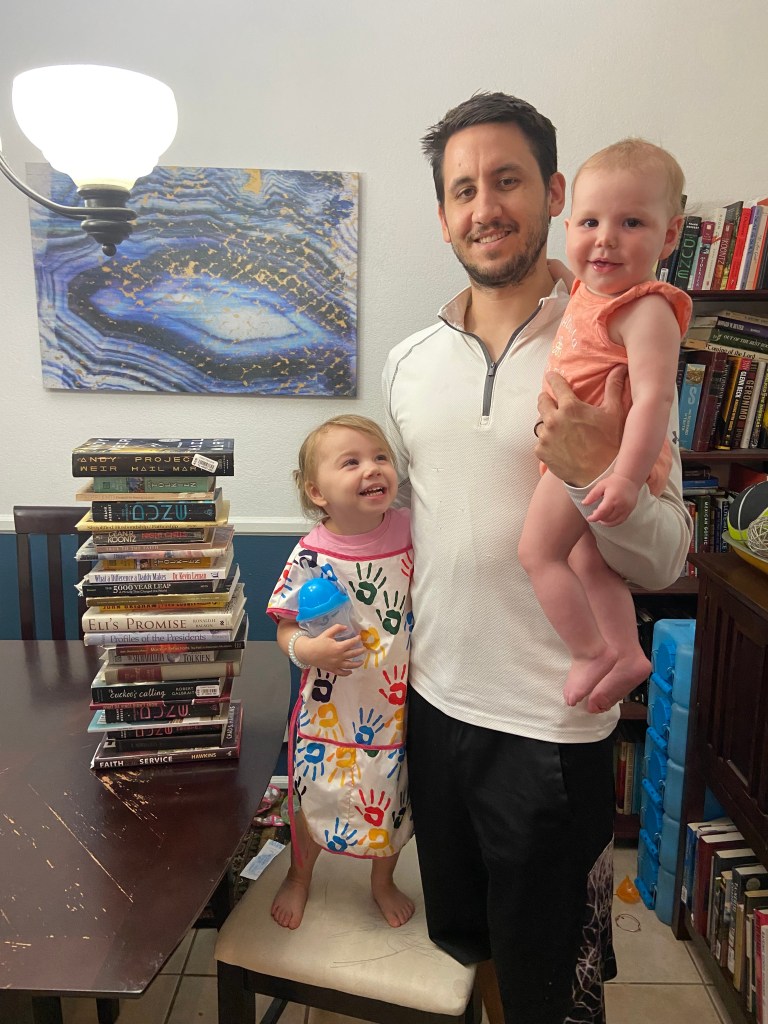
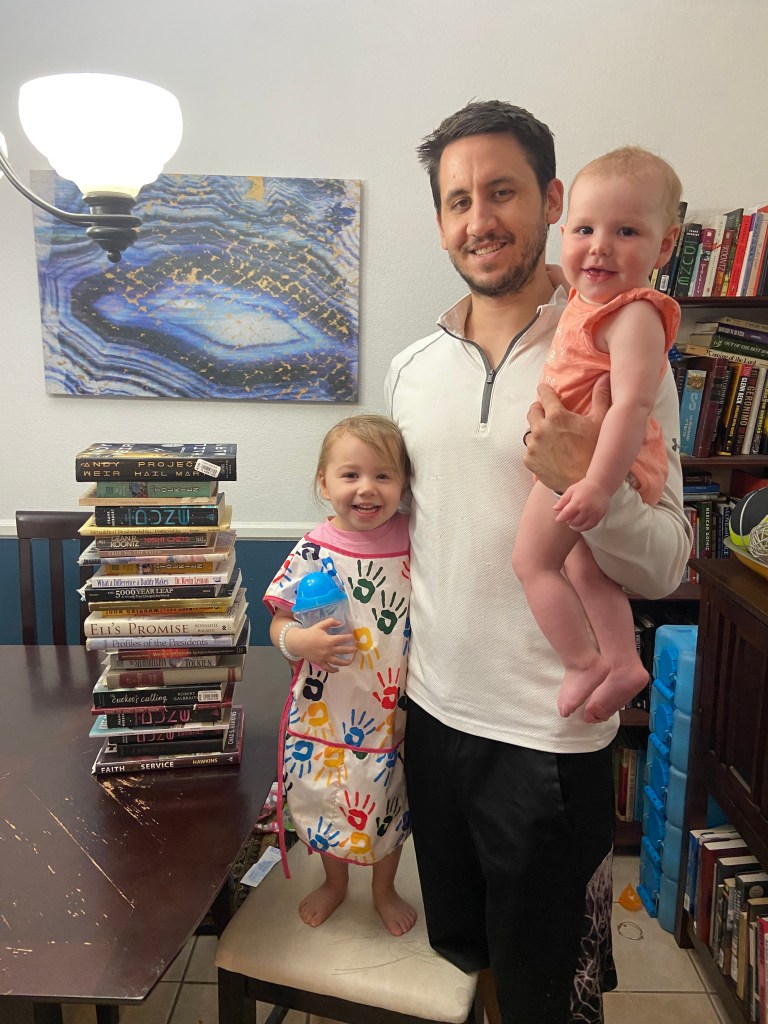
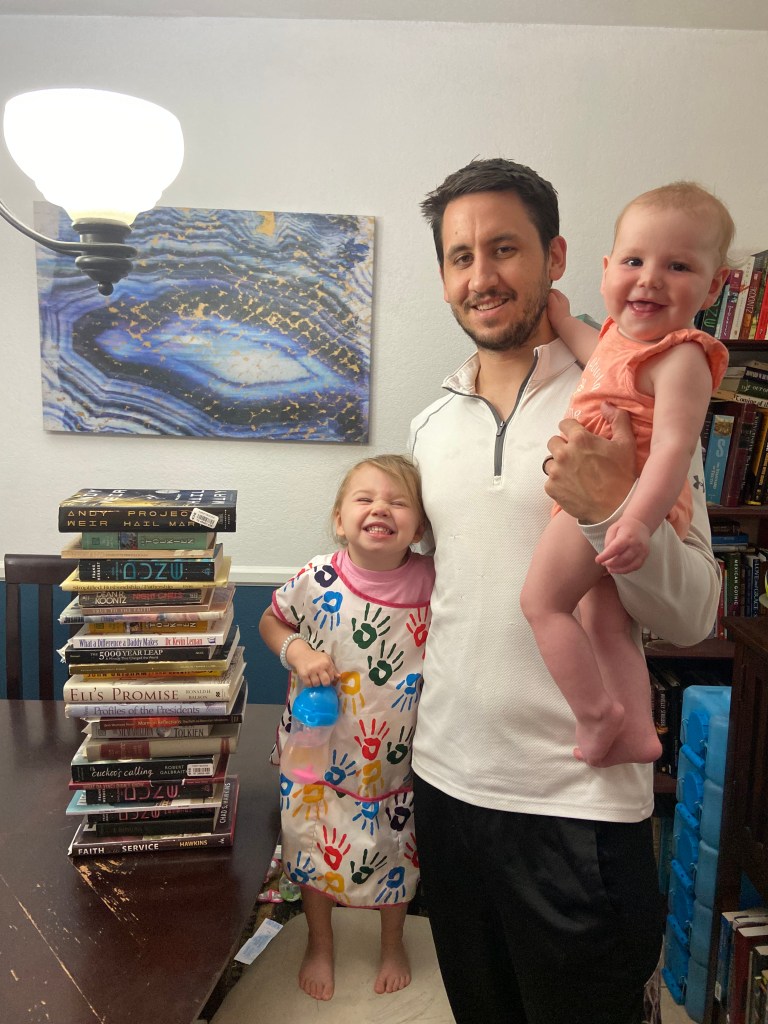
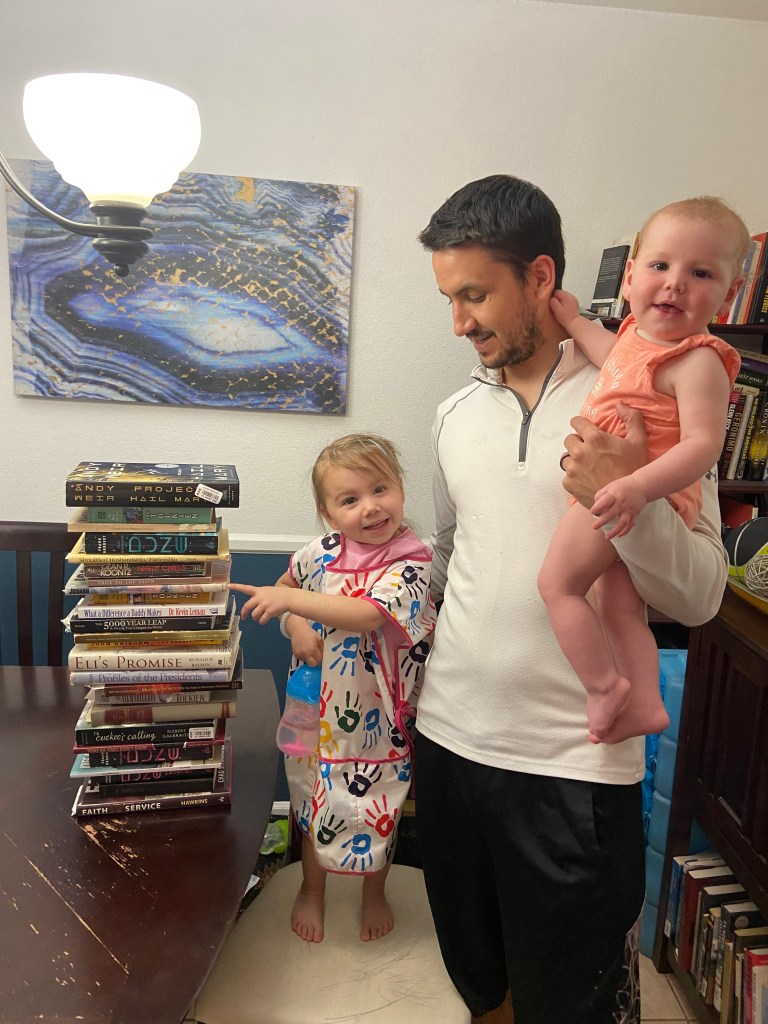
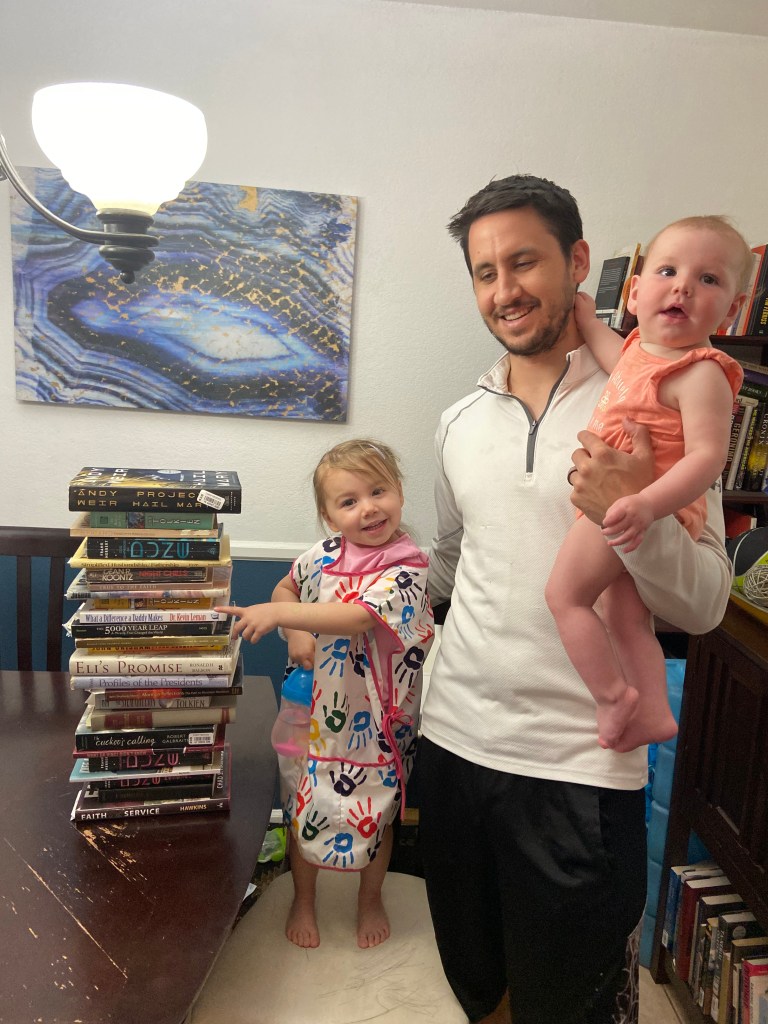
    Couldn’t pick my favorite for the cover photo, so keeping with tradition from last year: