Tag: church

  • Ivy and Sage Thoughts

    Ivy and Sage Thoughts

    This would have been the fifth installment of “Ivy Thoughts” but instead we get our first “Ivy and Sage Thoughts”! Welcome to my world of two adorable daughters. Come on in.

    Let’s start with Sage since she’s new to the segment. She hasn’t started forming full sentences yet, but it’s time she became an official part of these posts.

    Sage loves the Bluey song. For those who aren’t familiar, you can click HERE.

    In the song where it yells “Mom,” “Dad,” “Bingo,” and “Bluey” Sage yells “Dad!” every time. If she hears that song she stops, stares, and yells “Dad! Dad! Dad! Dad!” I enjoy her rendition of the theme song.

    Sage is off the charts shy, including around family she doesn’t get to see that often. It’s really interesting because this “shyness,” for lack of a better term, has been a part of Sage since she was a baby. When she was a baby she would sometimes start screaming and crying if someone looked at her. That has continued into her toddler-hood.

    Sage doesn’t like extra attention on her, besides from Beth and I. There was a moment where this became clear. We were doing Sage’s first birthday party at her grandparents. There were great grandparents, aunts, uncles and family there. We put a cake and candles in front of Sage. We sang happy birthday to her. What would normally be a dream come true, a whole cake in front of her, turned quickly to a nightmare when we finished singing and she looked around at all this mass amount of love and attention on her. Sage burst into tears. The collective attention and singing was too much for her to take.

    We’ve seen my family four weekends in the last 6 weeks. Every time we see my family Sage needs at least 24 hours to warm up. She will not go near anyone, gets upset if she gets picked up (or even looked at), and is excessively shy. She will cling to Beth or myself, often laying her head on our shoulder or snuggling her face into our arm to avoid anyone looking at her.

    What’s interesting about this is Sage is the outgoing one between her and Ivy. Sage is wild and crazy and outgoing when comfortable. But if there are strangers around, she gets quiet and closes in on herself. I think I’m like this. It’s interesting how our characteristics are passed onto our children and how some things are just built into us, even as babies. Sage is shy and reserved the same way I was always shy and reserved growing up.

    This past weekend when we were with my family it was fascinating watching Sage’s transformations. At one point Sage was sitting on my lap outside. My mom was in a chair across from us. Sage was snuggling next to me and being her normal (for this weekend) shy, quiet, timid self with my mom nearby. My mom got up to walk inside. The second she was gone Sage stood up and started laughing and screaming and playing. It was an instant transformation. She loves my family once she warms up. Once she warms up she’s crazy and laughing and playing, but until then she is terrified of any outside attention coming her way.

    Sage has inherited plenty of nicknames already. Some of her nicknames include Sagey Sunshine, Sagerific, Rif, Rific, Sage Laura, Roo, and Smudge. That’s all I can think of off the top of my head. That’s to say nothing of the dozens and dozens of nicknames Ivy has given her.

    One last special Sage moment that I think exemplifies strong second child. I dropped Ivy and Sage off at school recently. This was out of the ordinary as Beth usually takes them to school and Ivy was letting it be known this was not in routine. She was crying, saying she was sick, and making a big hubub. While Ivy was melting down I set all our stuff down – snacks for the school for the day, draw bags of washed sheets, lunch boxes, and waters. The teacher patiently gathered all our stuff while I consoled Ivy. Sage meanwhile had walked in through the first gate and was waiting to be let in to go play. The teacher was holding Ivy’s lunch box and looking around. “Where is Sage’s lunchbox?” She asked looking all over the place. I looked around too. It was just there. Sage walked back from the second gate and pointed on the shelf where she had set her lunchbox. She then turned around with a complete, “See the people I have to deal with?” look on her face as she waited to be let in to school to start playing.

    Now onto some classic Ivy thoughts.

    After getting home late from grandparents’ home one night, I asked Ivy for a hug and a kiss. She gave me a big hug then she got her face really close to mine and said, “sticker time,” patted her chest and said, “Ivy tired” and got into bed. Still not sure what sticker time meant or was referring to.

    Ivy flushed a toy down the toilet. I told her if she did that again the toilet would break and we’d need to go to the store when we needed to go to the bathroom. She seemed perplexed about this and continued to ask questions. I emphasized that flushing things down the toilet could break the toilet. “I break the house?” She asked. Seizing the opportunity to potentially get her to understand the severity of flushing something down the toilet I replied, “Yes, flushing toys down the toilet could break the whole house.” This had a big impact. She proceeded to tell Beth that she was worried she was going to break the house.

    The next day we were at church. Beth took Ivy to the bathroom. Ivy looked up at Beth and said, “If I flush a toy down the toilet, I break the church?” Beth told me later, that time I caught Ivy flushing a toy down the toilet was the second straight day Ivy had flushed something down the toilet at home. Beth hadn’t told me because she didn’t want me to freak out. Well, now Ivy is convinced our house is going to collapse into a pile of rubble if she flushes anything besides toilet paper down the toilet. She hasn’t put anything in the toilet since. Parenting win.

    Ivy really doesn’t like crane flies. They freak her out. We explained to Ivy that crane flies aren’t bad. They’re actually pretty good because they don’t bother people, but they eat the little bugs that annoy us. Ivy said, “They kill little bugs?” “Yes,” we replied. “They don’t kill people?” That made us laugh. “No,” we explained, “they don’t even hurt people.” Ivy said, “I’m glad they don’t kill people.”

    There’s a toy I grew up with called Playmobil. They’re little figures that I played with nonstop. I still love Playmobil. Ivy has the same love of them and they are all she plays with when we visit Grandma and Grandpa Q’s house in Las Vegas. Ivy has the same love of order that I do and can spend hours lining them up in orderly groups.


    These little figures have plastic hair pieces that click into their heads. When a Playmobil figure is missing its hair its head becomes bowl-like. The top of their head basically becomes a hole. Ivy saw a Playmobil figure without its hair once and exclaimed, “Oh no! He has a hole in his head. Let me see the hole in your head.” I showed Ivy the spot in the back of my head where hair still doesn’t completely grow. “Awww,” she said sympathetically.

    Before one more heartwarming story, I’ll share a full on threenager moment. This morning Ivy got out of bed and came out of her room. I was just about to walk out the door. Ivy does the cutest thing right now. She walks out and says, “Good morning, Dad, Cory is here” (new alias, Cory Matthews from Boy Meets World).

    I said, “Good morning, Cory, come give me a hug before I leave for work.”

    She walked over and said, “A hug and a big smooch.”

    She hugged and kissed my leg. I put my arm around her and patted her head. She started to walk away then came back and did it again. I again patted her head. She started to walk away then came back again. Same process. I started to think she was broken when on the fourth return walk she said, with feirce anger in her eyes, “No, no, no, Dad, don’t touch my head.” So I didn’t touch her head this time and she hugged my leg, gave it a kiss, and walked away. Then she turned around and looked at me and said, “When you touch my head my hair gets so so so crazy! Don’t pat my head, Dad!” She was holding back tears as she walked to our room to say good morning to Beth. As she walked into our room she slammed our door. The teenage years are going to be great, I can feel it.

    But to balance that, let’s end with a heartwarming Ivy moment. Ivy recently hugged me one night and looked up at me and said, “You’re the best, Dad.”

    I love being a dad.

  • Agency and Mistakes: Was Brigham Young Wrong?

    Agency and Mistakes: Was Brigham Young Wrong?

    Let’s start with an assumption.

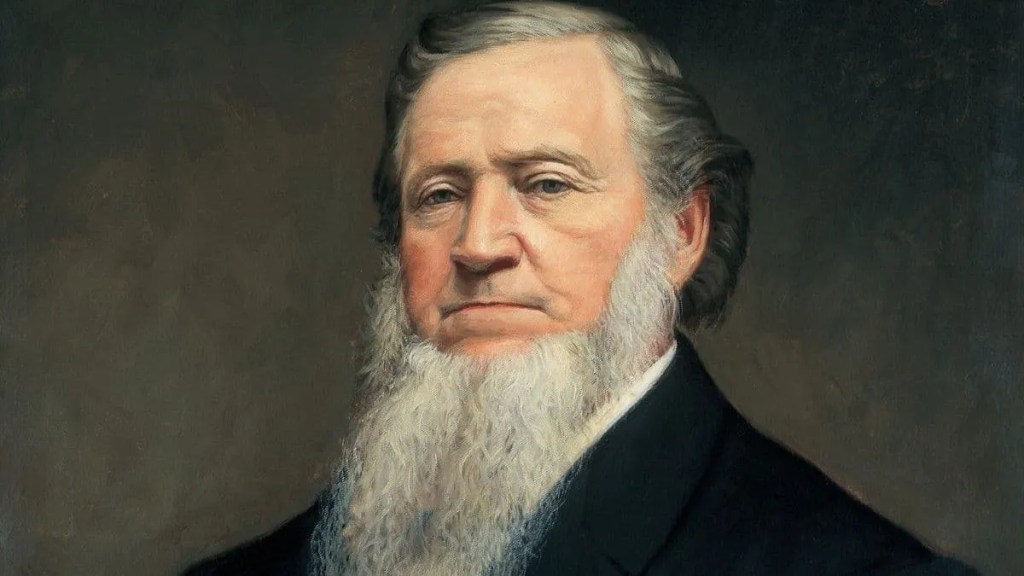
    What if Brigham Young incorrectly instituted the practice of the priesthood ban for black people?

    We always think in this way that God can do anything, however He wants to. Why didn’t He fix the priesthood ban for blacks issue immediately after Brigham Young if it was in fact a mistake by Brigham Young?

    We sometimes neglect to think that, if God were to fix things however He wants to, that would likely supersede our agency. This whole life is about us making choices. It would be a problem if God started correcting everything on this earth, especially with our many mistakes and shortcomings as mortals. It was never in God’s plan to supersede our agency, that was Lucifer’s plan.

    But let’s take a bigger perspective on this.

    What if God did correct this issue of black men not receiving the priesthood in the 1800s and early 1900s? What if He corrected it an eternity ago, when He created the Plan? God’s plan is perfect. God doesn’t always fix things the way we think He should fix things. In fact, He probably never fixes things the way we think they should be fixed. That’s what makes Him God and us tiny mortals trying with all our might to be like Him, but inevitably falling short.

    God’s Plan was established well before black men were denied the priesthood through Earth’s late 19th and early 20th centuries. His plan allows all those who would have faithfully accepted the priesthood while in this life to lose out on nothing. This is in precisely the same way His plan accounts for His countless children who didn’t have access to the saving ordinances of the Gospel in life, whether that be due to the gospel not being present on earth, never hearing about it, or a child dying before reaching the age of accountability. God’s plan is perfect. He’s already thought it through. I assume those who have an issue with the delay in the Church allowing black men to have the priesthood also have an issue with the tens of millions of infant deaths each year. In that case, your issue is with your faith in God, not in any church policy.

    I understand that these things are hard to understand while here. Some reading this may respond, “Yes, that’s precisely the issue I have: That many noble and worthy men weren’t allowed the priesthood and the millions of innocent children that die unfairly.” I understand this challenge. This is where faith comes in. I have faith in God, His Plan, His love, and that He will make all these things we don’t understand right. If we don’t have faith in those things, then yes, God is a monster that we should not worship. The God I know loves us and one day all these things will be understood.

    Something to us, here, simple and short-minded on earth, that looks like a huge mistake – it’s not a mistake to God. All those who couldn’t get the priesthood due to an incorrect policy will receive it.

    What if Brigham Young did make a mistake and what if the Church really would have collapsed if that mistake was corrected in the 1860s? THEN God’s church wouldn’t be on the earth. That seems like a real mistake. Again, God has thought these things through.

    We have an example of this principle in the policy change instituted by Wilford Woodruff banning plural marriage. In Official Declaration 1 of 1890, now in the Doctrine and Covenants, Wilford Woodruff says,

    “The question is this: Which is the wisest course for the Latter-day Saints to pursue—to continue to attempt to practice plural marriage, with the laws of the nation against it and the opposition of sixty millions of people, and at the cost of the confiscation and loss of all the Temples, and the stopping of all the ordinances therein, both for the living and the dead, and the imprisonment of the First Presidency and Twelve and the heads of families in the Church, and the confiscation of personal property of the people (all of which of themselves would stop the practice); or, after doing and suffering what we have through our adherence to this principle to cease the practice and submit to the law, and through doing so leave the Prophets, Apostles and fathers at home, so that they can instruct the people and attend to the duties of the Church, and also leave the Temples in the hands of the Saints, so that they can attend to the ordinances of the Gospel, both for the living and the dead?

    “The Lord showed me by vision and revelation exactly what would take place if we did not stop this practice. If we had not stopped it, you would have had no use for … any of the men in this temple at Logan; for all ordinances would be stopped throughout the land of Zion. Confusion would reign throughout Israel, and many men would be made prisoners. This trouble would have come upon the whole Church, and we should have been compelled to stop the practice. Now, the question is, whether it should be stopped in this manner, or in the way the Lord has manifested to us, and leave our Prophets and Apostles and fathers free men, and the temples in the hands of the people, so that the dead may be redeemed.”

    Sometimes we live with this thinking that God can do whatever so why doesn’t He? This, I think, is the basis of so many losing faith in Him. I look forward to the day when we are all reminded that we came to earth willingly, that we knew the Plan, and that we were eternally grateful for the opportunity to have freedom of choice and to learn right from wrong, away from Him (God), where it was completely up to us to make choices.

    Again, we fall into this thinking, I think, that God can do anything He wants however He wants. Maybe. But God still works through us. God still gives us our agency. God still lives by laws. God said He allows plural marriage in the case where he wants to raise a righteous generation unto Himself (Jacob 2). What would we have had God do if He needed to grow the church membership in one generation? Import a couple hundred thousand men and women from space? The answer is – God works with us. He works within the world He has given us.

    God allows us the bounds to make mistakes. Within those mistakes, God’s Plan works. I have faith in the truth of that. God takes our worst, and it becomes part of the Plan. He prefers our best, but He knows us better than we know ourselves.

    On the question of if Brigham Young did make a mistake – again, maybe the answer is yes, but I will refer again to the Official Declaration 1 – this was Wilford Woodruff speaking, “The Lord will never permit me or any other man who stands as President of this Church to lead you astray. It is not in the programme. It is not in the mind of God” (emphasis added).

    It is not in the program. It is not in the mind of God.  

    I believe in giving God all the power we actually try to take away from His power. God doesn’t watch things unfold her and go, “Oh crap, I need a righteous generation, let’s implement polygamy.”  Or, “Oh man, Brigham isn’t listening, this is bad.” This was worked out long ago. Just because we don’t like the way God did things makes it all the more likely He did it perfectly, because we are dumb, and so limited in our view. We cannot comprehend the workings of God.

    Did Brigham Young make a mistake? I don’t know.

    I know who didn’t make a mistake. That’s where I put my faith.

  • Influence of One

    Influence of One

    I’d like to relay a powerful story from LeGrand Richards’ book Just to Illustrate. In the book, he tells the story of meeting a man who claimed his father was one of the first converts of the Church of Jesus Christ of Latter-day Saints in Mississippi in 1840.

    This was shared with LeGrand in 1940. Since the conversion of his father in 1840, his father and his father’s descendants had contributed 100 YEARS of missionary service to the Church of Jesus Christ. Fifteen of the man’s descendants were at that time serving active missions. LeGrand relates that a couple years later he met that same man who told LeGrand the number was now 160 years of missionary service.

    “You see,” said the man, “when you add ten or fifteen years each year from ten or fifteen missionaries in the field, it does not take long to add another hundred years.”

    LeGrand then says, “The missionary who brought that man into the church back in 1840 might not have felt that he had accomplished much, especially if he were his only convert. Yet in a hundred years there was one hundred and sixty years of missionary work from that one man and his descendants. Add to that all the converts made by their converts and their descendants, and you would almost have a nation of men, all as the result of that one conversion.”

    This is a great follow-up to “Teaching in heaven.” 

    We should never be discouraged about our small efforts in sharing the gospel. We don’t know how the world could be changed by that one invitation.

    Think how much joy that missionary is having in heaven, watching as light, love, and peace is brought to thousands upon thousands of individuals because of the one person he shared the gospel of Jesus Christ with in 1840.

    What a powerful thought and what motivation to share the light we have with others.

  • Goals

    Goals

    I never used to set goals. I’m not exactly sure why. Could have been partly due to the thinking: if you don’t set goals you don’t fail.

    Throughout life, despite not actively setting goals, I think I’ve always had goals, even if those goals are subconscious. I think we all have goals.

    It’s interesting to look back on my life and see how my goals have changed.

    High school – graduate

    College – have as much fun as possible and meet as many people as possible

    After college – have a job to provide for myself

    Over time my goals changed in drastic ways. I went from wanting to have fun to thinking about a family. At some point, I went from only thinking about myself to thinking about others. 

    I’ve never been one to put a whole bunch of stock in goal setting. I always heard the logic: “You can’t accomplish it until you write it down.” I can see how that makes sense, but I just never subscribed to it. That includes New Year’s Resolutions. What’s the point of a whole population of people setting goals due to an arbitrary date? A goal they will stop putting any effort toward after week 3. 

    My Dropbox account has a whole lot of random and miscellaneous items in it. Random word documents, thoughts, quotes, letters, theories, links, notes, etc. When I had been back at church a couple years, I stumbled across something interesting, something I had almost no recollection of writing. I’ll post some of it here. It was a Word document called “2016 Goals.”

    Here is what I wrote in 2016. Through context clues, I can determine it was written either very early in 2016 or even *gasp as New Year’s Resolutions.

    Life

    • Stop swearing
      • Every time I swear out loud, take note of it. At the end of the year, donate $1 for every swear word I said through 2016.
    • Drink less
      • Try to limit drinking to twice per month.
    • Go back to church
      • In January go at least once.
      • February-December go to church at least 2 times per month. If I go less than 2 times in any given month, make up for it in a future month.
    • Go out of my way to do one nice thing for someone else at least once per week.
    • Buy a property.

    High aspirations, right? Try to limit drinking to twice per month, wow… aim for the stars.

    Other than the “Life” category I also had poker, work, and exercise. For the purpose of this post, I’ll focus on the above – Life.

    First of all, I immediately didn’t keep pretty much any of these goals. I never donated $1 for every swear word, though I do remember trying to keep track of my swearing. Drink less – out the window almost instantly. I don’t think I went to church at all January or February, so that’s pretty funny. 

    But here’s the extraordinary part. The year 2016 was the year I accomplished EVERY SINGLE ONE of those goals, with only buying a property bleeding into 2017.

    I stopped swearing in 2016, completely.

    I stopped drinking in 2016, completely.

    I started thinking about others. I don’t know if I did a nice thing for someone every week, but I know I tried.

    I bought my condo in 2017.

    In my opinion, without a doubt, the most important one and the one that enabled me to accomplish all the other goals I set – March 2016 was the month I started going back to church. I laugh at the fact I didn’t go in January or February, but is there any chance I would have gone in March if not for writing down these goals? Probably not.

    Remember, I don’t even remember writing these down. I know that seems strange, but I don’t. That’s how little thought I put into it. Within 2 months I’d completely forgotten about these goals. But, I think, something inside of me didn’t forget about these goals. Call it my subconscious, I’ll call it my soul, somehow, some way, writing these down gave me the power and strength to do things I thought impossible. Note again the goals, swear LESS, drink LESS. I went back to church and that became I don’t want to swear, I don’t want to drink.

    I’d be remiss if I gave all credit to myself for writing these goals down and accomplishing them. These goals that were written down and forgotten, my soul remembered them. I also think they were written and acknowledged somewhere much more important. I believe someone took note of my goals and sent help. That’s the only logical conclusion after all these forgotten goals somehow fell into place in the year 2016.

    After all this, I still don’t set concrete goals. Shame on me after the evidence I’ve seen. When I stumbled upon that “2016 Goals” Word document, I became a believer. Writing down goals is powerful. God sees our goals. Maybe our subconscious kicks in. Maybe good goals cause your spirit to cry out with joy that you’ve set some standards for yourself to try to accomplish.

    What I do know, is that goals are powerful. Writing them down is powerful. I should really try to be better at setting and WRITING DOWN concrete, solid goals. I’ve seen extraordinary things come from that. I think we all can accomplish extraordinary things when we set ourselves on a path.

    I have to conclude by thanking them. God. How could that all have happened without His support? My goals were so lame, and yet He made them something. Jesus Christ. How could I accomplish anything without Him forgiving me for all my wasted time, bad actions, and mistakes? I could only move forward by Him letting me look past my past. The Holy Ghost. There were countless difficult situations, countless times I ALMOST gave in and started drinking again, countless times, countless times. I know he was always there begging me to listen to him. Finally, the countless angels God undoubtedly sent, seen and unseen, to lift me up, help me along, protect, and encourage me. I owe it all to them. I am grateful. 

  • What do we believe in?

    What do we believe in?

    My Aunt Lindsey often asks the question, “What do you know?” I usually respond, “Not much.”

    What do we really know? Anything?

    While reading Mosiah chapter 26, I came across an interesting commentary from Hugh Nibley, one of my favorite scholars. The commentary was on Mosiah 26:15 which reads:

    “Blessed art thou, Alma, and blessed are they who were baptized in the waters of Mormon. Thou art blessed because of thy exceeding faith in the words alone of my servant Abinadi” (emphasis added).

    In considering that phrase, “in the words alone of Abinadi”, Hugh Nibley asks, “Now what about childish faith? What about being gullible, etc.? Alma believed in the “words alone”? Alma saw no evidence, no proof, or anything like that? And it wasn’t the words of God; it was the words of Abinadi alone that he believed in? What’s going on here? Why is there merit in this?”

    He continues, “There is merit because Alma believed in his words alone. I would emphasize his. You are blessed because of the things you choose to believe-not by the act of believing, not just by faith. You weren’t blessed because you believed, but because you chose what to believe. Everybody chooses what to believe. The atheist is a very strong believer. He is the most passionate arguer you can possibly find, and the positivist. Where will you find greater faith and firm conviction than among economists? . . . You must believe in something, and everybody does. But the Lord said, blessed are you [Alma] because of the things you chose to believe; you chose to believe in the things that Abinadi taught.”

    I’ve written before about The Faith of an Atheist.

    What do we believe in?

    This is an interesting statement by Hugh Nibley. The idea that it isn’t our faith that is important. Everyone has faith in something. It is what we have faith in. What do we choose to believe? Do we choose to believe that this is all one dumb coincidence and we’re all here for no real reason? Or do we believe in a Savior who redeems us, a Father who loves us, and an eternity of potential?

    Like a lot of things, it’s really about agency. What do we choose to believe in? Alma chose to believe in something good, hopeful, eternal.

    People who leave the church – are they better for it? This is going to upset some people. But in my opinion, no, people aren’t better for leaving the Church. That’s not absolute, of course. Some who leave the church still donate constantly to good causes, serve others, love others, and use their time in helping others. More often than not, I don’t think that’s the case.

    Many who leave the church, instead of turning their focus to good, hopeful, and helpful things, spend the rest of their lives trying to bash, destroy, and talk negatively about the church. Why is that? If leaving the Church of Jesus Christ is a good thing, why doesn’t more good come from it instead of more negativity? Why is tearing down something, whatever your feelings on it, that brings others hope and joy, a good result?

    Is it easy to be a member of the Church of Jesus Christ? With the number of people my age deciding they don’t care for the Church, or any church, I’d say membership in the Church of Jesus Christ is not super easy. A lot of people say, “The church doesn’t do anything for me.” The Church isn’t about what it can do for you. It’s about what you can do for others. When you leave the Church, what do you do for others?

    Leaving the Church is complicated. I’m not trying to oversimplify it too much. But what I think gets lost sometimes is that leaving the Church is often a selfish choice. At least it was for me. I don’t want to have to get up early for church on Sunday. I don’t want to use my Saturday morning helping an elderly person move their belongings. I want to drink. I don’t have time for a church calling like teaching a class, working with the youth, or organizing group activities. I definitely don’t have time for ministering. Yeah, checking on a couple people every so often to make sure they’re doing OK, and really help them if they say they need something, don’t have time for that. I don’t want to pay 10% of what I earn anymore. The list goes on. Someone leaving the Church NEVER thinks this way (or won’t admit it). It’s about historicity or “what they feel” or feeling lied to or CES letter blah blah. I’m not trying to say that those things can’t be hard for people. They are, and I understand that. But often, it comes back to I, when the Church’s main goal is to help us see outside of ourselves.

    Now let’s be clear. Simply going to church isn’t enough. There are plenty of people who go to church on Sunday, leave, and call themselves stalwart disciples of Christ. You may be worse off than the nonbeliever in that case. It may be worse to believe and turn away the sick and needy than to choose not to believe.

    Does some small historical question, or some big historical question, distract you from a plan called “the Plan of Happiness”? Do you choose to worry about a statement by Brigham Young or some question about Joseph Smith? Do you disregard the miraculous book that was written, the testimony of a Savior of the world, an account of that Savior visiting His children in America? Do you ignore the hopeful and positive miracles because you have doubts?

    What do you choose to believe in?