Tag: faith

  • A Kingdom Divided

    A Kingdom Divided

    The first step for Zion is to stop distinguishing ourselves from one another. We are first Children of God.

    President Russell M. Nelson has been clear about the three primary identities we should all focus on for ourselves. Those three identities are:

    First – children of God.

    The first identity is for every person on the face of the earth. Whether they realize it or not, every person is a child or God. The second and third identities are for members of the Church of Jesus Christ of Latter-day Saints. But this does not exclude anyone. The second and third identities are an invitation to the world.

    The second identity is child of the covenant.

    The third identity is disciple of Jesus Christ.

    President Nelson has stressed that anything we give precedence over these three identities distracts from our true potential. As children of God, children of the covenant, and disciples of Jesus Christ, we have a divine inheritance and royal home to return to. Any other worldly designation distracts from our ultimate goal of becoming everything we can be.

    Some of the other designations the world assigns include sexuality, status, race, and political affiliation. There are countless self-defined categories we assign ourselves. None of these things matter, they won’t matter at all when the veil is lifted, and we are reminded of what we always were.

    Zion are the pure in heart (D&C 97:21), Zion are one.

    All who believe in Christ are the children of Christ. But how is Zion established? How can there be unity in Christ given the divisive nature of the world and Christianity?

    A search for all the sects of Christianity brings up THOUSANDS of results. Thousands. How can one know the truth when there are so many claiming to be true? How can Christianity be united under Christ when there are thousands battling for attention, power, and patrons.

    How can God be a God of such confusion and disorder?

    In Luke 11:17 Jesus Christ says:

    Every kingdom divided against itself is brought to desolation; and a house divided against a house falleth.

    How would Jesus Christ feel about the state of the religion that espouses His name?

    I’ve heard it said that Christianity is united, despite its differences, in its faith in Christ. I think this is an admirable way to look at it. In fact, it’s how I try to look at it. It’s my opinion and belief that our faith in Jesus Christ is important and unites us. That said, what really unites us? What enduring principle is it that unites all Christians?

    Is it our belief in what Christ taught? There are a million different interpretations of what Christ taught.  

    Is it our belief in who Christ was? That couldn’t be a more divisive topic. Was He who He claimed to be? Was He the Son of God or wasn’t he?

    Is it our belief in the Atonement of Jesus Christ and what it accomplished? Again, there are different interpretations of Christ’s Atonement, why it was needed, and what it accomplished.

    Surely we can agree on Christ’s resurrection? Was Christ resurrected with His body or wasn’t He? Was there significance to Him eating fish with His disciples after His resurrection? Again, there is contention on this topic.

    What can Christianity be united on? It seems nothing.

    I believe the Church of Jesus Christ of Latter-day Saints provides the only solution to this problem. What Christianity can be united on is a connection to Jesus Christ. A real connection. Not a belief in Him, what He taught, or who He was. The connection must be real and tangible. The connection must be a welding link. The connection must have veracity on earth and in heaven (Matthew 18:18). That connection must be through a covenant.

    A covenant is a two-way promise.

    A covenant binds us to Him.

    When we get baptized, we promise to take upon us the name of Christ, and He becomes our shepherd. From that point on we are inseparably linked with Him.

    Latter-day Saints are a covenant people. The saints of God have always been covenant keepers.

    In the podcast Church History Matters, the hosts were speaking about the early history of temples in the Church of Jesus Christ. Something they said stood out to me as I’ve been working on writing this post.

    “…through the ordinances given to both men and women, living and dead, the human family is being knit or woven or let’s just use the word sealed together into one eternal holy order which we can call the family of God, we can call it the Kingdom of God, we can call it the Church of the Firstborn, we can call it the Celestial Kingdom, or simply the priesthood.”

    In the most recent General Conference of the Church of Jesus Christ of Latter-day Saints, Elder McCune of the Seventy said:

    Joy and eternal perspective come through being bound to the Savior by making and keeping covenants through Christlike discipleship.

    Adam, Abraham, Moses, and Peter; they made covenants with the great Jehovah and became His, and received of His power. Over time, they became more like Him. Over time they became one with Him. Enoch created Zion and was so connected to the Lord that he and his city were taken up to Him. This connection is made through covenants.

    What can unite Christianity? It is a covenant with Jesus Christ.

    Christ’s Church has temples where these covenants can be made.

    We must strive to be one with our brothers and sisters. We can only truly be one as we are united under one banner. The disjointed nature of Christianity is unacceptable. Covenants are needed. It is the banner of covenants with Jesus Christ that will unite Christianity, and nothing else. He died for us. In return, He asked us to believe in Him, follow Him, repent, and be baptized. That was His request of us. There is only one baptism that is acceptable to God the Father and that is the baptism with His authority in the name of His Son. No other baptism is acceptable to Him because it is a baptism not by His authority.

    I wish the Christian world could see that it is covenants that unite us to God. It is covenants that can re-unite us.

    I know as the Millenium approaches that one day all knees will bow and every tongue confess. At some future date the children of God will know and understand the covenants needed to unite the heavenly and eternal family.

    It is here for us now. But the world does not listen. Jesus was sent to this world, but He was not of it. This world struggles with the eternal nature of what God has in store for us. One day the world will have to understand what was always offered to us. What is offered to us is unity under Christ. Eternal families, eternal potential, eternal happiness, eternal inheritance. That is what will come when the world covenants to join with Jesus Christ and be Zion.
  • Wheat and Tares

    Wheat and Tares

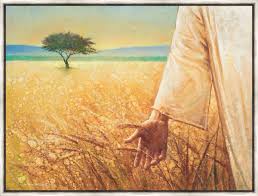
    Christ gives the parable of wheat and tares in Matthew 13:24-30:

    24 Another parable put he forth unto them, saying, The kingdom of heaven is likened unto a man which sowed good seed in his field:

    25 But while men slept, his enemy came and sowed tares among the wheat, and went his way.

    26 But when the blade was sprung up, and brought forth fruit, then appeared the tares also.

    27 So the servants of the householder came and said unto him, Sir, didst not thou sow good seed in thy field? from whence then hath it tares?

    28 He said unto them, An enemy hath done this. The servants said unto him, Wilt thou then that we go and gather them up?

    29 But he said, Nay; lest while ye gather up the tares, ye root up also the wheat with them.

    30 Let both grow together until the harvest: and in the time of harvest I will say to the reapers, Gather ye together first the tares, and bind them in bundles to burn them: but gather the wheat into my barn.

    In Doctrine and Covenants section 86 Christ gave an explanation of this parable. Here are His words:

    Verily, thus saith the Lord unto you my servants, concerning the parable of the wheat and of the tares:

    Behold, verily I say, the field was the world, and the apostles were the sowers of the seed;

    And after they have fallen asleep the great persecutor of the church, the apostate, the whore, even Babylon, that maketh all nations to drink of her cup, in whose hearts the enemy, even Satan, sitteth to reign—behold he soweth the tares; wherefore, the tares choke the wheat and drive the dchurch into the wilderness.

    But behold, in the last days, even now while the Lord is beginning to bring forth the word, and the blade is springing up and is yet tender—

    Behold, verily I say unto you, the angels are crying unto the Lord day and night, who are ready and waiting to be sent forth to reap down the fields;

    But the Lord saith unto them, pluck not up the tares while the blade is yet tender (for verily your faith is weak), lest you destroy the wheat also.

    Therefore, let the wheat and the tares grow together until the harvest is fully ripe; then ye shall first gather out the wheat from among the tares, and after the gathering of the wheat, behold and lo, the tares are bound in bundles, and the field remaineth to be burned.

    Quick rundown:

    Verses 1-3 explains the great apostasy that occurred to the church after the apostles “have fallen asleep” (aka were killed).

    Verse 4 reminds us that we’re now speaking of our day.

    Verse 5 tells us, “the angels are crying unto the Lord… to reap down the fields.” That can be interpreted different ways but basically the angels want to start with the harvest. The harvest can be considered the gathering of souls at the end of times. This leads to

    Verse 6 where the Lord tells the angels to hold off on the harvest because He doesn’t want to destroy the wheat. The wheat are the righteous, those followers of the Lord. The tares are those who oppose God.

    Verse 7 we learn that wheat will grow alongside tares until the end. Then the wheat will be separated from the tares, and the tares will be burned.

    I believe the most telling part of those verses is in verse 6 where it says, “for verily your faith is weak.”

    The Lord doesn’t want to pull up the tares because the wheat is still “tender” with weak faith.

    I’ve heard this parable many times but for the first time a thought occurred to me. What would it mean for the angels to reap the harvest and pull up the tares while the wheat is still weak? The tares being pulled up signifies the evil people of the world being taken away. The wheat would be too weak to handle this, the wheat is too intertwined with the tares. Wheat and tares, of course, represent people. What does it mean that the wheat is too tender for the tares to be taken? The thought that occurred to me was that the wheat, or faithful people, would have their faith shattered if the tares around them were taken. Could this represent the tares of some friends, family, and people we care about? What if God let loose the angels and took up the tares. How many faithful people would lose loved ones? 

    Are you a wheat or a tare?

    Is our faith weak or strong?

    In Matthew 13:38 Christ says

    “The good seed are the children of the kingdom; but the tares are the children of the wicked one”.

    Christ doesn’t detail the ok seed or the middle ground seed. We are good seeds or we are tares. We are working for Christ or working against Him. We are faithful or we lack faith.

    One day the wheat will be separated from the tares and the end will come. When that day comes, which side will we be on? The side of the wheat or the side of the tares? It’s not enough to be lukewarm as the adversary intensifies his attack. Wheat is nourishing, tares are not. There’s no middle ground. You are either a wheat or a tare.

    Which are you?

  • Sickness

    Sickness

    I’d like to share a poem by Boyd K Packer.

    In ancient times the cry “Unclean!”
    Would warn of lepers near.
    “Unclean! Unclean!” the words rang out;
    Then all drew back in fear,

    Lest by the touch of lepers’ hands
    They, too, would lepers be.
    There was no cure in ancient times,
    Just hopeless agony.
     · · · · · · · · · · · · · · · · · · ·
     But there was One, the record shows,
    Whose touch could make them pure;
    Could ease their awful suffering,
    Their rotting flesh restore.
     · · · · · · · · · · · · · · · · · · ·
     The day He made ten lepers whole,
    The day He made them clean,
    Well symbolized His ministry
    And what His life would mean.
     However great that miracle,
    This was not why He came.
    He came to rescue every soul
    From death, from sin, from shame.
     · · · · · · · · · · · · · · · · · · ·
     What must be done to make us clean
    We cannot do alone.
    The law, to be a law, requires
    A pure one must atone.
     He taught that justice will be stayed
    Till mercy’s claim be heard
    If we repent and are baptized
    And live by every word.
     · · · · · · · · · · · · · · · · · · ·
     If we could only understand
    All we have heard and seen,
    We’d know there is no greater gift
    Than those two words—“Washed clean!”

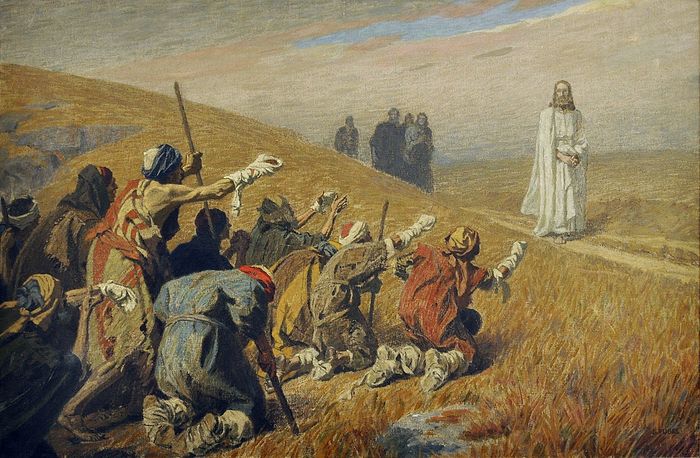
    Leprosy was a terrible disease. The skin rotting before the afflicted’s own eyes.

    One day we will stand before Christ and feel how unclean we really are. How grateful will we be for the Atonement in that moment? I’m grateful that we can be washed clean from all our misdeeds, errant thoughts, unkindness, and mistakes. All because He suffered our folly for us.

    While I’m not overexcited to see all my shortcomings, it will be a powerful moment to truly see and understand what Christ did for me. I have an idea now. One day I’ll see and know.

    He died for me.

  • Why can’t Anyone go in an LDS Temple?

    Why can’t Anyone go in an LDS Temple?

    In the Church of Jesus Christ of Latter-day Saints, our temples are sacred. Many people know this by the fact that they aren’t allowed in. This can, understandably, cause some negative emotions. Nobody likes to be excluded from anything.

    I heard an anecdote that really stuck with me.

    A man was telling a story about when he was a missionary and held Q&A sessions with local churches in the Bible Belt south. One of these sessions, a nice little elderly woman asked a not so nice question, “Why is your church exclusionary and doesn’t let people into your temples?”

    The man explained that he immediately realized this woman wasn’t able to attend the sealing of someone she cared about, which created this understandable animosity. He asked the old woman and learned she wasn’t able to attend the temple sealing of a beloved granddaughter.

    A somewhat standard response to this question is that it is about worthiness, that you must be worthy to enter the temple. Many Biblical examples can be used to illustrate this point.

    As the man was about to respond this way, he felt an impression to not give this standard response. He realized talking about worthiness wouldn’t be right with this woman. This was a Bible loving, Christ loving, Bible belt evangelical Christian. Telling her she wasn’t worthy wouldn’t be fair.

    Personally, I would have explained covenants in this moment. That one needs to make sacred covenants to enter certain places. This man received an altogether different impression, and this is the part that struck me.

    He asked her, “Do you believe that the Book of Mormon is the word of God.”

    She replied, “No offense, but no.”

    He asked her, “Do you believe this is Christ’s true church on the face of the earth?”

    She replied, “No offense, no, I don’t believe that.”

    He asked her, “Do you believe that Joseph Smith is a prophet?”

    She replied, “No offense, no.”

    Each time he told her he didn’t blame her for not believing it. That if it weren’t for the witness of the spirit to him, he wouldn’t believe it himself. He then asked her, “Do you believe that ancient prophets came to earth to bestow the keys of the sealing power to bind on earth what is bound in heaven as Matthew details in chapter 16?”

    She replied, “That’s in Matthew 16? I never thought of that. But no, I don’t believe that.”

    The man told her that’s OK, but he does believe all those things. Then he transitioned somewhere I did not expect, the story of Jairus’s daughter being raised from the dead (Mark 5:22-43, Luke 8:40-56).

    The man asked her if she knew the story and of course this avid Bible studier knew it.

    He directed her attention to the moment when Christ arrived at the home. The girl was dead. Those there mourning mocked Christ when He said she was just sleeping.

    Then what did Christ do?

    He “put them all out.”

    Christ had to remove all the lack of faith from the room. Christ, the Master. He let Peter, James, and John stay. He let the mother and the father stay. They had faith. He removed all those that didn’t believe.

    The man explained that when he goes to a temple, it’s not a marriage ceremony. It’s not until death do us part. Just like when Christ brought that girl back from the dead, telling death that it had no power before Him, the same is happening in temples. The priesthood power of temple sealing is telling death, “You can’t have this couple. This couple is protected. This couple is sealed. Even in death, death can not split them up. They are one. They are united.” It’s as if Christ Himself is saying, “They are mine, and you cannot have them.”

    That is what happens in Christ’s temples. Couples are sealed.

    The man then explained that when he attends a temple sealing, his faith becomes part of it. He contributes his faith to that couple. His provides his belief that they will be sealed for eternity.

    He then explained, “You admitted you don’t believe these things. Would you mingle your lack of belief in a place of faith? Would you have Christ keep the nonbelievers in the room to see the miracle?”

    Now, this isn’t the only reason people who aren’t members of the Church of Jesus Christ of Latter-day Saints can’t enter temples. Worthiness is a part of it. As I already mentioned, covenants are a part of it.

    But I loved this part I’d never thought about, faith is also part of it.

    I am grateful that God provided a plan and His Son so that I can be sealed to my family for eternity. I love my family. I never want to leave them. Now I look at Ivy, Sage, Beth. I can’t fathom a life without them. They are everything. I thank God every day for the sealing power and the gift He has allowed me to be sealed to them for time and all eternity.

  • Suffering, a Moment, a Breakdown

    Suffering, a Moment, a Breakdown

    I want to share a story that just happened to me.

    I don’t know why it happened. I don’t know what happened. That’s why I’m writing it. Maybe writing it down will help me to understand.

    It’s 1/2/25 at 9:00 in the morning. It’s my first day back at work in something like 2 weeks. I’m driving to a client’s office. I’m listening to a podcast called Y Religion. They’re discussing 50 relics of the restoration; 50 items from the time the gospel of Jesus Christ was being restored.

    They mention a microphone used by Spencer W. Kimball. I love Spencer W. Kimball. He is one of my favorite prophets.

    As I’m writing this, I’m remembering what they talked about before this microphone. What they talked about before this microphone was the original manuscript of Jesus the Christ written by James E. Talmage. They emphasized that the writing of Jesus the Christ, one of the most impactful books of my life, was inspired by the Church of Jesus Christ of Latter-day Saints attempting to re-emphasize its focus on what is most important: Jesus Christ.

    The podcasters said sometimes the culture needs to be reminded of what our most important focus is.

    I wondered if the Church needs that reminder again today.

    I remember thinking that President Russell M. Nelson, a prophet today, is trying.

    They talked about the microphone. Brad Wilcox, the provider of one of my all-time favorite talks/speeches/dissertations (His Grace is Sufficient) started talking about Spencer W. Kimball. He shared a story from when he was on his mission and for the first time would hear a radio broadcast of General Conference. Back in those days, certain countries only got Conference in written word months after Conference completed. Brad Wilcox as a young missionary was disappointed when the radio turned on and he realized it was just a translator. Of course it was a translator. The message needed to be broadcast to this particular area in Spanish.

    Then, he said, Spencer W. Kimball came on the radio with his telltale, well-known scratchy voice. The small group of saints asked Brad, “Who is that????”

    He replied, and as he told the story he choked up, “That is the prophet of God.”

    On the podcast, they then started to discuss the sacrifice that Spencer Kimball went through – losing his vocal cords and continuing to preach, speak regularly, and guide God’s church.

    I thought about that sacrifice.

    What have we gone through?

    Have we lost our vocal cords and then been asked to continue to preach?

    I thought about that sacrifice. I thought about that prophet of God. I thought about that voice.

    And while I was driving in the car, I was crying. I didn’t even know I was crying. I didn’t know why I was crying. I still don’t know why I was crying.

    I started thinking about why I was crying.

    They talked about the kindness of Spencer W. Kimball and how losing his vocal cords made him so gentle, so empathetic to the suffering of others.

    I thought about my current calling as Elders Quorum President.

    I thought about how much I fall short in that calling.

    I thought about telling my quorum that I’m a bad ministering brother. But I try. And asking them, who are also bad ministering brothers, to also try.

    I thought about all the suffering I’ve learned about in our ward since becoming president. I thought about all the loneliness and sickness and illness and suffering and heartache.

    I thought about my daughters.

    I thought about the client I was about to see and some of the personal things he had told me about his family when he invited me to a Suns game once.

    I thought about the suffering of his family.

    I thought about all the suffering my daughters would have to endure in this life.

    And I asked why.

    And I cried harder.

    And I reminded myself of why.

    We know the why. Luckily, I know the why. I’ve written about it here a hundred times.

    And then I pulled up to a light. And I looked directly at a homeless man. And I thought about giving him a dollar. And I wondered if the light was going to change. And I thought about how I didn’t want him to have to limp over to me for a dollar. Then he started to limp over to me. And I let him pass. And I let him walk back by me. And I wondered if he had a drug addiction.

    And I thought about all the suffering in the world.

    And I cried.

    I wrote this. And I still don’t know quite what it means.

    I know the world is going to get a lot harder and there’s going to be a lot of suffering.

    And I’m going to ask why, despite knowing the answer.

    And I realize that sometimes knowing why will make it easier, maybe even help, and sometimes, maybe it won’t.

    And I worry about my daughters.

    And I worry about this world.

    And I worry about all the lost and lonely people.

    And I wonder why.

    And I want Jesus Christ to come back so it can stop. I want to help. But my efforts seem so small and fruitless. I’m a bad ministering brother and a bad Elders Quorum President and I wonder, I can’t possibly be who God needs in this position now.

    And I feel so small.

    And I just want Christ to come back and fix it all.

    But I know before that happens this all has to get a lot harder. It has to get so much harder.

    And I worry.

    And I have faith.

    And I wonder if my faith is enough.

    And I cry.

    So I wipe my eyes and blow my nose, hoping the client can’t tell that I’ve been crying. And I go about my day, always with why in the back of my mind.