Tag: faith

  • Ignorance and Spontaneous Generation

    Ignorance and Spontaneous Generation

    Do you know what spontaneous generation is?

    Spontaneous generation is the outdated idea that living organisms can spontaneously come from other living organisms. For example, it used to be believed that a horse was how bees were created. People used to observe that a horse would die, and bees would “spontaneously generate” from the corpse. Crazy huh? Of course, now we know better. I wrote the below for a discussion post in my Science 301 class, Understanding Formal Processes.

    The once prevalent fallacy of spontaneous generation goes to show that we can be extremely wrong about simple and obvious things by relying on what our eyes tell us. When I initially started reading about spontaneous generation in Bondeson’s book, The Feejee Mermaid and Other Essays in Natural and Unnatural History, I could hardly believe that spontaneous generation was debated into the 1800s (Bondeson, 2014, p. 248). As I thought about it more, though, I understood how this theory took hold of observable logic and persisted for so long. An animal decays in the sun and maggots appear. Where did they come from? An obvious conclusion was the decaying flesh of the animal created the maggots.

    Scientific progress is filled with examples of people being sure of something that ends up being absurd. The relationship between observable scientific knowledge and the scientific method is that as the scientific method is improved upon, meaning, as theories and ways of experimenting on those theories improve, scientific knowledge grows in proportion. It’s interesting to note what Herman van Booerhave said of the brilliant mathematician Girolamo Cardano, that he was exceptional when correct in his theories but, “When he advocated erroneous theories, he surpassed them all in folly” (Bondeson, 2014, p. 197).

    Often, we see how outlandish proposed experiments can become. Take Paracelsus’s proposed experiment to create a human being by mixing excrements, semen, broth, and nutritious fluids (Bondeson, 2014, p. 196). While seemingly absurd, scientists have always been ridiculed for outlandish theories, and those theories only go the direction of proven or disproven by what Paracelsus proposed: an experiment. Even the most outlandish experiment using the scientific method is an improvement on assumptions based solely on simple observations.

    When I was in 7th grade my science teacher gave us a very simple assignment. The assignment was to take something, anything that we could test, and observe each day, make a hypothesis, then keep the data and see if our assumption was correct. Many of my classmates repeated a couple simple observations. I wanted to be more creative. I chose to check the thermostat in my home each day and monitor the fluctuations in temperature. My hypothesis was that as it got hotter outside during the summer, the temperature would go up in my home. This seemed an obvious assumption to a 7th grader.

    I was shocked when I learned, from checking the temperature every morning, that it was 72 degrees in my home every morning, no matter what. My hypothesis was foiled by the scientific progress of a simple thermostat. A device I always assumed to simply tell the temperature, I learned, was actually monitoring the temperature and turning on cool air as it got hot, or hot air as it got cool, to always keep our home at a consistent temperature. I learned from this how something that can seem obvious can be so wrong when ignorance exists. The ignorance here was a 7th grader who didn’t yet understand the simple workings of the things around him. We see in society every day how detrimental ignorance is. Ignorance exists in science, religion, everywhere around us. As we experiment and try new theories, our ignorance is lessened as we come to better understand the world around us.

    What seems so ridiculous now, spontaneous generation was an obvious observation given the tools available to science at the time. In a world that debates all things spiritual – the after-life, the soul, and all things we can’t see – science ridicules theories that can’t be proven. Because science can’t prove the existence of the soul, it says there is no soul. Like those who could observe that maggots spontaneously appeared but couldn’t know how because they didn’t have the tools and capacity to do so, one day all things we still don’t understand will be proven. This includes premortal existence, the soul, spirits, resurrection, and the after-life.

    There’s this secular belief that spiritual things inherently non-scientific. Those with faith understand that one day all these spiritual concepts will be proven through scientific methods. It will all be so clear to us one day, when our eyes are opened and we are given additional knowledge and understanding. What a day for science that day will be.


  • Purpose and What Did You Eat Last Week

    Purpose and What Did You Eat Last Week

    I recently did a meditation that I couldn’t get myself into, I disagreed so much with the premise. I can usually go with the flow with any guided meditation, at least the ones I’ve done. Often the guided meditations lead to spiritual thoughts. This meditation led to a spiritual thought, but not in the normal way.

    The voice leading the meditation stated, basically, that we are on this big rock floating through space. None of us know why we’re here or what the true purpose of all this is. The meditation continued advising to set that aside for a moment and focus on your breathing, etc.

    I stopped right there. In my mind I thought, but I do know why I’m here, I do know the purpose of all this. I couldn’t get behind the premise. It’s a common theme of my writing. Where we come from, why we’re here, where we’re going. It hit me that 99% of people listening to that meditation probably don’t bat an eye at that statement. Most people probably gloss right over it like, “Yeah, I don’t know what the meaning of all this is.” That makes me sad.

    I just started a new book that talks about the temporal nature of this life and how silly it is to one, not believe in the things we can’t see, and two, put so much stock into the things we can see, even though they’re so temporary.

    The book asked what I ate 2 weeks ago. I had no idea. It made an interesting point. Food and water are the most critical thing to our survival. We can’t survive without them. Yet, what did you eat 2 weeks ago? You don’t even remember. What about the car that you love then 8 years later is a clunker. Or the house you cherish but inevitably becomes dirty, beat up, and cluttered with other stuff that is inconsequential. The book talked about how much stock we put into these things.

    How many of us consider why we’re here or where we’re going? How many in the world live in complete ignorance, not wanting to consider these great questions? It amazes me.

    We can’t see or describe heartache, fear, doubt, love, the wind, and yet they exist. Faith exists. Our soul exists. Eternity exists. God exists. These are the things that matter. I wish our society could spend a little less time with a Netflix special they won’t remember a year from now and consider more the purpose of this life. 

    The purpose of this life is God’s plan to make us stronger, better, and more like Him. We knew God before we came here. We will remember Him when we leave here. This life is so important. Not for food, or water, or cars, or homes, or Netflix, but for the faith we build, the experiences we go through, and the families and relationships we cultivate. I wish this is something we could all remember more.

  • Destruction of Christ

    Destruction of Christ

    While looking at the cover picture for this post, an obvious realization came to me.

    Look closely at that picture. What do you see?

    The top of the picture is glorious. You can faintly make out a being in that bright light, coming out of the clouds.

    It was the bottom of the picture that caught my attention. One word comes to mind: desolation.

    It hit me why desolation and pain and suffering and death and starvation and destruction must happen to the people on this Earth before Christ’s Second Coming. People on earth are so stubborn and prideful. We wouldn’t accept Christ if He came out of the sky right now. With Netflix, food, water, and our comfortable lives, if we saw Him come straight out of the clouds as a bright star, we would be fascinated for as long as we’re fascinated with anything that hits the news.

    Many would deny it as some sort of special effects stunt put on by the media.

    Do you realize last year the government came out and said UFOs exist?

    The collective reaction of Earth seemed to be, “cool.”

    How long would Christ’s coming fascinate us if it happened tomorrow? A week? A year? A day? Then it would become old news and we’d move on. Seriously. Seems ridiculous? I think it’s true. 

    Destruction will make people humble themselves and accept Christ when He comes. It will make some people realize man isn’t great at governing a planet and we need some help from something, anything. For those opposed to God and religion, what happens before the Second Coming may even make them concede we need help from the divine. The destruction of Earth that will come in the last days (these days) will hopefully lead to many realizing Satan’s principles (which now run the world) are destructive. Greed, envy, anger, jealousy, deceit, lust, and revenge cannot run a fruitful society.

    The destruction will make people realize they need Jesus Christ. We see it now, today. No one thinks they need Christ in their life. No one cares about God. We’re comfortable. Life is good.

    What happens when life isn’t as comfortable? People turn to God.

    Life will get drastically less “good” before His coming. Many will cry about how it is unfair and how could a loving God let this happen to us? We let this happen to us. Our choices will lead us to that point.

    What is the being in the top of that picture coming to do? What will Jesus Christ be coming to the earth to do? Look at the bottom of the picture again. When the Earth is destroyed, all our comforts and idols that we relied so heavily on gone, when that time comes, He will be coming to heal. He will be coming to fix what is broken. Who can deny we are broken?

    While the destruction of the Second Coming can be a frightening topic, for the faithful it will be a bittersweet time to rejoice. While destruction happens around us, we can have faith and confidence that God is keeping all His promises to us, His children.

    When that time comes, as fear grips the Earth, we can have joy amidst the world’s uncertainty. We will know our Savior is coming. We will know we can rely on Him. We will know, as long as we put our faith and trust in Him, all will work out for our benefit and for His glory.

    As the world falls deeper and deeper into turmoil, what a comfort that is.

  • Impactful Moments

    Impactful Moments

    In Gravity of God, I wrote about how God is the center of our universe and how His faith and His action holds it all together. I discussed how us being here is an opportunity for us to test how we will use our faith and actions to influence and impact people.

    Will we have a God-like influence of love, help, support, giving, charity, and selflessness to those around us? Or will we use our influence to be more in Satan’s camp of selfishness, hate, judgment, pride, and animosity?

    Our actions matter. We’re here to see how we’ll use the talents and gifts we’ve been given.

    Some moments carry more weight than others.

    I believe everyone we interact with in this life is meant to teach us something. Do you consider the interactions you have to be significant? Do you believe the things that happen to you have meaning? How about the things you do to others?

    I believe when someone is unkind to me here for any reason – they’re here to teach me something.

    I believe when someone does something I disagree with – they’re here to teach me something.

    I believe when someone is kind to me or a good example to me – they’re here to teach me something.

    All these moments matter, and some moments have lasting importance.

    There are so many mundane and average moments in a day. I’m talking about the, “How are you today?” “Good.” “Good.”

    Then there are conversations that change our worldviews, make us think, or expand our horizons. There are some conversations that make us think about eternity. There are some conversations that prepare us for eternity.

    I’ve been given so much in this life.

    I know where I come from, why I’m here, and where I’m going, while so many around me don’t have these answers. Part of the reason I think I’m here and why I’ve been given so much is so that I can share it with others. If everyone around me is asking the important question – why am I here? And I know the answer, and I’m not sharing it with them, then I’m the most selfish person there is.

    Why do you think I put the time and effort into writing this? One day I want to tell God I tried my best to share what He gave me.

    Anyways.

    There is one topic that can be brought up in any conversation and will immediately change the moment from mundane and borderline meaningless to extraordinarily impactful and important. That topic is God.

    I was at a bachelor party once. We went to Palm Springs for a long weekend. Got a house. Played a lot of pool and video games. The rest of the party played golf. I found ways to fill my time while they played golf.

    There were two conversations I had that weekend that were memorable and impactful.

    While playing pool one night, somehow religion got brought up. I’m sure I helped us into that direction one way or another. Me and another guy in the group who I didn’t know very well started talking about eternity, church, and the gospel.

    That conversation was years ago. And seemingly nothing came about from it. But I still remember what that guy said at one point. He said, “When God gets brough up, the conversation changes. It becomes real. Even if it’s slightly or fully contentious, it’s still good if God is in the conversation.”

    He was so right, and it’s the reason I’m writing this.

    He probably doesn’t consciously remember that conversation. But I believe his spirit does. I really believe we keep a record of all we hear, see, and learn here on earth. And one day he’ll see that moment again and I hope it was as impactful as it felt.

    The other conversation that happened was on the drive back. I was in the car with the groom to be and a friend.

    We were talking about the upcoming wedding and what that meant, the topic of marriage, fidelity, vows, our bodies, drinking, habits, and growth were discussed. I know those topics sound wide-ranging. It was a long drive.

    I came out of that conversation feeling like we’d talked about something so important.

    Every mundane conversation is exactly that, mundane, until God is brought up.

    Have more meaningful conversations.

  • Why Polygamy?

    Why Polygamy?

    The question is often asked: Why did God command Joseph Smith to enact the practice of polygamy, or multiple wives.

    The answer is sometimes given that it was for God to raise up righteous seed. to increase the number of children born in the gospel covenant in order to “raise up seed unto [the Lord]” (Jacob 2:30). I will come back to this.

    Another reason that isn’t often spoken of. Joseph Smith’s calling as a prophet was to restore all things. Not some things. Not most things.  All things.

    If a Priesthood power was had or executed in this earth, it was Joseph Smith’s duty to restore it in this, the dispensation of the fullness of times.

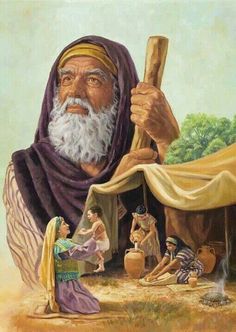
    To many people distraught at the idea of polygamy I would ask, “Do you believe in the Bible? Do you believe in Abraham, the great Patriarch?” How can a practice so wholeheartedly be condemned in the 19th century but be acceptable to you in the past? God is eternal. He doesn’t care about 2000 BC or the 1830s. To Him it is all one eternal round.

    It’s amazing that the staunchest denouncers of plural marriage never speak of Abraham, Isaac, and Jacob. The same Abraham, Isaac, and Jacob whom they pronounce with vigor, “I believe in the God of Abraham, Isaac, and Jacob.” Israel, whom the 12 tribes of Israel come from, exist because of this practice so condemned by modern critics.

    I want to touch back on the “righteous seed” theory. Some I think at least slightly scoff at the idea. It’s such a broad concept that most simple human minds can’t see such a big picture. Couldn’t God raise children to Him in a different way? He’s God, right?

    Maybe.

    But God has always worked through us, here on earth, to do, build, create, and work. He doesn’t magically insert tens of thousands of people because He needs them here. He commands and we either react with faith or with stubbornness.

    I’d like to give a real-life example of this principle of raising seed unto Him.

    I am a descendant of polygamy. Me. Someone you know is here because of this practice. Where would I be if not for this practice? I would have either been born to another family, outside of the covenant, outside of this Church, or I’d still be in line waiting to come to earth.

    I’m grateful for the practice of polygamy. I know it was difficult. I know it was a great test of faith. It was an incredible trial for those who had to live it. Those who endured it faithfully, like my great-great-great grandfather, Benjamin F. Johnson, have blessed me and the life of countless others. I’m grateful to him.

    It is pretty well documented how much Joseph Smith struggled with the principle. He all but avoided it for many years. Do you think Joseph Smith who was already persecuted and hated, driven from state to state, wanted to institute something that would make his enemies more hateful? Do you think he wanted to institute something that gave his enemies more anger and vitriol towards him and the Church? It was hard enough. It was not easy for Joseph Smith to institute polygamy.  Ultimately, he had to learn obedience to all of God’s commands. Even the hard ones. Even the ones he didn’t understand.

    We don’t know exactly why God instituted the practice of polygamy, anciently or modernly. We can guess, we can hypothesize. But like many other principles or workings of God, it comes down to faith. I wouldn’t be here without the faith of someone else who accepted something difficult. It’s a small act of faith on my part to accept and show gratitude for their great faith in times past.