Tag: Family

  • The Hearts of the Fathers

    The Hearts of the Fathers

    I always thought about the mission of Elijah (turn the hearts of the fathers to the children and children to the fathers) from my perspective, as one of the “children.” I hadn’t thought about it from the other perspective.

    What happened when Christ preached to those who had died? He talked of His gospel and returning to heaven which was predicated on their baptism. This likely caused a stir amongst the dead. You can see the shudder through the countless number, “Baptism? But how can we be baptized without bodies?” Then Christ explained temple work, vicarious baptisms for the dead, and that they could be saved by their progenitors, their families. Imagine the excitement this caused.

    Those who Christ preached to had been dead for hundreds, some for thousands of years. When was the last time they’d thought about mortality? Did they think about mortality? Had they moved on? Like someone who has a vacation in Mexico but returns to their home, had they settled back into “life” amongst the dead and slowly stopped thinking about mortality? 

    If they had settled back into death, this news from Jesus Christ surely made them re-focus their attention on the living. 

    What then transpired? Did they begin ministering to their living loved ones? Were they sent out to influence the living? Were they ushered out to beg spiritually for help to be saved? 

    I’d always thought about how our hearts here on earth were turned to our dead loved ones when Elijah came and instituted the keys of the sealing power. 

    I hadn’t thought about how the hearts of the dead turned back to us and what that looked like. 

    Love. 

    Love and sacrifice and covenants bind us. 

    We, without them, cannot be made perfect. They, without us, cannot be made perfect. 

    Our ancestors laid the entire foundation for all that we have. Whether we want to give them credit, blame them, or forget them, we can’t deny that we are where we are and we are who we are because of them. 

    It’s amazing to see the modern-day genealogical work being done in the world and particularly amongst the saints. 

    We are creating a bonding link, a welded connection back to Adam. I don’t know exactly how, but this keeps the world from being smitten with a curse. 

    I believe it has to do with love. It has to do with connection. It has everything to do with why we’re here and what we’re meant to learn. 

  • Grandpa Frank

    Grandpa Frank

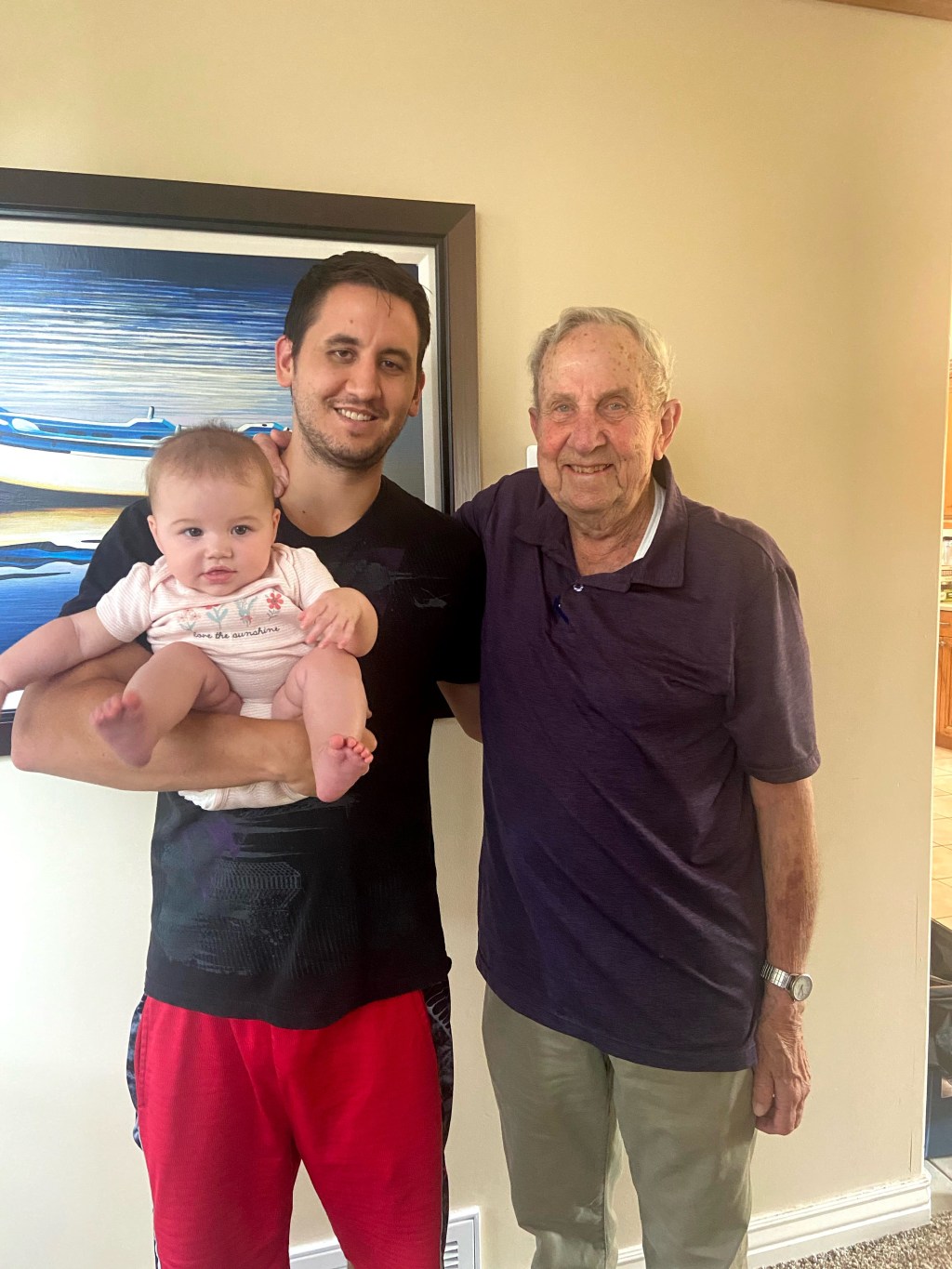
    My most vivid memory of Grandpa Frank, aside from the “Wogs” (the nickname he had for me) and sitting on his lap as a kid, being squeezed into a ball, and being told I would grow up that way, is a few years ago when he bore his testimony in a church meeting. Paraphrasing, Grandpa said:

    “I miss my wife. I miss my daughter. I miss them so much. But this Gospel tells me I will see them again. That means more to me than anything. And I know it’s true, and that brings me so much comfort.”

    As the legend goes, Grandma Leach converted to the Church of Jesus Christ of Latter-day Saints in her early 30s. While Grandma lugged kids to church every Sunday, Grandpa Frank would watch football, golf, or go fishing. He seldom attended. He showed little to no interest in church.

    Again, as legend goes, after over a decade of this, the bishop of Grandma’s ward came to the door one day.

    “Are you excited for this Saturday?!” He asked.

    “What is happening Saturday?” Grandma asked, confused.

    “Frank’s baptism!” The bishop exclaimed.

    Grandma had no idea. For months, on the sly, Grandpa Frank had been meeting with the missionaries and studying the Book of Mormon. He decided it was true. I have no idea why he never told Grandma. I don’t think anyone knows. Maybe this is where I get my secretive, stubborn, frustratingly independent qualities (sorry Beth).

    That Saturday he got baptized and proceeded to go to church with the family from then on.

    What is the Gospel of Jesus Christ, really?

    Change. A man who preferred football, golf, or fishing realized the most important thing in his world was his family. He sacrificed what he wanted to do on Sunday for them.

    What is the Gospel of Jesus Christ, really?

    Faith. A man who decided to believe something extraordinary: he could and would spend eternity with those he loved most.

    What is the Gospel of Jesus Christ, really?

    Love.

    I didn’t cry when I heard Grandpa died. I know I’ll see him again. I know where he is. I know he’s happy.

    As I write this, a vision comes to my mind.

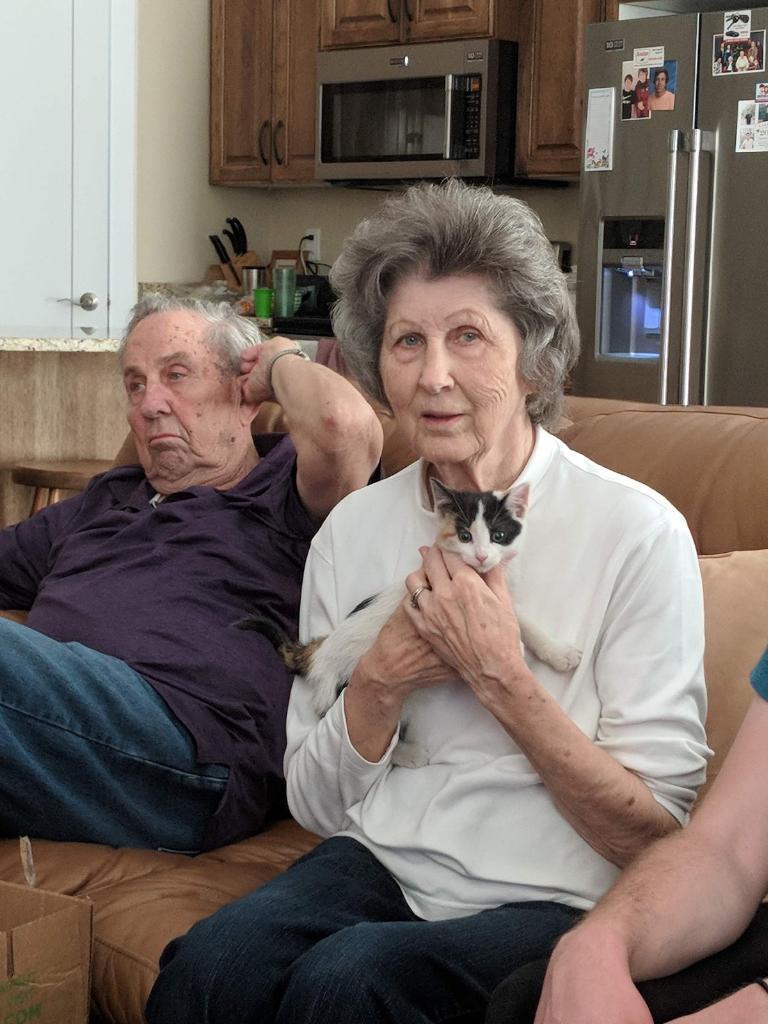
    Grandpa Frank sees Grandma Sandra. He smiles. He is overjoyed to be reunited with the love of his love, his constant companion until the previous four years separated them temporarily. He embraces her. “It’s really true, Sandra?”

    “You always knew it was,” Grandma tells him.

    Others come. Grandpa is surrounded by Laura, Mike, Henry, Olivia, parents, grandparents, friends, loved ones, and Bengie, of course. They rejoice. People (and a dog) he missed so much, but always knew he’d see again.

    As I picture this reunion, and I think about where I am, similarly stubborn and obnoxious as Grandpa Frank, I think about my daughters, and this family I’ve been given. I think about the faith I’ve gained because I’ve seen examples of real faith. Faith as tangible as this keyboard I now type on. Grandpa Frank’s faith was real. I think about those I’ll one day see again. I think about those I have in my life now, that I’ll be able to have in my life forever. As I consider this all, I cry tears of joy.

    This is the Gospel of Jesus Christ.

    I know that Grandpa knew it and I know where he is now.

    What greater comfort is there than this?

    Thank you, Grandpa, I’ll see you soon.

  • Marriage

    Marriage

    I wrote this in September of 2023, when Beth and I were practically still newlyweds (married just over 4 years when I wrote this, now we’re approaching 7).

    Beth and I had a fight the other day.

    I’ve been reading the Church Handbook for the Church of Jesus Christ of Latter-day Saints.

    The day after that fight, and Beth and I had of course made up, I read this:

    Husband and Wife

    “A husband and wife are intended to progress together toward eternal life (see 1 Corinthians 11:11).

    This is your quarterly reminder that marriage is HARD. There’s a reason it’s so important in God’s eternal plan.

    “A couple makes this covenant (covenant of celestial marriage) when they receive the marriage sealing ordinance in the temple. This covenants it the foundation of an eternal family.”

    “When faithfully kept, it allows their marriage to endure forever. Ultimately, thy can become like God (see Doctrine and Covenants 132:19-20).

    Again, in case you missed it the first time, another reminder, there is a reason marriage is so HARD.

    If you’re reading this and your marriage is hard, don’t give up. If you’re reading this and your marriage is getting hard, don’t give up. If you’re reading his and your marriage has been hard, don’t give up. Rely on and trust each other.

    “God has commanded husbands and wives to cleave to each other (see Genesis 2:24; Doctrine and Covenants 42:22). In this context, the word cleave means to be completely devoted and faithful to someone. Married couples cleave together by loving and serving each other.”

    And just one more important reminder from the handbook:

    “Cleaving also includes total fidelity between husband and wife.”

    Marjorie Hinckley was once told by a lady when she was a newlywed to Gordon B. Hinckley, “Don’t get discouraged, the first 10 years of marriage are hard.” Not the first 6 months or the first year: the first 10 years. You are combining your life with someone. There will inevitably be differences in living, habits, thoughts, plans. You are literally becoming one with another individual. What could be more difficult than that? What can be more humbling than giving a part of yourself a way for someone you love? What can better illustrate that love than sacrificing for your significant other?

    Marriage is a sacrifice, and it’s meant to be. That’s the point I think the world forgets sometimes. Marriage is not supposed to be all gain and all for me, me, me. Like being a member of the Church of Jesus Christ of Latter-day Saints isn’t all flowers and blessings –being a member of this church is a sacrifice – of time, money, and effort. Being married is also a sacrifice. If it wasn’t a sacrifice, it wouldn’t be worth having.

    The sixth Lecture on Faith is all about sacrifice.

    The most important and valuable things in this world require sacrifice.

    I recently heard the fascinating idea that when couples divorce, they lose memories. It is after divorce that they learn their memories weren’t theirs at all but shared memories. When separated, divorced couples literally lose memories. Because those memories weren’t just one or the others. Those memories were joint memories. When split, when separated, when broken, when divorced, those memories disappear.

    I found that to be so interesting.

    I love my wife. I am grateful for her. There are things she does that make my life less enjoyable- but I couldn’t live without her. She is the mother of my daughters and the most important person in my life and I’m sorry every day that I take her for granted. Marriage is hard, but she is my partner. I’ve grown so much and connected with her on so many levels the first few years of marriage, I’m interested to see how far this merging of mind and personality can go. To become one.

    1 Corinthians 11:11 “Nevertheless neither is the man without the woman, neither the woman without the man, in the Lord.”

    “The man and the woman are intended to learn from, strengthen, bless, and complete each other.” – Elder Bednar.

  • Growing Up

    Growing Up

    I recently saw a compilation video. This video showed dads seeing their daughters with their boyfriends for the first time.

    This made me think about when this will happen to me one day.

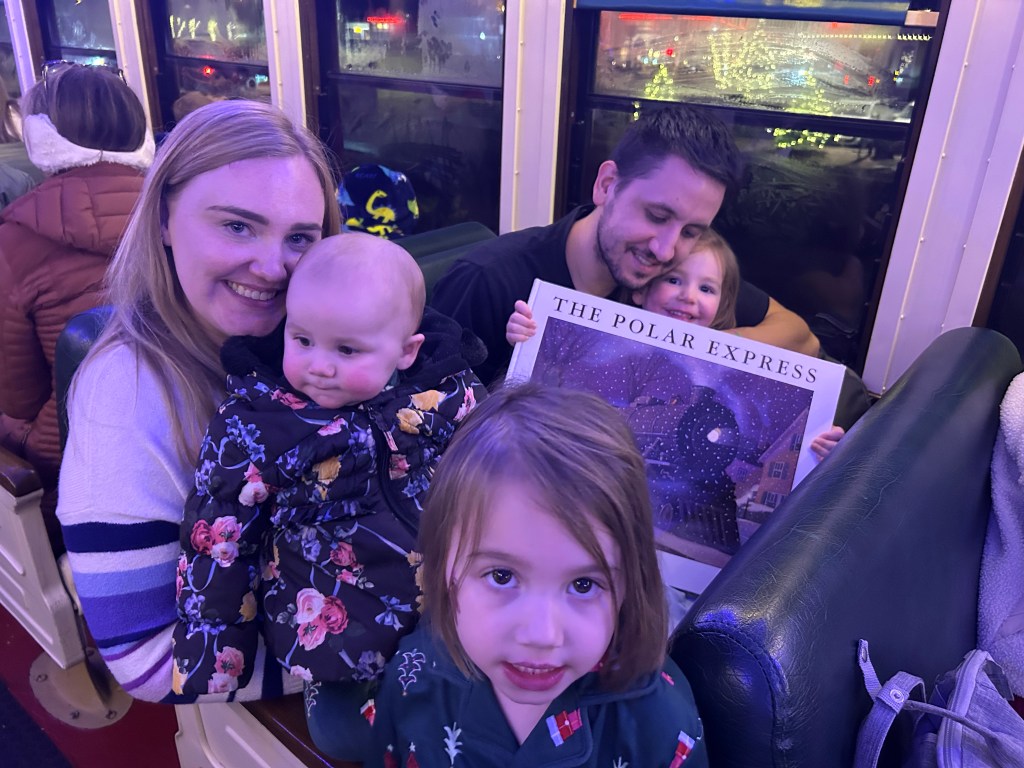
    I started to think about Ivy, Sage, and Wren one day growing up. I started to think about my Ivy, my partner, my girl who cuddles with me at every chance and always wants to play. I thought about her growing up.

    I started to feel an intense pain in my chest. Like serious, gotta stop thinking this kind of pain.

    I don’t know if other parents get this.

    You know those “memories” videos that iPhones create? IPhone takes all your photos for a year or something and puts them together with emotional music in the background. I can watch them in very limited spurts. I will definitely start bawling my eyes out. Tears are the best case scenario. Worst case, the aforementioned heart pain extends to my whole body and it feels like my body will explode.

    This will sound like an exageration. It is not. It is a real feeling.

    You’ll notice above when I talked about Ivy cuddling with me and always wanting to play, I stopped there. I could have listed a million other examples of the loving affection between us. I could have used more examples with Sage and Wren.

    But as I type these thoughts and consider them getting older, my chest starts to hurt, and my eyes fill, and I have to stop. There’s a reason I’m not getting more detailed.

    My love for them is so all encompassing, so palpable, so excruciating, that I feel physical, overwhelming pain when I think about it one day changing. I know it has to change, one day. Until that day…

    Having three kids now five and under (because Ivy is five, yeah, let’s not talk about it), is extremely, extremely hard. It’s taxing. It feels like almost every day is a marathon that never ends. Sometimes I’ll find myself thinking I just want it to be over. I want them to be able to pour their own cereal and put on their own pants and wipe their own bum.

    Then Ivy started putting on her own pants and pouring her own cereal. Sage started wiping her own bum.

    And as I type this, and the screen becomes blurry, I remember to embrace the bum wipings and all the mundane. Because one day might be the last day Ivy says, “Daddy, do you want to play with me?”

    I hope that day never comes. But I guess it probably will.

    Okay. I need to stop now.

    Am I the only one? What is this love? A father for his daughters.

    I’ll be patient, one more month
    You’ll wrap your fingers ’round my thumb
    Times are changing, I know, but who am I if
    I’m the person you become
    If I’m still growing up

  • Is Roseto, Pennsylvania Zion?

    Is Roseto, Pennsylvania Zion?

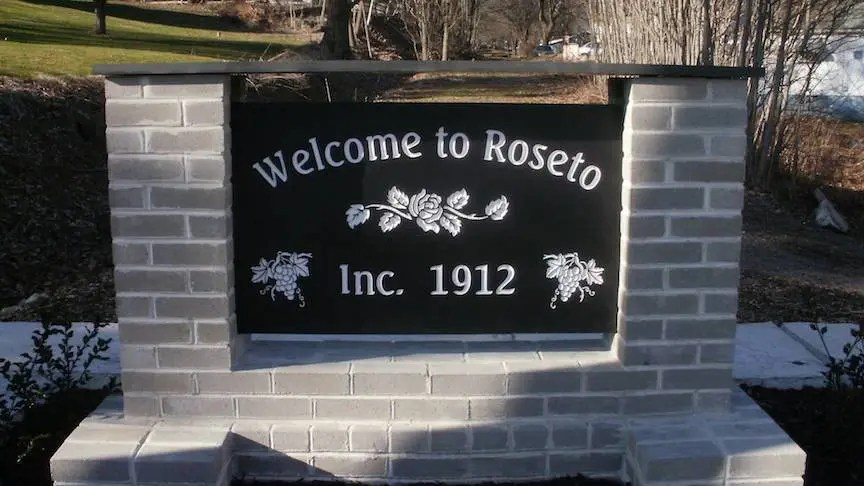
    There was an extraordinary thing happening in Roseto, Pennsylvania in the 1950s. I read about it in an awesome book called Outliers by Malcom Gladwell.

    Roseto, Pennsylvania was an outlier when it came to heart disease. For some reason, instances of heart attacks and heart trouble in Roseto were shockingly different than anywhere else.

    In the 1950s, heart attacks were the leading cause of death in men under the age of 65 (Outliers, p. 6).

    In Roseto, nobody under 55 had heart attacks. Roseto had half as many people with heart trouble over 65 compared to any other area studied. This included next-door cities and towns.

    What’s fascinating about this is that this phenomenon apparently had nothing to do with genetics, diet, or any other seemingly obvious reason. There was no obvoius indicator of why a whole community would be free of heart trouble.

    Heart trouble wasn’t the only thing missing from this community. A sociologist was brought in to study the community. His name was John Bruhn and he said, “There was no suicide, no alcoholism, no drug addiction, and very little crime. They didn’t have anyone on welfare. Then we looked at peptic ulcers. They didn’t have any of those either. These people were dying of old age. That’s it” (Outliers, p. 7).

    What made Roseto unique, then?

    Finding no pattern, those doing the study had to look at anything different about Roseto to try to explain this phenomenon.

    This led to a primary theory. That primary theory behind why Roseto, Pennsylvania residents didn’t suffer heart trouble or many other common diseases had to do with their community.

    Roseto had an old-fashioned way about it in the 1950s, even compared to the standards of its day. The residents of Roseto were primarily Italian-American immigrants. The standard in Roseto was to live at home as long as possible, take care of one another, and generally live a more laid-back and communal way of life. A young man would stay at home and take care of family. If he lost a job, it was okay. The community would often try to keep shortcomings like a lost job secret so as not to create any embarrassment. Kids would take care of parents. Parents would take care of kids. The community took care of each other. It was a family-focused, close-knit community.

    “(Researchers) learned about the extended family clans that underlay the town’s social structure. They saw how many homes had three generations living under one roof, and how much respect grandparents commanded. They went to mass at Our Lady of Mount Carmel and saw the unifying and calming effect of the church. They counted twenty-two separate civic organizations in a town of just under two thousand people. They picked up on the egalitarian ethos of the community, which discouraged the wealthy from flaunting their success and helped the unsuccessful obscure their failures” (Outliers p. 9, emphasis added).

    The fact that Roseto residents had such low instances of heart trouble revealed a potential connection between community relationships and social support to reduced stress and heart disease. The community of Roseto appeared to buffer its inhabitants from the stresses of life.

    This got me to thinking.

    What is Zion? What is the perfect society? What will it look like? What will it be like, practically speaking?

    “…the Rosetans had created a powerful, protective social structure…” (Outliers p. 9).

    Will Zion be a community that goes to church together? A community that stops to talk to each other? A community that continues to live under one roof with their direct family as long as possible? A community where equality reigns? A community where spontaneous cookouts in front yards are common?

    This sounds like Zion to me.

    It’s fascinating that a community basically shielded itself from the stresses of a fallen world by living by these principles. I believe these are God-given principles: fairness, love, community, support, unity – that’s what makes Zion.

    “When presenting (the researchers’) findings at many medical conferences where their peers were presenting long rows of data arrayed in complex charts and referring to this kind of gene or that kind of physiological process, and they themselves were talking instead about the mysterious and magical benefits of people stopping to talk to one another on the street and of having three generations under one roof….No one was used to thinking about health in terms of community” (Outliers p. 10).

    This Christmas season, as I’m inevitably considering the state of our world and where we’re headed, I can’t help but wonder: is it this simple?

    Community, family, support. People supporting people, people uplifting one another, communities looking out for each other. Neighbors waving hi. People engaging with those in their community. Ministering. Fellowship. Is it that simple? Would that fix our world?

    I think it would. I think this is primarily what is missing from our modern-day societies. Love thy neighbor. How about say hi to thy neighbor?

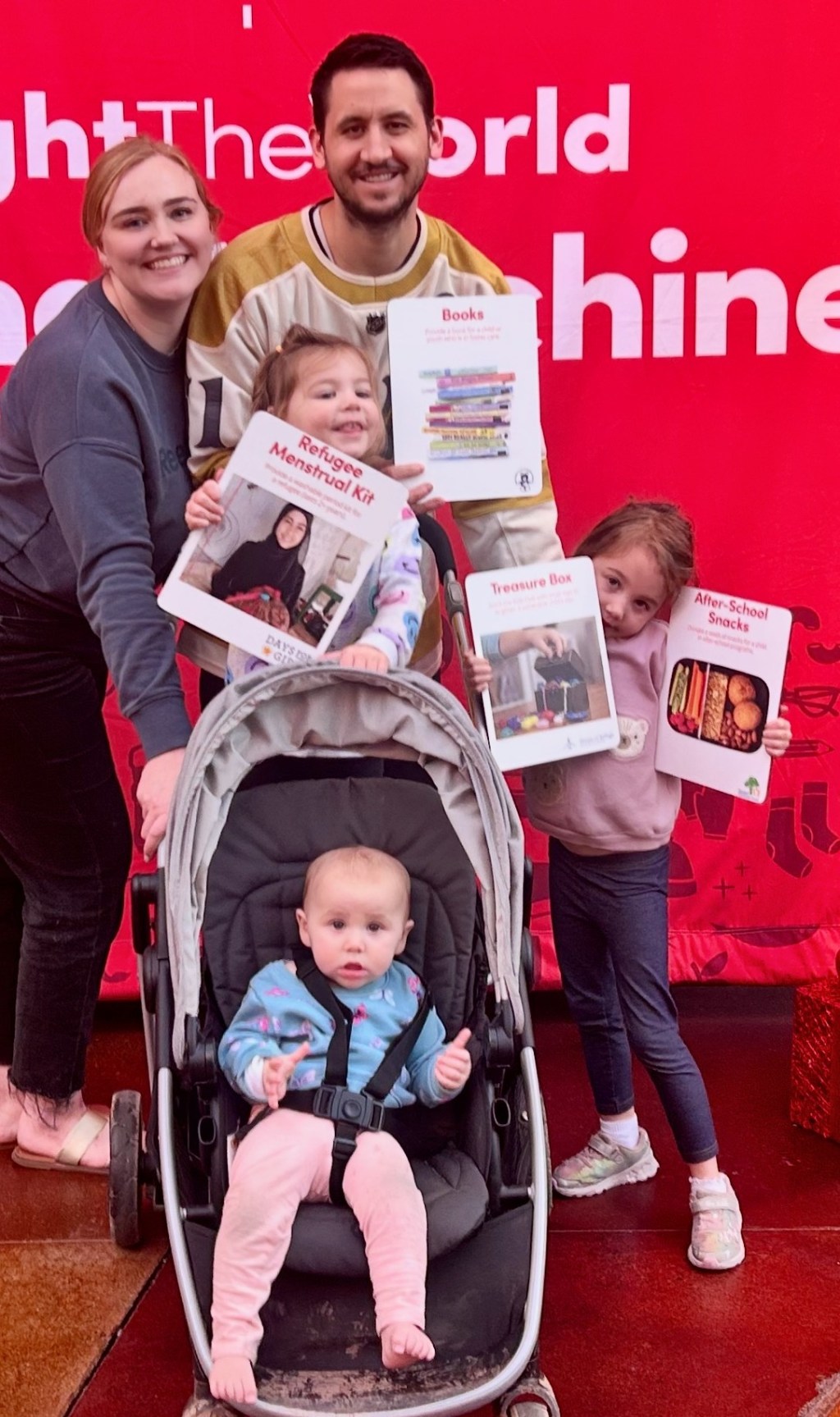
    This holiday season, aim to light the world. Start by dropping off cookies at a neighbor’s house. It might save you from a heart attack.