Tag: Family

  • Six Flags Trip Report 6/13/2025

    Six Flags Trip Report 6/13/2025

    Ivy just had her fourth Six Flags trip and Sage her third. If we’re keeping score, that’s four trips in four years (of age) for Ivy and three trips in two years for Sage. We’re on track.

    To some people Six Flags is just a theme park. To a Quackenbush Six Flags is ground zero for formative experiences. Ground zero is an adequate analogy. Only the strong survive these trips.

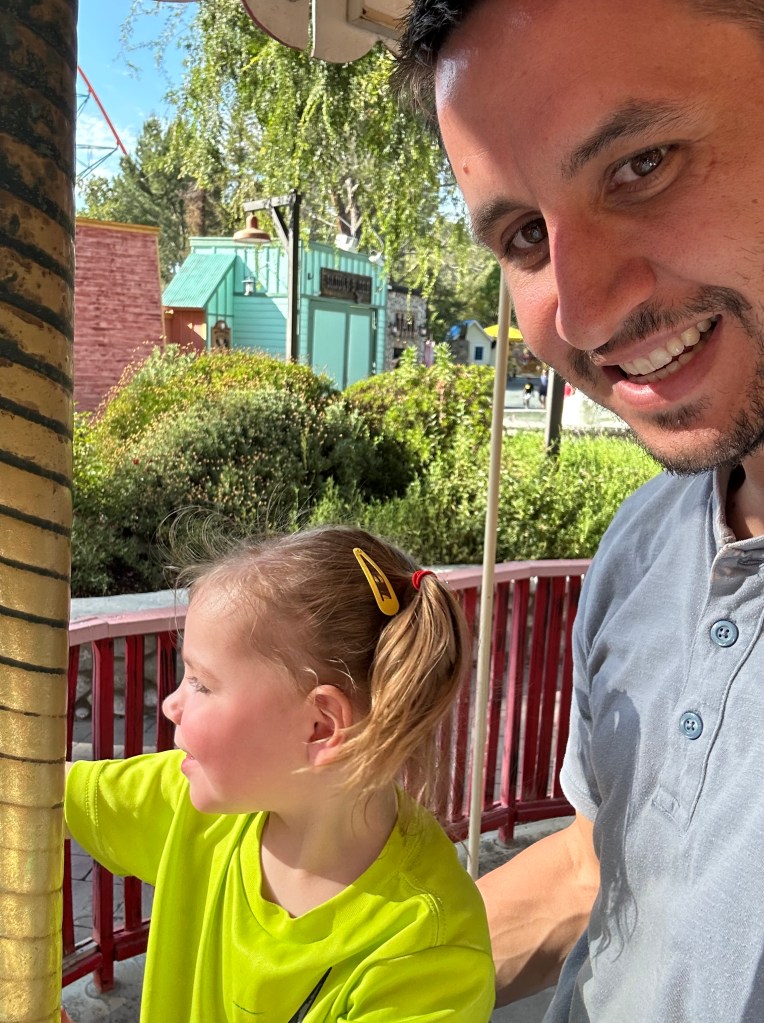
    One interesting dynamic that developed this trip was Sage voicing her opinion. Last time we went to Six Flags, Sage was still young enough that she just went with the flow and/or whatever Ivy wanted to do. This was the first trip where I had to balance the demands of a toddler and a four-year-old preteen. But we’ll get to that.

    If you read 2023’s trip report you know how early we usually leave for these trips. This time we drove straight to the beach on Friday and went to the park early on Saturday.

    Beth’s sister Eve came to Arizona from Utah and joined us on the trip to California. Her coming along was a lot of help. For once Beth and I weren’t outnumbered.

    Beth and Eve didn’t want to go to the beach, so they dropped us off on Friday and went and did I don’t know what with Wren.
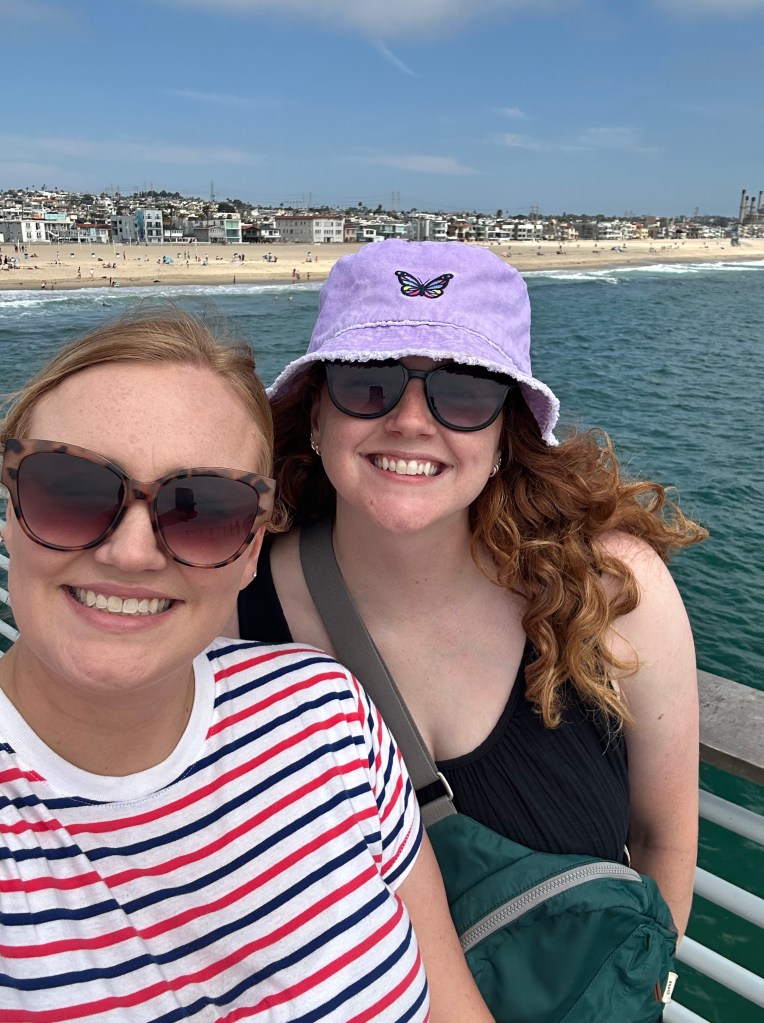
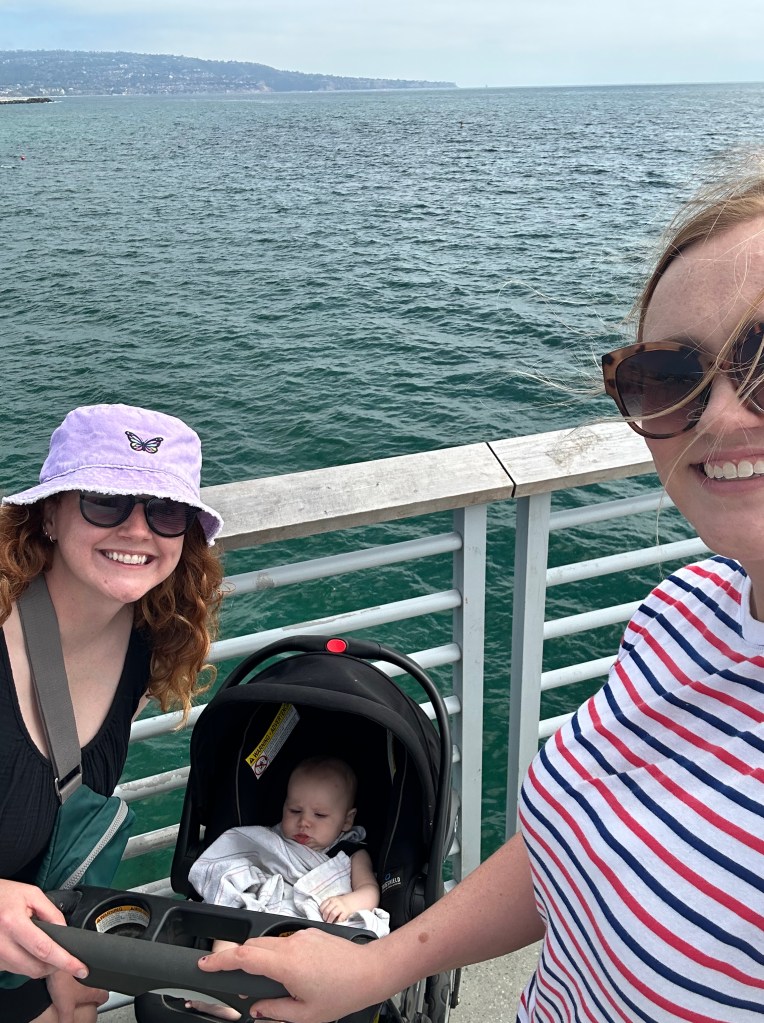
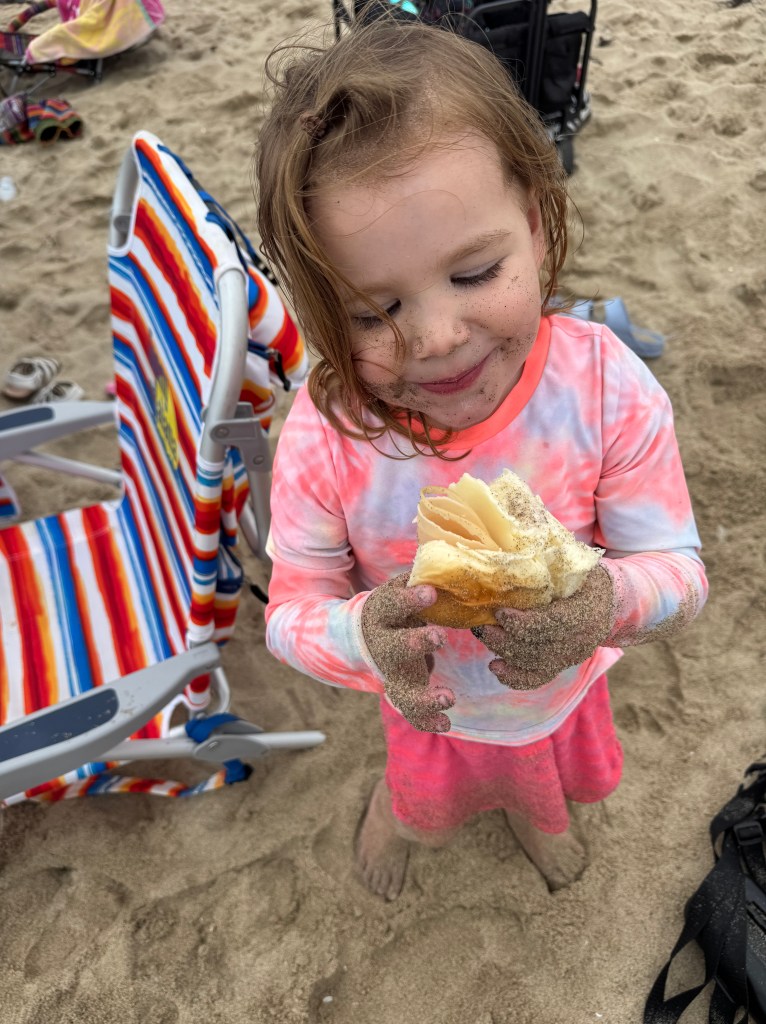
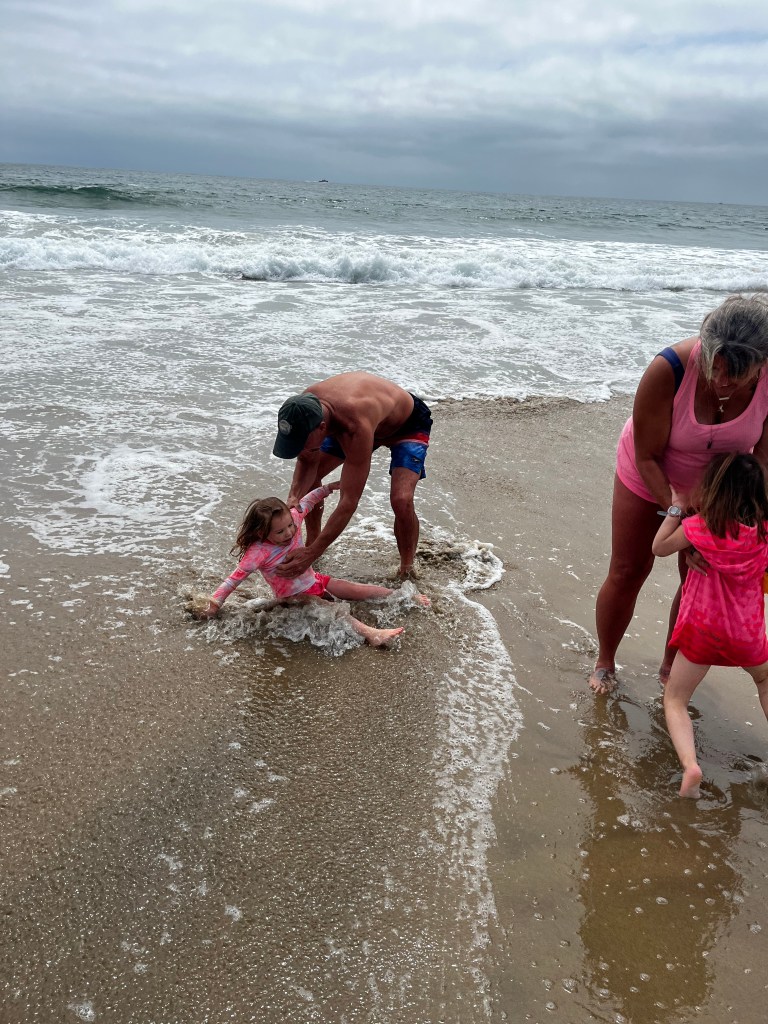
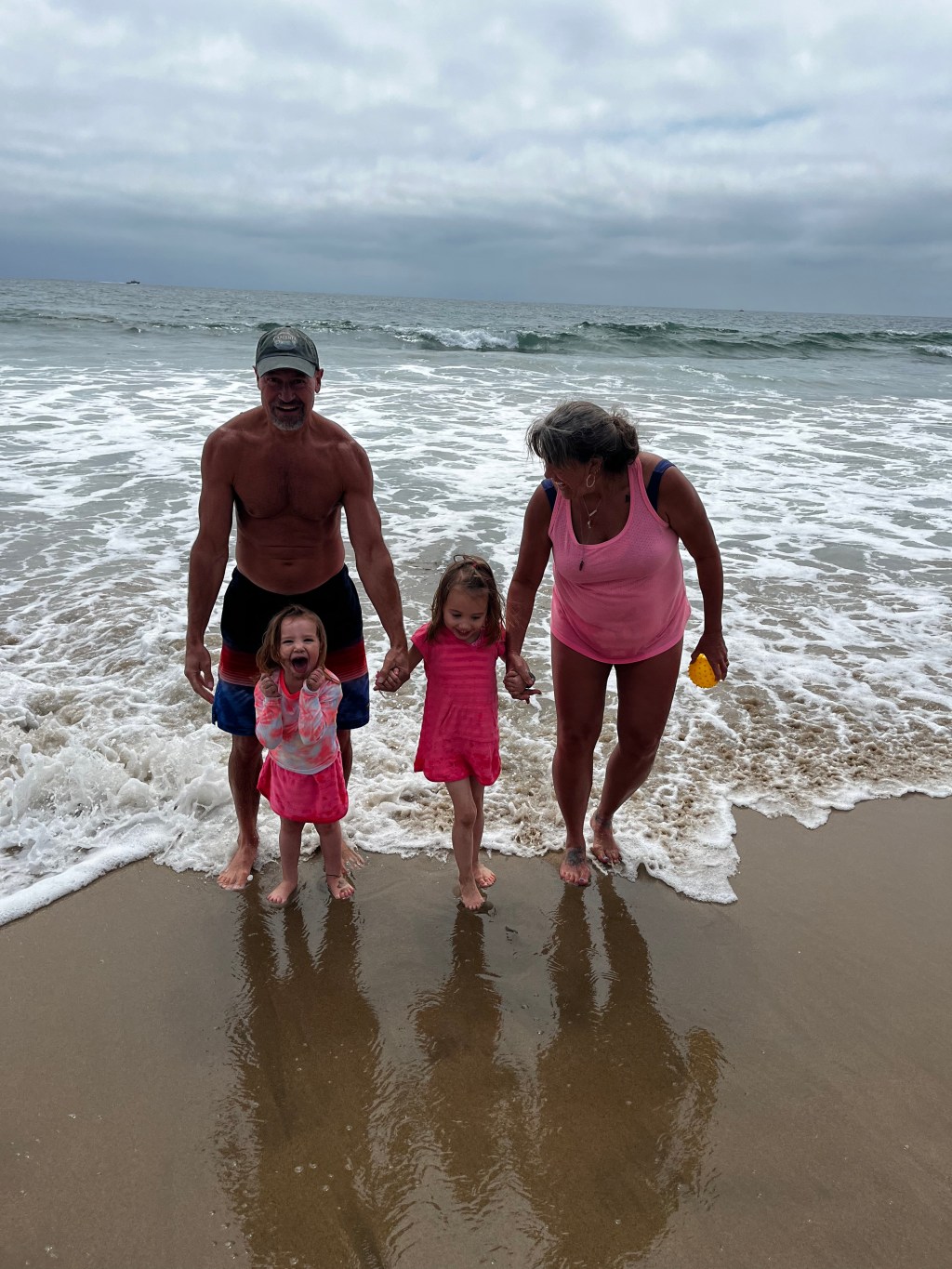
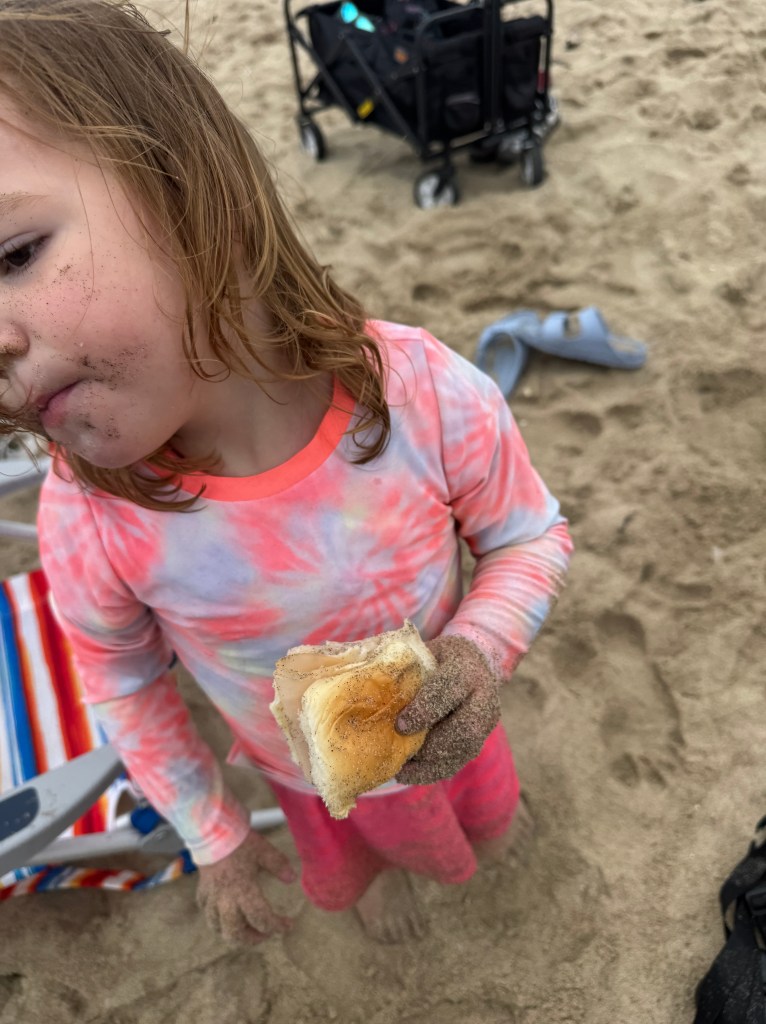
    Sage is now at the age where she has a pure love and infatuation with the beach, particularly with sand. She ate a borderline unsafe amount of sand.

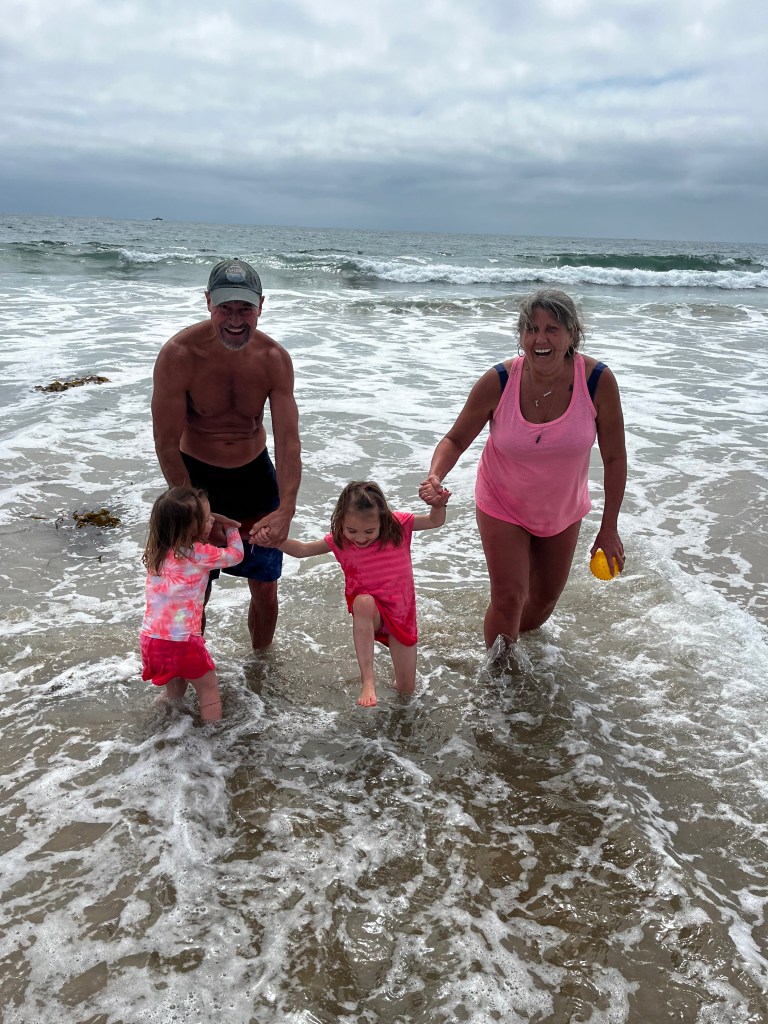
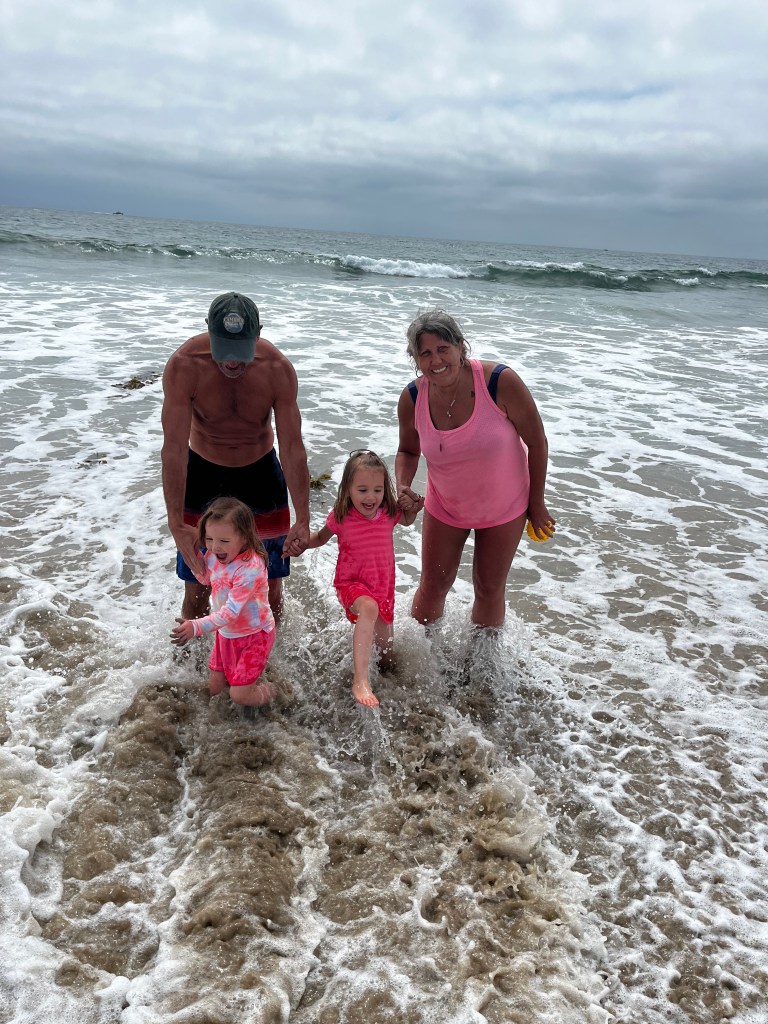
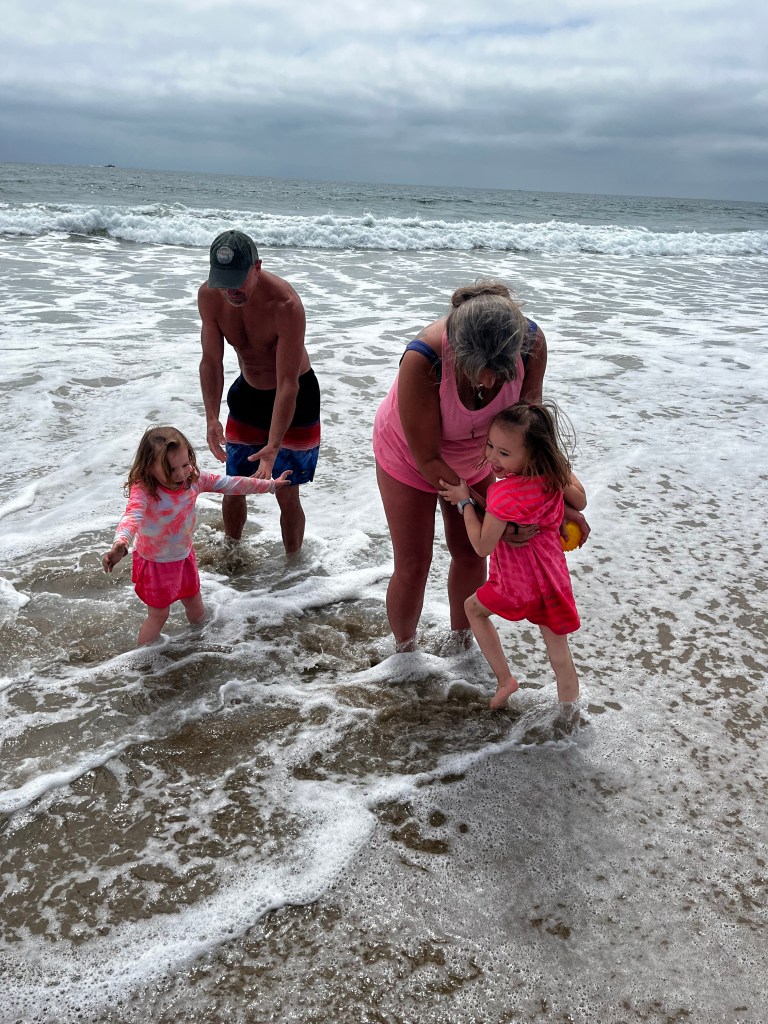
    The girls both came out of their shells on this beach trip. They even went in the water! Ivy was fully submerged, not completely by choice. She and Sage were playing on the edge of the water, and I guess she fell in. She was really upset until I told her how awesome she was and then she brightened up.
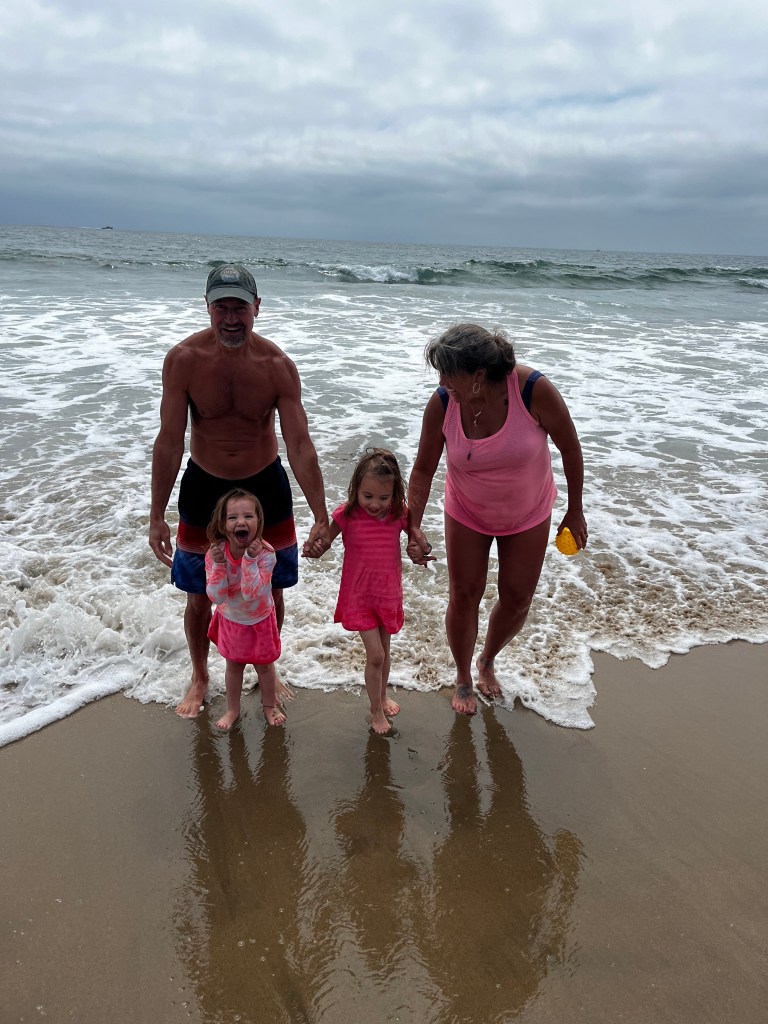
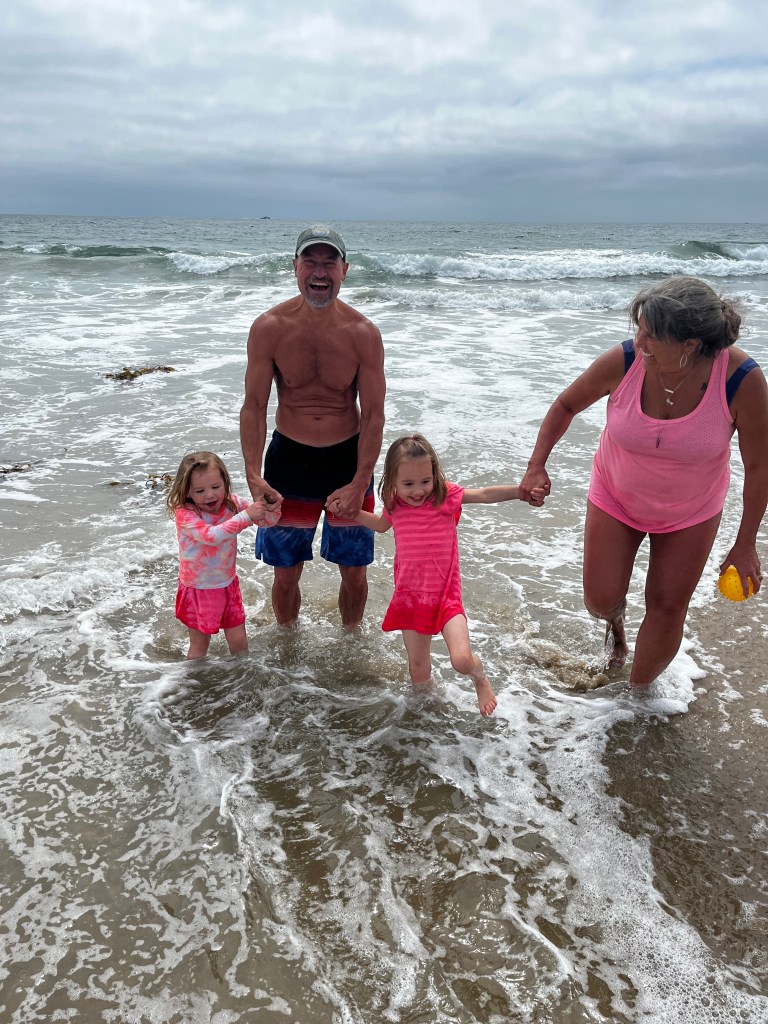
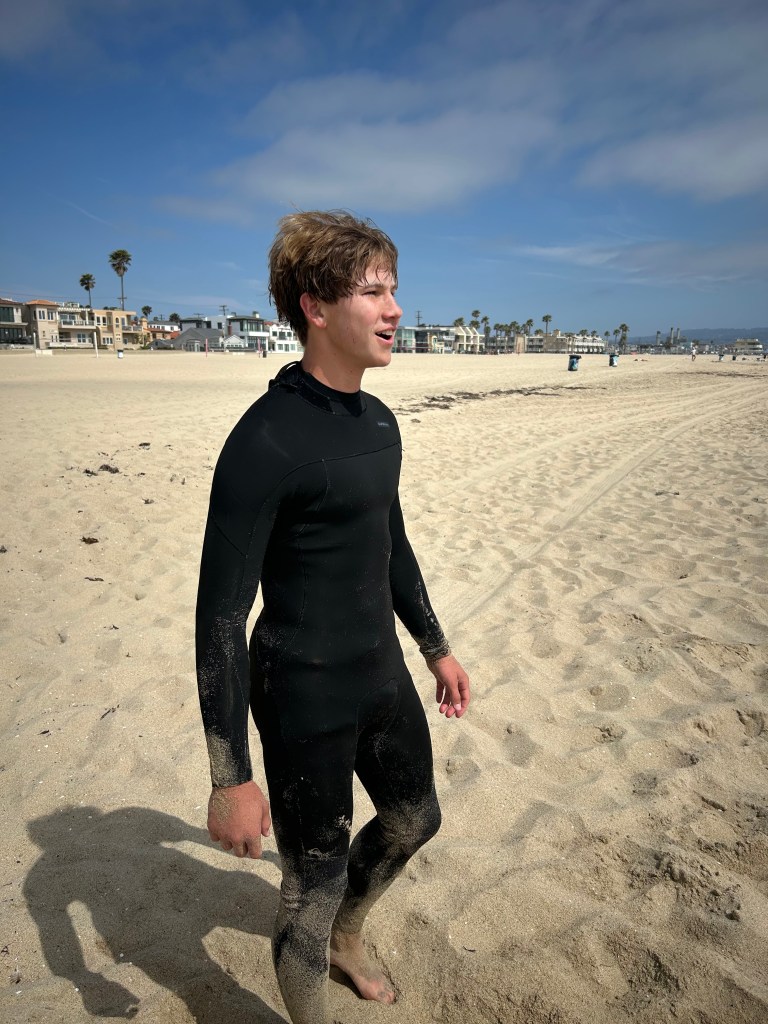
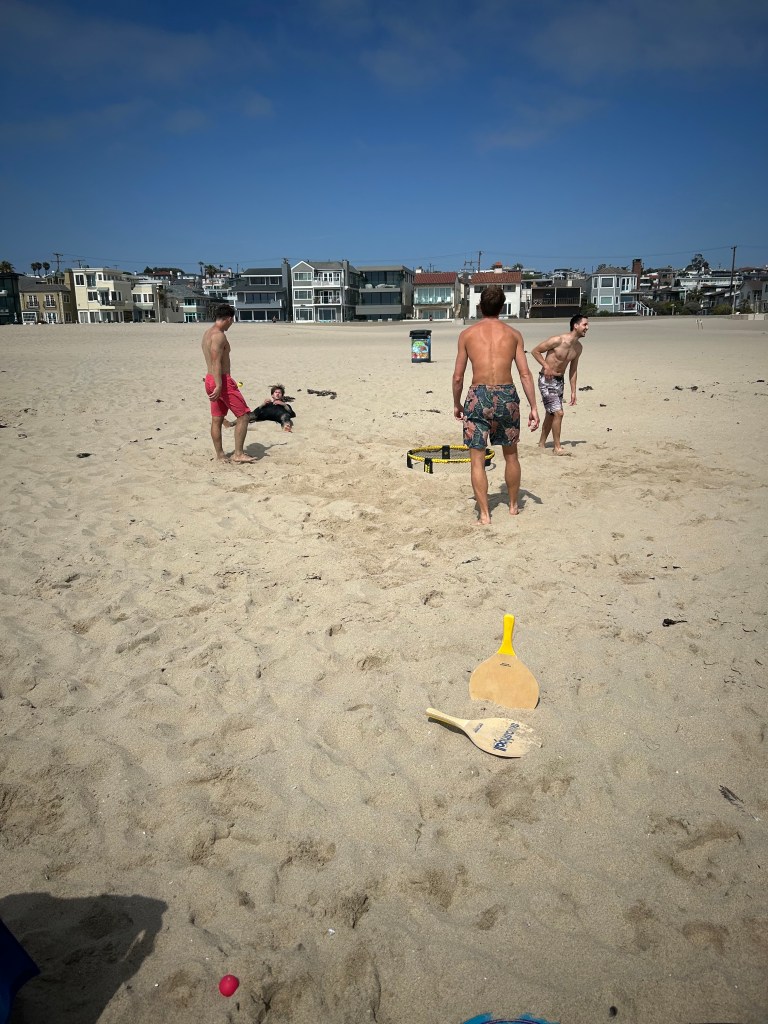
    We played a lot of Spikeball and swam in the ocean. Good beach trip.
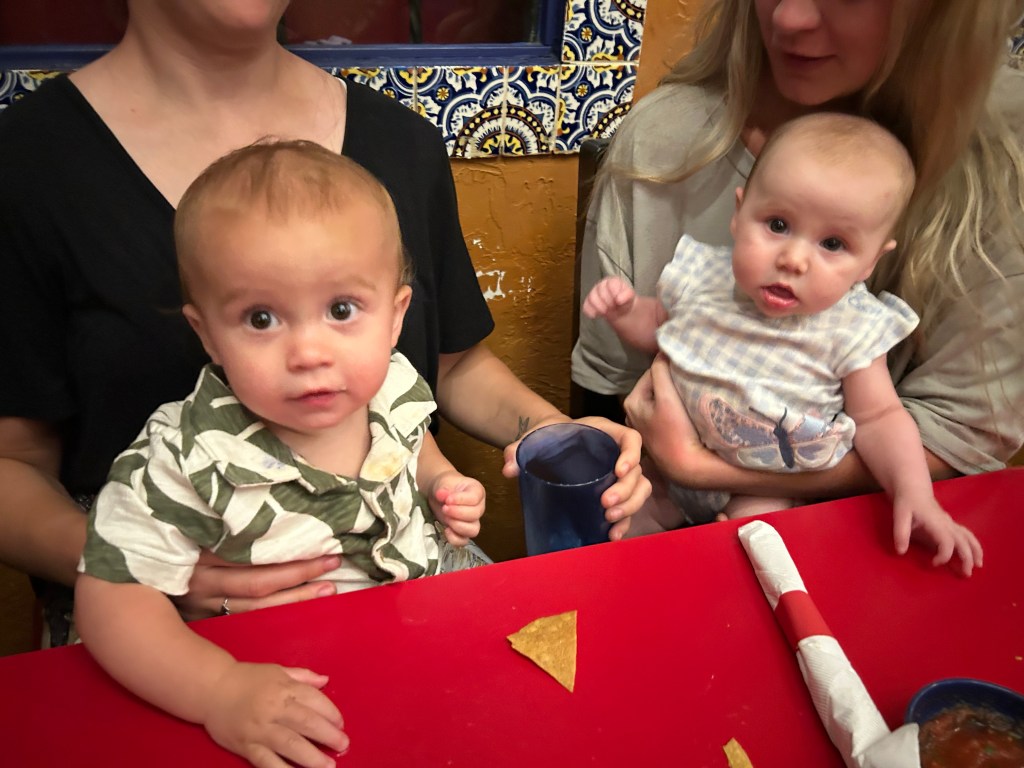
    That night baby Wren and baby Fulton got to meet for the first time at our favorite California trip Mexican restaurant, Don Cucos.

    But the next day was Six Flags!

    One of the parts of these California trips that is most memorable to Ivy is the hotel breakfast. Ivy LOVES the hotel breakfast. If you ask her about it, she’ll tell you they have great juice (we don’t drink juice at home).

    We had breakfast and since we were already in town and not driving straight from Arizona to Six Flags, we were able to get to the gates ahead of the 10:30am opening. It was the first time we’d ever used the “VIP entrance” feature of our tickets. We got through the gates and got to line up at a rope ahead of general admission. We were headed towards rides at 10:22am. This gave us a big head start on any crowds. We were able to ride 10 rides in our first 30 minutes inside the park.

    The plan was to go ~3 adult rides and then ~3 kid rides but since there were no lines, we got carried away with the power.

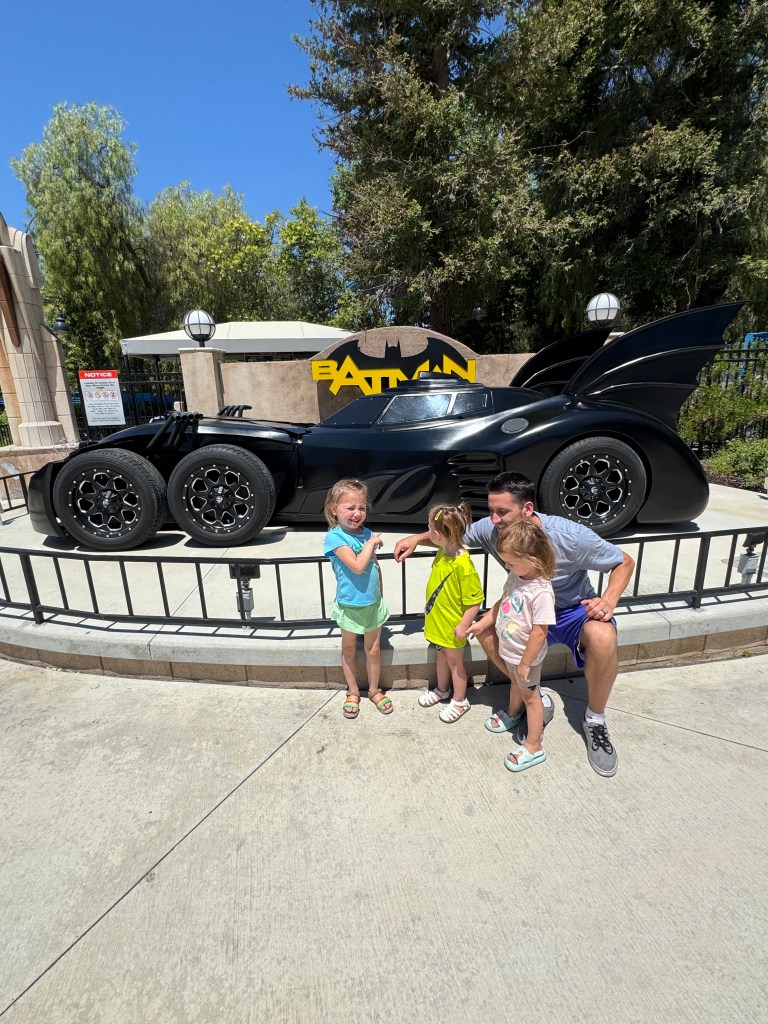
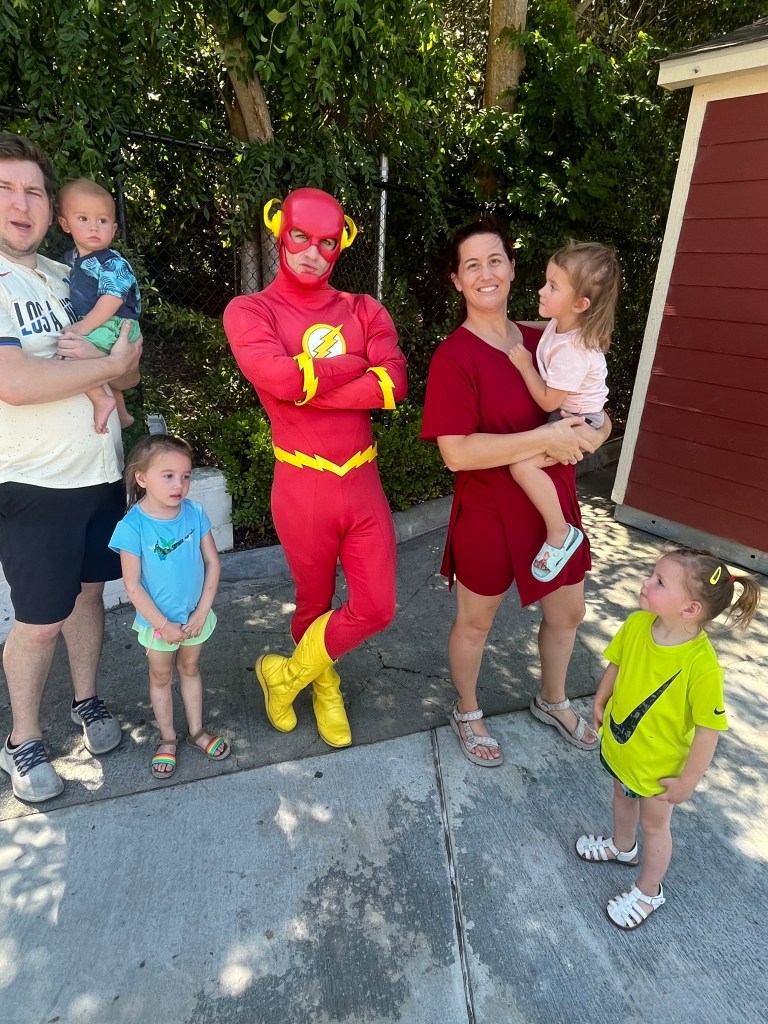
    In the meantime, the kids got to meet Flash and see the Batmobile.
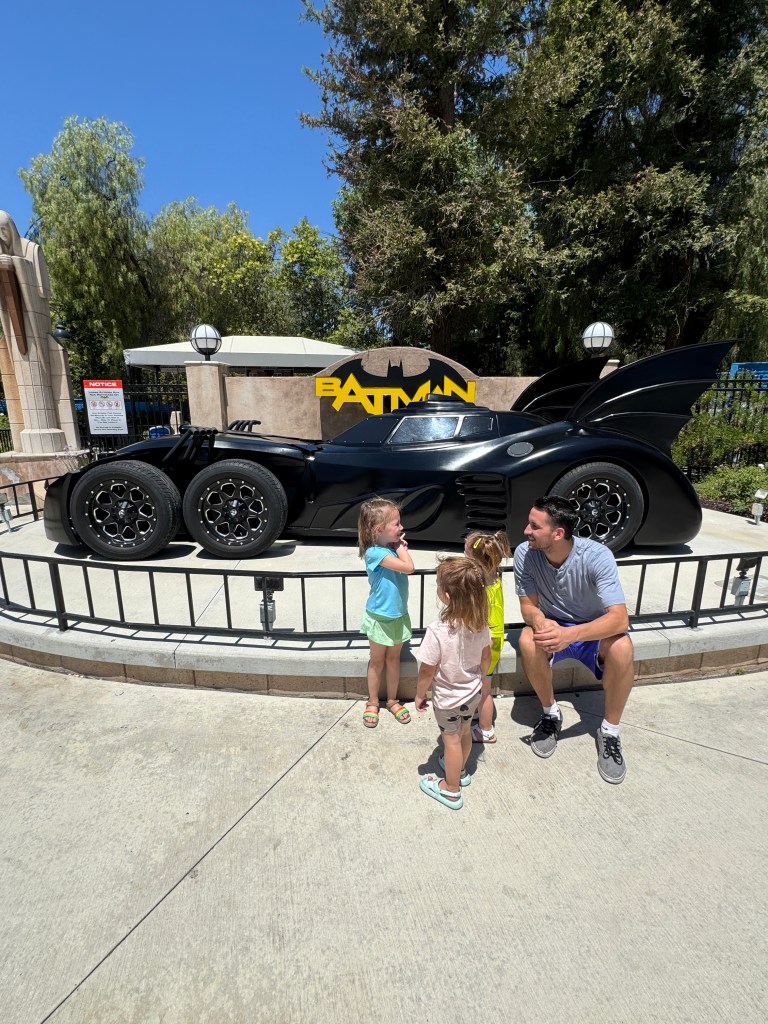
    Ivy hit a milestone since our last trip. She was now 42” in height, opening up a bunch of new rides for her. The first new ride Ivy got to try is called Teen Titans Turbo Spin.

    I was a little nervous about this first of 42” rides. Turbo Spin is a carnival style ride where you stand against a wall and spin at a high speed. Ivy loved it.

    We were very disappointed that a ride called Battle for Metropolis was closed. That was another that Ivy would have been able to ride. It’s one of those rides where you slowly travel around in a cart with a fake laser zapper shooting bad guys.

    There was another ride we had never before worked into the rotation. It was called Jet Stream, and it had no height requirement. It was a water ride that the entire family got to ride. Ivy, Sage, and all the little ones enjoyed it.

    The final new ride that was an addition for Ivy was Roaring Rapids:

    This was by far the longest line we waited in. It was so long Ivy almost boycotted. When we were very near to getting on the ride, she started loudly casting her vote for leaving.

    While Ivy waited in line at Roaring Rapids, the other young kids – Sage, her cousin Kaia, and her cousin Fulton – all went to Bugs Bunny World.

    We finally got on Roaring Rapids. Ivy’s excitement quickly turned into a freak out when the first splash hit her. Roaring Rapids can have that effect on you. She freaked out for most of it and continued to freak out as we got off. She was mad that she was wet. I reminded her how hot it was outside and pointed to some people sitting in the shade fanning each other. I asked her if she thought she was more comfortable and cool and wet than those people. Her mood quickly turned as she was excited to admit she felt cool and wet.


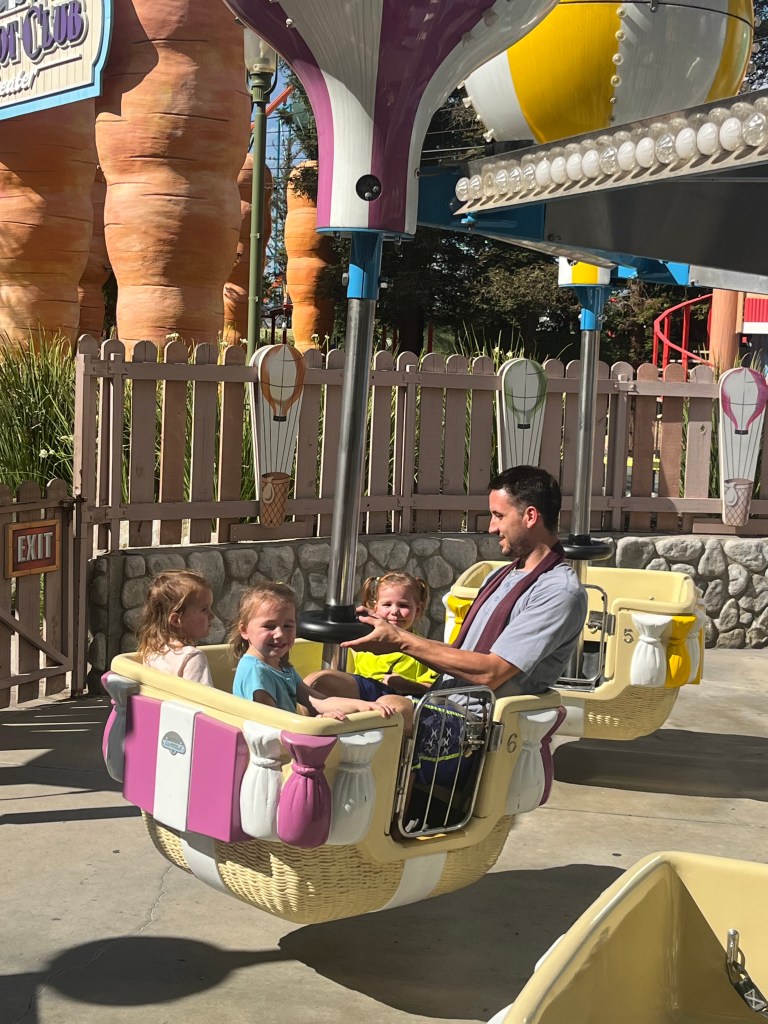
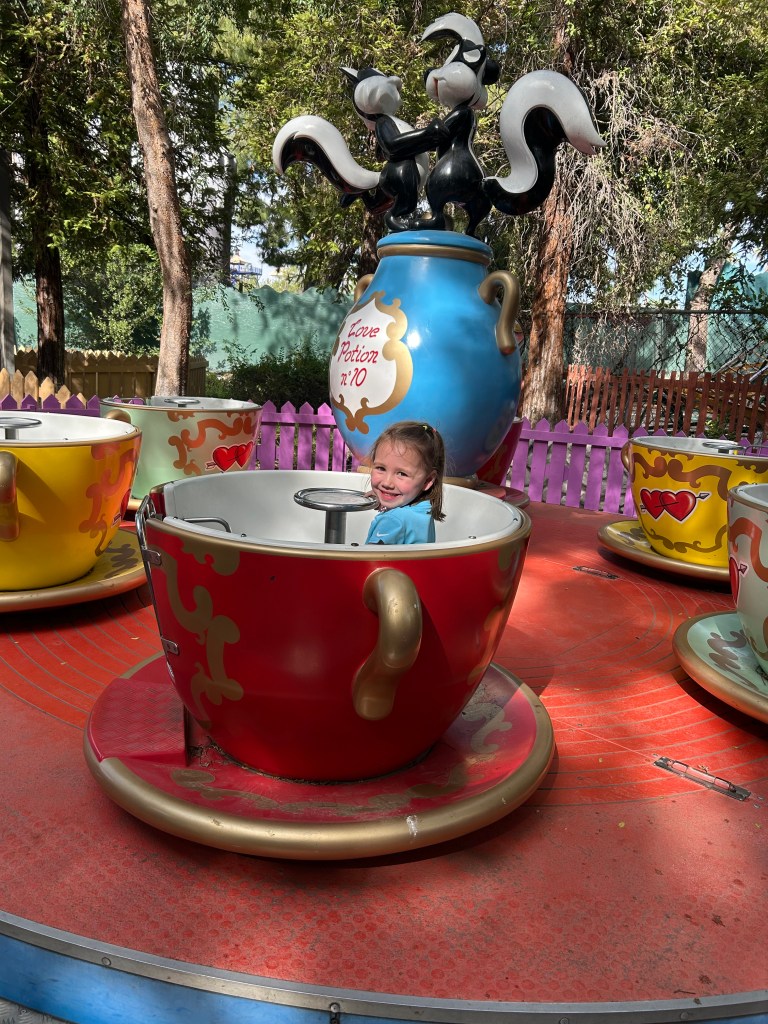
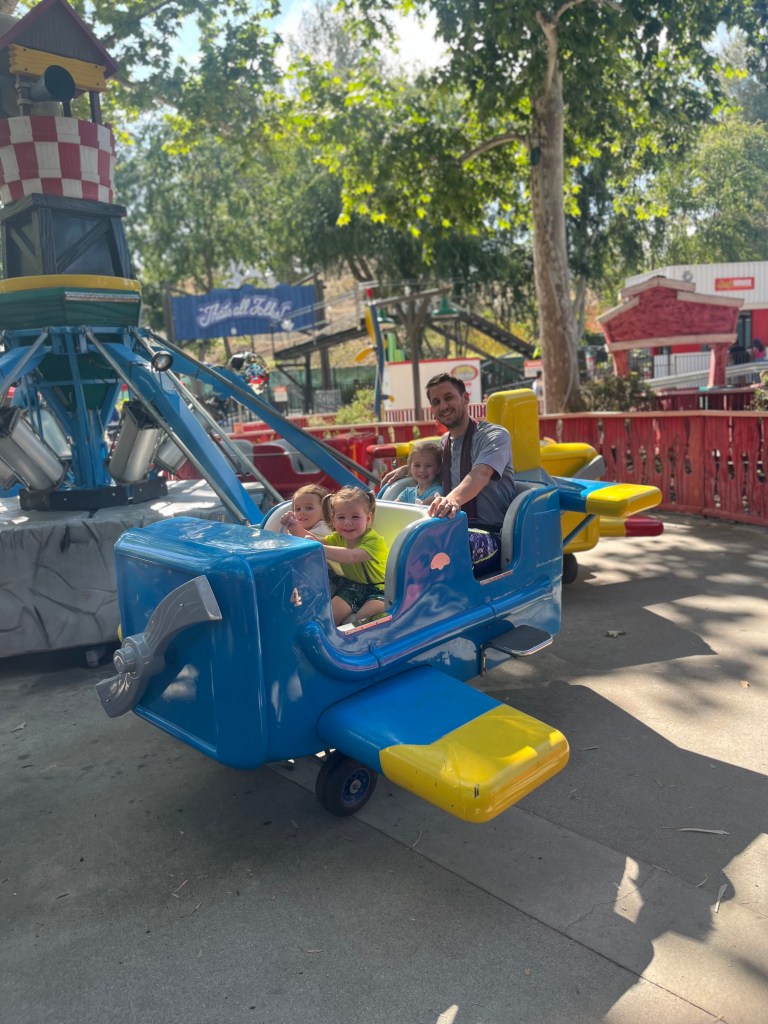
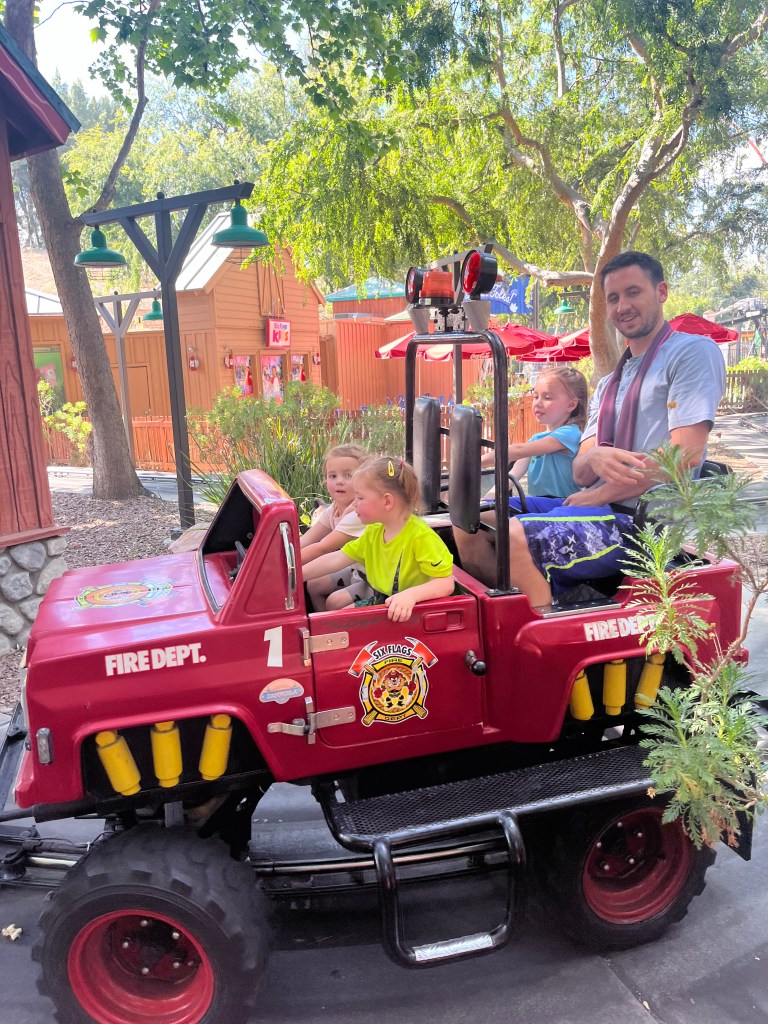
    Finally we got to Bugs Bunny World. I took Ivy on a couple of her favorites – the ball house, the School Bus, and Taz’s Trucking Co – before we found Sage and her cousin Kaia.

    We spent a couple hours riding everything the girls wanted to ride. As I mentioned, with Sage developing a strong opinion on what ride she wanted, there was a lot of deal-making and compromising. Kaia was only with us a couple rides so after that future ride decisions became a sister battle.
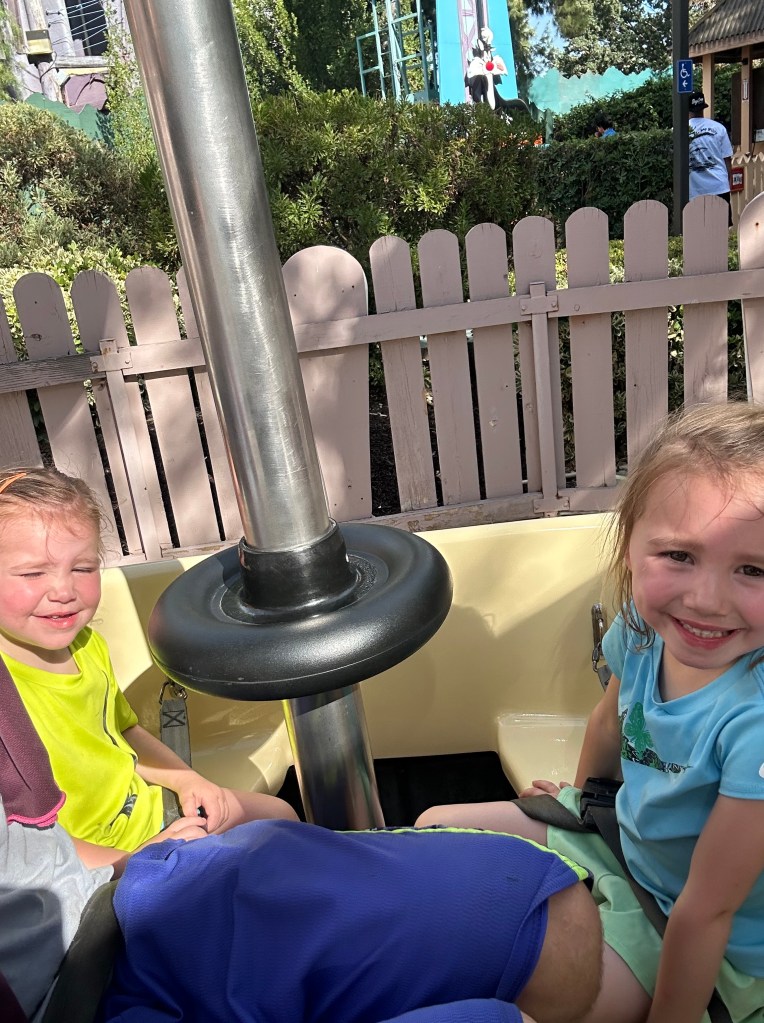
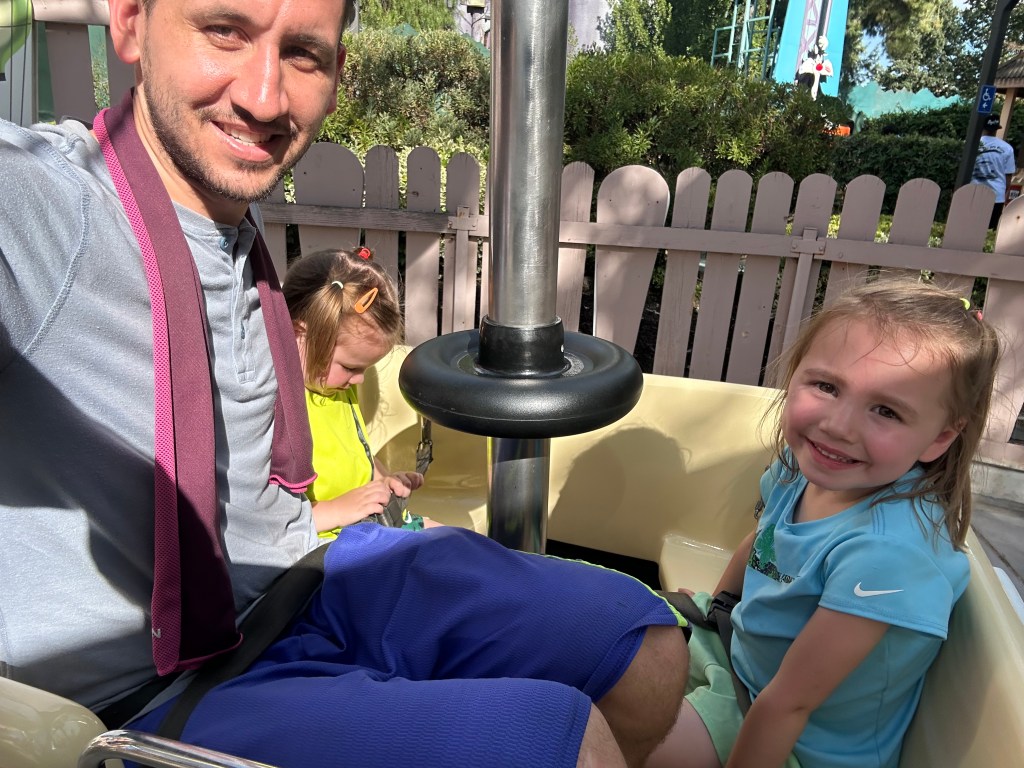
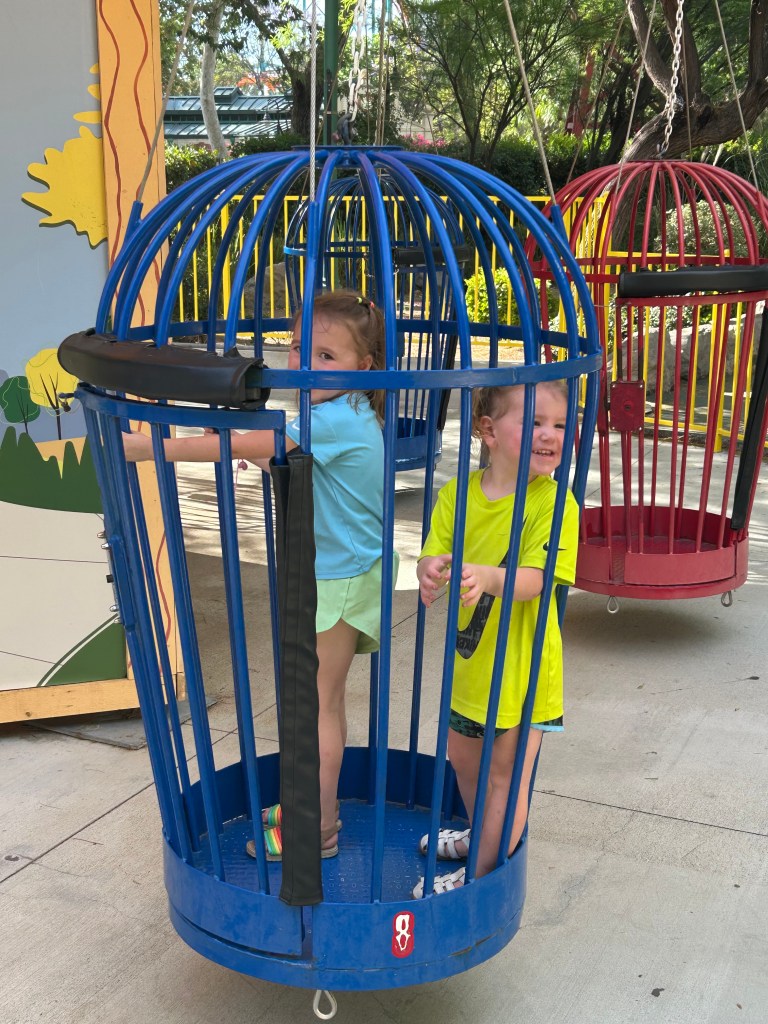
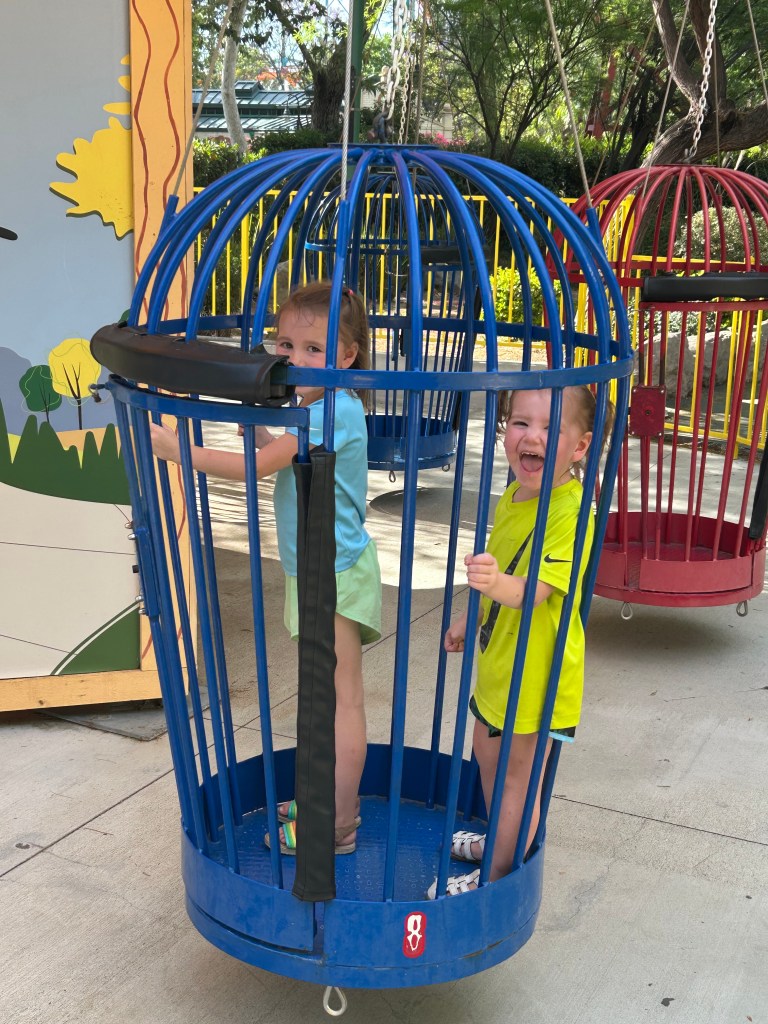
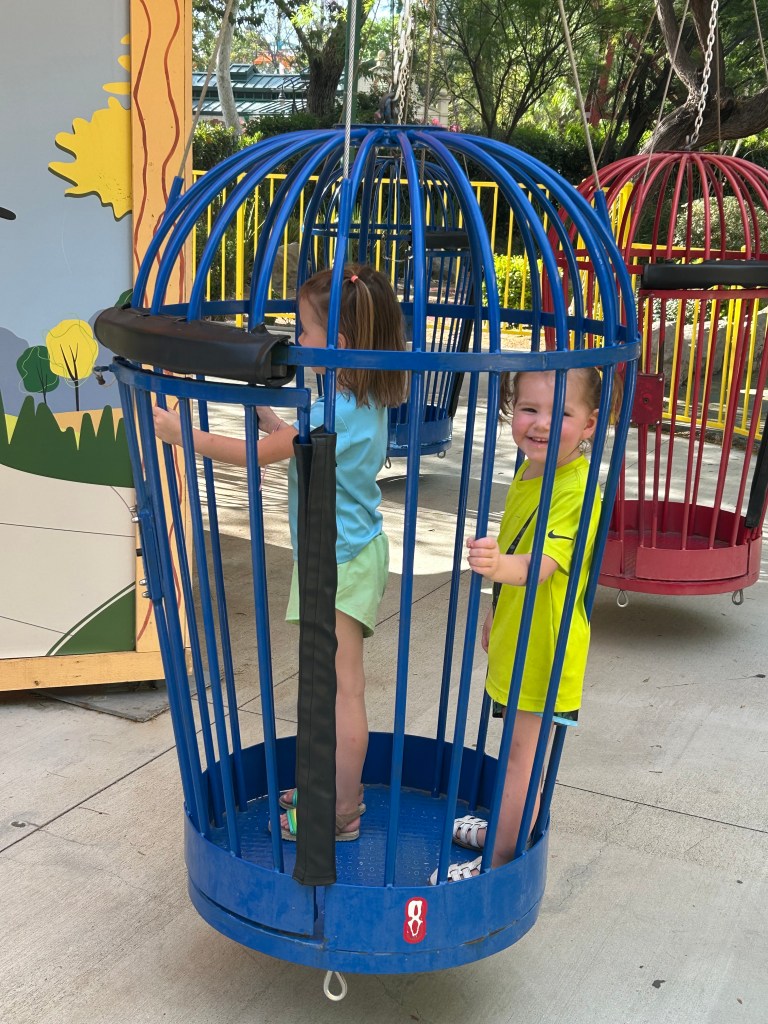
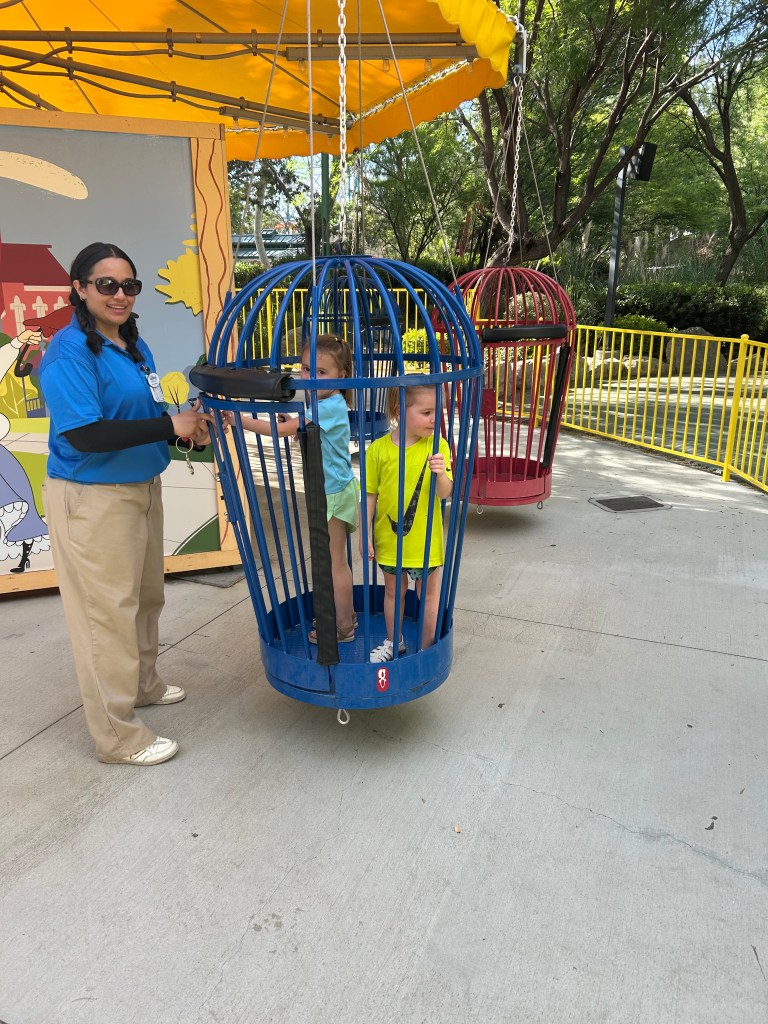
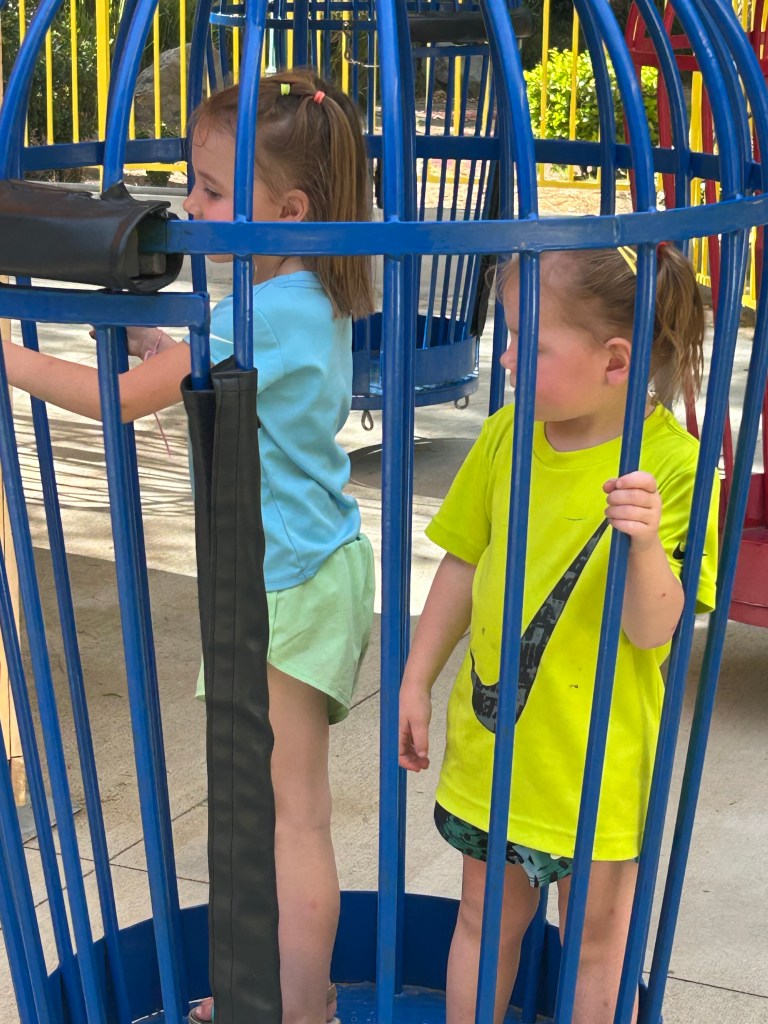
    Six Flags is where you grow. When it was just Ivy, Sage, and I, we went and rode a favorite, just for the novelty of it: the Tweedy Bird Cages (See Ivy’s trip in 2023 for picture proof of Ivy getting Grandpa into a bird cage). I sent Ivy and Sage in to ride together. At first they were going to ride in separate cages. But as they approached and the fear set in, they joined their courage together and rode in one cage. They both came off so happy.
    Next to the bird cages was a ride called Road Runner Express. We hadn’t tried that one before. I knew it was a kid roller coaster, potentially on the “extreme” side (for Ivy and Sage). We went up to the nonexistent line. This was a ride I would have to sit with Sage on, leaving Ivy alone. The teenage ride operator seemed sympathetic to this issue so he said if the three of us could fit in one cart, we could ride together. I got Sage in, I climbed in, but when I tried to get Ivy to join us, she refused. She didn’t want to ride. The ride operator said she couldn’t stand in the ride area, so she had to leave the platform, go through the gate, and go down the stairs to watch. I watched anxiously as Ivy left the gate. My heart broke. She was resigned. She was trying not to seem upset, but she was disappointed.

    Is this how it is being a parent?

    Seeing the subtle growth, and sadness, and disappointment and having to watch and feeling your heart break for your sweet daughter?

    I dread more of these moments as my kids grow. I guess it’s life.

    Sage and I rode the ride. Sage was terrified, but she did it. We got off and found Ivy sitting on the bench. She looked so big. I hardly recognized her, sitting by herself, I assume thinking about how Sage and I just rode the roller coaster and she didn’t. I asked if she wanted to ride the ride and she said no. We moved on.

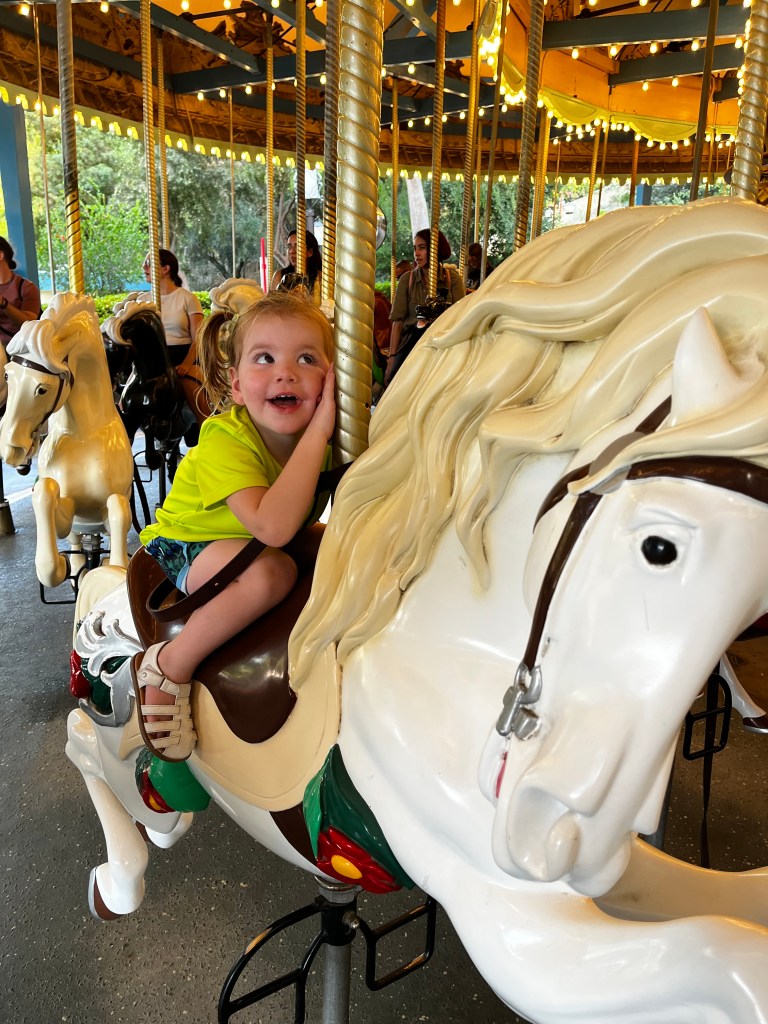
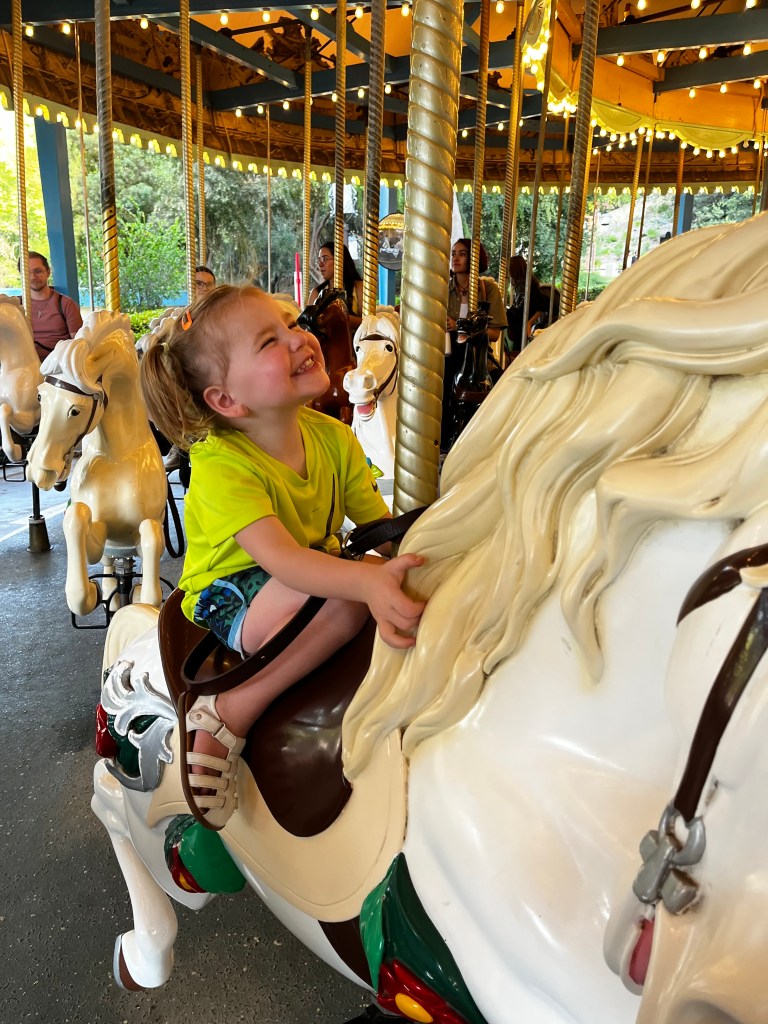
    We went to the merry go round.
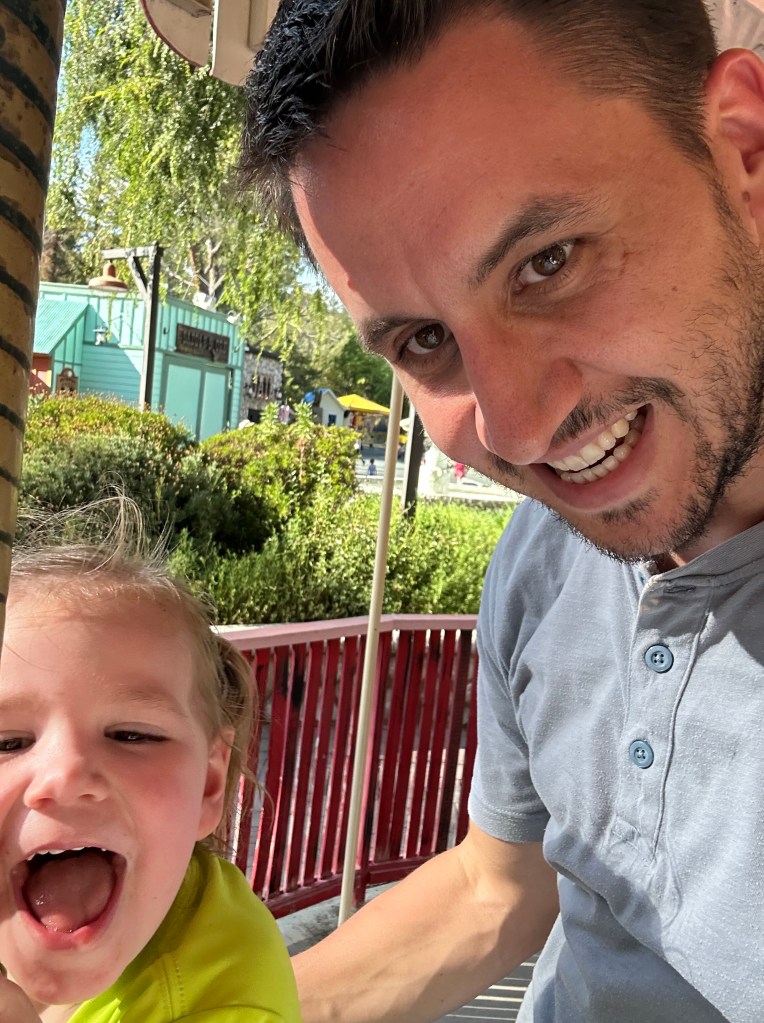
    Next to the merry go round was a ride called Speedy Gonzales Hot Rod Racers:
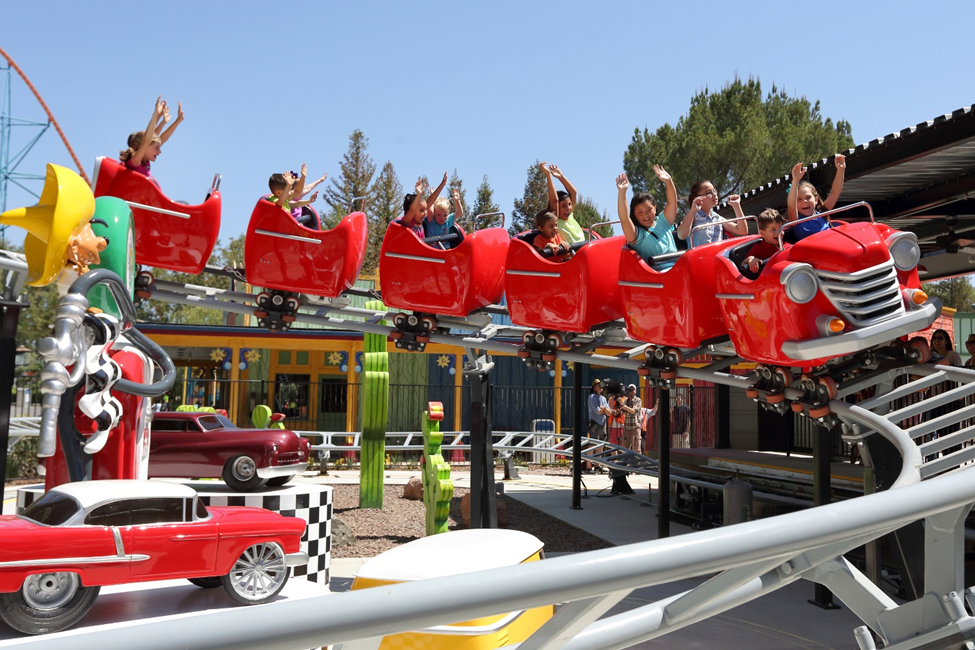
    Ivy enjoyed this ride last time we were at Six Flags, despite it being on the extreme side for her.

    This would be another ride that I HAD to ride with Sage, but Ivy was tall enough to ride alone. I explained this to Ivy as best as I could. It would be another situation like the last roller coaster that Ivy didn’t want to ride alone. As Sage and I got in our seats, Ivy started to panic. She didn’t want to be alone. I calmly explained to her that I had to be with Sage because she was too little but that Ivy was my big girl and she could ride behind us, but she’d have to be alone.

    I thought she was going to leave again.

    I was prepared to collapse into a puddle of sad dad, watching my daughter be disappointed yet again.

    But then I saw a shift in Ivy’s eyes. From my perspective, I think she remembered what just happened at that last ride, and she didn’t want it to happen again. “Defiantly” seems like a dramatic word to describe how she approached her roller coaster cart, but I can’t find a more adequate word. She got into her seat and got buckled in. I looked behind us to watch her.

    I was proud.

    Ivy rode that roller coaster by herself. When it stopped, the ride operator gave the group an option to go a second time. I looked back at Ivy. She was grinning from ear to ear yelling, “Again! Again!”

    After our second time around, we got off the ride and Ivy wanted to ride again. Sage wanted to go back to the merry go round. I told Ivy we could come back to ride again after the merry go round. The merry go round was right by Speedy Gonzales. We got in line for the merry go round and Ivy looked longingly over at Speedy Gonzales.

    Ivy looked at Speedy Gonzales, and back at me, and back at Speedy Gonzales.

    Then she did something completely unexpected. Ivy proposed that she go to Speedy Gonzales while Sage and I rode the merry go round. I told her that would be okay. I watched as she walked towards Speedy Gonzales. At the ramp up, I saw her confidence waver. She stopped. She never looked back at me, but she stopped. Then she ran up the ramp. I watched her stand in line and wait for her turn.

    It may seem like a small thing to some. But Ivy is very tentative, very cautious, she usually won’t go out of our sight. There she was, waiting in line to ride a roller coaster by herself.

    This made me think about something. Bad things happen. Ivy not riding that first roller coaster while Sage and I went made me so sad to watch. If I could have changed it, I probably would have. If I could have inserted the courage into Ivy’s little soul by force of will, I don’t think I could have resisted. But then Ivy wouldn’t have learned and grew. She grew in that moment of disappointment.

    God sees bad things happen and He doesn’t change it. If He did, we couldn’t grow. If He changed things, He would be defeating the purpose of us coming to earth. You go to Six Flags to be brave, to be disappointed, and to scream your heart out: The same reason we came to earth.

    If I changed what happened at that first roller coaster then Ivy wouldn’t have learned something important about herself, about being brave, about what she is capable of.

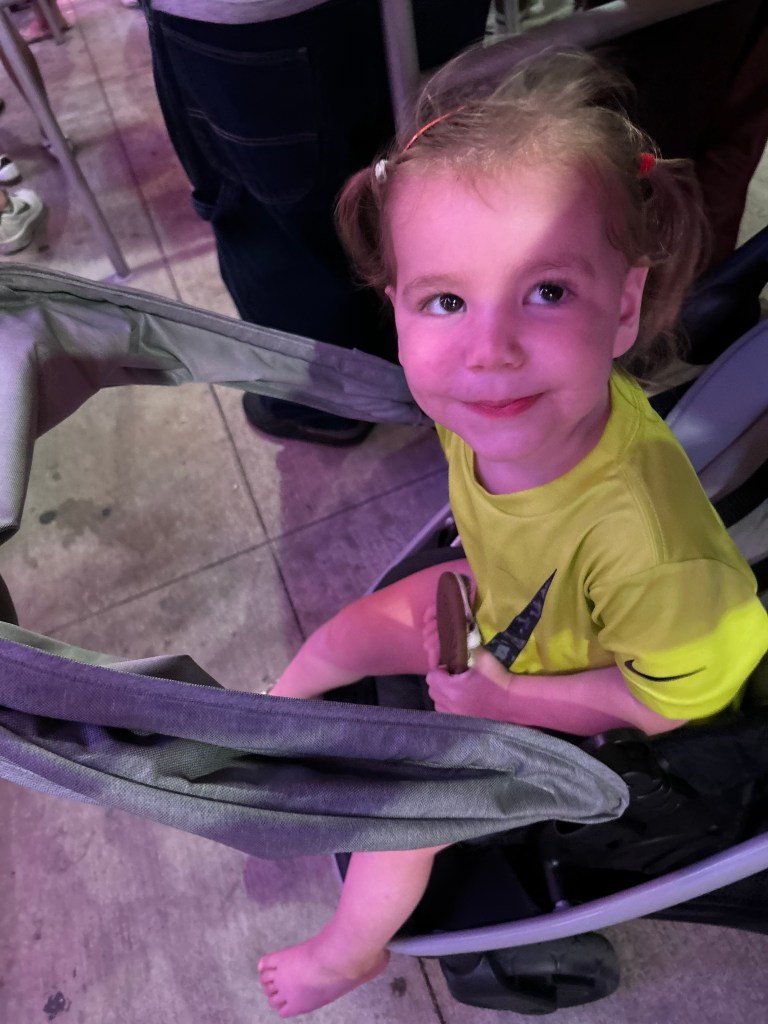
    Anyways, back to Six Flags. We finished the night, shutting the park down at 9:00pm, on Crazanity. My dad potentially got hit by a bat and we talked to security and medical staff to make sure all was well. No big deal.

    I think the next day was Father’s Day.

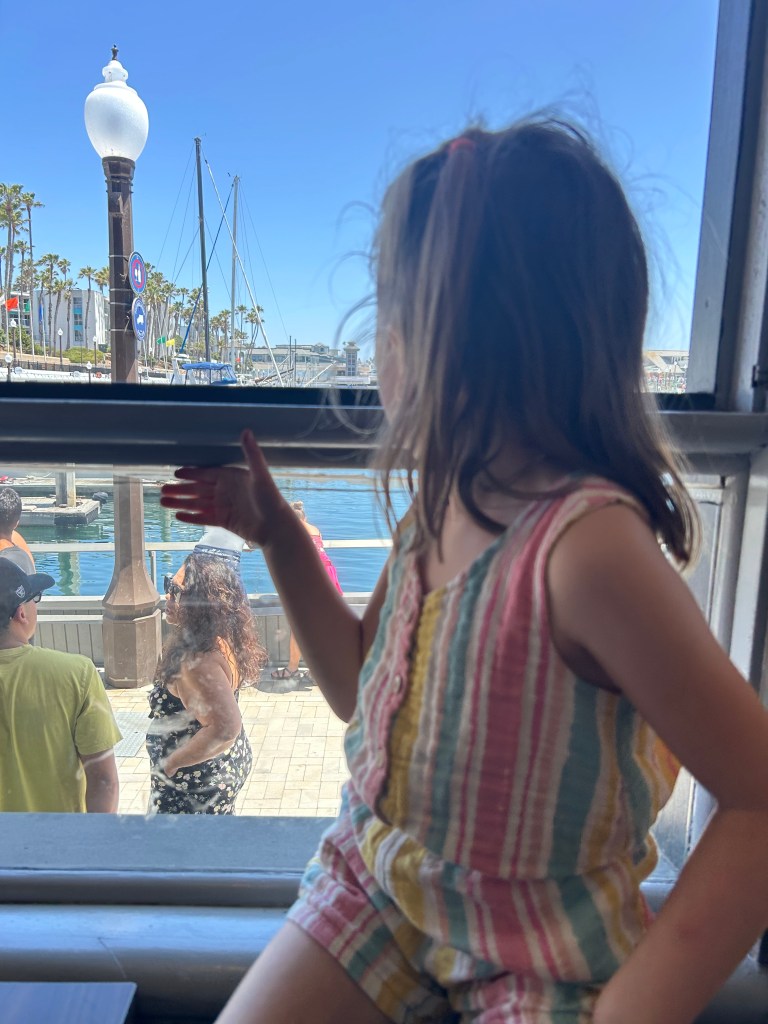
    We had lunch at a pier before heading back to Arizona while my family went to the beach.

    Six Flags and beach June 2025 trip: 10/10.

  • Parenting Without Faith

    Parenting Without Faith

    Moments where you feel like a good parent doing good things sometimes don’t come often enough. And then one comes that is so impactful it brings you to tears.

    Ivy claimed to be sick this morning. I thought she was making it up until I saw her throw up with my own eyes.

    So she stayed home from school. Without any guidance or prompt, she went upstairs on her own and laid down in her bed. This is very un-Ivy like. She was definitely sick.

    I got a show setup on a laptop for her so she could lay in bed and relax. I brought it to her, and she didn’t want it, she just wanted to rest. Ivy was definitely sick.

    An hour later she came to my room and said she did want a show. We walked back to her room, and I started to get it setup. She said she needed to throw up and inexplicably walked away from her throw up bucket and passed her bathroom down the hall to my bathroom.

    Luckily, she made it in time.

    She knelt in front of the toilet. She looked so big, her little four-year-old body, already knowing how to properly throw up in a toilet. Any parent can relate to and feel the pain of watching their child throw up.

    I held her hair and rubbed her back.

    Ivy stood up.

    She said, through little sobs and stutters as she caught her breath, “Daddy, I ask Jesus in my bed to help me. Will you pray for me at my bed? I asked Jesus to help me stop throwing up.”

    Those words don’t fully capture it. I cannot properly put in words the sweetness, the tenderness, the humility, the vulnerability, the faith, the innocence of what was coming out of Ivy’s mouth. What I put above was roughly what she said. But it was so much more. It was soft, it was gentle, it was pleading.

    This pleading was not with adultlike “this needs to get done” energy, but with patient understanding. This request came with complete innocence. Coming from your four-year-old who is normally all chaotic, joyful energy, these calm, sweet moments can be so jarring.

    I explained to Ivy that Jesus might help her stop throwing up, but I promised her that even if she didn’t stop throwing up, He would be with her and help her. I told Ivy, “You know when Jesus died for you?” She nodded, as this is something we talk about often. “When He died for you, He felt what you just felt, that hurt and pain and sickness of throwing up, He felt it. So even if you throw up more, He is with you.”

    Ivy said, “Even when I get big owies, He feels it.”

    I took Ivy back to her room. I put a show on for her to watch. She lay in bed.

    How do parents parent without faith?

    This parenting thing is hard enough. How could I explain to Ivy that she’s throwing up and in pain and I don’t know why and there’s nothing I can do about it?

    In the last couple weeks, my knee has been healed, my daughter with potential hip dysplasia has been blessed (what happens is yet to be seen), and my Ivy has known that even though she’s sick, Jesus is with her and helping her and there’s a reason for it.

    How do you raise kids without this?

    I don’t know.

    The last thing Ivy said during our conversation at the toilet, “Jesus is God, that is why I ask Him for help.”

    Jesus is our God. Heavenly Father is our Father. They watch over us. As I sit here with tears in my eyes, my sweet daughter laying in bed suffering with a little tummy ache, writing this out, I’m reminded that Jesus is God. And I don’t know what I’d do if I didn’t know that. It would be so hopeless otherwise.

    He died for us, and He knows our pain.

    I wish we could all have the faith of a 4-year-old.

  • A Lesson Learned

    A Lesson Learned

    *I wrote this when Ivy was 5 months old.

    I had an Ivy experience that I wanted to write down. It’s something I think I’ll never forget, but still good to get it written to make sure I don’t forget the lesson from this experience.

    One night I was with Ivy and doing her bedtime routine. I don’t usually do “Beth’s routine.” My routine is to rock Ivy to sleep with a bottle then lay her down. This night Beth asked me if I wanted to do what she normally did which was read to Ivy, then turn off the lights, rock her to sleep, and lay her down.

    I started reading a book to Ivy and she was thoroughly enjoying it. She was curled up in my left arm as I rocked in the rocking chair and held the book up in front of her with my right hand. She would get a huge smile on her face every time I would emotionally read a portion of the story.

    As I was reading, my left pocket started to vibrate. Normally I wouldn’t even consider answering a call at this moment. I had been making calls that week for my church calling. There were some people I needed to get a hold of, and it was important I talked to them. This all went through my mind as I held Ivy and weighed my options. I decided I didn’t know when I would get to speak to this person again and I needed to answer.

    I jostled Ivy up a bit and got the phone out of my pocket. I believed it to be only a minor inconvenience to her. I answered the phone and began talking. I expected it to be only a minute or two conversation. As I was talking, Ivy got unsettled and started to fuss. I put the phone between my right ear and shoulder and got her into my lap in front of me. I started to bump her up and down to soothe her.

    As I rocked her up and down, she got more content. When I was listening to the person speak on the other end, she even smiled and enjoyed the rocking. Then I started talking. When I talked to the person on the other end, for some reason Ivy got really unsettled.

    This is the image I have in my head. When I would be talking into the phone she would curl her bottom lip over her top lip, her bottom lip would start to quiver, and she was the saddest looking baby I have ever seen. I’ve seen her do this once or twice before, but never so directly related to something I was doing.

    This pattern repeated a couple times. I wouldn’t talk and she would smile and rock on my lap. I would start talking into the phone and she would get very upset and start to cry. The image I have in my mind is of betrayal. I don’t know if that’s what Ivy was actually thinking, probably not. But all I could think was, this was her time with me, and now I’m on the phone, and it’s upsetting her more than I’ve ever seen.

    It broke my heart.

    I got off the phone within 5 minutes but by that time the damage was done. I turned off the lights and tried to rock her which almost never fails but she was not having it. She was completely unhappy.

    Beth took over and was able to settle Ivy down and put her to sleep.

    I went outside to think.

    Now, the reason I answered the phone wasn’t bad. I don’t think what I did was blatantly bad. My intentions were good.

    As I sat outside, this is what I told myself. I got kind of bitter for a moment. Can’t I answer an important call related to my church calling? How can I be a productive and responsible member of my church if I don’t take those important calls? I was getting more upset. Then something hit me.

    There were a lot of good things that I could have been doing at that time while I was with Ivy.

    But, at that moment, there was nothing more important in the entire world than being with her.

    I wasn’t bad because I wanted to fulfill my calling, answer the phone, help someone, fulfill my duties. Those were good intentions.

    It didn’t matter.

    While I was reading to Ivy, she was the most important thing in the world. Nothing else mattered. Whether or not she actually felt betrayed by me answering that call during our reading time (again, she probably didn’t), I did betray her. That was her time with me, and I took it from her.

    I could have called that person back 15 minutes later and it would have been fine.

    I learned an important lesson I hope I never forget that night. While there are a million good things to be doing, my daughter is the most important thing in the world. Especially in the precious and far-too-few moments I get with her, nothing else in the world should matter.

    It was one of those cosmic-shift moments. One of those moments I realized would stay with me for the rest of my life. A moment I learned an extraordinarily important lesson from.

    I’m grateful for that moment, and I hope to never cause that quiver of a lip ever again.

    Reading back on this 4 years later and I think I still hold tight to that lesson learned. Just today someone told me about a celebrity who was asked if there was anything that made him jealous of other people. His reply was that he is jealous of anyone who still has kids at home.

    One day my girls will grow up and I’ll miss the playing and the wrestling and the tickling and the screaming and the tantrums and the fighting. I try to remember that every day.

    Now Ivy is almost 5 and Wren is how old Ivy was when I wrote this. Crazy.

    Wren
  • Simplified Fathership (Must read for all Dads!)

    Simplified Fathership (Must read for all Dads!)

    These are the highlights I typed up for myself from a book called Simplified Husbandship | Simplified Fathership by Richard M. Eyre. I typed this up mostly for myself to refer back to. This section is only on simplified fathership.

    (In multiple quotes in this book the author says “he” and “him” when referring to his own children. Since my children are all girls, I changed each of these instances to “her” and “she”).

    “Fathership is, in the eternal context of the gospel, vastly important. It is a key to much of what lies ahead. Until this life, fathership was God’s role, His only. When we came to this earth, we made the greatest of eternity’s transitions, assuming the fathership role ourselves – we hope to keep it for eternity. There is no greater stewardship no greater source of potential joy or of potential sorrow.”

    How true is that? There are no higher highs or lower lows than those associated with being a parent.

    I also like that idea, that we made the greatest of eternity’s transitions when we left our premortal life to come to earth. We took on the greatest responsibility when we came to earth. The responsibility over our bodies and the responsibility over the bodies of others. There was no going back once we decided to come here.

    “[Fathership] is hard because we’re dealing with the most complex things on earth: new human lives.”

    “It’s hard because God is the only one who knows how. But that is also the reason we can do it, and do well at it – because our Heavenly Father will help us (individually, personally) to be good fathers, if we ask, if we try, if we make it a high enough priority.”

     “Fathership isn’t easy, but it is natural. You do have fathership inside of you. It was bred there through the premortal eternities. It was taught by the perfect example of the only Father there.”

    Truths about fathership and families that are self-evident:

    1. “Families are heavy, profound, eternal responsibilities.”
    2. “Families are the foundation of civilization.”
      • “Every society that has flourished has been firmly founded upon strong families and homes. The early success of the American democracy can be attributed to the family. There was little social progress in the first 250 years following Columbus’s landing. Most “Americans” were French and Spanish seekers of fortune, more oriented to the pursuit of wealth than to serious settlement. America, like the Orient and all great civilizations of progress and stability, became great with the arrival of strong families who wanted to build real homes.”

    “Happy families are all alike: every unhappy family is unhappy in its own way.” – Leo Tolsto

    The key qualities to simplified fathership:

    1. Confidence
    2. Consultantship
    3. Calmness-Consistency-Congruence
    4. Concentration

    Confidence:

    “People respond to confidence. People live up to the images they perceive others have of them. Especially little people.”

    “All children have unique gifts. A parent who can recognize them will magnify them. He will feel real confidence in the child which the child will sense in a hundred subtle ways. Strength leads to strength. Confidence grows.”

    “Rewards are better than punishments.”

    “The father who has programmed himself to look for and show confidence will direct toward the child the kind of light that can be reflected and that will steadily and gradually increase the child’s self-esteem.”

    “Sometimes the most obvious ways of showing (and building) confidence in children are overlooked. The more direct ways are often best. The most direct way is to tell the child. Sit a three-year-old down, look her square in the eye, and say, “You are really a fast runner. You are very good at eating with a fork. You are good at building things with your blocks. I am really proud of you.”

    “Try it as an experiment. Think about the specific things you are proud of about your child. Make a mental list. Not too long. Just the main things. Think of the gifts she has, the things (even little ones) that she does well. Get her alone. Concentrate on her. Tell her what she’s good at. Some children react more than others (when I do this with my three-year-old he beams like a sunbeam and is sweetness and light for twelve hours) but all children react. Those who respond least may be those who need it most.”

    Confidence Summary:

    “A father who is self-programming the concept of “confidence” says to himself:

    • “I look for my child’s gifts, talents, virtues, sweetness. I notice all she does well, all she is, all she is becoming.
    • “I tell her! I praise her in every way – by word, look, touch.
    • “I give more attention for positive behavior than for negative.
      • (I really try to do this, though it is difficult. The natural reaction to something bad is to jump up and correct it immediately. Since that natural reaction is so hard to fight, I try to be extra intentional about reacting to positive behavior. When Ivy does something for Sage or picks up after herself, I try to be very effulgent and boisterous with my praise).
    • “I avoid criticism consciously, carefully. I separate my disfavor with things she does from my constant favor and confidence in her, in who and what she is.
    • “I love my child. I‘m more grateful for her than I can express. She is a very important person to me. I am important because I have her! She knows this; she feels it.”

    Consultantship:

    “Our Heavenly Father whose fathership is perfect and whose model all fathers should look to, set the clear example of wisdom. His plan, and that of His Son, was built around agency and freedom. He rejected (as did we) the plan of guarantees and managed supervision, choosing instead the plan of self-determination and experience, and freedom to ask, decide, and choose.”

    “Perhaps the Lord’s greatest strength is manifest when He lets us make mistakes.”

    • I think about how patient God was with me while I figured out who I am. Can I do this same thing for my girls as they grow and make mistakes? I hope so.

    A study was done by Life magazine. It selected two groups of students. One group were A students, and the other group were less self-motivated students with average grades. The students came from similar homes. The researchers traced the students’ histories backwards trying to find differences. The researchers didn’t find differences from their homes until they got to the pre-school years:

    “The difference was the parents. The A students had parents who functioned more as consultants than managers. They loved their children but were involved and busy with other things as well. Their general attitude toward their pre-school children was to keep them in a free, stimulating environment; let them explore; respond to their questions; watch for “curious moments” when they could teach their children. The C parents were more dominant, more managing. In most cases, they actually spent more time with their children than the A parents, but that time consisted of directing the children and force-feeding them with things they were often not interested in. The C children had more restricted environments and lived lives that were virtually managed by their parents.”

    One day the author planned a whole day with his kids: clean their rooms, plant in the garden, go on a bike ride. The day quickly fell apart. “The rooms never got clean, I planted by myself the only seeds that got planted, and the kids acted as if I was forcing them to ride their bikes.” The author was reminded of something urgent he had to do in the afternoon for work. He told his kids, “Kids, I’ve got a little work I have to do. There are some seeds in the shed. The directions are on them, but don’t touch them until your rooms are straight. I’ll unlock the old clothes chest for costumes if you want to play afterwards. I don’t care what you do as long as you clean up. I’ll be in the den if you need me.”

    The author states that the afternoon went amazing. He helped with a couple questions about the seeds and had to remind his son twice about his room. He settled one disagreement that “gave me a chance to teach a principle. (We “backed up” the problem and had the two act out how they could have resolved it without fighting. It was a real teaching moment, because it was related to something that had just happened rather than being a lesson I just happened to want to teach them).” The author got his work done and when he finished his kids had a play to present to him with the costumes.

    He says, “I learned that day that children do not need to be told to learn or told what to learn. They need responsive parents. They need a father who is more interested in them and in their needs and interests of the day than in his own preconceived ideas of what would be fun or what they should learn.”

    I have found this to be especially true lately with Ivy and Sage. When anything happens – Ivy takes something and Sage is screaming, Sage hits Ivy and Ivy is retaliating, etc. I usually intervene and help them resolve it. Lately I’ve just been letting it happy. This takes a lot of resolve because the natural parent reaction is “there is conflict happening with my kids, I need to do something.” But what I’ve found is, when I intervene, I can usually calm it down after a couple minutes, but another conflict is very likely to happen again soon after.

    What I’ve found is that if I just let the conflict happen between them, it might take longer to calm down, someone might even get hurt, but they will eventually resolve it. And when they do resolve it, it will be done, over, squashed. I think when I step in and force a resolution, there isn’t really anything being resolved. I’m putting a band-aid on the situation and it will soon happen again. But when they’re allowed the space to work it out together, it actually gets resolved, and they move on to peaceful, awesome, team-work play.

    “Children are more like plants than like clay. They need to be nourished, not formed; cultivated in their own growth, not pressed into molds.”

    “My Commitment to My Children’s Agency”:

    1. I will not force my children into my preconceived mold of what they should be. I will try to discover who and what they really are as they discover themselves. I will try to expose them to many things and to encourage their interests, their abilities.
    2. I will try to give them a free and active, open environment. No parts of our house will be off-limits. I will be sure there is an abundance of crafts, projects, books, games, and materials to experiment with.
    3. I will watch them, listen to them, and answer their questions honestly (with another question whenever I can). I will watch for “teaching moments” and take the time necessary whenever I see one.
    4. As much as practical, I will let them make their own decisions.
    5. I will make my own life as real and full as possible so that I will serve as an example to them of the joy of growing up and becoming an adult. I will show confidence in the gospel and in myself so that they will want to come to me when they have questions or worries.

    Item one will be difficult for me given my love of basketball. I hope my girls will develop a love of basketball as I watch with them, take them to practice, and take them to play. Ivy and I have started daily ball handling drills. So far it’s fun and she’s enjoying it. I hope it continues.

    Give the right priority to your kids without dominating them.

    “The Savior, of course, was a great consultant. He guided people in working out their own problems. He answered questions with questions or with parables. He made people think, encouraging them to draw their own conclusions.”

    “Joseph Smith, in one of his most profound and thought-provoking statements, said, “I teach [the people] correct principles and they govern themselves.” To a surprising degree, this works even with small children.”

    Consultantship Summary:

    • “I am a consultant to them. I let them explore, experience, discover, I watch for teaching moments and respond to questions but try not to manage or dictate what the do any more than I have to.
    • “I teach them principles and try to be an example of each principle I teach.”

    Calmness-Consistency-Congruence:

    Calmness

    When speaking of Mr. Rogers, “It is because he is so calm that it makes them (kids) feel calm.”

    “Anything connected with the Savior or His words carries a feeling of peace.”

    “Nothing works better in calming down a child than telling her about a time when you felt the same way.”

    “Probably the most important key to calmness is that the father have calmness as his conscious goal. Whatever your other objectives for the moment…try to maintain a second objective which is always the same: ‘Keep a calm, pleasant spirit whenever you are with them.’”

    Consistency

    “Erratic behavior, on the other hand, upsets children and makes them insecure.”

    “Things that are consistent in a family become traditions. Children gain security and calmness from things that don’t change, things they can depend on.”

    Congruence

    “There is a difference between an uncontrolled temper and righteous indignation. There is also a difference between real calmness and artificially-contained fury.

    “Christ often taught through righteous indignation. When His apostles made mistakes and should have known better, He reproved them sharply, and they felt His love through His wanting them to be better. Two things distinguished His anger. First, it was always directed at what they did, never at them. Second, it was controlled, never out of control.” (John tells us that Christ braided a whip before driving the money-changers from the temple.)

    “You change your children for the better only as you change yourself for the better.”

    Importance of setting a good example:

    1. “We were having a hard time getting the two older girls to practice the violin consistently. After weeks of nagging and pushing, I had a better idea. I got out my old cello and started practicing each morning before breakfast. Within a week, the girls were practicing, too.
    2. “Josh’s room was always a disaster. I had tried to explain how much better and more peaceful he would feel if he kept it straight, but with no results. One day I brought him into my room, which needed cleaning, and sat him down to watch. While I cleaned, I talked about how nice it would make me feel. I showed him that I enjoyed having it straight. I explained what pride meant and that I was proud of my room. About then, he disappeared. When I finished I peeked into his room. He was cleaning feverishly, with a contented smile on his face.”

    Calmness-Consistency-Congruence Summary:

    • “I’m calm in the presence of my children. They feel my calmness and respond to it.”
    • “I’m consistent with my children in discipline, in being responsive to their questions, and in doing certain things they can depend on.”
    • “My feelings and behavior with my children are congruent. I let them see my real emotions, but they are always in control. If I get more angry than ‘righteous indignation’ would allow, I apologize to them.”

    That last part is something I take pride in. If I make a mistake (hurt my child, lose my temper, yell, am unfair, am unreasonable, etc), I will apologize to my girls. I think it’s extremely important that they see and hear me apologize when I make a mistake.

    Concentration:

    “Children need two kinds of confidence. One is the security-confidence of being part of a family institution. The other is the individual-confidence of liking themselves, of being unique, of knowing there are certain things they do well.”

    Ways to focus on each child as an individual:

    1. Daddy Dates
      • Each child has a “daddy date book” which is nothing more than a note book in which she keeps memories of each date – – a ticket stub or a program.
    2. Clubs
      • With the eldest daughter, who loves books, she has “the Library Discussion Group.” With a six-year-old son, who is very mechanically minded, he has “The Fixers Club” (whenever something breaks, the two of them try to fix it together). These clubs not only give each child a special and unique relationship with their dad; they also provide a vehicle for close communication. The father says he learns far more about his boy in their talks while “fixing things” than in any more formal “interview.”
    3. Husband-Wife Reviews
      • Go on a date once a month where the topic of discussion is each child, how they’re progressing, and their needs.
    4. Interviews
      • Meet with children once a week to talk about their week and their goals for the upcoming week.
    5. Ten-second Focus and Taking them Along.
      • Another father I want to tell you about says he’s too busy for any routines such as those listed above. He says that whenever he tries a “daily program” or a “weekly interview” something comes up and he feels guilty for not following it. His method, therefore, for giving his children individual attention is quite different. First, no matter how busy he is, he finds at least one moment a day (sometimes only a few seconds) to interact directly with each child. He focuses all his attention on that child, perhaps for just one question: “How did that math test go?” Second, this father takes one of his children with him whenever it is possible.

    The last part is something I put extra effort into doing even though it’s so much more work. Going to the store? Which (or all) of my girls can I take with me? Visiting someone from church? Who is coming with me? Meeting with the missionaries and someone interested in our church? One of my girls is coming along. That last one often happens and for any “distraction” having a young child with me causes I think is more than made up for by cuteness.

    “One help in a large family is for the father to make a point of privately telling each child how important his individual place in the family is. “You are the oldest and your example means so much to the others.” “You are the youngest daughter and we’ll always have a special love for you.” “You’re our blondie.”

    “As you begin to feel that you know the unique strengths and gifts of a particular child, it is a good exercise to write out a description of that child which includes each gift. The writing helps you focus real attention on that child. (The reading, out loud to the child, improves her confidence both in herself and in your love for and interest in her.)

    “Perhaps the best way to learn how to treat a child as an individual is to pray about each one, to ask the Lord to reveal to you their strengths and to tell you how to communicate fully and individually with each one.”

    Concentration – Summary

    • “Each of my children is unique. I appreciate separate things about each of them.
    • I find ways to be with each one alone and to talk to each one alone. I realize that each may need a different kind of communication with me.
    • I look for the unique gifts that each one has and compliment it and cultivate it.”
  • Pondering on Death, Eternity, Growth, and Mortality

    Pondering on Death, Eternity, Growth, and Mortality

    Emma Smith, the wife of the prophet, was once given a promise that is worth pondering.

    Emma had a 14-month-old child die.

    As a father of three, the thought is unimaginable. Reading through the list of Smith children that died in infanthood is heartbreaking.

    According to Alexander Smith, Emma’s son who made it to adulthood, shortly before her death in 1879 she had a vision where Joseph Smith visited her and promised her she would raise all her children who had not lived to adulthood after her mortality ended.

    What are the implications of this?

    I believe what can be gleaned from this is powerful, comforting, and gives a look into the truly magnificent love and power of a Father in Heaven. I believe the truths restored by Joseph Smith to be awe-inspiring. I believe the truths revealed by Joseph Smith should be awe-inspiring if he truly was a prophet of God. I believe that to be truth.

    I’ve read near-death experiences that describe young children playing in heaven. I still wonder about, and don’t comprehend, age, mortality, “childhood and adulthood”, maturity, time, and the importance of our bodies.

    Those categories: age, mortality, childhood and adulthood, maturity, time, and our bodies seem like a wide-ranging and somewhat unrelated group of topics.

    But what was shared with Emma Smith makes those topics intertwined.

    What is age? In mortality, I am 30 years older than my children. But in the eternities their spirits are eternal, they never had a beginning. Who I am to say that I am any more “mature” than my two sweet daughters? My two young girls teach me and inspire me daily. I believe I came to earth before them to guide them, lead them, watch over them – a great and marvelous calling and responsibility – but they’re also here to guide, lead, and watch over me. It’s the great circular of life (not to be confused with, though very similar to, the Circle of Life in the Lion King).

    In this sense, what is childhood and adulthood?

    It is one eternal round.

    But that experience – of me raising my children and the humility that brings – and my children being raised – and the humility that takes – clearly has significance and importance to our eternal progression. This explains why Emma was given this promise that she would one day raise the children she lost. She missed that opportunity, but in God’s Plan, nothing is truly missed. It’s all one eternal round. It all comes back. This should be a great comfort to anyone who has lost any loved ones, to anyone who’s felt they missed any mortal opportunity – to raise children, get married, or have any mortal experience – this should be a great comfort to all.

    Another significant message to take from this vision given to Emma is the importance of the family unit. Just because Emma’s children died as infants didn’t mean they weren’t her children. They would always be her children. She would always be their mother. The family unit is important. The family unit is eternal.

    I’ve touched on age, mortality, childhood and adulthood, maturity, and time – 5 of the 6 seemingly random topics. What of our bodies?

    Our bodies have eternal significance and their growth has eternal significance. We can not be like our Father in Heaven until we are resurrected and have bodies like His. I’ve been pondering on this a lot lately. The elements are eternal. Element can not be destroyed. When God created Adam and Eve’s bodies from the dust of the earth, He was taking eternal element and making a tabernacle for them. Our eternal spirits are housed in eternal element. There is something extraordinary and significant about our bodies. We cannot be properly resurrected beings, we cannot be like our Heavenly Father, without attaining our bodies.

    After our resurrection we will attain our bodies for the rest of eternity and therefore be more like our Father.

    Finally, the biggest thing to take away from Emma’s experience is how ignorant we are of the complete workings of God. We can rest assured that a perfect and all-loving Father in heaven will make ALL things right. Every last item that is a concern to us – death, raising children, marriage, relationships, family – all of it will be understood and made right in a perfect way.

    I have no doubt that my Heavenly Father, and your Heavenly Father, loves all of us in such a deep and incomprehensible way. I have faith in His love and His character. I have faith in His Plan. I know all our concerns are but the concerns of a child wanting a chocolate bar at a store. The child can’t see the grand scheme and can’t see how the world can be right while leaving the store without a chocolate bar. One day our eyes will be opened and we will see that the chocolate bar wasn’t as important as we thought, for our Father had created a plan to give us all the chocolate our heart could desire.

    If we follow Him and trust Him, it all will be made right.