Tag: forgiveness

  • Revenge and Forgiveness

    Revenge and Forgiveness

    Israel

    Palestine

    Israel and Palestine

    Israeli War

    Aggressors in War

    Revenge

    Forgiveness

    9/14/25

    As I prepared to write on this topic that I quite honestly don’t want to write about, I listed out those possible titles for this post. If that list is an indication of anything, it’s how scattered my thoughts on this topic will be.

    I actively avoid politics. I aggressively avoid current affairs.

    It’s not that I want to, I’d like to be aware of the important things happening around the world. It’s that I feel like I have to.

    Politics and current events are so filled with hatred, vitriol, unkindness, unfairness, poison, and frankly stupidity that I have chosen to actively avoid it. This becomes a problem when my wife wants to discuss these things, and would really like her husband to be able to discuss it with her, and then she has to watch me like an ostrich putting my head straight into a hole. I just want no part of it.

    Recent events have led to me looking into some things.

    I hear so much leftist this and right wing that – I am aggressively trying to keep myself from knowing what these distinctions mean. Call me naive. I think it’s all so stupid.

    What does this have to do with those topics listed above?

    Just saying Israel and Palestine, I believe, ignites passionate political beliefs.

    If you need proof, yes, even wars are split along party lines:
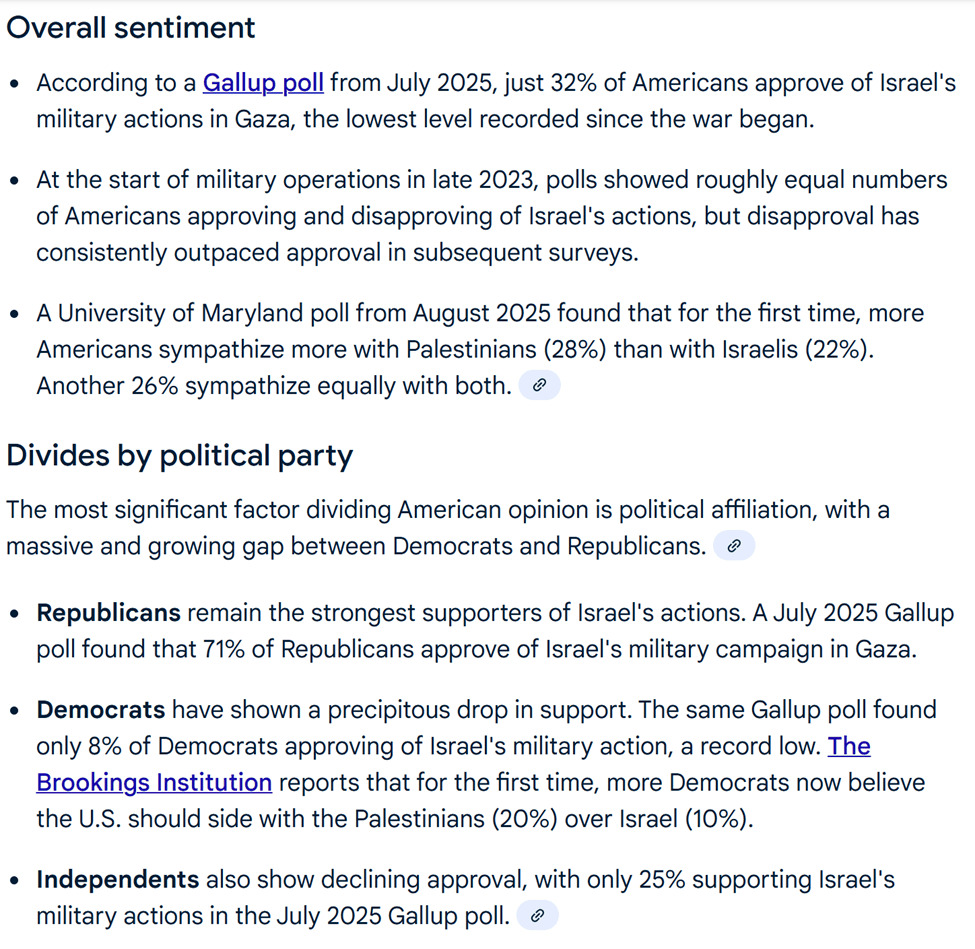
    I do not like passionate political beliefs. I hope this post has nothing to do with politics.

    I hope this post has something to do with history, what’s right, and prophesy.

    I’ve written about Israel and Palestine before HERE and ten months later HERE.

    The Book of Mormon was written so that we, the Gentiles of today, will understand what is coming in our future. The Book of Mormon is meant for our day and is meant to guide us.

    I’ve recently been reading Hugh Nibley’s thoughts on what the Book of Mormon teaches us about how a civilization and a people can go wrong and destroy themselves.

    I probably lost most people at “prophesy.” Prophesy is real. And while I put my head in the ground about political affairs and current events, I think the rest of the world puts its head in the ground when it comes to prophesy.

    Hugh Nibley emphasized, as I’ve been studying his words regarding Mormon chapters 1-9, how the ancient inhabitants of Mesoamerica ultimately destroyed themselves. He detailed how the chosen people of this land, those who were given this land and given God’s covenant that it would be their land as long as they followed Him – how those people lost their favor and were destroyed.

    The extinction of a people started with:

    Pride.

    No repentance.

    War.

    Revenge.

    War is justified when it comes in self-defense. The thing I want to focus on here is revenge. Hugh Nibley talks about how the Nephites of the Book of Mormon were destroyed when they officially became a bloodthirsty people bent on revenge. God withdrew from them when they decided they would avenge all their fallen brothers who had been killed.

    Which leads to me today, long having put my head in the ground since that post about Palestine and Israel four years ago.

    I accidentally read an article about the current state of the Israel – Palestine war.

    I decided to write this post when I read this:

    “Signs for this old-new vocabulary are everywhere. It is common among Jews, for example, to add the initials for “blessed his memory” next to the name of the dead – but in this war, almost every soldier or civilian victim is memorialized with the phrase “Hashem yikom damo” (God will avenge his blood).”

    God punishes the wicked with the wicked. You don’t want to become the people punishing the wicked in the name of God. Because at that point, you are the wicked. And at that point, your day will come too.

    I fear how long the United State of America has felt the need to be the aggressor in the war against wickedness around the world.

    There is a big difference between wars of self-defense, wars of aggression, and wars of revenge.

    Ceasing to remember the blessed memory of loved ones and instead seeking to avenge blood is not God’s way.

    The world has long said this is how God works. It is not how God works. It is how Satan works. And when people think they’re acting on behalf of God but really being led chain-linked by Satan, the worst atrocities happen.

    Prophesy is being fulfilled before our eyes and the world collectively puts its head in the ground.

    Which leads to my concluding point that Hugh Nibley mentions. Ultimately, we will all be judged for our own actions. What we do matters. All we can do is what we can do – kindness, forgiveness, love, peace, avoid contention, avoid fighting, avoid hatred, avoid judgment, meekness, humility, faith. These are the things we can do in a world that is lost and confused. A world that is deviating. A world that distances itself from God more and more every day.

    You do your part. You do what’s right.

    You love. That’s all.

    9/15/25 Update

    As I painfully, accidentally read more political information, I come back to add more because it seems relevant to what I’ve already written.

    Some recent quotes I’ve read from Donald Trump regarding Charlie Kirk’s assassination:

    The radicals on the left are the problem. And they’re vicious and they’re horrible and they’re politically savvy.

    We have radical left lunatics out there, and we just have to beat the hell out of them.

    And then I read articles and comments and it’s all attack attack attack hate hate hate while yelling at Trump for saying to attack attack attack. Does no one see the irony?

    The same article with the headline

    later, quietly, adds:

    “The president added in a separate answer that he would urge his supporters to follow a nonviolent path in response to the shooting. “He [Kirk] was an advocate of nonviolence,” Trump said. “That’s the way I’d like to see people respond.””

    Why does “beat the hell out of them” get the headline?

    Because it evokes emotion on both sides. It gets clicks.

    The same article that condemns Trump for violent speech chooses to promote the violent speech.

    Why?

    Because the violent inflammatory statement get the clicks.

    It is all hypocrisy.

    I’m not excusing Trump’s, “beat the hell out of them.” I am condemning it. But if we fail for this click-baiting and this hatred, this you against us mentality, we become part of the problem.

    Then I read Governor Cox of Utah’s statements:

    “We can return violence with violence; we can return hate with hate. That’s the problem with political violence. It metastasizes. We can always point the figure at the other side. At some point we have to find an off ramp, or else it’s going to get much worse.”

    I stand by the Governor Cox’s words.

    An eye for an eye quickly becomes lives for lives. Revenge hurts everyone.

    How do we find an off ramp?

    Again, from Governor Cox:

    “Social media is a cancer on our society right now,” Cox said. “And I would encourage people to log off, turn off, touch grass, hug a family member, go out and do good in your community.”

    Love. Forgive. Look past the thing you disagree with someone on and instead look at the beautiful, passionate, important person they are.

    We all have a divine heritage and one day we will be embarrassed about how we thought of the people around us.

    There is no other side. There are only people. We are all imperfect and the sooner we realize that and forgive and show love, the better we will all be. Only love can heal the divide in our world.


  • Forgiveness, Doves, and The Chosen

    Forgiveness, Doves, and The Chosen

    Surprisingly I haven’t written about the Chosen yet.

    I’m about to finish season 3. I think this is an important TV show.

    In this season, there is a moment when Mary is talking to Tamar, a woman from Ethiopia.

    Mary voices jealousy towards Tamar for seemingly being able to push her way into the group without any hardships. Mary points out that she needed demons cast from her and to be pulled drunk from a tavern to get to her current place with Jesus. Mary seems to think Tamar is lacking humility due to her lack of trials.

    It was at this point that Tamar said something that jumped out at me while I watched:

    “Jesus forgave you, but you choose to hold on to it.”

    An episode later we get a look into Matthew’s past. Matthew is my favorite character.

    We see a flashback to when an old man came to Matthew during Matthew’s time as a tax collector. The man brazenly admits to legally accumulating tons of debt in an effort to help his children. The man will be sentenced to a prison camp because he’ll never be able to pay back the debt. He doesn’t care; he is an old man.

    The man then gives Matthew some prayer tassels. They are seemingly worthless, but the meaning of the old prayer tassels was significant to the old man. To him, those tattered tassels were priceless.

    The man gives them as a gift to Matthew telling him that one day he may regain his faith and need them. Matthew insists that he will never need those prayer tassels. The man insists.

    Matthew held onto those tassels and Mary found them.

    When Mary asked about them, Matthew told her the story. He didn’t understand why the man gave this sentimental item to him. Mary explained that the old man wasn’t giving some prayer tassels to Matthew, he was giving his faith to Matthew.

    Matthew’s response:

    “Why would he do that for someone like me?”

    Mary then told a story about a time she was going to kill herself. The only thing that stopped her was a dove. She saw it in the distance and took it as a sign that she shouldn’t do what she was considering.

    She told Matthew that man who gave away his prayer tassels was Matthew’s dove.

    These scenes from this powerful show gave me a lot to ponder.

    I often feel like Mary and Matthew.

    “Jesus forgave you, but you choose to hold onto it.”

    “Why would he do that for someone like me?”

    I pondered on whether I’m holding onto anything. Are you?

    The second question is a question I ask myself often. Why would God do this for someone like me? Why did Christ suffer, for me?

    Are we too hard on ourselves?

    I think back on some of my doves.

    Love is Powerful.

    The Inspiration.

    RIP Coach.

    Sometimes I think I’m like Mary, holding onto guilt that Christ no longer wants me to hold. That said, I have an interesting relationship with my guilt. I don’t dwell on it. I think a lot of it has left me. Still, sometimes I think I feel unworthy.

    We all hold onto things we should let go, becuase Christ already forgave us.

    We are surrounded by doves, those people that see our potential. We can always be the dove to someone else when they feel like they’re coming up short.

    We all feel unworthy sometimes, even though those around us see our potential. And God always sees our potential.

  • Will Hitler be Forgiven?

    Will Hitler be Forgiven?

    Before I share this, I will state the obvious. Hitler the man did heinous, horrible acts. He caused as much pain and heartache as any soul ever has on this earth. In writing this silly thought experiment I in no way intend to make light of the horrible choices of others. I believe I will have a hard time forgiving some of the acts I see during life reviews at the great judgment. Forgiveness, thankfully, won’t be for me to decide. I don’t know who will be forgiven for what. I know some will need to ask for forgiveness and likely won’t. I know some will receive forgiveness that we can’t comprehend. I trust in God. Now onto my silly post. Please don’t take the main character too seriously.

    I had a thought while I was in the shower, and it stemmed from this question – will Hitler be forgiven? The mere mention of the idea is enough to get me canceled. 

    The beauty of the plan of salvation and something only the Church of Jesus Christ proposes an answer to, is that God will save all His children and how that could be accomplished.

    The thought I had in answer to this question was – maybe Hitler will be forgiven, only God knows. If someone like Hitler could be forgiven, what change would need to take place in a soul like that for that to happen?

    We see momentous changes in mortality. We can see transformations over small courses of time. Think of someone you’ve seen change over the course of 5, 10, or 50 years. A lot of changes can happen to a spirit over the course of 50 years. Now imagine 1000, 5000, and 10,000 years. How about 3 billion years? Those numbers are hard to imagine. What amount of change could happen in a millennium? A lot, I imagine.

    On the other hand, that amount of time can also show the great weaknesses of a character. A lot of change can happen in a billion years and if there are any flaws in character, cracks become gulfs. Eternity is a long time so luckily we have a long time to change. But if we aren’t working toward perfection, our flaws will grow.

    I have read comments in near-death experiences about the malleability of the soul during mortality compared to after death. I’ve read analogies that compare the soul while here on earth to wet cement while the soul post-death being like settled cement. I believe that’s what makes mortality so critical. Our lack of knowledge and need for faith one way or the other, in a way I don’t understand, allows us to change in ways not possible once this life is over.

    The beauty of the plan of salvation is that God will save all His children that want to be saved. That’s the critical part. The desire to be saved. That’s also something becoming increasingly scarce in our society, the ability to forgive.

    Christ and God will know and understand all, and they will be forgiving beyond all measure.

    Which leads to the question, if we’re going to use Hitler as our abstract understanding of evil: will Hitler want to be saved? Will Hitler want to stand before God and Jesus Christ, Jesus Christ, the one who had to suffer for Hitler’s sins, who had to suffer for all the pain Hitler caused? Will Hitler want to stand before Jesus Christ? Will he have the humility to seek that forgiveness? If the evils of Satan touched his heart and soul as deeply as they seemed to – desire for power, hate, etc., will Hitler want to stand before them?

    Will Satan want to be forgiven? No. He won’t. Envy, evil, and hatred have poisoned his once angelic soul (Isaiah 14:12).

    No one can be forgiven if they willingly continue to deny Christ and ”crucify” Him anew.

    Will Hitler have the humility to bow before Christ and beg His forgiveness?

    I can’t imagine that level of change. It’s hard for me to picture that from someone who did such horrible things and strayed so far from the light. That is millenniums of change which is change my mind can’t fathom.

    What I also can’t imagine is how I can ever be made perfect. Me, with all my flaws, judgements, unkindnesses, shortcomings, deceits, greed, and selfishness. How can I be made perfect? I believe it will take a long time.

    Maybe Hitler will change and be forgiven for his sins. I believe if that’s possible it will take time.

    If we love the gospel plan and Heavenly Father and Jesus Christ’s ability to forgive us for our mistakes, we have to accept that they will forgive others too.

    The gospel plan is beautiful. For one and all.

    None of us deserve the redeeming love and a sacrifice willingly given of a God. Jesus Christ, spit upon and bleeding, shed his mortal blood and gave up his immortal spirit so we can live again. I am grateful for what He did for me and I recognize every day that I don’t deserve it. It makes me love Him all the more.

    Forgiveness isn’t something that should be taken lightly. It is serious.

    But when I stand before Him, and I humbly kneel, I believe He will forgive me. And for that moment, I’ll give anything.

  • This is Repentance

    This is Repentance

    Sometimes I struggle with the idea that my sins have been made completely white through the Atonement of Jesus Christ, that I’m completely forgiven for everything I’ve done.

    I know this disrespects the Atonement of Jesus Christ and that’s part of my biggest struggle. The last thing I ever want to do is belittle what Christ did for me.

    The thing is, sometimes I still dwell on my past sins. Sometimes I still think about them. Sometimes I still feel remorse and guilt. Sometimes I wonder if I’ve paid the full penitence to those I hurt. Have my sins been washed away? Are they completely gone if I still remember them?

    I rationalize this, and I believe it’s true, that I remember them for my benefit. I have to remember them or I might return to them. It’s the remembrance of guilt that keeps me from wanting to go back to being that person.

    I understand this intellectually.

    Still, sometimes it’s hard for me to understand how Christ can have forgotten my sins, washed them away as if they never happened, when I can’t forget them myself.

    The young men I work with and I recently studied Isaiah chapter 1.

    Isaiah 1:18 reads:

    “Come now, and let us reason together, saith the Lord: though your sins be as scarlet, they shall be as white as snow; though they be red like crimson, they shall be as wool.”

    After reading that I emphatically emphasized something to those young boys. What I emphasized was this:

    “When you truly repent, and show remorse, and try your absolute hardest to not do it again, Christ forgives and forgets your sins. Period. White as snow. It’s as if they never happened. Don’t be deceived. Satan will have you believe you can never be forgiven for a mistake. This is the great lie. You can be forgiven. If you repent, Christ will forgive. Not only that, He won’t even remember it. It’s like it never happened. I can’t stress this enough.”

    That’s what I said to my young men, and I believe it’s true.

    But… do I believe it’s true?

    Given what I just wrote?

    I had a thought today for the first time ever. I often think about the time of judgement. That time when we stand before Christ and have our life reviews. I’ve never feared that moment. The thought that occurred to me today is: why don’t I fear that moment? I have so much to be embarrassed by, so much to be ashamed of in my past behavior. Why haven’t I worried about it before? It occurred to me that one day my wife, Beth, will see how I once was. I’ve tried to tell her, but I don’t think she gets it. Then it occurred to me that my family will see it too. I will be so ashamed! Why haven’t I feared this before?

    Then it hit me.

    Maybe that’s repentance.

    Repentance is knowing – yes, I did those things. Yes, I made many mistakes. But though my skins be scarlet (they are and were) they shall be as white as snow. As I type this, I hold back tears. That’s what Christ has done for me. That’s what repentance is.

    Luke 15:7:

    “I say unto you, that likewise joy shall be in heaven over one sinner that repenteth, more than over ninety and nine just persons, which need no repentance.”

    D&C 18:13:

    “And how great is his joy in the soul that repenteth!”

    I am that soul. I don’t know how the life review will go. If my sins are forgiven and forgotten, are those parts reviewed? I don’t know. But what I realized was, and why I’ve never feared that moment, is even if all my abhorrent behavior is shown, it will be ok. It will be ok because I changed.

    That thought of Beth seeing how I used to be? It occurred to me that maybe she’ll love me even more after seeing all of it because she’ll see how much I changed. She’ll be able to see the full picture of how far I came to be a semi-decent husband and father.

    I think that’s what repentance is. Knowing that even if all your sins are laid out, you’re still forgiven.

    That’s repentance.

  • The Higher Law and the End of Blood Sacrifice

    The Higher Law and the End of Blood Sacrifice

    Christ fulfilled the law. This was why blood sacrifices were done with after His last and great sacrifice. But what does this mean, practically?

    The Israelites practiced God’s law which was a law of reparations. You take out the eye of an enemy maliciously, you take out his eye. Someone kills your brother, you kill him. The problem with this is obvious. Blood begets blood and when does it end?

    This is why the Israelites practiced the law of sacrifice. They took an animal, that had nothing to do with bloodshed, or theft, or lying, and instead of continuing the constant cycle of reparations, they sacrificed the blood of the animal. This is obviously what Christ represented when He died on the cross. He paid the price for all our sins, because we are incapable of paying such a price.

    This is why Christ preached a higher law. No longer was it an eye for an eye but it was turn the other cheek. No longer was it sue for damages but give your second coat. Christ’s point was that after He died for our sins, animal sacrifices would be done away with, there was no more putting your sins off on a goat. Christ was teaching the end of strife. Someone wrongs you, forgive them and move on. This put an end to the vicious cycle of payback and recompense.

    Who was the greatest example ever of this? Jesus Christ never asked us to do something He didn’t do first, when He was up on the cross, and forgave those who had scourged, beaten, and crucified Him.

    But of course, justice still had to be paid for a wrong done. That’s where Christ came in, paying the ultimate and last sacrifice with His blood. So, we flawed human beings, who sometimes commit wrong without even meaning to, can be forgiven. This is the miracle of what Christ did for us, the miracle of His atonement, the miracle of His forgiveness, and the miracle of the higher law.