Here we are 10 months later. I encourage anyone to go read my original post. I just did. It helped me refresh in my mind the complexity of this issue. This issue clearly isn’t going away in our lifetimes. I think it’s only a matter of time before this issue could impact our actual lives so it’s good to be aware of what’s going on.
Before I write this, be aware that I am aggressively avoidant of the news. It’s so conflicting and I don’t trust it. If I’m going to look into this topic, I’m going to do a lot of research and reading. Beth just said she didn’t know how to interpret the news because she’ll hear one thing and then the complete opposite from moment to moment. So, some of what I write here might be considered politically incorrect. I don’t care.
I recently accidentally listened to a soundbite from the Republican presidential debate. Someone was asked what Israel should do to the terrorists, Hamas. The response was so… aggressive. I had a bunch of other adjectives there at first, for what the response was. I removed them because I don’t want to offend anyone. That said, I will voice my opinion here. I hope anyone reading who would use aggressive terms about what Israel should do will consider the complexity of the situation before proclaiming that Hamas must be destroyed by any means necessary.
I just went to search for exactly what was said by that Republican candidate and found an article in the Washington Post with the title:
“Candidates use violent rhetoric on Israel-Gaza war without mentioning humanitarian aid“
I think it’s immensely important to remember that the pursuit of vengeance is causing more atrocities to be performed.
Terrorism is bad. Obvious statement? Of course. So is retaliation, withholding food, water, and medical supplies to innocent people, bombing hospitals, war crimes.
Division.
Pro-Israel or pro-Palestine. These are labels.
This entire world is focused on creating more divisions among us. Satan reigns in the hearts of men.
The world is not black and white. The Book of Mormon is a story of two groups of people that couldn’t coexist. They had a centuries-long feud based upon an argument over the right to rule. It is written from the perspective of the Nephites so it can often incorrectly be characterized as a story of good guys versus bad guys. The story of the Nephites and the Lamanites is not a story of good guys and bad guys. It is a story of two groups of people with differing views, ideologies, politics, and cultures that each felt they were in the right.
The world is not black and white. It is seldom as simple as good guys and bad guys. That’s what we’re seeing in the Middle East right now. A study of the Book of Mormon can show us exactly where this kind of feud leads. It can only lead to complete destruction on both sides.
Some quotes from my last post on this conflict –
“What’s worse is what is being done to Israeli people, we are becoming animals.”
Two Blue Lines
“It’s clear that there will not be peace if we continue to demolish innocent peoples’ houses…”
Two Blue Lines
“All former Shin Bet (Israel’s internal security service, think the FBI) leaders were unanimous; Israel must talk with the terrorists. They must talk with anyone that might talk to them. Peace cannot come through military or tactics or fighting or intelligence.”
The two great commandments of God are to love and to love (Matthew 22:36-40).
This conflict doesn’t end until forgiveness and love supersede vengeance and bloodshed.
Now, look at the cover picture, at the top of this post. Look at it closely. Stare at it. Put yourself there. Be the man in that picture for a fraction of a second. I did. That’s why I’m writing this post. My heart breaks for those caught in a war. My heart breaks for those who want nothing to do with this conflict, caught in between angry, vengeful, hateful factions. My heart breaks for men and women holding their dead children in their arms.
I am not Pro-Israel or Pro-Palestine. I am Pro-peace. I believe we all should be.
I recently heard a quote so good I want to quote it in full:
“Think about this. When a little baby is born, that baby cries at inopportune times, makes a lot of noise. It soils its diapers; it demands to be fed when it wants to be fed. It costs you a lot of money, a lot of time, a lot of energy, a lot of lost sleep. So why do we keep putting up with these little creatures? It’s because there’s this deep, underlying feeling of love for these children of ours. We love them so much that we don’t look at what it’s costing us. We keep infusing life and we keep teaching, and we keep forgiving, and we keep working with, and we keep nurturing and feeding and helping them to grow to become who they need to become and who they have the capacity to become.”
I think that’s an awesome quote. Well said.
I’ve been thinking about this more lately. With a toddler that is so full of joy and happiness, and also, sometimes, not. And a 7-month-old that still isn’t sleeping great. And with plates thrown and irrational frustrations (by the toddler), and crying and no sleep and…
Ivy “loving” Sage
*Sigh
The energy it takes. The life force being sucked out of me.
And.
Would I go back if I could?
Not in a kagillion-billion-zillion-babillion years. I love them so much. It’s all worth it.
Is it hard? Heck yeah. It’s so hard. Do I feel like I’m dying a slow death sometimes? Uh, yeah, I do.
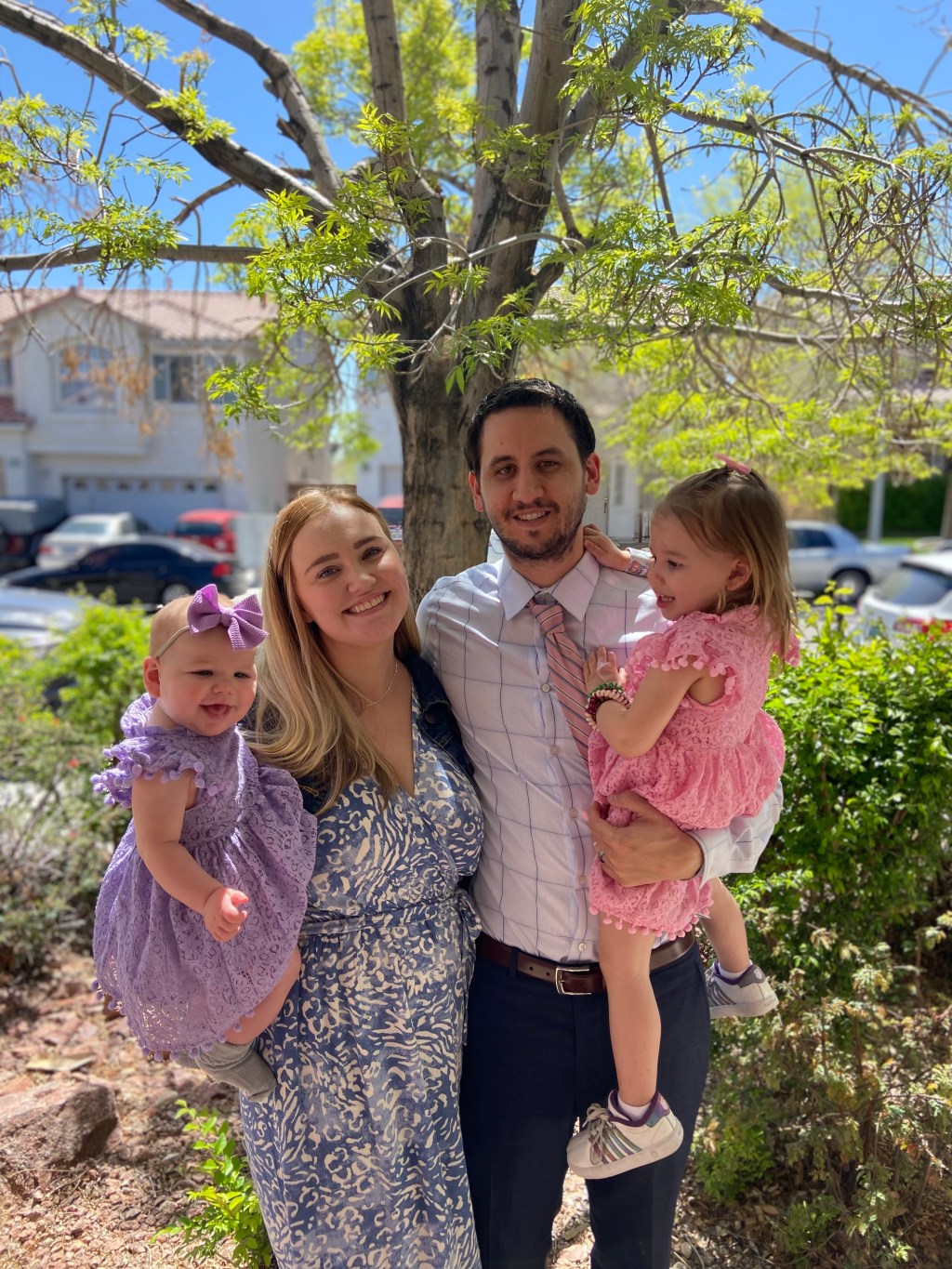
And then, Ivy smiles and says, “Dada. I love you.” And Sage sees me and inexplicably giggles. And suddenly, all that sucked out life force flows into my body from my head to my toes in a rush of energy and exhilaration and LOVE. It’s like nothing else in this world: looking at my two daughters. The love.
As a parent, speaking for myself, there’s a point where you become numb to the sacrifice and all you give up for your children. There was a time when having to get up once in the middle of the night to check on anything would ruin my entire night of sleep. At this moment, the average night has at least 3 middle-of-the-night wake ups. Zero wake ups in the night is a miracle.
Early on with Ivy, I really struggled with this. I started to wonder how I could survive without getting sleep. And now we’re starting over with Sage who doesn’t sleep nearly as well as Ivy did. I’m probably getting hours less sleep per week than I ever have. And yet I feel alive and invigorated. Somehow, I’m surviving. I think it’s that infusion of love I get from seeing them happy, healthy, and growing each day.
Ivy the morning after waking me up three times in the middle of the night. She didn’t go to sleep with the crown.
The time, the noise, the diapers, the feeding, the money, the energy, the sleep put into these “little creatures.” And yet, do I regret it? A resounding NO! I want more. I love them so much, it hurts. Sometimes it physically hurts how much I love them. That quote above came from a video of a guy discussing the Lectures on Faith. I’ll link it HERE.
He was talking about the attributes of God. That wasn’t where the quote ended.
“If we as mortal parents can figure that out (the love for our children), how much more do perfect, eternal parents have that figured out? God is a God motivated by love. It’s not just this outward thing, it’s part of the divine characteristic. God is love. Without that, you and I can’t have full faith in God unto life and salvation.”
We’re here to learn to love like God. God, Christ, and the Holy Ghost love so perfectly that they have become one in mission, intent, and purpose. That is the love I feel for my family. I would give anything for them. My wants and needs have taken three back seats. Beth, Ivy, and Sage’s needs are so much more important than mine. The “world” will try to say this is unhealthy, that I need to “put myself first” or “take care of myself.” Of course, I don’t completely disregard my health and care, but that idea that I come first is extremely wrong. I don’t come first. I know that. And not coming first is what gives me strength each day. That infusion of love that comes from my family makes every sacrifice the sweetest sacrifice there is.
If I feel this way, as a mortal man who knows how to give good gifts, how much more perfectly does God love me? How much more is He willing and able to give me because He loves me? I know God loves me. I am eternally grateful for His love. Now, He is teaching me how to love.
Forgiveness can be so hard. There’s a reason Christ emphasized it so differently from normal human traditions. Human thinking is, “I can’t forgive them that many times.” God’s response is, “how many times have I forgiven you?”
That point is brought home in Matthew chapter 18. In verses 21-23, Peter asks that question we’re all tempted to ask. How many times must I forgive? Seven? Surely seven is good. It’s 4 more times than the Hebrew law dictated at the time. Christ’s famous response,
“I say not unto thee, until seven times; but, until seventy times seven.”
Christ expounded upon this with the parable of the servant who owed a king a large sum. When brought forward to pay the sizeable debt, the servant fell down before the king and begged for patience. In great mercy, the king waived the debt.
That same servant then went out and grabbed another servant, demanding that a tiny amount be paid back. The second servant asked for patience and the same servant who had just been shown so much mercy had the second servant thrown into prison.
When the king heard this he “was wroth, and delivered him to the tormentors, till he should pay all that was due to him” (Matthew 18:34).
It seems so easy here on earth not to forgive others. What does it hurt us to not forgive? How does that person who wronged me deserve my forgiveness?There is a story from the book Return from Tomorrow. A holocaust survivor is found in a concentration camp. When he is liberated by the soldiers, he is put to work helping with the sick and dying around him. He is energetic and relatively healthy. The soldiers finally say to him, “you must have been lucky. You haven’t been here long, huh?” The man tells them how many years he’d been at the concentration camp; a long time. They marvel at his health. How can it be?
The man tells them that early in the war, his wife and children were murdered before his eyes. He desperately wanted to hate these men, hate this war, hate this world, hate God. He had every reason to. But, the survivor made a decision. He decided he would not carry that hate with him. He decided he wouldn’t poison himself with hate. Forgiveness saved his life.
Elder David E. Sorensen said, “When someone has hurt us or those we care about, that pain can almost be overwhelming. It can feel as if the pain or the injustice is the most important thing in the world and that we have no choice but to seek vengeance. But Christ, the Prince of Peace, teaches us a better way. It can be very difficult to forgive someone the harm they’ve done us, but when we do, we open ourselves up to a better future. No longer does someone else’s wrongdoing control our course. When we forgive others, it frees us to choose how we will live our own lives. Forgiveness means that problems of the past no longer dictate our destinies, and we can focus on the future with God’s love in our hearts.”
We may think not forgiving others is harmless, but hate is poison. Holding onto grievances and refusing to forgive only poisons ourselves.
In the book, Surprised by Hope, N. T. Wright said: “If you lock up the piano because you don’t want to play to somebody else, how can God play to you?“
Reading back on the story of the king and the foolish servant who would be forgiven his great debt then demand payment from another. We read that and scoff at the hypocrisy. Yet we all have this same hypocrisy in us. And God is our king, having forgiven us all, and wroth when we can’t extend the same favor to our fellow brothers and sisters.
Going along with what Elder Sorensen said, from this link: “I think it is helpful to recognize that offences and injuries are always bottled in our past. So, forgiveness requires us to deal with our past – not our present or future. We have to let go of our past in order to fill up the present and bless the future. When we fail to deal properly with our past, we are like someone whose elastic belt is caught on a barbed wire fence; we can make very little forward progress until we unhook ourselves from our pain and injustice in our past.”
That quote is perfect in explaining how that man from the concentration camp survived. That man, if he hated, would have been stuck in the past, attached to a barbed wire. Never being able to progress to his future. Instead, he chose to forgive, free himself, and save himself. That is the true power of forgiveness.
We have all been wronged. We have all wronged others. Some of us have been wronged worse than others. But life isn’t a ledger book. Life isn’t a tally of who has been wronged the most. There is always someone that has been wronged worse than you have. The book The Shack talks about this eternal idea of “being wronged.” If you refuse to forgive someone, and that someone refuses to forgive their father who made them that way, and their father refuses to forgive his father who made him that way: on and on for eternity. Grievances go back to the beginning of time. Forgiveness ends the vicious cycle of hate.
Forgive our trespasses as we forgive those who trespass against us.
There was a point in my life when I realized I’d been carrying around poison for far too long. There was a day I realized I had to forgive some people from my past so that I could move forward. I reached out to some people I hadn’t spoken to for so long. It helped me. I felt that feeling, of getting a weight off your shoulders. For me, it was more a feeling of getting poison out of my system. I thought I’d forgiven. It wasn’t until I actually said it, to the person that needed to hear it, and apologized for my part in pain that was caused, that I realized the burden I’d been carrying for so long.
We all must forgive.
Again, I know that sometimes such heinous wrongs are committed that some people feel they have the right to shout, “But I’ve never hurt someone like they hurt me!”
In those moments think about the person from the concentration camp who refused to hate. He chose to forgive. It saved his life. He had more reason to hate than just about anyone ever has. He chose not to. There’s always someone that deserves to hate more. Choose to love instead.
Let go of the hate you harbor and forgive. Do you want to come before God and Him to ask, “how can I forgive you, when you never forgave?”
We all do wrong, and we all get wronged. Remove yourself from the past and progress.
A forgiveness post would be lacking if it didn’t mention where all forgiveness originates. Always remember, there is only one person who can truly break the vicious cycle of pain and hate. Jesus Christ is the ultimate giver of grace and mercy. If you feel you truly can’t forgive, lean on Him. He felt the pain, He felt all of it, and He has forgiven us. He’s forgiven all of us. He died so that we can experience the true feeling of freedom that He allows. His blood paid our debt, all of it. As we rely on Him, we will find the forgiveness our hearts desperately need.
I’ve heard of the “Adam-God Theory” but never looked into it. Until recently, I really didn’t know what exactly it referred to. Here is my research into the Adam-God theory for those interested and especially for those who may have concerns about this theory and its history in the restored Church of Jesus Christ.
Before I begin, almost all my thoughts come from this link:
It was a great resource on this topic and I recommend it if you want to learn more.
If you want a quick, short video that sums up the whole history of the Adam-God theory, watch this video:
Now, my thoughts.
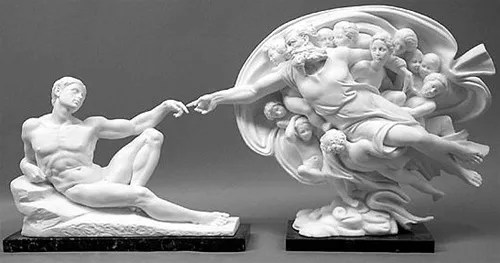
The Adam-God theory is the theory that Adam and God the Father are the same person. This theory was mentioned by Brigham Young.
First – Adam is not God the Father. Adam is not who we pray to. This does not fit the teachings of the scriptures, does not fit modern revelation, is not a doctrine of the restored gospel. So why are we talking about it, you ask?
Second – Yes, Brigham Young did make some bold statements about Adam being God. He also made countless statements contradicting that statement. Brigham Young was a convert and a prophet. Try to imagine the dichotomy of those positions. Try to imagine someone a few years into the faith trying to lead the entire church. Is it so shocking that there were erroneous statements made, especially when we consider and understand the personality and boldness of the prophet who led the saints across the rugged wilderness of the West?
Third – Because Brigham Young made incorrect statements does not mean he was a false prophet. It means he was learning line upon line, and he made false statements. He has made statements to try to help us, the people of the church, reconcile some of his more questionable comments. For example, when speaking generally about who Adam was and proposing some thoughts about Adam, Brigham started by saying, “I propose to speak upon a subject that does not immediately concern yours or my welfare….I do not pretend to say that the items of doctrine and ideas I shall advance are necessary for the people to know, or that they should give themselves any trouble about them whatever.. (Brigham Young, Oct 8, 1851). If it does not concern our welfare, don’t get too hung up on it. The church was young and growing when Brigham was prophet. God has always worked through us, mortals, to fulfill His works. This has always resulted in fallibility. Brigham Young was a prophet, even if he made mistakes in the thousands of public discourses he gave during his learning period as a prophet/convert.
Fourth – Because prophets are fallible does not mean we cannot trust and follow them. As The Church has grown out of its infancy, it has strengthened itself in countless ways. One of those strengths has become the checks and balances of the church organization. The First Presidency and Quorum of the Twelve Apostles must be unanimous in any declaration of doctrine. President Nelson speaks hundreds of times a year. Not every word from his mouth (in my opinion) is scripture. It is guidance and direction from God’s anointed prophet, yes, but not scripture. But when President Nelson, the First Presidency, and the Quorum of the Twelve sign their names to a declaration, it becomes binding guidance on doctrine, church policy, etc. Such was the case with “The Family: A Proclamation to the World” for example.
Now, the statement made by Brigham that when Adam and Eve came to the Garden of Eden they already had celestial, resurrected bodies is interesting. I more think they came with perfect bodies as they came directly from the Father and hadn’t yet been corrupted by the fall, not that they were necessarily resurrected bodies yet. Celestial, maybe, resurrected, I don’t think so. That’s all I will say on this matter, though, to support my point earlier that things that distract from our salvation should be discussed with caution. I haven’t done enough research, pondering, or praying to comment on this with much confidence and would hate for my children 150 years from now to claim I believed Adam was already resurrected when put in the Garden of Eden. See how these small comments can be blown out of proportion? Grateful I’m not a prophet.
Another thought – the eternal nature of the plan of happiness is not something we can begin to comprehend. If it ultimately distracts us from our current efforts towards salvation, we should tread with ultimate caution. Such is the thinking about if Adam lived on another planet before he came here and countless other thought experiments that might distract from what is important, which is, Jesus Christ performed the ultimate atoning sacrifice for my sins. He died so that I can live. He suffered so I can be forgiven and can live with God, my Father, again. All other questions, while interesting and can expand our minds and thinking, if they distract from the ultimate source of our salvation – the Plan of Salvation and Christ’s personal role in it for us – should be avoided.
Those are my thoughts on this from my research. Here are some final items to really, I hope, put this theory and any issues involved with it, to rest.
As mentioned, Brigham contradicted himself many times on the idea that Adam was God. While he mentioned the idea a couple times in public, there are many other instances of Brigham Young speaking where he clearly separated Adam and God the Father as two separate individuals.
BYU professor Stephen E. Robinson sums it up well:
“Yet another way in which anti-Mormon critics often misrepresent LDS doctrine is in the presentation of anomalies as though they were the doctrine of the Church. Anomalies occur in every field of human endeavor, even in science. An anomaly is something unexpected that cannot be explained by the existing laws or theories, but which does not constitute evidence for changing the laws and theories. An anomaly is a glitch…. A classic example of an anomaly in the LDS tradition is the so-called “Adam-God theory.” During the latter half of the nineteenth century Brigham Young made some remarks about the relationship between Adam and God that the Latter-day Saints have never been able to understand. The reported statements conflict with LDS teachings before and after Brigham Young, as well as with statements of President Young himself during the same period of time. So how do Latter-day Saints deal with the phenomenon? We don’t; we simply set it aside. It is an anomaly. On occasion my colleagues and I at Brigham Young University have tried to figure out what Brigham Young might have actually said and what it might have meant, but the attempts have always failed. The reported statements simply do not compute—we cannot make sense out of them. This is not a matter of believing it or disbelieving it; we simply don’t know what “it” is. If Brigham Young were here we could ask him what he actually said and what he meant by it, but he is not here…. For the Latter-day Saints, however, the point is moot, since whatever Brigham Young said, true or false, was never presented to the Church for a sustaining vote. It was not then and is not now a doctrine of the Church, and…the Church has merely set the phenomenon aside as an anomaly.”
“As far as can be determined, none of Brigham Young’s successors in the presidency of the Church continued this teaching in public, and by the presidency of Joseph F. Smith (1901–18) there were active moves to censure small groups that taught Adam-God.
One of the earliest statements from the Church rejecting Adam-God teachings was made by Charles W. Penrose in 1902:
‘The Church of Jesus Christ of Latter-day Saints has never formulated or adopted any theory concerning the subject treated upon by President Young as to Adam.‘
In October 1976 general conference, Spencer W. Kimball declared the Church’s official position on Adam-God:
‘We warn you against the dissemination of doctrines which are not according to the Scriptures and which are alleged to have been taught by some of the General Authorities of past generations. Such, for instance, is the Adam-God theory. We denounce that theory and hope that everyone will be cautioned against this and other kinds of false doctrine.‘”
Other statements by future general authorities refuting Brigham Young’s opinions:
Bruce R. McConkie – “What I am saying is that Brigham Young, contradicted Brigham Young, and the issue becomes one of which Brigham Young we will believe. The answer is we will believe the expressions that accord with the teachings of the Standard Works.”
And Brigham Young himself – “I am more afraid that this people have so much confidence in their leaders that they will not inquire for themselves of God whether they are led by Him. … Let every man and woman know, by the whisperings of the Spirit of God to themselves, whether their leaders are walking in the path the Lord dictates, or not.”
Finally, while some might consider everything said here to be a sign that the church changes and is “wrong,” I would completely refute that. The church is changing. The church is growing. The church is living.
Doctrine and Covenants 1:30 is Christ speaking and reads “And also those to whom these commandments were given, might have power to lay the foundation of this church, and to bring it forth out of obscurity and out of darkness, the only true and living church upon the face of the whole earth, with which I, the Lord, am well pleased, speaking unto the church collectively and not individually.”
While so many would criticize the Church of Jesus Christ of Latter-day Saints for changing, the Lord describes it as living. The only living church on the face of the earth. This is a power of Christ’s church- not a weakness.
This is my wife, Beth’s testimony exactly as written. Names have been changed.
In a future post I will give some of my thoughts about this, but for now, the power of her testimony should stand on its own, unencumbered by any comments I could hope to make.
Here it is.
The Journal Entry of Beth’s Conversion Story
April 20, 2016
I just read my patriarchal blessing for the second time since I got it. It confirmed promptings I’ve been having lately that I should do some journaling for myself and posterity so, even though it is past midnight I felt it better to do this than mindlessly fall asleep to some Netflix show. The past few years have had so much I don’t know how to fit everything I should write to remember. So, because of my failings as a journal writer, it will have to be a highlight reel of life. I just feel some changes that have occurred are too important to neglect to include.
I am in my third year at ASU. I love it, I love learning, but my diagnosis with clinical depression in October 2015 has really been a roadblock in my ability to work hard. Luckily, after dropping out for a semester, I’m slowly starting to feel like myself again. I’m not taking medication anymore but I’ve been hiking often and the feeling I get from pushing myself and being physically fit really serves as a great anti-depressant. So I’m back in school with just 9 credit hours, but hard classes. (1920’s senior thesis, history of college sports, and existentialism) I will probably graduate in about a year and do some sort of graduate school program. I previously had been dead set on going to law school. However, I’ve had to rethink my career path after being diagnosed with the depression episode. I don’t really trust myself to be able to go through law school. I always had 100% confidence in my academic capabilities. Now, I’ve taken a real hit to that confidence. My patriarchal blessing does mention that through my righteousness I will have many different career options. That has been comforting.
Life has been full of changes the past year. I think the biggest one that I will write on is about the ending of my very serious relationship with John for 2 ½ years and my decision to come back to church. I dated him from senior year of high school all the way up to just short of my 21st birthday. I really thought I loved him. He and I had plans to even get married one day. We were HS sweethearts and he was what I considered my first real love. I feel a real sense of anger at the situation but I also can’t help but think I will always love who he used to be and what we used to have.
Initially, since about sophomore year of high school, I was set on not being LDS. I didn’t have a testimony of the Book of Mormon, I didn’t believe what the prophets spoke about. I wanted to live contrary to many of the commandments. I never cared to enter the temple. I was prepared to live that life with John too. We were definitely not living by LDS standards and that is exactly what I wanted. I was perfectly happy breaking the word of wisdom and living contrary to the law of chastity, among other things. Our relationship was never perfect. We fought often. He drank. I remember one day he drank so much he wound up in the hospital knocked out. For approximately 5 hours I sat there watching him, angry, upset, feeling betrayed, but wanting to show compassion. He cheated on me many times. I would often find messages on his phone texting other girls. He was perfectly fine with going out and getting drunk with other girls when I wasn’t around. Dramatic scenarios like these were often. I didn’t like who I was when I was with him. But I lost touch with who I used to be or who I could be. And when there were good times, I felt some amazing love. I just started to realize I had a better potential and I deserved better.
The changes came slowly at first. I remember when Clark was on his mission, I had one night where I felt so very, extremely alone. Not just physically but much deeper than that. It was dark. I was overcome by hopelessness. It was a feeling I almost lack the ability to explain. I now think it was a result of separating myself so far from the spirit that the light from Christ dimmed. I was prideful. I hadn’t prayed in years. But I did. I prayed in that moment. Desperately. I pleaded with God, please take this feeling from me even though I know I don’t deserve it. Immediately, my fear dissipated and calm overwhelmed me. That was the first time I understood how real prayer was. I wish I could convey that feeling to others. It was painful, scary, optimistic, and inspiring all at once. That was a start.
Any institute classes at ASU helped too. I didn’t mind studying the gospel from an intellectual standpoint so I liked going. I read scriptures. I discussed the gospel. I often was so eager to share what I learned with John. Sometimes he’d listen, other times he’d pretend to. It was awkward. I wanted to share what I found profound and he was resistant. But again, there were slow changes creeping in. I was realizing what the words of the gospel could mean. And he was realizing that he wanted nothing to do with it.
The real changes began around the start of 2015. I had quit or was about to quit partaking in most of the big sins I had been living in for years. I had already quit drinking and I was ready to cut-off the intimate aspect of my relationship with John. I had an institute class on the Teachings of the Latter-Day Prophets at this time. For some scheduling reason, I missed that class often. To make up absences we had to write papers on general conference talks. (Which I had never listened to previously in my life) So I did it. And that was a blessing in disguise. Again, I took it as an intellectual opportunity, like listening to Gospel TED Talks. At first I learned a lot. But then I began to feel a lot. I studied the atonement. And the friendship and companionship of Christ. I studied talks on being genuine and being compassionate. I began to slowly feel a change of heart, a softening of a heart that had been proud for many years. And even though I thought I was happy before, I started to feel joy. Real joy. And I started to feel love for others. Real Christ-like love. And I started to understand my divine purpose. The real potential I could live up to. Then came the dreams that gave the final push.
I’ve had vivid and detailed dreams for a few years now. Often they are silly. But often they are profound. Sometimes they even come true. I know that for many of us, the spirit speaks to us in dreams. For context, it is important to know I never wanted to get married in the temple before in my life and I never had been the kind of girl to dream excessively of my wedding day either. However, I had about four dreams where I was walking out of the temple in a white dress looking happier than I’d ever been lovingly holding the hand of a man. These dreams always ended right before I saw the face of the man I married. One night, I had the fifth identical dream but this time the man was John.
In addition, I had another dream that my friend Mike was home from his mission, in white, crying and saying how proud he was while hugging another person dressed in white. As he turned around it became clear it was John on his baptism day! So with these dreams I thought I knew what it meant! John and I would change our ways, repent, convert, and live happily ever after.
But of course that isn’t what happened. As a side note, I now have a different interpretation of those dreams. I think God was showing me what could be. What I should want to be. And as I saw that possibility play out in my dreams but realized that it could not be a reality in real life I had to consider what I truly wanted and expected for myself. After I broke up with John I had the wedding dream only once more. It was once again identical to the dreams before. But I saw the man I was going to marry. It isn’t like I could list a particular physical look I had for him but it’s as if I knew who he was anyway. As if the trust and love I had for him made me know him. And it made me desire so much to strive to one day be endowed so that I will get to marry that man and walk out of the temple with him one day. That was the first time I wanted to go through the temple. I now hope to be endowed and sealed one day.
So after these dreams I tried to appeal to John, first by asking him to quit drinking. I wanted so badly to have the life I thought I knew we could have. But we were sent here with free will and someone needs to want to change in order to truly change. He did not want to change. The last few months were devastating. I thought I loved John, I was otherwise so happy, but my relationship was suffering. I was starting to open up to the gospel, to build a relationship with Christ. I was doing well in school, I was making many friends. But we had diverged. Thankfully I was blessed to be given so many obvious signs of what was right that I knew without any doubt there was no turning back from the Gospel at this point. I either go forward with this change next to John or I go forward without him. But I had to go forward And so June came, he sat on my front doorstep. We talked kindly but distanced. And that was it. I was sad. The man I thought I loved was gone. But inexplicably I felt so at peace. It felt okay. I felt optimistic. I sensed a hard path ahead but I knew it was going to be worth it.
So here I am with that journey under my belt. It has left me at times feeling damaged. I’m generally a confident person but I took a real hit to my self worth after this. The depression has made me feel like I’m not as smart or capable as I thought I was. My failed relationship made me feel I’m not worth someone’s loyalty or commitment That no matter how pretty or smart or funny or confident they think I am that a life with me wasn’t worth giving up something as trivial as alcohol. That my friends weren’t wiling to stick around when I chose to give up sin and follow Christ. But the gospel keeps me going.
I can’t wait to love someone that chooses to love me fully back. I hope one day I can trust myself to do that. I hope one day I can give 100% of my love and feel it back. I want to trust that I’m worth someone’s loyalty. I want to trust I’m worth a righteous man. I pray to become better through this trial so I can be worth it one day.
And in the end of this trial I realize I’m grateful for it. I look to those times where I was given a sign and a testimony loud and clear when I’m beginning to doubt. And I’ve doubted. I was proud enough to think blessings would rain down on me immediately after this big step. They didn’t, at least not in the form I had expected. I’ve dated in the YSA ward but there hasn’t been anyone I’m seriously in to. In fact I almost find myself incapable of emotionally attaching to anyone. I’ve dealt with crippling depression. I lost friends. People decided they would choose John over me. They decided it was better to have the partying John than the sober Beth. I lost direction in my career path. But among all these trials I now understand what is temporary and what is eternal. It was the most alone I had ever felt. But I finally knew I wasn’t really ever alone.
I had to go through my own repentance process with the bishop. (Farnsworth then Thurston) It was scary. But I now love and feel the atonement for real. Every time I pray, I thank Heavenly Father for Christ’s atonement. I needed the atonement then, and I need it now. My testimony in the atonement holds me over when my testimony in other aspects is less stable. My testimony of the eternal nature of being is so strong. My testimony of Christ’s personal relationship to us through prayer is tangible.
I love Christ. I feel him there because he knows my pain. He’s been my friend when all hope was gone. I’m not completely myself again but I find joy in reaching out to those who I sense also feel alone, damaged, or scared. My trial has given me an ability to reach out to those in pain just as Christ does. And I feel real, Christ-like love that I’ve never felt before. I look at people with a new light now because of it. I try to understand the principle of forgiveness because I need it. I long to maintain an eternal perspective because I knew what challenges there were to face on Earth yet I boldly said I was ready to do it. And I will continue to do so.
I look forward to the day I can look back and understand the ‘why’ of my experiences and trials. But for now I will press on with hope and gratitude. I know my Savior lives. I hope I never doubt it! I hope I never forget. I am so grateful for the hard times. I’m grateful for humility and for this clarity. I’m so grateful for my story.






 No Coincidences