Tag: god

  • Gravity of God

    Gravity of God

    The push and pull of all things.

    Here’s another one of those thought experiments I’ve talked about before. Let’s see where this goes. Work with me.

    Earth’s gravity pulls us down, we push back on Earth, but Earth doesn’t feel us because we’re so small and insignificant.

    God is the gravity of our universe. The magnitude of His pull is so great that He is the force that keeps us in balance, connected to His gravity, two feet stable on the ground.

    My mind is having trouble wrapping itself fully around the concept I’m trying to describe, so bear with me.

    Visions of Glory talks about the impact of every single moment in our lives. When we do something, it ripples all around us. No action we ever take does not impact something or someone in some way. Everything. The smallest moments and the largest decisions. They all ripple through time and have such an impact.

    I believe this to be true.

    I’ve long tried to understand how God’s omniscience and our free will coexist. I know (or hope) this is something I’ll learn when I die. But for now, my mortal mind is working through this understanding. It’s been proposed that God is a great mathematician who quantifies the likelihood of every person in the world’s choices and comes to an approximation of what will happen in the future. That seems too simple…and seems to have some holes in it. Again, to me, in my simple mind.

    What I’m thinking with gravity and pull is this –

    God is the pull on all of us. He keeps us in balance, as already stated.

    We have pull on other things around us as well. As I mentioned, our choices have impacts on others. Now, it’s not our gravity, like God’s, that impacts others. We’re not celestial beings like God – yet.  But our choices, our actions, our thoughts do impact and change our surroundings and those around us.

    So God’s gravity pulls all of us. We pull others with our actions.

    I wonder, and I think I’m starting to believe, that there is a great cosmic physics happening. God is the center, the everything, the force that keeps us in motion. We make choices that impact others. In a way, we’re being trained to be like God, to have an impact, to have a force.

    Since God is the center, the everything, He sees our actions and how they will ripple, since they all report back to Him. He is our gravity. So as we ripple, He is the center, and He sees the all. Since He is our force, and we move around Him, He can sense it all, past, present, and future.

    Now, as I write this, I again am struck by the simplicity of my mind and how short I am falling in describing what I’m trying to describe. It’s like describing the color blue. I can feel what I’m trying to say, but I just can’t put it into words.

    Anyways, there’s the Physics lesson for the day. I know it’s a bit rambling and I’m not positive it makes sense. Thanks for reading.


  • Why Do I Care?

    Why Do I Care?

    I’ve been thinking recently. Why I care about this?

    This being – the Gospel, the Church of Jesus Christ, the Church of Jesus Christ of Latter-day Saints, Jesus Christ in general.

    Let’s start with Jesus Christ in general. I feel like I write about this constantly and it’s the constant conclusion to one of my posts, so I’ll be brief here. I care about Jesus Christ in general because He has given me everything. The least I can do in return is share Him, follow Him, try my best to be like Him.

    Let’s go broader. Why do I care about the Gospel and the Church of Jesus Christ? That, I think goes in line with why I care about Jesus Christ Himself. If I care about Him, then I would care about His church, and I’d want to share His gospel. That lines up.

    You’ll notice I distinguished the Church of Jesus Christ with the Church of Jesus Christ of Latter-day Saints. This is what I want to focus on and think about here.

    Why do I care to share that I’m a member of the Church of Jesus Christ of Latter-day Saints? Why do I invite people to church? Why do I invite people to activities? Why do I share Book of Mormons? Why do I invite people to meet with the missionaries? Why do I share being a latter-day saint? Why do I talk about it? Why does it matter? Why do I care? Why do I keep doing it with such little success?

    It’s something I think about relatively often. The why?

    How do I stay motivated to write spiritually themed blog posts every week not very many read and fewer still are interested in?

    Why do I keep having gospel discussions with people and trying to convince them that this is the restored Church of Jesus Christ – when everyone I talk to disagrees, or worse, doesn’t care?

    Why do I keep inviting people to church and activities when they never come?

    Why do I keep sharing scriptures and conference talks that no one reads or listens to?

    Why is being a “Mormon” important?

    Hmm.

    Sounds depressing right? Sometimes it’s hard. Being a member missionary is hard. It’s discouraging. It seems like an endlessly fruitless effort.

    And yet I’m not being persecuted or crucified so I have really nothing to complain about compared to saints from earlier times.

    So, I’ve distinguished “The Church of Jesus Christ of Latter-day Saints” from “The Church of Jesus Christ” but that’s really the answer to the question of why. I do all these things, no matter how hard or discouraging, because I believe the Church of Jesus Christ of Latter-day Saints is the Church of Jesus Christ. I believe they are one and the same. I believe this is Christ’s restored church. I believe it is the way back to Him. I believe I was called and sent here to share it. That’s why I do it. That’s why I care.

    I have a friend who converted to this church who once said something I found fascinating. He said, basically, “Whether it’s true or not, I don’t care. This church brings me happiness. It’s made my life better. It’s made me a better person. It’s made me feel closer to God. Is it true? Is it the One True Church? I don’t know. Really, I don’t care.”

    He doesn’t care because for him it’s about his well-being. This church has helped his life and brought him joy. What does he care about the rest of it? While I think in a completely different way, I can appreciate this line of logic, this way of thinking. This person is an extreme pragmatist. So when he said this statement, it told me a lot about him.

    Does what this individual said make him any less of a latter-day saint and disciple of Christ than me? I’ll say, I think it could, but it doesn’t. This person is still one of the most faithful, serving, selfless, Christ-like individuals I know. Ultimately his why doesn’t matter as much as who he is becoming, which is more like Jesus Christ.

    I consider that person’s why somewhat temporal. ‘This church has been good to me and brought me joy, I’m for it.’

    My why is different.

    My question is, what if the church doesn’t bring you joy? What if it makes your life worse? This friend of mine might leave if that were the case. Right now he has no reason to leave.

    Maybe this is why so many leave. They don’t see how the church is benefitting them.

    This friend and I have a mutual friend. The mutual friend is very interested in religion and so we’ve had religious conversations together. After a few discussions, my friend said the mutual friend would never join the church. He said the mutual friend had too much to lose. His family would disown him, his wife would hate him, his whole life would change. It would be too hard. Should that person join the church?

    My friend would say no.

    Again, my why is different.

    I look at that and say, “Is it true?”

    Response from hypothetical person, “Well…”

    “No well, is it true?”

    If it’s true, if God sent a prophet, and that prophet established a church, and it’s Christ’s church – if it’s true – what else matters?

    Is it true?

    I believe it is.

    That’s why it matters. That’s why I care. That’s why it’s so important to me.

    I’ll write more on the temporal vs spiritual benefits of the church another time. But for now, I wanted to share that.

    Is it true?

    Yes.

    Then it matters. It matters more than anything else on this entire earth.

  • An Epistle from the New Testament Apostles

    An Epistle from the New Testament Apostles

    I read a book titled An Epistle from the New Testament Apostles.

    A sentence in the second paragraph of the preface caught my attention and helped me to read this book in a different light. That sentence read:

    “Imagine for a moment how you might feel if you were to go to your mailbox only to find there a long letter addressed personally to you from the First Presidency and the Quorum of the Twelve Apostles as those church leaders were constituted shortly after the resurrection of Christ.”

    Huh. Do we read the Bible in this way? Do we read the Bible as if Simon Peter, Paul of Tarsus, or John the Beloved were writing to us? How much more power comes from the words as we consider them a personal letter directly sent to us? What is the Bible really, but a letter sent directly to us from these prophets? You could also consider the Bible a letter sent to you from God.

    I’d like to share a part of this book that was especially significant to me. As I said, the book takes all the epistles of the prophets in the New Testament and categorizes them. It’s also worth noting that where there are multiple translations or interpretations of what may have been originally written, this book showed some of those different options. Keep that in mind when reading the quotes below. One category that stood out to me was titled:

    Unity in the Church

    From James 3:14-16 “But if ye have bitter envying and strife in your hearts, glory not/do not assume superiority over/ and lie not against the truth. This wisdom descendeth not from above, but is earthly, sensual, devilish. For where envying and strife is, there is confusion and every evil work.”

    Sounds like Christianity today.

    Another section.

    A Call to Unity in the Body of Christ

    From Ephesians 4:1-6 “I therefore, the prisoner of the Lord, beseech you that ye walk worthy of the calling wherewith ye are called, With all lowliness and meekness, with longsuffering, forbearing one another in love; Endeavouring to keep the unity of the Spirit in the bond of peace. There is {In} one body, and one Spirit, even as ye are called in one hope of your calling; One Lord, one faith, one baptism, One God and Father of all, who is above all, and through all, and in you all.” 

    Ephesians 4:11-15: “And he gave some, apostles; and some, prophets; and some, evangelists; and some, pastors and teachers; For the perfecting of the saints, for the work of the ministry, for the edifying of the body of Christ: Till we in the unity of the faith, all come and of {to} the knowledge of the Son of God, (MISSING ERASED CONTENT FROM KJV). That we be no more children, tossed to and fro, and carried about with every wind of doctrine, by the sleight of men, and cunning craftiness, whereby they lie in wait to deceive, But speaking the truth in love, may grow up into him in all things, which is the head, even Christ.”

    Unity.

    I point out the lack of it in Christianity not to try to “dispute” or to create “contention” but to point out the obvious.

    It’s interesting the first things Jesus Christ did when he appeared to His other flock in the Americas.

    1. He proclaims His Atonement, announcing that He accomplished what the prophets said would be fulfilled, announcing that He can save His people.
    2. He ministers to His people one by one. They are each individually allowed to come up and feel the wounds in His hands, feet, and sides.
    3. After the people cry out “Hosana!” literally, “God save us” or “Save now, we pray,” Jesus Christ sets forth the mode of baptism, the way He can save them.

    From here Christ’s complete focus is on unity. He elaborates on the oneness of Himself, God the Father, and the Holy Ghost.

    Then He says (3 Nephi 11:28-30), “And according as I have commanded you thus shall ye baptize. And there shall be no disputations among you, as there have hitherto been; neither shall there be disputations among you concerning the points of my doctrine, as there have hitherto been. For verily, verily I say unto you, he that hath the spirit of contention is not of me, but is of the devil, who is the father of contention, and he stirrith up the hearts of men to contend with anger, one with another. Behold, this is not my doctrine, to stir up the hearts of men with anger, one against another; but this is my doctrine, that such things should be done away.”

    May we all avoid disputations and contention. May we always serve with meekness, longsuffering, and love. I hope that one day Christianity can be unified in our faith in Jesus Christ. That will likely not come until the millennium, when we can all look to who we serve, and know without a doubt that we know Him. But we can do our part today to not let the devil have power over us. We can do our part by removing contention and argument from our lives.


  • Hypocrisy in Intelligent Design and Evolution Debate

    Hypocrisy in Intelligent Design and Evolution Debate

    The theory of intelligent design is, simply put, the idea that this world is too perfectly designed for there to be no designer. The theory comes from what’s called the Watchmaker Analogy, put forth by William Paley in 1802. The idea is that if you walked into the woods and found a pocket watch, you would assume someone designed that pocket watch. Due to the complexity and clear design of the pocket watch, you would not assume it just appeared there by coincidence.

    Of course, it’s more complex than that. Before you say, “Well you would assume a designer because you’ve seen a pocket watch before,” well, sure. That’s not the point. The point is that things that appear to have been designed usually have a designer. If it makes you feel better, insert “clearly designed foreign object” instead of pocket watch.

    Intelligent design gets a tough rap in the scientific community. In scientific circles, they scoff at this idea. They say, scientifically, who is the designer? The ridicule continues from there.

    There is one argument from scientists against the theory of intelligent design that I’d like to discuss here. Scientists who believe in the theory of evolution and oppose intelligent design make this argument:

    They say that –

    “If there is an intelligent designer, why would that intelligent designer create things that seem to not have a purpose?”

    To be funny, and to lighten the mood, we will use the example of male nipples. Why would an intelligent designer give males nipples when they serve no purpose?

    Proponents of intelligent design would respond, “Just because we don’t know the purpose, doesn’t mean there is none.”

    This results in escalated scoffing from evolutionary scientists. They say, “That is unscientific. You can’t have it both ways. You can’t say something has an intelligent designer, then when asked why there would be pointless designs say we don’t know the purpose of those designs. That is unscientific as it is untestable and can’t be proven either way.”

    This goes back to what is “scientific” in terms of the scientific method, etc.

    The theory of evolution is that all species have evolved through a process called natural selection. There is ample evidence to appear that the theory of evolution is true. See my post What the Theory of Evolution is Missing. Natural selection is basically the idea that the strongest survive, they breed, and so the strongest traits in a species will survive and be passed on.

    Of course, it’s not that simple.

    So, here’s the thing.

    If an evolutionary proponent is asked, “Why did natural selection result in males with nipples? How did nipples help man survive?”

    The response would be, “Natural selection doesn’t guarantee everything is related to survival. There is some randomness.”

    What is the difference between the intelligent design defense and the evolution defense?

    What’s the difference between:

    • Intelligent designer
      • If we don’t understand the design, doesn’t mean there is no purpose.

    And

    • Evolution and natural selection
      • Not every trait is for the purpose of survival, there is some randomness.

    Where is the difference? These are both ‘you can’t have it both ways’ arguments.

    Is there something I’m missing here? Is this not, essentially, the same argument? Is this not the same thing?

    Ultimately, the root of criticism of the theory of intelligent design comes down to one thing: belief in God. That’s what it’s all about. A lot is thrown around about “unscientific” and blah blah. Please define “scientific.” Cool, thank you. Now I’ll find 10 different definitions of scientific from 10 different scientists.

      I’ve elaborated more on the “God issue” in science in this post. Science and religion will always be in an unwarranted battle until the true scientist – the one who set this all up, designed it, created it, organized it, and sent us here – comes down and explains it all to us. I welcome that day.

    1. Why Polygamy?

      Why Polygamy?

      The question is often asked: Why did God command Joseph Smith to enact the practice of polygamy, or multiple wives.

      The answer is sometimes given that it was for God to raise up righteous seed. to increase the number of children born in the gospel covenant in order to “raise up seed unto [the Lord]” (Jacob 2:30). I will come back to this.

      Another reason that isn’t often spoken of. Joseph Smith’s calling as a prophet was to restore all things. Not some things. Not most things.  All things.

      If a Priesthood power was had or executed in this earth, it was Joseph Smith’s duty to restore it in this, the dispensation of the fullness of times.

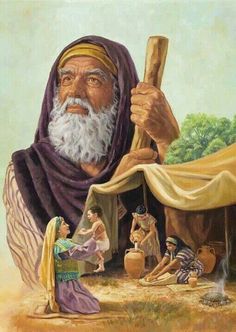
      To many people distraught at the idea of polygamy I would ask, “Do you believe in the Bible? Do you believe in Abraham, the great Patriarch?” How can a practice so wholeheartedly be condemned in the 19th century but be acceptable to you in the past? God is eternal. He doesn’t care about 2000 BC or the 1830s. To Him it is all one eternal round.

      It’s amazing that the staunchest denouncers of plural marriage never speak of Abraham, Isaac, and Jacob. The same Abraham, Isaac, and Jacob whom they pronounce with vigor, “I believe in the God of Abraham, Isaac, and Jacob.” Israel, whom the 12 tribes of Israel come from, exist because of this practice so condemned by modern critics.

      I want to touch back on the “righteous seed” theory. Some I think at least slightly scoff at the idea. It’s such a broad concept that most simple human minds can’t see such a big picture. Couldn’t God raise children to Him in a different way? He’s God, right?

      Maybe.

      But God has always worked through us, here on earth, to do, build, create, and work. He doesn’t magically insert tens of thousands of people because He needs them here. He commands and we either react with faith or with stubbornness.

      I’d like to give a real-life example of this principle of raising seed unto Him.

      I am a descendant of polygamy. Me. Someone you know is here because of this practice. Where would I be if not for this practice? I would have either been born to another family, outside of the covenant, outside of this Church, or I’d still be in line waiting to come to earth.

      I’m grateful for the practice of polygamy. I know it was difficult. I know it was a great test of faith. It was an incredible trial for those who had to live it. Those who endured it faithfully, like my great-great-great grandfather, Benjamin F. Johnson, have blessed me and the life of countless others. I’m grateful to him.

      It is pretty well documented how much Joseph Smith struggled with the principle. He all but avoided it for many years. Do you think Joseph Smith who was already persecuted and hated, driven from state to state, wanted to institute something that would make his enemies more hateful? Do you think he wanted to institute something that gave his enemies more anger and vitriol towards him and the Church? It was hard enough. It was not easy for Joseph Smith to institute polygamy.  Ultimately, he had to learn obedience to all of God’s commands. Even the hard ones. Even the ones he didn’t understand.

      We don’t know exactly why God instituted the practice of polygamy, anciently or modernly. We can guess, we can hypothesize. But like many other principles or workings of God, it comes down to faith. I wouldn’t be here without the faith of someone else who accepted something difficult. It’s a small act of faith on my part to accept and show gratitude for their great faith in times past.