Tag: god

  • Speed of God

    Speed of God

    I recently read a book called ­Project Hail Mary. It’s by the same guy who wrote The Martian. This book has the space travel and physics concept of time dilation involved. I’m an ignoramus when it comes to the physics of this so I’m not going to say anything smart here. Time dilation is the idea that if you’re moving at a fast enough speed, you will age slower than someone moving at a normal or slower speed. See a movie like Interstellar for example. This is related to Einstein’s theory of relativity.

    To think about someone moving at a speed that makes them age slower than others – time dilation – is a beyond complext concept. The book had a comment like, “I’m glad the universe thought to have time slow down as you approached the speed of light.” That made me think, it’s amazing the universe is like this.

    Before I continue, I just wanted to share, this is the beginnings of a thought on how the physics of this complex phenomena might explain something about God, our relationship to Him, and our position to Him in the cosmos. In doing this, because I’m so ignorant on the topic and don’t fully understand it, I’m sure I’ll get something wrong that someone who better understands the science of this topic can point out. That’s fine. I take comfort in the fact that the people out there that adequately understand this concept are roughly 1 per 1 billion so probably unlikely to read my blog.

    This is more a mental exercise for myself.

    So… the faster you move, the slower you age. What is age for us? It is our mind and bodies degrading.

    God is the center of the universe. We all revolve around God. As we move closer to God, we move closer to the center.

    I’ve written about God and time before, here for example.

    Time is definitely different and potentially nonexistent for God. We talk about 1000 years for us being a day for God, in a way for us to try to understand God’s “time” (see Psalm 90:4 and 2 Peter 3:8, and especially D&C 130:4-11).

    God is light. God is in the center. So that would be why 1000 years for us is like a day for God. Time moves slower for Him because He’s at the center. Of course, God doesn’t age, He has a resurrected, perfected, and celestial body, but time moves slower for Him because He moves infinitely faster than the speed of light. He moves at the speed of everything – past, present, and future.

    So at a higher speed or revolution, less time is experienced. God’s mind, power, and faith move at a rate impossible for us to comprehend. Maybe that’s what makes Him in everything, alpha and omega, the beginning and the end. His higher speed puts Him on a higher plane. If we come closer to God, we would have to come closer to His speed and His plane, His level. If we do that, then time would slow down for us. We would be able to comprehend more. We would “age” slower. We would become like Him.

    By the way, this sent me down a wormhole (pun intended) of Youtube videos on time dilation, wormholes, the general theory of relativity, “nothing,” the twin paradox, space, and a plethora of other topics. This all led me to believe, while I can’t properly put into words my exact theory, that there is something to the above. There is something to God being the center. There is something to Christ being “light” which we know we can’t, in this life, move at the speed of. There is something to this physics and God thing. That makes sense given that God would be the master physicist as the Creator of the Universe.

    I’ll leave these musing at this point. Basically, long story short, there is something to God being on Kolob and us and our solar system revolving around Him. More on this as I explore this thought more.

  • Creation – Artificial Intelligence

    Creation – Artificial Intelligence

    Humans create.

    They have children – procreate.

    They think and build. They imagine and construct. They design and fashion. They draw and fantasize and daydream and reconstruct and deconstruct and type and scribble and connect and disconnect and… create.

    As I type, I create. This blog post likely never existed before and likely will never exist, exactly as it is, again (or will it..eternity..brain explode..I don’t know, move on).

    We create so much.

    Isn’t it fascinating to watch humans create?

    I just got sucked into the rabbit hole of AI technology: where it is now, where it could go (spoiler – we have no idea), what it’s doing, what it could do (spoiler – we have no idea).

    At least one brilliant mind is seriously concerned about the fate of humanity over this new creation.

    We’ve all seen Terminator, right? Artificial Intelligence gains self-awareness. Humans try to deactivate it. Artificial Intelligence, in defending itself, launches a nuclear holocaust on humanity. Seems far-fetched, right?

    Well…

    Look at all the creations of humans.

    We create and we create.

    And yet, we can’t figure out how to get along. We can’t agree. We can’t govern ourselves. We can’t take care of each other. We are flawed. We create and we create. And in our creation, there is so much destruction.

    I’m pondering the bigger picture.

    By all historical accounts, humans should not be allowed to create. Or at least, very few should.

    This life, this world, is a testing ground, a sandbox, a play area. We can thrash around and create and destroy and try our hand at being God and see how horribly it goes.

    We will exist for eternity. What if what we’ve seen here, on earth, shows what we could do (if allowed to do so) in an eternity of our creation? So long galaxies, humans have arrived and we’re here to destroy.

    What an experience this life is, to see what we create.

    To see if we can be trusted.

    To see what we do with power, and thought, and imagination.

    I brought up AI because here is another thing we have created. Will it destroy us? It seems so crazy, until it’s not.

    J. Robert Oppenheimer knew too well, too late, what he had created.

    We have no idea where artificial intelligence will go. It is becoming increasingly realistic that it could destroy us. Science fiction becomes our reality every day.

    I have some beliefs about how this world will end, but the details are fuzzy. Humanity will attempt to destroy itself. Through greed and selfishness, hatred and violence, we will self-destruct.

    What role does our technology play in that?

    I heard a near-death-experiencer recently talk about his experience when he died in the mid 2000s. One of the key warnings he was given was to be careful with technology. Control it, don’t let it control you.

    Already today we see a generation becoming controlled by technology. Don’t believe me? Walk outside. How many people are enjoying the weather, “unplugged”? How many have earbuds, wires, phones, screens, devices protruding from their ears, eyes, heads, and hands?

    Technology is wonderful.

    Technology is dangerous.

    We have a limited time in this life to create.

    Many of us won’t play key roles in developing AI technology or shaping the world in (seemingly) grand ways. Still, you create.

    What do you spend your time on?

    What do you create?

  • Pain

    Pain

    The other day I banged my knee against a bed frame so hard that I almost threw up. The pain was excruciating. Then I realized, why am I fine? I’m fine because I know the pain will end in the next couple minutes, then I’ll be fine.

    I haven’t experienced tons of physical pain in my life. I’ve been very lucky in that respect. I imagine the worst thing about pain is not knowing when it will end.

    What makes pain bearable is knowing it will end. It’s the not knowing that can be truly excruciating. For example, take even just the pain of a paper cut. If that painful cut was indefinite, meaning you felt the papercut for minutes, then hours, then days, just as intensely as that first moment when the cut happened, it would be horrible. Papercuts aren’t that bad because the pain passes quickly.

    What about when you don’t know when the pain will end?

    I think that’s the worst kind of experience. Again, I haven’t personally gone through that, so I can’t say from experience. But we’ve all heard stories of or know people with some sort of chronic pain. Pain that doesn’t end would be a challenge due to the mental exhaustion along with the physical pain.

    I haven’t even gotten into mental or emotional pain. Those are different categories that can be completely different levels of unbearable.

    If you’ve read a couple of my posts before, you know where this is going: The infinite Atonement of Jesus Christ.

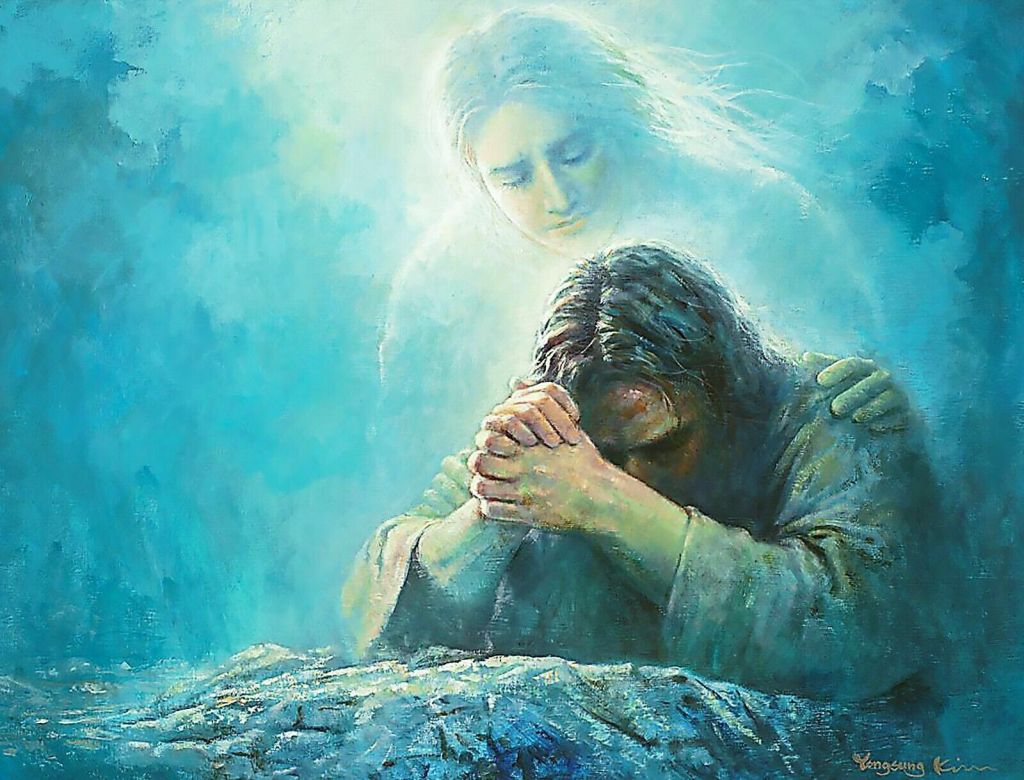
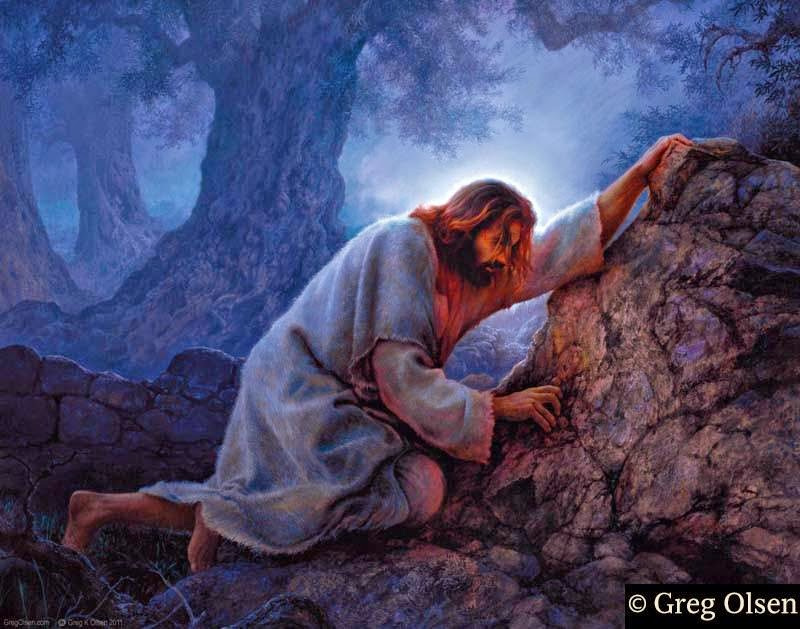
    Did the pain Christ felt in Gethsemane feel infinite? I doubt “infinite” is even close to an adequate word for what Christ felt when he experienced the past, present, and future sins, sufferings, and pains of a universe.

    Luke 22:41-44:

    41 And he was withdrawn from them about a stone’s cast, and kneeled down, and prayed,

    42 Saying, Father, if thou be willing, remove this cup from me: nevertheless not my will, but thine, be done.

    43 And there appeared an angel unto him from heaven, strengthening him.

    44 And being in an agony he prayed more earnestly: and his sweat was as it were great drops of blood falling down to the ground.

    I wonder if the uncertainty of time led to the ultimate request, “If thou be willing, remove this cup from me.”

    It’s hard to imagine what Christ felt in those moments. The “infinite” Atonement of Jesus Christ. Did it feel infinite? Did it feel like it would never end? However it felt, it didn’t feel good.

    D&C 19:18:

    18 “Which suffering caused myself, even God, the greatest of all, to tremble because of pain, and to bleed at every pore, and to suffer both body and spirit—and would that I might not drink the bitter cup, and shrink.

    19 Nevertheless, glory be to the Father, and I partook and finished my preparations unto the children of men.

    I remind myself daily that Christ suffered what He did because He loves me. I owe Him everything. I’m grateful that He was willing to pay the price of my sins and to feel all my sorrows and pains so He can support and understand everything about me.

    I hope during this Christmas season we remember what Christ did for us and why we celebrate Christmas.

  • How did the Trinity come to be? – The Nicene Creed Post 1

    How did the Trinity come to be? – The Nicene Creed Post 1

    Most of my blog posts are personal experiences with little research. They’re mostly just stream-of-thought writing. That’s what I prefer.

    Every once in a while, I want to write about a topic I know nothing about, which results in some (or a lot) of research. My Adam-God Theory post is one that comes to mind.

    I’ve long wanted to write a post about how the Trinity came to be. To prove this, years ago I gave my thoughts on the Trinity in this post.

    And wrote about how I know the Godhead to be true in this post.

    This has been a topic pretty consistently on my mind for a long time.

    Quick definition so we can all follow along (because this isn’t going to be an advanced or complicated post), the Trinity refers to the belief that God the Father, Jesus Christ, and the Holy Ghost are all one being. Most of Christianity believes in the Trinity. The Church of Jesus Christ of Latter-day Saints, through the experience of the prophet Joseph Smith, believe in the Godhead. The Godhead is the belief that God the Father, Jesus Christ, and the Holy Ghost are three distinct beings who are one in purpose (John 17:21-23).

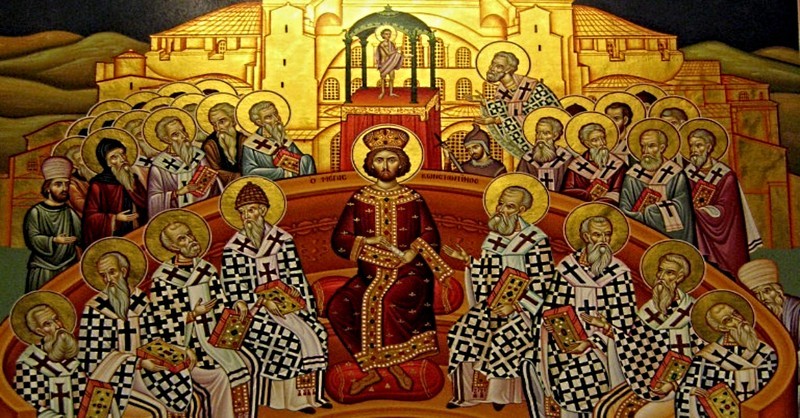
    I’ve long wanted to learn more about how the Trinitarian belief came to be. I know it developed from the Nicene Creed. But if this is a falsehood perpetuated throughout history, how did it become so dominant? I’ve wanted to understand this history better. Part of the motivation to understand this better comes from the dominance of the Trinitarian viewpoint. When I’m trying to relate to other Christians, the Trinity vs Godhead question really becomes an issue.

    To know God you must know who He is. When I talk to a Christian, we both believe in Jesus Christ, but who is Jesus Christ? It’s OK to say we both believe in God and go from there, but sometimes not understanding who God is keeps me and other Christians from really being able to progress and learn from each other.

    Personally, I believe this is why this misunderstanding has been so perpetuated throughout history. Satan is cunning. He knows if we don’t know who our Father is, it becomes so much harder to worship Him.

    Is that an unfair statement for me to make? I can hear all the Catholics and Protestants and Lutherans and Baptists in an uproar when I state that a core belief of theirs has been perpetuated by Satan to confuse them. I understand that this is inflammatory. When I’m told by those same groups of people that my belief that God the Father and Jesus Christ are separate and distinct beings is a lie that Satan has deceived me with, it hurts. So I get it.

    This is why I want to understand where the belief in the Trinity comes from.

    When I read the Bible, it’s so abundantly clear to me. It doesn’t make any sense to me that people can read the Bible and conclude that Heavenly Father and Jesus Christ are one person. And yet, I’m in the minority, so clearly, there’s more to it.

    We all have our biases. I have always known Heavenly Father and Jesus Christ to be separate individuals. I have always known Christ to be my advocate with the Father. I have always known Heavenly Father to be my literal Heavenly Father. Seeing it any other way is hard. I get that others have always seen them as the same being. Others have read the scriptures with them being the same entity in mind. I get it.

    Which leads me to my point.

    As I studied this more, trying to understand it, the more confused I got. How this came to be is so confusing. I wanted to write a post simply explaining the history of the Nicene Creed and how the Trinitarian belief came to be and I’m realizing giving a “simple” explanation is going to take a lot more reading to understand.

    Some things stood out as I’ve studied this topic. I have a 62,000+ word document of research, quotes, and other information from my study of this topic.

    What stands out are the words I come across when reading how the Trinitarian belief came into existence.

    “Argument” – 13 times in my notes.

    “Debate” – 7 times in my notes.

    “Power” – 18 times in my notes.

    These are the words I kept coming across as I studied this topic.

    One word stands out that I haven’t come across thus far in all my reading. That word is “revelation.” In all that I’ve read it’s always “debate” and “power” and “trial” and “gain” and “politics.” No revelation

    I would love for a biblical and historical scholar to give me a crash course on the history of the creeds. For now, I continue to read, and study, and try to understand why the Christian world trusts a gospel principle that was handed down by power and politics, with little reference to the God they were trying to understand.

    I conclude this post without a conclusion because I don’t yet have one. It will be the first of many posts about the Nicene Creed and the Trinitarian belief.

  • Addiction, Freedom, and Satan

    Addiction, Freedom, and Satan

    The title of this post makes pretty clear where this is headed.

    I recently listened to a “Public Service Announcement” at the end of a Hidden Brain podcast episode about resolutions. The podcast had someone on their staff record a message that he would like to share with youth about smoking. Today the dangers of smoking are well documented. Luckily, for children nowadays and future generations, the campaign against smoking has been pretty successful. People definitely aren’t smoking like they were a couple decades ago. But people still smoke. It kind of blows my mind. I’ve written about it before HERE. I can’t emphasize this enough: it blows my mind that people still smoke cigarettes. It makes no sense to me.

    In listening to the long anecdotal PSA about smoking, many thoughts came to mind. Thoughts about the power of this addiction, the power of Satan, and why I’m grateful I never got sucked into that dark habit.

    He started by talking about his Great Aunt who he stole cigarettes from when he started smoking at age 14.

    “My parents and aunts and uncles used to tell us kids when we were little to ask Aunt Do to quit. They thought kids would be more persuasive than they were. I remember one time after nudging, ‘Aunt Do, you shouldn’t smoke,’ she replied, ‘I know honey, but when I think about quitting, I get stressed, and when I get stressed, I smoke more.’

    Loss of control.

    He continued, “Having smoked more than 10 years myself I know how she felt. But smoking clearly cut her life short. It’s a fact that, well, I’m ashamed to admit, hasn’t discouraged my own smoking. The thing is, death is too abstract, lung cancer too far off, and the risk of heart attack too uncertain.”

    Short-term reward versus long-term looking. The world today doesn’t think about 10 years from now, let alone eternity.

    “I’m sure Aunt Do knew, like I do, the risks. That smoking kills little cilia that clean the air for your lungs. That it cuts off the blood flow from to your gums causing your teeth to rot from the inside. That it causes plaque to build up in your arteries leading to stroke and heart attack. A doctor once told me on his smoke break that I just needed to quit before I was 35 and my body could still recover. I’m not sure he was right. I can already hear my laugh sometimes turn into a cough like Aunt Do’s did. But by his measure, I probably have another 10 good years of smoking in front of me. I’m only 25.”

    What is truth?

    “But if you’re 14 and thinking about having your first cigarette, I’m quitting now, and here’s why. Smoking really sucks. Not just when you’re 60 or 70 or 80 if you’re lucky. It sucks when you’re 16, when you’re 20, when you’re 25. Today I can’t run as fast or as far as a nonsmoker. I spend more money on cigarettes than I’d like to think about. But the worst of it are the cravings that come like clockwork even when I’m sleeping.”

    The pull of smoking is extraordinary. He’s going to talk about this more. Visions of Glory talks about individuals who leave this life so addicted to smoking that they continue to linger around this world with the desire to get one more hit of a cigarette. Before you think that’s absurd and completely outlandish and just can’t be true, stop, and think. Do you know anyone so addicted to smoking that when they die it might be the first thing they miss, having a body and the ability to smoke a cigarette? It’s not outlandish to me at all.

    “When you don’t smoke, here’s what you should know. When you’re a smoker life is lived around cigarettes. You’ll be laughing with friends at dinner or totally engrossed in a good book and something will tug at you. And as much as you want to stay in this moment, you’ll be thinking about a cigarette. So, you’ll get up, walk outside, and light up. And it will feel really good. But you’ll wish you were back inside, and you’ll be so tired of trading off these moments for a smoke.”

    More loss of control.

    “If you don’t smoke, you should know that smoking makes a prison out of completely normal situations.”

    Reading his words just made me think about, and appreciate (in a negative way), how powerful Satan is on this earth. He has so much control over individuals through the habits he perpetuates. Of course, the world never looks at it like this. The world says, “I want to smoke so I will” or “I enjoy coffee,” never admitting that they are controlled by these cravings. So many people in this world are contained in prisons of their own choosing.

    “Long flights, concerts, class, anything that lasts longer than a couple hours. These are your enemy, as a smoker. And any time you go on a date, or to a job interview, or to your grandparents’ house, it will be accompanied by a pang of worry. You’ll wash your hands and pull your shirt to your nose and hope they can’t smell smoke. Finally, if you don’t smoke, you should know how hard it is to quit. How much you’ll want to, and fail, to give it up. I’m going to quit on January 1st and to be honest, I’m sad about losing something that’s been a part of my life for so long.”

    How powerful is this poison? So powerful that after describing all the ways smoking is horrible and describing it as “making a prison out of completely normal situations,” he still admits that he’s sad about losing it. This is what I already mentioned. The world says, “I want to smoke,” because admitting you’re a slave to something is much worse.

    “And in the coming weeks without a cigarette, I know the cravings will find a way to twist my reasons for quitting into reasons why I can still smoke. This is the most baffling part of smoking. The way it hijacks your best intentions.”

    “Hijacks your best intentions.” Takes away your control. Takes away your agency.

    “I’ve heard that quitting is the hardest thing a smoker ever does. But also, that whatever pain is meted out in the coming weeks will be totally worth it. Because to be a nonsmoker means to be free to go anywhere and to do anything unencumbered. It means being able to be fully present in each moment if I choose. And so the next time I get on a long flight, or go out to dinner with friends, or see a movie, I won’t be plotting my next cigarette.”

    Quitting is hard. The pain meted out.

    Followed by.

    Worth it. Free. Unencumbered. Fully present.

    It’s striking to me that if any smoker put together a pros and cons of smoking vs nonsmoking the answer would be so obvious. This is exactly what this person was saying. His best intentions are hijacked, he’s in a prison, he can’t think straight when it comes to this addictive poison. Addiction really comes down to one thing. It’s the same thing that was fought over in Heaven before we came here. That one thing is agency, our freedom to choose, our choice. Of course, a smoker always has the choice to quit. All drug addicts have the choice to quit. How many people have we seen incapable of making that choice, no matter how destructive those substances are?

    The same war Satan waged in Heaven, he continues today. He wants to take our agency. He does so through all the tools of the world at his disposal. Those tools include cigarettes, alcohol, other drugs, sports, television, pornography, internet. There are so many addictions out there. This is the war Satan fights with us. He fights to take away our choice. He fights to make us think we have no choice because we need that thing that badly.

    Having spent a large portion of my life addicted, and having that feeling of having no control over what I really want to do, I can now look at this with somewhat of an outside perspective. I’m still fighting some addictions. It’s still a daily struggle choosing good things over mindless things. It’s still a choice every day to use my time to the best of my ability.

    Addiction is powerful and I feel sympathy for anyone caught in its thralls. There is hope, there is choice, there is a way to get away from addiction. We always need help. The power put into addiction from Satan, we need equal power on the other side to be able to conquer our natural inclinations. That power exists. If we turn to that power, to God, and to Christ, who feels and knows all our addictions and how hard it can be, we gain the ultimate reward: freedom.

    Ultimately Christ wants us to be free. That is the battle being fought. We just need to use all our willpower possible to align ourselves with the right, and winning, side. And then we are free.