Tag: humility

  • The Gift of Tongues and a Temple in Guatemala

    The Gift of Tongues and a Temple in Guatemala

    I recently learned a little about the Cessationist movement in Christianity. I learned that they believe many things have ceased in modern Christianity. One of the things they think has ceased is the gift of tongues.

    The Church of Jesus Christ is alive and well as is the gift of tongues.

    The most obvious example of the gift of tongues in Christ’s modern church is shown in the millions of 18-24 year-olds learning and speaking foreign languages to spread the gospel.

    I recently read of a true miracle in tongues, and I wanted to share.

    Allen Christenson writes the following:

    “I was privileged to help in the translation of the temple ceremony into K’iche’, a dialect of the Mayan Indians of Guatemala. In 1991, the Church brought up seven choice native Maya members of the Church to record the ceremony for the first time in their own language. Most had never traveled outside their own country. They arrived when we had a bad cold snap and snow storms last January. In a country where it never snows that was quite a shock. They wondered whether the flakes were volcanic ash, and bundled up with layer upon layer of clothing so that the snow would have no chance of touching their skin.

    The Maya today are for the most part illiterate, particularly in their native tongue. It has only been in recent years that some members of the church have begun to learn to read and write in the Maya language, so that they can read the scriptures and other church publications. This is a great tragedy, because until about 500 years ago the Maya were the most literate people in the Americas, preserving their history and culture with a sophisticated hieroglyphic script in hundreds of folded screen books. The Spanish Conquest in the early sixteenth century was a devastating blow to Maya literacy in Mexico and Guatemala. Great numbers of hieroglyphic texts were burned in an attempt to eradicate “idolatrous paganism.” Native scribes were singled out for persecution to such an extent that within one hundred years, the art of writing had nearly disappeared from among the Maya people. When I was a missionary in the Guatemala highlands, no one I knew could read in Maya. Because I opened most of the areas I worked in, the church was in its infancy and there were no members to prepare for the temple. The closest temple in fact was in Mesa, Arizona, and for a people who earned at best a dollar a day, a trip there was a goal which was simply impossible to even think about.

    Today there is a temple in Guatemala City. The Maya who were brought up to record the temple ceremony for their people had all taken out their own endowments and considered it a great privilege to have a part in bringing the blessings of the endowment to their people in a language that they could understand.

    For the first few days, the Maya were given time to read through their parts, review videotapes of the ceremony to practice their timing and voice inflections, and to prepare for the actual recording. It soon became apparent what an impossible thing we were asking them to do. Most of their homes had no electricity, and the rows of machines and blinking lights were frightening and intimidating. None could read any better than at a grade school level, sounding out each word at a time. Just getting out the words was a frustrating and time-consuming task. We frankly didn’t think that it would be possible for them to become proficient enough to read the text rapidly, much less instill in the words the spirit that such a sacred ceremony demands.

    I will never forget the first day we started to record. We put these poor, humble people in a little glass booth, surrounded by technical gadgets, microphones, and earphones and asked them to relax and speak the words with naturalness and the proper spirit. They were so frightened that they could not speak more than a few words at a time, and those were unusable.

    We all went back to our hotel rooms discouraged and felt that we were going to fail. The next day, I noticed a change in the Maya. They were unusually quiet and serious, but somehow they didn’t seem to be as afraid as the day before. When the first brother, who was assigned to read the part of Elohim, was called on to record his part, he stepped into the recording booth without hesitation. The window was set so high in the booth that we could barely see him, being only 5’4″ tall. He put on his earphones, closed his eyes and looked up momentarily, and then said quietly that he was ready. When I gave him his cue he began to speak in the most beautiful, flowing Maya that I had ever heard spoken. He read through three full pages without error before we had to stop him to check the sound level. When I cued him to stop, He asked if he had done something wrong and looked so apologetic that it broke my heart. I assured him that we just had to do some technical things and that he had done beautifully. The spirit was so strong that it was a physical presence that we all could feel. The emotion of it was overwhelming. The brother in charge of the recording instruments turned to me afterward and simply said, “We have just witnessed a miracle, one of the strongest manifestations of the gift of tongues that I have ever witnessed. His voice, inflection, and timing were as good as the best professional actors that we have in English, Spanish, or other of the more established languages.” When I asked this Mayan brother what had happened since the day before, he smiled and said that he knew the enormous importance of the temple endowment for his people and knew that he couldn’t do it on his own. He and the others had tried as hard as they could but that the words just didn’t come. So he had prayed last night to his Father in Heaven and told him that he just couldn’t do it without His help. He didn’t want his people for generations to come to hear his voice and weakness, but the voice of Elohim. He asked if his Father in Heaven would please come to that sound booth with him and speak for himself. He felt assured and that morning he never doubted that God would be there with him. One by one, each of the other Maya read through their parts with similar power and faith. [Allen J. Christenson, “Account of the Recording of the Temple Ceremony into K’iche’ Maya in 1991,” Personal Communication to Alan C. Miner]

    This is one example of a miracle. Miracles are rarely widely spread or publicized. Sometimes they are quiet, personal experiences. Sometimes the world never knows. But if you seek them out, if you look for them, they are there. Miracles happen every day in the world. Miracles happen every day in Christ’s church. Christ’s church is alive in the Church of Jesus Christ of Latter-day Saints. Miracles have not ceased. The gift of tongues is alive and active.

    Mormon 9:20

    And the reason why he ceaseth to do miracles among the children of men is because that they dwindle in unbelief, and depart from the right way, and know not the God in whom they should trust.”

    Moroni 7:29

    And because he hath done this, my beloved brethren, have miracles ceased? Behold I say unto you, Nay; neither have angels ceased to minister unto the children of men.

    God will never cease to be a God of miracles.
  • Satan is Jesus’s Older Brother

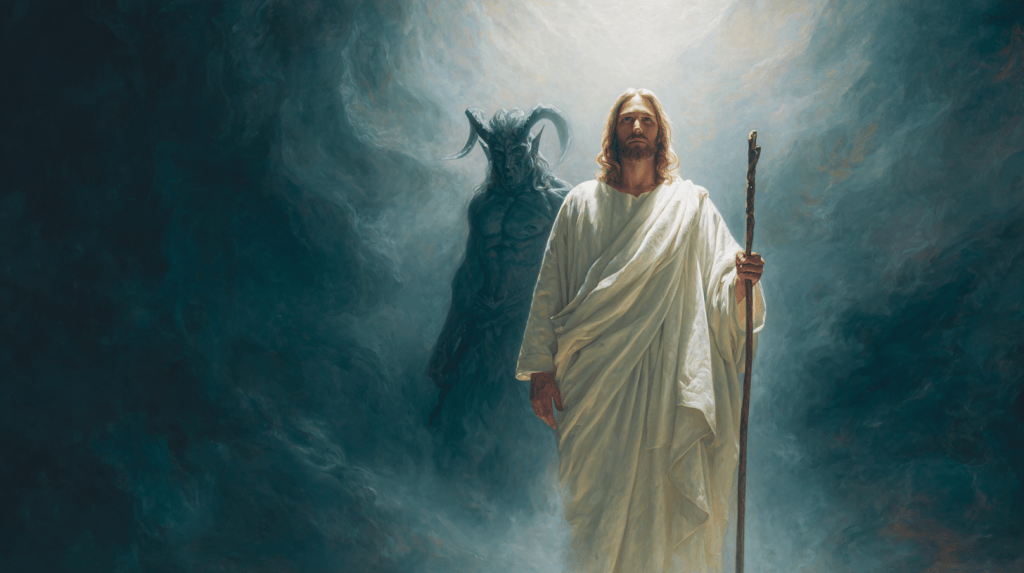
    Satan is Jesus’s Older Brother

    Stay with me.

    Before I go down this path let me acknowledge some things:

    1. We don’t understand how time works in eternity. It’s likely everything I’m about to say is nonsense from the eternal perspective. Still, have some fun with me. I know I got your attention with that title.
      • It’s very possible that God “adopted” billions of intelligences at the same time. Meaning, It didn’t go Satan, then Jesus, then Moses, then you, then me, etc. It’s probably not that simple. Anyways…

    Now that’s out of the way, I think there is a fun thought experiment/argument to be had that despite Jesus Christ having the title of “Firstborn”, Satan might be “older” than Jesus.

    Everything in this world symbolizes Jesus Christ. Everything points to Him (Moses 6:63, 2 Nephi 11:4). 

    There are some individuals from history that are clear types and shadows of Jesus Christ.

    Examples:

    1. Joseph of Egypt
      • Savior of his people and all of Egypt
    2. Moses
      • Liberator of Israel
    3. Nephi
      • Led his people to the Promised Land
    4. David
      • King of Israel
    5. Isaac
      • Inheritor of all that Abraham had and father of Israel (Jacob)
    6. Jacob (Israel)
      • Father of the covenant people of Earth
    7. Joseph Smith
      • Restorer of the Gospel on Earth (through Jesus Christ, of course)
    8. Peter
      • Leader of Christ’s church after Christ’s ascension
    9. Abel
      • In the likeness of his father, hearkened to the voice of the Lord
    10. Ephraim
      • Received the birthright, descendents are responsible for the gathering of Israel

    All of these men represent Jesus Christ in different but very clear and obvious ways. 

    What do all these men have in common? None of them are the oldest in their family. None of them are the firstborn.

    Interesting, right?

    “Well, but, the scriptures say Jesus Christ is the firstborn of God. Clear as day,” said a hypothetical someone arguing against my point.

    What if “firstborn” has meaning closer to heir, covenant son, preeminent one?

    Psalm 89:27 speaking of David, King of Israel, reads:

    “I will make him my firstborn, higher than the kings of the earth.”

    David was the youngest son in his family.

    In Genesis 22:2 God says to Abraham:

    “Take now thy son, thine only son Isaac, whom thou lovest…”  

    But Isaac wasn’t Abraham’s only son. He also had Ishmael. Maybe Isaac was his covenant son. 

    Jeremiah 31:9 reads:

    “For I am a father to Israel, and Ephraim is my firstborn.”

    None of Ephraim, David, or Isaac were the firstborn. Yet they were each described as such in varying ways.

    Now Jesus’s words about Himself:

    “I was in the beginning with the Father, and am the Firstborn” (D&C 93).

    This is a captivating feature of scripture. There is a repeated theme of an older brother rejecting His younger brother who receives stewardship over him. 

    Cain opposed Abel.

    Ishmael yielded to Isaac.

    Esau opposeed Jacob.

    Joseph of Egypt was rejected by his older brothers.

    David was initially overlooked by his older brothers.

    Are these older brothers representative of Satan, the way the younger brother is representative of Jesus?

    Sound familiar? (Satan’s Story and Satan’s Story Continued)

    Maybe all these examples are meant to teach us something. It’s hard to be an older brother and yield leadership to your younger brother. What if Satan had taken another route and humbly accepted Jesus Christ? What if he accepted Jesus Christ’s position as “firstborn of the Father”, the chosen one, God’s beloved? What if Cain didn’t oppose Abel? Where would Cain be now?

    Also, what if Joseph of Egypt’s brothers accepted his position of power over them from the beginning? Joseph wouldn’t have been able to complete his earthly mission of saving all of Egypt. Sometimes, maybe, we need opposition (2 Nephi 11).

    But what happens when older brothers do humbly yield to their younger brother? Joseph Smith’s older brothers were legendarily supportive of his calling as God’s prophet. Esau famously humbled himself and reconciled with Jacob. Moses’s older brother Aaron appears to have accepted Moses’s role as prophet most of the time. Amazing things happen when older brothers can humble themselves.

    What if Laman and Lemuel could have humbled themselves before Nephi? Think of the love, peace, and prosperity that could have existed among the Nephites in the Americas. But then we wouldn’t have had all the lessons the Book of Mormon teaches us about opposition.

    God’s plan is perfect.

    It’s fascinating to look at scripture from a broader perspective, look for patterns, and try to grasp all that God wants us to learn and understand.

    While I prefaced this post saying it could be somewhat silly of an exercise, I stand by it. I think it’s a good exercise to review the scriptures in out-of-the-box ways and try to see the patterns God may be trying to teach us.

    Wherever in the birth order Jesus Christ and Satan landed, we know they were “older.” We know that God chose Jesus Christ to be His Son, the Redeemer of the world, the Savior of mankind. We know God doesn’t make mistakes. I’m grateful for what the scriptures teach me about Jesus Christ and that they can constantly strengthen my testimony of Him and all that He did for me.

  • Repentance

    Repentance

    3 Nephi 11:32 reads: 

    “And this is my doctrine, and it is the doctrine which the Father hath given unto me; and I bear record of the Father, and the Father beareth record of me, and the Holy Ghost beareth record of the Father and me; and I bear record that the Father commandeth all men everywhere to repent and believe in me.” 

    3 Nephi 11:37-38 reads:

    “And again I say unto you, ye must repent, and become as a little child, and be baptized in my name, or ye can in nowise receive these things. 

    And again I say unto you, ye must repent, and be baptized in my name, and become as a little child, or ye can in nowise inherit the kingdom of God.” 

    These were some of the first recorded words Jesus Christ spoke to His other flock in the Americas (John 10:16).

    Hugh Nibley says, 

    “Who is righteous in the Book of Mormon? There’s a very simple definition of righteousness in the Book of Mormon, as in the book of Ezekiel. One is righteous because he is repentant, and a person who is not repenting is a person who is not righteous. That’s all there is to it, because we’re all wicked and we all need to repent all the time. “Say nothing but repentance to this generation” (D&C 6:9). The first word of the Lord to the Nephites was, “This is my doctrine…and I bear record that the Father commandeth all men, everywhere to repent…” (3 Nephi 11:32). You have to do that. And as Ezekiel tells us, if a person has been righteous all his life but he’s not repenting any more, he’s wicked (see Ezekiel 18:20-32). Of course, he may have been wicked all of his life, and if he’s repenting now, he’s righteous. It makes no difference. So, always repent, always keep repenting. “But behold, all nations, kindreds, tongues, and people shall dwell safely in the Holy One of Israel if it so be that they will repent” (1 Nephi 22:28).

    I’ve thought a lot about that Hugh Nibley quote since I read it. 

    Can it be that simple? Is it that black and white? 

    Good person = someone repenting 

    Bad person = someone not repenting 

    Does this mean deathbed confessions are adequate? Does this mean if you confess your sins and repent the day before you die that you are righteous? 

    Yes and no. 

    I believe Hugh Nibley’s point is powerful. Repentance=righteousness. Unrepentance=unrighteousness.  

    There’s another part of this equation. Repentance=change. 

    I think back on the eight years I was inactive from church. One of the most distinct aspects of that time period was not praying. I never prayed. Praying made me feel guilty. Since I was not praying, naturally I was also not repenting. At the time I couldn’t repent. Not only due to the fact that I wasn’t praying, but also because I wasn’t ready. I wasn’t going to stop doing the things I was doing. I couldn’t repent and then go continue to do what I was doing. I hope I’ve never taken for granted the Atonement of Jesus Christ. I know I do. But I try so hard not to. 

    As I’ve been back at church these last 10 years, I haven’t missed a day of repentance. I repent at least once and sometimes two or three or four times a day. My nightly prayers have a consistent feature, no matter what – asking for forgiveness for the mistakes I’ve made. I often try to think back through my day and think of the mistakes I made and the things I could have done better. 

    Repentance causes change. If I repented during the years of my inappropriate behavior, it would have been insincere, or it would have led to change. I wouldn’t have been trying to change. My repentance started when I was ready to change. That isn’t to say I should have waited as long as I did. But I do believe Heavenly Father has an unimaginable amount of patience with us. I think we’ll one day marvel at how much love and patience He possesses.  

    Repentance has a negative connotation. It shouldn’t. Repentance makes us better. As Ivy put it one day when I asked her, “Why do we want to be like Jesus?” 

    “Because He is nice.” Repentance makes us nicer. Repentance makes us better. It isn’t a negative thing at all.  

    Are there nice people that don’t “repent.” Of course. But repentance is bigger than that. It’s a humility. It’s recognizing our faults. It’s recognizing we have nothing without all that God has given us. It is a desire to change and be even better than we were the day before. 

    So are deathbed confessions valid? That’s not for me to decide. I know repentance results in change. Ultimately God will decide. It’s not for us to judge. And that’s the most important point to make. When someone shows up to church for the first time, someone who has made a million mistakes and a million bad life choices; when that person shows up to church, you love them. You love and accept and forgive. Leave the rest for God to decide. A person coming to church and trying to change should be shown as much love as a church congregation can muster.

    The miracle of the Atonement is that it is eternal – backwards and forwards. Forever. Christ is always there waiting for us when we’re ready. When we’re ready to start repenting, then we are ready to start changing, and then we can start to be ready to go see Him again. Hopefully, through so much repentance, we can become like Him. That’s the ultimate goal.  

  • Abraham’s Faith

    Abraham’s Faith

    I had a thought (shocker).

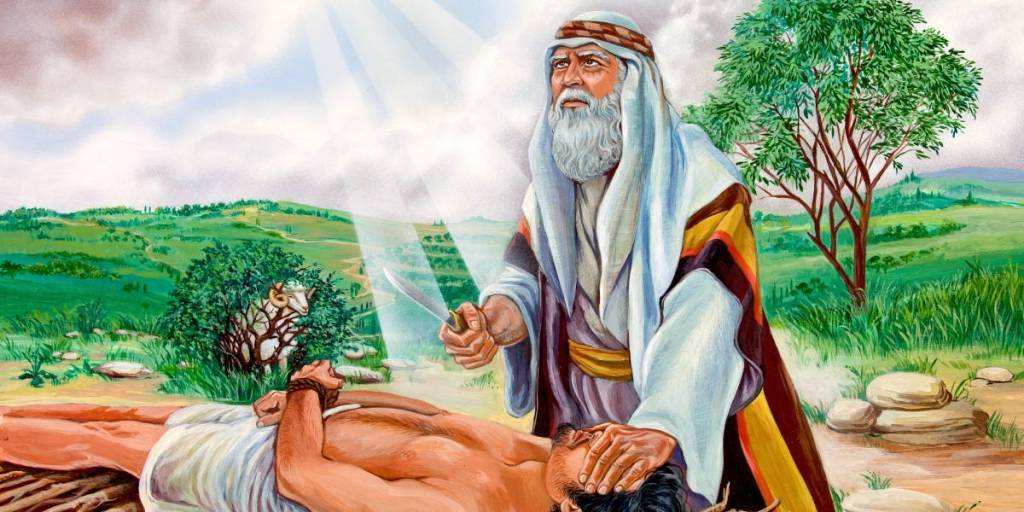
    I shared last week about Abraham’s shared experience of almost being sacrificed by his father.

    Here’s another way to look at it.

    We marvel at the faith of Abraham to sacrifice his son. He didn’t know that God would stop him moments before he went through with it. For all Abraham knew, his son would be dead, gone. And yet, he was still willing to do what God asked him to do.

    We marvel at this faith to do the impossible.

    What about God, when it came to sacrificing His only Son? Well, we would say, God knew the end. He knew His Son would conquer death and be resurrected. He knew His Son’s death would only be temporary. He’s God. He has nothing to worry about. Abraham was just a man. Abraham had no such knowledge.

    Or did he? 

    Faith is the “assurance of things hoped for, the evidence of things not seen” (Hebrews 11:1). Faith, by its nature, is to not have a perfect knowledge of things. Was Abraham’s faith so perfect that he did know, just like God knew with Jesus Christ, that everything would be ok?

    Abraham had a promise from God. God promised Abraham that his seed would be as numerous as the stars in the heavens and the sands of the sea. Abraham had some understanding of the eternities. It didn’t matter to him when the promises of God would be fulfilled. He trusted God. He had a perfect knowledge that God would keep his promises. 

    Now. The gut-wrenching, heart-tearing, indescribable and impossible act of losing your son. The pain. What about that? Abraham had faith that God would even make that right. Abraham had faith that God would only allow him to do what ultimately he needed to do to become who he could become. Abraham trusted God enough to do anything. Why? I think because he knew God loved him. Abraham didn’t have faith that God loved him, didn’t hope that God loved him, didn’t believe that God loved him. He knew. 

    Maybe faith proceeds knowledge.

    If we truly understand God’s love for us, His children, we can do anything, and endure anything.

    Abraham didn’t know the exact result of the sacrifice of his son. But he did know that God kept His promises. And hew knew that God loved him. And whatever the result, it would all work out for their benefit, glory, and growth in the long run. 

    That is faith.

  • Guilt

    Guilt

    Every once in a while, I feel guilt for things I did, the person I used to be, the people I hurt, the pain I caused, the horrible things I was a part of. I know it seems…like I haven’t really changed if I only feel that guilt every once in a while. Guilt is an interesting thing. 

    Every once in a while, I look back on who I was. I’ll feel some guilt for the worst things I was a part of. I think I’ll always feel that, in this life, to some extent. It’s like a prick in my side, as the scriptures would say. It stays with me because I need to be reminded of where bad choices lead.

    The most interesting thing about the guilt of my past is it’s not really there, anymore. By this I mean, when I think about it, I more think about the people I hurt, and I feel sorry. But those feelings have become distant, like an old me.

    I know there will be, or I hope there will be, some people who read this that I did hurt. I know they’re going to read this and scoff. “Oh good for you, you’ve been forgiven. What about me? The person you hurt.” That’s the guilt that still hits me sometimes.

    I have tried to reach out to some people from my past, especially early on. There were things I had to say and people I had to speak to before the weight of my guilt could be lifted off me. It’s intrersting…for years I didn’t let go of some of the weight I was carrying. And it was a weight. It was slowly killing me.

    I haven’t been forgiven because of myself. I haven’t chosen to forgive myself.

    I know a lot of my friends who have only known me in the last few years read this. They might sometimes wonder what makes me so passionate about church, God, the gospel, etc.

    I know a lot of my friends and people who knew me back when I was in full “of the world” mode and they now wonder, “What the heck changed? When did he become a God nut?”

    I know there are people from high school who will think similar things.

    I hope this explains a little bit about why I’ve become so passionate to share about Jesus Christ, to talk about Jesus Christ, to write about Jesus Christ. I hope for everyone who knew me in high school, everyone who knew me through college, everyone who knew me through church, I hope this can explain why I can’t stop talking about Jesus Christ.

    At least once a week I cry in gratitude. Because when I think about my past, it’s not really there anymore. Like I said, some guilt will always be there. But the overwhelming sadness at who I used to be is gone. I shed tears once a week asking God why. Why did He save me? What am I worth to Him?

    I can’t be ashamed of Jesus Christ anymore. I was ashamed and embarrassed to be a believer and outward worshiper of Him for too long.

    Today, I feel with an all too real sensation that He died for me. He suffered, and bled, and was scourged, and was insulted, and humbly took it, for me. Without Him that guilt would still be killing me. I’ve been washed clean by His blood. And that’s why I’ve changed. For all those who used to know me, that’s why I am the way I am now. Because the feeling of what Christ did for me is too real of a feeling.

    This forgiveness didn’t come over night. I didn’t one day feel great. It was months and months of being on my knees, crying, begging. It was reaching out to certain people. It was being humble enough to admit I made so many mistakes. And over time, I don’t know exactly when it happened, but one day my guilt was a thing of the past. Sometimes I feel guilt because my guilt is a thing of the past.

    Guilt is an interesting thing.

    I still make many, many mistakes.

    If there is anyone reading this that is still scoffing, thinking, “Well you were a jerk to me, screw you.” Please forgive me. You can comment here anonymously and really lay into me. I know there are still things I might need to make up for. Christ forgave me but others might still have to. Please reach out to me if I ever hurt you so I can try my best to ask for your forgiveness.

    For anyone reading this who thinks their choices are who they are. Your choices make you only if you continue to make them. As soon as you decide to change someone will be there to change you. Guilt doesn’t have to be with you forever. It can be washed away. Trust me, it’s a miraculous feeling. 

    I sometimes wonder how I could change so drastically. Being a person who said things like “washed clean in the blood of Christ” or “Christ saved me.” I never thought I would say things like that. They sound so corny. Then, in quiet moments by myself I’m overwhelmed by God’s love and that He gave His Son to die…for me. Then I decide I’ll be as corny as I have to be. I can’t be embarrassed anymore. I just can’t. Because I know Christ was never embarrassed to claim me. Through all my mistakes and through all the moments He should have turned His back on me, He never would, He never did. He always loved me. 

    I haven’t been forgiven because of myself. I’ve been forgiven because of Him. It’s the greatest gift I’ve ever been given and it’s free to us all. 

    It’s why I still cry EVERY time I hear this song: 

    And I Stand All Amazed:

    Video “Remembering in Whom We Have Trusted” by Elder Allen D. Haynie 

    *I wrote this sometime around 2019. As I edited it to post in 2026, I felt some sadness at things that are less true than they were 7 years ago. For example, I no longer cry at least once a week. I think about this sometimes. I really used to cry once a week, during the sacrament, when I thought about what Christ did for me. It’s less often now.

    While I want to retain that passion and that burning feeling of gratitude within me for what Christ has done for me, it’s also kind of beautiful that I’m less emotional. Part of the reason I’m less emotional is because I feel less guilt about past deeds. I think over time the Atonement of Jesus Christ has more and more healed my soul and my guilt.

    I still owe Him a tremendous debt of gratitude. I still owe Him everything. I hope to hold to those emotions while also being able to let go of past guilt as best I can. It’s a balance. A balance afforded me by the Great Healer.