“Ask not what your country can do for you – ask what you can do for your country.”
John F. Kennedy’s famous quote given in 1961. I think this has become a great weakness of humans today, and society as a whole. There are so few asking, “what can I do for you” and so many asking, “what’s in it for me?”
There seems to be a great falling away from the Church of Jesus Christ of Latter-day Saints. There is a great falling away from religion in general. I think part of this falling away is based on this “me first” way of thinking. What does a church do for me?
I believe there might be a plague in the Church of Jesus Christ of this way of thinking. We all know someone who has left the church for whatever reason. All the reasons aside, there’s often a statement included that the church wasn’t doing it for them anymore, the church wasn’t helping them, or they didn’t see the need of the church.
I would say, ask not what your church can do for you, but what you can do for your church.
Now, to be clear, the Church of Jesus Christ of Latter-day Saints is the greatest blessing in my life, both temporally and eternally. It saved me from the gutters of this life. It has provided me all that is wonderful and beautiful about life. It has provided me a stable family that loves me. It has provided me a wife and daughters who I love. It has provided me a foundation to hold to in a world that tosses us all around. More than all these blessings here, it has also blessed me eternally with a perspective on why I’m here, where I’m going, and what’s truly important. It has provided me light. It has provided me hope. It has provided me love. It has provided me everything.
I say again: the Church of Jesus Christ of Latter-day Saints which is how I know of the Gospel of Jesus Christ and Christ’s love for me is the greatest blessing in my life. Both here and for forever.
That said.
The Church (and gospel) of Jesus Christ is not here on the earth for what it can do for me. It is here for me to learn what I can do for others. The Church of Jesus Christ is not here because of what it can do for you. It’s here to help you learn what you can do for others. The Church is a vehicle by which you can learn to be like Jesus Christ. I wrote about this in my post Do We Really want to be like Jesus.
I think when we truly understand this, the world changes. It’s no longer, “what do I get out of this?” It becomes “what can I do to help someone else get something out of this?” This is what it’s all about. Love. Fellowship. Support. That’s why the Church is here. Not to bless your life. So you can bless lives.
I’ll conclude with one last question, I hope you will truly ponder: did Jesus ever ask, “what’s in it for me?”
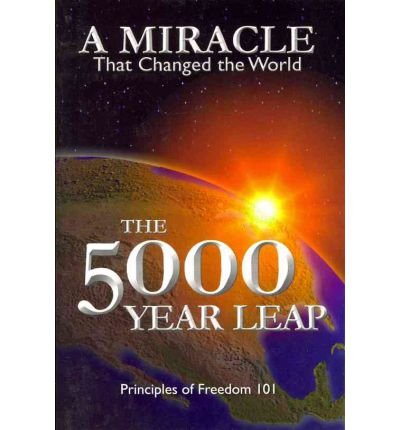
These are thoughts from a book I read recently called A Miracle that Changed the World. It was an awesome book that laid out just how spectacular the establishing of America was. This was a section of the book I had some thoughts on. I’m quoting sections of the book with my thoughts.
p. 52:
“The Tide of Reform
“Many Americas became extremely self-conscious about their lack of “public virtue” because of non-involvement in the affairs of government. They began to acknowledge their obsession with self-interest, the neglect of public affairs, and their disdain for the needs of the community as a whole. Gradually, a spirit of “sacrifice and reform” became manifest in all thirteen colonies.”
This occurred in America in the couple of years leading up to the Declaration of Independence being signed. Is it any coincidence that a spirit of sacrifice, public virtue, and selflessness preceded the greatest revolution in the history of the world and the rise of the greatest nation ever to exist on earth? God needed a self-sacrificing and humble people to inherit the new world. When they exhibited these qualities, they became His chosen people to enact this major event. This led to a revolution and the freedom from tyranny that allowed the explosion of religious freedom that God planned, that couldn’t have happened under the rule of a monarchy. It started with sacrifice, service, and humility.
“In the eyes of the Whigs, the two or three years before the Declaration of Independence always appears to be the great period of the Revolution, the time of greatest denial and cohesion, when men ceased to extort and abuse one another, when families and communities seemed peculiarly united, when the courts were wonderfully free of that constant bickering over land and credit that had dominated their colonial life.”
Two things especially stand out to me from that statement –
“families and communities seemed peculiarly united.”
From the Family Proclamation: “We call upon responsible citizens and officers of government everywhere to promote those measures designed to maintain and strengthen the family as the fundamental unit of society.”
As the fundamental unit of society, strong families make for strong society. No wonder Satan has so adamantly attacked the family. Look at divorce rates, look at what has happened to the American family. The dismantling of families is the the beginning of the downfall of a great society, and we’re seeing it happen right before our eyes.
“the courts were wonderfully free of that constant bickering…”
Could the 13 original colonies have broken from the greatest world power at that time, colonies v. Greatest World Power, if they were busy bickering amongst themselves? It took unity for the freedom of America to be established.
D&C 38:27: “be one; and if ye are not one ye are not mine.”
This is what we need – Americans to become self-conscious about how selfish we’ve become. This is the eternal principle of unity. America needed to be united under one cause and one heart before they could break free from tyranny. God wants us to be one. What has happened to that unity?
I read in a Doctrine and Covenants commentary how early church members, going back to the very earliest days of the church, were advised to avoid courts. It was said that if a dispute couldn’t be resolved by arbitration, then there was discord and discontent too strong amongst the parties, and they needed to evaluate what they truly valued. One early church leader, Oliver Cowdery, was chastised for becoming too involved in the courts, and it ultimately began to descent towards his excommunication.
“When Oliver moved to Missouri in 1837, he sought to alleviate personal debts by starting a legal career. Witnesses testified that Oliver had urged people to sue others in court who “fired guns in town,” who broke “the Sabbath day,” he “frequently solicited for business in collecting debts,” and “urge[d] on lawsuits with others.””
There can’t be unity where there is constant bickering and lawsuits. Those needed to be removed from public standards before the 13 colonies could think to stand up against Britain.
The book continues:
“How the Moral Reform Accelerated the Revolution
“Many Americans became so impressed with the improvement in the quality of life as a result of the reform movement that they were afraid they might lose it if they did not hurriedly separate from the corrupting influence of British manners. They attributed this corruption to the monarchal aristocracy of England. Even Americans such as John Jay, Robert Morris, and Robert Livingston were beginning to see that the people were exhibiting a potential capacity for virtue and morality which would guarantee the success of a free, self-governing society. Therefore, it became popular to express the sentiment that the sooner they became independent the better” (emphasis added).
The underlined portion is the part that stood out to me. Imagine if society today could be said to have such a high standard of virtue and morality. This is what guaranteed the success of the United States: A virtuous and morally upright people. This is why they could self-govern themselves, because they self-governed in righteousness. Imagine describing our society like that today – excess of virtue and morality.
The definition of virtue is “behavior showing high moral standards.”
The definition of morality is “principles concerning the distinction between right and wrong or good and bad behavior.”
We couldn’t be farther from such a standard. We’ve gone so far off the path that we have reversed morality so that right is wrong and wrong is right. We have molded morality to be what we want it to be. The early Americans who established this nation were moral and upright in all their dealings, which allowed them the honor of being the people to establish the most free, most righteous, and most powerful nation in history. Freedom and righteousness are power.
Another motivating factor for the colonies wanting freedom from England was to avoid developing all the negative attributes of the British.
“British influence was already taking its toll. One alarmed American wrote, “Elegance, luxury and effeminacy begin to be established.” David Ramsay declared that if Americans had not revolted “our frugality, industry, and simplicity of manners, would have been lost in an imitation of British extravagance, idleness and false refinements” (emphasis added).
America has gotten closer to extravagance, idleness, and false refinements than frugality (look at our national debt), industry (look at our bail outs), and simplicity (look at social media).
It’s time for unity in America. It’s time for virtue and morality. It’s time to protect and re-establish the importance of the family. It’s time to return to frugality, industry, and simplicity. If America can return to these values, maybe it stands a chance to stay a chosen nation and be protected from the tribulations that are to come.
I don’t think anything makes me feel closer to God than staring into the eyes of my babies. I’ve written about it before HERE. I don’t remember this specifically with Ivy, though I’m sure it happened. But with Sage I’ve stared into her eyes and it’s the most outstanding, humbling feeling.
What did I do to deserve this gift?
As I hold Sage and she begins to drift off into sleep, while comfortably in my arms, I wonder what I did to deserve so much trust. She is so comfortable in my arms, so content, so peaceful, so trusting. Why does she trust me? What did I do to earn that trust?
Nothing.
Or maybe everything.
I don’t know how Sage, Ivy, and I interacted before coming here. Before coming to earth were we best friends, running around, shooting hoops, reading books, taking walks? Maybe I did earn that trust.
What did I do to earn the trust of God, to send His daughters to me?
As I stare into Sage’s eyes, I see the eyes of God.
She is His daughter. She is of His lineage. She is a princess, not of me, but of Him. And as I stare into her eyes, I think that’s the overwhelming, outstanding, humbling feeling I get, that I described above. It’s looking into the eyes of God.
This will be slightly out of brand for my blog. I love basketball so it’s surprising this is the first true basketball commentary I’ve written.
Anyways,
Kevin Durant is without question one of the best players in the NBA right now (when healthy), and one of the most talented players of all time. He is an extraordinary basketball player. It was big news a couple weeks ago when he requested a trade from his current team, the New Jersey Nets. It was especially relevant in Arizona because Durant listed Phoenix and Miami as his two preferred destinations.
A quick history on Kevin Durant for those that don’t know –
Durant was on an off-the-charts talented Oklahoma City team that had 3 future MVPs on the roster. That Oklahoma City Thunder team gave a record breaking 73-win Golden State Warriors team all it could handle. The Warriors came back from down 3-1 to the Oklahoma City Thunder. That Warriors team then lost to the LeBron led Cavaliers in the finals.
After the Warriors lost to the Cavaliers, and beat Durant’s Thunder, Durant left his team to join the record-breaking Warriors. A true, “if you can’t beat em, join em.” I didn’t hate this move by Durant like a lot of basketball fans did. As a lover of basketball, I could see that Durant hated playing with Russell Westbrook. From watching Durant play with Westbrook, I could understand Durant’s frustration. He wanted to play with a real team. Draymond Green, Klay Thompson, and Steph Curry made basketball look so fun. If I could play with any NBA team, it would hands down be the Warriors. They play basketball right. I understood Durant’s decision.
Fast forward some years. The Warriors win two more championships in 3 years. Durant is the Finals MVP both times. Here’s the thing though. The Warriors were never Durant’s team. It was always Steph Curry’s team. No matter how phenomenal Durant was. He couldn’t be loved in the Bay Area the way Steph was.
This led Durant to leave again. Always looking for the greener grass. He joined the Nets and hitched his wagon to a known enigma: Kyrie Irving. I won’t go into all the details, but the Nets experiment went disastrously. About as bad as it possibly could. Durant wanted to go to New Jersey to make it his city, the way San Francisco was Steph’s city. It exploded in his face.
So here we are, full circle. Durant is wanting out again. Looking for greener pastures, again.
Here’s the amazing thing I’m sure the casual NBA fan has missed.
What were the two teams Durant said were his two most desired destinations to be traded to? The Suns and the Heat. Who was the number one team in the west last year?… the Suns. Who was the number one team in the East last year?…the Heat. Interesting.
When Durant left the Thunder, he got destroyed in the media for leaving to join a better team. Despite being the player that took the Warriors over the top, potentially making them the best team in NBA history, he was never satisfied. He always seemed jaded by how he was bashed for the decision, and the perceived lack of love and appreciation he received for his basketball brilliance.
Here we are. Years later. He’s making the same decision. He went to a team to make it his own. It was disastrous. So, he’s trying to go to another team that already has leadership and join them.
How does Steph Curry tie into this?
Steph Curry is a leader of men; Durant is a lone ranger. Durant is not a leader of men.
Durant thinks because he can recruit talent to play with him, that makes him a leader. Recruiting talent doesn’t make you a leader. Elevating those around you makes you a leader. When has Durant elevated others?
The dichotomy of Kevin Durant is wanting to be a part of good culture, then ultimately wanting to be the good culture himself. But you can’t be the good culture by the simple fact that you want to be the good culture. Good culture is humility, self-sacrifice, team before individual. Durant acts like that’s what he wants, but then he leaves the greatest team of all time because he wasn’t getting the credit he felt he deserved. He went somewhere else thinking he could have it all. A talented team and a city that loved him.
Look who he gravitated towards in his recruitment efforts– another lone wolf, unique, kind of weird individual – Kyrie Irving. Look who else he brought in – a strip club attending, come in out of shape, (selfish), James Harden. These aren’t culture builders. What happened in Golden state doesn’t happen every day. And it does not happen by accident. It’s not every day that you find immensely talented people that are willing for it not to be all about them. Kevin Durant was never interested in it not being about him. That’s the dichotomy.
Steph Curry brought Kevin Durant in and embraced him. He didn’t care about the limelight. He cared about winning. He proved that. Two MVP trophies that did not go his way. Why? Because he had the humility to say, definitively, “it doesn’t have to be about me.” With Steph Curry, it’s truly about the team.
Steph Curry doesn’t try to be humble. He doesn’t try to be a uniter of men. He just is those things. They come naturally to him. He is a leader. These things don’t come naturally to Kevin Durant.
This isn’t an indictment of Kevin Durant as a person and definitely not as a basketball player. Not everyone is a born leader. It may be unfair to compare him to the most selfless superstar in NBA history, and I don’t think it’s even close. Who has a higher combination of talent, accolades, and humility than Steph Curry?
That said, Kevin Durant brought this comparison on himself. He had it all. Championships. A great team. Great teammates. He left that because he wanted to do it himself. When things got hard, he bailed ship faster than Kyrie bails a vaccination center. Is it any surprise that his two preferred destinations are where there’s a solid team, solid culture, solid comradery, and solid leadership?
Durant thought he wanted to be a leader of men. He quickly realized he only wanted to play basketball. That’s fine. Hopefully, though, he doesn’t go to Phoenix or Miami, win championships, and then realize he’s still not happy. Even though, if that were to happen, it seems like a foregone conclusion that would be the result.
I had a dream last night. In it I was going down a stream. I had the feeling of leaving civilization for the wilderness. I came to a cliff. I climbed to the top and on the precipice there was a small and shabby tent erected. I went inside and there was an old prophet. I spoke with him.
A new prophet came. The new prophet was well dressed and well-kept, not like the old prophet living in a tiny tent on the edge of a cliff. The new prophet was respected, and I knew he came from a comfortable home. He was well regarded by society and lived comfortably in the world. He was told he had to take the place of the old prophet and live there in the wilderness, in a tent.
When I woke up from this dream, I had a feeling it was important, but I couldn’t figure out why.
What was this dream telling me?
I write down all my dreams. But this one felt important.
Was Russell M. Nelson the new prophet? Was he of the world? Was he flawed? What was the dream telling me?
As I meditated in the morning, I continued to ponder this question. On my drive into the office, I prayed to know if there was something I was supposed to glean from this dream. I asked specifically that if there was something important that I was supposed to learn to please allow my reading for the day to guide my mind to understanding.
I’m in Mosiah chapter 3 and Doctrine and Covenants section 133 respectively in my daily scripture study. A few hours later I was reading verse 71, exactly where I’d left off the day prior, of section 133, which reads:
“Behold, and lo, there are none to deliver you; for ye obeyed not my voice when I called to you out of the heavens; ye believed not my servants, and when they were sent unto you ye received them not.”
Alongside D&C I’m reading a commentary. The commentary for verse 71 said:
Why Are the Prophets Rejected?
President Spencer W. Kimball commented:
“Various excuses have been used over the centuries to dismiss these divine messengers. There has been denial because the prophet came from an obscure place. ‘Can there any good thing come out of Nazareth?’ (John 1:46.) Jesus was also met with the question, ‘Is not this the carpenter’s son?’ (Matt. 13:55.) By one means or another, the swiftest method of rejection of the holy prophets has been to find a pretext, however false or absurd, to dismiss the man so that his message could also be dismissed. Prophets who were not glib, but slow of speech, were esteemed as naught.…
“We wonder how often hearers first rejected the prophets because they despised them, and finally despised the prophets even more because they had rejected them. Even so, why else is the record of rejection so complete? The cares of the world are so many and so entangling, even very good people are diverted from following the truth because they care too much for the things of the world.…
“Sometimes people let their hearts get so set upon things and the honors of this world that they cannot learn the lessons they most need to learn. Simple truths are often rejected in favor of the much less-demanding philosophies of men, and this is another cause for the rejection of the prophets.
“But while there are various excuses for rejection, there’s a certain cause for this sad record. It must not be passed over: the cares of the world, the honors of the world, and looking beyond the mark are all determined by a persuasive few who presume to speak for all.…
“The holy prophets have not only refused to follow erroneous human trends, but have pointed out these errors. No wonder the response to the prophets has not always been one of indifference. So often the prophets have been rejected because they first rejected the wrong ways of their own society.
“These excuses for rejection of the prophets are poor excuses. The trouble with using obscurity as a test of validity is that God has so often chosen to bring forth his work out of obscurity. He has even said it would be so. (See D&C 1:30.) Christianity did not go from Rome to Galilee; it was the other way around. In our day the routing is from Palmyra to Paris, not the reverse. Just because something is in our midst does not mean that we have been in the midst of it. We can daily drive by a museum or an art gallery but know nothing of what is inside.
“The trouble with rejection because of personal familiarity with the prophets is that the prophets are always somebody’s son or somebody’s neighbor. They are chosen from among the people, not transported from another planet, dramatic as that would be!…
“Of course, rejection of the holy prophets comes because the hearts of people are hardened, as people are shaped by their society. Yet even when the hardening is swift, it can also be subtle. Who, for instance, a scant twenty years ago would have foreseen the massive use of abortion in society today? Like all the diseased doctrines of the devil, the practice is pleasing unto the carnal mind.
“Prophets have a way of jarring the carnal mind. Too often the holy prophets are wrongly perceived as harsh and as anxious to make a record in order to say, ‘I told you so.’ Those prophets I have known are the most loving of men. It is because of their love and integrity that they cannot modify the Lord’s message merely to make people feel comfortable. They are too kind to be so cruel. I am so grateful that prophets do not crave popularity.” (In Conference Report, Apr. 1978, pp. 115–16; or Ensign, May 1978, pp. 76–77.)
It wasn’t until the very end of that statement from Spencer W. Kimball that it hit me, and I remembered – I asked for guidance in what I read today to help with my dream. I dreamed of prophets, now I was reading a long commentary from a prophet about why prophets are rejected.
I thought back on my dream. I had correctly believed that Russell M. Nelson was the “new prophet.” What I incorrectly interpreted was that Russell M. Nelson was “of the world” or wrong in some way. My dream gave me a feeling that he was flawed. That he was attached to the comfortable home and respectful world he lived in.
After reading that comment from Spencer W. Kimball, I realized there was no flaw in Russell M. Nelson.
The attacks on prophets are starting to escalate in our current society. See the recent backlash against Jeffrey R. Holland as an example.
The eternal and correct view of prophets on gender, marriage, and the importance of the family is under attack. Prophets will not deny truth. They will continue to speak truth even as they are rejected by the world.
Nobody embodies a “loving man” more than Jeffrey R. Holland. If you’ve ever watched one of his tear-filled and tear-jerking General Conference addresses, you know that the man emanates love for us, for followers of Jesus Christ and for all of God’s children.
“Those prophets I have known are the most loving of men. It is because of their love and integrity that they cannot modify the Lord’s message merely to make people feel comfortable.”
No statement has ever fit Jeffrey R. Holland more accurately.
I started making connections between my dream and what it was trying to tell me, so I went back and re-read where I was at in Mosiah 3:18, 19 (the verses I read before D&C that day). It reads:
18 “For behold he judgeth, and his judgment is just; and the infant perisheth not that dieth in his infancy; but men drink damnation to their own souls except they humble themselves and become as little children, and believe that salvation was, and is, and is to come, in and through the atoning blood of Christ, the Lord Omnipotent.
19 “For the natural man is an enemy to God, and has been from the fall of Adam, and will be, forever and ever, unless he yields to the enticings of the Holy Spirit, and putteth off the natural man and becometh a saint through the atonement of Christ the Lord, and becometh as a child, submissive, meek, humble, patient, full of love, willing to submit to all things which the Lord seeth fit to inflict upon him, even as a child doth submit to his father.”
“And the infant perisheth not that dieth in infancy.”
“but men drink damnation to their own souls except they humble themselves and become as little children.”
“For the natural man is an enemy to God.”
“And becometh as a child.”
“even as a child doth submit to his father.”
“Who, for instance, a scant twenty years ago would have foreseen the massive use of abortion in society today? Like all the diseased doctrines of the devil, the practice is pleasing unto the carnal mind. Prophets have a way of jarring the carnal mind.”
I think my dream was reminding me what I already know to be true. We are in the time where our society has fully rejected the prophets. The attack on them is going to increase. Russell M. Nelson has been a respected heart surgeon, kind, gentle, grandfatherly figure. I believe we are quickly approaching the time that he will be cast into the wilderness and hated by a world that has always hated prophets. I believe this is what my dream was telling me.
Those of us with faith in Jesus Christ and His anointed servants must keep firm in our faith in Him, and in His servants. Don’t be shaken by the attacks on His chosen servants. If you do, your faith in Him (Jesus Christ) can be shaken next. Trust in whom He has chosen. Follow them as you follow Him. The Lord’s prophets will not lead us astray. Russell M. Nelson is the Lord’s anointed and he is our prophet. As the world turns on Jesus Christ’s prophet, we must support and protect him from a world that will hate what he and our Lord stand for.
For more on this topic, I read this blog post that elaborates on the dangers of choosing what we do and do not want to believe from prophets. Click the image below to read the post:











 No Coincidences