
Tag: love

  • Yelling Coaches

    Yelling Coaches

    I grew up with a lot of yelling coaches. There’s one in particular I still have nightmares about. He was a coach who communicated in only one way: yelling as loudly as possible. I always had the feeling he hated me. As an adult, looking back, I haven’t gained a new perspective on this. It hasn’t become one of those, “He yelled at me to make me stronger, and he really did care about me.” No. I still think he hated me.

    I didn’t respond well to yelling.

    One of my concerns when I started coaching basketball 5 seasons ago was how I would handle yelling. As I mentioned in How do we speak to others, I have an inherent aversion to yelling. I didn’t want to yell period, let alone at my girls. I was worried how the girls I coached would respond to me if I wasn’t willing to yell at them. Would they respect me? Could I discipline them?

    What I’ve found, and I’m grateful to report, is that in my experience you don’t need to yell at anyone to get them to respect you. A quiet, private chastisement or loving criticism is 1000 times more effective than yelling or publicly embarrassing a player.

    There was one game I’ll never forget. We were beating the team badly in the second half, but it hadn’t always been that way. It was a close game through the first half. But as the second half got going, their coach started to get flustered. The coach was yelling at the refs and their players constantly. It was a classic case of a coach losing their cool as the game stayed close. This was obvious from my seat. As the coach yelled at the refs more, their players lost focus and started complaining about the officiating as well. Then the coach started turning their frustration on the players, yelling at them after turnovers or mistakes. I saw their team quickly devolve. Players were throwing their hands up in frustration. After every play, they were looking to their coach to make sure they weren’t about to be yelled at. It reminded me so much of my time playing for my yelling coach.

    That was the reason our lead extended in the second half until we were blowing them out. I always wonder how a coach can expect their players to stay calm and composed if the coach themselves is unable to do so.

    At one point in that game, when the opposing coach was yelling at one of their players, a player on my team who was sitting next to me on the bench looked up at me and said, “Thank you.”  I replied, “What?” and she said, “Thank you for not being like that coach and yelling at us.” That was about the best coaching compliment I’ve ever received.

    I explained to that player my coaching philosophy. Yelling doesn’t help. All yelling does is put everyone on edge.

    That same player, at the end of the season, gave me a card with a note that read, “Thank you so much for this season. I loved playing with you as a coach, thank you so much for being the coach. I hope you have a great time with your wife and Ivy” (this was before Sage).

    If you’re wondering why and how coaching is rewarding, there it is.

    So, do I yell? The season from this example (3 seasons ago now), I actually had to apologize to my team on a couple occasions. There were a couple games where I wasn’t proud of how I acted on the bench. I lost my cool, exhibited frustration on the bench, and sometimes yelled. One time I snapped at a player in the heat of a game. I felt really bad about that. I pulled that player aside afterward and apologized. At practice after a game where I got frustrated and started yelling, I explained to the team my philosophy: how can you stay composed if I don’t? I told them I was disappointed in my behavior and planned to be better.

    I hope that taught those kids something about accountability. If I don’t hold myself accountable, how should I expect to hold them accountable? I doubt they’d ever had a coach admit to being wrong. I wonder, how can we expect these athletes to respect someone who doesn’t admit when they’re wrong?

    One more story from this last season, our first at Notre Dame Prep. We had a really good team this year. We were 15-0 with two games to go. I knew this second to last game would be our toughest test. At halftime, my worries were justified as we were down two points. Throughout the first half I had to constantly reign myself in to keep myself from losing it on my players. They weren’t playing like themselves and I was disappointed. It was only after that I realized they were doing their best, but the lure of that undefeated season had really gotten into their heads. As I was walking from our bench to our locker room, I was prepared go crazy on my team under the guise of lighting a fire under them. If you’ve played serious sports, all these coaching tropes probably sound familiar.

    As I walked from our bench, I received wise words from Cameron. He said, “Before you go in there, remember that these girls have never been down at halftime.” He clearly saw in my face what was about to happen in that locker room. I’m glad he did. He saved me from what would have been a mistake. He was right. These girls didn’t need to get more flustered by not only being down at halftime but then getting yelled at in the locker room. How could I expect them to be composed if I wasn’t? Instead, I put a smile on my face, walked in, and told the girls how awesome it was to be in a close game for once. I then got into the things we needed to do better.

    Now, our team had some stern halftimes throughout the season. As a coach, you’re perpetually trying to lift your team higher, no matter how much you’re winning by. But, what would I have taught those girls if, in the one game they were losing, I walked in and blew a gasket? I would have taught them the worst possible thing – that habits, and effort, and sportsmanship, and accountability were not as important as winning and losing. That is not a lesson I want to instill in any young person.

    As for yelling productively, another fear I had, that didn’t end up being a problem. I used to wonder if I could coach when I don’t like to raise my voice at all. I quickly learned, that in the intensity of a game, I can’t help but raise my voice – to the players on the court, so the ref can hear a question I have, in the huddle over a crowd. This is what I consider productive yelling. My fear of not being able to yell during a game is lost. If anything, I need to tone it down. Those games can get exciting and intense and sometimes I’m tempted to run to half-court in the middle of a play to call a timeout because the ref won’t look at me (that happened).

    Productive yelling is good. Yelling to try to demean a player or to get their respect is not. Especially when that yelling is insulting or embarrassing, which it often is. I didn’t respond well to yelling when I played and it’s my experience that a lot of kids don’t.

    Winning is fun, but it’s not our primary goal as a coaching staff. These girls will all go on to have jobs, be professionals, get married, have kids, and do all the things that make this life rewarding and challenging. Our primary goal as a coaching staff is to prepare our student-athletes to be prepared for life. Basketball will pass. But learning to keep your cool under pressure, have confidence, do your best, and treat and speak to people with respect will better them for life.

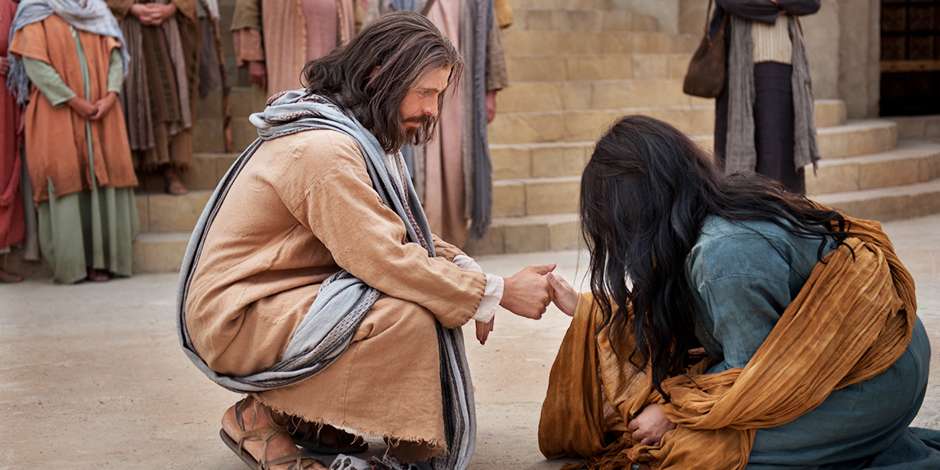
  • An Epistle from the New Testament Apostles

    An Epistle from the New Testament Apostles

    I read a book titled An Epistle from the New Testament Apostles.

    A sentence in the second paragraph of the preface caught my attention and helped me to read this book in a different light. That sentence read:

    “Imagine for a moment how you might feel if you were to go to your mailbox only to find there a long letter addressed personally to you from the First Presidency and the Quorum of the Twelve Apostles as those church leaders were constituted shortly after the resurrection of Christ.”

    Huh. Do we read the Bible in this way? Do we read the Bible as if Simon Peter, Paul of Tarsus, or John the Beloved were writing to us? How much more power comes from the words as we consider them a personal letter directly sent to us? What is the Bible really, but a letter sent directly to us from these prophets? You could also consider the Bible a letter sent to you from God.

    I’d like to share a part of this book that was especially significant to me. As I said, the book takes all the epistles of the prophets in the New Testament and categorizes them. It’s also worth noting that where there are multiple translations or interpretations of what may have been originally written, this book showed some of those different options. Keep that in mind when reading the quotes below. One category that stood out to me was titled:

    Unity in the Church

    From James 3:14-16 “But if ye have bitter envying and strife in your hearts, glory not/do not assume superiority over/ and lie not against the truth. This wisdom descendeth not from above, but is earthly, sensual, devilish. For where envying and strife is, there is confusion and every evil work.”

    Sounds like Christianity today.

    Another section.

    A Call to Unity in the Body of Christ

    From Ephesians 4:1-6 “I therefore, the prisoner of the Lord, beseech you that ye walk worthy of the calling wherewith ye are called, With all lowliness and meekness, with longsuffering, forbearing one another in love; Endeavouring to keep the unity of the Spirit in the bond of peace. There is {In} one body, and one Spirit, even as ye are called in one hope of your calling; One Lord, one faith, one baptism, One God and Father of all, who is above all, and through all, and in you all.” 

    Ephesians 4:11-15: “And he gave some, apostles; and some, prophets; and some, evangelists; and some, pastors and teachers; For the perfecting of the saints, for the work of the ministry, for the edifying of the body of Christ: Till we in the unity of the faith, all come and of {to} the knowledge of the Son of God, (MISSING ERASED CONTENT FROM KJV). That we be no more children, tossed to and fro, and carried about with every wind of doctrine, by the sleight of men, and cunning craftiness, whereby they lie in wait to deceive, But speaking the truth in love, may grow up into him in all things, which is the head, even Christ.”

    Unity.

    I point out the lack of it in Christianity not to try to “dispute” or to create “contention” but to point out the obvious.

    It’s interesting the first things Jesus Christ did when he appeared to His other flock in the Americas.

    1. He proclaims His Atonement, announcing that He accomplished what the prophets said would be fulfilled, announcing that He can save His people.
    2. He ministers to His people one by one. They are each individually allowed to come up and feel the wounds in His hands, feet, and sides.
    3. After the people cry out “Hosana!” literally, “God save us” or “Save now, we pray,” Jesus Christ sets forth the mode of baptism, the way He can save them.

    From here Christ’s complete focus is on unity. He elaborates on the oneness of Himself, God the Father, and the Holy Ghost.

    Then He says (3 Nephi 11:28-30), “And according as I have commanded you thus shall ye baptize. And there shall be no disputations among you, as there have hitherto been; neither shall there be disputations among you concerning the points of my doctrine, as there have hitherto been. For verily, verily I say unto you, he that hath the spirit of contention is not of me, but is of the devil, who is the father of contention, and he stirrith up the hearts of men to contend with anger, one with another. Behold, this is not my doctrine, to stir up the hearts of men with anger, one against another; but this is my doctrine, that such things should be done away.”

    May we all avoid disputations and contention. May we always serve with meekness, longsuffering, and love. I hope that one day Christianity can be unified in our faith in Jesus Christ. That will likely not come until the millennium, when we can all look to who we serve, and know without a doubt that we know Him. But we can do our part today to not let the devil have power over us. We can do our part by removing contention and argument from our lives.


  • This is Repentance

    This is Repentance

    Sometimes I struggle with the idea that my sins have been made completely white through the Atonement of Jesus Christ, that I’m completely forgiven for everything I’ve done.

    I know this disrespects the Atonement of Jesus Christ and that’s part of my biggest struggle. The last thing I ever want to do is belittle what Christ did for me.

    The thing is, sometimes I still dwell on my past sins. Sometimes I still think about them. Sometimes I still feel remorse and guilt. Sometimes I wonder if I’ve paid the full penitence to those I hurt. Have my sins been washed away? Are they completely gone if I still remember them?

    I rationalize this, and I believe it’s true, that I remember them for my benefit. I have to remember them or I might return to them. It’s the remembrance of guilt that keeps me from wanting to go back to being that person.

    I understand this intellectually.

    Still, sometimes it’s hard for me to understand how Christ can have forgotten my sins, washed them away as if they never happened, when I can’t forget them myself.

    The young men I work with and I recently studied Isaiah chapter 1.

    Isaiah 1:18 reads:

    “Come now, and let us reason together, saith the Lord: though your sins be as scarlet, they shall be as white as snow; though they be red like crimson, they shall be as wool.”

    After reading that I emphatically emphasized something to those young boys. What I emphasized was this:

    “When you truly repent, and show remorse, and try your absolute hardest to not do it again, Christ forgives and forgets your sins. Period. White as snow. It’s as if they never happened. Don’t be deceived. Satan will have you believe you can never be forgiven for a mistake. This is the great lie. You can be forgiven. If you repent, Christ will forgive. Not only that, He won’t even remember it. It’s like it never happened. I can’t stress this enough.”

    That’s what I said to my young men, and I believe it’s true.

    But… do I believe it’s true?

    Given what I just wrote?

    I had a thought today for the first time ever. I often think about the time of judgement. That time when we stand before Christ and have our life reviews. I’ve never feared that moment. The thought that occurred to me today is: why don’t I fear that moment? I have so much to be embarrassed by, so much to be ashamed of in my past behavior. Why haven’t I worried about it before? It occurred to me that one day my wife, Beth, will see how I once was. I’ve tried to tell her, but I don’t think she gets it. Then it occurred to me that my family will see it too. I will be so ashamed! Why haven’t I feared this before?

    Then it hit me.

    Maybe that’s repentance.

    Repentance is knowing – yes, I did those things. Yes, I made many mistakes. But though my skins be scarlet (they are and were) they shall be as white as snow. As I type this, I hold back tears. That’s what Christ has done for me. That’s what repentance is.

    Luke 15:7:

    “I say unto you, that likewise joy shall be in heaven over one sinner that repenteth, more than over ninety and nine just persons, which need no repentance.”

    D&C 18:13:

    “And how great is his joy in the soul that repenteth!”

    I am that soul. I don’t know how the life review will go. If my sins are forgiven and forgotten, are those parts reviewed? I don’t know. But what I realized was, and why I’ve never feared that moment, is even if all my abhorrent behavior is shown, it will be ok. It will be ok because I changed.

    That thought of Beth seeing how I used to be? It occurred to me that maybe she’ll love me even more after seeing all of it because she’ll see how much I changed. She’ll be able to see the full picture of how far I came to be a semi-decent husband and father.

    I think that’s what repentance is. Knowing that even if all your sins are laid out, you’re still forgiven.

    That’s repentance.

  • Wisdom of Tolkien

    Wisdom of Tolkien

    ****Disclaimer before reading this post. Of course I have the greatest family and Beth. The world wasn’t completely lonely. My world has always been amazing. I thank God daily for that, and don’t know what I did to deserve it. I love my family and I love Beth. I’ve been so blessed. But that didn’t fit into the point of this post. So, I’m putting this disclaimer before writing.

    Tolkien inspires a lot of thoughts in me. His writing is flush with eternal truths.

    I’m reading The Book of Lost Tales Part 1 (I wrote this in 2022, I’m now on book 5).

    This book includes the writings of J.R.R. Tolkien that were never put to print in his lifetime. His son has since edited and published the writings.

    In this book, the tale of the coming of the Eldar, or the elves, is told. The Valar (Gods of Earth) had been on the earth for an untold amount of time. They knew one day the children of Ilúvatar (the one God, their creator) would come one day. That day finally came. This is how it is described in the book:

    “Then shouted all the people of Valinor: “I-Eldar tulier – the Eldar have come” – and it was not until that hour that the Gods knew that their joy had contained a flaw, or that they had waited in hunger for its completion, but now they knew that the world had been an empty place beset with loneliness having no children for her own.”

    That is precisely how I feel about Ivy and Sage. What was the world before them? It was a lonely place. What did I do before them? Play basketball and video games? What was life?

    It wasn’t until they came that I truly understood what mattered. I’ve written about my world flipping upside down before. That passage from The Book of Lost Tales Part 1 describes it perfectly.

    What was the earth before my children?

    An empty place.

  • Becoming a Father

    Becoming a Father

    I wrote and posted a first 48 hour update when Ivy was born. At the time I wrote some ramblings from the hospital. I never posted but wanted to share, even though it’s been a couple years since this was written. It’s funny to read back on the simplicity of a newborn. Oh how life has changed with two little ones. Here are those ramblings followed by a thought about my grandparents at the end:

    36 hours in the hospital.

    Swaddling and diapers.

    Resting and food.

    That seems to be the cycle of the last 36 hours. Beth feeds Ivy, change diaper, swaddle, Beth feeds Ivy, breakfast. Repeat before lunch. Repeat before dinner. In between that is rest.

    I’ve never spent this much time in a hospital. I know many have. It’s an interesting existence. I can’t say I dislike it too much. I have writing, reading, tv. What else could I need? Oh, my wife and baby.

    Ivy has been so great. She only sleeps and eats. Those are her two modes so far.

    I’m told this won’t last long. My fingers are still crossed.

    We’ve joked that thus far she has my demeanor (calm?) I’m hopeful it continues.

    I can’t say enough about how kind the nurses have been here. They have been so helpful, attentive, patient. All the good things.

    In the morning soon before the 24-hour mark we mentioned we would like to go home if that was a possibility. Within an hour it felt like 5 nurses came in to do this check or that, this test, that test. I guess they’re fine with us leaving if we’d like to. We live near the hospital so it’s not a worry to us to leave.

    My grandfather, Frank Leach, called me while in the hospital. We had a great discussion about life, parenthood, and faith. With this new life, Ivy James, in my life, and this call from one of my progenitors, it got me thinking about the Circle of Life.

    Disney’s song gives a touchingly accurate portrayal of the Father’s Plan for us here. What would I be without my grandparents? Love has afforded me much.

    What would I be without the foundation they laid? Three of my grandparents are converts to the Gospel of Jesus Christ. My prayers are often filled with gratitude to my Heavenly Father for faith-filled grandparents who did really difficult things, made difficult life choices, made difficult changes, so that I could enjoy the fruits of the Gospel of Jesus Christ today. 

    My grandparents on both sides are spiritual giants and I have been extraordinarily blessed by them and the lives they lived.

    Thank you, Virginia Quackenbush, Stan Quackenbush, Sandra Leach, and Frank Leach. How blessed I am to forever have you and thank you for all you’ve afforded me.

    Re-reading this and now thinking about my Ivy and my Sage. How different Sage is from Ivy. More on that another day. How lucky I am to have this little family.