Tag: religion

  • Infant baptisms, Salvation, and the Atonement of Jesus Christ

    Infant baptisms, Salvation, and the Atonement of Jesus Christ

    One of the great fallacies of Christian belief is what happens to people who die without being baptized, especially those who never, in mortal life, had an opportunity to be baptized.

    The Church of Jesus Christ of Latter-day Saints is sometimes accused of diminishing God through the beliefs He has revealed to us. For example, the idea that we can become like Him. Other Christian sects look at this as some sort of disrespect towards God. Like us trying to be like our Father is an insult to Him. We’re similarly criticized for diminishing Christ’s Atonement in the faith and works discussion.

    What of children who die without baptism? How many children have died without the opportunity to be baptized?

    We’re criticized for diminishing Christ’s Atonement.

    What’s more disrespectful to the price Christ paid for ALL of us than saying Christ’s Atonement doesn’t cover the billions of people – billions of babies and children, that have died without baptism? What a corrupt and sad view of the Atonement of Jesus Christ to say that it doesn’t protect innocent children who never could be baptized. He died for all of us.

    So, I would like to share beautiful truths as revealed by God to his prophets in this dispensation that pertain to little children, salvation, the resurrection, and Christ’s Atonement.

    The following are some frequently asked questions concerning the status of children who die before the age of accountability.

    Are they automatically saved? 

    Elder Bruce R. McConkie wrote: “To this question the answer is a thunderous yes, which echoes and re-echoes from one end of heaven to the other. Jesus taught it to his disciples. Mormon said it over and over again. Many of the prophets have spoken about it, and it is implicit in the whole plan of salvation. If it were not so the redemption would not be infinite in its application. And so, as we would expect, Joseph Smith’s Vision of the Celestial Kingdom contains this statement: ‘And I also beheld that all children who die before they arrive at the years of accountability are saved in the celestial kingdom of heaven.’ [D&C 137:10.]

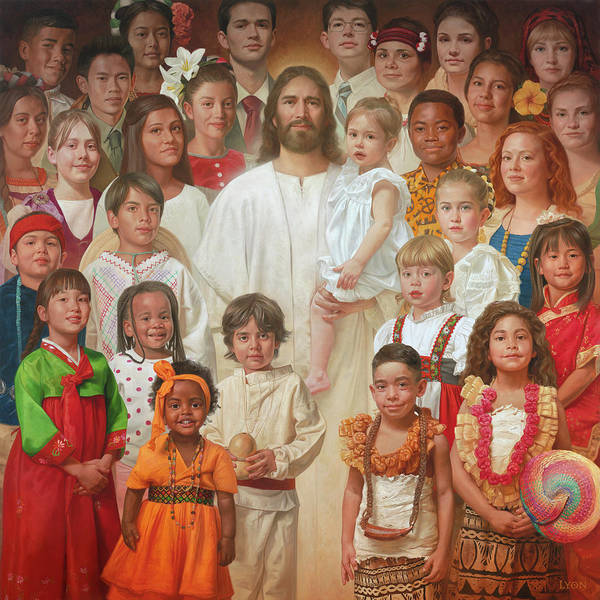
    “It is sometimes asked if this applies to children of all races, and of course the answer is that when the revelation says all children it means all children. There is no restriction as to race, kindred, or tongue. Little children are little children and they are all alive in Christ, and all are saved by him, through and because of the atonement. …

    “They are saved through the atonement and because they are free from sin. They come from God in purity; no sin or taint attaches to them in this life; and they return in purity to their Maker. Accountable persons must become pure through repentance and baptism and obedience. Those who are not accountable for sins never fall spiritually and need not be redeemed from a spiritual fall which they never experienced. Hence the expression that little children are alive in Christ.…

    “Truly it is one of the sweetest and most soul-satisfying doctrines of the gospel! It is also one of the great evidences of the divine mission of the Prophet Joseph Smith. In his day the fiery evangelists of Christendom were thundering from their pulpits that the road to hell is paved with the skulls of infants not a span long because careless parents had neglected to have their offspring baptized. Joseph Smith’s statements, as recorded in the Book of Mormon and latter-day revelation, came as a refreshing breeze of pure truth: little children shall be saved. Thanks be to God for the revelations of his mind where these innocent and pure souls are concerned!” (“The Salvation of Little Children,” Ensign, Apr. 1977, pp. 4, 7.)

    Even though little children will be saved, does that mean they will have eternal life?

    Elder McConkie explained: “Eternal life is life in the highest heaven of the celestial world; it is exaltation; it is the name of the kind of life God lives. It consists of a continuation of the family unity in eternity. … children will be saved in the celestial kingdom. Salvation means eternal life; the two terms are synonymous; they mean exactly the same thing. Joseph Smith said, ‘Salvation consists in the glory, authority, majesty, power and dominion which Jehovah possesses and in nothing else.’ (Lectures on Faith, pp. 63–67.) We have come to speak of this salvation as exaltation—which it is—but all of the scriptures in all of the standard works call it salvation. I know of only three passages in all our scriptures which use salvation to mean something other and less than exaltation.” (“Salvation of Little Children,” p. 5.)

    President Joseph Fielding Smith added:

    “The Lord will grant unto these children the privilege of all the sealing blessings which pertain to the exaltation.

    “We were all mature spirits before we were born, and the bodies of little children will grow after the resurrection to the full stature of the spirit, and all the blessings will be theirs through their obedience, the same as if they had lived to maturity and received them on the earth.

    “The Lord is just and will not deprive any person of a blessing, simply because he dies before that blessing can be received. It would be manifestly unfair to deprive a little child of the privilege of receiving all the blessings of exaltation in the world to come simply because it died in infancy.…

    “Children who die in childhood will not be deprived of any blessing. When they grow, after the resurrection, to the full maturity of the spirit, they will be entitled to all the blessings which they would have been entitled to had they been privileged to tarry here and receive them.” (Doctrines of Salvation, 2:54; see also Mosiah 15:25.)

    Why do some children die and others live? Are those who die better off than those who remain in mortality?

    Elder McConkie wrote:

    “We may rest assured that all things are controlled and governed by Him whose spirit children we are. He knows the end from the beginning, and he provides for each of us the testings and trials which He knows we need. President Joseph Fielding Smith once told me that we must assume that the Lord knows and arranges beforehand who shall be taken in infancy and who shall remain on earth to undergo whatever tests are needed in their cases. This accords with Joseph Smith’s statement: ‘The Lord takes many away, even in infancy, that they may escape the envy of man, and the sorrows and evils of this present world; they were too pure, too lovely, to live on earth.’ (Teachings, pp. 196–97.) It is implicit in the whole scheme of things that those of us who have arrived at the years of accountability need the tests and trials to which we are subject and that our problem is to overcome the world and attain that spotless and pure state which little children already possess.” (“Salvation of Little Children,” p. 6.)

    Will children who die before the years of accountability ever be tested in the way that other mortals are tested? 

    President Joseph Fielding Smith said: “Satan cannot tempt little children in this life, nor in the spirit world, nor after their resurrection. Little children who die before reaching the years of accountability will not be tempted.” (Doctrines of Salvation, 2:57; see also D&C 29:4745:58.)

    What will happen to children in the Resurrection?

    President Joseph F. Smith wrote: “Joseph Smith taught the doctrine that the infant child that was laid away in death would come up in the resurrection as a child; and, pointing to the mother of a lifeless child, he said to her: ‘You will have the joy, the pleasure, and satisfaction of nurturing this child, after its resurrection, until it reaches the full stature of its spirit.’ There is restitution, there is growth, there is development, after the resurrection from death. I love this truth. It speaks volumes of happiness, of joy and gratitude to my soul. Thank the Lord he has revealed these principles to us.” (Gospel Doctrine, pp. 455–56.)

    Thank the Lord He has revealed these principles to us. Amen.
  • Thomas Edison and the Unimaginable

    Thomas Edison and the Unimaginable

    How do you imagine something unimaginable?

    This thought is motivated by an awesome podcast called “How to Take Over the World.” I highly recommend it.

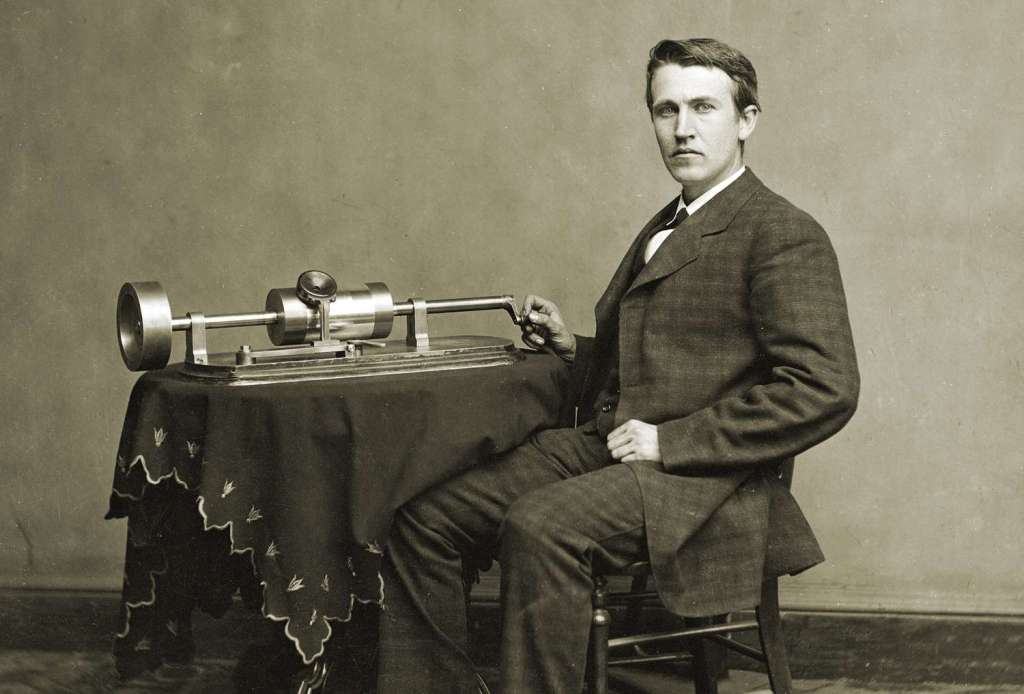
    When Thomas Edison discovered the ability to replay the voice using an invention that would become the phonograph, people couldn’t begin to fathom what they were hearing.

    When Edison started showing his new invention to individuals who had never seen anything like it before, this was a regular occurrence:

    A person would come in. Edison’s invention would be used to play back some recorded statement. The person would be asked what they just heard. The person would have no idea.

    The person would then be told that what they were about to hear was a human voice. The same recording would be replayed. The person would be able to repeat every word from the recorded statement.

    People who had never “seen” (heard) this before literally couldn’t fathom what was happening, so much so that their brains couldn’t even quantify it. How crazy is that? Makes you think how amazing it is that hearing the recorded voice has become so second nature to us. Up until 150 years ago, no human ears had ever heard the human voice from anything other than a human mouth.

    This new invention led to tons of confusion and misinformation about this device. People thought that dead spirits were speaking or the machine itself was talking. People just couldn’t wrap their minds or imaginations around the human voice being replayed.

    There is even a story of a scientist writing Edison after reading an article about the new invention/wonder in a magazine. The scientist asked Edison to issue a public statement refuting the absurdity, as it was not scientifically possible.

    This invention created a worldwide phenomenon. Thomas Edison became a celebrity overnight.

    This story leads to many interesting thoughts.

    The first interesting thing to consider is the idea of thinking about something that you can’t comprehend. When was the last time you were truly shocked by something? In the day and age we live in, nothing shocks us anymore. We’ve become numb to the fantastic world we live in. Moving stairs, cold boxes for food, flying tubes of steel, speeding metal squares: these things are amazing. We don’t even marvel at UFOs anymore, for crying out loud.

    I’m fascinated by inventors. I’m fascinated by people that can create something most of us never even dreamed possible. That was the phonograph, that was playing the human voice. Think how second nature the recorded voice has become to us. But back then, it was UNFATHOMABLE.

    The second thought that came to me from this story was, what do we really know about the world around us? We consider our society so intellectually mature and advanced, and yet, what do we really know about science? When we discover a fourth dimension, will we be shocked? When we learn there’s a spiritual realm all around us that we can’t see, how amazed will people be?

    This is also a lesson in trusting our senses. People back then couldn’t believe their eyes or ears. Today this has become a saying flippantly thrown about: “I couldn’t believe my eyes.” No, back then, they really couldn’t believe their eyes or ears. How much trust do we put in our senses? When it comes down to it, we can so quickly feel like our senses are deceiving us.

    Another noteworthy thing about this story is what the public latched onto when they heard of this invention. People got it into their heads that what was being played when the phonograph spoke were the voices of the dead. This kind of made sense. It was such a foreign concept to them, they just went to the most fantastical thing. Soothsayers and fortune tellers have existed for millennia. The natural assumption by people at that time was, if an unexplainable, miraculous, disembodied voice is speaking, it must be the dead talking.

    Not only did people jump to the conclusion that it was the dead speaking, they latched to the idea with an abundance of enthusiasm. Our fascination with the dead is endless, especially today. Why are we so enthralled by the idea? Why is it so important to us? Well, I believe, it’s because the hearts of the fathers are being turned to the children and the hearts of the children being turned to the fathers (Malachi 4:6, D&C 2, D&C 110:13-16, D&C 138:46-48, JSH 1:37-39).

    It’s our natural hope and desire to speak to our loved ones on the other side. We are drawn to them.

    There is an invention today, also from the 1800s, that is magnitudes more magnificent than the phonograph. This invention is equally as mystifying. In 1836 Joseph Smith, Jr. dedicated a temple to the Lord. This “invention” allowed the sealing of families for eternity. This miraculous invention, like the phonograph, is little understood by the world. Much of the world doesn’t realize this “invention” exists. Coincidentally, the phonograph was invented in 1877. The oldest standing Temple of God is the St. George temple which was dedicated in 1877.

    How amazing to see the temple work of this dispensation where so many of our hearts are turned to our progenitors who have already passed through the veil. When temple work is done for a family member, a real bond is created. We are all connected.

    This, I believe, is why people were hopeful the phonograph was a way for them to speak to their dead.

    The phonograph is an invention that has blessed the lives of so many with the ability to communicate here on Earth. Temples bless every person who has ever lived, does now live, or will ever live. The temple is eternal. I’m grateful to live in a time when we know of temples and of their eternal significance. I’m grateful to have temples nearby. I’m grateful to be sealed to my family for eternity. I’m grateful to know I will see all my loved ones again.

    How powerful is that? How amazing is that? We get to do work for our dead, be linked to them forever, and create a connection for eternity. Now that’s an amazing invention.

    Columbus, Ohio Temple
  • Unity, Peace, and Love

    Unity, Peace, and Love

    I recently watched a video depicting the famous rameumptom of Alma chapter 31. I’ve written about the rameumptom before.

    The rameumptom was a tower built by the Zoramites for their prayers. They would stand atop this small tower and pray. Their prayers consisted of proclamations of how they were better than their brethren, and they thanked God for making them so much better than others. 

    In this video depiction, it showed a fancily dressed person strutting to the rameumptom, pushing aside someone on his way, cutting a line, and walking to the top while someone was already there. That person, apparently properly interpreting the danger of standing up to this man, quickly left his prayer so this man could yell with pride, “Holy, holy God, we believe that thou art God and we believe that thou art holy.”

    That video can be watched here if you’re interested.

    What I thought about as I watched this video is how strange the behavior would be for a follower of God to strut and push someone out of their way to offer a public prayer of pride. It was the spiritual God-follower pushing someone rudely out of the way that stood out to me.

    President Nelson, Elder Soares, and Elder Christofferson recently all talked to members of the Church of Jesus Christ of Latter-day Saints about being kinder, more charitable, and avoiding contention in one session of General Conference. The impact of three of the highest-ranking members of our Church and apostles and prophets of the Lord all speaking on essentially the same topic in a 2-hour span was quite jarring.

    The three talks were:

    President Nelson – Peacemakers Needed

    Elder Soares – Followers of the Prince of Peace

    Elder Christofferson – One in Christ

    As I watched this video of the corrupt Zoramites, I worried about this message from our leaders. I personally have been witness to so much contention and unkindness in social media in “LDS” or “doctrine” or supposed “Christ-centered groups” where combativeness sometimes seems more important than kindness and love. This has led me to lessen my usage of social media, despite loving the doctrinal topics sometimes explored, due to the hateful nature that the topics are explored in.

    I worry about members of the Church of Jesus Christ that take being right more seriously than being loving.

    How many members of our religion and all religions strut around with our beliefs and act like we’re better than those around us? We must not be the Zoramites. This, I believe, is what President Nelson, Elder Soares, and Elder Christofferson are trying to tell us. Followers of Jesus Christ should be loving first, second, and last. Followers of Jesus Christ should be distinguished by their kindness.

    This behavior of someone knocking someone out of the way to go pray looks so similar to someone debating the merits of Christ’s gospel by putting down and insulting others. I hope we all avoid this behavior. As representatives of Jesus Christ, it’s important we remember the two great commandments: love and love.

  • What’s in it for Me?

    What’s in it for Me?

    “Ask not what your country can do for you – ask what you can do for your country.”

    John F. Kennedy’s famous quote given in 1961. I think this has become a great weakness of humans today, and society as a whole. There are so few asking, “what can I do for you” and so many asking, “what’s in it for me?”

    There seems to be a great falling away from the Church of Jesus Christ of Latter-day Saints. There is a great falling away from religion in general. I think part of this falling away is based on this “me first” way of thinking. What does a church do for me?

    I believe there might be a plague in the Church of Jesus Christ of this way of thinking. We all know someone who has left the church for whatever reason. All the reasons aside, there’s often a statement included that the church wasn’t doing it for them anymore, the church wasn’t helping them, or they didn’t see the need of the church.

    I would say, ask not what your church can do for you, but what you can do for your church.

    Now, to be clear, the Church of Jesus Christ of Latter-day Saints is the greatest blessing in my life, both temporally and eternally. It saved me from the gutters of this life. It has provided me all that is wonderful and beautiful about life. It has provided me a stable family that loves me. It has provided me a wife and daughters who I love. It has provided me a foundation to hold to in a world that tosses us all around. More than all these blessings here, it has also blessed me eternally with a perspective on why I’m here, where I’m going, and what’s truly important. It has provided me light. It has provided me hope. It has provided me love. It has provided me everything. 

    I say again: the Church of Jesus Christ of Latter-day Saints which is how I know of the Gospel of Jesus Christ and Christ’s love for me is the greatest blessing in my life. Both here and for forever. 

    That said.

    The Church (and gospel) of Jesus Christ is not here on the earth for what it can do for me. It is here for me to learn what I can do for others. The Church of Jesus Christ is not here because of what it can do for you. It’s here to help you learn what you can do for others. The Church is a vehicle by which you can learn to be like Jesus Christ. I wrote about this in my post Do We Really want to be like Jesus.

    I think when we truly understand this, the world changes. It’s no longer, “what do I get out of this?” It becomes “what can I do to help someone else get something out of this?” This is what it’s all about. Love. Fellowship. Support. That’s why the Church is here. Not to bless your life. So you can bless lives.

    I’ll conclude with one last question, I hope you will truly ponder: did Jesus ever ask, “what’s in it for me?”

  • The God Question: Intelligent Design, Evolution, and God

    The God Question: Intelligent Design, Evolution, and God

    This is a version of an essay I wrote for a science and religion course. That’s why it has such an “official” tone, and the headlines. I don’t share this because I think it’s an extraordinary essay. But I do think I made some decent points about the “God issue” in science. When you spend this much time writing an essay that fits the theme of your blog, it’s just gotta be shared. So here’s my essay on intelligent design, evolution, and God.

    Intelligent Design and Evolution

    God is the center of the debate between science and religion, and in particular the debate between the theories of evolution and intelligent design. To claim any other conflict ahead of the question of whether God exists is to distract from the root cause that separates these theories. If the question of God’s existence could be solved one way or another, then evolution and intelligent design could coexist and potentially benefit one another. Unfortunately, the existential question of God will never be solved by science. Therefore, with God being the center of the issue, exploring the “God issue” between evolution and intelligent design is the best way to help the two theories reconcile with one another, even if the true question, “does God exist?” is never answered.

    The God Question

    Believers of evolution and believers of intelligent design have more to agree upon than is often realized. However, there is one topic or question that creates a gulf between the two fields. That question is: Does God exist? When evolutionists and intelligent design proponents come to understand this as the main question that separates them, it may be possible to relate and coexist, and therefore grow as fields of knowledge alongside one another. It is the loud voices of ardent atheist evolutionists such as Richard Dawkins, Sam Harris, and Daniel Dennett who pronounce aggressive disbelief in God, and it is the loud and passionate voices of creationists who oppose belief in the undeniable evidence of evolution that create this void (Wolf, 2006). The milder, middle-of-the-road voices get drowned out by the louder minority. The believer in intelligent design who accepts the facts of evolution and the believer in evolution who can see the merits in intelligent design theory are the voices that bring these two fields to an agreement that benefits both. Intelligent design need not deny many aspects of the theory of evolution. Evolution need not devalue the merits of the theory of intelligent design. At the root of the conflict is the belief in God. Coming to understand God as the major issue and question can bring both sides into more agreement, or at the very least, a middle-ground of mutual understanding.

    Historical Belief in God

    The thinking of the world has transitioned aggressively from a belief in God. While there has been a movement away from God, especially in scientific communities, as can be illustrated in countless scholarly writings such as The God Delusion (Dawkins, 2006) and Why Intelligent Design Fails (Young & Edis, 2014), a large portion of the world still believes in some higher power, some creator that put humans on this earth. It is nearly impossible for a firm believer in God to remove that innate belief from their consciousness.

    In the book The 5000 Year Leap, Cleon Skousen (2011) discusses John Locke’s famous Essay Concerning Human Understanding. “In it Locke pointed out that it defies the most elementary aspects of reason and experience to presuppose that everything in existence developed as a result of fortuitous circumstance. The mind, for example, will not accept the proposition that the forces of nature, churning about among themselves, would ever produce a watch, or even a lead pencil, let alone the marvelous intricacies of the human eye, the ear, or even the simplest of the organisms found in nature. All of these are the product of intelligent design and high-precision engineering” (Skousen, 2011, pp. 95-96). Locke’s thinking agrees with the teleological argument of intelligent design put forth by William Paley in the 1700s (Crashcourse, 2016). Locke continues to expound on this topic by pointing out how a man can come to know God exists. Skousen concludes with Locke’s thinking, “And because any thoughtful person can gain an appreciation and conviction of these many attributes of the Creator, Locke felt that an atheist has failed to apply his divine capacity for reason and observation” (Skousen, 2011, p. 97).

    These examples from Locke are used to illustrate a point. It was not long ago that disbelief in God was deemed a ludicrous proposition. It wasn’t long ago that these theists were the louder voices. Historically, those with no belief in God have been discriminated against and ridiculed similarly to how science ridicules belief in God today. Ridicule of the belief of God is as counterproductive today as the ridicule of not believing in God has been throughout history.

    Attack on God

    An outspoken opponent of theism in the scientific community is Richard Dawkins. One of the basic attacks Dawkins uses against God is comparing belief in God to belief in any number of mythical creatures. Dawkins often refers to belief in God as being similar to believing in a Flying Spaghetti Monster (Dawkins, 2006). Dawkins says that because people believe in something ridiculous like the Flying Spaghetti Monster, doesn’t mean he has to accept it. This analogy is not close to comparable. There aren’t books handed down for centuries about belief in the Flying Spaghetti Monster. There isn’t a majority of the world population believing in Flying Spaghetti Monsters. We don’t have any support for the existence of Flying Spaghetti Monsters. This is just one example of an unfair attack from the “militant atheism” that Dawkins proposes (Dawkins, 2008).

    Scientists like Dawkins ignore the evidence that does exist out there because it doesn’t suit their needs or beliefs. This is the opposite of scientific progress and something Dawkins is “militantly” opposed to. There are many unexplained phenomena with adequate scientific evidence behind that scientists like Dawkins disregard simply because it’s phenomenal and they can’t understand it. Take, for example, near-death experiences. The catalogs and books being put together of people of different cultures, ages, demographics, and backgrounds all detailing a similar experience is dismissed out of hand. Science is based on observation. If any other phenomena like gravity or momentum had as much documented support as near death experiences that have been cataloged, scientists would explore further, not dismiss automatically.

    Another main critique of intelligent design is that the theory mentions design without defining who the designer would be. The reason intelligent design refuses to mention the designer is obvious. The mere mention of God is liable to get extreme backlash from the scientific community. Furthermore, it leaves the concept open to the many interpretations of the nature of God and who the creator may be across varying religions. This is an example of why the attack on God is counterproductive. It creates the dynamic where intelligent design theory talks about an ambiguous “designer” without simply stating that the designer is a theorized divine creator. God is the answer to the question of who the intelligent designer would be, and yet because of the aforementioned loud minority, God is not specifically mentioned. The issue is that while so many believe in this designer, in and out of the scientific community, no one can say the name for fear of being criticized.

    Intelligent Design within Evolution

    There is plausible proof of many elements of evolution. However, this does not remove the possibility of the influence of intelligent design. That is to say, it is conceivable that the world can evolve while also having the influence of an intelligent designer that planned for this evolution and progression. The two theories need not be at odds with one another. Intelligent design and evolution both have holes and flaws in their theories as Darwin himself admitted (Leddra, 2010). Neither theory is perfect. If either theory were perfect, there would be a definitive answer. That’s why they are still classified as theories. The conflict really comes down to one question: is there a God? This is where the entire conflict between intelligent design and evolution lies. That question will not be answered decisively by either science or religion.

    Science will not answer whether God exists. That will always be a matter of faith. If that question is answered it will mean that God has revealed Himself and His purpose, as science will never disprove God. This is obvious, for you cannot prove that something does not exist. If there is a God and He reveals Himself and His purposes, designs, and methods to humanity, then the conflict between intelligent design and evolution will instantly become a moot point. Humanity will know for a fact how living things came to be. The question of if they evolved, how they evolved, and God’s role in it, and these debates between intelligent design and evolution will become null and void. 

    Conclusion

    These examples showing the change in how God is perceived in both society and science, and how science has changed in the attack on God, go to show the underlying cause of all the controversy. It is ultimately about the existence of God. We can conclude, then, that it is extremely important for religion and science, and their respective theories, to consider how they can coexist with one another. By rejecting even the possibility of a God, science limits itself and its ability to explore the universe. By rejecting evolution, the theory of intelligent design limits its ability to coexist with science. Science will benefit by cooperation between the theories of intelligent design and evolution. This cooperation ultimately hinges on finding a way to reconcile the question of God, for the ability of all theories to progress to their fullest potential, and the furthering of knowledge for humanity.