Tag: sacrifice

  • Abraham’s Faith

    Abraham’s Faith

    I had a thought (shocker).

    I shared last week about Abraham’s shared experience of almost being sacrificed by his father.

    Here’s another way to look at it.

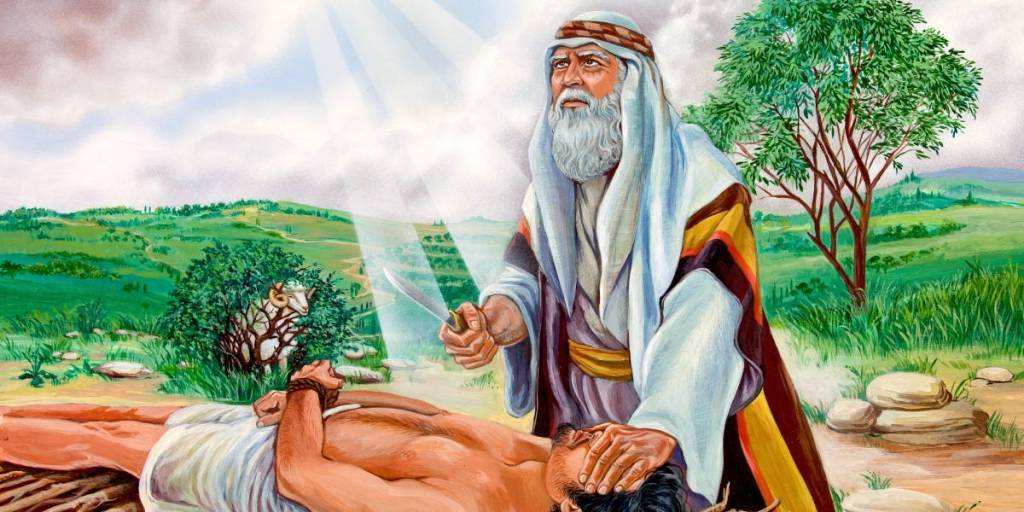
    We marvel at the faith of Abraham to sacrifice his son. He didn’t know that God would stop him moments before he went through with it. For all Abraham knew, his son would be dead, gone. And yet, he was still willing to do what God asked him to do.

    We marvel at this faith to do the impossible.

    What about God, when it came to sacrificing His only Son? Well, we would say, God knew the end. He knew His Son would conquer death and be resurrected. He knew His Son’s death would only be temporary. He’s God. He has nothing to worry about. Abraham was just a man. Abraham had no such knowledge.

    Or did he? 

    Faith is the “assurance of things hoped for, the evidence of things not seen” (Hebrews 11:1). Faith, by its nature, is to not have a perfect knowledge of things. Was Abraham’s faith so perfect that he did know, just like God knew with Jesus Christ, that everything would be ok?

    Abraham had a promise from God. God promised Abraham that his seed would be as numerous as the stars in the heavens and the sands of the sea. Abraham had some understanding of the eternities. It didn’t matter to him when the promises of God would be fulfilled. He trusted God. He had a perfect knowledge that God would keep his promises. 

    Now. The gut-wrenching, heart-tearing, indescribable and impossible act of losing your son. The pain. What about that? Abraham had faith that God would even make that right. Abraham had faith that God would only allow him to do what ultimately he needed to do to become who he could become. Abraham trusted God enough to do anything. Why? I think because he knew God loved him. Abraham didn’t have faith that God loved him, didn’t hope that God loved him, didn’t believe that God loved him. He knew. 

    Maybe faith proceeds knowledge.

    If we truly understand God’s love for us, His children, we can do anything, and endure anything.

    Abraham didn’t know the exact result of the sacrifice of his son. But he did know that God kept His promises. And hew knew that God loved him. And whatever the result, it would all work out for their benefit, glory, and growth in the long run. 

    That is faith.

  • Abraham’s Sacrifice

    Abraham’s Sacrifice

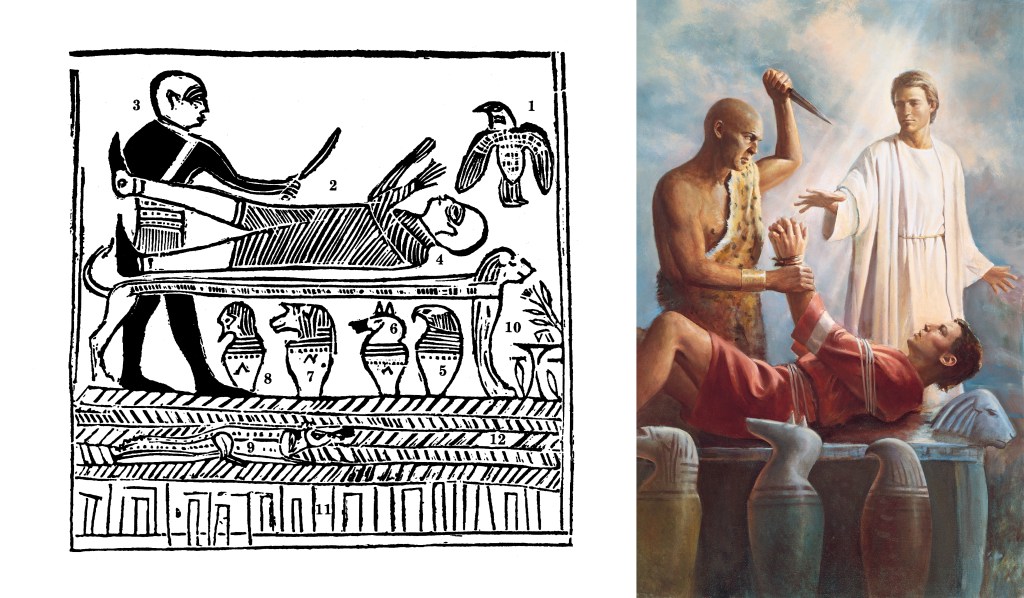
    “Yet Abraham himself came from a troubled family – his father, who had abandoned the true worship of God, tried to have Abraham sacrificed to false gods.”

    Come Follow Me Curriculum

    And you thought your parents were bad. They ever try to sacrifice you to false gods? 

    When I read that above quote, I thought about something I’d never connected in my mind before.  

    The story of Abraham almost sacrificing his son Isaac is a well-known biblical story of true faith. What I’d never connected with this, though, was the almost sacrifice of Abraham by his father many years prior. 

    There’s a lot to unravel there. 

    What occurred to me was this: Not only was this an unbearably difficult test Abraham was given; to sacrifice and kill his most precious, only son. It also, likely, spurred up painful memories of when Abraham’s father offered him as a sacrifice. (If all things are a type and a shadow of greater things, and Abraham represents God in sacrificing His only begotten son, what does this say about God?) 

    In that moment, with the added guilt and pain of losing his precious son, did Abraham also wonder about the damage he was causing his son? If by some miracle Isaac surived, how would he feel about almost being sacrificed? Abraham went through the same with his father.

    Another way to think about this – Abraham’s father is demonized for his part in almost sacrificing his son. Abraham is revered for his almost role in sacrificing his son. What is the difference? Well, the difference, I assume, is the intent, the heart, and the being to whom the sacrifice was being offered. 

    But how, in that moment, did Abraham have such faith, such trust, such knowledge, such understanding to know he was doing the right thing and sacrificing his son to the right God? Didn’t his father believe the same thing once upon a time? 

    This is one of those blog posts where I don’t have answers to my own questions. This is something I will have to ponder upon, research, and think more about.   

    If anyone has comments or can enlighten me, please do. 

  • A Letter to my Brother

    A Letter to my Brother

    You think you’ve lived.

    You think you’ve loved.

    You think you’ve cried.

    You think you’ve felt.

    You haven’t felt anything yet.

    Prepare yourself.

    When that baby girl is born in June you’ll realize in one momentous second that you’ll never be the same.

    It’s the strangest thing. You’ve thought this whole time you’ve had a life and then in one moment you realize, “Woah.” Words can’t describe the moment a child is born. “Heart expanding” isn’t all encompassing enough. You’ve never had a heart until now. You realize all of a sudden every capacity to care and love that your being has possessed pales in comparison to this overwhelming feeling of care and protection you have for this helpless thing.

    It’s the craziest thing.

    Advice.

    Don’t blink. Dwell on how quickly time passes just enough to kick yourself into gear. So that when you’re tired, and, oh, you think you’ve been tired before now? You’ve never known tired. When you’re tired and grumpy and thinking you can’t wait until they just get out of diapers, or put on their own pants, or pour their own cereal, until you remember one day will be the last diaper, the last time helping them put on pants, the last time pouring their cereal. Remember every day that one day will be the last day for all these things, and it makes it easier.

    Don’t watch those “memories videos” iPhones make at any point after having a daughter. Unless you have 3 hours to spare melting into a puddle of sadness, joy, despair, and existential crisis thinking about how time goes by. And your girl grows.

    Don’t dwell on this too much or your heart will explode out of your chest.

    Don’t let the time go by without noticing.

    Don’t hate the sleepless nights too much, because, dare I even say, one day you’ll miss them.

    Many a father has experienced a new level of emotion when considering that their baby girl will one day grow up.

    So don’t miss a moment.

    Don’t listen to Beautiful Things once you have a daughter. Your heart can’t take it.

    Be careful listening to any songs.

    Be prepared for movies you used to enjoy taking on a whole new meaning. Hook is no longer a fun story about Peter Pan, it’s a story of fatherhood.

    You’ll have the HIGHEST highs and the lowest lows.

    In 5 years you’ll be a new person. You won’t even realize it’s happening. But one day you’ll realize, in an all-powerful moment – you are a new person. Probably a better person. You’ll learn so much you didn’t know you needed to learn.

    Your faith will grow. Your faith will be tested.

    Be a good father, and husband, at all costs. Nothing else matters as much as this.

    Be careful not to miss what she teaches you. Be like her.

    Don’t forget that children are angels sent from heaven and because of that, God will always watch over them, and you.

    Don’t forget to take her everywhere you can.

    Don’t forget that even sickness can be a blessing.

    ALWAYS embrace the chaos.

    I guess I could go on forever. But most of it you’ll have to learn on your own.

    Since you won’t be listening to Beautiful Things anymore I’ll give you my version:

    And I thank God every day
    For the girls He sent my way
    But I know the things He gives me
    He can take away

    And I hold them every night
    And that’s a feelin’ I never want to lose
    But there’s no man as terrified
    As the man who stands to lose

    Don’t be terrified. Just know time flies. Don’t waste it. Welcome to fatherhood.

  • Marriage

    Marriage

    I wrote this in September of 2023, when Beth and I were practically still newlyweds (married just over 4 years when I wrote this, now we’re approaching 7).

    Beth and I had a fight the other day.

    I’ve been reading the Church Handbook for the Church of Jesus Christ of Latter-day Saints.

    The day after that fight, and Beth and I had of course made up, I read this:

    Husband and Wife

    “A husband and wife are intended to progress together toward eternal life (see 1 Corinthians 11:11).

    This is your quarterly reminder that marriage is HARD. There’s a reason it’s so important in God’s eternal plan.

    “A couple makes this covenant (covenant of celestial marriage) when they receive the marriage sealing ordinance in the temple. This covenants it the foundation of an eternal family.”

    “When faithfully kept, it allows their marriage to endure forever. Ultimately, thy can become like God (see Doctrine and Covenants 132:19-20).

    Again, in case you missed it the first time, another reminder, there is a reason marriage is so HARD.

    If you’re reading this and your marriage is hard, don’t give up. If you’re reading this and your marriage is getting hard, don’t give up. If you’re reading his and your marriage has been hard, don’t give up. Rely on and trust each other.

    “God has commanded husbands and wives to cleave to each other (see Genesis 2:24; Doctrine and Covenants 42:22). In this context, the word cleave means to be completely devoted and faithful to someone. Married couples cleave together by loving and serving each other.”

    And just one more important reminder from the handbook:

    “Cleaving also includes total fidelity between husband and wife.”

    Marjorie Hinckley was once told by a lady when she was a newlywed to Gordon B. Hinckley, “Don’t get discouraged, the first 10 years of marriage are hard.” Not the first 6 months or the first year: the first 10 years. You are combining your life with someone. There will inevitably be differences in living, habits, thoughts, plans. You are literally becoming one with another individual. What could be more difficult than that? What can be more humbling than giving a part of yourself a way for someone you love? What can better illustrate that love than sacrificing for your significant other?

    Marriage is a sacrifice, and it’s meant to be. That’s the point I think the world forgets sometimes. Marriage is not supposed to be all gain and all for me, me, me. Like being a member of the Church of Jesus Christ of Latter-day Saints isn’t all flowers and blessings –being a member of this church is a sacrifice – of time, money, and effort. Being married is also a sacrifice. If it wasn’t a sacrifice, it wouldn’t be worth having.

    The sixth Lecture on Faith is all about sacrifice.

    The most important and valuable things in this world require sacrifice.

    I recently heard the fascinating idea that when couples divorce, they lose memories. It is after divorce that they learn their memories weren’t theirs at all but shared memories. When separated, divorced couples literally lose memories. Because those memories weren’t just one or the others. Those memories were joint memories. When split, when separated, when broken, when divorced, those memories disappear.

    I found that to be so interesting.

    I love my wife. I am grateful for her. There are things she does that make my life less enjoyable- but I couldn’t live without her. She is the mother of my daughters and the most important person in my life and I’m sorry every day that I take her for granted. Marriage is hard, but she is my partner. I’ve grown so much and connected with her on so many levels the first few years of marriage, I’m interested to see how far this merging of mind and personality can go. To become one.

    1 Corinthians 11:11 “Nevertheless neither is the man without the woman, neither the woman without the man, in the Lord.”

    “The man and the woman are intended to learn from, strengthen, bless, and complete each other.” – Elder Bednar.

  • Salt of the Earth

    Salt of the Earth

    In studying the scriptures, it can be beneficial to have an understanding of the cultural background of those people and situations we read about. I recently read something that added a whole new perspective to the phrase “salt of the earth.”

    Matthew 5:13 reads

    “Ye are the salt of the earth: but if the salt have lost his savour, wherewith shall it be salted? It is thenceforth good for nothing, but to be cast out, and to be trodden under foot of men.”

    3 Nephi 12:13 reads

    “Verily, verily, I say unto you, I give unto you to be the salt of the earth; but if the salt shall lose its savor wherewith shall the earth be salted? The salt shall be thenceforth good for nothing, but to be cast out and to be trodden under foot of men.”

    I don’t know about you, but when I think about salt the first thing I think about is taste. Especially when the word “savor” is used. But this is NOT what those hearing these words come from the source (Jesus Christ) would have thought about.

    In using the metaphor of us being “the salt of the earth”, with my understanding of taste, I would think about being a representative of the gospel to help it “taste” good to others. That by seeing the way I live, others can see that the Gospel is good. Another thought that comes to my mind about salt is its preservative properties. This metaphor could be looked at as those who are the salt of the earth conserve and preserve the Gospel, keeping it active and alive.

    How would the ancient Israelites and inhabitants of ancient America have viewed this metaphor? Turns out, the primary purpose of salt to these cultures would have been its ability to impact the smell of sacrifices.

    The commentary I read stated:

    “When sacrifices were offered upon the altars of ancient Israel, the Israelites did not give the Lord the flesh of the animal, the fruit of the ground, or the ashes or smoke of such sacrifices. The acceptable part of the offering presented to the Lord was the smell, ‘a sweet savour unto the Lord’ (Leviticus 1:17). (Many translations have the word “aroma” in the place of “savour”). In the Bible, the word savour most often refers to the pleasant smell of burning sacrifice in the temple. To ensure that the smell would be sweet, the Mosaic law required that the offering be liberally sprinkled with salt.

    “The scent of an unsalted burnt offering would be the stench of scorched flesh. But if the meat were generously salted, the odor would be quite different, ….. due to the reaction of the salt upon the cells that compose animal flesh. Under high-salt conditions, cellular fluid rapidly escapes the cells to dilute the salts outside cell membranes. ………When accentuated by heat, these fluids cause a sweet savour to emanate….

    “In this context the charge to be the ‘salt of the earth’ takes on marvelous significance. The Lord said, ‘I give unto you to be the salt of the earth; but if the salt shall lose its savour wherewith shall the earth be salted?’ (3 Nephi 12:13). The Savior’s audience no doubt understood the law of Moses and the close connection between salt and acceptable sacrifice (emphasis added).

    “It is clear that under the new covenant the followers of Christ, as “salt,” are responsible for extending gospel blessings to the whole earth. “When men are called unto mine everlasting covenant,” the Lord explains, “they are accounted as the salt of the earth and the savor of men” (D&C 101:39). It is our privilege and blessing to lovingly lead our brothers and sisters to Christ, helping them receive their covenant blessings. As we do so, we become the figurative salt that makes it possible for them to offer the acceptable sacrifice of a broken heart and a contrite spirit. In addition, our own covenant sacrifice of time, talents, and means is pleasing to the Lord.”

    The commentary concludes with this statement:

    “So how do we become the salt of the earth? The Apostle Paul points out that charity is a key to this process: “Be ye therefore followers of God, as dear children; And walk in love, as Christ also hath loved us, and hath given himself for us an offering and a sacrifice to God for a sweet smelling savour” (Ephesians 5:1-2).

    This gives the analogy of salt of the earth a whole new meaning.

    Without the gospel of Jesus Christ, and those keeping the covenants of God on earth, there is no acceptable sacrifice on the earth.

    I’ve written before about the One True Church and why it’s important. Our covenants are important.

    Malachi 4:5-6 reads

    Behold, I will send you Elijah the prophet before the coming of the great and dreadful day of the Lord:

    And he shall turn the heart of the fathers to the children, and the heart of the children to their fathers, lest I come and smite the earth with a curse.

    Modern revelation gives us more insight into this curse.

    D&C 128:18 reads

    the earth will be smitten with a curse unless there is a welding link of some kind or other between the fathers and the children, upon some subject or other—and behold what is that subject? It is the baptism for the dead. For we without them cannot be made perfect; neither can they without us be made perfect. Neither can they nor we be made perfect without those who have died in the gospel also; for it is necessary in the ushering in of the dispensation of the fulness of times, which dispensation is now beginning to usher in, that a whole and complete and perfect union, and welding together of dispensations, and keys, and powers, and glories should take place, and be revealed from the days of Adam even to the present time.

    We are the salt of the earth. We are the enabling welding link, through the power and priesthood of Jesus Christ Himself, that allows the sacrifices of this world to be of any worth, of a sweet savor, to God Almighty.

    What a beautiful and powerful responsibility. What a calling. Without the gospel our sacrifices are for naught. Our covenants are important.

    We must be the salt of the earth to save it from the curse, to make our sacrifices acceptable to God, to link ourselves to our past generations, and to one day come before God, having fulfilled our salt-like duties. To preserve, save, and help the earth on its eternal trajectory. What a sobering an humbling thought.

    As I always say, I am grateful for the Church of Jesus Christ of Latter-day Saints. I am grateful for the priesthood attached to it. I am grateful that we can help in God’s glorious plan.