It’s been a long time since I’ve written about marriage. It was in the midst of a worldwide pandemic that I last wrote on this topic.
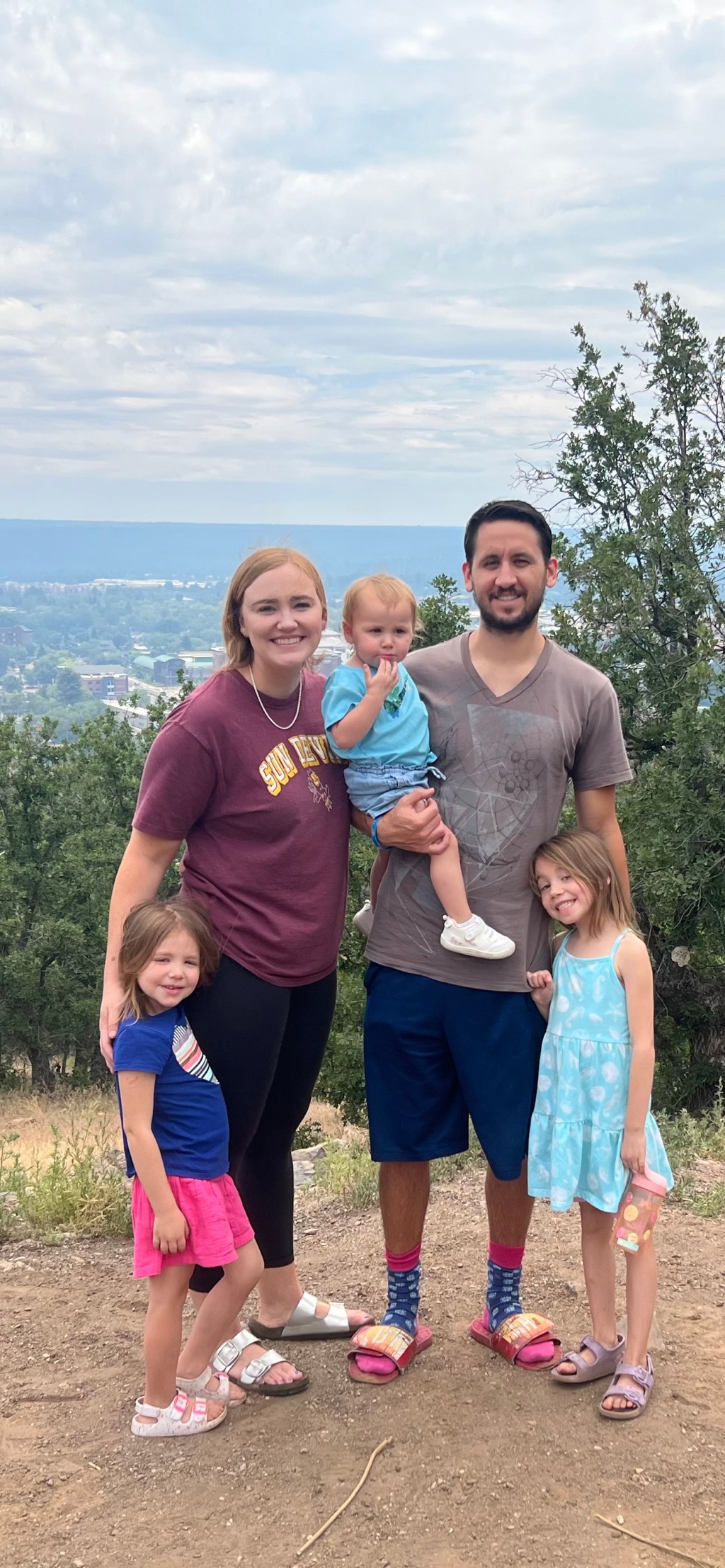
Now that I’m a seasoned veteran of the marriage game (7 years), I thought it was time I imparted some more wisdom on the topic.
First of all, what’s changed in my life now that I’ve been married 7 years? I made a list:
First, I have way more missing socks.
Second, Hair. Everywhere. This might be a product of 3 daughters as well.
Third, Clothes. Everywhere.
That pretty much sums it up. Marriage has caused me to be missing a lot more socks, and encountering a lot more hair and piles of clothes.
On a more serious note (though I’m deadly serious about the above), I was reading in the Church of Jesus Christ of Latter-day Saints Handbook the other day. I came across the section titled
Husband and Wife
A lot stood out to me in this short section of eternal truths about marriage. I wanted to share some of what I read and my thoughts on it. Right from the start:
“Marriage between a man and a woman is ordained of God.”
What a simple and profound truth that the world has somehow distorted into a complete mess. I believe this is something that has fallen by the wayside in modern society. In a secular society that considers marriage a tax benefit or something related to governmental laws of the land, the profoundly important nature of marriage is lost. Marriage is ordained of God. When a couple gets married, they’re not just making a vow to each other, they’re making a vow with God. There are reasons for divorce. But do those reasons stand up to separating a union that included God as part of the promise? I think most divorces today would be reconsidered if the participants fully recognized or understood the role God played in the vows made.
“A couple makes this covenant [of celestial marriage] when they receive the marriage sealing ordinance in the temple. This covenant is the foundation of an eternal family. When faithfully kept, it allows their marriage to endure forever.”
The idea of eternal families is near and dear to my heart. A long time ago, when I was very far away from the church, I told a girl I was talking to that I would never get married outside of the temple. This was always something I stood by. My opinion was always, ‘I know this is true, so if I’m going to get married, why would I half do it? If I’m going to get married, it will be forever. If I’m going to have a family, it’s going to be eternal.’
I believe this is one of the most beautiful truths of the restored gospel, a beautiful truth that God has reminded His children of in this, the dispensation of the fullness of times. We are eternal. Our relationships are important. Our families are the most important.
That girl that I told I would only ever get married in the temple was not a member of the Church of Jesus Christ of Latter-day Saints. She said she was struck those years ago that I believed something so strongly. At the time I was living completely contrary to the teachings of the Church. Everything I did was in opposition to the laws God had set forth for me. The idea of me ever getting married in the temple was a far-fetched pipe dream. Despite how far away I was from the church, I knew eternal families to be a true principle. I knew my family, with my mom and dad and siblings was eternal. I wouldn’t have my own family, with a wife and children of my own, to be any other way. It had to be eternal. That girl I told those many years ago that I would only get married in a temple – she got baptized years later. She was sealed in Jesus Christ’s temple. Now she is sealed to her boys and to her husband for time and all eternity. She said my firmness on something I was so far from impacted her. I’m glad it did.
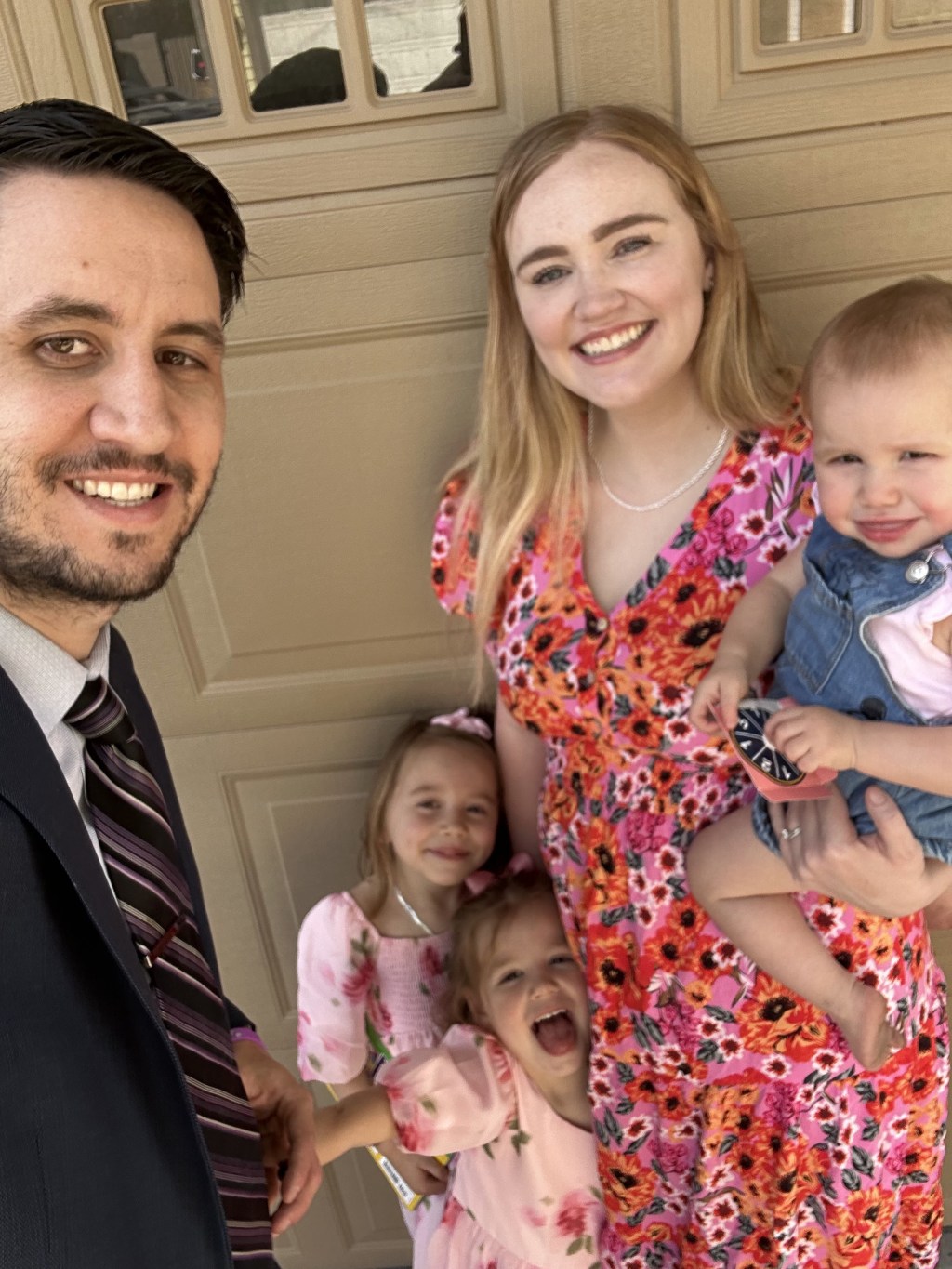
Today my marriage is eternal and will be forever because we made an agreement with God. Marriage is hard. It fluctuates. There are lots of peaks and valleys. I don’t know that it’s getting any easier. But I do know my love for my wife is evolving in a fascinating way. Our relationship is strengthening through bumps and bruises. If not for the belief in an eternal partnership, those bumps and bruises may make me reconsider marriage. But that isn’t an option. In a particularly bad fight years ago Beth texted me while I was at work noting how cold and withdrawn I had been after the fight. She told me if I was considering ending our marriage (this shows how crazy the fight was) that I should just tell her and not keep her in the dark.
I told her that would never happen. It wasn’t an option. I hope that gave her comfort. I believe it did. No matter how bad our fights get, we have a partnership and that partnership includes God. I’ll have to answer to Him one day if I don’t give every effort in my being to make this union work.
I’m grateful Beth has the same respect and appreciation for the marriage covenant that I have.
“God has commanded husbands and wives to cleave to each other. In this context, the word cleave means to be completely devoted and faithful to someone. Married couples cleave together by loving and serving each other.”
It’s a difficult transition going from only caring about yourself to having to consider someone else for everything. It’s easy to be selfish when it’s just you to worry about. A marriage doesn’t work that way. I had to get over a lot of selfishness when I got married. There’s probably a lot of selfishness still to go.
“Adam and Eve set an example for husbands and wives… They were united with each other and with God.”
United. If ye are not one ye are not mine (D&C 38:27). I think marriage is the greatest training ground for learning unity, partnership, and oneness. I already noted the selfishness that must be released when getting married. With selfishness a marriage can’t work. I think this is a primary reason why marriage is so important to God. Adam and Eve were united with each other and with God. If God is an integral part of a relationship, I think it becomes exponentially more difficult for that relationship to end.
I am grateful for the marriage covenant. I am grateful for the covenant path that started with baptism and led me to where I am today. The world is ever-changing. The marriage covenant is not. The world is shaky. Eternal families are firm. The world is difficult. My family is my strength. The world attacks me. My eternal companion, my wife, supports me. The Church of Jesus Christ of Latter-day Saints is more than a church. It is Christ’s organization on the Earth today. As such, it is a refuge against the whirlwind. The covenants God has given me in this earth life will benefit me for all of eternity. What a thought. What a blessing. What a gift. I am ever-grateful for that gift.
I recently learned a little about the Cessationist movement in Christianity. I learned that they believe many things have ceased in modern Christianity. One of the things they think has ceased is the gift of tongues.
The Church of Jesus Christ is alive and well as is the gift of tongues.
The most obvious example of the gift of tongues in Christ’s modern church is shown in the millions of 18-24 year-olds learning and speaking foreign languages to spread the gospel.
I recently read of a true miracle in tongues, and I wanted to share.
Allen Christenson writes the following:
“I was privileged to help in the translation of the temple ceremony into K’iche’, a dialect of the Mayan Indians of Guatemala. In 1991, the Church brought up seven choice native Maya members of the Church to record the ceremony for the first time in their own language. Most had never traveled outside their own country. They arrived when we had a bad cold snap and snow storms last January. In a country where it never snows that was quite a shock. They wondered whether the flakes were volcanic ash, and bundled up with layer upon layer of clothing so that the snow would have no chance of touching their skin.
The Maya today are for the most part illiterate, particularly in their native tongue. It has only been in recent years that some members of the church have begun to learn to read and write in the Maya language, so that they can read the scriptures and other church publications. This is a great tragedy, because until about 500 years ago the Maya were the most literate people in the Americas, preserving their history and culture with a sophisticated hieroglyphic script in hundreds of folded screen books. The Spanish Conquest in the early sixteenth century was a devastating blow to Maya literacy in Mexico and Guatemala. Great numbers of hieroglyphic texts were burned in an attempt to eradicate “idolatrous paganism.” Native scribes were singled out for persecution to such an extent that within one hundred years, the art of writing had nearly disappeared from among the Maya people. When I was a missionary in the Guatemala highlands, no one I knew could read in Maya. Because I opened most of the areas I worked in, the church was in its infancy and there were no members to prepare for the temple. The closest temple in fact was in Mesa, Arizona, and for a people who earned at best a dollar a day, a trip there was a goal which was simply impossible to even think about.
Today there is a temple in Guatemala City. The Maya who were brought up to record the temple ceremony for their people had all taken out their own endowments and considered it a great privilege to have a part in bringing the blessings of the endowment to their people in a language that they could understand.
For the first few days, the Maya were given time to read through their parts, review videotapes of the ceremony to practice their timing and voice inflections, and to prepare for the actual recording. It soon became apparent what an impossible thing we were asking them to do. Most of their homes had no electricity, and the rows of machines and blinking lights were frightening and intimidating. None could read any better than at a grade school level, sounding out each word at a time. Just getting out the words was a frustrating and time-consuming task. We frankly didn’t think that it would be possible for them to become proficient enough to read the text rapidly, much less instill in the words the spirit that such a sacred ceremony demands.
I will never forget the first day we started to record. We put these poor, humble people in a little glass booth, surrounded by technical gadgets, microphones, and earphones and asked them to relax and speak the words with naturalness and the proper spirit. They were so frightened that they could not speak more than a few words at a time, and those were unusable.
We all went back to our hotel rooms discouraged and felt that we were going to fail. The next day, I noticed a change in the Maya. They were unusually quiet and serious, but somehow they didn’t seem to be as afraid as the day before. When the first brother, who was assigned to read the part of Elohim, was called on to record his part, he stepped into the recording booth without hesitation. The window was set so high in the booth that we could barely see him, being only 5’4″ tall. He put on his earphones, closed his eyes and looked up momentarily, and then said quietly that he was ready. When I gave him his cue he began to speak in the most beautiful, flowing Maya that I had ever heard spoken. He read through three full pages without error before we had to stop him to check the sound level. When I cued him to stop, He asked if he had done something wrong and looked so apologetic that it broke my heart. I assured him that we just had to do some technical things and that he had done beautifully. The spirit was so strong that it was a physical presence that we all could feel. The emotion of it was overwhelming. The brother in charge of the recording instruments turned to me afterward and simply said, “We have just witnessed a miracle, one of the strongest manifestations of the gift of tongues that I have ever witnessed. His voice, inflection, and timing were as good as the best professional actors that we have in English, Spanish, or other of the more established languages.” When I asked this Mayan brother what had happened since the day before, he smiled and said that he knew the enormous importance of the temple endowment for his people and knew that he couldn’t do it on his own. He and the others had tried as hard as they could but that the words just didn’t come. So he had prayed last night to his Father in Heaven and told him that he just couldn’t do it without His help. He didn’t want his people for generations to come to hear his voice and weakness, but the voice of Elohim. He asked if his Father in Heaven would please come to that sound booth with him and speak for himself. He felt assured and that morning he never doubted that God would be there with him. One by one, each of the other Maya read through their parts with similar power and faith. [Allen J. Christenson, “Account of the Recording of the Temple Ceremony into K’iche’ Maya in 1991,” Personal Communication to Alan C. Miner]
This is one example of a miracle. Miracles are rarely widely spread or publicized. Sometimes they are quiet, personal experiences. Sometimes the world never knows. But if you seek them out, if you look for them, they are there. Miracles happen every day in the world. Miracles happen every day in Christ’s church. Christ’s church is alive in the Church of Jesus Christ of Latter-day Saints. Miracles have not ceased. The gift of tongues is alive and active.
Mormon 9:20
“And the reason why he ceaseth to do miracles among the children of men is because that they dwindle in unbelief, and depart from the right way, and know not the God in whom they should trust.”
Moroni 7:29
And because he hath done this, my beloved brethren, have miracles ceased? Behold I say unto you, Nay; neither have angels ceased to minister unto the children of men.
These are the highlights of the book Lighten Up that I read in 2021.
“…” usually indicates the next part of the quote was later in the paragraph.
Quotation marks indicate the author is quoting someone else.
A line starting without a capitalized letter indicates my highlight starts in the middle of a sentence.
This is a book written for members of the Church of Jesus Christ of Latter-day Saints about going easier on themselves, and lightening up.
Rejoicing in Diversity (Chapter 1-4)
Chapter 1 Lighten Up!
The greatest bridge of all is the culture of the gospel.
Love is not just a nice feeling about someone. It is the pure and joyful pulse of the universe, and being in tune with it means you are in tune with the forces that bind together the stars on one hand and the atoms on the other.
According to the measurements we usually use, for the most part Jesus did not make people’s lives physically better.
We are the rainbow, but it is Christ who is the light.
Chapter 2 Principles and Practices
We should never compare ourselves spiritually to someone else.
Sometimes we think we can’t be united unless we’re all the same – doing the same things, talking the same way, understanding a gospel idea the same way. I think the Apostle Paul has a very different opinion.
Let us be careful not to snicker at jokes that demean and belittle others because of religious, cultural, racial, national, or gender differences.
(on 300 families surveyed that were considered “Effective Mormon Families” by their stake presidents) 99 percent of these families always paid their tithing; 93 percent said they always accepted Church callings; nearly all of them were sealed in the temple;…When the interviewers asked if they usually had family prayer, 73 percent of them said yes; 66 percent usually held family home evening; 24 percent went to the temple regularly, and 28 percent had regular family scripture study…lots of leeway on practices. Yet all of these families were, in the opinion of their stake presidents, effective and successful. Isn’t that encouraging?
(effective families continued) “You don’t have to come from a strong LDS family yourself to have one. Forty-nine percent of the husbands and 39 percent of the wives had not graduated from seminary. Only 21 percent of the husbands had been on missions. Twenty percent of the fathers and 18 percent of the mothers were not baptized at age eight. Between 15 and 18 percent were baptized after the age of twelve.
“At some point, sometimes before marriage, sometimes as a couple, these people decided that their own children would be raised up in a gospel environment…. [And] they followed it up with action.”
What’s the principle? Teach your children the gospel.
Lighten up about yourself – and about other people.
“Ideals are stars to steer by. They are not a stick to beat yourselves with.”
If we focus on principles instead of practices, we free ourselves from the unwarranted and unnecessary burden of guilt that often ensues when our practices do not match those of everyone else. We also free ourselves from the even more terrible burden of judging others because their practices don’t match ours.
“The one great stumbling block to our progress in faith is rule-keeping that does not spring from an honest heart…Jesus Christ never condemned the honest heart. His wrath was kindled against the hypocritically empty rule-keeping of the Pharisees.”
If I know how you feel about Jesus Christ, I am much less worried with how you feel about many other things.
Chapter 3 Walk in My Zori
We cannot replay God for his blessings.
Whatever your season is, enjoy it. Don’t try to concentrate on the tasks of another season.
A mission…wisdom of our leaders…it is a full-time assignment that deserves and receives the missionary’s complete concentration.
Meet the season of your life wholeheartedly.
Our marriage was like that – a team effort – and It might not have worked so well if we had spent much time thinking about who the leader was.
I knew that I must not let this time of physical weakness become a time of spiritual weakness as well.
(Lessons of the zori) One: Mutual obligation to each other…Two: relishing each season of life in turn without trying to rush through them all…Three: knowing that progress comes by teamwork and by each person in a marriage taking turns…Four: there is a time to bear heavy responsibilities and a time to let those responsibilities shift to someone else.
My great task in this life is the task the Savior has given all of us: “Learn of me.”
Chapter 4 Limitations: A Fine Line
We waste tremendous energy when we fret about our limitations instead of getting on with those portions of our life that are under our control.
(On consecrating what we have and what we are to the Lord’s work, a woman who said she “took my blackness with me…and that was part of what I consecrated. A woman cried saying she never had the privilege of doing this for a black woman before and she replied) “That’s one of the things I can do for you that no one else in the temple today could do.’”
Magnifying our callings doesn’t mean multiplying our tasks.
(The earth is ours. Why? Because we’ve deserved it? Because we’ve earned it?) No, because it is our Father’s delight to give it to us: “And it pleaseth God that he had given all these things unto [you]; for unto this end were they made to be used, with judgement…”
When we can thank God for trials, tribulations, irritations, and afflictions, something happens to transform them into blessings.
(Being grateful for fleas, concentration camp where guards let them be so they could read their Bible) “My mind rushed back to our first hour in this place. I remembered Betsie’s bowed head, remembered her thanks to God for creatures I cold see no use for” (The Hiding Place, pp. 2018-9.).
I could have chosen to feel frightened and let the children and parents feel that.
“And if [you] come unto me, I will show unto [you your] weakness. I give unto [you] weakness that [you] may be humble; and my grace is sufficient for all who humble themselves before me; for if [you] humble [yourself] before me, and have faith in me, then will I make weak things become strong” (Ether 12:27).
Defining Ourselves (Chapters 5-9)
Chapter 5 “For Such a Time as This”
We, like Esther, have come to our place for such a time as this…”we wrestle not against flesh and blood, but against principalities, against powers, against the rulers of the darkness of this world, against spiritual wickedness in high places”
(Story of Elizabeth Francis Yeates conversion) “When I had read it all,” she wrote, “I said aloud ‘praise the Lord. I have found the right way at last.’”…”I could see no other way but to repent of my sins and to be baptized. I knew my people would bitterly oppose it when they knew it, and that my former friends would treat me coldly but it was worse than I ever thought.” That one sentence, “It was worse than I ever thought,” contains an agony of heartbreak.
She did not falter. Her last moment of hesitation had come on the very brink of her baptism when she looked down into the dark river at midnight, December 4, 1855. (The ceremony was performed in secret because of the risk of persecution.) She wrote, “[I] felt as though I could not possibly go in it, but a Voice seemed to say ‘There is no other way.’” In faith, she took that step. “It seemed after that,” she wrote, “that every thing had changed. The scales had fallen from my eyes, and the gospel plan was glorious, and I covenanted with my Heavenly Father that however dark the clouds may be, if friends turned to be foes that by His help I would serve Him.
“And so I discovered that it is not on our forgiveness any more than on our goodness that the world’s healing hinges, but on His. When He tells us to love our enemies, He gives, along with the command, the love itself (The Hiding Place, p. 239).
“The Holy Ghost filled me with the awareness that my mother had been handicapped in mortal life. She had an emotional handicap, the source of which remains a secret to me. But she is handicapped no longer. And neither am I” (“Forgiving My Mother,” Ensign, August 1990, p. 49).
Joy comes from serving others and delighting in our sisterhood – in ministering to rather than administering for each other.
You, in whatever callings you have throughout your own life, will face many choices between serving the program and serving an individual. I believe that if we truly serve individuals in the Lord’s way, we’ll have less trouble with the program. There’s a wonderful story about President McKay that illustrates the distinction. Irene Bates tells the story, which involved her husband, Bill, the first British president of Manchester Stake in England during the 1960s. (The story goes – It was normal for stake presidents and two bishops to be invited to General Conference with all traveling expenses paid. Instructions came to have all bishops and branch presidents come. A stake president named Bill was sure this was an error, but eventually gave the names of all the bishops and branch presidents in his stake. There was one branch president who was overjoyed for the chance to go to General Conference. He and his wife opened up their home in their little town to have church. The local paper featured a story about the trip. Word came down that it was a mistake. The stake president was distraught. He called the president of the British Mission who provided the prophet, David O. McKay’s, direct number. The stake president “looked at the number for a long moment, then said, ‘I’ve got to do it.’” He phoned President McKay and laid the whole situation before him. His response: “You’re quite right, President Bates. It would be very wrong to do that to that good man. We must have them all come. Please do me a favor and let me call President Tanner.” Bill came out of the office with tears streaming down his face.
Chapter 6 “A House of Glory”
Each of us wants to be friends with time, Comfortable waiting for toast to pop,
The trick is to find out whether a minute is worth more
Crammed or empty. And, either way, to get on with it.
Heavenly Father doesn’t save up all his spiritual experiences just for sacrament meeting or the temple.
And that’s because you’re a temple – a living, breathing, walking temple on two legs with a spirit that’s in motion, seeing the needs of many.
I know that I am nothing; as to my strength I am weak; therefore I will not boast of myself, but I will boast of my God, for in his strength I can do all things.
Chapter 7 Motherhood: Less Guilt, More Joy
How grateful the entire house of Israel could be that Moses’ mother did not insist on being Moses’ only mother.
Our agency is eternal.
(speaking of her sons) it was far more important to us that they pay their tithing, attend their meetings, and administer the sacrament worthily than it was for their hair to be a certain length.
“They have their agency.”
(her son) instantly identifies and summarily rejects attempts to make him feel guilty about not being married. How foolish I would be to pick up the guilt my son has properly rejected and bind it on my own shoulders, to create a burden where none exists!
(about mothers) guilt is a burden they need not pick up.
Chapter 8 Defining Ourselves
Now, the point I want to make is this: Ed was trying to be the best son, the best son-in-law, and the best Mormon he could be. I was trying to be the best daughter, daughter-in-law, and Mormon I could be. Those were three role definitions apiece we were trying to work out with our families and the Church – not to mention trying to be the best husband and wife to each other we could be. How we succeeded had a large impact on our self-esteem. But there came a point where we had to choose. Ed couldn’t be the best son – in terms of Japanese culture and in terms of what his mother wanted – and also be the best Mormon he could be. I couldn’t be the best daughter-in-law – in terms of what his mother wanted – and still be the best Mormon I could be. Being a good daughter-in-law was important to me, but being a good Mormon was more important. Being a good son was important to Ed, but being a good Mormon was more important. So he had to establish that definition of himself without knowing if his mother would ever come to terms with it.
Do you feel that newness? Do you feel that strong connection to Jesus and the love that he has for you? If you do, it makes it easy to choose being a good member of the Church first.
Minimize the areas of conflict.
You want your family to see that you’re a better, happier person as a result of belonging to the Church.
Chapter 9 Three Ideas for a Brighter Life
But it was the fear of making a mistake that paralyzed him, traumatized him, and made him dissolve in tears…. Does that happen to us sometimes?
Old proverb – “He who makes no mistakes does not usually make anything.”
Sin involves two characteristics: knowing the law and willfully breaking the law
D&C 80:3 “it mattereth not, for ye cannot go amiss.”
The Japanese word for this self-motivated goodness is kigatsuku.
Embracing Charity (Chapters 10-13)
Chapter 10 The Pure Spirit of Charity
(On teaching and knowing the first day what child would be difficult) I learned that I must go immediately to that child and return to him or her often during the day – to give a hug, to ruffle up his hair, to pat her shoulder. If I would do that, by day’s end, whatever in me sensed a difficult difference about that child had dissolved, and we had created the special bond that had come spontaneously with the others.
(Her husband while Mission President in Japan, when a woman criticized him for helping to setup a tent) “My title may be president, but that only means that I am the Lord’s servant here in Japan.”
Chapter 11 Surrounded by Samaritans
We all know why children behave this way. They want to feel special and important – and Satan’s counterfeit way of achieving that goal, even in little children, is to make someone else feel unimportant, unspecial, wrong.
(dream told by Jude Inmpey of the Aba area of Nigeria) “He dreamed he was at a major social event where an organ was being played, but the sound from the organ was painful. Upon investigation, he found that the organist was playing only on the white keys. The interpretation came to him sometime later at a Church gathering: ‘The Church has for many years played the white keys on the keyboard,’ he said, ‘and now they’re playing both the white and the black, and the music is much sweeter.’”
But I think of growing up on a plantation in Mahukona. I think of the Hawaiian women in that tiny Mormon branch who welcomed a Japanese Buddhist girl who edged shyly in the door. They made room for her beside their own children, taught her to sing the hymns, and loved her – not because she was going to be the first counselor in the Relief Society general presidency fifty years later, but because she was there and because they had loving hearts.
Chapter 12 The Power of Charity
What I’m suggesting is that our expectations need to communicate confidence and joy, rather than anxiety and pressure.
(Question she and her husband asked themselves when talking about goals for their sons) “If we continue with these same goals and priorities for Ken, will they help him reach his eternal potential?”
He (Christ) talks about his Father who, in a parched desert land, sends rain “on the just and on the unjust” and permits his sun “to rise on the evil and on the good.” Then he says, “Be ye therefore perfect, even as your Father…is perfect.” How is our Father perfect? In not withholding the blessings of this sun and rain – which I think are symbols for his love – for anyone.
love doesn’t make distinctions about whether someone is evil or good, deserving or not deserving. Love will spill over in blessing, simply because that’s the nature of love.
We only imperfectly grasp his (God’s) immense patience.
the need we have to achieve perfection. There is no waste. And there is no haste. We will all have all the time we need. We have a loving Father who makes sure we will receive the experiences we need to achieve perfection.
we definitely don’t need to inspect other people.
The reason “charity never faileth” is because we aren’t in charge of the supply department.
Chapter 13 “Neither Do I Condemn Thee…”
Neither do I condemn thee (John 8)
For I am convinced that neither death nor life, neither angels nor demons, neither the present nor the future, nor any powers, neither height nor depth, no anything else in all creation, will be able to separate us from the love of God that is in Christ Jesus our Lord.” (Romans 8)
Seeking the Light of Christ (Chapters 14-Epilogue)
Chapter 14 Opening the Door to Christ
The gospel is not a system that distrusts or despises the world.
Illness and adversity are not punishments for being alive; they are natural accompaniments of life.
If one great constant in the universe is the unfailing love of the Savior, the other great constant is his unfailing respect for human agency.
He wants to hear real prayers, honest prayers.
But who are we trying to kid? Jesus has just seen the stove where the spaghetti boiled over, and it was pretty obvious that wasn’t the only thing that had ever boiled over on the stove. He heard what you muttered when you picked up that one sock, just as you’ve been doing for the past eight years. He caught that worry about the dentist bill that flashed across your mind when you were putting toothpaste on your brush. He doesn’t want polite platitudes. He wants you! All of you! He wants to be the center of your total life – the worried you, the mad you, and the sad you as well as the inspired, happy, obedient, loving you.
(From a missionary after saying a no substance prayer and wondering why God wouldn’t help her) “This time, I didn’t say a prayer – I prayed.”
don’t think anything is too small for the Savior’s loving attention.
Chapter 15 Spiritual Preparation
But a life centered in the future is not really the kind of life that makes living today worthwhile.
the gospel brings peace. Even when it stretches us and makes us work hard, it brings peace.
(After listing all the “shoulds” in the church, or things we’re told we should do) You should do what works for you.
many of the good women of the world (in whom there is often such an inner sense of spirituality) will be drawn to the Church in large numbers. – Spencer W. Kimball
Chapter 16 “Learn of Me”
There are two things I want us to remember about light: First, light doesn’t compete with darkness. It dispels darkness. And second, Christ’s burden is light.
For all of us – whether we are converts or were born in the Church – there comes a moment when the gospel becomes real to us in a way that it hasn’t been before. These are moments of a reality beyond realness. They make a light go on permanently, a light that never goes off unless a line goes down or a switch gets turned off somewhere. If that’s the light that we share together when we feast on the scriptures and learn of Christ, then it is a light that dispels the darkness in our lives.
One of the inevitable effects of true spirituality is light-heartedness, a generosity in happiness.
Jesus is our yokemate. When we take his yoke upon us, he’s pulling on the other half of the yoke. There aren’t many loads that are too heavy to pull if Jesus is pulling beside us.
(Paraphrase of Matthew 7:9-10) “What Relief Society president is there among you, who, if a sister ask for comfort, will give her a lecture? Or, if she ask for more spiritually nourishing lessons, will give her guilt instead?
To have faith in his identity is only half the principle. To have faith in his ability and in his power to cleanse and to save, that is the other half.
We must have faith in Christ – not only that he is the Savior, but that he is our Savior.
Stephen Robinson told another story that impressed me. His seven-year-old daughter Sarah asked for a bicycle. She was the only child on the block without one. Brother Robinson didn’t have enough money to buy her a bicycle at the time, so he sidestepped the issue by telling her, “You save all your pennies, and pretty soon you’ll have enough for a bike.” A couple of weeks later, he saw her do a job for Janet, then add the two pennies she earned to some others in a little jar with a slit in the lid. She showed him the pennies in the bottom and said, “You promised me that if I saved all my pennies, pretty soon I’d have enough for a bike. And, Daddy, I’ve saved every single one of them.”
“My heart melted,” he says. “She was doing everything in her power to follow my instructions.” She didn’t know – though he did – that she would eventually have enough pennies for a bicycle, but by then she would be in high school. So he took her shopping and they spent all afternoon looking at bicycles:
Finally we found it – the perfect bicycle, the one she new in the premortal existence. She got up on that bike, and she was thrilled. She then saw the price tag, reached down, and turned it over. When she saw how much it cost, her face fell and she started to cry. She said, “Oh, Dad, I’ll never have enough for a bicycle.”
So I said, “Sarah, how much do you have?”
She answered, “Sixty-one cents.”
“I’ll tell you what,” I said. “You give me everything you’ve got and a hug and a kiss, and the bike is yours.” Well, she’s never been stupid. She gave me a hug and a kiss. She gave me the sixty-one cents. Then I had to drive home very slowly because she wouldn’t get off the bike. She rode home on the sidewalk, and…I drove along slowly beside her.
We all want something desperately – but it isn’t a bicycle. We want the celestial kingdom. We want to be with our Father in Heaven. And no matter how hard we try, we come up short. The Savior proposes, “I’ll tell you what. All right, you’re not perfect. How much do you have? What can you do? Where are you now? Give me all you’ve got, and I’ll pay the rest. Give me a hug and a kiss; that is enter into a personal relationship with me, and I will do what remains undone.”
There is good news and bad news here. The bad news is that he still requires our best effort. We must try, we must work – we must do all that we can. But the good news is that having done all we can, it is enough (“Believing Christ,” pp 51-52.)
I looked back, confused by what I was seeing. I considered a response. All that came was, “Who are you?”
“I’m all that you could have been,” he replied.
He looked just like me. I guess I couldn’t have been a bodybuilder. “What do you mean I wasted it?” I asked.
“You were given so much. So much opportunity. So much of a head start. You were raised to know God. You were raised to know Jesus Christ. You were raised to know why you were here and where you were going. And look what you did with it.”
I stared back dumbly. Ok, that was unfair. I got married late. Had one kid. Got divorced. Held down a decent job for most of my life. Maybe I drank a bit too much and I had a propensity to gamble. But my son loved me, despite my faults. My life wasn’t perfect by any means but a waste? This seemed over the top.
“I didn’t waste it. My life? It wasn’t wasted,” I finally said. I had no other defense than to repeatedly say it wasn’t a waste.
“I’ve come to tell you that you did. I’m sorry,” the other me seemed to say with real compassion. Would I have been equally compassionate in his shoes?
“What did you do differently?” I asked.
A vision opened up to me. This must have been what so many near-death-experiencers describe as a life review, but this wasn’t my life. It was me I was seeing, but it wasn’t my life. It was my life for stretches. But then something changed. In a miraculous way I saw it all. The thoughts, the struggle, the fear, the doubt, and the triumph. I saw the grappling with faith.
In my life, I’d never come back to God. It was too painful to feel like I’d let Him down. The focus of this vision was one critical moment. A prayer to God begging Him to take this alternate version of me back. I’d never done that.
The vision flew through other minor and major events. The major events: Marriage, but not at the venue I got married at, this was performed at a beautiful white building. A temple. A wife he (the alternate version) was faithful to. Children that didn’t just “love” him but admired and adored him. Children that had their own faith that strengthened and guided them in a fallen world. A wife that appreciated him and stuck with him through it all.
Then seemingly minor but apparently important events: Service, church callings, prayers, books read, time spent studying, time spent writing, small discussions, small moments shared, smiles, gratitude, forgiveness, sharing, giving. I had to admit it was a much different life than the one I had lived. It sure had a lot less football on Sundays.
Did I waste it?
In 2021 when I wrote the above, I had heard the question, “If on the last day of your life you met the person you could have been, what would you say to each other?”
That inspired me to write the brief dialogue above. It’s what I thought that interaction could look like if I never turned back to God and reminded myself what is truly important about this life.
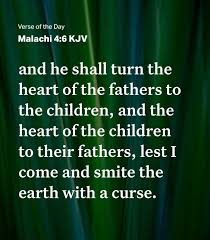
I always thought about the mission of Elijah (turn the hearts of the fathers to the children and children to the fathers) from my perspective, as one of the “children.” I hadn’t thought about it from the other perspective.
What happened when Christ preached to those who had died? He talked of His gospel and returning to heaven which was predicated on their baptism. This likely caused a stir amongst the dead. You can see the shudder through the countless number, “Baptism? But how can we be baptized without bodies?” Then Christ explained temple work, vicarious baptisms for the dead, and that they could be saved by their progenitors, their families. Imagine the excitement this caused.
Those who Christ preached to had been dead for hundreds, some for thousands of years. When was the last time they’d thought about mortality? Did they think about mortality? Had they moved on? Like someone who has a vacation in Mexico but returns to their home, had they settled back into “life” amongst the dead and slowly stopped thinking about mortality?
If they had settled back into death, this news from Jesus Christ surely made them re-focus their attention on the living.
What then transpired? Did they begin ministering to their living loved ones? Were they sent out to influence the living? Were they ushered out to beg spiritually for help to be saved?
I’d always thought about how our hearts here on earth were turned to our dead loved ones when Elijah came and instituted the keys of the sealing power.
I hadn’t thought about how the hearts of the dead turned back to us and what that looked like.
Love.
Love and sacrifice and covenants bind us.
We, without them, cannot be made perfect. They, without us, cannot be made perfect.
Our ancestors laid the entire foundation for all that we have. Whether we want to give them credit, blame them, or forget them, we can’t deny that we are where we are and we are who we are because of them.
It’s amazing to see the modern-day genealogical work being done in the world and particularly amongst the saints.
We are creating a bonding link, a welded connection back to Adam. I don’t know exactly how, but this keeps the world from being smitten with a curse.
I believe it has to do with love. It has to do with connection. It has everything to do with why we’re here and what we’re meant to learn.