Author: Brayden Quackenbush

  • Who was Jesus Christ

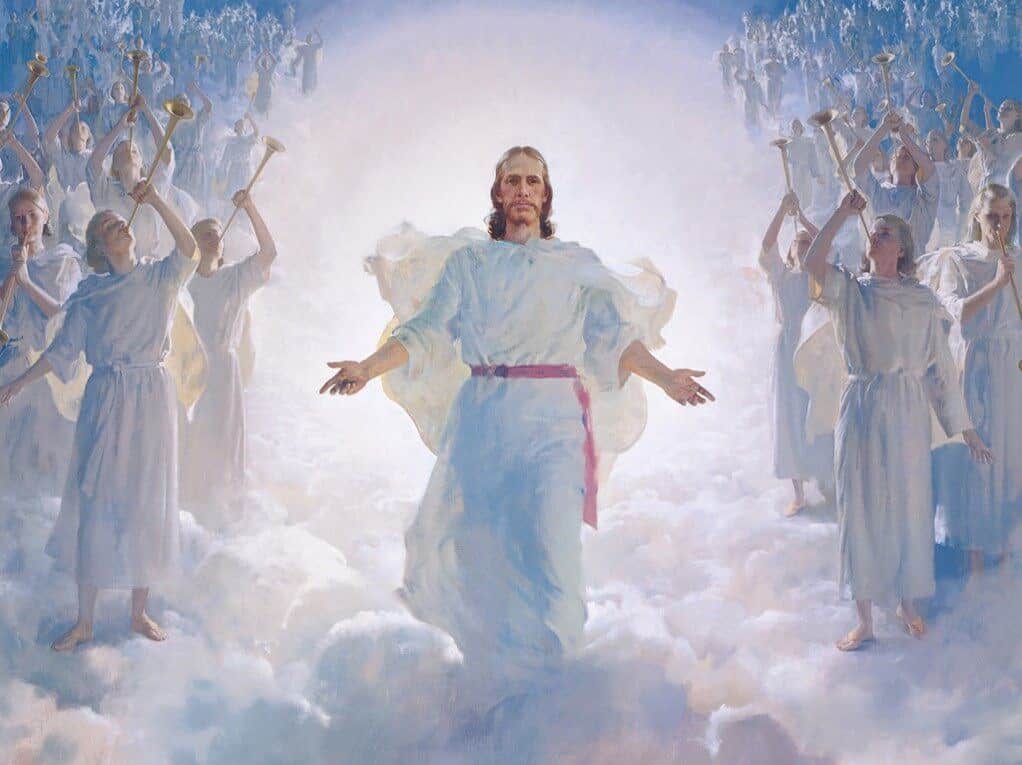
    Who was Jesus Christ

    I may have written about this idea before, but given we just celebrated Christmas I’m going to share the thought again.

    If you’re reading this, you chose to come to earth. You don’t remember this choice, but trust me, you did.

    If you’re reading this, you knew to some extent what coming to earth would entail. To be clear, you couldn’t fully understand what you were getting into. But I imagine you knew it would be hard. You knew you would suffer. You knew you would fail.

    Then you discussed an option. Maybe someone could atone for every mistake you would make so you could be forgiven and return home again.

    Someone stepped forward and you accepted Him.

    Who was that person that you put your entire eternal salvation, destiny, and future into? Who did you trust enough to literally put the fate of your soul on the line? Who was this person that you trusted so much, who you knew loved you so intensely, who was so upright, so kind, so seemingly perfect that you actually believed and trusted He would go down and continue to be perfect. You believed He would go down and do something impossible so you could be saved. I assume you knew Him to be so perfect that you believed He could continue to be perfect with all that mortality could throw at Him. Impossible. It seemed impossible and yet you trusted Him.

    Who was this person?

    What was His character?

    What was He like?

    How could He be so magnificent, so powerful, so kind, so loving, so perfect that you were willing to bet your existence on it?

    Who was He?

    Did He know what He was getting into way back then?

    I don’t think He did.

    Matthew 26:39:

    “And he went a little farther, and fell on his face, and prayed, saying, O my Father, if it be possible, let this cup pass from me: nevertheless not as I will, but as thou wilt.”

    Matthew 26:42:

    “He went away again the second time, and prayed, saying, O my Father, if this cup may not pass away from me, except I drink it, thy will be done.”

    Matthew 27:46:

    “And about the ninth hour Jesus cried with a loud voice, saying, Eli, Eli, lama sabachthani? that is to say, My God, my God, why hast thou forsaken me?”

    The heavens cried for joy when He accomplished the impossible.

    You cried for joy knowing He accomplished the impossible.

    Did Christ know He would accomplish His mission on earth? Was His faith a perfect knowledge? With the importance of agency, I believe there was a chance that Christ would fail.

    But He didn’t.

    We knew He wouldn’t.

    Who was this character?

    This Being.

    This Entity.

    This Savior.

    This Brother.

    This Person that we so trusted.

    I’m grateful He was born. I’m grateful He accomplished His mission. I’m grateful that He knew I wasn’t going to be perfect and so He did the hard thing for me. I’m grateful for His love. I’m grateful that He loved me so much that He refused to fail, even though it was unimaginably hard. I know He refused to fail because He knew what was at stake.

    Merry Christmas.

  • Why we REALLY don’t Drink Coffee

    Why we REALLY don’t Drink Coffee

    Members of the Church of Jesus Christ of Latter-day Saints abstain from tea and coffee, along with other drinks and substances. We refer to this as the “Word of Wisdom.

    The question often comes up, “Why don’t you drink coffee?” This seems to be the one that really hangs people up. Abstain from cocaine? Makes sense. Alcohol? People can see it. COFFEE?!?!?!!?! People are befuddled.

    This isn’t an easy question to answer, but I wanted to write my thoughts on it. The REAL reason we don’t drink coffee.

    Do we not drink tea and coffee because it makes us healthier? Do we avoid coffee because it’s addictive? Do we avoid coffee for our body’s health?

    Maybe.

    Is that the primary reason we don’t drink coffee?

    NO.

    Why do we pay tithing?

    Why do we partake of the sacrament on Sunday?

    Why do we avoid going to the store or other activities on Sunday?

    Why do we do any number of things the world finds peculiar?

    It’s because we have made covenants with God to obey His commandments. That’s it. That’s why we do what we do. To be obedient to God.

    Maybe it makes us healthier, maybe keeping the sabbath holy renews our spirits, maybe not swearing keeps our minds clean, maybe tithing brings us blessings. But are any of these maybes the real reason we do anything? It shouldn’t be.

    We do these things because we love the Lord and have covenanted to follow Him. End of story. The world might call it restrictive, but from my personal experience, it is the EXACT opposite. It is freedom.

  • Books in 2023

    Books in 2023

    My books read have an inverse correlation to how many children I have. 58 in 2020, 45 in 2021, 26 in 2022, 21 in 2023, and in 2024 I’m on pace to finish 15. I miss reading 50 books in a year, but I have the best distractions.

    This is the third year I’ve made a list of all the books I read. Click to see lists for 2021 and 2022.

    2023’s book list comes with even more of a disclaimer than usual. You may have noticed I’m posting 2023’s list at the end of 2024. It’s been at least a year since I’ve read most of these books. This made it difficult to remember the finer details of the individual books. Add the fact that I packed all these books away so I can’t review my highlights, and I struggled a bit remembering each individual book.

    Still, it might mean the list even better represents what books I liked because the list will partially indicate the most memorable books from last year.

    So, here is the order of my most enjoyable reads from 2023.

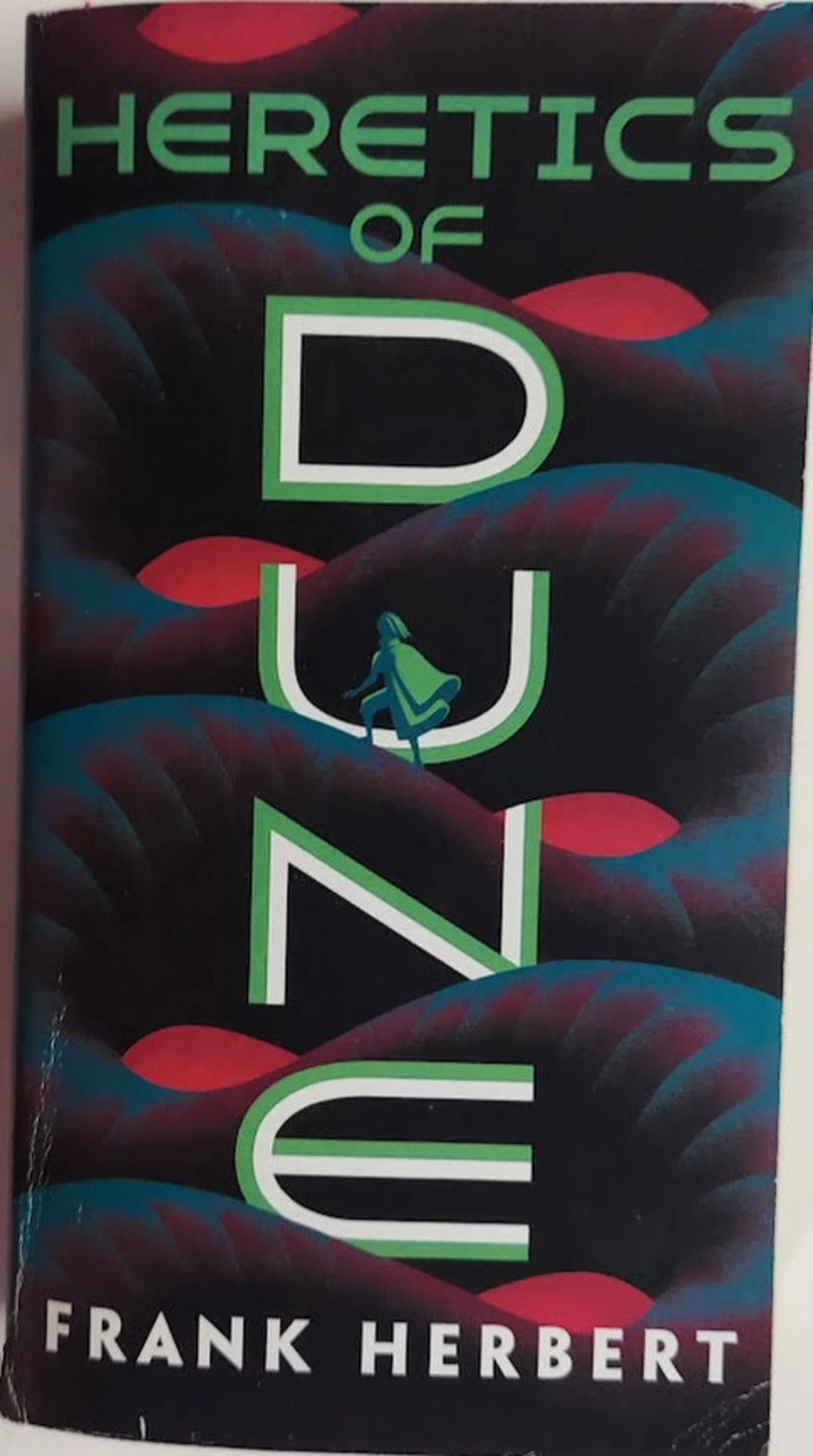
    1. Heretics of Dune by Frank Herbert
      • The fifth book in the Dune series, I must show respect for what Frank Herbert created in the Dune universe by ranking this book this high. I love this series. I loved this book. I love his universe. I love his writing. Best series I’ve read since Harry Potter, hands down.
    2. The Silkworm by Robert Galbraith (aka J.K. Rowling)
      • I loved this book, the second book in the Strike detective novel series. JK Rowling is the greatest author of our generation. This list doesn’t even have a Harry Potter book on it and yet Harry Potter was mentioned in the top two books. Anyways…
    3. Mandy’s Promise by Frank Leach
      • This book has a special place in my heart as it was written by my grandpa. Re-reading the synopsis of the book gave me chills because it really was a great story. I loved this book.
    4. The Man Who Broke into Auschwitz by Denis Avey
      • This was a phenomenal book. I just read the Wikipedia page on it and learned some of the story might have been embellished. Well, yeah, welcome to story-telling. It’s an extraordinary tale of a man who tried to get into Auschwitz and eventually survived being an Allied prisoner of the Second World War.
    5. Ancient America and the Book of Mormon by Thomas Stuart Ferguson and Milton R Hunter
    6. Outliers by Malcom Gladwell
      • This book was great, really made me think about how our situations and often some luck impact our potential growth and abilities. Must read for someone wanting to understand the outliers or overperformers in our society.
    7. Hugh Nibley’s semester one on the Book of Mormon
      • This is a transcription of all lectures from a Book of Mormon class Hugh Nibley taught from 1988-1990 at BYU. Don’t ask me how I found it, but I did, and I immediately downloaded and saved all of them. These are insightful, his understanding of history is off the charts, so many extraordinary insights that grew my testimony in the Book of Mormon and God’s hand in the history of all things. If you want a copy, let me know and I’ll send it to you. Invaluable.
    8. Career of Evil by Robert Galbraith
      • Book three of the Strike detective series. This book is ranked a little lower than Silkworm because it dragged a little more with a lot more developing characters and drawn-out suspicion. The end was well-worth the wait though.
    9. Songs of the Morning Stars by Sarah Hinze
      • This is a collection of stories about children visiting their families before they were born. Legend has it my dad dreamt of all of us before we came. He knew all our genders. So this one hits close to home.
    10. Thinking, Fast and Slow by Daniel Kahneman
      • This book was about how our minds work and about our fast or slow reactions or decisions. It explores thinking and ways to improve our decision-making.
    11. Go Forward with Faith by Sheri L. Dew
    12. Room by Emma Donoghue
      • I actually started this book once years ago and never finished it. That was back when I sometimes didn’t finish books. I enjoyed it this time. This is the story of a young boy born in captivity. Fascinating thought experiment about life, freedom, and experience. Also became a movie.
    13. Doctrine and Covenants Commentary by Hyrum M Smith and Janne M Sjodahl
      • This book was a 1200-page church history grind, but extremely rewarding to finish.
    14. Malachi and the Great and Dreadful Day by Mark E. Petersen
      • Malachi is a lesser-known prophet which means there is less content for the author to provide but also more I didn’t know about Malachi to be learned. I enjoyed this book. Other books I’ve read in the series included Moses (#24 from 2021) and Joshua (#22 from 2022).
    15. Book of Lost Tales Vol 3 Lays of Beleriand by J.R.R. Tolkien
      • By book three it felt like I was reading the same legends over again, with extra commentary about where words came from that didn’t super interest me. I still love reading Tolkien’s tales but didn’t love these as much.
    16. Liberty and Tyranny: A Conservative Manifesto by Mark. R. Levin
      • Without revealing too much about my political beliefs, I enjoyed this book.
    17. The Shaping of Middle-Earth (Vol 4) by Christopher Tolkien
      • See above commentary on Vol 3, lots of repetition, still fun to read Tolkien’s legend.
    18. Way to Be by Gordon B. Hinckley
      • Gordon B. Hinckley had a way of speaking and it comes out in this book. It was full of witty and funny stories amidst spiritual guidance and advice from a prophet of God.
    19. Gospel Symbolism by Joseph Fielding McConkie
      • I don’t remember this book super well, but it was all about the significance of symbolism in the scriptures and in the temple.
    20. Tao Te Ching by Lao-Tzu
      • “The Way.” This book was like reading Proverbs from the Bible: insightful but dry. Most interesting thought I got from this book was to make me consider the strength of babies.
    21. Mormonism and the Negro by John J. Stewart
      • This book was full of outdated and inaccurate information.
  • Ignorance and Spontaneous Generation

    Ignorance and Spontaneous Generation

    Do you know what spontaneous generation is?

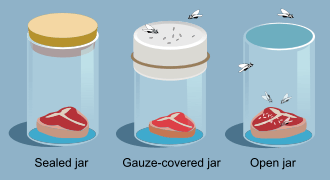
    Spontaneous generation is the outdated idea that living organisms can spontaneously come from other living organisms. For example, it used to be believed that a horse was how bees were created. People used to observe that a horse would die, and bees would “spontaneously generate” from the corpse. Crazy huh? Of course, now we know better. I wrote the below for a discussion post in my Science 301 class, Understanding Formal Processes.

    The once prevalent fallacy of spontaneous generation goes to show that we can be extremely wrong about simple and obvious things by relying on what our eyes tell us. When I initially started reading about spontaneous generation in Bondeson’s book, The Feejee Mermaid and Other Essays in Natural and Unnatural History, I could hardly believe that spontaneous generation was debated into the 1800s (Bondeson, 2014, p. 248). As I thought about it more, though, I understood how this theory took hold of observable logic and persisted for so long. An animal decays in the sun and maggots appear. Where did they come from? An obvious conclusion was the decaying flesh of the animal created the maggots.

    Scientific progress is filled with examples of people being sure of something that ends up being absurd. The relationship between observable scientific knowledge and the scientific method is that as the scientific method is improved upon, meaning, as theories and ways of experimenting on those theories improve, scientific knowledge grows in proportion. It’s interesting to note what Herman van Booerhave said of the brilliant mathematician Girolamo Cardano, that he was exceptional when correct in his theories but, “When he advocated erroneous theories, he surpassed them all in folly” (Bondeson, 2014, p. 197).

    Often, we see how outlandish proposed experiments can become. Take Paracelsus’s proposed experiment to create a human being by mixing excrements, semen, broth, and nutritious fluids (Bondeson, 2014, p. 196). While seemingly absurd, scientists have always been ridiculed for outlandish theories, and those theories only go the direction of proven or disproven by what Paracelsus proposed: an experiment. Even the most outlandish experiment using the scientific method is an improvement on assumptions based solely on simple observations.

    When I was in 7th grade my science teacher gave us a very simple assignment. The assignment was to take something, anything that we could test, and observe each day, make a hypothesis, then keep the data and see if our assumption was correct. Many of my classmates repeated a couple simple observations. I wanted to be more creative. I chose to check the thermostat in my home each day and monitor the fluctuations in temperature. My hypothesis was that as it got hotter outside during the summer, the temperature would go up in my home. This seemed an obvious assumption to a 7th grader.

    I was shocked when I learned, from checking the temperature every morning, that it was 72 degrees in my home every morning, no matter what. My hypothesis was foiled by the scientific progress of a simple thermostat. A device I always assumed to simply tell the temperature, I learned, was actually monitoring the temperature and turning on cool air as it got hot, or hot air as it got cool, to always keep our home at a consistent temperature. I learned from this how something that can seem obvious can be so wrong when ignorance exists. The ignorance here was a 7th grader who didn’t yet understand the simple workings of the things around him. We see in society every day how detrimental ignorance is. Ignorance exists in science, religion, everywhere around us. As we experiment and try new theories, our ignorance is lessened as we come to better understand the world around us.

    What seems so ridiculous now, spontaneous generation was an obvious observation given the tools available to science at the time. In a world that debates all things spiritual – the after-life, the soul, and all things we can’t see – science ridicules theories that can’t be proven. Because science can’t prove the existence of the soul, it says there is no soul. Like those who could observe that maggots spontaneously appeared but couldn’t know how because they didn’t have the tools and capacity to do so, one day all things we still don’t understand will be proven. This includes premortal existence, the soul, spirits, resurrection, and the after-life.

    There’s this secular belief that spiritual things inherently non-scientific. Those with faith understand that one day all these spiritual concepts will be proven through scientific methods. It will all be so clear to us one day, when our eyes are opened and we are given additional knowledge and understanding. What a day for science that day will be.

  • Book Review: How Money Works – Stop being a Sucker

    Book Review: How Money Works – Stop being a Sucker

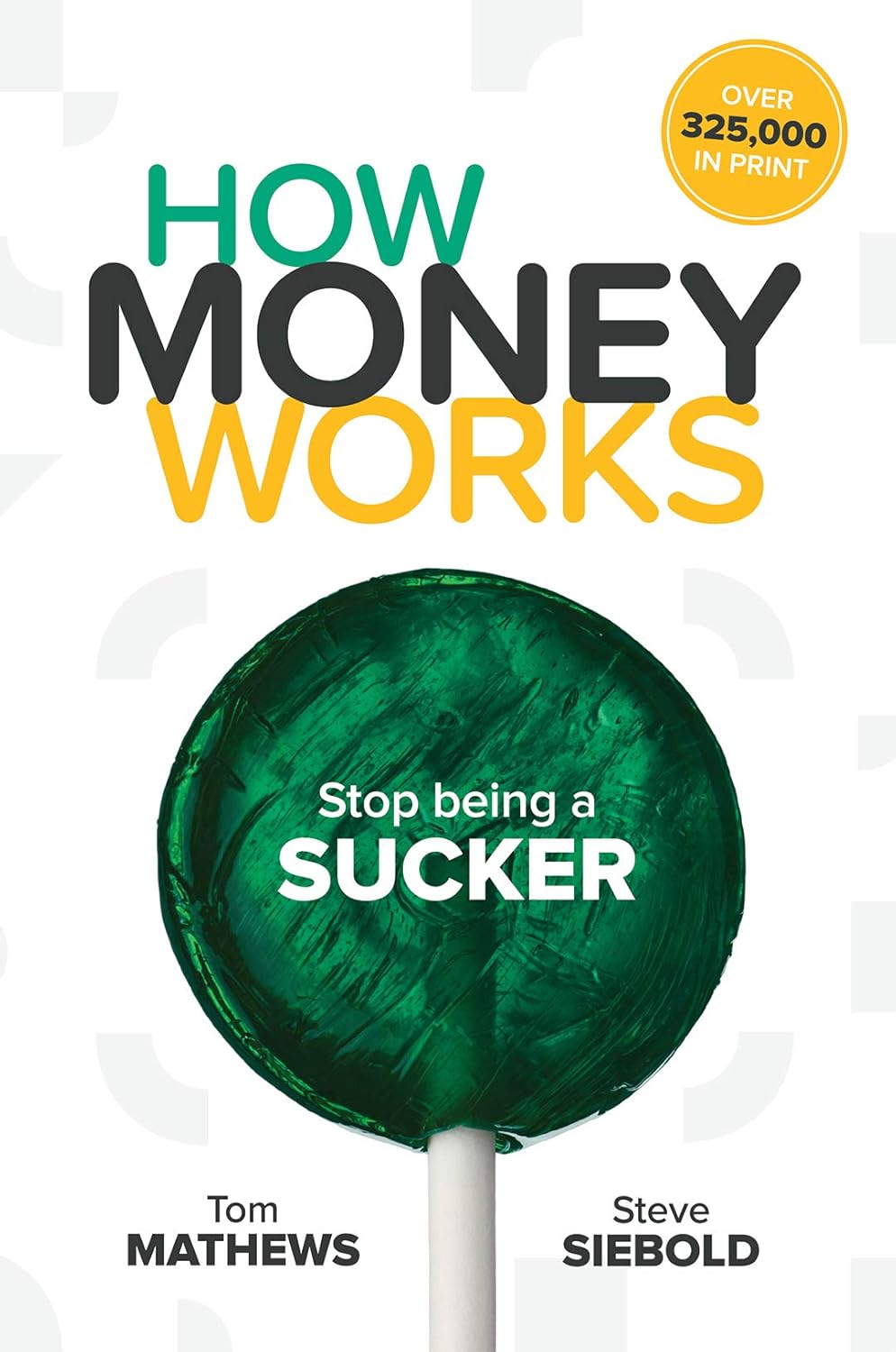
    How Money Works – Stop Being a Sucker
    By: Tom Mathews and Steve Siebold
    Copyright 2019

    This book was given to me to help me understand finances. I’m still pretty much hopeless in this category. This book could be described as “a short read that covers financial concepts that should be taught In school, but are not.”  There are so many financial concepts not covered in school that are important. 

    As a known financial sucker, I was grateful for this book. I seriously think everybody could benefit from reading this book. The most important thing it brought to my attention was how poorly I was handing my money and how important time was when setting up for financial stability in the future.

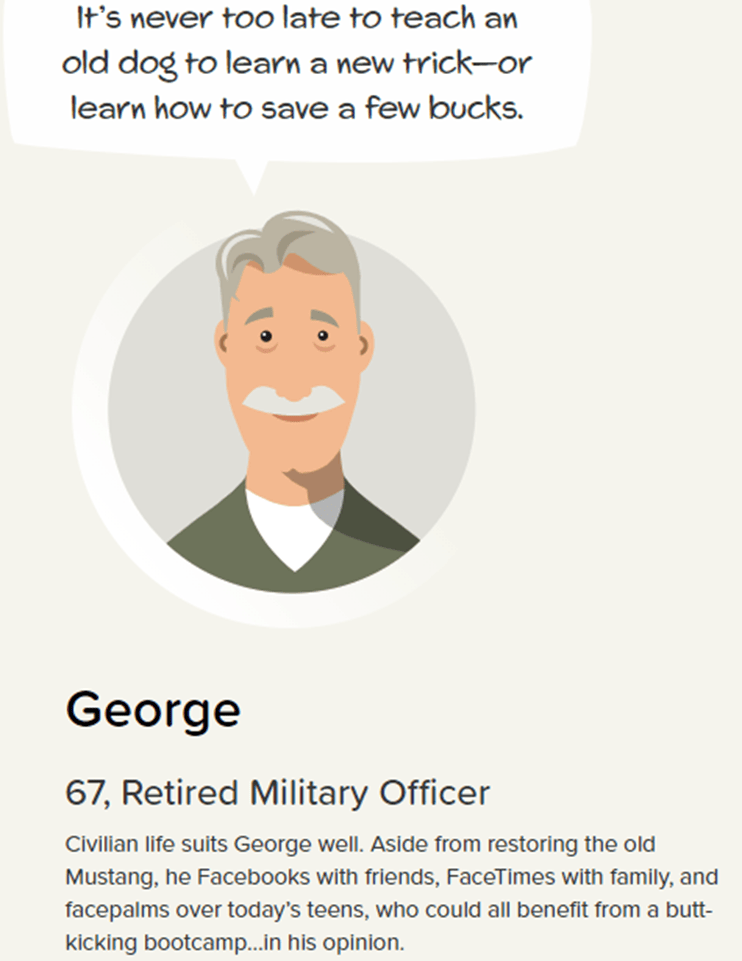
    The book is written in a fun, comic book-like setup. There are pictures throughout. There are characters you’re introduced to in the beginning that the book uses to have conversations with and teach financial concepts without putting you to sleep. I appreciated this structure a lot. As someone who struggles looking into these financial concepts because of all the words I don’t understand, concepts I’m unfamiliar with, and it’s sooo boring, this book helped to easily and quickly give the overview of what important information I needed to know. 

    I found myself relating to two of the characters for various reasons.

    Clark –

    And

    George –

    Clark because I have lots of brilliant ideas (and he’s kind of the dummy character in the book) and George because I think I’m already a grumpy old person facepalming over teenagers.

    I’m lucky to have people in my life who have already started helping me get my finances organized and make money “work for me” better. We’d all like to retire at some point. Moving forward, social security is an uncertainty. It’s up to us to prepare for our retirement.

    As I have a third daughter on the way, life insurance has gone from something I laughed at to something that seems absurd not to have. I couldn’t imagine passing away and leaving my wife and daughters with nothing, let alone with potential debts and financial responsibilities to take care of.

    If you don’t have a life insurance policy – get this book and then get one. It doesn’t matter if you’re 20 years old. In fact, it’s better if you’re 20 years old. The earlier the better. The book did a great job of showing this principle with graphs. The earlier you invest even a small amount of money, the more time it has to grow, with no work on your end. 

    Here’s an interview with the author on Good Morning Texas:

    https://www.youtube.com/watch?v=LChhrYkRLuw

    Here’s a sample from the book itself:

    Check it out. It’s an easy and helpful read.