Category: Uncategorized

  • The Difference Between Steph Curry and Kevin Durant

    The Difference Between Steph Curry and Kevin Durant

    This will be slightly out of brand for my blog. I love basketball so it’s surprising this is the first true basketball commentary I’ve written.

    Anyways,

    Kevin Durant is without question one of the best players in the NBA right now (when healthy), and one of the most talented players of all time. He is an extraordinary basketball player. It was big news a couple weeks ago when he requested a trade from his current team, the New Jersey Nets. It was especially relevant in Arizona because Durant listed Phoenix and Miami as his two preferred destinations.

    A quick history on Kevin Durant for those that don’t know –

    Durant was on an off-the-charts talented Oklahoma City team that had 3 future MVPs on the roster. That Oklahoma City Thunder team gave a record breaking 73-win Golden State Warriors team all it could handle. The Warriors came back from down 3-1 to the Oklahoma City Thunder. That Warriors team then lost to the LeBron led Cavaliers in the finals.

    After the Warriors lost to the Cavaliers, and beat Durant’s Thunder, Durant left his team to join the record-breaking Warriors. A true, “if you can’t beat em, join em.” I didn’t hate this move by Durant like a lot of basketball fans did. As a lover of basketball, I could see that Durant hated playing with Russell Westbrook. From watching Durant play with Westbrook, I could understand Durant’s frustration. He wanted to play with a real team. Draymond Green, Klay Thompson, and Steph Curry made basketball look so fun. If I could play with any NBA team, it would hands down be the Warriors. They play basketball right. I understood Durant’s decision.

    Fast forward some years. The Warriors win two more championships in 3 years. Durant is the Finals MVP both times. Here’s the thing though. The Warriors were never Durant’s team. It was always Steph Curry’s team. No matter how phenomenal Durant was. He couldn’t be loved in the Bay Area the way Steph was.

    This led Durant to leave again. Always looking for the greener grass. He joined the Nets and hitched his wagon to a known enigma: Kyrie Irving. I won’t go into all the details, but the Nets experiment went disastrously. About as bad as it possibly could. Durant wanted to go to New Jersey to make it his city, the way San Francisco was Steph’s city. It exploded in his face.

    So here we are, full circle. Durant is wanting out again. Looking for greener pastures, again.

    Here’s the amazing thing I’m sure the casual NBA fan has missed.

    What were the two teams Durant said were his two most desired destinations to be traded to? The Suns and the Heat. Who was the number one team in the west last year?… the Suns. Who was the number one team in the East last year?…the Heat. Interesting.

    When Durant left the Thunder, he got destroyed in the media for leaving to join a better team. Despite being the player that took the Warriors over the top, potentially making them the best team in NBA history, he was never satisfied. He always seemed jaded by how he was bashed for the decision, and the perceived lack of love and appreciation he received for his basketball brilliance.

    Here we are. Years later. He’s making the same decision. He went to a team to make it his own. It was disastrous. So, he’s trying to go to another team that already has leadership and join them.

    How does Steph Curry tie into this?

    Steph Curry is a leader of men; Durant is a lone ranger. Durant is not a leader of men.

    Durant thinks because he can recruit talent to play with him, that makes him a leader. Recruiting talent doesn’t make you a leader. Elevating those around you makes you a leader. When has Durant elevated others?

    The dichotomy of Kevin Durant is wanting to be a part of good culture, then ultimately wanting to be the good culture himself. But you can’t be the good culture by the simple fact that you want to be the good culture. Good culture is humility, self-sacrifice, team before individual. Durant acts like that’s what he wants, but then he leaves the greatest team of all time because he wasn’t getting the credit he felt he deserved. He went somewhere else thinking he could have it all. A talented team and a city that loved him.

    Look who he gravitated towards in his recruitment efforts– another lone wolf, unique, kind of weird individual – Kyrie Irving. Look who else he brought in – a strip club attending, come in out of shape, (selfish), James Harden. These aren’t culture builders. What happened in Golden state doesn’t happen every day. And it does not happen by accident. It’s not every day that you find immensely talented people that are willing for it not to be all about them. Kevin Durant was never interested in it not being about him. That’s the dichotomy.

    Steph Curry brought Kevin Durant in and embraced him. He didn’t care about the limelight. He cared about winning. He proved that. Two MVP trophies that did not go his way. Why? Because he had the humility to say, definitively, “it doesn’t have to be about me.” With Steph Curry, it’s truly about the team.

    Steph Curry doesn’t try to be humble. He doesn’t try to be a uniter of men. He just is those things. They come naturally to him. He is a leader. These things don’t come naturally to Kevin Durant.

    This isn’t an indictment of Kevin Durant as a person and definitely not as a basketball player. Not everyone is a born leader. It may be unfair to compare him to the most selfless superstar in NBA history, and I don’t think it’s even close. Who has a higher combination of talent, accolades, and humility than Steph Curry?

    That said, Kevin Durant brought this comparison on himself. He had it all. Championships. A great team. Great teammates. He left that because he wanted to do it himself. When things got hard, he bailed ship faster than Kyrie bails a vaccination center. Is it any surprise that his two preferred destinations are where there’s a solid team, solid culture, solid comradery, and solid leadership?

    Durant thought he wanted to be a leader of men. He quickly realized he only wanted to play basketball. That’s fine. Hopefully, though, he doesn’t go to Phoenix or Miami, win championships, and then realize he’s still not happy. Even though, if that were to happen, it seems like a foregone conclusion that would be the result.

    Always seeking greener pastures.

  • Children Need Their Father

    Children Need Their Father

    I went on a weeklong river rafting trip. I believe it was the longest time I’d spent away from Ivy. A large portion of that trip, I did not have my cell phone with me.

    When I got off the river and started driving back to Las Vegas with my family, I checked my phone and learned that Ivy had not had a good week. Meltdowns, tantrums, refusing to sleep. Apparently, she’d had a very hard time in my absence. I didn’t even recognize the girl being described.

    Many theories were tossed around to explain the behavior: teething, out of her routine (they stayed at my in-law’s house), she was sick, her shoes were too tight. I knew the truth. She missed her daddy. I couldn’t wait to get home and comfort her.

    I’ve written about missing Ivy before. This was the first time, it seemed, she could really miss me. I just finished a book, What a Difference a Daddy Makes by Dr. Leman that talks all about the importance of a father, especially in a daughter’s life. It talks about how a father reinforces confidence and helps a daughter relate to men as she gets older. It talks about how moms have a tendency to parent and do things one way, and the balance of how a father generally does things is important to a child’s development. This is at least partly why The Family Proclamation says, “Marriage between man and woman is essential to His eternal plan. Children are entitled to birth within the bonds of matrimony, and to be reared by a father and a mother who honor marital vows with complete fidelity.”

    I believe I was 16 when I first hung up on my mom while she was talking. I promptly received a call from my dad. The usual mild-mannered, relaxed father I knew was gone. I was told over the phone, in no uncertain terms, that if I EVER hung up on my mother ever again, he would kill me. I believed him. He told me I was to treat my mom with respect. It was an important lesson I needed to learn. It was the last time I ever hung up on my mom.

    This is an example of why kids need their dad. Dads, in society, have gotten a ridiculously unfair reputation. Dr. Leman in the aforementioned book noted the unfair representation of fathers on television. Fathers are almost always bumbling blockheads that can’t get anything right. This is unfair and wrong. It has built a belief in society that fathers aren’t needed, or worse, that they cause more harm than good. Fathers are important.

    So how was Ivy when I returned home? An angel. The most well-behaved, happy, sleeping babe you ever met. She smiled ear to ear the moment I saw her when I got home. It was such dramatic joy that I almost didn’t believe all the propaganda I’d been hearing about her. She just needed her daddy.

    Before I could get too cocky, Beth had a doctor’s appointment during the week. It was Ivy and I for a couple hours. Then I got to witness all the behavior I’d seen.

    A growing girl needs her daddy. She also needs her mother. We’ve seen that Ivy is way happier when it’s all of us together. Ivy’s still relatively fresh from heaven. She knows the importance of family and the The Family Proclamation.

    I’m grateful to understand the importance of family. I’m grateful to have a small inkling of how important I can be to Ivy’s life. I’m grateful that Beth continues to be such a great mother. I’m grateful to have an amazing family to help me understand these things. I’m grateful that families can be forever.

  • Adam-God Theory

    Adam-God Theory

    I’ve heard of the “Adam-God Theory” but never looked into it. Until recently, I really didn’t know what exactly it referred to. Here is my research into the Adam-God theory for those interested and especially for those who may have concerns about this theory and its history in the restored Church of Jesus Christ.

    Before I begin, almost all my thoughts come from this link:

    https://www.fairlatterdaysaints.org/answers/Mormonism_and_doctrine/Repudiated_concepts/Adam-God_theory#Question:_What_is_the_Adam-God_Theory.3F

    It was a great resource on this topic and I recommend it if you want to learn more.

    If you want a quick, short video that sums up the whole history of the Adam-God theory, watch this video:

    Now, my thoughts.

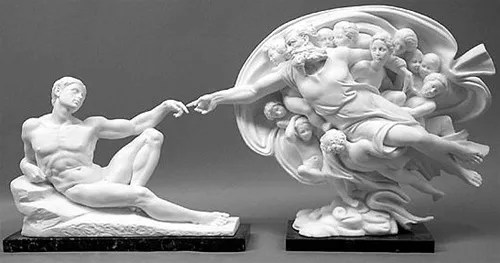
    The Adam-God theory is the theory that Adam and God the Father are the same person. This theory was mentioned by Brigham Young.

    First – Adam is not God the Father. Adam is not who we pray to. This does not fit the teachings of the scriptures, does not fit modern revelation, is not a doctrine of the restored gospel. So why are we talking about it, you ask?

    Second – Yes, Brigham Young did make some bold statements about Adam being God. He also made countless statements contradicting that statement. Brigham Young was a convert and a prophet. Try to imagine the dichotomy of those positions. Try to imagine someone a few years into the faith trying to lead the entire church. Is it so shocking that there were erroneous statements made, especially when we consider and understand the personality and boldness of the prophet who led the saints across the rugged wilderness of the West?

    Third – Because Brigham Young made incorrect statements does not mean he was a false prophet. It means he was learning line upon line, and he made false statements. He has made statements to try to help us, the people of the church, reconcile some of his more questionable comments. For example, when speaking generally about who Adam was and proposing some thoughts about Adam, Brigham started by saying, “I propose to speak upon a subject that does not immediately concern yours or my welfare….I do not pretend to say that the items of doctrine and ideas I shall advance are necessary for the people to know, or that they should give themselves any trouble about them whatever.. (Brigham Young, Oct 8, 1851). If it does not concern our welfare, don’t get too hung up on it. The church was young and growing when Brigham was prophet. God has always worked through us, mortals, to fulfill His works. This has always resulted in fallibility. Brigham Young was a prophet, even if he made mistakes in the thousands of public discourses he gave during his learning period as a prophet/convert.

    Fourth – Because prophets are fallible does not mean we cannot trust and follow them. As The Church has grown out of its infancy, it has strengthened itself in countless ways. One of those strengths has become the checks and balances of the church organization. The First Presidency and Quorum of the Twelve Apostles must be unanimous in any declaration of doctrine. President Nelson speaks hundreds of times a year. Not every word from his mouth (in my opinion) is scripture. It is guidance and direction from God’s anointed prophet, yes, but not scripture. But when President Nelson, the First Presidency, and the Quorum of the Twelve sign their names to a declaration, it becomes binding guidance on doctrine, church policy, etc. Such was the case with “The Family: A Proclamation to the World” for example.

    Now, the statement made by Brigham that when Adam and Eve came to the Garden of Eden they already had celestial, resurrected bodies is interesting. I more think they came with perfect bodies as they came directly from the Father and hadn’t yet been corrupted by the fall, not that they were necessarily resurrected bodies yet. Celestial, maybe, resurrected, I don’t think so. That’s all I will say on this matter, though, to support my point earlier that things that distract from our salvation should be discussed with caution. I haven’t done enough research, pondering, or praying to comment on this with much confidence and would hate for my children 150 years from now to claim I believed Adam was already resurrected when put in the Garden of Eden. See how these small comments can be blown out of proportion? Grateful I’m not a prophet.

    Another thought – the eternal nature of the plan of happiness is not something we can begin to comprehend. If it ultimately distracts us from our current efforts towards salvation, we should tread with ultimate caution. Such is the thinking about if Adam lived on another planet before he came here and countless other thought experiments that might distract from what is important, which is, Jesus Christ performed the ultimate atoning sacrifice for my sins. He died so that I can live. He suffered so I can be forgiven and can live with God, my Father, again. All other questions, while interesting and can expand our minds and thinking, if they distract from the ultimate source of our salvation – the Plan of Salvation and Christ’s personal role in it for us – should be avoided.

    Those are my thoughts on this from my research. Here are some final items to really, I hope, put this theory and any issues involved with it, to rest.

    As mentioned, Brigham contradicted himself many times on the idea that Adam was God. While he mentioned the idea a couple times in public, there are many other instances of Brigham Young speaking where he clearly separated Adam and God the Father as two separate individuals.

    BYU professor Stephen E. Robinson sums it up well:

    “Yet another way in which anti-Mormon critics often misrepresent LDS doctrine is in the presentation of anomalies as though they were the doctrine of the Church. Anomalies occur in every field of human endeavor, even in science. An anomaly is something unexpected that cannot be explained by the existing laws or theories, but which does not constitute evidence for changing the laws and theories. An anomaly is a glitch…. A classic example of an anomaly in the LDS tradition is the so-called “Adam-God theory.” During the latter half of the nineteenth century Brigham Young made some remarks about the relationship between Adam and God that the Latter-day Saints have never been able to understand. The reported statements conflict with LDS teachings before and after Brigham Young, as well as with statements of President Young himself during the same period of time. So how do Latter-day Saints deal with the phenomenon? We don’t; we simply set it aside. It is an anomaly. On occasion my colleagues and I at Brigham Young University have tried to figure out what Brigham Young might have actually said and what it might have meant, but the attempts have always failed. The reported statements simply do not compute—we cannot make sense out of them. This is not a matter of believing it or disbelieving it; we simply don’t know what “it” is. If Brigham Young were here we could ask him what he actually said and what he meant by it, but he is not here…. For the Latter-day Saints, however, the point is moot, since whatever Brigham Young said, true or false, was never presented to the Church for a sustaining vote. It was not then and is not now a doctrine of the Church, and…the Church has merely set the phenomenon aside as an anomaly.”

    From the link above previously mentioned:

    “As far as can be determined, none of Brigham Young’s successors in the presidency of the Church continued this teaching in public, and by the presidency of Joseph F. Smith (1901–18) there were active moves to censure small groups that taught Adam-God.

    One of the earliest statements from the Church rejecting Adam-God teachings was made by Charles W. Penrose in 1902:

    The Church of Jesus Christ of Latter-day Saints has never formulated or adopted any theory concerning the subject treated upon by President Young as to Adam.

    In October 1976 general conference, Spencer W. Kimball declared the Church’s official position on Adam-God:

    We warn you against the dissemination of doctrines which are not according to the Scriptures and which are alleged to have been taught by some of the General Authorities of past generations. Such, for instance, is the Adam-God theory. We denounce that theory and hope that everyone will be cautioned against this and other kinds of false doctrine.‘”

    Other statements by future general authorities refuting Brigham Young’s opinions:

    Bruce R. McConkie – “What I am saying is that Brigham Young, contradicted Brigham Young, and the issue becomes one of which Brigham Young we will believe. The answer is we will believe the expressions that accord with the teachings of the Standard Works.”

    And Brigham Young himself – “I am more afraid that this people have so much confidence in their leaders that they will not inquire for themselves of God whether they are led by Him. … Let every man and woman know, by the whisperings of the Spirit of God to themselves, whether their leaders are walking in the path the Lord dictates, or not.”

    Finally, while some might consider everything said here to be a sign that the church changes and is “wrong,” I would completely refute that. The church is changing. The church is growing. The church is living.

    Doctrine and Covenants 1:30 is Christ speaking and reads “And also those to whom these commandments were given, might have power to lay the foundation of this church, and to bring it forth out of obscurity and out of darkness, the only true and living church upon the face of the whole earth, with which I, the Lord, am well pleased, speaking unto the church collectively and not individually.”

    While so many would criticize the Church of Jesus Christ of Latter-day Saints for changing, the Lord describes it as living. The only living church on the face of the earth. This is a power of Christ’s church- not a weakness.

  • The Life Beyond

    The Life Beyond

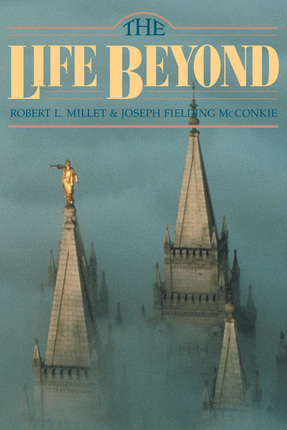
    The Life Beyond by Robert L. Millett and Joseph Fielding McConkie Copyright 1986.

    I recently was asked by two friends who have different religious beliefs from me, what do you believe happens to a person when they die?

    This is the great question right?  One of the 3 great questions.

    1. Where did I come from?
    2. Why I am I here?
    3. Where am I going?

    What a world we’d live in if every conversation we ever had started with that question:

    Hi, my name is Brayden.  Say, what do you think happens to us when we die?

    Wouldn’t that be great!  Less discussion about politics, sports, and tv.  What amazing conversations could come about from that question.

    It amazes me how many people in the world float through life without knowing any sort of answer to these questions.  It’s no wonder we’re in a world that seems untethered from any understanding, sense of reality, or sense of meaning.  What’s worse than all those who don’t know the answer to these questions is those that don’t even ask the question.  It baffles my mind that so many live on this earth, day by day, moment by moment, without daily stopping to ponder: why am I here?

    I believe the reason for this attitude by many people and much of society is due to a feeling that there is no answer.  No one can know so why ask?  I believe every person has asked these questions at some point.  They eventually determine it’s unknowable and move on.  I believe this cuts us off from growth.  How can we grow to our full potential if we have no understanding of our true potential?  How can we reach our true potential if we believe this whole life is for no purpose or reason?  How can we reach our full potential if we don’t even know if there’s something after all this?  In that case, what’s the point?

    That’s why when this question comes up I internally jump for joy.  I know many skeptics, doubters – ye with little faith – still say, “you can’t really know.”  I don’t care.  I know!  I know where I come from.  I know why I’m here.  I know where I’m going.

    It’s one of my greatest wishes that every person on this earth knew the same.  I believe it would make people happier.  I believe it would make the world a better place.  It’s why I’m writing this.  To share what I know.

    The Life Beyond is a book I recently finished by one of my favorite scholars.  Robert Millet was a panelist on the youtube video series I’ve used to study the lectures on faith.  I’ve seen Joseph Fielding McConkie on many of the books I intend to read.

    This book details everything we know about The Life Beyond.  Through scripture, modern revelation, prophets, and all other light and knowledge we’ve received, they go into great detail about what happens after we die.

    Could there be a more important book?

    Can you believe this book exists?  Can you believe you’re not reading it right now?

    Hundreds of millions stumble around in darkness, with fear of death and wonderment about life.  Here is scripture, from God, light and knowledge, revelation, that answers the most important questions in this life.

    For those with little understanding of the Gospel of Jesus Christ, this book would be like feeding a steak to a newborn.  Milk before meat.  I understand that.  Still, why isn’t everyone reading it?  If anyone reading this has ever asked, why am I here?  I invite you to read this book.  Then ask questions.  It can change your life.

    To conclude I’ll share one excerpt from the book that I enjoyed. 

    “The Family Unit Beyond the Veil

    Paul said, ‘I bow my knees,’ as do we all, ‘unto the Father of our Lord Jesus Christ, of whom the whole family in heaven and earth is named” (Ephesians 3:14-15).  In a manifestation to Brigham Young after his death, Joseph Smith told his successor to be sure to instruct the Saints to keep the Spirit of the Lord, promising that if they would do so, ‘they will find themselves just as they were organized by our Father in Heaven before they came into the world.  Our Father in Heaven organized the human family, but they are all disorganized and in confusion.’  Brigham also said that Joseph showed him the pattern, ‘how they were in the beginning.’  He said that he could not describe it but that there must yet be ‘a perfect chain from Father Adam to his latest posterity.’

    During an illness, Jedediah M. Grant visited the spirit world two nights in succession.  He reported a perfect order and government that existed there, saying that the ‘righteous gathered together,’ that there were ‘no wicked spirits among them,’ and that they were ‘organized in family capacities.’  ‘To my astonishment,’ he said, ‘when I looked at families, there was a deficiency in some, there was a lack, for I saw families that would not be permitted to come and dwell together, because they had not honored their calling here.’” (Emphasis added)

    What a marvel it is we have these truths and how lucky we are.  May we all fulfill our callings here, and start by asking, why am I here?

  • The Millionaire Mind

    The Millionaire Mind

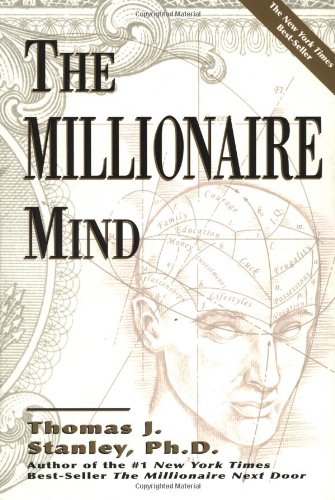
    I mentioned in another post the repetitive nature of the book The Millionaire Mind by Thomas J. Stanley. It’s a world-famous, best-selling book written in 2000. Being written 22 years ago makes it slightly outdated (might be the billionaire mind now), yet it is clearly still relevant today. The repetition is undoubtedly intentional as that’s the way humans learn. What were the repeated points made over and over, then? What does this book clearly think are the most important aspects of becoming a millionaire or having a “millionaire mind”?

    Before I give the list of things I found repeated in the book, it’s important to point out a distinction made in the book between types of millionaires. In the study of millionaires, the author, Dr. Stanley, was looking for “balance sheet millionaires.” He wanted people with high asset, low debt net worths. For obvious reasons this book was NOT a study of individuals who appear to be living a millionaire lifestyle when in reality they were in huge amounts of debt.

    Here are the things I found myself highlighting over and over from that book:

    1. Marriage is conducive to becoming a millionaire, or financially independent. This is for various reasons including but not limited to:
      • Having a support system and partner
      • Combining skills and talents (2 is better than 1)
      • Stability
    2. Generally, millionaires are cautious with how they spend their money. “Cheap” is not a fair characterization, but frugal might be. They are cautious with their money and particular about how they spend it.
      • The book used the example often that millionaires never bought a car over $41,000 or paid more than $38 for a haircut.
    3. Often, millionaires started their own business. It’s difficult to become a millionaire when you’re being paid by someone else.

    I find point 3 very interesting. There’s a guy on YouTube that has gotten popular making one type of video. In these videos he walks around asking people in expensive cars, “what do you do?” Common answers heard are attorney, doctor, and real estate. But the overwhelming majority of the answers are some form of “I started my own company x.”

    I think about this often. This was the point stressed over and over, more than any other point made in this book. The dead horse was beaten relentlessly. If you want to get “rich,” start your own business. If you don’t know this, I’m telling you now, so now you know. But I think most of us know this. And yet, so few of us start our own business. Why is that?

    Like I said, I think about this a lot. I think there are various reasons more people don’t venture out and start their own thing. They can be boiled down to:

    1. Fear
    2. Doubt in oneself
    3. Laziness
    4. Ignorance

    That’s it. I think those are the four things that keep someone from starting their own business. Working for someone else is stable and comfortable, going out on your own is scary (fear). When it’s up to you and you alone to succeed, the excuses go out the door. Relying on yourself for your paycheck requires a lot of confidence in oneself (doubt in oneself). Laziness is probably the greatest detriment to progress in life (laziness). Finally, ignorance in not knowing where to start, or thinking people who start businesses just knew something they didn’t or had some secret (ignorance). Often this is an accepted ignorance. The thinking that others have a secret sauce of success. This ignorance is tied to laziness more than anything.

    There is *usually no secret sauce. Usually someone who starts their business had less fear, less doubt in themselves, were the opposite of lazy, and did the research and work. Simple as that. I’m trying to work myself towards a financial freedom goal. It’s slow work and I find myself running into these four hurdles constantly:  fear, doubt, laziness, ignorance.

    All these things can be defeated, and I think we would benefit ourselves greatly to face these challenges head on and step out of our comfort zones. Of course, that’s easier said than done.

    So what’s my conclusion? Why am I writing this post if I myself can’t step out of my fear, doubt, laziness, and ignorance? I don’t know yet. But maybe one day I’ll look back on this post and think, “well I was always thinking about it, and eventually I got there.” That’s the hope.