Tag: faith

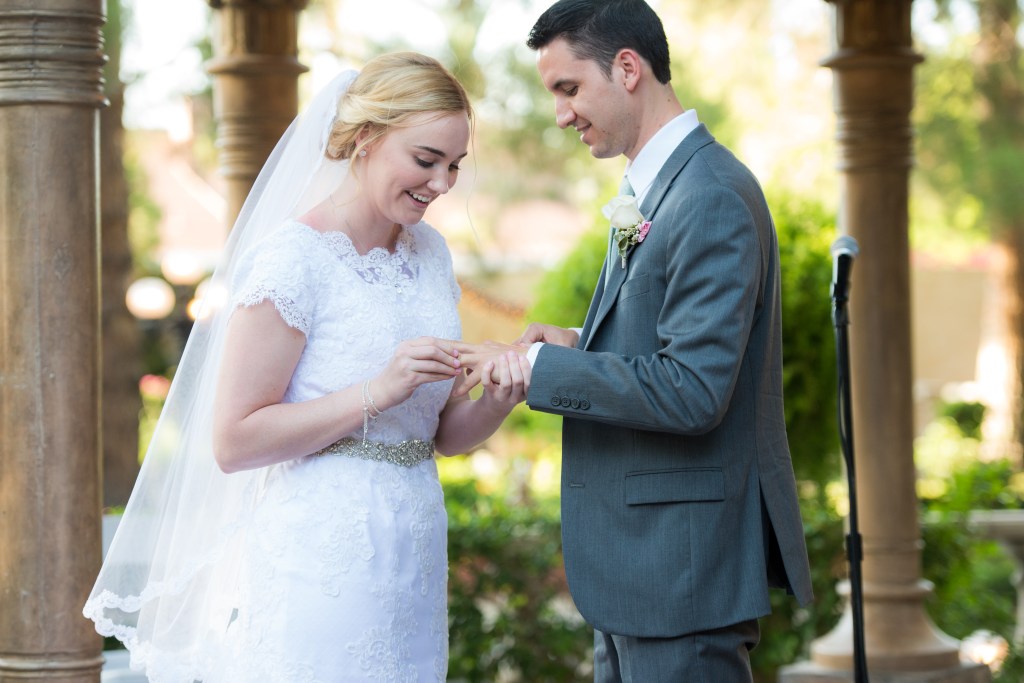
  • A Wife Who: Message to my 22-year-old self

    A Wife Who: Message to my 22-year-old self

    Find yourself a wife that is kind, caring, and good.

    Find someone you know will be a good mother not by any one action or by any words but by their being; who they are.

    Find someone who will love, uplift, and support you through everything you want to accomplish.

    Here’s an important one: find someone that will love you conditionally. The world says to find someone that loves you unconditionally. That’s too easy. Where is the growth and progression in being loved unconditionally? Find someone who wants you to improve and be better as much as you yourself want to improve and be better.

    Find someone who also wants to be better.

    When two people independently want to be stronger and better, they collectively become stronger and better.

    As important as someone who loves you conditionally, find someone who loves the Lord unconditionally. Find someone who has a testimony of what is important in this life. While the world moves and shakes, find someone with a foundation. So that if ever your foundation becomes weak, you have someone whose foundation is strong.

    Keep your foundation strong for that person as well, so that they can rely on you when their foundation needs shoring up.

    Find someone who wants God to be a part of your life, family, and home. If God is in your home, your home can never fail.

    Find someone with faith. Find someone with devotion. Find someone you can trust.

  • Faith of an Atheist – Bouncing Atoms

    Faith of an Atheist – Bouncing Atoms

    What does an atheist have faith in?

    We all have faith. We have faith that we eat, and the food will sustain our body. We have faith that we drink, and the water sustains our body. We have faith that we breathe, and air sustains our body. We have faith that we will move, and it happens. Every act of our lives is an act of faith.

    As Lectures on Faith Lecture First says: “without [faith], both mind and body would be in a state of inactivity, and all their exertions would cease, both physical and mental.”

    Whether you believe in a Creator or not, this fact remains: all have faith. The only question is: what is your faith in?

    I previously wrote about the faith of an atheist HERE. That post talks about the hope of an atheist. What about the faith?

    If we all live by faith, what does an atheist have faith in?

    The only thing I can think that an atheist has faith in is their self.

    When you remove God from the equation, what else is there? There is you, your mind, your thoughts, your supremacy. Not only that, if there is no God, then this all just happened by chance. You are a product of random chance, with no meaning. You are an object with atoms inside of you bouncing around causing you to do things. If this is all by chance, there is no free will. If there is no God and we are all happenstance, if we are all a great coincidence, then we are Gods, and there are no Gods. There is nothing. There is no point.

    A lack of a belief in God is a lack of belief in anything. If this life is not about a bigger plan then it’s all pointless.

  • Are Women more Faithful than Men?

    Are Women more Faithful than Men?

    Why are women more faithful than men?

    I’ve often wondered this. Others may disagree, but in my experience, generally, it is true. Why is it that women are more faithful than men?

    There are countless examples of faithful men in the scriptures. There are also examples of faithful women in the scriptures, though less countless. Where the LDS church does have countless examples of women with great faith is in our pioneer stories. There are so many.

    Some of the examples of faithful women in the scriptures include Elizabeth, the mother of John the Baptist, Mary, the mother of Christ, and Mary Magdalene. I think often it is mothers that convert while fathers fight.

    From what I’ve seen today, in modern times, women have more faith than men. Women are more open to spiritual experiences.

    I think this is somewhat due to the “natural man.” In my opinion, man is much more natural than woman.

    I also think it has to do with Christ’s admonition, “be ye as little children” (Matthew 18:3).

    Don’t women possess more of the good qualities of children than most men? Women are generally more humble, meek, kind, caring, and gentle than men. I think few would disagree with this. Women possess more quantities of all the positive attributes of little children that most men lack. It doesn’t make men necessarily bad. I think it does create a gulf between us (males) and God, though.

    If men can learn to be what we are with a positive light, and attain the meekness and humility of little children, we draw closer to God. I think this is what the Priesthood is meant to help us to do. We are to learn to be humble with authority. Learn to be meek with power.

    What was Christ but complete humility with complete power?

    The Priesthood of God can not be wrought with unrighteous dominion (Doctrine and Covenants 121:37).

    We must be as little children. Meek and humble, and let our faith be as the women who surround us, who often far surpass our ability to trust, believe, hope, and have faith.

  • Maybe (The Story of the Chinese Farmer)

    Maybe (The Story of the Chinese Farmer)

    “There once was a farmer whose horse ran away. Upon hearing the news, his neighbors came to visit. ‘Such bad fortune,’ they said, full of sympathy.

    “‘Maybe,’ the farmer replied.

    “The next morning the horse returned, bringing with it three other wild horses. ‘What great fortune!’ The neighbors exclaimed.

    “‘Maybe,’ replied the old man.

    “The following day, the farmer’s son tried to ride one of the untamed horses. He was thrown off and broke his leg. The son would forever limp. ‘What terrible fortune!’ The neighbors cried.

    “‘Maybe,’ answered the farmer.

    “The next morning the army came through the farmer’s village to draft young able-bodied men for the war. Seeing his son’s limp, they passed him by. The neighbors congratulated the farmer. ‘What wonderful fortune!’ They said.

    “‘Maybe,’ said the farmer.”

    So, it’s hard to know which experiences will turn out to be fortuitous and which will be unfortunate.

    Another story to consider.

    A dog is at the vet. It is there with its wonderful owner. The dog knows his owner loves him very much. The dog’s owner provides food and shelter to him every day. His owner takes him for walks every day and loves him so much. His owner would never do anything to harm him.

    At the vet, the dog is due to get shots.

    The owner knows the importance of these shots. The owner knows the dog needs the shots to keep him healthy. The owner knows the shots are for her dog’s ultimate benefit.

    While the dog is getting shots, all he can think is, “why oh why is my owner letting them do this to me? It hurts so bad! Why is she letting this happen?” The dog looks at his owner and cries and cries. He’s in so much pain. “Why is she standing there ignoring my pain? Why isn’t she doing anything? Doesn’t she love me?”

    The gap between the dog’s understanding and his owner’s understanding is vast. If the owner tried to explain to her dog germ theory and why he needed his shots, he wouldn’t understand any of it.

    The gap between God and us must be infinitely more expansive than the gap between our understanding and that of our pets.

    We don’t know completely why bad things happen to good people. We don’t know why some live while some die.

    The restored gospel of Jesus Christ tells us some key information. This information doesn’t completely answer the question of why bad things happen to good people, but it does add important information.

    We all chose to come here.

    We all knew it would be hard.

    Some knew they would experience unimaginable pain.

    We all chose to come here.

    The good news of the Gospel of Jesus Christ is that no pain, no hardship, no difficulty, no tragedy, is without meaning or purpose. It’s all for one great design: to make us better and stronger. Even as I say that, “to make us better and stronger” those words fall flat. Someone experiencing immense pain doesn’t care that they’ll be stronger in the end. Saying “to make us better and stronger” is akin to telling the dog, it’s going to be ok. Our understanding is limited. That doesn’t take away from the fact that everything that happens here is meant for our ultimate good. Everything here is to help us to reach our full potential.

    Do you think that dog understands those shots will help him live longer? Could we possibly understand if God tried to explain to us the mysteries of the universe and how that unimaginable pain can be for our benefit?

    Does this make unimaginable pain easier to endure? I think it does. I’m not in the throes of pain at the moment, though.

    When I thought I might die, and I thought how desperately I would miss my wife and my one month old daughter, when I thought about how I wouldn’t get to teach her to talk, shoot a basketball, or ride a bike, my heart hurt. But then I knew something amazing. I knew that, even if I had to leave my daughter and my wife, I’d see them again. Life is one eternal round with God and nothing would be lost. I knew that if I had to leave, it was for my ultimate benefit, and the benefit of my family. I had to trust God in that moment. That brought me peace.

    Could the farmer’s son have realized that breaking his leg and being limp for the rest of his life would actually save his life? He couldn’t know it. But someone did.

    When bad things happen, take comfort. Trust Him.

    How do we know what is a blessing and what isn’t? We don’t. Someone does. Trust Him.

  • Attack on Mormons

    Attack on Mormons

    Legend has it my grandfather has a hidden room in his home for the day that followers of Christ are rounded up like Jews were in Europe during World War II. I spent much time trying to find that room without luck. I’m still not convinced it doesn’t exist.

    Beth and I recently finished a TV show called Under the Banner of Heaven. If anyone wants to see every anti-Mormon falsehood spouted in 7 hour+ long episodes, I highly recommend it.

    A story made headlines recently. A highly recruited quarterback from Utah was visiting an Oregon football game. He left the game when the student section started chanting “f- the Mormons.”

    The play “The Book of Mormon.”

    Southpark parodies.

    Imagine another religion being treated this way. Can you picture the outrage if a student section chanted “f- the Jews” for example? I felt wrong just typing that.

    And yet the Church of Jesus Christ of Latter-day Saints is not shielded from this. Why is that?

    Under the Banner of Heaven being my most recent exposure to anti-Mormon media, that’s where I’ll focus this post, with my point at the end. Stay with me. Even if you haven’t seen the show (and despite what I said above, I DON’T recommend it) this will still be pertinent.

    An article was written in the Atlantic about the show. That article can be found HERE.

    If you’re interested, you should read the whole article. It’s well written and helped me understand the underlying feelings I had about this show.

    Here are some highlights from that article that I agree with:

    “[It] felt like seeing my religious life in a funhouse mirror, each detail-from the sacred to the mundane-twisted and stretched and distorted to appear frightening and strange.”

    When talking about the absurd use of the phrase “Heavenly Father” in the show, “But I gave up after a few episodes [counting the weird usages of “Heavenly Father], once I realized what was going on. To say that I have never met a Mormon in my life who talks like this would be to miss the point. These lines were not intended as shibboleths for Mormon viewers-they are there to serve a stereotype, to exoticize a people and flatten their faith tradition.”

    “Under the Banner of Heaven is one of the most openly hostile treatments of a minority religious group to appear in popular American entertainment this century. It is also an unqualified hit.”

    I could go on about the flawed and insulting nature of this show.

    Elder Bednar, an apostle for our church, was asked his thoughts on the show. He responded, “We don’t like it, but we don’t spend all of our time responding to it. We have a mission to fulfill.”

    The writer of the Atlantic article stated he initially felt good about Bednar’s response. Then on further thought:

    “But almost immediately, I doubted myself. Wasn’t I just taking the same path of least resistance – above-the-fray politeness, studious nonconfrontation – that Latter-day Saints always seem to take when faced with stuff like this?”

    This is exactly the struggle I deal with. I am in a constant “polite, studious nonconfrontation”-like attitude. It’s how I was raised. I was pretty heated by the end of the final episode. Episodes 1-6 I was just “bluh.” A feeling of, “whatever. They’re making us look weird, the show is weird.” Then that turned into the show is upsetting me. I found myself having an unsettled feeling after each episode that I couldn’t quite pinpoint. Truly, it wasn’t until reading the Atlantic article that full outrage started to settle inside me. How could a show treat my religion like this? Where would it be acceptable to treat any other religion like this? What’s next?

    It was to the point that I didn’t mention to friends I was watching this show because I didn’t want them to watch it. This included close friends that know me and my religion and (I hope) would see through much of the nonsense of the show.

    I hesitated to share because maybe this fear of others seeing my religion as cooky exists inside me. I know what my religion is. It’s precious to me. It’s sacred. It has provided every blessing in my life, I can’t spit upon and laugh at my Church, it’s too important to me.

    So, Bednar’s statement. I like it, in that, it’s how I would respond. Forgive. Turn the other cheek. Don’t get emotional. Don’t get upset. Above all else, don’t let them see you’re upset. But then, at what point do you stop being a cultural punching bag? Is there a point where you stand up for the church and religion that you love? After all, I know this to be Jesus Christ’s Church. Is a show like this really insulting Him? That causes real outrage inside me that I’m willing to speak out about. Spit on me, spit on my faith, spit on my church and my religion. Don’t spit on Him. Maybe that’s ultimately what got me upset. The idea being perpetuated through this show that it was Christ’s church that caused some extremist men to kill a woman and her daughter. I feel for Brenda’s family, her sister, who rightly pointed out that this show unfairly portrays her murder.

    And as the article points out, where is the apology? Where is the script before the show plays saying “Mormons are not an extremist, murdering people. This is a dramatization.”

    In an age where Disney has to apologize before The Lady and the Tramp, Under the Banner of Heaven needs no disclaimer apology for this? Remember that football player at the Oregon game, Oregon apologized for their student section’s behavior.

    As the article points out, we are moving backwards. Rather, we are being pushed backwards. Saints rarely live peacefully in a wicked world.

    What other religion could be ridiculed, spit upon, and disrespected in this way, without public outcry and support, besides the Church of Jesus Christ of Latter-day Saints?

    In our forgiveness, we laugh it off and shrug. But a dangerous thing is happening out there. As Satan does in any dispensation where there are Saints to God, he is stirring up the masses against us.

    This leads to my point.

    The attack of this show on a religion seems like a small enough matter. “Who really cares” some might say, as I did, initially. It does matter. The attack on religion, on faith, on Christ is increasing daily. It seems dramatic to even consider the idea that Latter-day Saints could be rounded up like what happened 80 years ago. We can trick ourselves into thinking we’ve gotten better as a world and as society since then.

    Media attack on faith and on Christ are widespread and increasing. It’s not just the Church of Jesus Christ being attacked when shows and plays and TV openly mock it, it’s all followers of Christ and ultimately Christ Himself.

    This attack is going to increase, and we need to be aware of it. I hope that all my friends and especially those who don’t believe in God realize how important this is to be aware of. Believers need the support of nonbelievers in our defense. Otherwise, this world becomes a scary world for those of faith.

    Maybe it’s time for a return trip to my grandparent’s home to search out that hidden room. I hope it’s not.