Tag: god

  • Does God get Impatient?

    Does God get Impatient?

    Sometimes I have heard the comment when discussing scripture that God “lost his patience.” In this way of thinking, enough was enough for God. The Lord of Lords and King of Kings had come to the end of His straw. His patience was lost.

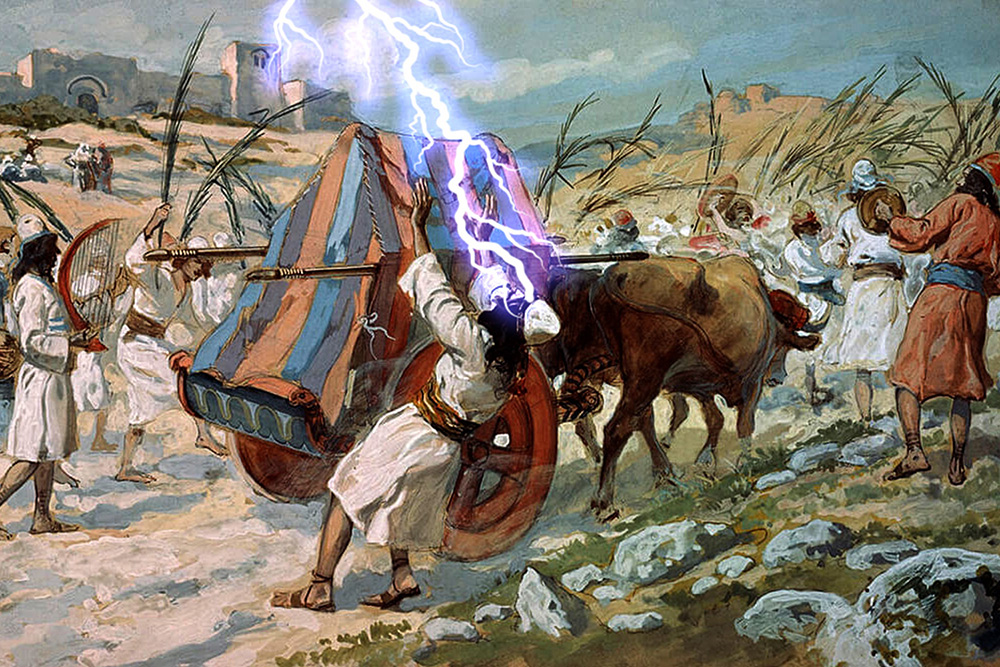
    There are countless examples we can look to where a perceived loss of patience occurred. In these examples, our human eyes see a loss of patience. Examples include the times the Lord told Moses He was going to destroy the Israelites (Exodus 32, Deuteronomy 9:12-14) or Uzzah touching the ark (2 Samuel 6:6-7).

    Does God change His mind?

    Various Google searches of “Is God impatient” come up with many titles like “God is patient – until He isn’t.” I propose that this is not the right way to think about God. I lose patience with my toddler, often. We all lose patience, often. Does God “lose patience” with me? I don’t think so.

    Remember the omniscient thing? Omniscience=all knowing. If God knows the beginning from the end, how can He lose patience? He knows what’s coming.

    From this link during some of those Google searches:

    “God is never said to be patient about things or circumstances. Why? It is because He knows all things. He knows the beginning from the end. He does not have any need of that kind of patience. When we speak of the patience of God, we are not talking about enduring hard times; we are talking about being longsuffering toward people.”

    David Hocking

    Patience, like time, is a human thing. It doesn’t apply to God. We apply it to Him in our attempt to understand Him. But how can God be “patient” if He already knows everything?

    So why are these examples, where it seems like the Lord changes His mind, included in the scriptures? Why is the account of the Lord saying He was going to destroy the Israelites and raise up a seed through Moses, only to “change His mind” included in the Bible?

    The question, “Why is it in the Bible” is almost always answered, “to teach us about Christ.”

    Let’s look at the Moses example.

    Moses is talking to Jehovah when he pleads on behalf of the children of Israel. He is interceding on their behalf. Who does Moses represent here? – Jesus Christ, our advocate with the Father. So, in this case, Moses was being a type of Christ and Christ was assuming the role of God the Father. We were learning from this scripture that Christ is our advocate with the Father, the same way Moses was the advocate for the Israelites with Jehovah.

    We must be careful in applying our human traits to God. God is not us. He works on a completely different plane. We can’t comprehend His ways and it’s important, because of our lack of understanding, we don’t lessen His power and perfection in our finite minds.

    God doesn’t lose patience with circumstances. He can’t. He knows all the circumstances. He knows the beginning. He knows the end. God doesn’t lose patience with us. He can’t. He is perfect in everything, including His love for us. He can want the best from us, He can want us to be better, He can want us to make better choices. But He DOES NOT lose patience with us. He is longsuffering. He is loving. He is perfect.

  • The Prints

    The Prints

    There’s a subtlety throughout scripture I don’t think we discuss often enough.

    We know that when we are resurrected, we are resurrected to our perfect frame. Not a hair on our heads will be lost. We will be perfected (Alma 11:43-44).

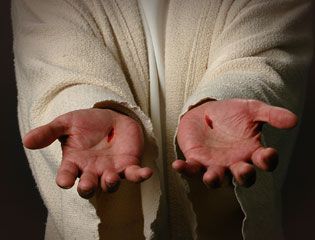
    We also know that when Christ showed Himself after His resurrection, He retained the prints in his hands, wrists, and feet (3 Nephi 11, John 20).

    Why does Christ retain these markings? Why does He keep these reminders of the most pain and suffering any person has ever experienced? It’s because Christ doesn’t remember the suffering when he looks at those marks. He remembers us.

    He could choose to remove those physical “blemishes.” Instead, He keeps them as a reminder.

    He also probably keeps them for us. So that when we see Him, we can be reminded of what He did for us. So we can remember His suffering and in turn realize how deeply He loves us. In this sense, Christ may have Thomas the Doubter (unfair title) in mind (John 20:25).

    Everything in scripture can hold some deep significance.

    I think this often overlooked fact holds spectacular significance.

    He was pierced through, tortured, suffered for us. He will never forget us. We are etched in the palms of His hands.

  • What is a Place?

    What is a Place?

    Prepare for one of my more “out there” posts. You’ve been warned. Here we go.

    I often hear statements like, “When we die, we may not be in the same place as our family but…”

    For those who don’t know the doctrines of the Church of Jesus Christ of Latter-day Saints on the kingdoms of heaven, this will be something I’ll likely write about another time. In the meantime, read this link.

    We know that here on earth, time is much different than in heaven. In the afterlife, time will be a completely different concept. Our understanding of time is completely impacted by our mortal experience. There’s a good chance in the next life there will be no “time.” This is a difficult concept to wrap our mortal brains around, but I believe it to be true.

    I think the next life might have a similar application for “place.” Here on earth, we have such a finite understanding of “places.”  You’re here or you’re there. Then how can God be everywhere?

    I wonder if our understanding of “place” will be much altered in the next existence, just like time. Space and time; I’m sure a quantum physicist can speak on this topic with much more eloquence.

    The point I’m trying to make is, here on earth we get hung up on many things. Who will be married to who in heaven? Where will I be? What will I be doing? How will I spend my “time”? On and on our questions go. It’s natural for us to ask these questions. A constant topic of my writing is the wish that people would ask these questions more.

    These questions are good, but here’s another one: what if the next existence is so out of our realm of understanding that these questions don’t even make sense?

    Where will I be?

    Where will my family be?

    Back to that original statement I hear often: “I may not be in the same kingdom (place) as my relative, but I will still be able to see them.” 

    What if this is a wholly incorrect way of thinking about it? Yes, there will be kingdoms. What if this concept of kingdoms is a way for God to help us try to understand the next life? What if the kingdoms of heaven are analogous to our state of mind?

    This applies, I think, to the Telestial Kingdom which we are told is as numerous as the stars. Will each person really have a star as their own “place?” I don’t know. Maybe. Maybe it’s a state of mind. The Telestial Kingdom could be our state of mind, our paradise, our new home – as numerous as the stars which are as numerous as different states of mind.

    This state of mind idea also applies to visits and how those of a higher kingdom can visit those of a lower. Where will my family be and can I visit them? Do I want to be in the Celestial Kingdom if my family is in the Terrestrial Kingdom? If our “kingdom” is a state of mind or a state of consciousness, this explains how easily we could visit other “places.” Someone with a certain level of consciousness could easily visit, temporarily, a lower plain or consciousness to be with loved ones. But a lower state of consciousness can’t just raise its level to the higher “kingdom.” If they could, then they would join that kingdom.

    I know. Now I’m in full matrix, take the red pill and raise your “consciousness” talk, but hear it out, read it again, consider it. Maybe there’s something there to ponder.

    We know that only those who wish to obtain the highest glory will attain it. God will not force individuals to be “somewhere” “better” if they don’t want to be there. The greatest sinner doesn’t want to be in the presence of God. They would rather be outside of His presence than endure the glory that He is and feel how short they fall. The pain of being without God is less than being in front of Him and knowing what you could have been, and what you refused to be.

    What if hell is a state of mind and being, not a place?

    This thought came completely new to me from a (questionable) book called Ye Are Gods. But all books can open our minds or thinking or teach us something:

    “Each degree of glory is merely a state of consciousness in the mind of each individual, from those who live in the filth of the gutters and the slums to those who travel a highway of light. Celestial glory is a state of consciousness or awareness and understanding. It is man’s heritage to look unto his Father and to claim his divine birthright.”

    Hopefully I’m not being blasphemous here. I think this is an interesting thought experiment. I think this is a curious idea.

    I need to ponder upon this more, but I believe I’m touching the iceberg of some truth here. This is not doctrine or anything church official I’ve read, just my thoughts. If you ever ask yourself these questions, I would love to hear yours.

  • Agency and Mistakes: Was Brigham Young Wrong?

    Agency and Mistakes: Was Brigham Young Wrong?

    Let’s start with an assumption.

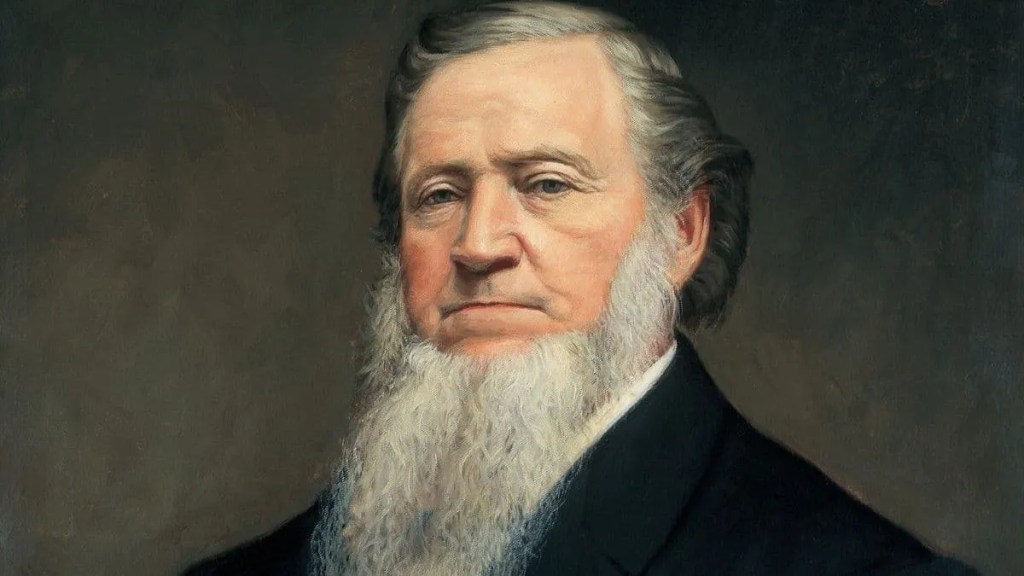
    What if Brigham Young incorrectly instituted the practice of the priesthood ban for black people?

    We always think in this way that God can do anything, however He wants to. Why didn’t He fix the priesthood ban for blacks issue immediately after Brigham Young if it was in fact a mistake by Brigham Young?

    We sometimes neglect to think that, if God were to fix things however He wants to, that would likely supersede our agency. This whole life is about us making choices. It would be a problem if God started correcting everything on this earth, especially with our many mistakes and shortcomings as mortals. It was never in God’s plan to supersede our agency, that was Lucifer’s plan.

    But let’s take a bigger perspective on this.

    What if God did correct this issue of black men not receiving the priesthood in the 1800s and early 1900s? What if He corrected it an eternity ago, when He created the Plan? God’s plan is perfect. God doesn’t always fix things the way we think He should fix things. In fact, He probably never fixes things the way we think they should be fixed. That’s what makes Him God and us tiny mortals trying with all our might to be like Him, but inevitably falling short.

    God’s Plan was established well before black men were denied the priesthood through Earth’s late 19th and early 20th centuries. His plan allows all those who would have faithfully accepted the priesthood while in this life to lose out on nothing. This is in precisely the same way His plan accounts for His countless children who didn’t have access to the saving ordinances of the Gospel in life, whether that be due to the gospel not being present on earth, never hearing about it, or a child dying before reaching the age of accountability. God’s plan is perfect. He’s already thought it through. I assume those who have an issue with the delay in the Church allowing black men to have the priesthood also have an issue with the tens of millions of infant deaths each year. In that case, your issue is with your faith in God, not in any church policy.

    I understand that these things are hard to understand while here. Some reading this may respond, “Yes, that’s precisely the issue I have: That many noble and worthy men weren’t allowed the priesthood and the millions of innocent children that die unfairly.” I understand this challenge. This is where faith comes in. I have faith in God, His Plan, His love, and that He will make all these things we don’t understand right. If we don’t have faith in those things, then yes, God is a monster that we should not worship. The God I know loves us and one day all these things will be understood.

    Something to us, here, simple and short-minded on earth, that looks like a huge mistake – it’s not a mistake to God. All those who couldn’t get the priesthood due to an incorrect policy will receive it.

    What if Brigham Young did make a mistake and what if the Church really would have collapsed if that mistake was corrected in the 1860s? THEN God’s church wouldn’t be on the earth. That seems like a real mistake. Again, God has thought these things through.

    We have an example of this principle in the policy change instituted by Wilford Woodruff banning plural marriage. In Official Declaration 1 of 1890, now in the Doctrine and Covenants, Wilford Woodruff says,

    “The question is this: Which is the wisest course for the Latter-day Saints to pursue—to continue to attempt to practice plural marriage, with the laws of the nation against it and the opposition of sixty millions of people, and at the cost of the confiscation and loss of all the Temples, and the stopping of all the ordinances therein, both for the living and the dead, and the imprisonment of the First Presidency and Twelve and the heads of families in the Church, and the confiscation of personal property of the people (all of which of themselves would stop the practice); or, after doing and suffering what we have through our adherence to this principle to cease the practice and submit to the law, and through doing so leave the Prophets, Apostles and fathers at home, so that they can instruct the people and attend to the duties of the Church, and also leave the Temples in the hands of the Saints, so that they can attend to the ordinances of the Gospel, both for the living and the dead?

    “The Lord showed me by vision and revelation exactly what would take place if we did not stop this practice. If we had not stopped it, you would have had no use for … any of the men in this temple at Logan; for all ordinances would be stopped throughout the land of Zion. Confusion would reign throughout Israel, and many men would be made prisoners. This trouble would have come upon the whole Church, and we should have been compelled to stop the practice. Now, the question is, whether it should be stopped in this manner, or in the way the Lord has manifested to us, and leave our Prophets and Apostles and fathers free men, and the temples in the hands of the people, so that the dead may be redeemed.”

    Sometimes we live with this thinking that God can do whatever so why doesn’t He? This, I think, is the basis of so many losing faith in Him. I look forward to the day when we are all reminded that we came to earth willingly, that we knew the Plan, and that we were eternally grateful for the opportunity to have freedom of choice and to learn right from wrong, away from Him (God), where it was completely up to us to make choices.

    Again, we fall into this thinking, I think, that God can do anything He wants however He wants. Maybe. But God still works through us. God still gives us our agency. God still lives by laws. God said He allows plural marriage in the case where he wants to raise a righteous generation unto Himself (Jacob 2). What would we have had God do if He needed to grow the church membership in one generation? Import a couple hundred thousand men and women from space? The answer is – God works with us. He works within the world He has given us.

    God allows us the bounds to make mistakes. Within those mistakes, God’s Plan works. I have faith in the truth of that. God takes our worst, and it becomes part of the Plan. He prefers our best, but He knows us better than we know ourselves.

    On the question of if Brigham Young did make a mistake – again, maybe the answer is yes, but I will refer again to the Official Declaration 1 – this was Wilford Woodruff speaking, “The Lord will never permit me or any other man who stands as President of this Church to lead you astray. It is not in the programme. It is not in the mind of God” (emphasis added).

    It is not in the program. It is not in the mind of God.  

    I believe in giving God all the power we actually try to take away from His power. God doesn’t watch things unfold her and go, “Oh crap, I need a righteous generation, let’s implement polygamy.”  Or, “Oh man, Brigham isn’t listening, this is bad.” This was worked out long ago. Just because we don’t like the way God did things makes it all the more likely He did it perfectly, because we are dumb, and so limited in our view. We cannot comprehend the workings of God.

    Did Brigham Young make a mistake? I don’t know.

    I know who didn’t make a mistake. That’s where I put my faith.
  • Discussion Before I Came to Earth

    Discussion Before I Came to Earth

    “Now, you’re going to get a lot of attention. A LOT. You will be the center of their world for years. This will give you a huge advantage in life. That early love will carry you for your entire mortal experience.”

    My upcoming birth and place in life were being discussed.

    “But, there is a downside. Your parents are young, inexperienced. They can barely take care of themselves. Now they’ll have to take care of you. They will make mistakes. Every mistake they make will be made up for by the outpouring of love you receive, but there will still be mistakes. You will have to grow up as they learn to take care of a child.

    “Also, being the first-born will be a huge responsibility. If things go according to plan, and they always do, you will be the first of many children. Your younger siblings will be as much your responsibility in life as your parents. You will have to answer to how you treated them, how you watched over them, how you protected them, how you supported them. It will start at a young age, but it will be for your entire mortal life. You will have to watch over them.”

    I loved each of them so much already. Of course, I would do that.

    “Being the oldest will provide many unique opportunities. Sometimes you will be a bully. This will be to teach you something later in life and to teach your siblings. Over time your relationship with them will grow and develop. You all will mature mortally and spiritually.

    “It won’t be easy. But being the first-born child will set you up to achieve your highest potential. It’s what He has in store for you. It will help you become who you can become.”

    This is how I imagine the conversation in heaven was before I came here. It would continue,

    “You will have a bumpy path. You’ve always had to learn things through trial and error. You will taste much of the bitter to realize how sweet obedience is.

    “Eventually we believe you will come back. Of course, that will be up to you. But Father doesn’t misread these things. When you come back you will find a companion from the devoted women of the kingdom. You know her already.

    “When the time is right, we will send you His choicest spirit. She will enter in much the same position you entered this world. Your wife and you will have much to learn, and she will teach you. You will be sent a strong, powerful, spiritual, kind, gentle, intelligent spirit to be a cornerstone of your family. She will be followed by another choice spirit, one who even now can’t wait for her experience to start. She will bring a spark and a light to your family. Your family will be stronger for the two pillars sent to expand it. You will be greatly blessed by your daughters.”

    Doesn’t this bring so much meaning to life? The truth of premortal existence speaks to my soul. I know it to be a fact. It is too sweet for my spirit to deny. I know its truth. I knew where I was coming, I knew who I was joining, I knew my wife and daughters before I came here. I was guided and trained for my time here on earth. I was sent for a purpose. I believe I’m still learning that purpose. Every mortal experience I’ve had has led me to the purposes I’m finding in life.

    “Your purpose will be to come to Him. Because you will taste so much bitter, you will be able to help others find Him. This will be your purpose.”

    I’m grateful for this truth of premortality. I know it’s true. I feel it. I know there’s a reason I’m here. I’m grateful for that.

    https://www.churchofjesuschrist.org/study/manual/gospel-topics/premortality?lang=eng