Tag: god

  • The God Question: Intelligent Design, Evolution, and God

    The God Question: Intelligent Design, Evolution, and God

    This is a version of an essay I wrote for a science and religion course. That’s why it has such an “official” tone, and the headlines. I don’t share this because I think it’s an extraordinary essay. But I do think I made some decent points about the “God issue” in science. When you spend this much time writing an essay that fits the theme of your blog, it’s just gotta be shared. So here’s my essay on intelligent design, evolution, and God.

    Intelligent Design and Evolution

    God is the center of the debate between science and religion, and in particular the debate between the theories of evolution and intelligent design. To claim any other conflict ahead of the question of whether God exists is to distract from the root cause that separates these theories. If the question of God’s existence could be solved one way or another, then evolution and intelligent design could coexist and potentially benefit one another. Unfortunately, the existential question of God will never be solved by science. Therefore, with God being the center of the issue, exploring the “God issue” between evolution and intelligent design is the best way to help the two theories reconcile with one another, even if the true question, “does God exist?” is never answered.

    The God Question

    Believers of evolution and believers of intelligent design have more to agree upon than is often realized. However, there is one topic or question that creates a gulf between the two fields. That question is: Does God exist? When evolutionists and intelligent design proponents come to understand this as the main question that separates them, it may be possible to relate and coexist, and therefore grow as fields of knowledge alongside one another. It is the loud voices of ardent atheist evolutionists such as Richard Dawkins, Sam Harris, and Daniel Dennett who pronounce aggressive disbelief in God, and it is the loud and passionate voices of creationists who oppose belief in the undeniable evidence of evolution that create this void (Wolf, 2006). The milder, middle-of-the-road voices get drowned out by the louder minority. The believer in intelligent design who accepts the facts of evolution and the believer in evolution who can see the merits in intelligent design theory are the voices that bring these two fields to an agreement that benefits both. Intelligent design need not deny many aspects of the theory of evolution. Evolution need not devalue the merits of the theory of intelligent design. At the root of the conflict is the belief in God. Coming to understand God as the major issue and question can bring both sides into more agreement, or at the very least, a middle-ground of mutual understanding.

    Historical Belief in God

    The thinking of the world has transitioned aggressively from a belief in God. While there has been a movement away from God, especially in scientific communities, as can be illustrated in countless scholarly writings such as The God Delusion (Dawkins, 2006) and Why Intelligent Design Fails (Young & Edis, 2014), a large portion of the world still believes in some higher power, some creator that put humans on this earth. It is nearly impossible for a firm believer in God to remove that innate belief from their consciousness.

    In the book The 5000 Year Leap, Cleon Skousen (2011) discusses John Locke’s famous Essay Concerning Human Understanding. “In it Locke pointed out that it defies the most elementary aspects of reason and experience to presuppose that everything in existence developed as a result of fortuitous circumstance. The mind, for example, will not accept the proposition that the forces of nature, churning about among themselves, would ever produce a watch, or even a lead pencil, let alone the marvelous intricacies of the human eye, the ear, or even the simplest of the organisms found in nature. All of these are the product of intelligent design and high-precision engineering” (Skousen, 2011, pp. 95-96). Locke’s thinking agrees with the teleological argument of intelligent design put forth by William Paley in the 1700s (Crashcourse, 2016). Locke continues to expound on this topic by pointing out how a man can come to know God exists. Skousen concludes with Locke’s thinking, “And because any thoughtful person can gain an appreciation and conviction of these many attributes of the Creator, Locke felt that an atheist has failed to apply his divine capacity for reason and observation” (Skousen, 2011, p. 97).

    These examples from Locke are used to illustrate a point. It was not long ago that disbelief in God was deemed a ludicrous proposition. It wasn’t long ago that these theists were the louder voices. Historically, those with no belief in God have been discriminated against and ridiculed similarly to how science ridicules belief in God today. Ridicule of the belief of God is as counterproductive today as the ridicule of not believing in God has been throughout history.

    Attack on God

    An outspoken opponent of theism in the scientific community is Richard Dawkins. One of the basic attacks Dawkins uses against God is comparing belief in God to belief in any number of mythical creatures. Dawkins often refers to belief in God as being similar to believing in a Flying Spaghetti Monster (Dawkins, 2006). Dawkins says that because people believe in something ridiculous like the Flying Spaghetti Monster, doesn’t mean he has to accept it. This analogy is not close to comparable. There aren’t books handed down for centuries about belief in the Flying Spaghetti Monster. There isn’t a majority of the world population believing in Flying Spaghetti Monsters. We don’t have any support for the existence of Flying Spaghetti Monsters. This is just one example of an unfair attack from the “militant atheism” that Dawkins proposes (Dawkins, 2008).

    Scientists like Dawkins ignore the evidence that does exist out there because it doesn’t suit their needs or beliefs. This is the opposite of scientific progress and something Dawkins is “militantly” opposed to. There are many unexplained phenomena with adequate scientific evidence behind that scientists like Dawkins disregard simply because it’s phenomenal and they can’t understand it. Take, for example, near-death experiences. The catalogs and books being put together of people of different cultures, ages, demographics, and backgrounds all detailing a similar experience is dismissed out of hand. Science is based on observation. If any other phenomena like gravity or momentum had as much documented support as near death experiences that have been cataloged, scientists would explore further, not dismiss automatically.

    Another main critique of intelligent design is that the theory mentions design without defining who the designer would be. The reason intelligent design refuses to mention the designer is obvious. The mere mention of God is liable to get extreme backlash from the scientific community. Furthermore, it leaves the concept open to the many interpretations of the nature of God and who the creator may be across varying religions. This is an example of why the attack on God is counterproductive. It creates the dynamic where intelligent design theory talks about an ambiguous “designer” without simply stating that the designer is a theorized divine creator. God is the answer to the question of who the intelligent designer would be, and yet because of the aforementioned loud minority, God is not specifically mentioned. The issue is that while so many believe in this designer, in and out of the scientific community, no one can say the name for fear of being criticized.

    Intelligent Design within Evolution

    There is plausible proof of many elements of evolution. However, this does not remove the possibility of the influence of intelligent design. That is to say, it is conceivable that the world can evolve while also having the influence of an intelligent designer that planned for this evolution and progression. The two theories need not be at odds with one another. Intelligent design and evolution both have holes and flaws in their theories as Darwin himself admitted (Leddra, 2010). Neither theory is perfect. If either theory were perfect, there would be a definitive answer. That’s why they are still classified as theories. The conflict really comes down to one question: is there a God? This is where the entire conflict between intelligent design and evolution lies. That question will not be answered decisively by either science or religion.

    Science will not answer whether God exists. That will always be a matter of faith. If that question is answered it will mean that God has revealed Himself and His purpose, as science will never disprove God. This is obvious, for you cannot prove that something does not exist. If there is a God and He reveals Himself and His purposes, designs, and methods to humanity, then the conflict between intelligent design and evolution will instantly become a moot point. Humanity will know for a fact how living things came to be. The question of if they evolved, how they evolved, and God’s role in it, and these debates between intelligent design and evolution will become null and void. 

    Conclusion

    These examples showing the change in how God is perceived in both society and science, and how science has changed in the attack on God, go to show the underlying cause of all the controversy. It is ultimately about the existence of God. We can conclude, then, that it is extremely important for religion and science, and their respective theories, to consider how they can coexist with one another. By rejecting even the possibility of a God, science limits itself and its ability to explore the universe. By rejecting evolution, the theory of intelligent design limits its ability to coexist with science. Science will benefit by cooperation between the theories of intelligent design and evolution. This cooperation ultimately hinges on finding a way to reconcile the question of God, for the ability of all theories to progress to their fullest potential, and the furthering of knowledge for humanity.

  • A Miracle that Changed the World

    A Miracle that Changed the World

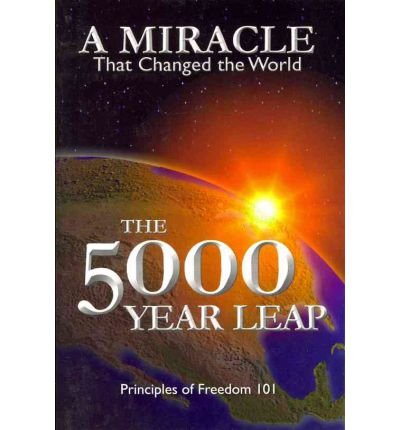
    These are thoughts from a book I read recently called A Miracle that Changed the World. It was an awesome book that laid out just how spectacular the establishing of America was. This was a section of the book I had some thoughts on. I’m quoting sections of the book with my thoughts.

    p. 52:

    The Tide of Reform

    “Many Americas became extremely self-conscious about their lack of “public virtue” because of non-involvement in the affairs of government. They began to acknowledge their obsession with self-interest, the neglect of public affairs, and their disdain for the needs of the community as a whole. Gradually, a spirit of “sacrifice and reform” became manifest in all thirteen colonies.”

    This occurred in America in the couple of years leading up to the Declaration of Independence being signed. Is it any coincidence that a spirit of sacrifice, public virtue, and selflessness preceded the greatest revolution in the history of the world and the rise of the greatest nation ever to exist on earth? God needed a self-sacrificing and humble people to inherit the new world. When they exhibited these qualities, they became His chosen people to enact this major event. This led to a revolution and the freedom from tyranny that allowed the explosion of religious freedom that God planned, that couldn’t have happened under the rule of a monarchy. It started with sacrifice, service, and humility.

    “In the eyes of the Whigs, the two or three years before the Declaration of Independence always appears to be the great period of the Revolution, the time of greatest denial and cohesion, when men ceased to extort and abuse one another, when families and communities seemed peculiarly united, when the courts were wonderfully free of that constant bickering over land and credit that had dominated their colonial life.”

    Two things especially stand out to me from that statement –

    1. “families and communities seemed peculiarly united.”
      • From the Family Proclamation: “We call upon responsible citizens and officers of government everywhere to promote those measures designed to maintain and strengthen the family as the fundamental unit of society.”
      • As the fundamental unit of society, strong families make for strong society. No wonder Satan has so adamantly attacked the family. Look at divorce rates, look at what has happened to the American family. The dismantling of families is the the beginning of the downfall of a great society, and we’re seeing it happen right before our eyes.
    2. “the courts were wonderfully free of that constant bickering…”
      • Could the 13 original colonies have broken from the greatest world power at that time, colonies v. Greatest World Power, if they were busy bickering amongst themselves? It took unity for the freedom of America to be established.
      • D&C 38:27: “be one; and if ye are not one ye are not mine.”

    This is what we need – Americans to become self-conscious about how selfish we’ve become. This is the eternal principle of unity. America needed to be united under one cause and one heart before they could break free from tyranny. God wants us to be one. What has happened to that unity?

    I read in a Doctrine and Covenants commentary how early church members, going back to the very earliest days of the church, were advised to avoid courts. It was said that if a dispute couldn’t be resolved by arbitration, then there was discord and discontent too strong amongst the parties, and they needed to evaluate what they truly valued. One early church leader, Oliver Cowdery, was chastised for becoming too involved in the courts, and it ultimately began to descent towards his excommunication.

    “When Oliver moved to Missouri in 1837, he sought to alleviate personal debts by starting a legal career. Witnesses testified that Oliver had urged people to sue others in court who “fired guns in town,” who broke “the Sabbath day,” he “frequently solicited for business in collecting debts,” and “urge[d] on lawsuits with others.””

    There can’t be unity where there is constant bickering and lawsuits. Those needed to be removed from public standards before the 13 colonies could think to stand up against Britain.

    The book continues:

    “How the Moral Reform Accelerated the Revolution

    “Many Americans became so impressed with the improvement in the quality of life as a result of the reform movement that they were afraid they might lose it if they did not hurriedly separate from the corrupting influence of British manners. They attributed this corruption to the monarchal aristocracy of England. Even Americans such as John Jay, Robert Morris, and Robert Livingston were beginning to see that the people were exhibiting a potential capacity for virtue and morality which would guarantee the success of a free, self-governing society. Therefore, it became popular to express the sentiment that the sooner they became independent the better” (emphasis added).

    The underlined portion is the part that stood out to me. Imagine if society today could be said to have such a high standard of virtue and morality. This is what guaranteed the success of the United States: A virtuous and morally upright people. This is why they could self-govern themselves, because they self-governed in righteousness. Imagine describing our society like that today – excess of virtue and morality.

    The definition of virtue is “behavior showing high moral standards.”

    The definition of morality is “principles concerning the distinction between right and wrong or good and bad behavior.”

    We couldn’t be farther from such a standard. We’ve gone so far off the path that we have reversed morality so that right is wrong and wrong is right. We have molded morality to be what we want it to be. The early Americans who established this nation were moral and upright in all their dealings, which allowed them the honor of being the people to establish the most free, most righteous, and most powerful nation in history. Freedom and righteousness are power.

    Another motivating factor for the colonies wanting freedom from England was to avoid developing all the negative attributes of the British.

    “British influence was already taking its toll. One alarmed American wrote, “Elegance, luxury and effeminacy begin to be established.” David Ramsay declared that if Americans had not revolted “our frugality, industry, and simplicity of manners, would have been lost in an imitation of British extravagance, idleness and false refinements” (emphasis added).

    America has gotten closer to extravagance, idleness, and false refinements than frugality (look at our national debt), industry (look at our bail outs), and simplicity (look at social media).

    It’s time for unity in America. It’s time for virtue and morality. It’s time to protect and re-establish the importance of the family. It’s time to return to frugality, industry, and simplicity. If America can return to these values, maybe it stands a chance to stay a chosen nation and be protected from the tribulations that are to come.

  • A Wife Who: Message to my 22-year-old self

    A Wife Who: Message to my 22-year-old self

    Find yourself a wife that is kind, caring, and good.

    Find someone you know will be a good mother not by any one action or by any words but by their being; who they are.

    Find someone who will love, uplift, and support you through everything you want to accomplish.

    Here’s an important one: find someone that will love you conditionally. The world says to find someone that loves you unconditionally. That’s too easy. Where is the growth and progression in being loved unconditionally? Find someone who wants you to improve and be better as much as you yourself want to improve and be better.

    Find someone who also wants to be better.

    When two people independently want to be stronger and better, they collectively become stronger and better.

    As important as someone who loves you conditionally, find someone who loves the Lord unconditionally. Find someone who has a testimony of what is important in this life. While the world moves and shakes, find someone with a foundation. So that if ever your foundation becomes weak, you have someone whose foundation is strong.

    Keep your foundation strong for that person as well, so that they can rely on you when their foundation needs shoring up.

    Find someone who wants God to be a part of your life, family, and home. If God is in your home, your home can never fail.

    Find someone with faith. Find someone with devotion. Find someone you can trust.

  • God Loves a Returned Sinner

    God Loves a Returned Sinner

    Luke 15:7 reads:

    “I say unto you, that likewise joy shall be in heaven over one sinner that repenteth, more than over ninety and nine just persons, which need no repentance.”

    Why does heaven rejoice over a returned sinner?

    Why does Christ love a returned sinner? This should be obvious. Christ loves a returned sinner because they’re utilizing His Atonement, the great gift He gave them. He suffered for that gift. Why wouldn’t He rejoice over it being used?

    It’s very important to point out that this doesn’t make the returned sinner any better than the constantly faithful. Do you think God is up there thinking, “you were always upright. Too bad you didn’t sin some more so I could have increased joy”? Of course not. God loves the consistently faithful. I think another important point here is that we’re all sinners. So, by this scripture we can know, that God loves all who repent of sins. We all sin.

    An individual from history who was a clear sinner, making evil choices, even if he didn’t realize it, was Paul. Paul ended up being one of the greatest missionaries ever but started as the greatest persecutor of the church. Paul received a miraculous visit from Jesus Christ. This converted him and he instantly changed his ways. As we read the scriptures, Paul’s change seems instant. But I believe there was a reason he had to travel blind for three days. I believe his change was actually slow and required a lot of humility.

    Paul became an obvious example of Luke 15:7, heaven rejoicing. Paul was such a go-getter of persecution; the Heavens must have been excited to have him on their team once he converted. Imagine how the angels rejoiced when Paul turned to the Lord because they now knew how ferocious he would be for the Lord.

    Peter can be seen as another example of someone who didn’t always make the right choices. Isn’t it amazing to read the New Testament and consider how flawed the individuals were who Christ chose to spread His word and be His ministers? Peter was no exception. You can look to Peter’s three denials of Christ as a great scriptural moment representing needing to learn a lesson, repent, and double down on conversion and commitment.

    Peter made a huge, and life-altering mistake by denying Christ those three times. It was life-altering for how it helped Peter change his life. It could have been life-altering in how it turned Peter away from Christ. He could have gone the other way. Christ knew He wouldn’t. That’s why Christ picked Peter.

    The show “The Chosen” does an interesting job of depicting Peter. What if Peter was kind of a bad guy? Not a bad heart, but did some bad things. A rough guy. A guy that made a lot of mistakes before he met Jesus and fell in as one of his apostles. Then, slowly, over much time around the Master, Peter became His primary apostle. Peter eventually became the president of Christ’s church.

    The student manual for the book of Mark notes:

    “Mark, more than the other Gospel writers, recorded the disciples’ shortcomings (see Mark 4:36-41; 6:52; 8:14-21). The disciples’ weaknesses stand in contrast to their greath faith and successes, which are depicted in the book of Acts, helping us appreciate the transformation brought about by the Resurrection and the outpouring of the Holy Ghost.”

    Never judge a sinner. They can become the most kind, most gentle, most Godly person. We all have Godhood in us. One day our sins will be in great contrast to our faith and successes when we ultimately attain our full potential.

    The Bible Dictionary definition of “conversion” states:

    Denotes changing one’s views, in a conscious acceptance of the will of God (emphasis added, Acts 3:19). If followed by continued faith in the Lord Jesus Christ, repentance, baptism in water for the remission of sins, and the reception of the Holy Ghost by the laying on of hands, conversion will become complete and will change a natural man into a sanctified, born again, purified person-a new creature in Christ Jesus (see 2 Cor. 5:17). Complete conversion comes after many trials and much testing (emphasis added, see Luke 22:32; D&C 112:12-13). To labor for the conversion of one’s self and others is a noble task, as in Ps. 51:13; Dan. 12:3; James 5:19-20; Alma 26; D&C 18:15-16.”

    The part that stood out to me most from that definition was that complete conversion comes after many trials. I know it did for me. I had to experience the bitter to appreciate the sweet. I had to see how dark life could feel to appreciate Christ’s light. I know my testimony is stronger because I had to learn how dark it can be.

    Did Peter experience his change through trials? Did Paul? I think they did. Those who go through the greatest trials and then turn to the Lord become his most devout followers. Paul was blind. That’s quite a trial. But when he saw the light, he never turned away from it again.

    We all don’t receive miraculous visitations from Jesus Christ like Paul did, or get to work with Christ side-by-side like Peter, but we can still feel His presence, serve Him, and feel what it’s like to have Him by our side. Imagine how different your actions would be day-to-day if Christ was with you? Well, He is.

    Sometimes I worry that faithful, day-one-never-wander latter-day saints are missing this. This devotion to the cause. This understanding of how much you need Him. It’s why trials happen. Otherwise, we’d all walk merrily through this life, never understanding the true depth of the Atonement and how desperately we need Him.

    Now, trials come in all shapes and sizes. Just because someone appears to never have gone through “it”, doesn’t mean they’ve never gone through it. We never know the internal struggles, challenges, and difficulties someone faces in their faith. It’s usually not on the outside. But if you see a devoted person to God, you can assume they’ve been through something. It’s those somethings that bring us to Him.

    God loves a returned sinner. Remember that whenever you make a mistake. While we don’t want to make mistakes, we always want to do our best, God will welcome us back with open arms when we make mistakes and repent. It’s a comforting thought whenever we mess up. God knows our heart. Part of making mistakes and repenting is truly regretting it. This doesn’t mean beating yourself up about it or getting too down on yourself, but it does mean truly feeling regret and remorse for mistakes. This can’t be faked. God knows your heart.

    I think we can learn something really neat from examples like Peter and Paul. No matter how far we stray, God has a place for us. God doesn’t look at what we’ve been or what we are, but what we will be. He knows what we will be. He sees that in us. I’d guess it’s His greatest desire that we see in ourselves what He already knows is there.

    Be like Peter and Paul. Be someone Christ can pick.

    God loves a returned sinner.

  • Faith of an Atheist – Bouncing Atoms

    Faith of an Atheist – Bouncing Atoms

    What does an atheist have faith in?

    We all have faith. We have faith that we eat, and the food will sustain our body. We have faith that we drink, and the water sustains our body. We have faith that we breathe, and air sustains our body. We have faith that we will move, and it happens. Every act of our lives is an act of faith.

    As Lectures on Faith Lecture First says: “without [faith], both mind and body would be in a state of inactivity, and all their exertions would cease, both physical and mental.”

    Whether you believe in a Creator or not, this fact remains: all have faith. The only question is: what is your faith in?

    I previously wrote about the faith of an atheist HERE. That post talks about the hope of an atheist. What about the faith?

    If we all live by faith, what does an atheist have faith in?

    The only thing I can think that an atheist has faith in is their self.

    When you remove God from the equation, what else is there? There is you, your mind, your thoughts, your supremacy. Not only that, if there is no God, then this all just happened by chance. You are a product of random chance, with no meaning. You are an object with atoms inside of you bouncing around causing you to do things. If this is all by chance, there is no free will. If there is no God and we are all happenstance, if we are all a great coincidence, then we are Gods, and there are no Gods. There is nothing. There is no point.

    A lack of a belief in God is a lack of belief in anything. If this life is not about a bigger plan then it’s all pointless.