Tag: god

  • Burdens Made Light

    Burdens Made Light

    Mosiah 23:23 reads:

    “For behold, I will show unto you that they were brought into bondage, and none could deliver them but the Lord their God, yea, even the God of Abraham and Isaac and of Jacob.”

    “They” in this verse was referring to the followers of Alma. Some time earlier in the Book of Mormon story, Alma recruited a group of people who were baptized and covenanted to follow Jesus Christ. This group of people then fled from the rule of their wicked king, Noah.

    Before Alma’s people could flee, though, a prophesy was made by a man named Abinadi.

    Mosiah 12:2, Abinadi speaking:

    “Yea, wo be unto this generation! And the Lord said unto me: Stretch forth thy hand and prophesy, saying: Thus saith the Lord, it shall come to pass that this generation, because of their iniquities, shall be brought into bondage [emphasis added], and shall be smitten on the cheek; yea, and shall be driven by men, and shall be slain; and the vultures of the air, and the dogs, yea, and the wild beasts, shall devour their flesh.”

    This epic part of the story in the Book of Mormon is long and complex but long story short – Alma and his people fled wicked King Noah. Then King Noah is attacked by the Lamanites and flees into the wilderness where he is eventually burned and killed. His son, Limhi, takes over as king of the people. Limhi’s people are brought into bondage.

    Some time later, the Lamanites stumble upon Alma’s people, and Alma’s people are also brought into bondage.

    Remember, Alma’s people at this point had repented of their sins, been baptized, and turned to Christ with all their hearts. Remember Abinadi’s words, “this generation…shall be brought into bondage.” When Abinadi spoke these words, he was prophesying in the name of the Lord. Can the Lord lie? The Lord cannot lie. When He speaks, it must be true, and it must come to pass.

    Despite their new covenants, prophesy still had to be fulfilled, and Alma and his people had to be brought into bondage.

    There are many important lessons we can learn from this story. In particular we can learn from the people of Alma. Despite their good choices, they were still brought into bondage. Making good choices, being good people, doing all the right things like keeping our temple covenants, serving others, going to church, taking the sacrament; none of these things exclude us from adversity. Just because we’re following Christ and doing everything right, doesn’t mean everything goes perfect for us. Bad things happen to good people.

    Why do bad things happen to good people? Because lessons are learned through trial.

    What lesson is learned here?

    Mosiah 24:13-14 is the Lord speaking to Alma and the people, amidst their trial:

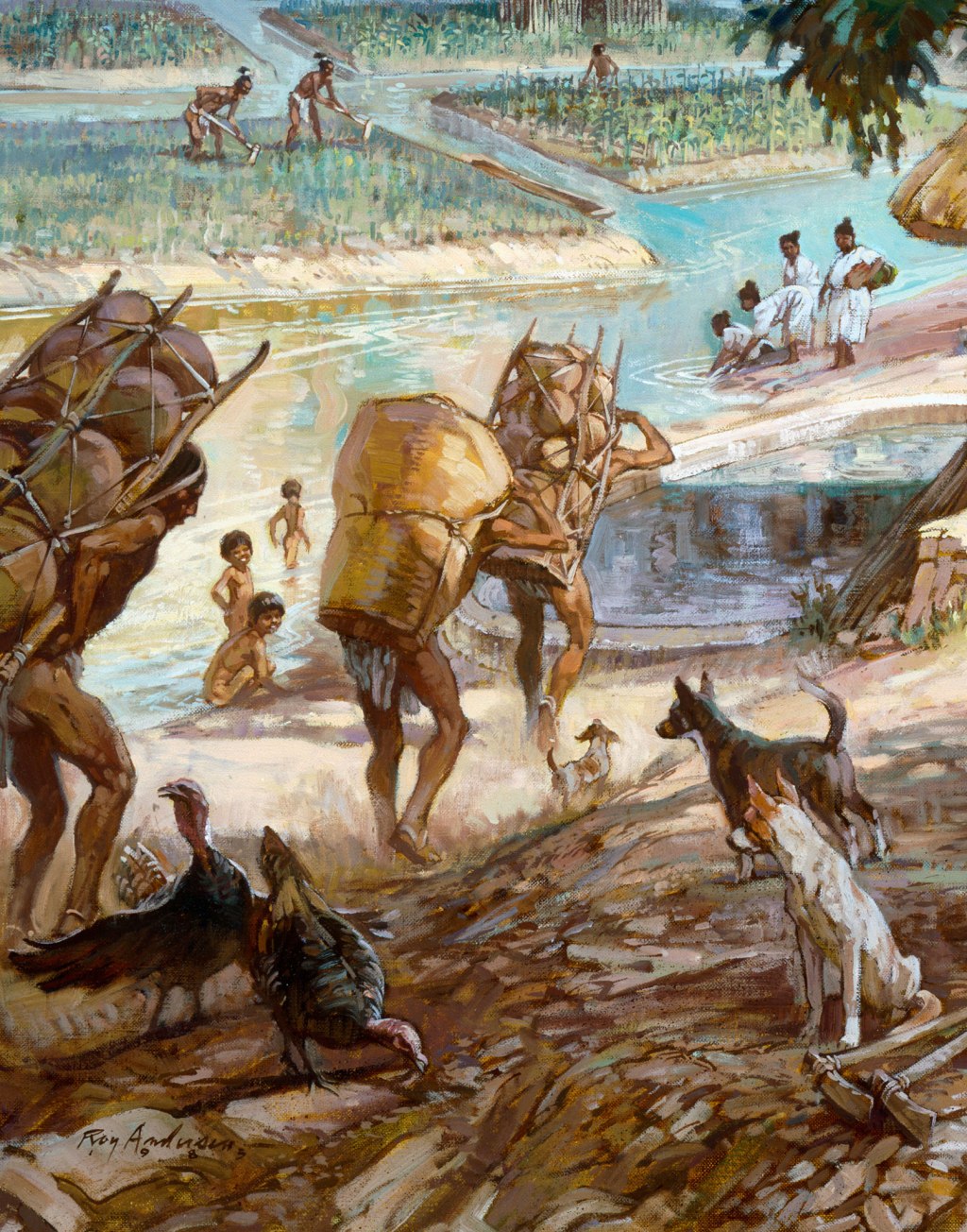
    “Lift up your heads and be of good comfort, for I know of the covenant which ye have made unto me; and I will covenant with my people and deliver them out of bondage [emphasis added]. I will also ease the burdens which are put upon your shoulders, that even you cannot feel them upon your backs, even while you are in bondage; and this will I do that ye may stand as witnesses for me hereafter, and that ye may know of a surety that I, the Lord God, do visit my people in their afflictions.”

    The Lord could not lie. The people had to be brought into bondage. But, importantly, the Lord would be with them, He would make their burdens light. And also importantly, as Mormon said in verse 23: “I will show unto you that they were brought into bondage, and none could deliver them but the Lord their God, yeah, even the God of Abraham and Isaac and of Jacob.” Since the Lord could not lie, the people could know that when he covenanted to deliver them from bondage, it would happen. They were brought into bondage because the Lord said it would be, now He was saying He would deliver them. They knew they could trust the Lord’s word.

    Amidst our hardest trials and most difficult times, we can turn to the Lord, and know that He will support, protect, and redeem us. No matter how difficult it gets. You, reading this, have your trials been as bad as becoming slaves to a harsh and bloodthirsty people? Rely on the Lord, and don’t murmur against Him. Continue to do your best and trust Him.

    Limhi’s people were in bondage for an estimated 18 years while Alma’s people were in bondage for 1 year. Do you think it made the one year any easier for Alma’s people because the people they’d left got it at least 18 times worse? Of course not. In that time, they had made all the right choices and still had to give 365 days of servitude. But ultimately, because of their covenants with the Lord, He delivered them.

    Don’t forget: with God, your burdens will be made light. Follow Him.

  • Sagey Dance Party

    Sagey Dance Party

    Sage has gotten much better at sleeping at night, thank goodness. That first month was rough. One night when Sage was a month old, I made live update notes to track her sleeping and try to understand why she was having such a hard time. Here are those notes, exactly as I typed them in my phone. These were typed in a sleepless blur throughout the night. Last Night I let the Party get the best of me (round two).

    10/4 – 10/5 with Sage:

    Fussy all night.

    Between 11:30pm and 1:30am – gave her gas drops and she fell asleep on my arms maybe midnight? Transfer her to dock (her bed) and try to hold in pacifier. Continues to cry.

    1:30am appears to be in pain. Has gas.

    1:32am patting her back upright seems to provide a little relief. Not much. She’s still crying.

    1:34am can feel her farting every couple minutes. Definitely tummy trouble.

    1:36am starts to use the restroom and seems to have relief for a moment then cries much harder. This all upright on my chest.

    1:37am she randomly seems to fall asleep on my chest with no patting or anything for ~45 seconds then starts crying again.

    1:40am Again seemingly randomly falls asleep. Gently rocking on chest, very subtle. She seems to be asleep on chest. Right arm under her bum. She’s laying on her left cheek. Her right arm up by face.

    When did she eat tonight? What happened between 11:30pm and 1:30am?

    1:44am she starts to cough. Was afraid she was going to wake up. She stayed asleep.

    1:45am want to try to sleep but afraid any movement will wake her. Sitting upright with head against the wall Sage at ~45 degree angle. She just did a shudder breath but still asleep.

    1:46am she seems ok, still sleeping. Starts clutching at my chest. Her breathing becomes audible. Sounds like she’s trying to pull in air for a couple breaths.

    1:49am she starts to tense up. Sounds like she is having a hard time breathing. She starts squirming a little. She’s still kind of asleep.

    1:51am nothing has changed but she’s in pain? Squirming and moving and starts crying.

    1:52am sit more upright. She is squirming and crying. Beth sits up and says she thinks she’s going to throw up. Sage crying. Rocking doesn’t help.

    1:53am Sage falls asleep to gentle rocking.

    1:54am Sage asleep. Stop rocking. Beth in bathroom. Might have a stomach bug or something. Maybe going to throw up due to the Sage crying and lack of sleep etc.

    1:55am Sage falls asleep. Beth didn’t throw up.

    Sage ate at 11:39pm until 12:23am. I guess I was asleep at that time. I’ve been up ever since.

    1:57am Beth says Sage has been eating a lot more the last two days. An extra hour or more feeding in 24 hour period. Not this night but the night before we started the reflux medication. Tonight and the night before have been the worst nights. She also got her shot 10/3. So after shot and starting reflux medicine, I don’t think Sage has slept much at all either night.

    2:00am she’s still sleeping. Same position as last time she slept. Can hear her breathing. Quiet sound.

    2:01am Beth asleep. Seems ok.

    2:02am Sage shudder breathes. Stays asleep. Breathing gets louder.

    2:03am what’s the temperature in Ivy’s room? It’s very cold in here. My arm outside the covers freezing. Sage getting cold?

    2:08am big shudder breath. Breathing more audible. Still sleeping.

    2:10am fix duplicate note. Can’t really sleep. Too awake. Read scripture. Alma chapter 8.

    2:17am Alma 8:6 how did Joseph Smith know Maya place names ended in “ha”/”hah”?

    2:18am Sage still sleeping.

    2:20am reading in preach my gospel about eternal marriage. Someone in conference talk I listened to today, maybe yesterday (what are days?). It was Holland’s Sunday morning talk. He talked about the story of King David and how he wouldn’t take the wood and animal to make an offering to God that was free. He wanted to pay for the wood and animal. He essentially said he wouldn’t offer something to God that didn’t cost him anything. That’s an interesting thought, isn’t it?. Is anything worth having worth having if it doesn’t involve some sacrifice?

    2:24am Sage is stirring a bit. Still sleeping. Right arm getting tired holding her.

    2:26am I was looking at old notes earlier from when Ivy didn’t sleep. This all seems vaguely familiar. Like a fever dream. Notes seem to indicate Ivy was much later. Like 6-8 months old which is of course right. It was after that we started her sleep training and she’s slept like a champ ever since. Our struggle with Ivy in the first two months was getting her NOT to sleep. The girl wouldn’t open her eyes to eat. We’d take her outside in a diaper in the cold to try to get her to open her eyes. Different kinds of stresses. I’m now remembering that was after my accident too. So my arm was all messed up and gauze wrapped. Oozing puss and blood all day. I have a memory of taking Ivy outside in the cold, me shirtless, arm wrapped, head wrapped in a bandage, Ivy in only a diaper, holding her up to the moon like a sacrifice. And that girl just slept through it. Lol it was crazy. Funny to look back on now. I’m sure we’ll laugh back on this with Sage too. “First 4 weeks of that girl’s life she’d pretty much only sleep on dad’s chest <3”. You gotta look at it that way and remind yourself of those things. Because, though this seems miserable, and my back and neck hurt, and tomorrow’s/today’s going to be rough, one day I’ll miss these nights. How sad is that? One day I’ll so desperately want Sage and Ivy’s attention that I’ll miss sitting up all night with them on my chest, or taking them naked out in the cold at midnight. Makes me want to cry. But I won’t cry because that would wake Sage.

    2:35am she breathed crazy and stirred for a moment but is still sleeping.

    2:36am back to preach my gospel. I wonder if I posted to my blog the post about the need for God yet? That might be coming out this Thursday. This is the perfect example of that. This night is hard. But I desperately need God’s help through it so I’m coming closer to him. And this is giving me the opportunity to ponder how precious this life on my chest is. Sometimes you get swept away in how difficult it is. It’s nice to pause and remember what a gift she is.

    2:39am I pulled my right hand out from under Sage so I can type with two hands. She’s pretty securely stuck to me, like Velcro. She’s still sleeping. Now only my neck and back hurt.

    2:43am you should go read the family a proclamation. It’s pretty good. “Husbands and wives-mothers and fathers-will be held accountable before God for the discharge of these obligations.” “Further, we warn that the disintegration of the family will bring upon individuals, communities, and nations the calamities foretold by ancient and modern prophets.”

    2:45am Sage kicks a lot in her sleep. Beth used to talk about this.

    2:48am isn’t it crazy to think about our divine destiny? Where we’ll be one day? “In the premortal realm, spirit sons and daughters knew and worshipped God as their Eternal Father and accepted His plan by which His children could obtain a physical body and gain earthly experience to progress toward perfection and ultimately realize their divine destiny as heirs of eternal life.”

    2:49am I haven’t read my patriarchal blessing in a while and have been wanting to. Now seems as good a time as any.

    2:51am I got it 6 years ago. Time flies. The church website makes it really easy to get to. “He presented His Plan of Happiness through His Son and you accepted it with all its rigors and challenges.” That part is good to remember as Sage starts to stir.

    2:53am Sage still asleep. Adding Sage and Ivy to my auto-fill to capitalize their names automatically on my phone.

    2:56am I’m glad Beth is sleeping, and she’s not sick. That would have sucked if she was sick.

    2:59am “You know that the path of God will lead to eternal happiness, and He invites every soul to return to His presence.”

    3:04am I’m not sure I’ve ever gotten through my patriarchal blessing without tears.

    6:03am Sage is awake. Put her in dock.

    7:00am I’m up

    I love you Sagey.

  • Are Women more Faithful than Men?

    Are Women more Faithful than Men?

    Why are women more faithful than men?

    I’ve often wondered this. Others may disagree, but in my experience, generally, it is true. Why is it that women are more faithful than men?

    There are countless examples of faithful men in the scriptures. There are also examples of faithful women in the scriptures, though less countless. Where the LDS church does have countless examples of women with great faith is in our pioneer stories. There are so many.

    Some of the examples of faithful women in the scriptures include Elizabeth, the mother of John the Baptist, Mary, the mother of Christ, and Mary Magdalene. I think often it is mothers that convert while fathers fight.

    From what I’ve seen today, in modern times, women have more faith than men. Women are more open to spiritual experiences.

    I think this is somewhat due to the “natural man.” In my opinion, man is much more natural than woman.

    I also think it has to do with Christ’s admonition, “be ye as little children” (Matthew 18:3).

    Don’t women possess more of the good qualities of children than most men? Women are generally more humble, meek, kind, caring, and gentle than men. I think few would disagree with this. Women possess more quantities of all the positive attributes of little children that most men lack. It doesn’t make men necessarily bad. I think it does create a gulf between us (males) and God, though.

    If men can learn to be what we are with a positive light, and attain the meekness and humility of little children, we draw closer to God. I think this is what the Priesthood is meant to help us to do. We are to learn to be humble with authority. Learn to be meek with power.

    What was Christ but complete humility with complete power?

    The Priesthood of God can not be wrought with unrighteous dominion (Doctrine and Covenants 121:37).

    We must be as little children. Meek and humble, and let our faith be as the women who surround us, who often far surpass our ability to trust, believe, hope, and have faith.

  • Maybe (The Story of the Chinese Farmer)

    Maybe (The Story of the Chinese Farmer)

    “There once was a farmer whose horse ran away. Upon hearing the news, his neighbors came to visit. ‘Such bad fortune,’ they said, full of sympathy.

    “‘Maybe,’ the farmer replied.

    “The next morning the horse returned, bringing with it three other wild horses. ‘What great fortune!’ The neighbors exclaimed.

    “‘Maybe,’ replied the old man.

    “The following day, the farmer’s son tried to ride one of the untamed horses. He was thrown off and broke his leg. The son would forever limp. ‘What terrible fortune!’ The neighbors cried.

    “‘Maybe,’ answered the farmer.

    “The next morning the army came through the farmer’s village to draft young able-bodied men for the war. Seeing his son’s limp, they passed him by. The neighbors congratulated the farmer. ‘What wonderful fortune!’ They said.

    “‘Maybe,’ said the farmer.”

    So, it’s hard to know which experiences will turn out to be fortuitous and which will be unfortunate.

    Another story to consider.

    A dog is at the vet. It is there with its wonderful owner. The dog knows his owner loves him very much. The dog’s owner provides food and shelter to him every day. His owner takes him for walks every day and loves him so much. His owner would never do anything to harm him.

    At the vet, the dog is due to get shots.

    The owner knows the importance of these shots. The owner knows the dog needs the shots to keep him healthy. The owner knows the shots are for her dog’s ultimate benefit.

    While the dog is getting shots, all he can think is, “why oh why is my owner letting them do this to me? It hurts so bad! Why is she letting this happen?” The dog looks at his owner and cries and cries. He’s in so much pain. “Why is she standing there ignoring my pain? Why isn’t she doing anything? Doesn’t she love me?”

    The gap between the dog’s understanding and his owner’s understanding is vast. If the owner tried to explain to her dog germ theory and why he needed his shots, he wouldn’t understand any of it.

    The gap between God and us must be infinitely more expansive than the gap between our understanding and that of our pets.

    We don’t know completely why bad things happen to good people. We don’t know why some live while some die.

    The restored gospel of Jesus Christ tells us some key information. This information doesn’t completely answer the question of why bad things happen to good people, but it does add important information.

    We all chose to come here.

    We all knew it would be hard.

    Some knew they would experience unimaginable pain.

    We all chose to come here.

    The good news of the Gospel of Jesus Christ is that no pain, no hardship, no difficulty, no tragedy, is without meaning or purpose. It’s all for one great design: to make us better and stronger. Even as I say that, “to make us better and stronger” those words fall flat. Someone experiencing immense pain doesn’t care that they’ll be stronger in the end. Saying “to make us better and stronger” is akin to telling the dog, it’s going to be ok. Our understanding is limited. That doesn’t take away from the fact that everything that happens here is meant for our ultimate good. Everything here is to help us to reach our full potential.

    Do you think that dog understands those shots will help him live longer? Could we possibly understand if God tried to explain to us the mysteries of the universe and how that unimaginable pain can be for our benefit?

    Does this make unimaginable pain easier to endure? I think it does. I’m not in the throes of pain at the moment, though.

    When I thought I might die, and I thought how desperately I would miss my wife and my one month old daughter, when I thought about how I wouldn’t get to teach her to talk, shoot a basketball, or ride a bike, my heart hurt. But then I knew something amazing. I knew that, even if I had to leave my daughter and my wife, I’d see them again. Life is one eternal round with God and nothing would be lost. I knew that if I had to leave, it was for my ultimate benefit, and the benefit of my family. I had to trust God in that moment. That brought me peace.

    Could the farmer’s son have realized that breaking his leg and being limp for the rest of his life would actually save his life? He couldn’t know it. But someone did.

    When bad things happen, take comfort. Trust Him.

    How do we know what is a blessing and what isn’t? We don’t. Someone does. Trust Him.

  • Suzerain and Vassal: The Father and the Son

    Suzerain and Vassal: The Father and the Son

    Mosiah 15:1-2 reads:

    1 And now Abinadi said unto them: I would that ye should understand that God himself shall come down among the children of men, and shall redeem his people.

    2 And because he dwelleth in flesh he shall be called the Son of God, and having subjected the flesh to the will of the Father, being the Father and the Son…

    How can Christ be both the father and the son? It’s a question that has troubled Christianity since before it was called Christianity. How can there be the one true God (Jehovah) and yet Jesus Christ (Jehovah) pray to His father who is in heaven?

    How can Christ be both the father and the son? Well, how are you, reading this a father (or mother) and a son (or daughter)? Sometimes we might overcomplicate the simplest things.

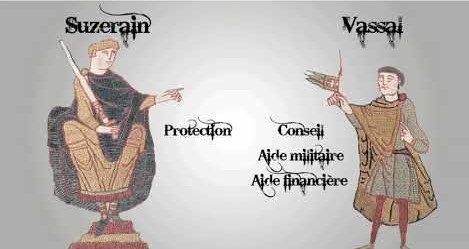
    In the ancient near east there existed a system wherein covenants could be made. That system could be described as a Suzerain Vassal covenant or treaty. In this sort of agreement one of the parties would be greater or more powerful than the other. The suzerain would be the powerful entity. The vassal would be the subservient, or lesser, or learning entity. In this sort of treaty, the vassal would pay tribute or show some form of loyalty to its suzerain. In return, the suzerain would provide protection or some other sort of benefit to its vassal. There could only be one suzerain/vassal connection. Meaning, a vassal couldn’t have two suzerains. This would basically be treason. You can only serve one lord.

    From this article on the suzerain/vassal covenant relationship:

    “The covenant Yahweh established with Israel at Mount Sinai exhibits striking parallels with Hittite suzerain/vassal treaties, which had six basic features: 1) a preamble that identifies the suzerain; 2) a historical prologue that recounts the previous relationship between the parties; 3) covenant stipulations to which the vassal must agree; 4) provisions for periodic reading and safekeeping of the covenant; 5) witnesses to the covenant; and 6) blessings and curses should the vassal either keep or fail to keep the covenant. The Sinaitic covenant contains all six of these characteristics.”

    In his book, The Last Days: Types and Shadows from the Bible and the Book of Mormon, Avraham Gileadi states:

    “the idea of Israel’s suzerain or Lord [Jehovah] assuming vassal or servant status in order to answer to his suzerain [God the Father] for his people’s rebelliousness introduces the concept of a God higher than Israel’s God. That is, Jehovah, the God of Israel, is a “Son” to God the “Father” (3 Nephi 11:7,11,32; compare 15:4-5). That concept does not appear explicitly in the Old Testament. Many Jews, therefore, insist that God is but “one” (Hebrew ehad; Deuteronomy 6:4); other than the Lord, they assume, no God exists (see Isaiah 44:6,8; 45:21-22). However, the idea of “the Father” and “the Son” makes perfect sense in light of ancient Near Eastern suzerain (Lord)–vassal (servant) covenant relationships.

         “Abinadi (and every prophet who teaches God’s redemption of humanity) here enlightens us. Abinadi says that God, who redeems his people, is both “the Father and the Son” (Mosiah 15:1-3; compare Alma 11;38-39; Ether 3:14). That abstruse statement seems at first glance to contradict the careful distinction between the Father and the Son that other scriptures teach. But when viewed from the ancient Near Eastern suzerain (lord)–vassal (servant) covenant relationship, we gain insight on how the Lord can serve as a suzerain or Father to his people Israel, but also can serve as a vassal or Son to his Father or suzerain. To Israel, the Lord is Father, and they become his sons or vassals. To God the Father, the Lord is the Son, subjecting his will to the Father in order to merit Israel’s salvation (Mosiah 15:2,7).

         “Moreover, as the literal and loyal Son of a divine Father–as the Son of a righteous [covenant suzerain “Father”]–the Lord is not subject to death unless he himself consents to die (See the type of Isaac’s consenting to let Abraham sacrifice him–Genesis 22:9) Even if he does die, the Father must come to the aid of his vassal and deliver his Son from death. In ancient Near Eastern literatures there is the concept of the god who dies only to revive and assume the throne of a senior deity. Thus “God breaketh he bands of death . . . giving the Son power to make intercession for the children of men” (Mosiah 15:8). What the Father does for the Son, the Son does for his sons and daughters: when “the Son reigneth, and hath power over the dead . . . he bringeth to pass the resurrection of the dead” (Mosiah 15:20).

         “Moreover, the moment one introduces the idea of the Father and the Son, one also introduces the concept of spiritual progression. That constitutes as much a part of the “good news,” or gospel, as does redemption from death itself (see Mosiah 15:10-19). Inherent in a Father/suzerain–Son/vassal relationship with God is the assuming of divine attributes–becoming God-like…”

    So we see that this Near Eastern tradition of suzerain and vassal treaties and covenants perfectly aligns with how we relate to Jesus Christ. He is our suzerain, making us His children. God is His suzerain. Through our covenant relationship with Christ, we receive protection from both Christ and His Father and our Father, God the Father.

    Another interesting thought from that note is how Christ conquered death. It was by His relationship with the Father that He was able to conquer death. He in turn allows us the same opportunity when we link ourselves to His will and power. Christ received His divine identity from His Father. We can receive our divine identity through Jesus Christ’s Atonement and conquering of death. This is why we only come to the Father through the Son. Christ is our protector, our Suzerain. As we serve Him, we receive that protection as His vassals.

    In addition, another way that Christ is our father is through the resurrection. It is due to Christ’s atonement and resurrection that we are able to be resurrected. This makes Christ the father of our bodies. For we wouldn’t have our bodies without His resurrection and the gift that we can be resurrected into our bodies. God the Father is still the father of our spirits. Whether that be through adoption, some measure of creation, or some other way, we’ll one day know.

    A last note I wanted to make that I liked from this article:

    “The basis of the covenant was Yahweh’s gracious acts toward Israel, not their obedience to him.”

    Our covenant relationship with Christ is a reminder that His grace saves us. It doesn’t matter how obedient we are. We needed His grace to save us. As our Suzerain, His covenant with us is based so much more on how He loves us and all He is willing to do for us than anything we can do for Him. We can never properly repay Christ for all He’s done for us. He is the Suzerain. He has the power to save us.

    This is the good news of the Gospel. Because Christ conquered all, we can become like Him, and in turn, become like our Father in Heaven.