When that baby girl is born in June you’ll realize in one momentous second that you’ll never be the same.
It’s the strangest thing. You’ve thought this whole time you’ve had a life and then in one moment you realize, “Woah.” Words can’t describe the moment a child is born. “Heart expanding” isn’t all encompassing enough. You’ve never had a heart until now. You realize all of a sudden every capacity to care and love that your being has possessed pales in comparison to this overwhelming feeling of care and protection you have for this helpless thing.
It’s the craziest thing.
Advice.
Don’t blink. Dwell on how quickly time passes just enough to kick yourself into gear. So that when you’re tired, and, oh, you think you’ve been tired before now? You’ve never known tired. When you’re tired and grumpy and thinking you can’t wait until they just get out of diapers, or put on their own pants, or pour their own cereal, until you remember one day will be the last diaper, the last time helping them put on pants, the last time pouring their cereal. Remember every day that one day will be the last day for all these things, and it makes it easier.
Don’t watch those “memories videos” iPhones make at any point after having a daughter. Unless you have 3 hours to spare melting into a puddle of sadness, joy, despair, and existential crisis thinking about how time goes by. And your girl grows.
Don’t dwell on this too much or your heart will explode out of your chest.
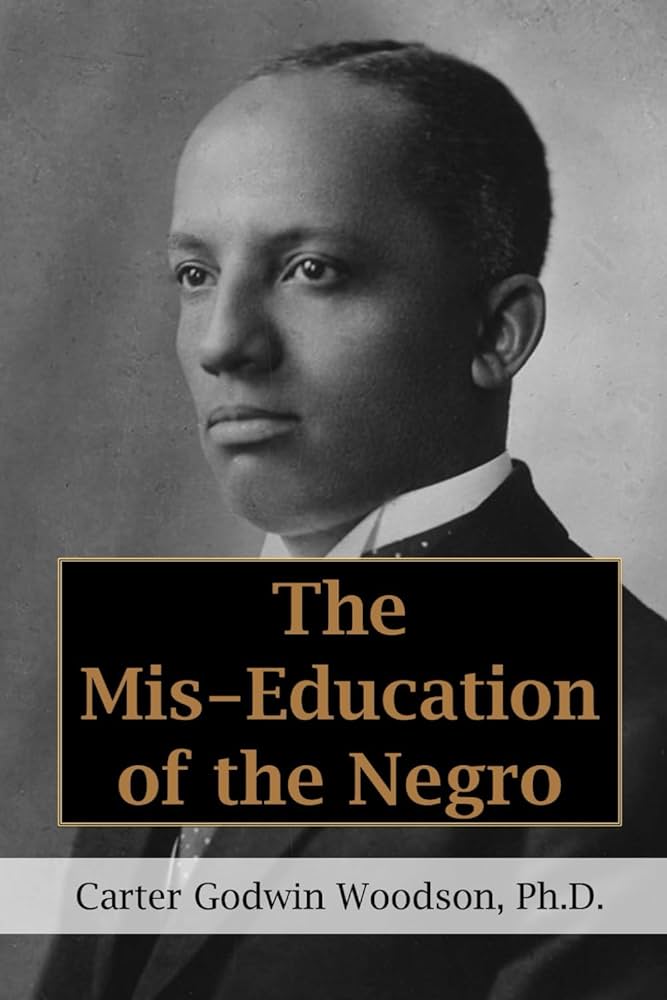
I read a book recommended by CJ (thanks CJ) that I’ve wanted to write something about ever since reading. It was such an interesting and powerful book. It proposed some thoughts I’d never considered and really opened my mind to a different way of thinking about a particular part of American history.
The book is titled The Mis-Education of the Negro, written in 1933. When I started the book, I immediately texted CJ and said there was too much in the book and that we should start a podcast series exploring the topics. He jokingly agreed to do a podcast. As I continued to read, I noted 40 topics, each I thought would make for a worthwhile discussion.
CJ and I are at a combined 6 children 4 years old and younger, so a podcast is definitely on hold.
I read this book a couple years ago.
Discussing race is difficult. I’ve debated posting this for some time. Not that I’m saying anything controversial or crazy. Just that I don’t like to think too much about race. But our race is important. It makes who we are.
Sometimes commenting on race as a white person feels like a lose-lose situation. I’m either so positive about other races that it seems like pandering to the point of insincerity or like I’m trying to make up for something, or I’m not positive enough and come across at best not understanding and at worst a racist.
I think this is why talking about race in America is so difficult. I’ve written about it before and it still is one of the most difficult things I’ve written.
And yet, I continue to hear from my black brothers and sisters say that the best place to start is to just be open about discussing it. Which led me to put this post together. Nothing profound. Just my thoughts on a good book.
I should mention that the book was written in 1933 which led me to continuously ask, is it still that bad? I think many of the disappointing and sad truths the book lays out have improved. Not yet perfect, but improved.
I want to list some of the topics I noted as interesting from the book. Then I’ll elaborate on one of them.
The “equality” of black and white people. Are black and white people the same? No, we are different in so many ways. From upbringing, culture, background, experience, etc. And that’s ok.
Black people being nominally free but economically enslaved.
Has education for black people gotten better or worse since 1933? I assume it must have improved, but it was a thought this book made me consider.
This is something I feel like people my age have started talking about more- why didn’t we learn how to do taxes instead of the Nina, the Pinta, and the Sante Maria? – The question I asked from reading this book, what is education good for? Why do we care about random historical facts from Europe? To be clear, I appreciate as much as anyone the importance of understanding history and where we came from. But shouldn’t I also know how to file my taxes and apply for a job? Also, on that note of “where we come from.” I remember a lot of history being taught about Europe. I don’t remember a ton being taught about Africa, Asia, or South America.
The opportunities that are afforded whites because more white people own businesses, etc. compared to black people. I think this was much more prevalent in the 1930’s compared to today.
I really struggled with reading this book because I passionately hate the word in the title of the book. Underlining it over and over throughout the book drove me crazy. I almost put the book down many times because I hated how a group of people was being, I felt, unfairly characterized.
Competing churches taking away from impoverished areas.
Why do we study the domineering, warring nations and not the peaceful, productive nations? The answer is obvious- the winners of wars write history. But philosophically something to consider.
Interesting point mentioned about former slaves avoiding using art to portray their experiences. There were so few books or art pieces made by former slaves depicting that struggle. I think we see that more embraced today with hip hop. Artists like Tupac, Ice Cube, and Kendrick Lemar come to mind as individuals that fully embrace the struggles they have experienced in life and have made great art out of it.
I heard this not from this book but 3+3 and 2+4 are the same. Different, but still the same.
The point I’d like to discuss a little more is point one. The author of this book pointed out that we’re so obsessed with making everyone equal that we disregard that people are different. He points out that maybe black people and white people shouldn’t be taught exactly the same. We come from different backgrounds and different life experiences. Something that resonates with me and helps me learn may not resonate or help someone else with a different culture from mine.
Still, I think this idea is interesting. Generally speaking, a black person has a different life experience from a white person. I’m not talking about just upbringing, I’m talking about the way we see the world, I’m talking about the way we interact with the world, I’m talking about the way the world interacts with us. Black people and white people can be different. That’s not bad though. We’re not different in an inferior / superior way, just different. Good and bad. Different.
From the book:
“The differences of races, moreover, is no evidence of superiority or of inferiority. This merely indicates that each race has certain gifts which the others do not possess. It is by the development of these gifts that every race must justify its right to exist.”
It makes me think about what is happening with gender. Women and men are different, and that’s ok. We all have our own skills and talents that make us who we are. The fact that I’m a man makes me different from my wife. My wife has many skills and talents I’ll never possess. Recently I heard it put this way – 3+3 and 2+4 are the same. Different, but equal.
That said, the most important thing is that we remember we are all sons and daughters of God. White and black doesn’t mean anything to God. What matters to God is what’s in our hearts. We are all individuals. That’s ok. We should all be treated equally, of course. But we should remember that we are unique. Our uniqueness is great.
If you want to read a book that makes you consider race and the history of education for black people, this is a great book to read. I encourage all of us to study these ideas so we can better love and understand each other.
I believe what can be gleaned from this is powerful, comforting, and gives a look into the truly magnificent love and power of a Father in Heaven. I believe the truths restored by Joseph Smith to be awe-inspiring. I believe the truths revealed by Joseph Smith should be awe-inspiring if he truly was a prophet of God. I believe that to be truth.
I’ve read near-death experiences that describe young children playing in heaven. I still wonder about, and don’t comprehend, age, mortality, “childhood and adulthood”, maturity, time, and the importance of our bodies.
Those categories: age, mortality, childhood and adulthood, maturity, time, and our bodies seem like a wide-ranging and somewhat unrelated group of topics.
But what was shared with Emma Smith makes those topics intertwined.
What is age? In mortality, I am 30 years older than my children. But in the eternities their spirits are eternal, they never had a beginning. Who I am to say that I am any more “mature” than my two sweet daughters? My two young girls teach me and inspire me daily. I believe I came to earth before them to guide them, lead them, watch over them – a great and marvelous calling and responsibility – but they’re also here to guide, lead, and watch over me. It’s the great circular of life (not to be confused with, though very similar to, the Circle of Life in the Lion King).
In this sense, what is childhood and adulthood?
It is one eternal round.
But that experience – of me raising my children and the humility that brings – and my children being raised – and the humility that takes – clearly has significance and importance to our eternal progression. This explains why Emma was given this promise that she would one day raise the children she lost. She missed that opportunity, but in God’s Plan, nothing is truly missed. It’s all one eternal round. It all comes back. This should be a great comfort to anyone who has lost any loved ones, to anyone who’s felt they missed any mortal opportunity – to raise children, get married, or have any mortal experience – this should be a great comfort to all.
Another significant message to take from this vision given to Emma is the importance of the family unit. Just because Emma’s children died as infants didn’t mean they weren’t her children. They would always be her children. She would always be their mother. The family unit is important. The family unit is eternal.
I’ve touched on age, mortality, childhood and adulthood, maturity, and time – 5 of the 6 seemingly random topics. What of our bodies?
Our bodies have eternal significance and their growth has eternal significance. We can not be like our Father in Heaven until we are resurrected and have bodies like His. I’ve been pondering on this a lot lately. The elements are eternal. Element can not be destroyed. When God created Adam and Eve’s bodies from the dust of the earth, He was taking eternal element and making a tabernacle for them. Our eternal spirits are housed in eternal element. There is something extraordinary and significant about our bodies. We cannot be properly resurrected beings, we cannot be like our Heavenly Father, without attaining our bodies.
After our resurrection we will attain our bodies for the rest of eternity and therefore be more like our Father.
Finally, the biggest thing to take away from Emma’s experience is how ignorant we are of the complete workings of God. We can rest assured that a perfect and all-loving Father in heaven will make ALL things right. Every last item that is a concern to us – death, raising children, marriage, relationships, family – all of it will be understood and made right in a perfect way.
I have no doubt that my Heavenly Father, and your Heavenly Father, loves all of us in such a deep and incomprehensible way. I have faith in His love and His character. I have faith in His Plan. I know all our concerns are but the concerns of a child wanting a chocolate bar at a store. The child can’t see the grand scheme and can’t see how the world can be right while leaving the store without a chocolate bar. One day our eyes will be opened and we will see that the chocolate bar wasn’t as important as we thought, for our Father had created a plan to give us all the chocolate our heart could desire.
If we follow Him and trust Him, it all will be made right.
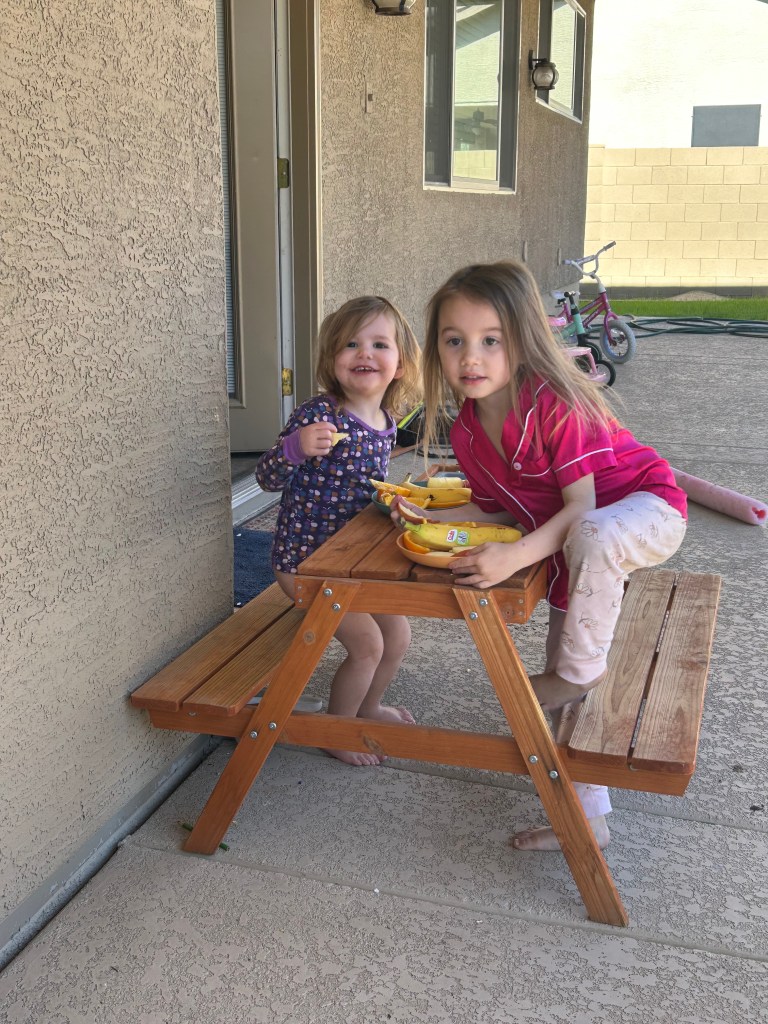
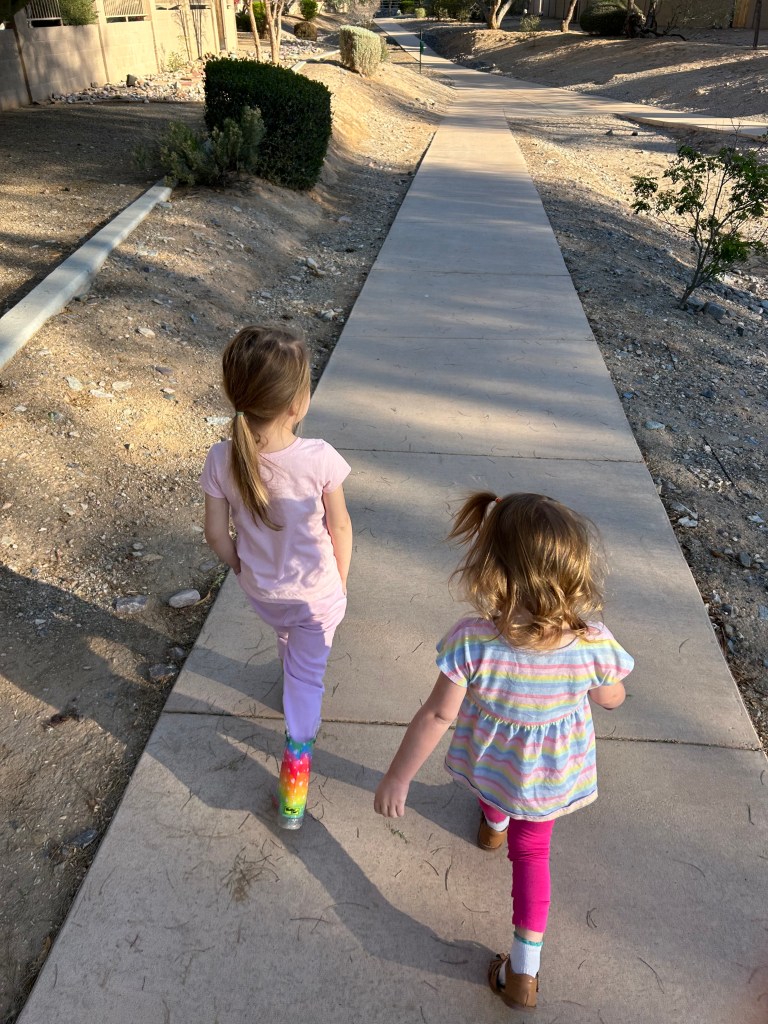
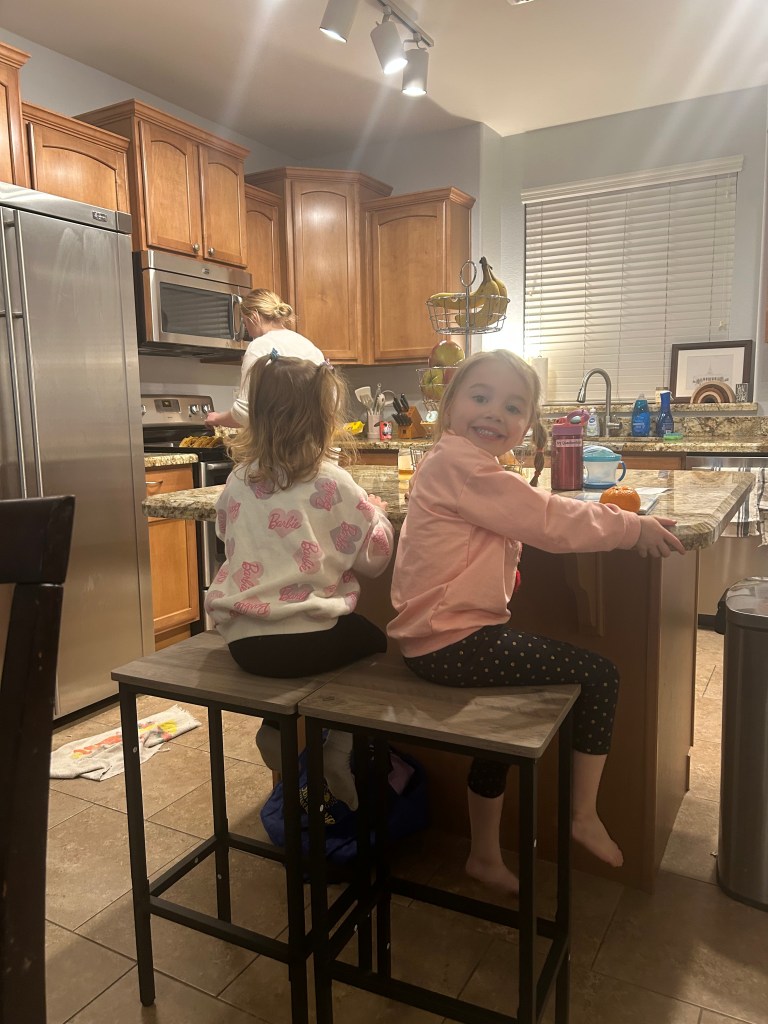
Sage is very much forming full sentences now (callback to last post). She has a lot to say. A really neat thing to see is Sage’s adoration for her big sister. She follows Ivy around everywhere she goes. She’s started wearing Ivy’s slides to school, even though they’re way too big for her, because they’re Ivy’s old shoes.
Sage is still shy. She’s getting better, but still has her moments. She’ll open up to people rarely. If a stranger is around she becomes super coy. She’s gotten especially better with family and people she sees regularly. But once she knows you and trusts you, she is full Sagey Sunshine. She is a linchpin in nursery at church. She walks in and gets other kids toys. It’s weird because despite being shy she likes to sing as loudly as she can during sacrament meeting in church. The only way to get her to be quiet is to tell her everyone is watching her because she’s being too loud. She immediately quiets down and starts looking around. I hope I’m not irreparably damaging her psyche.
Ivy’s growth and transformation since Wren was born is extraordinary. She still has her toddler moments. but overall she seems like a new person. A new maturity has immerged. She is smotheringly loving with Wren.
Ivy and Sage are constantly asking to hold Wren. They love her.
I’ve been telling people the oldest child has to grow up fast, the middle child has to learn to survive, and the youngest child will be the toughest. Wren has been mauled since the second she got home. If you look closely at her eyes you can’t help but see a, “I left heaven for this?” Look on her face.
It’s interesting watching this dynamic develop between Ivy, Sage, and Wren, and then think about myself and my siblings. I think about how quickly I had to grow up, how Adie followed me around, and how much I used to beat up Garrick and Dresdan.
Recently Garrick sent me a video. It was a guy talking about his older brother. He was saying how he was grateful for his older brother because he watched his older brother take all the speed bumps so he didn’t have to. That meant a lot to me.
Now I’m seeing Ivy already start taking the speed bumps that Sage and Wren won’t have to.
Transition into a heartwarming sister story.
Bedtime is of course an adventure/disaster/struggle pretty much every night. Ivy and Sage share a room. Most nights they lay down, all seems quiet, then Sage gets out of bed, turns on the light, climbs onto Ivy’s bed, and they start playing. This would be okay, except that it turns into tears and pain almost 100% of the time if left unchecked.
One night we put Ivy and Sage to bed a little earlier than usual. I watched on the monitor as Sage turned on the light and got into Ivy’s bed. I went upstairs and opened the door. Sage immediately reacted by starting to frantically scoot towards the edge of the bed, as she was used to me angrily coming in to tell her to get back in bed. This night I decided to give another message. I told Sage she could stay with Ivy as long as they did calm and quiet activities like read and tell stories. Sage got so excited. The smile on her face. She scooted back toward Ivy and started quietly clapping with the biggest grin on her face.
Ivy said, “Okay, I be just a little crazy.”
I told her no crazy at all. She said, “Just this much crazy,” and showed her forefinger and thumb pressed tightly together indicating a tiny bit of crazy. I reiterated that there was to be no crazy. I left them to quietly play. They ended up peacefully going to sleep.
Bedtime, sitting and playing quietly together, turning on the light, I’ve learned every so often it’s okay to just let it go. It eventually ends up in Sage crying, but at that point she’ll just get in bed and go to sleep. Ivy will usually lie down quietly facing her lamp going through her books and audio sleep stories.
We recently moved. The days during the move were…hard. It was difficult for the girls. I could tell. It’s interesting how our personalities, the things people don’t see, get passed onto our children. I could sense my girls feeling unsettled because I felt unsettled.
I didn’t recognize Ivy and Sage during the move. They were not themselves. In the midst of this chaos, after they went to sleep, I had to write as I do every night. I came back to this post to continue on it.
Writing about them was just what I needed. I re-read this in progress post and it reminded me of the normal disposition of my girls. This wasn’t them.
I came back and read this –
I was in the car with Ivy on a long drive. I was zoned out, in my own head.
Suddenly Ivy said something to me. I just responded automatically without even thinking about what she said, “Yeah, Ivy.”
Then I processed what she said. “The moms on the bus go beep beep beep.”
Once I processed it, I realized Ivy was making our classic joke, saying something on the bus does something it doesn’t actually do.
I cracked up and told Ivy she got me, and that it was really funny.
She was silent so I didn’t know if she was over it because I took too long.
I looked in the rearview mirror and she was sitting in her car seat with a smug grin on her face.
“I made Dad laugh,” she said just loud enough for me to hear.
Gosh I love these girls so much and I’ll try not to turn this Ivy and Sage moments post into a parenting post but… parenting is so hard. All the cliches – there is no playbook for this, I don’t know what I’m doing, etc.
I am an apprentice parent. And who am I an apprentice to?
The Father of the universe. What an honor. I know I’ve written about this before but how could He possibly entrust me – so incredibly flawed and faulty – to care for these precious souls?
Anyways, back on to the positive, funny, and uplifting moments of parenting two amazing girls.
Sage is crazy in the pool. Ivy as a baby had a semblance of this behavior before she got old enough to know better, but it was nothing like Sage. If we’re sitting on a step in the pool, Sage will repeatedly walk to the edge of the step and dive out into the water as far as she can. She’s not just stepping off the edge, she is diving. She’ll do one of two things at this point. She will either curl up into a ball or she will stretch out completely like she’s trying to reach the other end of the pool. It goes without saying we watch her very closely in and near the pool.
My family likes to go cliff jumping at the lake. It’s one of our favorite activities. Looks like Sage is going to be my cliff jumper. Ivy will too, but Sage seems to have an innate desire for danger.
As a kid I hated roller coasters. Hated. I would be peer-pressured to go on rides, and I would hate it. I remember my cousin Sarah loving roller coasters and having the feeling that I needed to toughen up. My parents now say it was Adie getting old enough to ride roller coasters that made me start embracing them. Now there’s nothing I love more than thrill rides and thrill activities. Roller coasters, sky diving, cliff jumping – these are my favorite things to do. If you told my 8-year-old self I’d grow up and my three favorite things would be roller coasters, jumping out of an airplane, and doing a gainer off a 35-foot cliff, I’d probably have thought that unlikely. It’s interesting how those around us influence us so much, sometimes for the better.
Like I said, I think Sage is going to be a natural cliff-jumper. Ivy may see that and become a cliff-jumper as well.
Ivy does already love the lake, though. Let the record show.
There’s a mini battle Beth and I have had the last two summers when we visit Las Vegas. Beth doesn’t want Ivy to go to the lake with me and my family. I always think it goes without saying that she’s going.
I kind of understand Beth’s reservations.
I understand that Ivy is little, it can be the slightest bit dangerous if we don’t watch her closely (which we do), it’s hot, open water, etc.
On the other hand, Ivy has to come to the lake with us!
Beth’s main concern I know is that I’m not fully engaged in parenthood when at the lake. Hard to watch your daughter while you’re leaping off cliffs. That said, when I’m not jumping off cliffs, there’s nothing I want more than to be sitting with Ivy on a boat, a kayak, or swimming with her.
When we finally did take Ivy to the lake for the first time, she loved it. She spent 8 hours at the lake, took a little cat nap in the shade while cruising around in a boat, went home, drove to St. George, and proceeded to stay up all night. Ivy’s a lake girl.
One last funny Ivy story and Sage story to conclude this post.
Ivy the other day started to say, “We’re going to do Halloween, then Thanksgiving, and Christmas.” As I was starting to think to myself, ‘Wow, how’d she know the order of holidays? My girl is growing up..’ Ivy concluded, “We’re going to do it backwards this year.” That made me chuckle.
As I mentioned, we moved. The new neighborhood is full of little kids under the age of 9. Coming from essentially a retirement community at our condo, that’s been great.
The other day Ivy and Sage were sitting in the grass playing with a new friend. Ivy was talking a lot, telling this new friend stuff. Sage, still her coy and quiet self at times, was repeating everything Ivy was saying, just extremely quiet. So Ivy would say, “This is how you make rock people” and Sage would whisper, “how..make.. rock people.”
One of Newton’s Laws of Motion states “For every action, there is an equal and opposite reaction.”
In life, for every sorrow, there is equal and opposite capacity for joy. For all our abilities to cause pain and suffering, there is an equal and opposite capacity in us to provide joy and comfort to others.
This brings up a thought: Without sorrow in general, we would lose the ability to provide an equal and opposite amount of joy. If there were no sorrow in the world, we couldn’t equally counter it with joy. This puts sorrow in a somewhat different light.
Without our personal sorrows, we could not help others through their personal sorrows. This is why, among infinite other reasons, Jesus Christ’s sacrifice was so significant. He knows all the sorrow. He has experienced it. He can help us through all our sorrows.
For some reason this week I’ve been studying Einstein’s General Theory of Relativity. The followoing thoughts and things I’m going to write probably won’t make sense. Scientifically, what I’m about to write may be nonsense. But they mean something to me, so I will try to elaborate.
I read that Einstein came up with one of his theories when he was looking out a window at someone on a ladder. He wondered what would happen if that person fell off the ladder?
While watching the short video The Refiner’s Fire, Ivy was in my lap. I was in a rocking chair. She was watching with me. I rocked while I held the phone, and we watched the video. My elbow was propped on the chair so as the chair moved, my body moved, and the phone moved. I wondered if Ivy was having to keep up with the phone, trying to trace it as it moved. I realized, probably not. Like me, she was moving with the chair that moved the phone. She was lying flat against my chest so as I moved, she moved, and the phone stayed right in her field of vision, in her eyes to see.
Then, near the end of the video, Ivy, as toddlers are known to do, got impatient and sat up in my lap. Now she wasn’t flush with my chest. As I rocked and tried to hold the phone steady, she rocked back and forth, tossed about by the flow of the chair but no longer in sync with me in any way. In addition, I had to move the phone farther away, one to try to keep it steady, and two to keep Ivy from grabbing it.
As I’ve studied Einstein’s theories I’ve been struck by the religious implications. Spacetime bends around the object with the most mass. That object pulls all smaller objects to it. They are drawn to it. Time and space literally bend to the will of the biggest object.
God is our biggest object. He is the biggest object of the universe. He is, literally, a celestial body of such force that from many lightyears away our sun, our planet, and we are drawn to Him. He is the force that keeps us moving. He is the force that keeps us living.
As I rocked in this chair, I realized the chair was God. He was the force I was rocking with. And as I was rocking with Him, it was easy to focus on whatever I needed to focus on. If I was flush with Him and in sync with Him, I could focus on that video easily as it rocked with Him. Ivy also, as she stayed flush with me, could focus on the bigger picture – represented by that video. But as she was dependent on me (flush with my body which was flush with the chair – remember God is the chair), when she lifted off me, it made it harder for her to see the picture. She’d disconnected from me and therefore disconnected with God. In addition, if I raised myself from the chair, I disconnected us both from the chair, from God, and we both lost the vision. We both got distracted, we both couldn’t follow the video, we both got tossed about by the swinging momentum, trying to stay flush with the chair (God) but having disconnected ourselves from Him.
What does this teach me?
In this moment, it is profoundly important for me to stay flush with God. Ivy (and now Sage) are relying on me.
It is profoundly important for me to teach Ivy, Sage, and our future daughter to become flush with God themselves, so they don’t need to rely on me. What happens when I’m not here?
How does this tie into The Refiner’s Fire video that started this thought?
We can create joy to counter sorrow. It is up to me to stay flush with God so that when Ivy, Sage, and my future daughter go through their refiner’s fires, they have somebody they can completely trust. In my life I have a great capacity to cause joy or sorrow. I think the greatest joy I can create in my daughters’ lives is teaching them that God loves them, they are His, He is watching them, and no matter what happens in their life, He will always be there for them. If I don’t teach this to my daughters, it would result in a great sorrow.
Ivy, Sage, and future daughter will go through their refiner’s fires just as I did. They will need God in their lives at that time. We all need God as we go through the refiner’s fire. Then, when we come out properly molded, we can be flush with the chair (God) and help others as they stay flush with us, until they, themselves, can connect themselves to God.
It is our greatest responsibility, and the greatest joy we can provide, to teach others that God loves them. They are children of God with a divine inheritance. No matter what happens to them in this life, He is always there, and it will be okay in the end.















 No Coincidences