Tag: growth

  • Why do we Love our Children?

    Why do we Love our Children?

    I recently heard a quote so good I want to quote it in full:

    “Think about this. When a little baby is born, that baby cries at inopportune times, makes a lot of noise. It soils its diapers; it demands to be fed when it wants to be fed. It costs you a lot of money, a lot of time, a lot of energy, a lot of lost sleep. So why do we keep putting up with these little creatures? It’s because there’s this deep, underlying feeling of love for these children of ours. We love them so much that we don’t look at what it’s costing us. We keep infusing life and we keep teaching, and we keep forgiving, and we keep working with, and we keep nurturing and feeding and helping them to grow to become who they need to become and who they have the capacity to become.”

    I think that’s an awesome quote. Well said.

    I’ve been thinking about this more lately. With a toddler that is so full of joy and happiness, and also, sometimes, not. And a 7-month-old that still isn’t sleeping great. And with plates thrown and irrational frustrations (by the toddler), and crying and no sleep and…
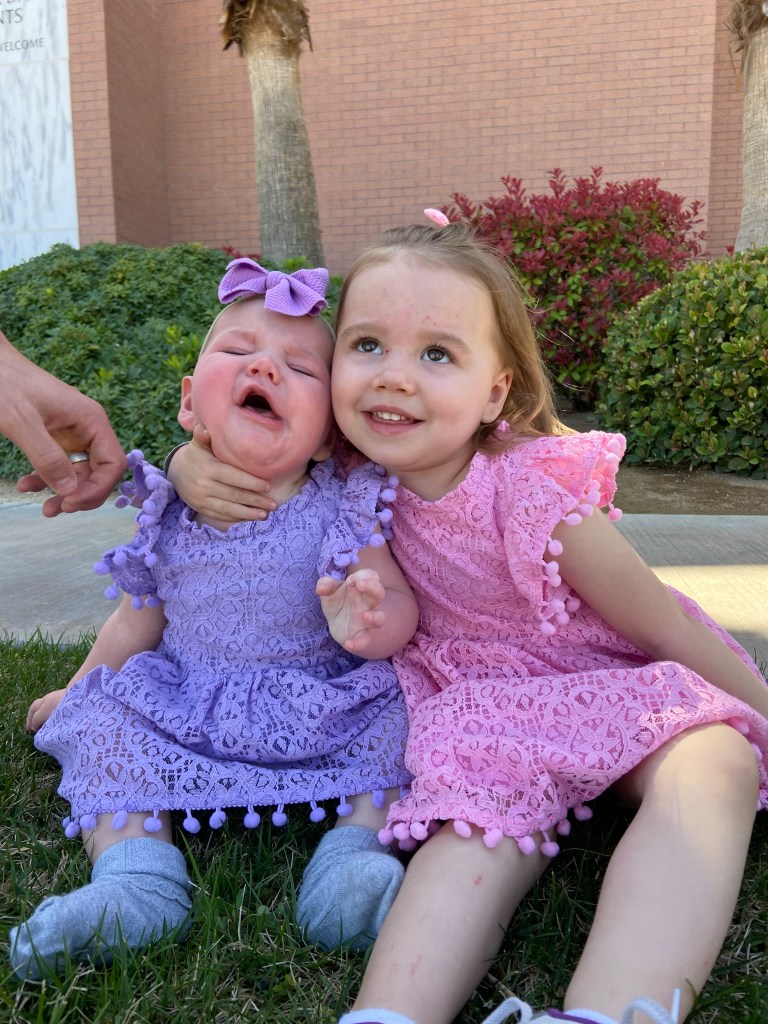
    Ivy “loving” Sage

    *Sigh

    The energy it takes. The life force being sucked out of me.

    And.

    Would I go back if I could?

    Not in a kagillion-billion-zillion-babillion years. I love them so much. It’s all worth it.

    Is it hard? Heck yeah. It’s so hard. Do I feel like I’m dying a slow death sometimes? Uh, yeah, I do.

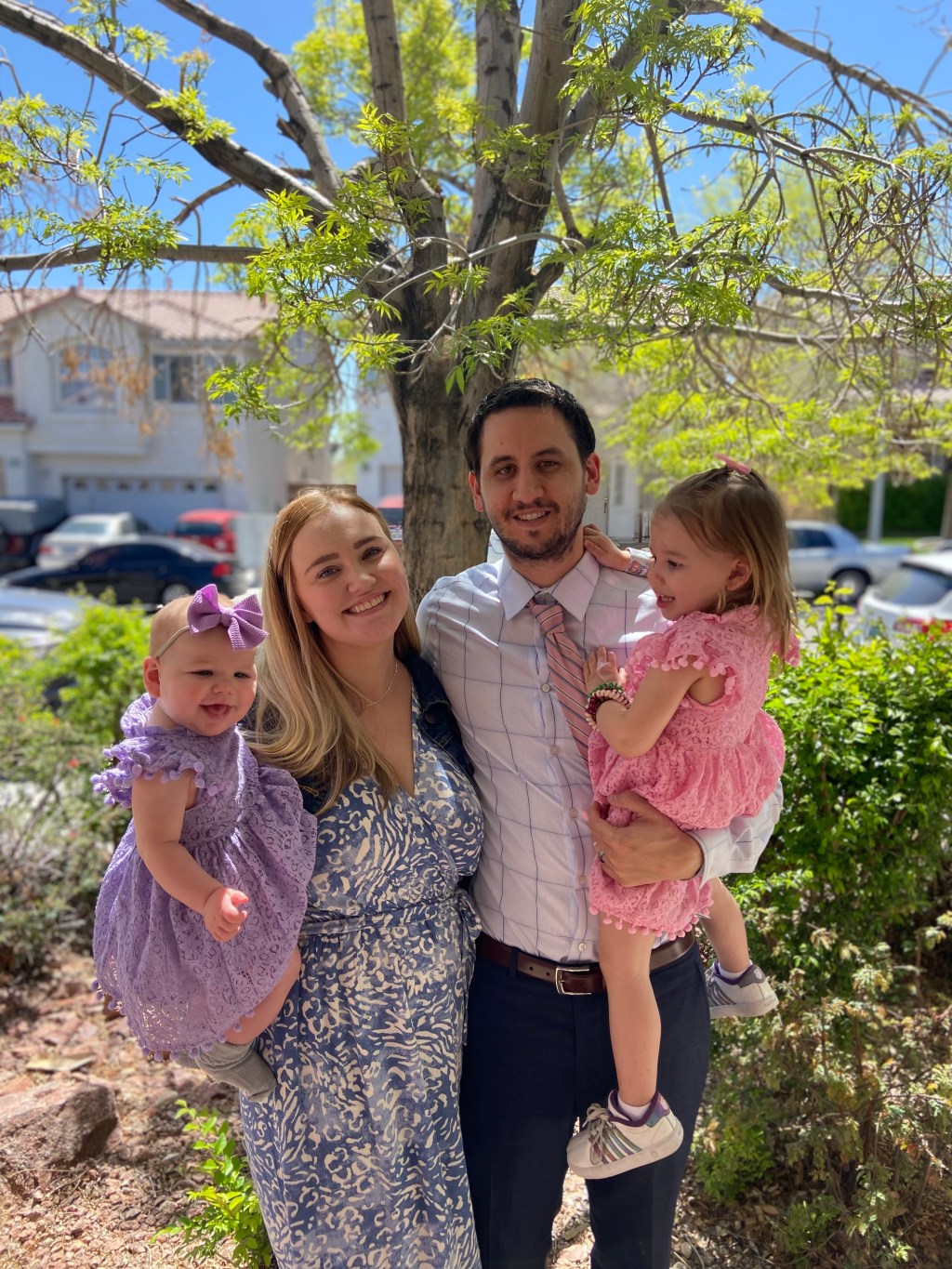
    And then, Ivy smiles and says, “Dada. I love you.” And Sage sees me and inexplicably giggles. And suddenly, all that sucked out life force flows into my body from my head to my toes in a rush of energy and exhilaration and LOVE. It’s like nothing else in this world: looking at my two daughters. The love.

    As a parent, speaking for myself, there’s a point where you become numb to the sacrifice and all you give up for your children. There was a time when having to get up once in the middle of the night to check on anything would ruin my entire night of sleep. At this moment, the average night has at least 3 middle-of-the-night wake ups. Zero wake ups in the night is a miracle.

    Early on with Ivy, I really struggled with this. I started to wonder how I could survive without getting sleep. And now we’re starting over with Sage who doesn’t sleep nearly as well as Ivy did. I’m probably getting hours less sleep per week than I ever have. And yet I feel alive and invigorated. Somehow, I’m surviving. I think it’s that infusion of love I get from seeing them happy, healthy, and growing each day.

    Ivy the morning after waking me up three times in the middle of the night. She didn’t go to sleep with the crown.

    The time, the noise, the diapers, the feeding, the money, the energy, the sleep put into these “little creatures.” And yet, do I regret it? A resounding NO! I want more. I love them so much, it hurts. Sometimes it physically hurts how much I love them. That quote above came from a video of a guy discussing the Lectures on Faith. I’ll link it HERE.

    He was talking about the attributes of God. That wasn’t where the quote ended.

    “If we as mortal parents can figure that out (the love for our children), how much more do perfect, eternal parents have that figured out? God is a God motivated by love. It’s not just this outward thing, it’s part of the divine characteristic. God is love. Without that, you and I can’t have full faith in God unto life and salvation.”

    We’re here to learn to love like God. God, Christ, and the Holy Ghost love so perfectly that they have become one in mission, intent, and purpose. That is the love I feel for my family. I would give anything for them. My wants and needs have taken three back seats. Beth, Ivy, and Sage’s needs are so much more important than mine. The “world” will try to say this is unhealthy, that I need to “put myself first” or “take care of myself.” Of course, I don’t completely disregard my health and care, but that idea that I come first is extremely wrong. I don’t come first. I know that. And not coming first is what gives me strength each day. That infusion of love that comes from my family makes every sacrifice the sweetest sacrifice there is.

    If I feel this way, as a mortal man who knows how to give good gifts, how much more perfectly does God love me? How much more is He willing and able to give me because He loves me? I know God loves me. I am eternally grateful for His love. Now, He is teaching me how to love.


  • A Wife Who: Message to my 22-year-old self

    A Wife Who: Message to my 22-year-old self

    Find yourself a wife that is kind, caring, and good.

    Find someone you know will be a good mother not by any one action or by any words but by their being; who they are.

    Find someone who will love, uplift, and support you through everything you want to accomplish.

    Here’s an important one: find someone that will love you conditionally. The world says to find someone that loves you unconditionally. That’s too easy. Where is the growth and progression in being loved unconditionally? Find someone who wants you to improve and be better as much as you yourself want to improve and be better.

    Find someone who also wants to be better.

    When two people independently want to be stronger and better, they collectively become stronger and better.

    As important as someone who loves you conditionally, find someone who loves the Lord unconditionally. Find someone who has a testimony of what is important in this life. While the world moves and shakes, find someone with a foundation. So that if ever your foundation becomes weak, you have someone whose foundation is strong.

    Keep your foundation strong for that person as well, so that they can rely on you when their foundation needs shoring up.

    Find someone who wants God to be a part of your life, family, and home. If God is in your home, your home can never fail.

    Find someone with faith. Find someone with devotion. Find someone you can trust.

  • Float

    Float

    If you’re a parent and ever get frustrated with your kids (every parent), especially if they are younger kids, you need to check out the Disney short called “Float.”

    It’s only 6 minutes long and can be watched on Disney+ or HERE.

    I have to remind myself often that Ivy is constantly experimenting. Everything she does is an attempt to understand the world around her. She’s never really trying to make a mess or destroy things. She’s only trying to see how that food that’s thrown will splatter and land.

    This Disney short reminds us that all children are unique and special. No matter how challenging our children are, we must remember they’re the greatest gift in the world. Every so often I have to pause and watch Ivy and think how amazing it is she is what she is. She was nothing 3 years ago. Today she is a living, breathing, experimenting, ever challenging, extraordinary person.

    I have to constantly temper what I think I want from Ivy.

    I want her to be confident, but I like it when she is quiet and reverent in public, especially at church.

    I want her to be independent but one day I’ll desperately miss her wanting to hold my hand.

    I want her to want my attention. Unless I’m busy.

    I want her to laugh and have fun and show joy. Unless it’s too loud.

    I want her to ask for help when she needs it, but I want her to do things she is capable of without me. At the same time, like the hand holding, one day I’ll desperately miss when my babe needed my help.

    All these contradictions we go through as parents.

    This is a short post just to be a reminder to all parents that your children are special. What makes them difficult and challenging is what makes them special. We aren’t meant to change our children. I actually think they’re meant to change us.

    Watch Float.

  • Suzerain and Vassal: The Father and the Son

    Suzerain and Vassal: The Father and the Son

    Mosiah 15:1-2 reads:

    1 And now Abinadi said unto them: I would that ye should understand that God himself shall come down among the children of men, and shall redeem his people.

    2 And because he dwelleth in flesh he shall be called the Son of God, and having subjected the flesh to the will of the Father, being the Father and the Son…

    How can Christ be both the father and the son? It’s a question that has troubled Christianity since before it was called Christianity. How can there be the one true God (Jehovah) and yet Jesus Christ (Jehovah) pray to His father who is in heaven?

    How can Christ be both the father and the son? Well, how are you, reading this a father (or mother) and a son (or daughter)? Sometimes we might overcomplicate the simplest things.

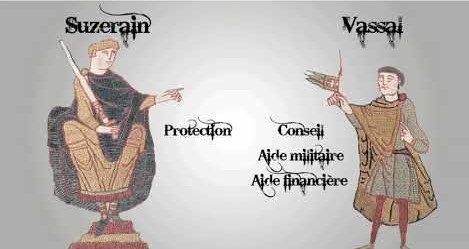
    In the ancient near east there existed a system wherein covenants could be made. That system could be described as a Suzerain Vassal covenant or treaty. In this sort of agreement one of the parties would be greater or more powerful than the other. The suzerain would be the powerful entity. The vassal would be the subservient, or lesser, or learning entity. In this sort of treaty, the vassal would pay tribute or show some form of loyalty to its suzerain. In return, the suzerain would provide protection or some other sort of benefit to its vassal. There could only be one suzerain/vassal connection. Meaning, a vassal couldn’t have two suzerains. This would basically be treason. You can only serve one lord.

    From this article on the suzerain/vassal covenant relationship:

    “The covenant Yahweh established with Israel at Mount Sinai exhibits striking parallels with Hittite suzerain/vassal treaties, which had six basic features: 1) a preamble that identifies the suzerain; 2) a historical prologue that recounts the previous relationship between the parties; 3) covenant stipulations to which the vassal must agree; 4) provisions for periodic reading and safekeeping of the covenant; 5) witnesses to the covenant; and 6) blessings and curses should the vassal either keep or fail to keep the covenant. The Sinaitic covenant contains all six of these characteristics.”

    In his book, The Last Days: Types and Shadows from the Bible and the Book of Mormon, Avraham Gileadi states:

    “the idea of Israel’s suzerain or Lord [Jehovah] assuming vassal or servant status in order to answer to his suzerain [God the Father] for his people’s rebelliousness introduces the concept of a God higher than Israel’s God. That is, Jehovah, the God of Israel, is a “Son” to God the “Father” (3 Nephi 11:7,11,32; compare 15:4-5). That concept does not appear explicitly in the Old Testament. Many Jews, therefore, insist that God is but “one” (Hebrew ehad; Deuteronomy 6:4); other than the Lord, they assume, no God exists (see Isaiah 44:6,8; 45:21-22). However, the idea of “the Father” and “the Son” makes perfect sense in light of ancient Near Eastern suzerain (Lord)–vassal (servant) covenant relationships.

         “Abinadi (and every prophet who teaches God’s redemption of humanity) here enlightens us. Abinadi says that God, who redeems his people, is both “the Father and the Son” (Mosiah 15:1-3; compare Alma 11;38-39; Ether 3:14). That abstruse statement seems at first glance to contradict the careful distinction between the Father and the Son that other scriptures teach. But when viewed from the ancient Near Eastern suzerain (lord)–vassal (servant) covenant relationship, we gain insight on how the Lord can serve as a suzerain or Father to his people Israel, but also can serve as a vassal or Son to his Father or suzerain. To Israel, the Lord is Father, and they become his sons or vassals. To God the Father, the Lord is the Son, subjecting his will to the Father in order to merit Israel’s salvation (Mosiah 15:2,7).

         “Moreover, as the literal and loyal Son of a divine Father–as the Son of a righteous [covenant suzerain “Father”]–the Lord is not subject to death unless he himself consents to die (See the type of Isaac’s consenting to let Abraham sacrifice him–Genesis 22:9) Even if he does die, the Father must come to the aid of his vassal and deliver his Son from death. In ancient Near Eastern literatures there is the concept of the god who dies only to revive and assume the throne of a senior deity. Thus “God breaketh he bands of death . . . giving the Son power to make intercession for the children of men” (Mosiah 15:8). What the Father does for the Son, the Son does for his sons and daughters: when “the Son reigneth, and hath power over the dead . . . he bringeth to pass the resurrection of the dead” (Mosiah 15:20).

         “Moreover, the moment one introduces the idea of the Father and the Son, one also introduces the concept of spiritual progression. That constitutes as much a part of the “good news,” or gospel, as does redemption from death itself (see Mosiah 15:10-19). Inherent in a Father/suzerain–Son/vassal relationship with God is the assuming of divine attributes–becoming God-like…”

    So we see that this Near Eastern tradition of suzerain and vassal treaties and covenants perfectly aligns with how we relate to Jesus Christ. He is our suzerain, making us His children. God is His suzerain. Through our covenant relationship with Christ, we receive protection from both Christ and His Father and our Father, God the Father.

    Another interesting thought from that note is how Christ conquered death. It was by His relationship with the Father that He was able to conquer death. He in turn allows us the same opportunity when we link ourselves to His will and power. Christ received His divine identity from His Father. We can receive our divine identity through Jesus Christ’s Atonement and conquering of death. This is why we only come to the Father through the Son. Christ is our protector, our Suzerain. As we serve Him, we receive that protection as His vassals.

    In addition, another way that Christ is our father is through the resurrection. It is due to Christ’s atonement and resurrection that we are able to be resurrected. This makes Christ the father of our bodies. For we wouldn’t have our bodies without His resurrection and the gift that we can be resurrected into our bodies. God the Father is still the father of our spirits. Whether that be through adoption, some measure of creation, or some other way, we’ll one day know.

    A last note I wanted to make that I liked from this article:

    “The basis of the covenant was Yahweh’s gracious acts toward Israel, not their obedience to him.”

    Our covenant relationship with Christ is a reminder that His grace saves us. It doesn’t matter how obedient we are. We needed His grace to save us. As our Suzerain, His covenant with us is based so much more on how He loves us and all He is willing to do for us than anything we can do for Him. We can never properly repay Christ for all He’s done for us. He is the Suzerain. He has the power to save us.

    This is the good news of the Gospel. Because Christ conquered all, we can become like Him, and in turn, become like our Father in Heaven.

  • Another Toddler Experience

    Another Toddler Experience

    I hope parents learn from their toddlers. I learn from Ivy all the time. Here is a simple example.

    Today we were all sitting on the couch. Sage was cradled in my left arm. Beth was sitting to my right with Ivy in her lap. Bengie, our aging dog, was between us.

    Ivy was doing peaceful mother-daughter stuff with Beth. Seemed boring to me. Plus, I was getting bored with what I was doing on my computer. So I reached over and poked Ivy. It was intended to be a tickle, normally Ivy’s favorite. But in that moment of peace, she did NOT like it. She scowled at me and turned away.

    I apologized for an improper time to play. Ivy and Beth continued to peacefully interact.

    A few minutes later, Ivy reached out and smacked Bengie. He understandably got annoyed by this intrusion on his peace and snapped back. This upset Ivy. Wanting to utilize a learning opportunity, I said to Ivy, “Ivy, don’t smack Bengie if you don’t want him to do that. He’s just laying there and you bothered him.” I continued, “How would you feel if I did that to you?…”

    Oh.

    I realized what I was saying. I had just done that to her. It was just moments later that she did the same thing to Bengie. I was close to missing that simple and obvious realization.

    I put my hand on Ivy’s head and said, “That’s probably why you did that to Bengie, huh?”

    A learning experience.

    I’m not sure how much Ivy learned from it, but I did. I was reminded that Ivy is watching, replicating, repeating, and behaving in the ways she sees me act. When she disrupts Bengie’s peace, well, I’d just disrupted her peace. When she loses her temper, she’s seen me lose my temper. When she gets upset, she’s seen me get upset.

    Obviously, Ivy is her own person and has her own emotions and actions. But it’s amazing to see how much she copies me. If she does something I’m disappointed in, it’s beneficial for me as a parent to stop and wonder, “is this something she learned from me?”

    I fear sometimes that parents don’t take enough responsibility for how we mold our children. Again, toddlers get angry and frustrated and do completely irrational things that they aren’t copying from us. But sometimes, a lot of the time, their behavior can be traced directly to something they saw us do.

    When we realize this, our every movement, word, and reaction around our children becomes something important.