Tag: holy ghost

  • God Loves a Returned Sinner

    God Loves a Returned Sinner

    Luke 15:7 reads:

    “I say unto you, that likewise joy shall be in heaven over one sinner that repenteth, more than over ninety and nine just persons, which need no repentance.”

    Why does heaven rejoice over a returned sinner?

    Why does Christ love a returned sinner? This should be obvious. Christ loves a returned sinner because they’re utilizing His Atonement, the great gift He gave them. He suffered for that gift. Why wouldn’t He rejoice over it being used?

    It’s very important to point out that this doesn’t make the returned sinner any better than the constantly faithful. Do you think God is up there thinking, “you were always upright. Too bad you didn’t sin some more so I could have increased joy”? Of course not. God loves the consistently faithful. I think another important point here is that we’re all sinners. So, by this scripture we can know, that God loves all who repent of sins. We all sin.

    An individual from history who was a clear sinner, making evil choices, even if he didn’t realize it, was Paul. Paul ended up being one of the greatest missionaries ever but started as the greatest persecutor of the church. Paul received a miraculous visit from Jesus Christ. This converted him and he instantly changed his ways. As we read the scriptures, Paul’s change seems instant. But I believe there was a reason he had to travel blind for three days. I believe his change was actually slow and required a lot of humility.

    Paul became an obvious example of Luke 15:7, heaven rejoicing. Paul was such a go-getter of persecution; the Heavens must have been excited to have him on their team once he converted. Imagine how the angels rejoiced when Paul turned to the Lord because they now knew how ferocious he would be for the Lord.

    Peter can be seen as another example of someone who didn’t always make the right choices. Isn’t it amazing to read the New Testament and consider how flawed the individuals were who Christ chose to spread His word and be His ministers? Peter was no exception. You can look to Peter’s three denials of Christ as a great scriptural moment representing needing to learn a lesson, repent, and double down on conversion and commitment.

    Peter made a huge, and life-altering mistake by denying Christ those three times. It was life-altering for how it helped Peter change his life. It could have been life-altering in how it turned Peter away from Christ. He could have gone the other way. Christ knew He wouldn’t. That’s why Christ picked Peter.

    The show “The Chosen” does an interesting job of depicting Peter. What if Peter was kind of a bad guy? Not a bad heart, but did some bad things. A rough guy. A guy that made a lot of mistakes before he met Jesus and fell in as one of his apostles. Then, slowly, over much time around the Master, Peter became His primary apostle. Peter eventually became the president of Christ’s church.

    The student manual for the book of Mark notes:

    “Mark, more than the other Gospel writers, recorded the disciples’ shortcomings (see Mark 4:36-41; 6:52; 8:14-21). The disciples’ weaknesses stand in contrast to their greath faith and successes, which are depicted in the book of Acts, helping us appreciate the transformation brought about by the Resurrection and the outpouring of the Holy Ghost.”

    Never judge a sinner. They can become the most kind, most gentle, most Godly person. We all have Godhood in us. One day our sins will be in great contrast to our faith and successes when we ultimately attain our full potential.

    The Bible Dictionary definition of “conversion” states:

    Denotes changing one’s views, in a conscious acceptance of the will of God (emphasis added, Acts 3:19). If followed by continued faith in the Lord Jesus Christ, repentance, baptism in water for the remission of sins, and the reception of the Holy Ghost by the laying on of hands, conversion will become complete and will change a natural man into a sanctified, born again, purified person-a new creature in Christ Jesus (see 2 Cor. 5:17). Complete conversion comes after many trials and much testing (emphasis added, see Luke 22:32; D&C 112:12-13). To labor for the conversion of one’s self and others is a noble task, as in Ps. 51:13; Dan. 12:3; James 5:19-20; Alma 26; D&C 18:15-16.”

    The part that stood out to me most from that definition was that complete conversion comes after many trials. I know it did for me. I had to experience the bitter to appreciate the sweet. I had to see how dark life could feel to appreciate Christ’s light. I know my testimony is stronger because I had to learn how dark it can be.

    Did Peter experience his change through trials? Did Paul? I think they did. Those who go through the greatest trials and then turn to the Lord become his most devout followers. Paul was blind. That’s quite a trial. But when he saw the light, he never turned away from it again.

    We all don’t receive miraculous visitations from Jesus Christ like Paul did, or get to work with Christ side-by-side like Peter, but we can still feel His presence, serve Him, and feel what it’s like to have Him by our side. Imagine how different your actions would be day-to-day if Christ was with you? Well, He is.

    Sometimes I worry that faithful, day-one-never-wander latter-day saints are missing this. This devotion to the cause. This understanding of how much you need Him. It’s why trials happen. Otherwise, we’d all walk merrily through this life, never understanding the true depth of the Atonement and how desperately we need Him.

    Now, trials come in all shapes and sizes. Just because someone appears to never have gone through “it”, doesn’t mean they’ve never gone through it. We never know the internal struggles, challenges, and difficulties someone faces in their faith. It’s usually not on the outside. But if you see a devoted person to God, you can assume they’ve been through something. It’s those somethings that bring us to Him.

    God loves a returned sinner. Remember that whenever you make a mistake. While we don’t want to make mistakes, we always want to do our best, God will welcome us back with open arms when we make mistakes and repent. It’s a comforting thought whenever we mess up. God knows our heart. Part of making mistakes and repenting is truly regretting it. This doesn’t mean beating yourself up about it or getting too down on yourself, but it does mean truly feeling regret and remorse for mistakes. This can’t be faked. God knows your heart.

    I think we can learn something really neat from examples like Peter and Paul. No matter how far we stray, God has a place for us. God doesn’t look at what we’ve been or what we are, but what we will be. He knows what we will be. He sees that in us. I’d guess it’s His greatest desire that we see in ourselves what He already knows is there.

    Be like Peter and Paul. Be someone Christ can pick.

    God loves a returned sinner.

  • Be Ye Therefore Perfect

    Be Ye Therefore Perfect

    There is a message recently brought to my attention in Matthew chapters 5-7. We all know the sermon on the mount. Don’t just not kill, also don’t even be angry. Don’t just not commit adultery, don’t even lust. Be ye therefore perfect.

    What comes next though? I haven’t before considered how the next chapters lead to a great message, a culmination of how we should behave and how we should try to be.

    What does the Sermon on the Mount transition into? What is the theme of chapter 6?

    Matthew 6:1 –

    “Take heed that ye do not your alms before men, to be seen of them: otherwise ye have no reward of your Father which is in heaven.”

    Matthew 6:20 –

    “But lay up for yourselves treasures in heaven, where neither moth nor rust doth corrupt, and where thieves do not break through nor steal.”

    Matthew 6:38 (JST) –

    “Wherefore, seek not the things of this world but seek ye first to build up the kingdom of God, and to establish his righteousness”

    Matthew 6 is all about our motives. In chapter 5 you seek to be perfect by your behavior. Chapter 6 asks, “why are you seeking to be perfect?” Is it for the glory of the world? Is it for more temporal possessions and blessings? Chapter 6 looks at your heart and asks your intention. We should want to be perfect because we love God and we love others. We should want to be perfect because it’s right. Perfection shouldn’t be about us or what it does for us. We should want to be perfect because Christ was perfect, perfect love, and our example. Chapter 6 tells us to look heavenward in all things.

    Which leads us to chapter 7. What does chapter 7 teach us?

    The message of chapter 7 is summed up by verse 1 (JST) –

    “Judge not unrighteously, that ye be not judged; but judge righteous judgement.”

    You’ve worked hard to fix your bad habits, to be loving, to treat others as you want to be treated. You’ve then addressed why you’re doing these things. Your heart is pure, you love others because it’s the right thing to do you. You look heavenward. Chapter 7 is about understanding that not everyone is at the same point on their own journey to perfection. Just because someone is working along their path, and in your mortal eyes may seem to be “behind” you, they’re not. Judge not others. They’re working their way down the path of perfection just as you are.

    That said, we still judge others righteously. Righteous judgement is loving judgement.

    Matthew 7:9 (JST) –

    “Go ye into the world, saying unto all, Repent, for the kingdom of heaven has come nigh unto you.”

    D&C 6:9 –

    “Say nothing but repentance unto this generation.”

    D&C 15:6 –

    “the thing which will be of the most worth unto you will be to declare repentance unto this people.”

    D&C 16:6 –

    “the thing which will be of the most worth unto you will be to declare repentance unto this people.”

    D&C 14:8 –

    “And it shall come to pass, that if you shall ask the Father in my name, in faith believing, you shall receive the Holy Ghost, which giveth utterance, that you may stand as a witness of the things of which you shall both hear and see, and also that you may declare repentance unto this generation.”

    What Christ’s apostles at the meridian of time were told to preach was the same thing those who were instrumental in the restoration of the Gospel of Jesus Christ were told to preach. It’s the same thing we’re supposed to preach today.

    Repentance.

    That’s what brings us and those around us closer to Christ.

    So, work on yourself first, Matthew chapter 5. Work on your motives second, Matthew chapter 6. Then, preach repentance to those on a different part of the path than you. Preach repentance with love and understanding. Never forgetting that you’re on the path too, trying to be your best. That’s all we can ask of each other. Do your best.

    From the book 40 Years And Marching On, an article by John W. Welch (p. 228) he says:

    “First is the acknowledgment that all people are at different stages in the eternal journey toward the glory of God, which is intelligence.”

    This is the message of the Sermon on the Mount. It’s not a one-part lesson, it’s 3 parts. Be perfect – be perfect for the right reasons – accept that others are not perfect (yet).

  • The Life Beyond

    The Life Beyond

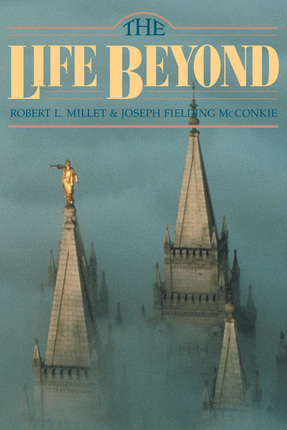
    The Life Beyond by Robert L. Millett and Joseph Fielding McConkie Copyright 1986.

    I recently was asked by two friends who have different religious beliefs from me, what do you believe happens to a person when they die?

    This is the great question right?  One of the 3 great questions.

    1. Where did I come from?
    2. Why I am I here?
    3. Where am I going?

    What a world we’d live in if every conversation we ever had started with that question:

    Hi, my name is Brayden.  Say, what do you think happens to us when we die?

    Wouldn’t that be great!  Less discussion about politics, sports, and tv.  What amazing conversations could come about from that question.

    It amazes me how many people in the world float through life without knowing any sort of answer to these questions.  It’s no wonder we’re in a world that seems untethered from any understanding, sense of reality, or sense of meaning.  What’s worse than all those who don’t know the answer to these questions is those that don’t even ask the question.  It baffles my mind that so many live on this earth, day by day, moment by moment, without daily stopping to ponder: why am I here?

    I believe the reason for this attitude by many people and much of society is due to a feeling that there is no answer.  No one can know so why ask?  I believe every person has asked these questions at some point.  They eventually determine it’s unknowable and move on.  I believe this cuts us off from growth.  How can we grow to our full potential if we have no understanding of our true potential?  How can we reach our true potential if we believe this whole life is for no purpose or reason?  How can we reach our full potential if we don’t even know if there’s something after all this?  In that case, what’s the point?

    That’s why when this question comes up I internally jump for joy.  I know many skeptics, doubters – ye with little faith – still say, “you can’t really know.”  I don’t care.  I know!  I know where I come from.  I know why I’m here.  I know where I’m going.

    It’s one of my greatest wishes that every person on this earth knew the same.  I believe it would make people happier.  I believe it would make the world a better place.  It’s why I’m writing this.  To share what I know.

    The Life Beyond is a book I recently finished by one of my favorite scholars.  Robert Millet was a panelist on the youtube video series I’ve used to study the lectures on faith.  I’ve seen Joseph Fielding McConkie on many of the books I intend to read.

    This book details everything we know about The Life Beyond.  Through scripture, modern revelation, prophets, and all other light and knowledge we’ve received, they go into great detail about what happens after we die.

    Could there be a more important book?

    Can you believe this book exists?  Can you believe you’re not reading it right now?

    Hundreds of millions stumble around in darkness, with fear of death and wonderment about life.  Here is scripture, from God, light and knowledge, revelation, that answers the most important questions in this life.

    For those with little understanding of the Gospel of Jesus Christ, this book would be like feeding a steak to a newborn.  Milk before meat.  I understand that.  Still, why isn’t everyone reading it?  If anyone reading this has ever asked, why am I here?  I invite you to read this book.  Then ask questions.  It can change your life.

    To conclude I’ll share one excerpt from the book that I enjoyed. 

    “The Family Unit Beyond the Veil

    Paul said, ‘I bow my knees,’ as do we all, ‘unto the Father of our Lord Jesus Christ, of whom the whole family in heaven and earth is named” (Ephesians 3:14-15).  In a manifestation to Brigham Young after his death, Joseph Smith told his successor to be sure to instruct the Saints to keep the Spirit of the Lord, promising that if they would do so, ‘they will find themselves just as they were organized by our Father in Heaven before they came into the world.  Our Father in Heaven organized the human family, but they are all disorganized and in confusion.’  Brigham also said that Joseph showed him the pattern, ‘how they were in the beginning.’  He said that he could not describe it but that there must yet be ‘a perfect chain from Father Adam to his latest posterity.’

    During an illness, Jedediah M. Grant visited the spirit world two nights in succession.  He reported a perfect order and government that existed there, saying that the ‘righteous gathered together,’ that there were ‘no wicked spirits among them,’ and that they were ‘organized in family capacities.’  ‘To my astonishment,’ he said, ‘when I looked at families, there was a deficiency in some, there was a lack, for I saw families that would not be permitted to come and dwell together, because they had not honored their calling here.’” (Emphasis added)

    What a marvel it is we have these truths and how lucky we are.  May we all fulfill our callings here, and start by asking, why am I here?

  • Beth’s Talk on Mosiah 3:19 (January)

    Beth’s Talk on Mosiah 3:19 (January)

    This is a talk, exactly as written, by Beth, that she gave in church in January. She rehearsed the talk verbally to me multiple times before I heard it in church. Of course, through hearing it I knew it was a great talk, but it wasn’t until proofreading and preparing to post this that I was struck by how phenomenal a talk this really was. Hope you enjoy reading it as much as much as I did. And now, Beth –

    Mosiah 3:19 Talk
    January 9, 2022
    Good morning brothers and sisters.
    I wanted to start by introducing my family as we are one of the families that were blended into this ward with the recent changes in the stake. My name is Elisabeth Quackenbush. My husband is Brayden Quackenbush. We met in the Scottsdale Young Single Adult Ward in 2017 and have been married for over 2 years. We have a one year old daughter named Ivy. You’ll see her running around Sunday School for another 5 months but she is very excited to start nursery after that.

    The topic I was given to speak on this morning is the scripture Mosiah 3:19. When I was informed this was my assignment I wasn’t really surprised. This scripture comes into my mind a lot and is brought up in conversations about life all the time when I’m chatting with my husband. I think it sticks in my mind because it stands in such contrast to a lot of the attitudes of the world these days.

    For those of you that memorized scripture mastery back in the day you may remember this scripture, but as a reminder, this scripture is King Benjamin speaking to his people in the Book of Mormon. It reads,

    “For the natural man is an enemy to God, and has been from the fall of Adam, and will be, forever and ever, unless he yields to the enticings of the Holy Spirit, and putteth off the natural man and becometh a saint through the atonement of Christ the Lord, and becometh as a child, submissive, meek, humble, patient, full of love, willing to submit to all things which the Lord seeth fit to inflict upon him, even as a child doth submit to his father.”

    When we break down this verse, we can derive meaning in a variety of ways. The first that I noted is that the natural man is inherently selfish. The second is the importance of change to the Eternal Plan of Happiness.

    Boyd K Packer stated in his 1990 talk, “Put Off the Natural Man, and Come Off
    Conqueror”:
    “Unchecked selfishness [of the natural man] stubbornly blocks the way for developing all of the divine qualities: love, mercy, patience, long-suffering, kindness, graciousness, goodness, and gentleness. Any tender sprouts from these virtues are sheared off by sharp selfishness. Contrariwise, I cannot think of a single gospel covenant the keeping of which does not shear off selfishness from us.”

    Through the influence of the Holy Ghost, and the atonement of Jesus Christ, we can and should change from the narrow focus of the natural man and become, “submissive, meek, humble, patient, full of love, and willing to submit to the will of God.”

    This idea of our ability and strength to change stands in stark contrast to the pervasive attitude of our society. This attitude states that we are born a certain way. We can’t change, and even shouldn’t want to change. If we do change, we are inauthentic. On the surface, this has a false sense of empowerment, I think. However, this idea that change is bad and that we must only be one way for the rest of our life is truly limiting, almost an eternal purgatory of mediocrity. Compare this to the freedom and growth permitted to us through Jesus Christ’s suffering, that we may improve and become like our Heavenly Father and Savior, Jesus Christ.

    My husband and I have had the opportunity to have many deep, religious
    conversations with friends of a variety of backgrounds. We often come across
    criticism of our faith’s belief that we can take steps, including repentance, baptism, and participating in temple ordinances, to change and become like God. We are accused of valuing works and forgetting the grace provided through Jesus Christ. On the contrary… His grace is the key element that permits us TO become new beings.

    In 2 Corinthians 5:17 we read, “Therefore if any man be in Christ, he is a new
    creature: old things are passed away; behold, all things are become new.”

    Brad Wilcox does a beautiful job in his BYU talk, “His Grace is Sufficient” at outlining how the Atonement of Jesus Christ, through His death and resurrection, provides us the need to change… (forgive me for this lengthy quote but as many of you know, this talk is incredible…)

    “[Yes, we are saved by Grace but] Have you been changed by grace? [We] are so excited about being saved that we are not thinking enough about what comes next. We are so happy the debt is paid that we may not have considered why the debt existed in the first place. Latter-day Saints know not only what Jesus has saved us from but also what He has saved us for.

    “A life impacted by grace eventually begins to look like Christ’s life. While many Christians view Christ’s suffering as only a huge favor He did for us,
    Latter-day Saints also recognize it as a huge investment He made in us.

    “As Moroni puts it, grace isn’t just about being saved. It is also about becoming like the Savior. The miracle of the Atonement is not just that we can live after we die but that we can live more abundantly. The miracle of the Atonement is not just that we can be cleansed and consoled but that we can be transformed.“

    Again, just think for a minute… how does that compare to what we are being taught by the world? I can’t change, I shouldn’t change…

    HOW DO WE PUT OFF THE NATURAL MAN AND BECOME LIKE CHRIST?

    We can actively seek this positive change…

    In her 1998 BYU Speech, Wendy Watson, now well known as Wendy Nelson, lists some ways. One is reflection. She notes how Alma directs this type of reflection:

    “Just how does Alma invite these change-inducing reflections? One way is through his use of questions. In Alma 5 alone, more than 40 questions are offered—questions like:
    Have ye received his image in your countenances? Have ye experienced this mighty change in your hearts? . . .
    . . . If ye have experienced a change of heart, and if ye have felt to sing the song of redeeming love, I would ask, can ye feel so now?‘ [Alma 5:14, 26]. Through the process of persistent questioning, Alma invites us to reflect over and over again: on our status with the Lord, on our spiritual growth and development, on things that need to change or have changed—and before we know it our desire for more change increases.”

    Another idea is to listen to the uplifting voices of authority in your life remembering, “As helpful as human voices of authority are, none can or should replace the ultimate voice of authority—the Word himself: the Savior Jesus Christ. What are you doing to hear his voice in your life? What are you doing to establish his voice as the voice of authority for you?”

    Other ways we can develop this change to become more like Him… Consistently and earnestly repent, seek out holy places, take steps of faith, pray to Him daily.”

    Sometimes change finds us…whether it be through loss, grief, depression, or trials in life, change is often thrust upon us in this mortal life. Again, the world finds few answers as to why there is such suffering and grief in the world. His eternal plan of growth and development is sometimes the only answer that makes sense. If we are to become like Christ, our innocent brother that felt all the sufferings of the world, how can we expect to be truly changed without some suffering of our own?

    Peter in speaking of [trials], said: “Beloved, think it not strange concerning the fiery trial which is to try you, as though some strange thing happened unto you: But rejoice, inasmuch as ye are partakers of Christ’s sufferings; that, when his glory shall be revealed, ye may be glad also with exceeding joy.”

    When we endure this life, put off the natural man, and develop into more Christ-like beings, we set ourselves up to feel an even greater degree of joy in this life and in eternity.

    This topic makes me think of a time when I came back to church after living a life that was not in line with what I knew to be right. I made many positive changes when I started coming back and attending the Scottsdale Young Single Adult ward. I starting observing the sabbath day, stopped a lifestyle of college partying, broke off a serious relationship, and made several other difficult but important decisions.

    However, with all this positive change and shunning of the enticings of the natural man, I still felt like I wasn’t receiving the blessings I thought I would. I wallowed in self pity over my own suffering for a while because of this and even wondered if all of my change was for nothing.

    However, I eventually decided I would stop focusing on what I needed and instead turned outward. I made it my mission to seek anyone in my ward that seemed lonely as I was. I sought opportunities to serve those that were also going through a variety of trials. And a miracle happened! The less I focused on my pain, my loneliness, my loss, and focused on loving those around me as Christ did, I really came to find true joy.

    I couldn’t believe how sincerely I loved everyone around me. I didn’t feel lonely. I developed new, Christ-like attributes. And ultimately, I shunned the ultimate trait of the natural man – selfishness. What a blessing that lesson was for my life.

    I know how hard it can be to put off the feelings we have as humans in a difficult mortal journey. It is something we will actively have to work for as long as we live. However, I know that when we let ourselves change and take on the characteristics of Christ we will prepare ourselves to find real joy in eternity. We will truly have cause to rejoice in his second coming.

    I say these things in the name of Jesus Christ, amen.

  • He Hears your Prayers

    He Hears your Prayers

    When I go through difficult times, for whatever reason that might be, I often find myself thinking to myself a lyric from the song “A Child’s Prayer.” 

    “Heavenly Father, are you really there?”

    I was recently having one of those difficult times and was thinking this phrase.

    I went to church that Sunday and said a prayer asking that if there was some guidance I could receive, that I’d hear it.  It was a particularly distracted day with Ivy in church.  Quick side note, it’s amazing how distracting a toddler can be in church.  Ivy is really good in church, and yet I still find it so difficult to focus on the speakers while also making sure she’s ok and entertained.

    Despite the normal distractions, I caught a speaker mentioning, “Heavenly Father, are you really there?”  I can’t remember in what context.  I believe it might have been the youth speaker.  I perked up, but that was it, the moment passed.

    It was a thoroughly uplifting Sunday that day and I found myself feeling in much better spirits.  Still, there were those lingering “difficulties” in the background.

    The next day I was with Ivy in her room.  I am more and more convinced that Ivy, and probably all children, are still at least 50% angel.  The coincidences Ivy causes in my life are too perfect.

    I was in her rocking chair on my computer reading and doing stuff while she played. Suddenly she came over to me which isn’t unusual.  I put my computer away and pulled out my phone instead.  I wanted to look up the songs we had in church the previous day because I had a song stuck in my head but didn’t know it’s name.  I pulled up Youtube to play the sacrament song and confirm it was the one stuck in my head.

    We listened to the song and then Ivy reached for the phone, again, not something out of the ordinary by any means.  She started tapping it with her finger.  I saw her click a couple recommended videos that were on the side of the screen and then she pulled her hand away.  A video started playing.  I didn’t recognize the song (at first).  It had a long introduction and then there were images of children with their parents.  Children praying with their parents, being tucked in, coloring, playing. 

    Suddenly it started.

    Heavenly Father, are you really there?
    And do you hear and answer every child’s prayer?
    Some say that Heaven is far away
    But I feel it close around me as I pray

    “I feel it close around me as I pray” is the part, during times of difficulty, that I struggle with.  Because in those times I don’t always feel heaven close around me as I pray.

    I started to cry.

    The song continued.

    Heavenly Father, I remember now
    Something that Jesus told disciples long ago
    “Suffer the children to come to me”
    Father, in prayer I’m coming now to thee

    I looked at Ivy.

    Then the song continued.

    Pray, He is there
    Speak, He is listening
    You are His child
    His love now surrounds you
    He hears your prayer
    He loves the children
    Of such is the kingdom, the kingdom of Heaven

    It had been so long since I’d heard the full song I truly didn’t remember that part. And when I heard it, it was so clear.  It was so clear.  In moments of challenge I remember the part, “Heavenly Father, are you really there?”  But I’d forgotten the part, “He is there.  Speak, He is listening.  You are His child.  His love now surrounds you.  He hears your prayer.”

    I remembered.

    Sometimes it’s so hard to hear Him.  Sometimes it’s so hard to remember He is there.

    Then He reminds you. 

    I want to remind everyone reading.  He is there.  Speak, He is listening.

    The world can yell at me that it was a complete coincidence that Ivy somehow brought up that song that I’ve never listened to before on Youtube.  I say, that’s ridiculous.  I needed to be reminded that my Father was there and listening, and so he reminded me.  Through my angel.

    I’m grateful for Him.  I’m grateful for all my angels. 

    I know He is there.