Tag: holy ghost

  • Truths Removed from the Bible

    Truths Removed from the Bible

    This post comes directly from something I read on my favorite Book of Mormon commentary website. He received it from a book I would like to read at some point by Anthony E. Bentley: 1000 Evidences for the Church of Jesus Christ of Latter-day Saints: Part Two-A Voice from the Dust: 500 Evidences in Support of the Book of Mormon. The portion I’m taking from the book is from pages 16-17.

    In the book, Brother Bentley points out how critics like to ask for specific examples of any “plain and precious things” found in the Book of Mormon that are not also found in the Bible. He then provides this list:

    • The Lord prepares a way for us to keep all of His commandments (1 Nephi 3:7):
      • 7 And it came to pass that I, Nephi, said unto my father: I awill go and do the things which the Lord hath commanded, for I know that the Lord giveth no bcommandments unto the children of men, save he shall cprepare a way for them that they may accomplish the thing which he commandeth them.
    • How mysteries are made known unto man (1 Nephi 10:19; Mosiah 2:9; Alma 12:10; 26:22)
      • 19 For he that diligently seeketh shall find; and the bmysteries of God shall be unfolded unto them, by the power of the cHoly Ghost, as well in these times as in times of old, and as well in times of old as in times to come; wherefore, the dcourse of the Lord is one eternal round.
      • 9 And these are the words which he aspake and caused to be written, saying: My brethren, all ye that have assembled yourselves together, you that can hear my words which I shall speak unto you this day; for I have not commanded you to come up hither to btrifle with the words which I shall speak, but that you should chearken unto me, and open your ears that ye may hear, and your dhearts that ye may understand, and your eminds that the fmysteries of God may be unfolded to your view.
      • 10 And therefore, he that will aharden his heart, the same receiveth the blesser portion of the word; and he that will cnot harden his heart, to him is dgiven the greater portion of the word, until it is given unto him to know the mysteries of God until he know them in full.
      • 22 Yea, he that arepenteth and exerciseth faith, and bringeth forth good bworks, and prayeth continually without ceasing—unto such it is given to know the cmysteries of God; yea, unto such it shall be dgiven to ereveal things which never have been revealed; yea, and it shall be given unto such to bring thousands of souls to repentance, even as it has been given unto us to bring these our brethren to repentance.
    • The process for receiving revelation and inspiration (1 Nephi 17:45; Enos 1:10)
      • 45 Ye are aswift to do iniquity but slow to remember the Lord your God. Ye have seen an bangel, and he spake unto you; yea, ye have heard his voice from time to time; and he hath spoken unto you in a still small voice, but ye were cpast feeling, that ye could not feel his words; wherefore, he has spoken unto you like unto the voice of thunder, which did cause the earth to shake as if it were to divide asunder.
      • 10 And while I was thus struggling in the spirit, behold, the voice of the Lord came into my amind again, saying: I will visit thy brethren according to their diligence in keeping my commandments. I have bgiven unto them this land, and it is a holy land; and I ccurse it not save it be for the cause of iniquity; wherefore, I will visit thy brethren according as I have said; and their dtransgressions will I bring down with sorrow upon their own heads.
    • The gentiles to assist the house of Israel (1 Nephi 22:8-11; 2 Nephi 10:18)
      • And after our seed is scattered the Lord God will proceed to do a amarvelous work among the bGentiles, which shall be of great cworth unto our seed; wherefore, it is likened unto their being nourished by the dGentiles and being carried in their arms and upon their shoulders.
      • And it shall also be of aworth unto the Gentiles; and not only unto the Gentiles but bunto all the chouse of Israel, unto the making known of the dcovenants of the Father of heaven unto Abraham, saying: In thy eseed shall all the kindreds of the earth be fblessed.
      • 10 And I would, my brethren, that ye should know that all the kindreds of the earth cannot be blessed unless he shall make abare his arm in the eyes of the nations.
      • 11 Wherefore, the Lord God will proceed to make bare his arm in the eyes of all the anations, in bringing about his covenants and his gospel unto those who are of the house of Israel.
      • 18 Wherefore, my beloved brethren, thus saith our God: I will afflict thy seed by the hand of the Gentiles; nevertheless, I will asoften the hearts of the bGentiles, that they shall be like unto a father to them; wherefore, the Gentiles shall be cblessed and dnumbered among the house of Israel.
    • The law of consecration (2 Nephi 2:2)
      • 2 Nevertheless, Jacob, my firstborn in the wilderness, thou knowest the greatness of God; and he shall consecrate thine aafflictions for thy gain.
    • The reason God allows evil and opposition to continue in the world and the importance of moral agency (2 Nephi 2:2, 10:16)
      • (See above).
      • 16 Wherefore, he that afighteth against bZion, both Jew and Gentile, both bond and free, both male and female, cshall perish; for dthey are they who are the ewhore of all the earth; for fthey who are gnot for me are hagainst me, saith our God.
    • The purpose of Adam’s fall & man’s existence (2 Nephi 2:22-25)
      • 22 And now, behold, if Adam had not transgressed he would not have fallen, but he would have remained in the garden of Eden. And all things which were created must have remained in the same state in which they were after they were created; and they must have remained forever, and had no end.
      • 23 And they would have had no achildren; wherefore they would have remained in a state of innocence, having no bjoy, for they knew no misery; doing no good, for they knew no csin.
      • 24 But behold, all things have been done in the wisdom of him who aknoweth all things.
      • 25 aAdam bfell that men might be; and men care, that they might have djoy.
    • The lost prophecy of the latter-day Joseph (2 Nephi 3:6-16)
    • God’s word is not limited to the Bible (2 Nephi 29:3-13)
    • The lost teachings of Zenos (Jacob 5:1-77)
    • A description of the natural man, and how to overcome (Mosiah 3:19; Alma 5:6-45)
      • 19 For the anatural bman is an cenemy to God, and has been from the dfall of Adam, and will be, forever and ever, unless he eyields to the enticings of the fHoly Spirit, and gputteth off the hnatural man and becometh a isaint through the atonement of Christ the Lord, and becometh as a jchildksubmissive, meek, humble, patient, full of love, willing to submit to all things which the Lord seeth fit to inflict upon him, even as a child doth submit to his father.
    • How to retain the remission of sins (Mosiah 4:11-16)
    • The true process of being born again (Mosiah 5:2-9; Alma 5:6-45)
    • The office and calling of a seer (Mosiah 8:13-17):
      • 13 Now Ammon said unto him: I can assuredly tell thee, O king, of a man that can atranslate the records; for he has wherewith that he can look, and translate all records that are of ancient date; and it is a gift from God. And the things are called binterpreters, and no man can look in them except he be commanded, lest he should look for that he ought not and he should perish. And whosoever is commanded to look in them, the same is called cseer.
      • 14 And behold, the king of the people who are in the land of Zarahemla is the man that is commanded to do these things, and who has this high gift from God.
      • 15 And the king said that a aseer is greater than a prophet.
      • 16 And Ammon said that a seer is a revelator and a prophet also; and a gift which is greater can no man have, except he should possess the power of God, which no man can; yet a man may have great power given him from God.
      • 17 But a seer can know of things which are past, and also of things which are to come, and by them shall all things be revealed, or, rather, shall secret things be made manifest, and hidden things shall come to light, and things which are not known shall be made known by them, and also things shall be made known by them which otherwise could not be known.
    • The manner in which faith is developed and maintained (Alma 32:26-34)
    • The relationship between justice and mercy (Alma 34:15-16)
      • 15 And thus he shall bring asalvation to all those who shall believe on his name; this being the intent of this last sacrifice, to bring about the bowels of mercy, which overpowereth justice, and bringeth about means unto men that they may have faith unto repentance.
      • 16 And thus amercy can satisfy the demands of bjustice, and encircles them in the arms of safety, while he that exercises no faith unto repentance is exposed to the whole law of the demands of cjustice; therefore only unto him that has faith unto repentance is brought about the great and eternal dplan of eredemption.
    • The state of the soul between death and the resurrection (Alma 40:11-14):
      • 11 Now, concerning the astate of the soul between bdeath and the resurrection—Behold, it has been made known unto me by an angel, that the spirits of all men, as soon as they are departed from this mortal body, yea, the spirits of all men, whether they be good or evil, are ctaken dhome to that God who gave them life.
      • 12 And then shall it come to pass, that the spirits of those who are righteous are received into a state of ahappiness, which is called bparadise, a state of rest, a state of cpeace, where they shall rest from all their troubles and from all care, and sorrow.
      • 13 And then shall it come to pass, that the aspirits of the wicked, yea, who are evil—for behold, they have no part nor portion of the Spirit of the Lord; for behold, they chose evil works rather than good; therefore the spirit of the bdevil did enter into them, and take possession of their house—and these shall be cast out into couter darkness; there shall be dweeping, and wailing, and gnashing of teeth, and this because of their own iniquity, being led captive by the will of the devil.
      • 14 Now this is the state of the asouls of the bwicked, yea, in darkness, and a state of awful, cfearful looking for the fiery dindignation of the wrath of God upon them; thus they remain in this estate, as well as the righteous in paradise, until the time of their resurrection.
    • Christians and Christianity flourished before the time of Christ (Alma 46:13-16):
      • 13 And he fastened on his head-plate, and his abreastplate, and his shields, and girded on his armor about his loins; and he took the pole, which had on the end thereof his rent coat, (and he called it the btitle of liberty) and he cbowed himself to the earth, and he prayed mightily unto his God for the blessings of liberty to rest upon his brethren, so long as there should a band of dChristians remain to possess the land—
      • 14 For thus were all the true believers of Christ, who belonged to the church of God, called by those who did not belong to the church.
      • 15 And those who did belong to the church were afaithful; yea, all those who were true believers in Christ btook upon them, gladly, the name of Christ, or cChristians as they were called, because of their belief in Christ who should come.
      • 16 And therefore, at this time, Moroni prayed that the cause of the Christians, and the afreedom of the land might be favored.
    • The symbolisms of the remnant of Joseph’s coat (Alma 46:23)
      • 23 Moroni said unto them: Behold, we are a aremnant of the seed of Jacob; yea, we are a remnant of the seed of bJoseph, whose ccoat was rent by his brethren into many pieces; yea, and now behold, let us remember to keep the commandments of God, or our garments shall be rent by our brethren, and we be cast into prison, or be sold, or be slain.
    • The perpetual cycle of the human experience (pride cycle): obedience–>blessings–>prosperity–>pride–>sin–punishment–>humility–>repentance–>obedience . . . (Helaman 12:1-3):
      • And thus we can behold how false, and also the unsteadiness of the hearts of the children of men; yea, we can see that the Lord in his great infinite goodness doth bless and aprosper those who put their btrust in him.
      • Yea, and we may see at the very atime when he doth bprosper his people, yea, in the increase of their fields, their flocks and their herds, and in gold, and in silver, and in all manner of cprecious things of every kind and art; sparing their lives, and delivering them out of the hands of their enemies; softening the hearts of their enemies that they should not declare wars against them; yea, and in fine, doing all things for the welfare and happiness of his people; yea, then is the time that they do dharden their hearts, and do eforget the Lord their God, and do ftrample under their feet the Holy One—yea, and this because of their ease, and their exceedingly great prosperity.
      • And thus we see that except the Lord doth achasten his people with many afflictions, yea, except he doth visit them with bdeath and with terror, and with famine and with all manner of pestilence, they will not cremember him.
    • The “other sheep” spoken of in John 10:16 are identified (3 Nephi 15:16-24)
    • The powers of translated beings (3 Nephi 28:36-40)
      • 36 And now behold, as I spake concerning those whom the Lord hath chosen, yea, even three who were caught up into the heavens, that I knew not whether they were acleansed from bmortality to immortality—
      • 37 But behold, since I wrote, I have inquired of the Lord, and he hath made it manifest unto me that there must needs be a change wrought upon their bodies, or else it needs be that they must taste of death;
      • 38 Therefore, that they might not taste of death there was a achange wrought upon their bodies, that they might not bsuffer pain nor sorrow save it were for the sins of the world.
      • 39 Now this change was not equal to that which shall take place at the last day; but there was a change wrought upon them, insomuch that Satan could have no power over them, that he could not atempt them; and they were bsanctified in the flesh, that they were choly, and that the powers of the earth could not hold them.
      • 40 And in this state they were to remain until the judgment day of Christ; and at that day they were to receive a greater change, and to be received into the kingdom of the Father to go no more out, but to dwell with God eternally in the heavens.
    • Baptism is only for those who are accountable (Moroni 8:5-23)
    • The manner in which all truth may be verified (Moroni 10:4-5)   
      • And when ye shall receive these things, I would exhort you that ye would aask God, the Eternal Father, in the name of Christ, if these things are not btrue; and if ye shall ask with a csincere heart, with dreal intent, having efaith in Christ, he will fmanifest the gtruth of it unto you, by the power of the Holy Ghost.
      • And by the power of the Holy Ghost ye may aknow the btruth of all things.

    And lastly, one of my own:

    Order of baptism 3 Nephi 11:24-27
    24 And now behold, these are the words which ye shall say, calling them by name, saying:
    25 Having aauthority given me of Jesus Christ, I baptize you in the name of the bFather, and of the Son, and of the Holy Ghost. Amen.
    26 And then shall ye aimmerse them in the water, and come forth again out of the water.
    27 And after this manner shall ye abaptize in my name; for behold, verily I say unto you, that the Father, and the Son, and the Holy Ghost are bone; and I am in the Father, and the Father in me, and the Father and I are one.

    I haven’t personally checked the Bible for all of these truths. If anyone knows of places in the Bible that speaks of any of these truths I would gladly review them. Ultimately, it is not a competition between the Bible and the Book of Mormon. The primary purpose of the Book of Mormon is to testify of Christ, and part of that purpose is accomplished by supporting the Bible in every way. The Bible and the Book of Mormon together leave indisputable evidence of Christ’s divine mission as our Savior.

  • The Greatest Gift Man can Receive in Mortality

    The Greatest Gift Man can Receive in Mortality

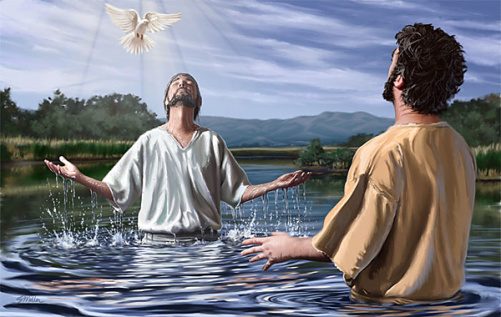
    The Holy Ghost is the Holy Spirit; he is the Holy Spirit promised the saints at baptism, or in other words the Holy Spirit of Promise, this exalted name-title signifying that the promised receipt of the Holy Spirit, as on the day of Pentecost, is the greatest gift man can receive in mortality.

    Bruce R. McConkie

    I recently read this quote and the truth of the statement hit me.  This seemed a fitting thought after last week’s post talking about the gift the gospel has been in my life. I believe that quote is a powerful reminder for those of us who have been blessed with this great gift.  The gospel is a blessing in part due to this great gift, the gift of the Holy Ghost. 

    I can’t wait to teach Ivy of this most extraordinary gift and to watch her receive it for herself.  I know the Holy Ghost is a guiding force and has blessed my life more than I will ever understand while on this earth.  One day I will know.

    I’m grateful for this constant companion (D&C 121:46), this friend, this comforter.  I am never alone when the Holy Ghost is within me.  What a blessing that gift is.  The greatest in this life.

    WORD FOR THE DAY-03JAN17 | Living Waters
  • The Shack

    The Shack

    The Shack was a New York Times best seller and eventually became a motion picture.  I watched the movie before reading the book.  I liked the movie a lot so was looking forward to reading the book. 

    The Shack is a story about a man who has to come face to face with his faith and what he believes about God.  It’s written claiming to be the true experience of one man, written by his friend.

    The book is great.  It is a religious themed book with an engaging story that anyone could enjoy.  The story is one anyone can get behind.  We have all felt pain and the circumstances of the main character’s journey are easy to attach oneself to.

    I marked and highlighted throughout the book.  It’s a book with countless lines that make you stop and think.  It’s an intellectual and spiritual journey.

    I had the unique experience of watching the movie 2 or 3 years before reading the book.  I loved the movie.  The movie really made me think and expanded my view on pain, justice, mercy, and how God fits into that equation.  Surprisingly, I think the book touched on that in a different way.  That theme was there, but I remember it being more palpable in the movie experience.

    The big question I’d like to address – did this really happen?  Some of what I know to be true doctrinally was misrepresented in this story, but I still can’t say for certain that this was a story of fiction. The world is a mysterious place and I don’t want to get into a situation where I limit what God is capable of.  If He presented Himself to this man in this unique way… maybe.  Maybe it happened.  Maybe countless things happened.

    What I will say is this:  whether it happened or it didn’t happen, even if it’s a completely fictional tale, I learned something.  It expanded my mind, made me think, and I believe it even strengthened my testimony of God, Jesus Christ, and the Holy Ghost.  For that reason, I can say I don’t care whether the main character truly had this experience.  Even if he was just impacted by whatever experience he had in a way that led him to portray such a unique and beautiful story, that’s good enough for me.

    There is something unique at the end of the book.  The very last page has “The Missy Project.”  It states that the book became #1 on the New York Times Bestseller List on a $200 budget because of passionate readers.  It says: “if you were as taken with the message of this book as we are, you may already have some unique ideas as to how you can best let others know about it…. If you have a Web site or blog, consider sharing a bit about the book and how it touched your life.  Don’t give away the plot, but recommend that they read it as well and link to http://www.theshackbook.com.

    I checked, the website still exists these 13 years after publication.  In fact, it’s a beautiful website promoting both the movie and the book.

    This book did touch me.  It expanded my thinking.  I loved it.  I loved the movie as well. 

    A lot of the books I read few will ever read simply because people aren’t interested in the subject matters that interest me.  This book should not be avoided.  Anyone can learn and grow from this book, it’s a page turner with an engaging plot and wonderful story.  Please read it.

    If you’ve already read The Shack tell me what you thought of it.

  • Blessing Ivy

    Blessing Ivy

    I recently had the special opportunity to bless Ivy.  Leading up to the blessing, I did some research on the history of blessing children in the Church of Jesus Christ and its significance.  For Ivy’s blessing, Beth put together an event and a description of what a baby blessing is.  Here is that description:

    What is a baby blessing?

    In summary, the naming and blessing of children is a commandment of God. It is proper for a worthy father to name and bless his children. Blessing of children was done during the time of Christ, and it occurred in the early years of the restored Church. The ordinance has become a regular practice followed by Church members ever since.

    Who has the authority to bless a baby?

    A worthy priesthood holder under the direction of the local bishop. It is usually the father or a close family member.

    What is the priesthood?

    The word priesthood has two meanings. First, priesthood is the power and authority of God. It has always existed and will continue to exist without end. Through the priesthood, God created and governs the heavens and the earth. Through this power, He exalts His obedient children, bringing to pass “the immortality and eternal life of man.”

    Second, in mortality, priesthood is the power and authority that God gives to man to act in all things necessary for the salvation of God’s children. The blessings of the priesthood are available to all who receive the gospel.

    What is the format of a baby blessing?

    When blessing a baby, priesthood holders gather in a circle and place their hands under the baby. When blessing an older child, brethren place their hands lightly on the child’s head. The person who gives the blessing:

    1. Addresses Heavenly Father.

    2. States that the blessing is performed by the authority of the Melchizedek Priesthood.

    3. Gives the child a name.

    4. Gives words of blessing as the Spirit directs.

    5. Closes in the name of Jesus Christ.

    Ivy and Aunt Cambria

    Reading up on the baby blessing beforehand taught me some interesting things about this sacred practice that I would like to share.

    The below points were taken from this link:

    https://www.churchofjesuschrist.org/study/ensign/1979/12/i-have-a-question/in-blessing-an-infant-should-both-the-naming-and-blessing-be-addressed-to-our-heavenly-father?lang=eng

    1. Unique to giving a blessing to an older child or adult, the naming and blessing of a child is directed to Heavenly Father like prayers are. 
      • This could be because the baby is too young to understand the words directed to him or her. 
    2. It appears that Melchizedek Priesthood holders are authorized to more than ask for a blessing but are able to pronounce a blessing upon the child directly, as the spirit directs.
      • See D&C 20:70
      • Sometimes inspiration (or confidence) to pronounce/give a blessing does not come.  In this case it is of course acceptable to ask Heavenly Father for these blessings.  I believe this is how I felt in giving Ivy her blessing.  It was enough to ask Heavenly Father to bless her with my requests.
    3. It is a commandment to name and bless infants.
      • See again D&C 20:70
      • It is important to remember the naming and blessing of children is not a saving ordinance.  It is still an important and sacred moment seen in heaven.
    4. “It is an awesome responsibility to be a priesthood agent of the Lord, to act in his behalf, and to approximate in one’s words and doings what the Lord would do if he were here.  A father, especially, who is to bless his child, has the delight and responsibility to prepare himself beforehand by pondering and by fasting and prayer, that he may be sensitive to the suggestions of the Spirit when giving the blessing.”
      • “How blessed we are to be able to present our little ones before the Lord, our families and the Church, and then consecrate them to the Lord.  How blessed we are to be able to name them, plead over, pray for, and, yes, to bless them directly and personally in harmony with our finest desires for them, by the authorization and wisdom of heaven.”

    The below points were taken from this link:

    https://www.churchofjesuschrist.org/study/ensign/1988/12/i-have-a-question/why-is-the-naming-and-blessing-of-a-child-important?lang=eng

    1. An interesting account from Joseph Smith on March 13, 1843 says, “Twenty-seven children were blessed, nineteen of whom I blessed myself, with great fervency.  Virtue went out of me, and my strength left me…”
      • “[The next day] Elder Jedediah M. Grant enquired of me the cause of my turning pale and losing strength last night while blessing children.  I told him that I saw that Lucifer would exert his influence to destroy the children that I was blessing, and I strove with all the faith and spirit that I had to seal upon them a blessing that would secure their lives upon the earth; and so much virtue went out of me into the children, that I became weak, from which I have not yet recovered; and I referred to the case of the woman touching the hem of the garment of Jesus. (Luke 8).” (History of the Church, 5:303.)
      • Elder John Taylor said the Savior’s example of blessing children “should be studiously complied with without hesitancy or objection” (by priesthood holders).
      • We see that Joseph Smith followed the example of the Savior who blessed children in both Israel and the American continent.  (Mark 10:14-16 and 3 Nephi 17).  What an amazing and marvelous thought:  our virtue can be passed to our children.  Our blessings are a force Satan must reckon with.  It makes me want to bless my daughter daily.  It also adds insight to a scripture that has always been a bit puzzling in Luke 8:46.  Virtue can literally leave us to help others.
    2. The new name:
      • A new name is often involved when a covenant relationship is formed.
      • When Adam and Eve were given dominion over the earth, Adam named all the animals (Genesis 2:19-20).
      • God blessed them and named Adam after giving him a body (Genesis 5:2).
      • When we get baptized we follow a similar pattern, taking upon us a new name, the name of Christ.
      • Temple covenants also involve the giving and receiving of names.
    3. The responsibility of blessing a child is bestowed, ideally, on he who helped create that child’s body, and who Heavenly Father entrusted His child with in mortality.
      • Joseph F. Smith – “The patriarchal order is of divine origin and will continue throughout time and eternity.  There is, then, a particular reason why men, women, and children should understand this order and authority in the households of the people of God and seek to make it what God intended it to be, a qualification and preparation for the highest exaltation of his children.  In the home, the presiding authority is always vested in the father, and in all home affairs and family matters there is no other authority paramount…This authority carries with it a responsibility, and a grave one, as well as its rights and privileges, and men cannot be too exemplary in their lives, nor fit themselves too carefully to live in harmony with this important and God-ordained rule of conduct in the family organization.”

    It is my experience that giving blessings is often the closest I ever feel to Heavenly Father.  I can feel him speaking through me and it is always a powerful, emotional, and memorable experience.  The opportunity to bless my daughter will be one of the greatest moments of my life.  I have immense gratitude to my Heavenly Father for entrusting Ivy into my care, allowing me to name her, and trusting me to watch over and protect her in this life and through eternity.

  • Organized Religion

    Organized Religion

    What do you think the point of organized religion is?

    I had an obvious realization recently, only recently.  The point of organized religion is to bring you closer to Heavenly Father and Jesus Christ.  If organized religion doesn’t bring you closer to God, then why do it?  I think it’s why we see so many people disenfranchised with organized religion.  In their hearts and souls, they know and hope what organized religion will bring – closeness with God.  When it doesn’t do that (and in fact sometimes does the opposite) they move away from it.

    The second point of organized religion: to bring us peace. 

    This second part isn’t as simple as “I belong to a church so I am happy and peaceful.” We know that Christianity is not always comfortable. This peace is bigger than worldly comfort. This peace is the knowledge that you are right with God. This peace is more eternal than this life.

    Why don’t organized religions do these two things?  Some do, and I’m not discounting those who come closer to God and find peace in any faith.  My point stands, that a lot of people have moved away from organized religion.  Why?  Why don’t most organized churches bring us closer to God or bring us peace?  They don’t have the proper authority from heaven to do so.

    God, through revelation has told us exactly what we need to do to come closer to Him and to have peace:

    1. Faith in Jesus Christ
      • Start by simply believing in Jesus Christ.  Believe He was born, believe He lived, believe He is the son of God, believe He died for you and your sins.
    2. Repentance
      • Once you believe, be better.  Don’t take for granted the suffering Christ went through for you.  Pray to God and ask forgiveness for the mistakes you have made and continue to make.
    3. Baptism
      • Religion has corrupted this simple principle.  All God asks is you make a symbolic gesture to show that you have faith in Him, faith in Jesus Christ, and will remember them.  Then use that show of faith to change and be better.  God has asked us to be baptized.  Follow His commandments and be baptized. 
    4. Gift of the Holy Ghost
      • The world is ever distracting and evil.  God has given us someone to provide strength.  The Holy Ghost is one with God and Jesus Christ and can be with us always.
      • I have the perfect example to help illustrate the important role the Holy Ghost plays.  I received a text from a friend one afternoon while I was working telling me his dad had passed away.  My friend didn’t want me to find out over social media, so he texted me.  When I read it I initially thought selfishly.  I was at work.  There wasn’t anything I could do.  I wanted to kneel and pray and cry.  But as I was sitting there something happened.  As clear as if a person whispered in my ear, I heard and felt a message.  Clear as day I knew important things.  This was my friend.  He was hurting.  Clear as day, “go to your friend.”  I’m not affectionate, it’s hard for me, ask my wife.  Beth knows that better than anyone.  It’s not in my nature to want to go comfort and cry with a friend.  That seems hard and vulnerable.  But in that very important moment I know the Holy Ghost came to me and directed me.  I know it was important for me, and I believe it was important for my friend.  The Holy Ghost did that.  I know that because I’ve worked so hard to be able to hear when the Holy Ghost speaks to me.  I have so many examples of that.  I could go on for days about the important moments that the Holy Ghost guided me.

    After the Holy Ghost, the final step: endure to the end.  Take the sacrament each week to renew your covenants from baptism.  Repent every day.  Remember Jesus Christ every day.  That’s it.  That brings you closer to God.  I know because it has for me.

    People don’t change overnight.  I know to many it seemed like I changed overnight.  I didn’t.  It was years of slowly changing habits, changing thoughts.  Many saw first-hand who I used to be but didn’t see the slow, gradual change to who I am now.  I always told myself I was “good.”  What good was me telling myself I was good if my actions and my selfishness said otherwise?  Four years ago, if I received the text I mentioned above I would have said “I’m sorry” and “let me know if you need anything.”  Today, I’m different.  I’m different because of Jesus Christ.

    What’s important?  I know why I’m here.  I know where I come from.  I know where I’m going. This brings peace.