Tag: jesus christ

  • The Higher Law and the End of Blood Sacrifice

    The Higher Law and the End of Blood Sacrifice

    Christ fulfilled the law. This was why blood sacrifices were done with after His last and great sacrifice. But what does this mean, practically?

    The Israelites practiced God’s law which was a law of reparations. You take out the eye of an enemy maliciously, you take out his eye. Someone kills your brother, you kill him. The problem with this is obvious. Blood begets blood and when does it end?

    This is why the Israelites practiced the law of sacrifice. They took an animal, that had nothing to do with bloodshed, or theft, or lying, and instead of continuing the constant cycle of reparations, they sacrificed the blood of the animal. This is obviously what Christ represented when He died on the cross. He paid the price for all our sins, because we are incapable of paying such a price.

    This is why Christ preached a higher law. No longer was it an eye for an eye but it was turn the other cheek. No longer was it sue for damages but give your second coat. Christ’s point was that after He died for our sins, animal sacrifices would be done away with, there was no more putting your sins off on a goat. Christ was teaching the end of strife. Someone wrongs you, forgive them and move on. This put an end to the vicious cycle of payback and recompense.

    Who was the greatest example ever of this? Jesus Christ never asked us to do something He didn’t do first, when He was up on the cross, and forgave those who had scourged, beaten, and crucified Him.

    But of course, justice still had to be paid for a wrong done. That’s where Christ came in, paying the ultimate and last sacrifice with His blood. So, we flawed human beings, who sometimes commit wrong without even meaning to, can be forgiven. This is the miracle of what Christ did for us, the miracle of His atonement, the miracle of His forgiveness, and the miracle of the higher law.

  • How did the Trinity come to be? – The Nicene Creed Post 1

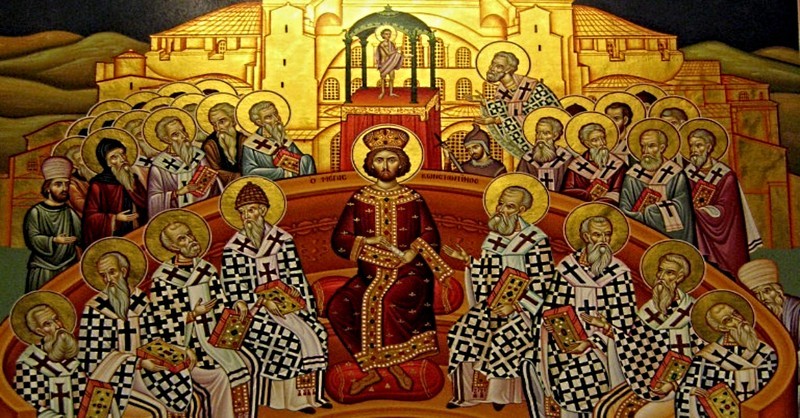
    How did the Trinity come to be? – The Nicene Creed Post 1

    Most of my blog posts are personal experiences with little research. They’re mostly just stream-of-thought writing. That’s what I prefer.

    Every once in a while, I want to write about a topic I know nothing about, which results in some (or a lot) of research. My Adam-God Theory post is one that comes to mind.

    I’ve long wanted to write a post about how the Trinity came to be. To prove this, years ago I gave my thoughts on the Trinity in this post.

    And wrote about how I know the Godhead to be true in this post.

    This has been a topic pretty consistently on my mind for a long time.

    Quick definition so we can all follow along (because this isn’t going to be an advanced or complicated post), the Trinity refers to the belief that God the Father, Jesus Christ, and the Holy Ghost are all one being. Most of Christianity believes in the Trinity. The Church of Jesus Christ of Latter-day Saints, through the experience of the prophet Joseph Smith, believe in the Godhead. The Godhead is the belief that God the Father, Jesus Christ, and the Holy Ghost are three distinct beings who are one in purpose (John 17:21-23).

    I’ve long wanted to learn more about how the Trinitarian belief came to be. I know it developed from the Nicene Creed. But if this is a falsehood perpetuated throughout history, how did it become so dominant? I’ve wanted to understand this history better. Part of the motivation to understand this better comes from the dominance of the Trinitarian viewpoint. When I’m trying to relate to other Christians, the Trinity vs Godhead question really becomes an issue.

    To know God you must know who He is. When I talk to a Christian, we both believe in Jesus Christ, but who is Jesus Christ? It’s OK to say we both believe in God and go from there, but sometimes not understanding who God is keeps me and other Christians from really being able to progress and learn from each other.

    Personally, I believe this is why this misunderstanding has been so perpetuated throughout history. Satan is cunning. He knows if we don’t know who our Father is, it becomes so much harder to worship Him.

    Is that an unfair statement for me to make? I can hear all the Catholics and Protestants and Lutherans and Baptists in an uproar when I state that a core belief of theirs has been perpetuated by Satan to confuse them. I understand that this is inflammatory. When I’m told by those same groups of people that my belief that God the Father and Jesus Christ are separate and distinct beings is a lie that Satan has deceived me with, it hurts. So I get it.

    This is why I want to understand where the belief in the Trinity comes from.

    When I read the Bible, it’s so abundantly clear to me. It doesn’t make any sense to me that people can read the Bible and conclude that Heavenly Father and Jesus Christ are one person. And yet, I’m in the minority, so clearly, there’s more to it.

    We all have our biases. I have always known Heavenly Father and Jesus Christ to be separate individuals. I have always known Christ to be my advocate with the Father. I have always known Heavenly Father to be my literal Heavenly Father. Seeing it any other way is hard. I get that others have always seen them as the same being. Others have read the scriptures with them being the same entity in mind. I get it.

    Which leads me to my point.

    As I studied this more, trying to understand it, the more confused I got. How this came to be is so confusing. I wanted to write a post simply explaining the history of the Nicene Creed and how the Trinitarian belief came to be and I’m realizing giving a “simple” explanation is going to take a lot more reading to understand.

    Some things stood out as I’ve studied this topic. I have a 62,000+ word document of research, quotes, and other information from my study of this topic.

    What stands out are the words I come across when reading how the Trinitarian belief came into existence.

    “Argument” – 13 times in my notes.

    “Debate” – 7 times in my notes.

    “Power” – 18 times in my notes.

    These are the words I kept coming across as I studied this topic.

    One word stands out that I haven’t come across thus far in all my reading. That word is “revelation.” In all that I’ve read it’s always “debate” and “power” and “trial” and “gain” and “politics.” No revelation

    I would love for a biblical and historical scholar to give me a crash course on the history of the creeds. For now, I continue to read, and study, and try to understand why the Christian world trusts a gospel principle that was handed down by power and politics, with little reference to the God they were trying to understand.

    I conclude this post without a conclusion because I don’t yet have one. It will be the first of many posts about the Nicene Creed and the Trinitarian belief.

  • Addiction, Freedom, and Satan

    Addiction, Freedom, and Satan

    The title of this post makes pretty clear where this is headed.

    I recently listened to a “Public Service Announcement” at the end of a Hidden Brain podcast episode about resolutions. The podcast had someone on their staff record a message that he would like to share with youth about smoking. Today the dangers of smoking are well documented. Luckily, for children nowadays and future generations, the campaign against smoking has been pretty successful. People definitely aren’t smoking like they were a couple decades ago. But people still smoke. It kind of blows my mind. I’ve written about it before HERE. I can’t emphasize this enough: it blows my mind that people still smoke cigarettes. It makes no sense to me.

    In listening to the long anecdotal PSA about smoking, many thoughts came to mind. Thoughts about the power of this addiction, the power of Satan, and why I’m grateful I never got sucked into that dark habit.

    He started by talking about his Great Aunt who he stole cigarettes from when he started smoking at age 14.

    “My parents and aunts and uncles used to tell us kids when we were little to ask Aunt Do to quit. They thought kids would be more persuasive than they were. I remember one time after nudging, ‘Aunt Do, you shouldn’t smoke,’ she replied, ‘I know honey, but when I think about quitting, I get stressed, and when I get stressed, I smoke more.’

    Loss of control.

    He continued, “Having smoked more than 10 years myself I know how she felt. But smoking clearly cut her life short. It’s a fact that, well, I’m ashamed to admit, hasn’t discouraged my own smoking. The thing is, death is too abstract, lung cancer too far off, and the risk of heart attack too uncertain.”

    Short-term reward versus long-term looking. The world today doesn’t think about 10 years from now, let alone eternity.

    “I’m sure Aunt Do knew, like I do, the risks. That smoking kills little cilia that clean the air for your lungs. That it cuts off the blood flow from to your gums causing your teeth to rot from the inside. That it causes plaque to build up in your arteries leading to stroke and heart attack. A doctor once told me on his smoke break that I just needed to quit before I was 35 and my body could still recover. I’m not sure he was right. I can already hear my laugh sometimes turn into a cough like Aunt Do’s did. But by his measure, I probably have another 10 good years of smoking in front of me. I’m only 25.”

    What is truth?

    “But if you’re 14 and thinking about having your first cigarette, I’m quitting now, and here’s why. Smoking really sucks. Not just when you’re 60 or 70 or 80 if you’re lucky. It sucks when you’re 16, when you’re 20, when you’re 25. Today I can’t run as fast or as far as a nonsmoker. I spend more money on cigarettes than I’d like to think about. But the worst of it are the cravings that come like clockwork even when I’m sleeping.”

    The pull of smoking is extraordinary. He’s going to talk about this more. Visions of Glory talks about individuals who leave this life so addicted to smoking that they continue to linger around this world with the desire to get one more hit of a cigarette. Before you think that’s absurd and completely outlandish and just can’t be true, stop, and think. Do you know anyone so addicted to smoking that when they die it might be the first thing they miss, having a body and the ability to smoke a cigarette? It’s not outlandish to me at all.

    “When you don’t smoke, here’s what you should know. When you’re a smoker life is lived around cigarettes. You’ll be laughing with friends at dinner or totally engrossed in a good book and something will tug at you. And as much as you want to stay in this moment, you’ll be thinking about a cigarette. So, you’ll get up, walk outside, and light up. And it will feel really good. But you’ll wish you were back inside, and you’ll be so tired of trading off these moments for a smoke.”

    More loss of control.

    “If you don’t smoke, you should know that smoking makes a prison out of completely normal situations.”

    Reading his words just made me think about, and appreciate (in a negative way), how powerful Satan is on this earth. He has so much control over individuals through the habits he perpetuates. Of course, the world never looks at it like this. The world says, “I want to smoke so I will” or “I enjoy coffee,” never admitting that they are controlled by these cravings. So many people in this world are contained in prisons of their own choosing.

    “Long flights, concerts, class, anything that lasts longer than a couple hours. These are your enemy, as a smoker. And any time you go on a date, or to a job interview, or to your grandparents’ house, it will be accompanied by a pang of worry. You’ll wash your hands and pull your shirt to your nose and hope they can’t smell smoke. Finally, if you don’t smoke, you should know how hard it is to quit. How much you’ll want to, and fail, to give it up. I’m going to quit on January 1st and to be honest, I’m sad about losing something that’s been a part of my life for so long.”

    How powerful is this poison? So powerful that after describing all the ways smoking is horrible and describing it as “making a prison out of completely normal situations,” he still admits that he’s sad about losing it. This is what I already mentioned. The world says, “I want to smoke,” because admitting you’re a slave to something is much worse.

    “And in the coming weeks without a cigarette, I know the cravings will find a way to twist my reasons for quitting into reasons why I can still smoke. This is the most baffling part of smoking. The way it hijacks your best intentions.”

    “Hijacks your best intentions.” Takes away your control. Takes away your agency.

    “I’ve heard that quitting is the hardest thing a smoker ever does. But also, that whatever pain is meted out in the coming weeks will be totally worth it. Because to be a nonsmoker means to be free to go anywhere and to do anything unencumbered. It means being able to be fully present in each moment if I choose. And so the next time I get on a long flight, or go out to dinner with friends, or see a movie, I won’t be plotting my next cigarette.”

    Quitting is hard. The pain meted out.

    Followed by.

    Worth it. Free. Unencumbered. Fully present.

    It’s striking to me that if any smoker put together a pros and cons of smoking vs nonsmoking the answer would be so obvious. This is exactly what this person was saying. His best intentions are hijacked, he’s in a prison, he can’t think straight when it comes to this addictive poison. Addiction really comes down to one thing. It’s the same thing that was fought over in Heaven before we came here. That one thing is agency, our freedom to choose, our choice. Of course, a smoker always has the choice to quit. All drug addicts have the choice to quit. How many people have we seen incapable of making that choice, no matter how destructive those substances are?

    The same war Satan waged in Heaven, he continues today. He wants to take our agency. He does so through all the tools of the world at his disposal. Those tools include cigarettes, alcohol, other drugs, sports, television, pornography, internet. There are so many addictions out there. This is the war Satan fights with us. He fights to take away our choice. He fights to make us think we have no choice because we need that thing that badly.

    Having spent a large portion of my life addicted, and having that feeling of having no control over what I really want to do, I can now look at this with somewhat of an outside perspective. I’m still fighting some addictions. It’s still a daily struggle choosing good things over mindless things. It’s still a choice every day to use my time to the best of my ability.

    Addiction is powerful and I feel sympathy for anyone caught in its thralls. There is hope, there is choice, there is a way to get away from addiction. We always need help. The power put into addiction from Satan, we need equal power on the other side to be able to conquer our natural inclinations. That power exists. If we turn to that power, to God, and to Christ, who feels and knows all our addictions and how hard it can be, we gain the ultimate reward: freedom.

    Ultimately Christ wants us to be free. That is the battle being fought. We just need to use all our willpower possible to align ourselves with the right, and winning, side. And then we are free.

  • Does God get Impatient?

    Does God get Impatient?

    Sometimes I have heard the comment when discussing scripture that God “lost his patience.” In this way of thinking, enough was enough for God. The Lord of Lords and King of Kings had come to the end of His straw. His patience was lost.

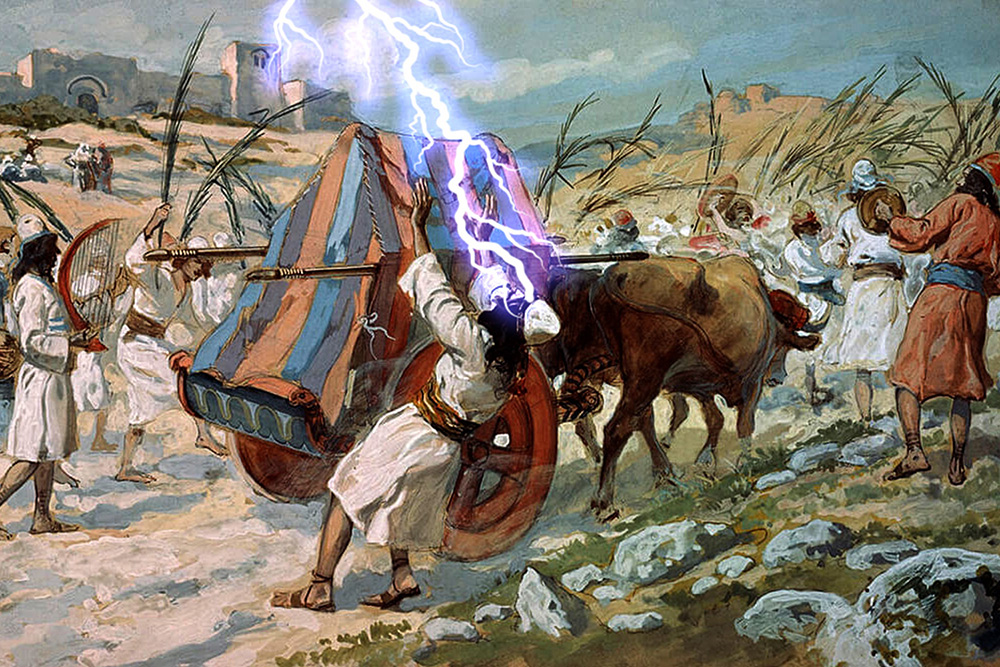
    There are countless examples we can look to where a perceived loss of patience occurred. In these examples, our human eyes see a loss of patience. Examples include the times the Lord told Moses He was going to destroy the Israelites (Exodus 32, Deuteronomy 9:12-14) or Uzzah touching the ark (2 Samuel 6:6-7).

    Does God change His mind?

    Various Google searches of “Is God impatient” come up with many titles like “God is patient – until He isn’t.” I propose that this is not the right way to think about God. I lose patience with my toddler, often. We all lose patience, often. Does God “lose patience” with me? I don’t think so.

    Remember the omniscient thing? Omniscience=all knowing. If God knows the beginning from the end, how can He lose patience? He knows what’s coming.

    From this link during some of those Google searches:

    “God is never said to be patient about things or circumstances. Why? It is because He knows all things. He knows the beginning from the end. He does not have any need of that kind of patience. When we speak of the patience of God, we are not talking about enduring hard times; we are talking about being longsuffering toward people.”

    David Hocking

    Patience, like time, is a human thing. It doesn’t apply to God. We apply it to Him in our attempt to understand Him. But how can God be “patient” if He already knows everything?

    So why are these examples, where it seems like the Lord changes His mind, included in the scriptures? Why is the account of the Lord saying He was going to destroy the Israelites and raise up a seed through Moses, only to “change His mind” included in the Bible?

    The question, “Why is it in the Bible” is almost always answered, “to teach us about Christ.”

    Let’s look at the Moses example.

    Moses is talking to Jehovah when he pleads on behalf of the children of Israel. He is interceding on their behalf. Who does Moses represent here? – Jesus Christ, our advocate with the Father. So, in this case, Moses was being a type of Christ and Christ was assuming the role of God the Father. We were learning from this scripture that Christ is our advocate with the Father, the same way Moses was the advocate for the Israelites with Jehovah.

    We must be careful in applying our human traits to God. God is not us. He works on a completely different plane. We can’t comprehend His ways and it’s important, because of our lack of understanding, we don’t lessen His power and perfection in our finite minds.

    God doesn’t lose patience with circumstances. He can’t. He knows all the circumstances. He knows the beginning. He knows the end. God doesn’t lose patience with us. He can’t. He is perfect in everything, including His love for us. He can want the best from us, He can want us to be better, He can want us to make better choices. But He DOES NOT lose patience with us. He is longsuffering. He is loving. He is perfect.

  • The Prints

    The Prints

    There’s a subtlety throughout scripture I don’t think we discuss often enough.

    We know that when we are resurrected, we are resurrected to our perfect frame. Not a hair on our heads will be lost. We will be perfected (Alma 11:43-44).

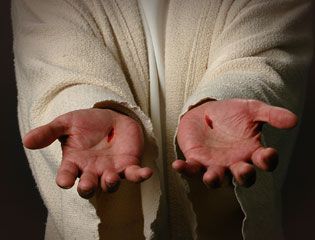
    We also know that when Christ showed Himself after His resurrection, He retained the prints in his hands, wrists, and feet (3 Nephi 11, John 20).

    Why does Christ retain these markings? Why does He keep these reminders of the most pain and suffering any person has ever experienced? It’s because Christ doesn’t remember the suffering when he looks at those marks. He remembers us.

    He could choose to remove those physical “blemishes.” Instead, He keeps them as a reminder.

    He also probably keeps them for us. So that when we see Him, we can be reminded of what He did for us. So we can remember His suffering and in turn realize how deeply He loves us. In this sense, Christ may have Thomas the Doubter (unfair title) in mind (John 20:25).

    Everything in scripture can hold some deep significance.

    I think this often overlooked fact holds spectacular significance.

    He was pierced through, tortured, suffered for us. He will never forget us. We are etched in the palms of His hands.