Tag: marriage

  • Response to Depression

    Response to Depression

    On April 11, 2020 Beth posted a thoughtful and vulnerable post about depression. She really put herself out there talking about something that is sensitive for her. I was proud of her for writing it. It’s still one of the most read posts from my blog.

    It was the 10th post ever put on my blog. It was so early in my blog that I didn’t even put a cover image for it.

    I recently went back to read that post and decided, 4 years later, and after 5 years of marriage, that I would like to write my thoughts on her post and the topic of depression. This will be a difficult post to write because, even after these years, I’m still grappling with my understanding of depression – what it means, how it manifests, my role in it, along with all the other complexities that come with depression.

    I’m going to pull quotes from Beth’s post and give my thoughts.

    In her post, Beth said this:

    “Sometimes in frustration, I just want to sum it up as “if you know, you know” and call it good. But that is not enough. Individuals, family members, institutions, others with depression need to know.”

    I definitely need to know. Because I don’t understand it. And that’s hard for me.

    I am married to Beth. I’ve seen depression. I can kind of understand it. And yet, I don’t. I know I don’t. I don’t get it. And that’s hard for me. It’s hard for me to try to understand something that I don’t know where to begin understanding.

    With me… I may upset some people with depression here until you hear my explanation (or maybe even with my explanation) – depression is being sad and not wanting to get up or do anything. That’s my impression of it because I’ve experienced that. What I haven’t experienced is actually not being able to get out of bed. I don’t understand that. I don’t get it. That’s the reason I don’t understand depression. I just can’t relate to it. That doesn’t mean I don’t think it exists. It’s just something I have a hard time framing because it’s not in my personal experience. We have tons of examples of things we can’t understand because we haven’t seen or experienced them ourselves. I’ll dive into an example later on in this post. It’s hard to understand something you have zero personal frame of reference for.

    I must be clear here. I’m not saying I’m not empathetic or sympathetic to the challenge of physically not being able to get out of bed. I desperately hope I am sympathetic to it. I hope that I’ve showed my wife at least some of the support and understanding she needs through her challenges.

    What I’m saying is that I don’t understand it, I don’t get it.

    I hope if you’re experiencing depression and you’re in a close relationship with someone (parent, sibling, friend, significant other, etc.) who doesn’t understand it, that you can have patience with them as we have patience with you. Not understanding doesn’t always mean not caring or not believing it’s real or that it exists. It can sometimes mean really just not getting it, as much as we want to. I think sometimes it’s as hard for a non-depressed person to understand depression as it is for a person with depression to describe what it’s like to a non-depressed person. This is exactly what Beth is talking about in the above quote.

    Next quote I’d like to comment on from Beth’s post –

    “For me, it is not a weight laying heavily on me. I don’t feel like the people in the commercials that have a dark rain cloud following over their head wherever they go.”

    Beth is referring to what her depression is like to her. This struck me. It may seem silly, but as someone who hasn’t experienced “depression” (I don’t think) I kind of assumed it was all the same. Beth reminded me that just like anxiety and fear and all the other plethora of challenges we face in this life, no two people have the exact same experience. Depression for everyone must be unique to everyone. I’d venture to guess that one person with depression might have as much difficulty understanding another person’s version of depression as I have with understanding it at all.

    I think it’s important to remember that this challenge comes in many shapes and forms and to have patience with everyone and their unique circumstance.

    This is where I bring myself into it to try to understand and sympathize better.

    I struggle with anxiety. It’s not something I talk about a whole lot. I think I treat it like Beth treats depression: with a little bit of embarrassment and avoidance. But now I’m an adult. I’m no longer a scared and confused kid. I’m still sometimes scared and confused, but no longer a kid. I now realize that lots of people struggle with anxiety. It’s not something to be ashamed of.

    Beth and I have talked about depression and anxiety together. She talks about depression which, as I noted, I don’t understand. Then when I try to explain how anxiety manifests in me, I see the confusion descend upon her like the aforementioned cloud of depression. She can’t figure out what I’m talking about. She’ll say outright, “I don’t understand what you’re saying.” Do I take offense to this? Of course not! She hasn’t experienced it. I return to my point earlier – people experiencing depression: don’t blame or get upset with others that don’t understand what you’re going through. Your depression is unique to you. Don’t mistake lack of understanding for lack of caring or believing.

    “Eventually, when you’re in the midst of a depressive episode, you begin to convince yourself that this is the new you. You will never be successful again. You will be a burden and failure for the rest of your life. I was very lucky to never feel like I wanted to end my life but, with feelings like that, it isn’t difficult for me to see how people get there.”

    When I read that, it breaks my heart. When I read that it helps me to remember that this is a real and difficult challenge despite my lack of understanding. I can’t comprehend the idea of taking my own life. I think this is similar to how I don’t comprehend depression. I hope anyone reading this that, like me, struggles with understanding the dynamics and impact of depression on someone’s life, can read that quote and realize how serious this is. In whatever ways depression can feel “unreal” – suicide is not. Suicide is very, very real. We must have sympathy, love, compassion, patience, and as much understanding as we can possibly have to help those in our lives that have depression-like feelings. It can save a life.

    “So why don’t you just get up? Go on a hike, play a game, talk to someone, you’ll feel better.”

    This is my way of thinking.

    “I ask, can you still support me and sympathize with me even if you can’t understand? While that seems like a fair compromise, I still think I can try to help others get a glimpse of my perspective. We can meet in the middle.”

    I reiterate my point made earlier. We can try to understand. Those with depression, we only ask that you try to understand that often we without depression really are trying to understand and sympathize. It’s hard to understand something you can’t comprehend. It’s the catch-22 of sympathy. We sympathize, but ultimately, we can’t understand. If we understood, we’d know. All we can do is our best. Have patience with us as we have patience with you.

    “Sometimes that means lowering expectations for a while. Sometimes that means just learning to listen instead of feeling like you must come up with the solution.”

    This is the part I struggle with the most. I’m the standard guy who wants to fix things. Just listening doesn’t seem productive. I’ve tried over the course of my marriage to be better at this part. Listening. Beth will have to comment on whether or not I have gotten better at this. I’m not sure I want to hear the answer.

    I also struggle with lowering expectations. I’m not sure how to best say this without sounding insensitive but deep down inside I feel like lowering expectations for someone isn’t the answer. I coach basketball and deciding I don’t expect much from my players doesn’t seem like a great answer. In Beth’s whole post, that’s probably the line I most struggled with.

    “While my depression has been well controlled for years now, it’s never truly gone. It can sneak in when I least expect it. I make sure to take my medication daily and be mindful of triggers and warning signs. I try to be vocal with my husband when I feel it creeping in.”

    I’ve been married to Beth for over 5 years now. In that time, I’ve seen the warning signs. I can see when something is coming. I can see when Beth is starting to not be herself. Usually she is short with me, impatient with the girls and I, little things seem to put her on edge, and then there are hours of sleep.

    I guess I have lowered my expectations in the moment. But my way of thinking is so much that aforementioned – “Get up and fight through it”… I can’t help but wonder if lowering expectations is the right thing. Is the best thing to do to let a person with depression lie in bed for hours and days at a time? I’m not sure it is. I’m not sure we’re supposed to lower expectations.

    That said, that’s what I’ve done. In those moments I’ve tried to let Beth know I love her and I’m there for her and I give her the time to “come back.” Usually this is only for a day or two. A day or two where Beth doesn’t leave her room and I take care of the girls, the house, and the responsibilities. If it were more than a day or two, with everything we have going on, I’m not sure I could make it happen.

    This is difficult. It’s made more difficult for my lack of understanding.

    I can usually tell when Beth hasn’t taken her medication. It’s a bit disarming to immediately see the results of this. It’s a palpable and obvious difference. With lack of understanding it’s hard for me to understand how this can so drastically shift behavior so quickly. And yet… when I’m tired, how quickly does my demeanor, patience levels, and personality change?

    I know so little about the body and how it functions. What do I know? I know nothing.

    Ultimately, I have to rely on something bigger for understanding. I’ll close this post in much a similar way to how Beth ended her post 4 years ago. My understanding of God, this life, and His plan makes these things more understandable. We’re here to be tested. We’re here to go through tests that we don’t understand, to test our faith. We’re here to grow. Every challenge in our life is an opportunity to grow. I believe Beth’s depression is an opportunity for her to learn about herself and to become something so much more. I believe her depression is also a part of my mortal experience. It’s meant to teach me something important.

    I hope I’m still learning something important. I hope I’m always patient and understanding and helpful. I hope Beth knows she can always trust me to be there to make up the difference. I also hope Beth knows she’s always good enough.

    The hardest part, I think, about being married to someone with depression is seeing someone smart, and strong, and brave, and kind, and patient, and talented – think she is not those things. There have been many times that I’ve had to remind Beth that just because she doesn’t feel like those things in a particular moment – she is still those things. She will always be those things. They are more innate to her personality and being than depression is.
  • Letter to Grandpa Q

    Letter to Grandpa Q

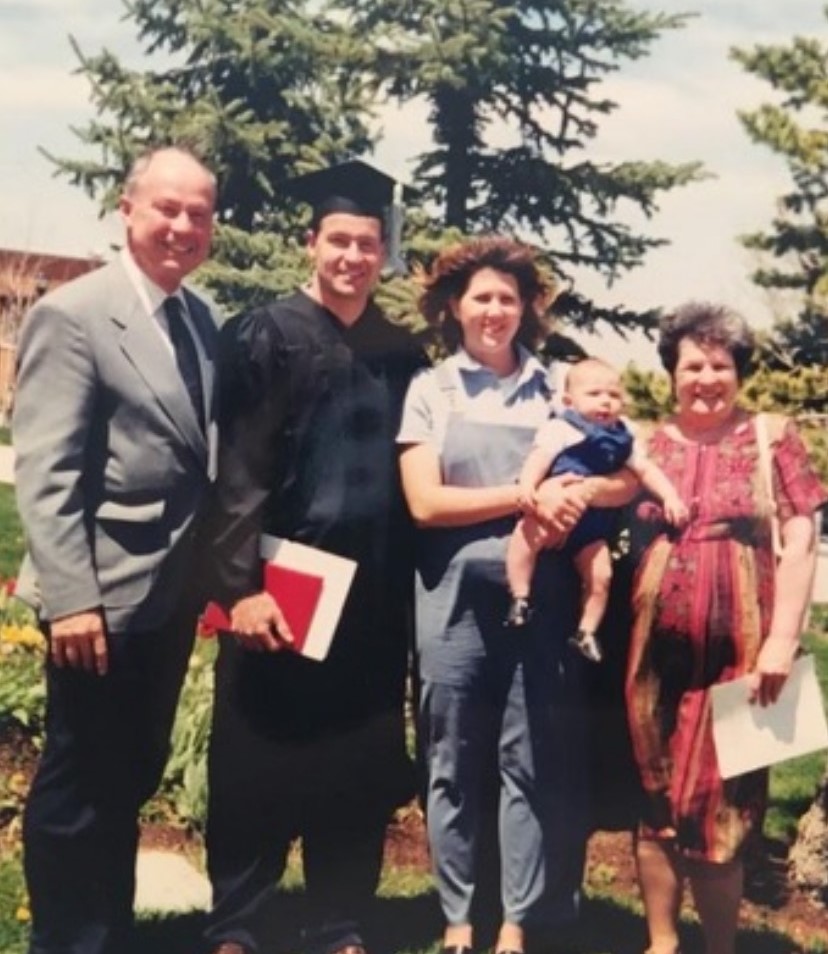
    My grandpa Stan recently turned 90 years old. For his birthday, all his children and grandchildren wrote him a letter. This is the letter I wrote to my grandpa.

    Grandpa,

    One of my earliest memories was my first and only trip to Grandaddy Lake. It was horrible. Keep in mind, I was maybe 4. It rained the whole time. It was so miserable. But I still remember it.

    I remember hiking back after the long week there. It was raining. I’m not sure it ever stopped raining. I was walking through mud, and I was crying. Everyone else was hiking with big backpacks for the trip. I had my little toy backpack on, and I was crying about it, about the hike, about the rain, about the mud, about my miserable existence.

    You got frustrated with me. It was the only time I recall seeing you frustrated/angry/mad. I cried more.

    My dad took my little backpack. I still have a memory of my dad shirtless, hiking in the rain. He was hiking now with his huge backpack on his back and my little backpack on his shoulder.

    I looked around at all my aunts, uncles, you, and my dad and realized no one else was complaining. Everyone was cold, wet, and frustrated, but no one was complaining.

    This core memory has stuck with me. I like to think it impacted me and in some minor, or possibly major ways, has shaped me.

    The Las Vegas Quackenbush clan (my family) has never been to Granddaddy Lake. We have our modern-day equivalent. We now go to the theme park Six Flags Magic Mountain multiple times a year. It is a requirement that any future in-law go through the gauntlet of a 12-hour day at Magic Mountain before they can even think about being accepted into the family.

    When Beth came to Six Flags with us for the first time, we were all so happy because there was a high heat warning. The lines were great! Meanwhile, we almost died. My roommate came with us to Six Flags once. He’s sworn to never return.

    I now have two daughters that I joke, tongue-in-cheek, about needing to remove as much Cannon from (Beth’s maiden name) and insert as much Quackenbush into as possible.

    This is the Grandaddy Lake mindset. More importantly, this is what it is to be a Quackenbush. I take pride in my name.

    I take pride in you.

    I take pride in our pioneer roots.

    I take pride in the foundation of faith I have been afforded.

    I take pride in what you and Grandma built, for me.

    I take pride in what you and Grandma built, for my family, for my daughters.

    I want to thank you for choosing an eternal companion of from among the devoted young women of The Kingdom. That is a line from my patriarchal blessing. I was able to choose an eternal companion who is an amazing mother, wife, and person because of you. I am able to raise my daughters with a confidence in things eternal because of you and Grandma. I am able to see the bigger picture, endure, have faith, progress, learn, grow, and get better, all with an understanding of who I am and where I come from, because of you and Grandma.

    I don’t know what I did to earn the position in the family I’ve been given, but I thank you.

    I look forward to one day having a life review. I hope to see some or all of your life review and Grandma’s life review. I look forward to one day seeing all the sacrifices endured and trials met head on by Grandma and yourself so that I could have the mortal experience I have been afforded. You and Grandma are a foundation. You created a foundation. In this life I’ll never fully understand all you went through and struggled with so I could have what I have. One day, I hope to understand. On that day, I will stand, and I will kneel, and I will thank my progenitors, you, for what you did for me. We all will.

    Thank you. We love you. We are grateful for you.

    With all the love you deserve, and I can give,

    Brayden

  • Ivy Thougts Part 3

    Ivy Thougts Part 3

    It’s time for one of my favorite posts to write – Ivy thoughts!

    This is a good one.

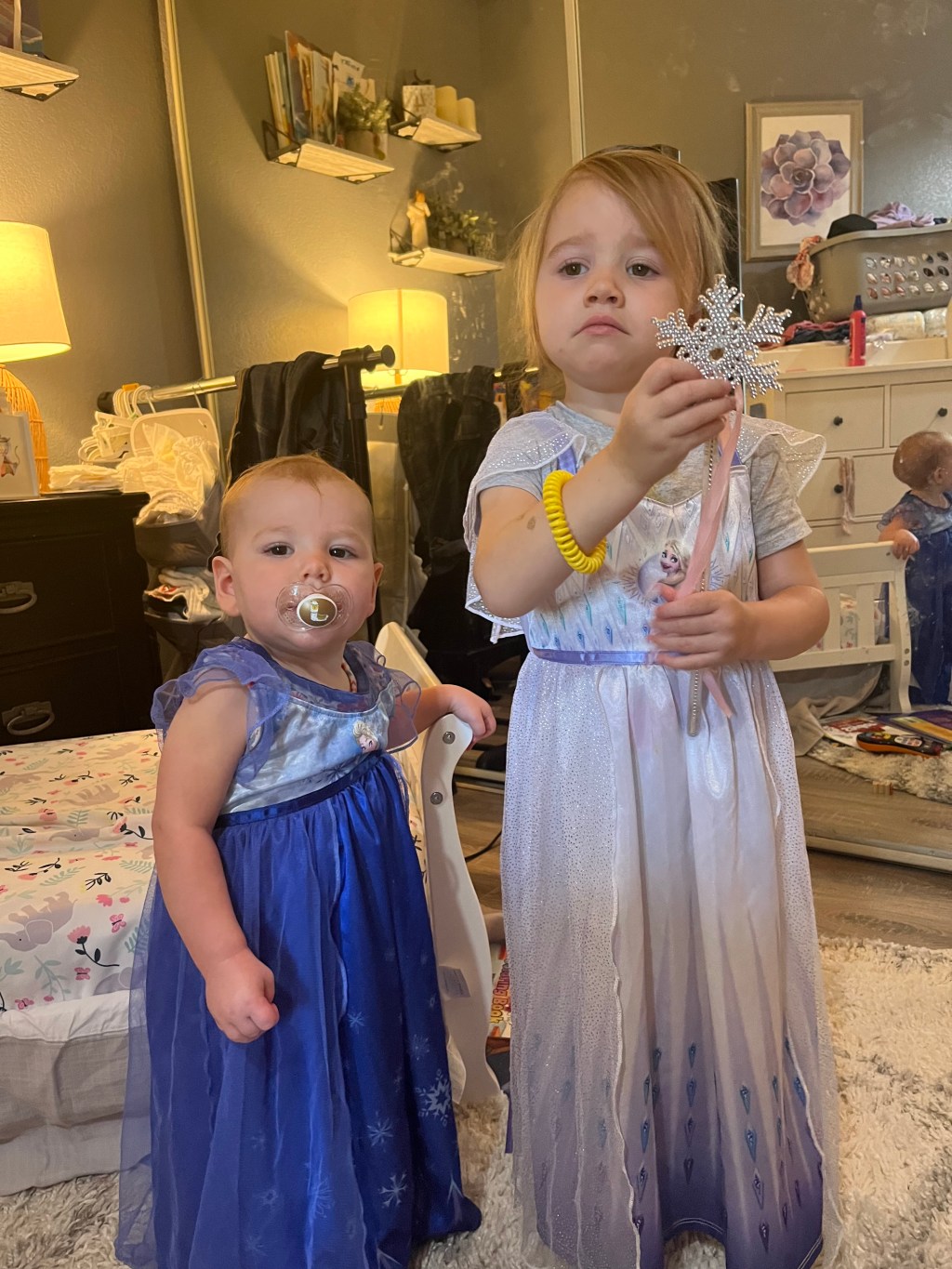
    One of the funnest things about being a parent is watching your child start to mimic you. It’s in those moments that I get a snapshot into how closely she is watching me. The other day Beth texted me and said, “I can tell when there’s a habit you do because Ivy does it. Like tapping your toothbrush on the edge of the sink. I said, ‘Does Daddy do that?’ And she said, ‘Yeah Daddy like tap tap tap.’”

    Other examples are the words she copies. The other day she said to her grandpa, “Papa, come hang out.” Another time they were playing a game and she said, “You give it a try.” My favorite example showing Ivy paying attention and learning, she was standing at the kitchen counter while her grandpa cut vegetables. He set the knife down and she, unprompted, said, “Ivy no touch knives.” Ivy helps me put the dishes away. I’ll hand her cups, plastic bowls, plastic plates, forks, spoons and she’ll put them in the dishwasher. Early on I would start to hand her a knife and then pause and say, “Does Ivy touch knives.” Of course, in the beginning, she would say, “Yes,” and I would say, “No, no, Ivy doesn’t touch knives,” and she’d quickly say, “No, no, Ivy no touch knives.” So we’d continue and if I started to hand her a knife to test her she would quickly say, “No, no, Ivy no touch knives.” Glad to see the things I’m teaching her are travelling.

    I had Ivy for an hour while I worked one day. She sat on the couch and watched Curious George by herself for 30 minutes. 30 minutes in she wanted to work with me. I tell her she can sit on my lap as long as she doesn’t touch anything. She proceeds to touch everything and say, “Can I touch this.” This I accept, having played this game before, as long as she doesn’t touch my keyboard. Then she starts throwing things. I gently set her aside and tell her it’s back to Curious George. This whole time she hasn’t said a word about the bag of Reese’s Peanut Butter Eggs on the right side of my desk. I’m amazed until… 2 minutes later she comes back. She walks up to my right arm which is on my chair’s arm rest. She gives my arm a huge hug and says, “Daddy, I’m so proud of you.” She gives it a good squeeze. I say, “Aw Ivy, thank you, I love you,” and give her a kiss. She promptly reaches over for the bag of chocolates and starts to walk away. I grab them just before she is out of reach. I tell her she can have one. I unwrap it and give it to her. As she walks out she says, “Thank you Daddy, I love you.” Is this what being wrapped around a finger feels like?

    Ivy and I were cuddling in bed after a nap and totally out of nowhere Ivy looks up at me and says, “You have sharks on your water bottle, Dad?” I looked over at my water bottle and said, “No, my water bottle is just green.” Ivy said, “It OK Dada, one day when you’re bigger you’ll get sharks on your water bottle TOO.”

    The other day Beth asked Ivy if she tooted and she said, very seriously, “No. There’s just a bobcat in my bum.” The same day, after I left for work, Ivy asked Beth, “Where Daddy going?” Beth responded that I went to work and Ivy said, “Again?!?!” You and me both sweet girl. She had a lot of personality that day.

    This was one of those equally heartbreaking and also wonderful parenting moments. I took Ivy with me to an open gym for basketball a couple months back. I expected it to go well. It went as poorly as it could have. I had to leave early and it was the last time I took Ivy to open gym. In my frustration, after Ivy was upset and throwing a fit and crying, I told her I’d hoped I could take her with me to basketball more this season but that I wasn’t going to make that mistake again. Like I said, I hadn’t taken her back with me since. Recently, I was at basketball. Ivy saw me leave with my bag and ball. “Where you goin Daddy?” “I have to go to basketball sweetie, I’ll see you when I get back.” She just looked at me with the most beautiful eyes and content face. But it wasn’t the normal – ‘see ya later’ face. While I was at practice Beth texted me, “Ivy’s been packing a bag and saying ‘I’m packing because I have to go to basketball soon. I know you will miss me when I’m at basketball. I come back though.’” I realized I need to give her another shot.

    Apparently when I was gone for work an entire day Ivy kept saying, “Say what’s wrong Hero Boy.” So Beth replies and asks what’s wrong with Hero Boy. “I lost my daddy.” Heart. Broken.

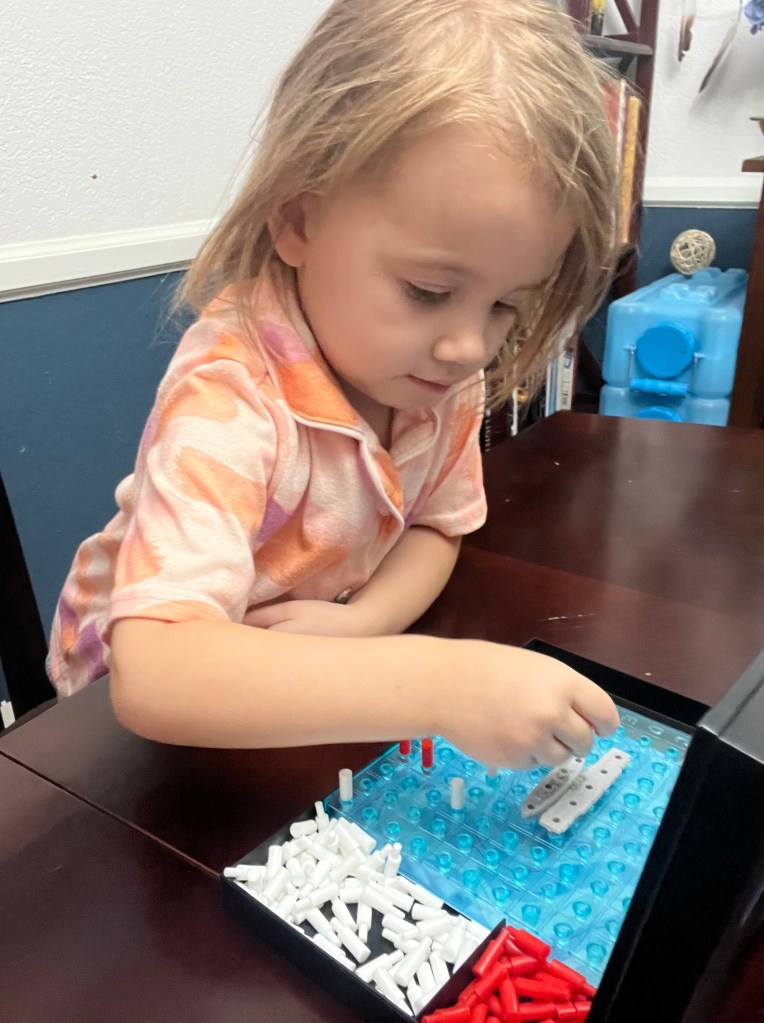
    We’ve had a few days of complete toddler turmoil. I love Ivy. She’s been a monster. She’s in the stage where if you ask her not to do something it’s instantly the next thing she does. Not kidding. We’ve been letting her play Battleship. You know, like the old school board game. She sits and puts the ships and pegs in and plays Battleship with herself. On occasion, the little pegs drop and I had to emphasize to her that it was important those didn’t drop because we didn’t want to lose pieces and Sage could choke on them. Ivy got out of her chair, walked across the room to where Sage was, and started to hand her one of the little pegs. It wasn’t like the temptation was even there. Sage wasn’t right next to her. She had to get out of her seat (a lot of work) and walk across the room to find Sage and willfully disobey what I just said. It was like she was possessed by some irrepressible urge to do exactly what I just told her not to do. These are the parenting moments that are teaching us patience, I guess.

    On that note of Ivy being difficult and us trying to be patient – I was leaving for basketball the other day and it had been a particularly stressful day for Beth. I went to Ivy before I left and quietly talked to her. I asked her to be my best girl. To help her mom, to take care of her sister, and to be my best, sweetest girl. “Can you do that for me?” “Yes, Daddy.” Beth texted me while I was at basketball: “We finally had a quiet moment to sit down after a walk and crafts. I’m trying so hard and yet she’s being so difficult! Ivy has a cold drink and Sage is eating her dinner. Ivy looks up at me and says in a sweet little voice, ‘Mom, I am doing my best.’ I have no idea where she heard that or if she even knows what that means but it was so sweet and probably true so I told her, ‘I know, my sweet Ivy’ and felt a little calmer. The student becomes the teacher yet again.” Ivy knows what that means. And she’s amazing. And she’s teaching us so much, while we try to teach her just enough to survive and not choke her sister.

  • Little Red Mark

    Little Red Mark

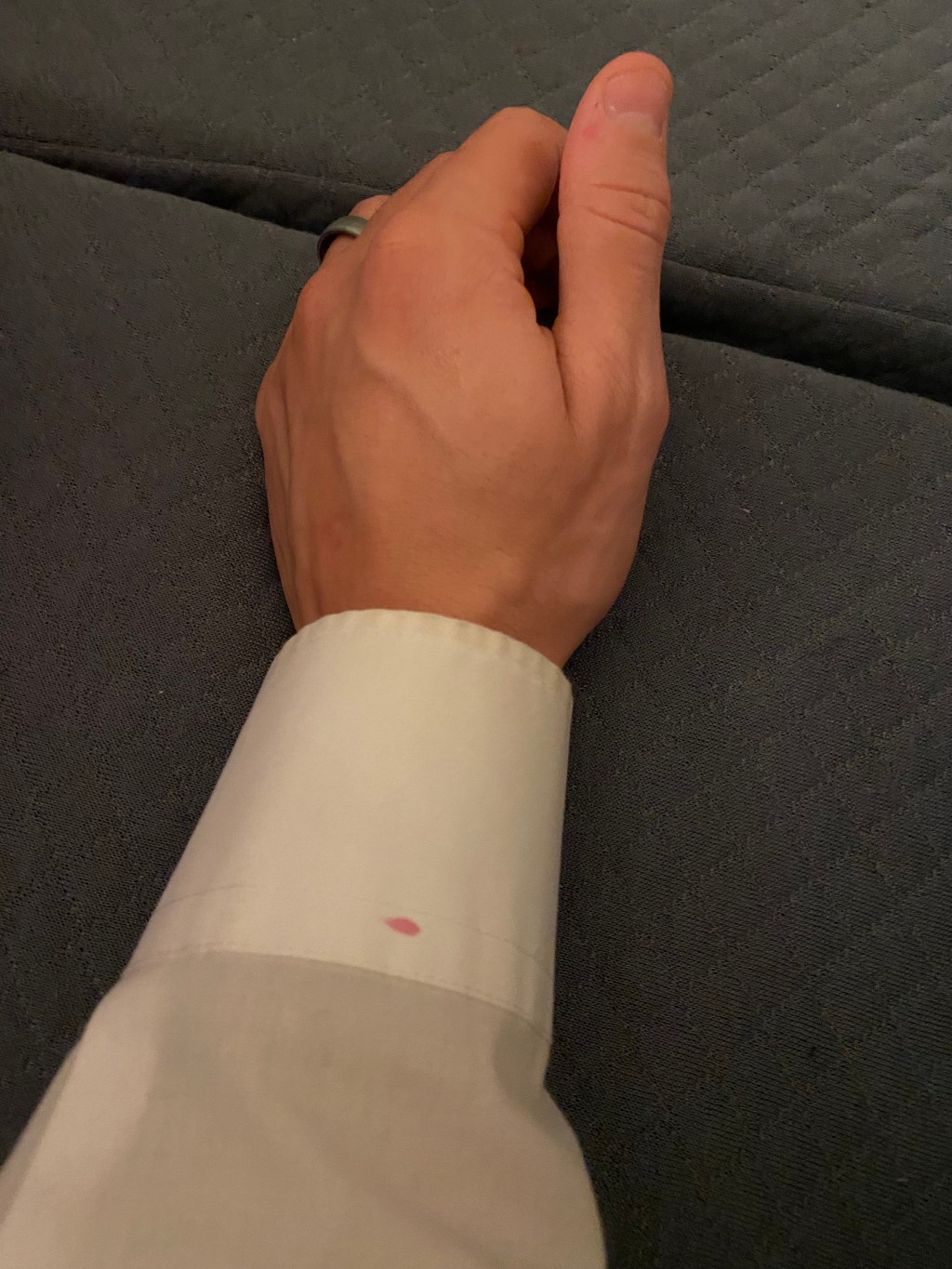
    I have a white church shirt with a little red permanent mark on the left cuff.

    A few years ago, in the Young Single Adult (YSA) Ward of my church, there was a young girl that started coming every so often. She had a family ward she more often went to, but every once in a while, would visit the YSA. She had a young son. He was a toddler, probably two years old.

    I was drawn to this girl. I could imagine how difficult it was for her to bring her young son with her to the YSA ward, a place full of single people with entirely different life situations. I could imagine how she felt judged and out of place. I could relate to how she felt. I’d been her a short year or two before. 

    At the time, I was the Sunday School President. That meant that once a month myself and my counselors led a teacher’s council with all the teachers in our ward to discuss how we could be better teachers, and how we could teach in the Savior’s way. 

    Whenever this young girl came to our ward, I would try to get her to stay for second hour and go to Sunday School. That was my job as Sunday School President, after all. More than that, it was my job as a disciple of Jesus Christ. 

    One Sunday I was inviting this girl to go to one of our Sunday School classes. The difference this week was I wouldn’t be going with her. I had my Teacher’s Council. I could tell that she was going to leave if I wasn’t going to attend the class with her. She was clearly worried about how her young child might be a distraction in class. So, I invited her to my teacher’s council. It took some explaining, letting her know it was open to anyone and she was completely welcome. She came to our council that day.

    I don’t remember anything we taught. I don’t remember an enlightening teaching moment or momentous thing learned on how to be a more Christ-like teacher, though I’m sure some of that occurred. I don’t remember it.

    What I do remember is spending time with that girl’s young son. My counselors were leading most of the discussion so I could spend time with him at the white board with markers, letting him play and keeping him occupied. When I did need to get up front and talk for a bit, I brought him with me. I look back at this moment fondly as a parent now with two daughters I’m constantly bringing to the front with me.

    I didn’t care if he was a distraction to the class. Some things are more important.

    That’s the point, right?

    At one point while watching him, he accidentally marked my white shirt with a red marker. I’ve thought about throwing that shirt out. It’s not a huge or extremely noticeable mark, but it’s there, and it is noticeable. I’ve kept that shirt. I wear it often. I use it as a reminder that some things are more important than a marked shirt.

    I sometimes wonder if someone might see that mark on my shirt and think, “how tacky, throw that shirt out, it has a red mark on it.”  Then I think about that young boy, his mother, and what’s more important, and decide it’s worth wearing that marked shirt.

    Reminder to everyone that we all have little red marks on our shirts. Sometimes they’re self-inflicted and sometimes they’re not. It doesn’t matter. The point is to not judge and to love without bounds.

    I recently got to see a young man that young girl was dating enter the waters of baptism. I hadn’t seen her little son in a few years. It’s crazy how quickly a two-year-old becomes an active, thinking, 5-year-old. I said hi to the now five-year-old boy. He, of course, didn’t remember me. But I showed him that mark on my shirt. It’s probably my imagination, but I saw recognition in those eyes. Like, whether or not he actually remembered making that mark (probably not), somehow, he recognized the significance. I felt like his eyes said, “I made that mark, and you kept it?” I told him I kept the shirt to remember him. He smiled.

    That young girl watched a man she had been dating get baptized. They were civilly married and as soon as they were able to, got sealed in God’s temple. They will be sealed in a temple for time and all eternity. That young boy will be sealed to them. Forever. That’s what it’s really all about, right?

  • Importance of Promises (and Covenants)

    Importance of Promises (and Covenants)

    Since as long as I can remember, promises have been important to me. I’ve always said I would never break a promise for any reason. Period. I’m sure at some points in my life I have broken promises. I have this vague recollection of a broken promise or two that still eat at me. I don’t remember the details, but I remember the feeling of not keeping my word. For whatever reason, promises are something I’ve always considered immensely important, I’m not sure exactly why. Deep down inside, I’ve always thought promises were important to keep. Otherwise, what was the point? Otherwise, words were hollow and how could you be trusted?

    In Alma 23:16-25:2 of the Book of Mormon, there is the story of the Anti-Nephi-Lehis. This is the story of the Lamanites who converted unto the Lord and from then on turned away from their past traditions of murder and bloodshed. They buried their weapons of war and covenanted to shed blood no more. They took their new covenant so seriously that when other Lamanites came to war against them, rather than break their newly made covenant, they knelt before their former brothers and gave up their lives.

    As I read this story recently, a question arose: how seriously do we take our covenants? What does our word mean to us? How about when our word is a promise to God? How important do we deem that pact?

    Covenants are important. Covenants are serious. Keeping covenants is a serious thing.

    The converted Lamanites, or Anti-Nephi-Lehis, made a covenant to shed blood no more. Full stop. No excuses. When their lives were at stake, did they reconsider? Did they say to themselves, “well I promised this, but surely I’m not supposed to lie here and die over a promise”? They thought the exact opposite. Their covenant was worth more than their mortal life. These Anti-Nephi-Lehis understood the significance of covenants. There were no excuses. They had faith. They knew that if they died keeping their word to God, they would inherit a glory and reward that would be well worth the earthly sacrifice.

    Covenants with God are greater than death.

    So, I ask again, how seriously do you take your covenants?

    Have I been perfect in keeping the covenants I’ve made with God? Let’s review the first covenants I made with God when I was baptized at age 9. I covenanted to:

    1. Take upon myself the name of Jesus Christ.
    2. Keep His commandments.
    3. Serve Him to the end.

    Have I been perfect in this? Of course not. None of us are perfect yet. But I’ve tried. I often wonder how much my baptism and the Gift of the Holy Ghost at age 9 strengthened me and helped me to return. I often wonder how my upbringing influences my deep respect for promises. Though I haven’t been perfect, I always took these covenants seriously.

    I now take further covenants I’ve made very seriously. For example, my covenant with my wife, to be faithful to her, to love her, to serve her, to be there for her. That is the most important promise I’ve made in this life and I intend to die before breaking it.

    In a world of promise-breaking and commitment to nothing, I am ever-grateful for the covenants I’ve been privileged to make. I’m grateful for the Church of Jesus Christ that provides the proper authority for me to make promises with God. I’m grateful to be linked to God. I’m grateful for the strength covenants provide in a shaky and uncertain world.

    If you’ve made covenants that you’ve broken, I implore you to reexplore those promsies. Satan leads us to believe that once broken, we can’t mend our word. When our promise is with God, that is true, we can’t mend it. But He can. Jesus Christ suffered the Atonement so that we can come back even to make up for the promises we’ve broken. He knows we aren’t perfect. He will make the difference. I fell into that trap for stretches in my life. Thinking I’d gone too far away from God, I’d broken too many promises, disregarded too many commandments, and I couldn’t come back. The feeling of reuniting with God is the most comforting feeling in the world. Reunite with Him. He will always take us back. He will always reestablish our covenants because He loves us that much.

    Come back to Him and feel His peace.

    I am grateful for covenants and that God allows me, an insignificant little speck, to align and connect myself with Him. What power. What comfort.